Villa Escondida

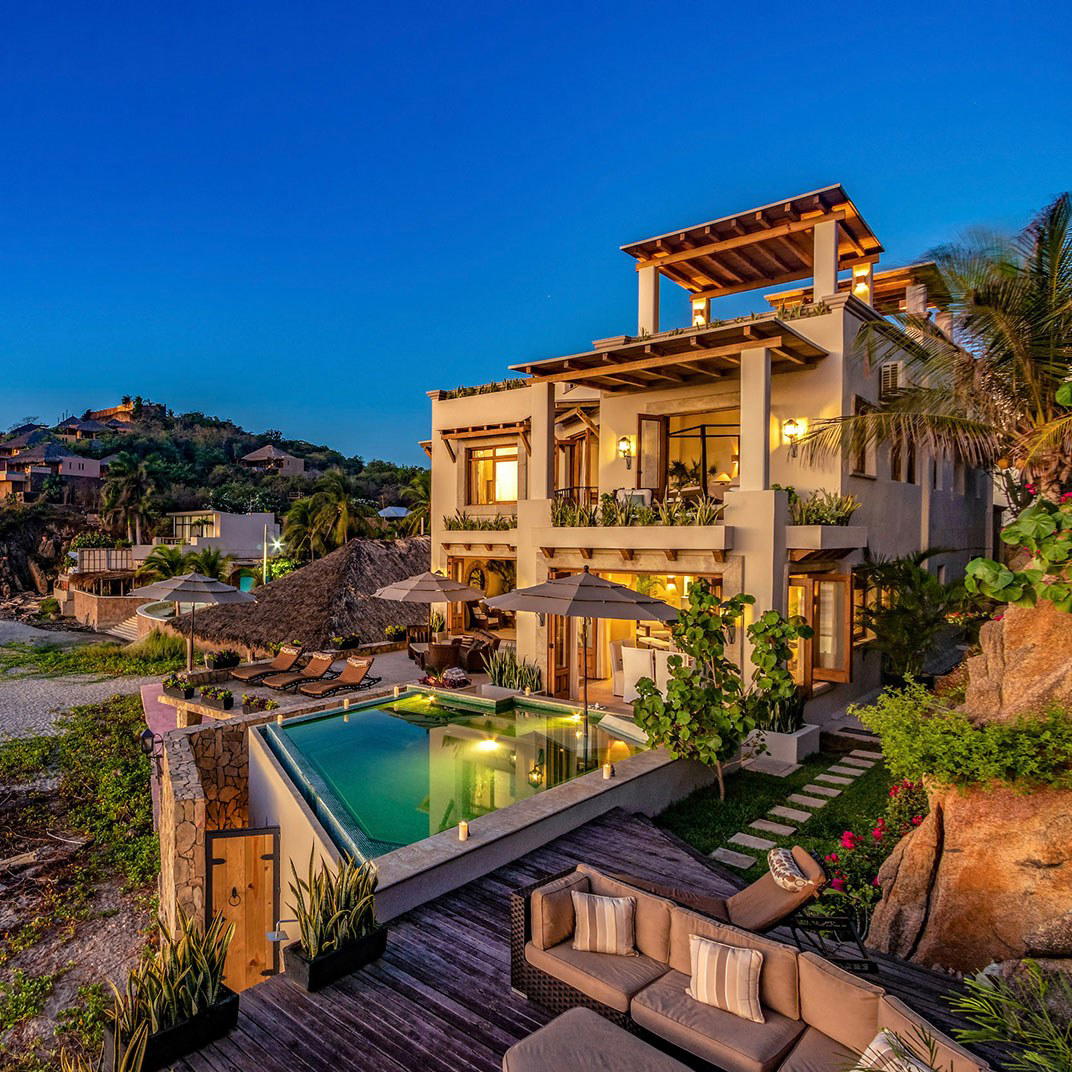
A Michelin Selected property on the Oaxacan coast at La Bocana Copalita, Villa Escondida sits outside Huatulco's resort corridor in a quieter stretch of the bay system. The address alone signals intent: this is a property that positions itself against the pace of mainstream beach tourism, drawing guests who prioritize seclusion over amenity density.
 Discover on Pearl
Pearl is the En Primeur Club membership app — saves, bookings, and concierge access live there. Same editors, same standards.
- Address
- MZ 5 Lote 14, La Bocana Copalita, Santa Maria Huatulco, Mexico
- Phone
- +13107650999
Where the Coast Steps Back from the Crowds
The Oaxacan coastline between Puerto Ángel and the Huatulco bay system represents one of the last stretches of Pacific Mexico where the built environment has not yet overtaken the natural one. Development in the Huatulco bays has been regulated since the resort was conceived as a planned destination in the 1980s under FONATUR, which imposed density limits that distinguish the area from Cancún-scale buildout. That regulatory context matters when reading a property like Villa Escondida, which sits not in the tourist zone proper but at La Bocana Copalita, a coastal position that keeps it at a deliberate remove from the marina restaurants and resort corridors that define Huatulco's more accessible face.
The address, MZ 5 Lote 14 at La Bocana Copalita, places the property at a river-meets-sea geography where the Copalita River meets the Pacific. That confluence, common along this coastline, produces a particular quality of light and an ecosystem mix, mangrove, beach forest, open ocean, that no amount of landscaping can replicate. Properties that exploit this kind of natural positioning tend to rely on it architecturally, and Villa Escondida's 2025 Michelin Selected recognition suggests it has done so with enough coherence to earn recognition in a program that weighs character alongside comfort.
The Architecture of Seclusion
Mexico's premium coastal properties have split across a clear axis in recent years. On one side sit the large-footprint international brands, One&Only; Mandarina in Riviera Nayarit, Montage Los Cabos in Cabo San Lucas, Zadun, A Ritz-Carlton Reserve in Los Cabos, which deliver amenity breadth and brand consistency as their primary value. On the other sit smaller, location-defined properties where the architecture and the landscape are doing most of the work. Villa Escondida falls into the second group.
In southern Mexico, the design vocabulary of this category draws heavily from vernacular coastal materials: palapa roofing, open-air corridors, stone and wood construction that blurs the threshold between interior and exterior. The approach is less about aesthetic statement than about climate logic, in a Pacific coastal environment with strong seasonal variation between dry-season heat and wet-season humidity, architecture that breathes outperforms architecture that seals. Properties that have gotten this right, from Xinalani in Quimixto on the Jalisco coast to Playa Viva in Juluchuca further up the Guerrero shoreline, share a structural honesty: the building does not pretend to be somewhere else.
Villa Escondida's placement at La Bocana Copalita suggests a similar orientation. A location on a river mouth, away from the hotel zone, does not work as a luxury proposition unless the property commits to the landscape around it. Properties that occupy sites like this and then import generic resort finishes tend to produce a dissonance that guests register, even if they cannot name it. Villa Escondida avoids that dissonance.
Huatulco's Position in the Oaxacan Coastal Circuit
For travelers already engaged with Oaxaca's cultural weight, the food scene in the capital, the mezcal culture, the textile villages, the coast represents a natural extension. But the connection between the state's interior identity and its Pacific edge is less traveled than the Oaxaca City-to-Monte Albán circuit. Huatulco sits roughly 250 kilometers south of Oaxaca City by road, a distance that requires either a domestic flight to Bahías de Huatulco International Airport or a four-to-five-hour drive through mountain terrain. That friction is, in effect, a filter: the visitor population skews toward those who have made a deliberate decision to be there.
The result is a coastal destination with less day-tripper density than Puerto Escondido, which has developed a significant surf tourism economy and accompanying infrastructure, and considerably less development pressure than Los Cabos or the Riviera Maya. Guests traveling from Oaxaca City who want a coastal stop before returning might also consider Hotel Humano in Puerto Escondido, which serves a different traveler profile and a more energized coastal scene, useful context for understanding where Villa Escondida positions itself by contrast.
For anyone building a broader Mexico itinerary that combines coast and culture, properties along the Oaxacan interior, Hotel Casa Santo Origen in Oaxaca, Casa Antonieta in Oaxaca City, or the more removed Casa Silencio in San Pablo Villa de Mitla, pair logically with a Huatulco stay.
Planning a Stay
Huatulco operates on a pronounced seasonal pattern. The dry season runs broadly from November through April, delivering the consistent sunshine and calm seas that characterize Pacific Mexico's high season. May through October brings the wet season, with afternoon rains and heavier cloud cover; this period also aligns with lower visitor volumes and, typically, softer rates at properties across the bay system. Travelers who prioritize seclusion over guaranteed beach weather often find the shoulder months, late October and early November, offer a reasonable balance.
Direct contact with the property is the practical starting point for booking, and reservations are essential. The address at La Bocana Copalita means guests should confirm access logistics in advance, river-mouth locations can involve short boat transfers or unpaved approach roads depending on conditions and season, and this is the kind of detail worth clarifying before arrival rather than after.
Travelers comparing Villa Escondida to other small coastal properties might also look at Las Alamandas in Costalegre, Hotel Esencia in Tulum, or Maroma in Riviera Maya for a sense of what the category delivers at different coastal contexts. Each represents a version of the same bet: that location specificity and low-key architectural integrity can hold their own against the amenity density of larger resort properties. Villa Escondida makes that bet from one of Mexico's most underexposed Pacific addresses.
Quick Comparison
Comparable venues nearby, for context on price, style, and recognition.
| Venue | Cuisine | Price | Awards | Notes |
|---|---|---|---|---|
| Villa EscondidaThis venue — the venue you are viewing | Contemporary Mediterranean beachfront villa with locally sourced materials | $$$$ | , | |
| TAGOO | Back-to-nature luxury eco-friendly boutique | $$$$ | , | Zona Costera |
| Aldea Canzul | Exclusive beachfront villa estate with Mayan architectural influences | $$$$ | , | Tulum |
| Villas del Mar | Exclusive luxury villa residences in a gated beachfront community | $$$$ | 0300800012422 | |
| Jashita Hotel | Eco-chic barefoot luxury boutique | $$$$ | , | Soliman Bay |
| Cunex The Riviera Maya Edition at Kanai | Luxury lifestyle resort focused on sustainable, experience-led hospitality within a protected coastal nature reserve. | $$$$ | , | .Kanai |
At a Glance
- Romantic
- Quiet
- Scenic
- Hidden Gem
- Intimate
- Elegant
- Rustic
- Honeymoon
- Romantic Getaway
- Family Vacation
- Weekend Escape
- Beachfront
- Infinity Pool
- Private Villa
- Panoramic View
- Terrace
- Pool
- Fitness Center
- Tennis Court
- Garden
- Massage
- Waterfront
- Garden
Tranquil and secluded beachfront atmosphere with open-air living spaces, terraces offering ocean views, and a relaxed casual vibe.