Triple Creek Ranch









2 Michelin Keys · La Liste Top Hotels · Star Wine List
Set on 800 acres in Montana's Bitterroot Mountain range, Triple Creek Ranch is an adults-only, all-inclusive Relais & Châteaux property recognised with Michelin 2 Keys (2024) and rated No. 1 Hotel in the World by Travel + Leisure readers in 2014. Twenty-five log cabins, an Orvis-endorsed fly-fishing program, and a wine cellar overseen by a resident sommelier define its position in American wilderness luxury.

Pearl is the En Primeur Club membership app — saves, bookings, and concierge access live there. Same editors, same standards.
- Address
- 5551 W Fork Rd, Darby, MT 59829
- Phone
- (406) 821-4600
- Website
- triplecreekranch.com
- Directions
- Get directions
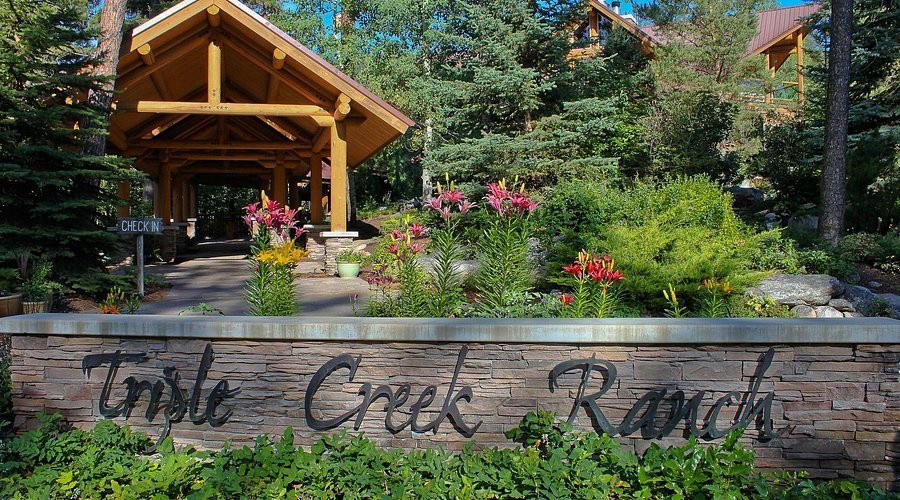
Where the Bitterroot Range Sets the Architecture
The American West has long attracted a particular type of luxury property: one that borrows the landscape as its primary design element and asks the built environment to defer to it. In Montana's Bitterroot Mountain range, that design logic reaches one of its more considered expressions. The drive from Missoula Airport, roughly 81 miles and two hours south through the towns of Lolo, Florence, Victor, Hamilton, and Darby before turning onto West Fork Road, functions as a decompression corridor as much as a transfer. By the time the road narrows and the Ponderosa Pines close in, the register has already shifted.
Triple Creek Ranch occupies 800 acres along the West Fork of the Bitterroot River. The property's 25 cabins are constructed of log or cedar, a material choice that reads as both vernacular and deliberate: the structures echo the surrounding forest rather than imposing a contrasting palette. Western architectural tradition, particularly the log-cabin idiom associated with the early twentieth-century National Park lodges, is here refined rather than replicated. Each cabin holds original Western art, Pendleton bedding, and a wood-burning fireplace, materials and objects that locate the guest firmly inside a regional aesthetic rather than a generic luxury one. The Ponderosa cabin, the property's largest unit at three bedrooms and 3,000 square feet, adds vaulted ceilings and a tiered deck overlooking a private trout pond, demonstrating how the site's topography becomes a functional amenity rather than mere backdrop.
Within the broader category of American wilderness retreats, the design approach here sits in a specific tier: properties where craft and regional specificity carry as much weight as thread count. Compare it with Amangiri in Canyon Point, which uses poured concrete to echo Utah canyon geology, or Post Ranch Inn in Big Sur, where structures are partly submerged into the coastal ridge. In each case, the architecture is a form of site argument. Triple Creek's argument is for the Northern Rockies tradition: timber, stone, fire, and sky.
The Cabin as Complete Environment
Relais & Châteaux membership, which Triple Creek Ranch holds, signals a property philosophy built around intimacy of scale and particularity of place. With 25 cabins (and 23 rooms in operational configuration), the property functions at a guest count that allows service to be anticipatory rather than reactive. One published account describes staff anticipating needs before guests could articulate them, which is a distinct operational mode from that of larger resort formats where service is transactional by necessity.
Each cabin comes equipped with a private or nearby outdoor hot tub, air conditioning, satellite television, high-speed wireless internet, a refrigerator stocked with drinks, and in-cabin room service. Daily fresh-baked cookies, homemade trail mix, and fresh fruit are restocked as a matter of routine. The detail matters because it shifts the cabin from a place to sleep into a self-contained domestic environment, which in turn means guests can modulate their level of engagement with the wider property rather than being funnelled through communal spaces on a fixed schedule. Remote cabins come with a golf cart for independent movement around the property. This kind of spatial autonomy is a structural feature of the design, not a peripheral convenience.
The property's all-inclusive rate structure encompasses accommodations, gourmet meals, house wines and spirits, and a range of on-ranch experiences. Off-ranch activities, specialist wines, the Chef's Table format, massages, and personal requests carry additional fees. Rates begin at approximately 1,300 USD per night, confirmed on request, which places Triple Creek in the top tier of American ranch properties. For comparison, properties of similar scale and credential in the wilderness luxury category, such as Sage Lodge in Pray or Blackberry Farm in Walland, operate within comparable price brackets and share the Relais & Châteaux or equivalent positioning around cuisine and small-scale immersion.
The Lodge, the Cellar, and the Table
The main lodge organises the property's social and culinary life across several distinct spaces. The Triple Creek Restaurant operates the formal dining program, drawing on regional produce from the Bitterroot Valley alongside global culinary influences. The format includes wine pairings from the property's cellar, tasting menus, and a private Chef's Table with a direct view into the kitchen. Special dietary requirements are accommodated through specifically prepared menus, which at this price point and scale is an operational baseline rather than a distinction.
Three floors above the dining room, the Rooftop Lounge houses the property's wine cellar, sourced from wine regions internationally and recognised by Star Wine List in 2026. A resident sommelier hosts tastings on request. The lounge also offers a full bar, signature cocktails, and deck seating with views over the West Fork of the Bitterroot River. The physical position of the wine program at the top of the lodge rather than in a basement reflects a deliberate hospitality logic: the cellar is an amenity for lingering, not a utility space.
The dining program's recognition alongside the property's La Liste Leading Hotels score of 92 points (2026) and Michelin 2 Keys designation (2024) positions Triple Creek within a small cohort of American properties where the food and beverage program carries institutional credibility, not just resort-level competence. In this regard it shares territory with properties like Auberge du Soleil in Napa or Bernardus Lodge & Spa in Carmel Valley, where wine programs and kitchen credentials are central to the property's identity rather than supplementary.
Activity as Architecture
The 800-acre footprint is not incidental. It is the primary infrastructure of the guest experience, and the programming built around it functions as an extension of the property's design logic. Triple Creek is an Orvis-endorsed fly-fishing lodge, providing complimentary fly-casting clinics with equipment included, a credential that signals technical seriousness within a niche where endorsement standards are specific. Guided fishing trips on the Bitterroot, Salmon, and Selway rivers are available at additional cost for guests who progress beyond the instructional clinics.
Access to the CB Ranch, a sister property covering 26,000 acres, expands the horseback riding, sport shooting, and ATV options well beyond what the primary property's acreage could support. In winter, the all-inclusive rate extends to include lift tickets, ski rentals, and transportation to alpine skiing and snowboarding facilities nearby, a structural inclusion that meaningfully changes the cost calculus for winter visits relative to properties that itemise those costs separately. Snowshoeing, snowmobiling, and winter horseback rides complete the cold-season program.
The property's adults-only policy (guests 16 and older) is a defining structural feature rather than a restriction. It shapes the operating atmosphere in ways that are difficult to replicate in a family-inclusive format: the pace is slower, the communal spaces quieter, and the dining room operates without the scheduling concessions that children's meal times require. Properties like Little Palm Island Resort & Spa in Little Torch Key operate on a comparable adults-only model and occupy a similar niche within the American luxury resort market, where the absence of a children's program is itself a meaningful amenity signal.
Planning a Stay
Triple Creek Ranch sits two hours by road from Missoula Airport (81 miles) and one hour from Hamilton Airport (36 miles). The approach via Highway 93 south through the Bitterroot Valley and then along West Fork Road for seven and a half miles is direct, if scenic. The property operates year-round, with distinct seasonal programming across winter and summer. Weekend availability is characteristically limited, and reservations require direct contact through the property's customer service team rather than online self-booking, reflecting a pre-arrival profiling process that allows the concierge to build an activity itinerary before arrival. Rates are confirmed on request, beginning at approximately 1,300 USD per night. Guests seeking comparable scale-and-wilderness combinations elsewhere in the American West might consider Amangani in Jackson Hole or Alpine Falls Ranch in Superior, though neither replicates the Relais & Châteaux dining credential that distinguishes Triple Creek's positioning. For the full context of Montana and Darby's hospitality options, see our full Darby restaurants guide.
Other properties in the broader wilderness luxury and design-led American resort category worth considering alongside Triple Creek include Troutbeck in Amenia, SingleThread Farm Inn in Healdsburg, Canyon Ranch Tucson in Tucson, and Ambiente, A Landscape Hotel in Sedona, each of which makes a different argument about how architecture and landscape should relate. For urban American luxury at the opposite end of the spatial spectrum, The Fifth Avenue Hotel in New York City, Raffles Boston in Boston, and Aman New York in New York City anchor the other pole of the category.
How It Stacks Up
Comparable venues nearby, for context on price, style, and recognition.
| Venue | Cuisine | Price | Awards | Notes |
|---|---|---|---|---|
| Triple Creek RanchThis venue — the venue you are viewing | refined rustic elegance in private log cabins | $1,000–1,500 | 2 Michelin Keys · La Liste Top Hotels | Not listed |
| Sage Lodge | Contemporary mountain lodge with rustic elegance | Not listed | 3 Michelin Keys · Virtuoso Luxury Hotel Partner | Pray |
| Paws Up | Contemporary classic luxury ranch resort blending rustic Montana aesthetics with five-star amenities and personalized service. | $1,500–2,500 | 2 Michelin Keys · La Liste Top Hotels | Blackfoot Valley |
| The Green O | Scandinavian-inspired luxury hideaway with mountain modern design emphasizing clean lines, natural materials, and seamless indoor-outdoor living within a working ranch setting. | $2,500+ | Forbes 4-Star | Greenough |
| Montage Big Sky | alpine luxury resort blending mountain west spirit with sophisticated hospitality | Not listed | 1 Michelin Key · La Liste Top Hotels | Big Sky |
| The Ranch at Rock Creek | luxury dude ranch resort | Not listed | La Liste Top Hotels · Top 50 Ranches | Philipsburg |
Recognition history
Dated appearances from independent guides and award organizations, with the underlying list record or original source where available.
Michelin 2 Keys
Michelin
La Liste Top Hotels
La Liste
Star Wine List
Star Wine List
Forbes 4-Star
Forbes
Relais Chateaux Award
Relais Chateaux
Full recognition history (14 entries)
Top 50 Ranches
Top 50 Ranches
Travel + Leisure 100 Favorite Hotels in the World #83 · No. 83
Travel + Leisure · 2026 Travel + Leisure 100 Favorite Hotels in the World
Virtuoso Luxury Hotel Partner
Virtuoso
World Spa Awards Montana's Best Wellness Retreat 2026 Nominee
World Spa Awards
Forbes 4-Star
Forbes
Michelin 2 Keys
Michelin
Travel + Leisure 100 Favorite Hotels in the World #42
Travel + Leisure
World Spa Awards Montana's Best Wellness Retreat 2025 Nominee
World Spa Awards
Michelin 2 Keys
Michelin
Details
- Romantic
- Quiet
- Rustic
- Elegant
- Scenic
- Cozy
- Intimate
- Sophisticated
- Honeymoon
- Romantic Getaway
- Anniversary
- Weekend Escape
- Wellness Retreat
- Panoramic View
- Private Dining
- Pool
- Spa
- Fitness Center
- Wi Fi
- Room Service
- Concierge
- Mountain
Cozy and refined with crackling wood-burning fireplaces, large windows showcasing mountain views, and a relaxed intimate atmosphere praised in guest reviews.