The Scotsman

A former newspaper headquarters on North Bridge, The Scotsman is one of Edinburgh's most architecturally distinctive hotels, recognised in the Michelin Selected Hotels 2025 guide. Its position between the Old and New Towns makes it a practical base for the city's central attractions, while its heritage interiors, marble, oak panelling, and the original press hall, give it a character that purpose-built hotels in Edinburgh rarely match.
Pearl is the En Primeur Club membership app — saves, bookings, and concierge access live there. Same editors, same standards.
- Address
- 20 North Bridge, Edinburgh EH1 1TR, United Kingdom
- Phone
- +44 131 556 5565
- Website
- scotsmanhotel.co.uk
- Directions
- Get directions
 Saves & bookings on Pearl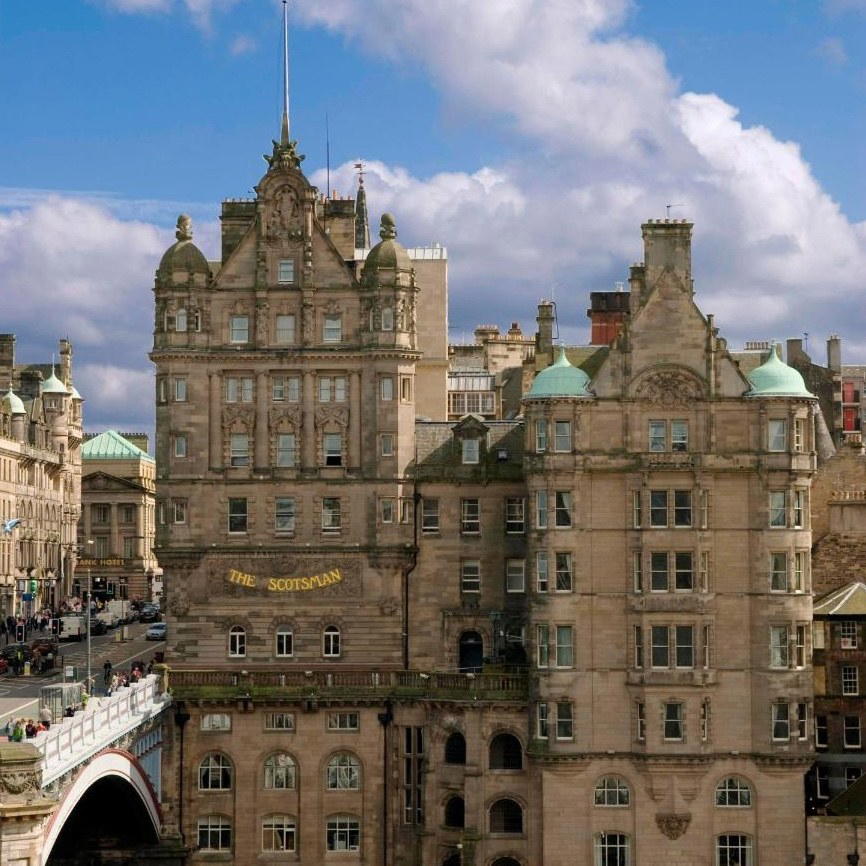
Where the Old Town Meets the Press
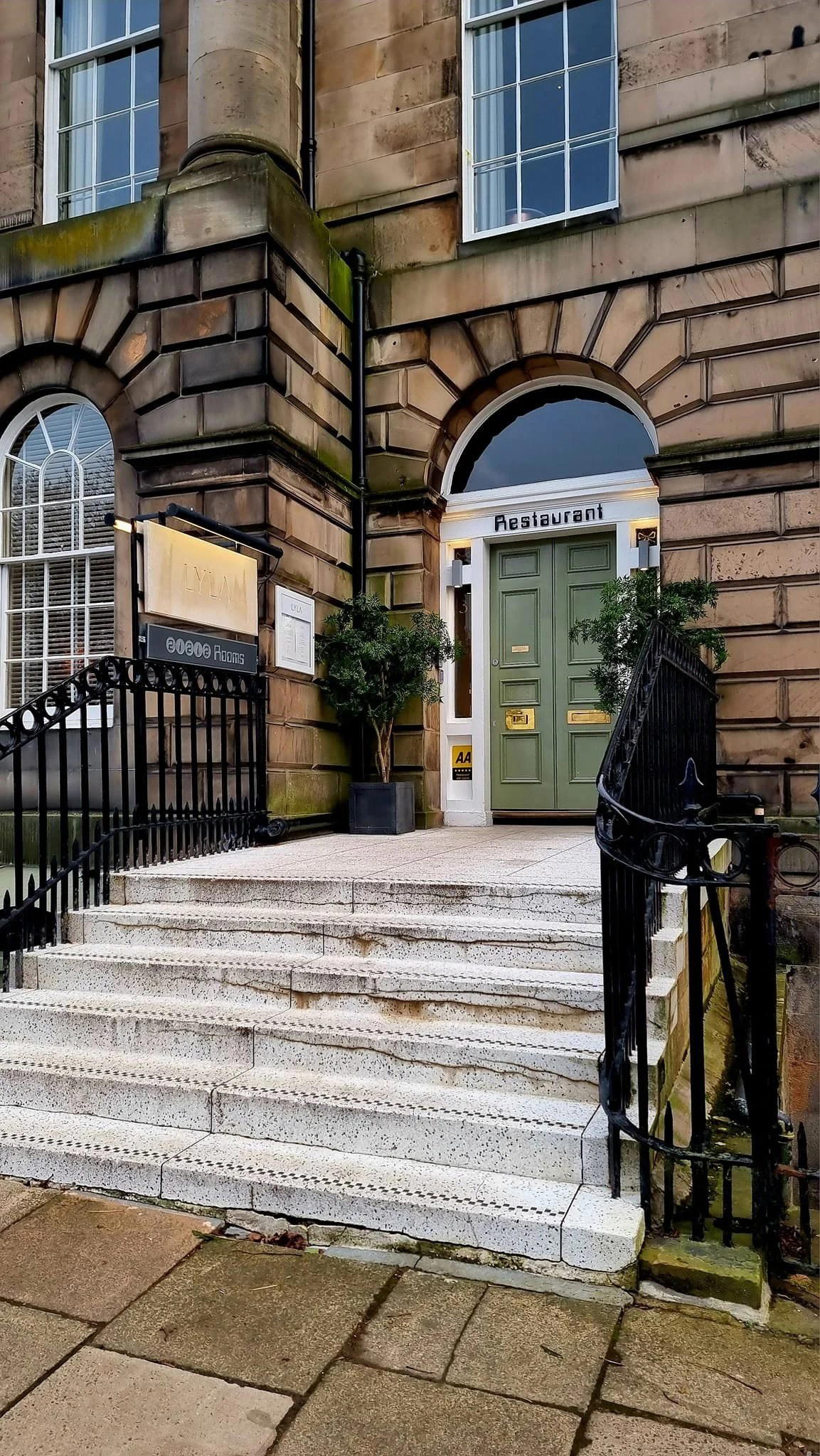
North Bridge in Edinburgh performs a specific urban function: it stitches together two cities that share a postcode but operate at different altitudes, connecting the medieval logic of the Old Town to the Georgian grid of the New. Standing on that bridge, the building that once housed The Scotsman newspaper occupies the kind of position that no planning committee would approve today. The facade is baronial sandstone, the scale is institutional, and the sense that something significant happened inside, for over a century of Scottish journalism, is impossible to shake. The hotel that now occupies 20 North Bridge inherits all of that weight and, unlike many conversions of grand civic buildings across Britain, has not softened the architecture into something easier to sell.
For Edinburgh's hotel market, that matters. The city has a strong mid-tier that leans heavily on Georgian townhouse formats, properties like 24 Royal Terrace Hotel and Eden Locke work within that vernacular effectively. At the upper end, the competition sharpens around properties with defined F&B; programmes and architectural identity: the Gleneagles Townhouse trades on brand extension, while Hotel du Vin anchors itself in wine-led dining. The Scotsman occupies different ground, with its claim resting on the building itself and on a location that is, by any measure, among the more logistically useful in the city.
The Architecture as Programme
The conversion of grand newspaper buildings into hotels has a precedent across the UK. What distinguishes successful examples from indifferent ones is how much of the original fabric survives into the guest experience. At The Scotsman, the marble staircase, the oak-panelled editorial rooms, and the scale of the former press operations are the programme, not merely the backdrop. This is the kind of building where the architecture does editorial work that no amount of considered soft furnishing can replicate.
Edinburgh's heritage hotel stock ranges from the formally grand, properties comparable to The Savoy in London in their institutional weight, to more domestically scaled conversions. The hotel sits in the institutional tier, closer in spirit to a property like Badrutt's Palace Hotel in St. Moritz in the sense that the building predates and outranks its current hospitality use. That is not a criticism. Hotels that are genuinely of their buildings, rather than installed within them, offer a quality of specificity that is increasingly difficult to find.
The Dining Angle: What Hotel F&B; Looks Like Here
Edinburgh's hotel dining has matured considerably in the past decade. The pattern visible across the city's better-positioned hotels is a move away from generic brasserie formats toward programmes with clearer identity: Scottish provenance, seasonal menus with traceable sourcing, or bar programmes built around domestic spirits. This shift reflects both the strength of Scotland's larder, game, seafood, Highland beef, and the expectations of a travelling audience that increasingly reads F&B; quality as a signal of hotel seriousness.
The Michelin Selected designation that hotel carries for 2025 is a hotel-level recognition rather than a dining award, but it signals that the property meets criteria across the full guest experience, of which food and beverage is a component. Michelin's hotel selection methodology considers the coherence of the offer, not just individual standout moments, which Comparable hotels in Scotland's broader luxury tier, from Gleneagles in Auchterarder to Crossbasket Castle in High Blantyre, have used F&B; distinctiveness as a primary differentiator. For a city-centre hotel like The Scotsman, the dining programme operates under different constraints than a rural estate, with a more diverse audience mix and a harder commercial case for kitchen ambition.
Scotland's current hotel dining moment is also being shaped by properties outside Edinburgh: Kilchoan Estate in Inverie represents one extreme of the provenance-led model, while Fingal Hotel, moored in Leith, has built its identity partly around the drama of its setting. The hotel's dining context is different, urban, centrally located, drawing on a guest mix that includes both leisure travellers and city visitors with other dinner plans. That means the F&B; programme functions as much as an amenity as a destination, which is not a lesser ambition, just a different one.
Position and Practicalities
The address at 20 North Bridge places the hotel within a short walk of the Royal Mile, Princes Street, and Waverley Station, which makes it one of the more practically situated properties in central Edinburgh. For the Fringe in August or the Hogmanay period over New Year, this positioning is directly relevant to the booking decision: proximity to Old Town venues and main festival sites is a genuine operational advantage. Travellers arriving by rail from London's east coast main line or from Glasgow Queen Street via Edinburgh Waverley will find the walk manageable with luggage.
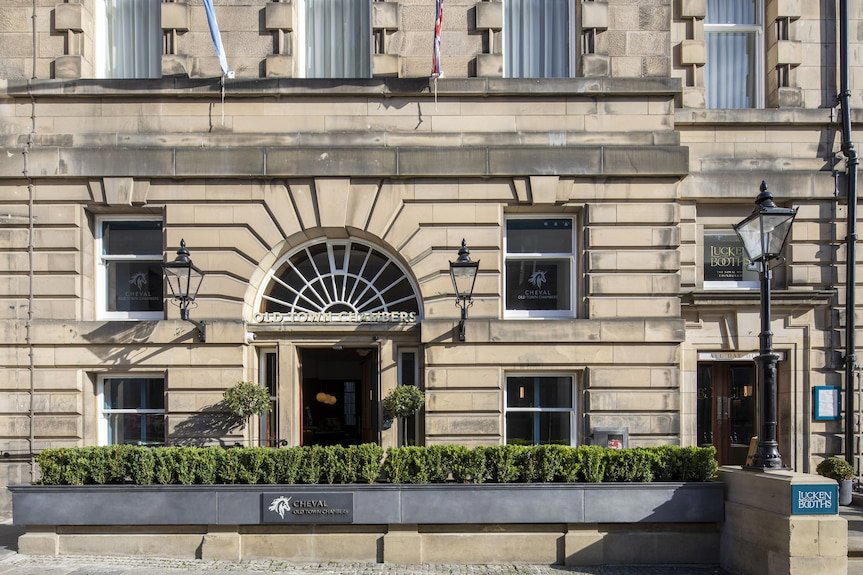
Among Edinburgh's other centrally placed hotels, 100 Princes Street and Cheval Old Town Chambers offer different formats in overlapping geography. The Black Ivy represents a more boutique proposition. For those extending a Scotland trip beyond Edinburgh, the Hotel du Vin at One Devonshire Gardens in Glasgow and Dunluce Lodge in Portrush represent the range of what independently positioned hotels in the broader region offer. Further afield in the UK, properties like Lime Wood in Lyndhurst, Estelle Manor in North Leigh, and The Newt in Somerset in Castle Cary sit at different points on the country-house spectrum for comparison. International travellers pairing Edinburgh with other major destinations might also consider The Fifth Avenue Hotel in New York City or Hotel de Paris Monte-Carlo in Monte Carlo within the broader premium hotel conversation.
A Pricing-First Comparison
Comparable venues nearby, for context on price, style, and recognition.
| Venue | Price | Awards | Notes |
|---|---|---|---|
| The ScotsmanThis venue — the venue you are viewing | $$$$ | 4-Star | Not listed |
| Black Ivy | $$$ | 4-Star | Bruntsfield, Soho House-inspired boutique with focus on sociability and luxury for all. |
| Radisson Collection Hotel, Royal Mile Edinburgh | $$$$ | 5-Star | Old Town, Contemporary boutique hotel blending Scottish heritage with modern design, positioned as a design-led luxury destination. |
| The Edinburgh Grand, a Luxury Collection Hotel, Edinburgh | $$$$ | 5-Star | Greenside, Luxury serviced apartments in a converted historic landmark, designed for modern independent travelers seeking residential-style comfort with five-star service. |
| Prestonfield House | $$$$ | 5-Star | Prestonfield, Ornate 17th-century country estate hotel in urban setting |
| Virgin Hotels Edinburgh | $$$$ | 5-Star | Old Town, Boutique luxury hotel in landmark historic building with modern twists. |
Recognition history
Dated appearances from independent guides and award organizations, with the underlying list record or original source where available.
Michelin Selected
Michelin
At a Glance
- Elegant
- Classic
- Sophisticated
- Ornate
- Romantic Getaway
- Business Trip
- Weekend Escape
- Historic Building
- Panoramic View
- Terrace
- Pool
- Spa
- Room Service
- Concierge
- Elevator
- Skyline
- Street Scene
- Pool
- Spa
- Room Service
- Concierge
- Elevator
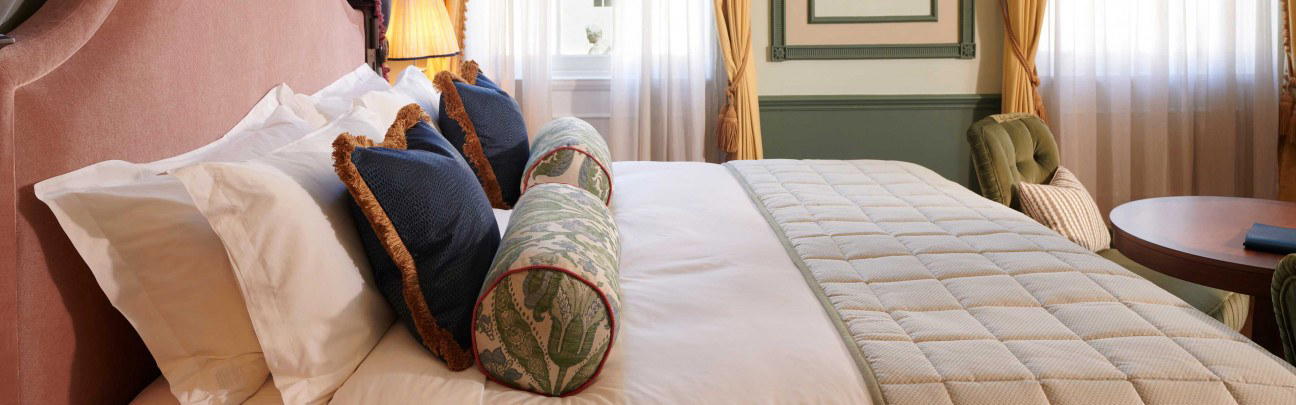
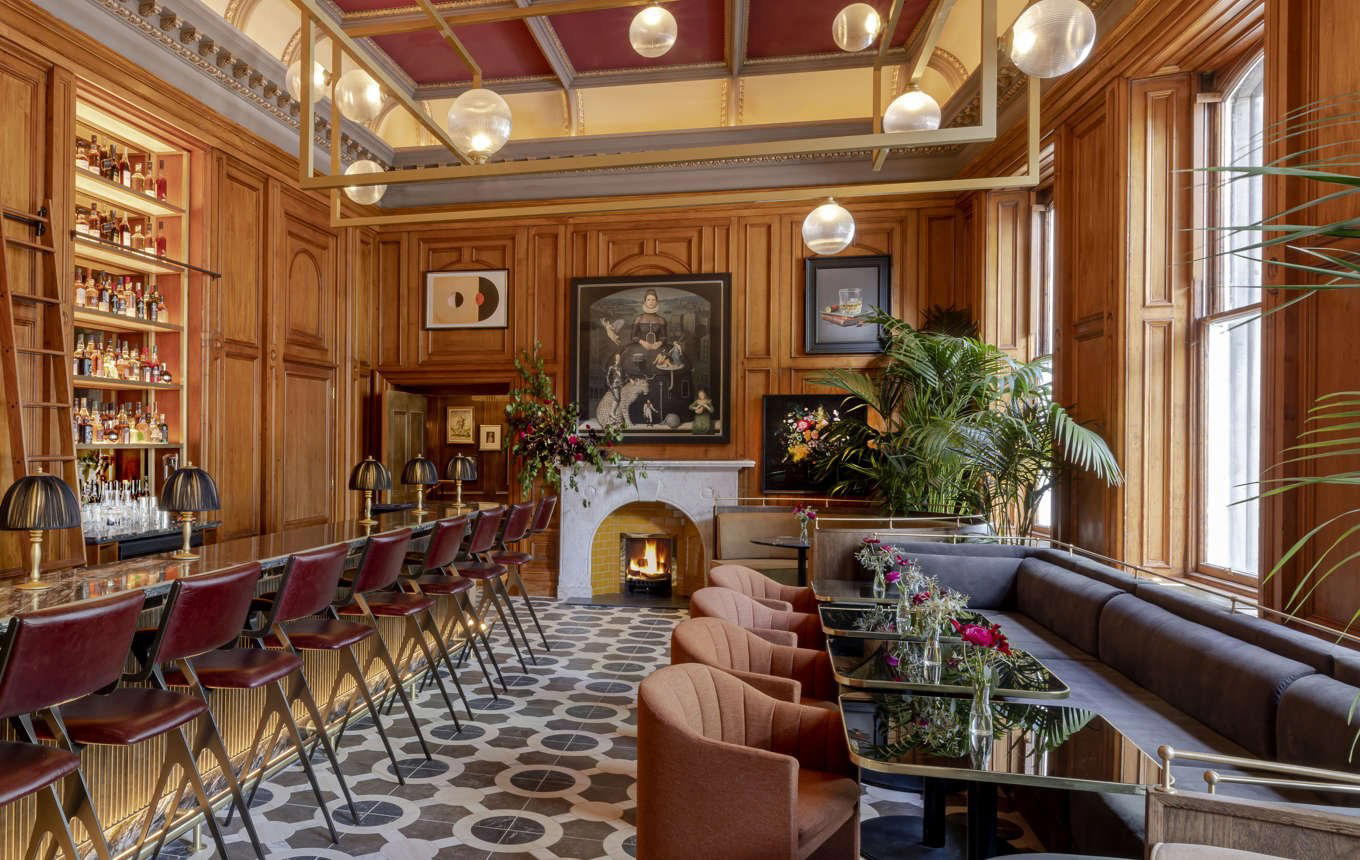
Low-key modern luxury blending Edwardian architectural grandeur with contemporary neutral tones of soft creams, greys, and pale oak panelling.