
Michelin Selected
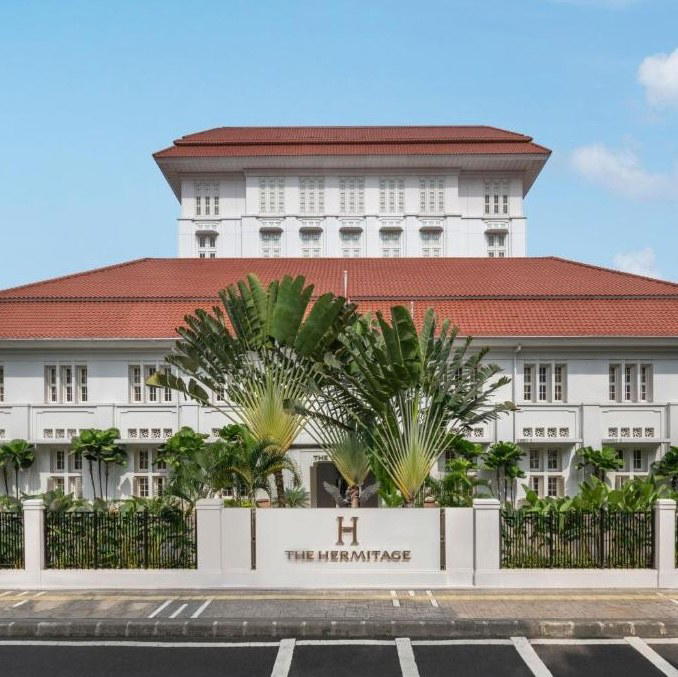
A MICHELIN Selected hotel on Jalan Cilacap in Menteng, The Hermitage occupies one of Jakarta's most characterful colonial-era addresses. Part of Marriott's Tribute Portfolio, it positions itself in the design-led independent tier of the city's hotel market, combining heritage architecture with a guest experience that prioritises personalisation over scale.

Pearl is the En Primeur Club membership app, where members save venues, book tables and use the concierge.
Menteng's Colonial Register
Menteng is not where Jakarta's hotel industry concentrated its modern inventory. The business corridor runs through Sudirman and Mega Kuningan, where properties like the Four Seasons Hotel Jakarta, Fairmont Jakarta, and Grand Hyatt Jakarta anchor the corporate upper tier. Menteng operates on a different register entirely. The neighbourhood was laid out by Dutch colonial planners in the early twentieth century as a garden suburb, and its low-rise residential grid, tree-lined streets, and preserved Dutch-Indies architecture give it a calm that the business districts cannot offer. A hotel that takes its address seriously in Menteng is making a deliberate positioning choice: heritage character over high-rise spectacle, neighbourhood immersion over convention-centre convenience.
The Hermitage, A Tribute Portfolio Hotel sits on Jalan Cilacap No. 1, a corner address in the heart of Menteng that carries real architectural weight. Tribute Portfolio, Marriott's collection brand for independent-spirited properties with distinct personalities, places The Hermitage in a different competitive conversation than the flag-led luxury towers to the south. The comparison set is not the Ritz-Carlton Mega Kuningan; it is closer to the smaller, character-led properties that have become a recognisable niche in Southeast Asian hospitality, where a building's history and a measured key count matter as much as the amenity list. For context on what that niche looks like elsewhere in Indonesia, properties like Mandapa, a Ritz-Carlton Reserve in Ubud and Nihi Sumba in Sumba operate with the same logic: a strong sense of place as the organising principle, rather than brand standardisation.
What MICHELIN Selection Signals Here
The Hermitage holds a MICHELIN Selected distinction in the 2025 MICHELIN Hotels guide, a credential that places it within a curated set of properties across Jakarta that the Guide's inspectors consider worthy of recommendation. MICHELIN hotel selection is not tiered by star count the way restaurant recognition is, but it functions as a quality floor: the Guide applies criteria around welcome, comfort, maintenance, and character. In Jakarta's hotel context, where the premium segment is crowded with internationally flagged properties, appearing in MICHELIN's selected set carries weight as an editorial endorsement from a source that does not operate on advertorial logic. The Ayana Midplaza Jakarta and Hotel Gran Mahakam operate in comparable recognition territory within the city's hotel map.
Service as Architecture
In the upper tier of Indonesian urban hospitality, personalisation has become the differentiating variable. Large-flag properties deliver consistent, process-driven service across hundreds of rooms; the design-led and heritage properties compete on a different axis, where staff-to-guest ratios, recognition of returning guests, and the capacity to respond to unstated preferences matter more than lobby scale. Menteng's residential character reinforces this dynamic at The Hermitage. Guests arriving on Jalan Cilacap are not processing through a convention-hotel entrance; they are stepping into a building with a specific civic history, in a neighbourhood that still functions as a place where people live rather than just pass through.
This geography shapes the service expectation. The relevant comparison is not how The Hermitage's welcome compares to the InterContinental Hotels Jakarta Pondok Indah at check-in volume; it is whether the property can deliver the kind of attentiveness that justifies choosing Menteng over the business districts in the first place. Properties that carry a heritage address and a collection-brand positioning stake their reputation on exactly that capacity. For a parallel in a different register, the approach echoes what the smaller design-led properties in Bali's competitive set, such as COMO Uma Canggu in Canggu and Desa Potato Head in Denpasar, have demonstrated: character-led properties succeed when the human infrastructure matches the physical one.
Jakarta's Hotel Market and Where This Fits
Jakarta's upper hotel market has consolidated around two models. The first is the full-service business tower, offering large meeting facilities, multiple branded restaurants, and the operational infrastructure that corporate travel demands. The Fairmont Jakarta, Grand Hyatt Jakarta, and Four Seasons Hotel Jakarta represent that model at its most complete. The second model is the property that trades on distinctiveness: a specific neighbourhood, a building with a past, a smaller key count that enables a different pace of operation. The Hermitage belongs to the second category, and that placement is a deliberate market choice, not a limitation.
For travellers whose Jakarta itinerary includes time in Menteng, the neighbourhood proximity matters practically. The area contains some of the city's older restaurant and café culture, and walking is viable in a way that it is not from the Sudirman or Kuningan towers. The 25hours Hotel Jakarta The Oddbird has signalled a similar bet on neighbourhood character over central-business-district positioning, suggesting that the market for location-led hotels in Jakarta is broader than the traditional corporate booking pattern implies.
Travellers extending their Indonesian itinerary beyond Jakarta will find useful context in properties that operate with related positioning logic elsewhere in the archipelago: Plataran Borobudur Resort and Spa in Magelang applies heritage and place-specificity in Central Java, while InterContinental Bandung Dago Pakar in Bandung addresses the West Java market. For those moving through Bali, Mulia Villas in Nusa Dua, Jumeirah Bali, Potato Head Suites and Studios in Seminyak, Hotel Komune and Beach Club Bali in Gianyar, and REVĪVŌ Wellness Resort Nusa Dua Bali in Badung cover a range of positioning tiers. Further east, Plataran Komodo Resort and Spa in Labuan Bajo and Innit Lombok in Ekas represent the more remote, experience-led tier of the Indonesian hotel market.
For the broader Jakarta context, see our full Jakarta restaurants guide, which covers the city's dining scene with the same neighbourhood-level specificity. Internationally, the heritage-in-a-premium-city model has clear reference points: Badrutt's Palace Hotel in St. Moritz, Hôtel de Paris Monte-Carlo, and The Fifth Avenue Hotel in New York City all demonstrate what happens when a property commits to a specific address and building as its primary competitive asset rather than brand infrastructure alone.
Planning Your Stay
The Hermitage sits at Jalan Cilacap No. 1 in Menteng, a central Jakarta neighbourhood accessible from Soekarno-Hatta International Airport via toll road, with travel time varying considerably depending on Jakarta's traffic conditions. Booking is available through Marriott's Bonvoy platform, which covers the Tribute Portfolio brand, and through standard travel channels. The InterContinental Jakarta Pondok Indah covers the south Jakarta market for those whose meetings or commitments place them in that corridor instead.
Style and Standing
Comparable venues nearby, for context on price, style, and recognition.
| Venue | Cuisine | Price | Awards | Notes |
|---|---|---|---|---|
| The Hermitage, A Tribute Portfolio Hotel, JakartaThis venue (the venue you are viewing) | Colonial-style boutique hotel in a restored 1920s Art Deco building | Not listed | Michelin Selected | Not listed |
| The Ritz-Carlton Jakarta, Mega Kuningan | Polished luxury retreat inspired by ancient spice trade with modern amenities. | Not listed | Michelin Guide New Hotels New Hotel · Michelin Selected | Kuningan Timur |
| Shangri-La Jakarta | Large luxury business-and-leisure hotel positioned as a premier meeting and event venue with resort-style gardens and pools. | $100–200 | Not listed | Sudirman |
| Movenpick Hotel Jakarta City Centre | Luxury contemporary urban hotel blending business-friendly facilities with lifestyle and leisure-oriented spaces in the heart of Jakarta. | $100–200 | Not listed | Kebon Kelapa |
| Fairmont Jakarta | Modern luxury tower in prestigious Senayan Square complex | Not listed | Michelin Selected | Gelora |
| Grand Hyatt Jakarta | Timeless luxury hotel with modern elegance in Jakarta's well-known Plaza Indonesia complex. | $100–200 | Michelin Selected | Gondangdia |
Recognition history
Dated appearances from independent guides and award organizations, with the underlying list record or original source where available.
Michelin Selected
Michelin
Continue exploring
More in Jakarta
Hotels in Jakarta
All hotels in Jakarta →
Bars in Jakarta
All bars in Jakarta →
Details
- Elegant
- Classic
- Sophisticated
- Quiet
- Intimate
- Business Trip
- Romantic Getaway
- Weekend Escape
- Rooftop Pool
- Historic Building
- Butler Service
- Pool
- Spa
- Fitness Center
- Room Service
- Concierge
- Valet Parking
- Skyline
- Wheelchair Accessible
- Elevator
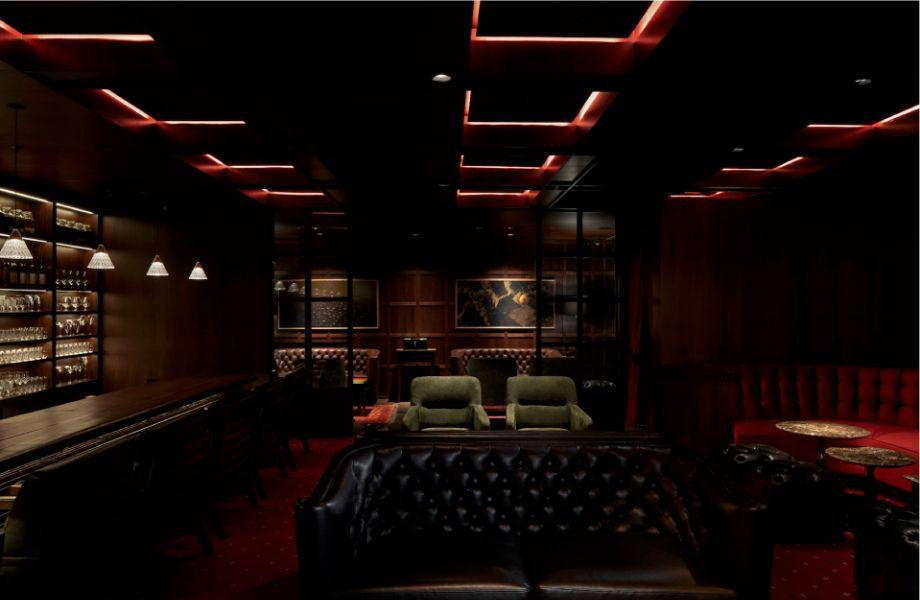
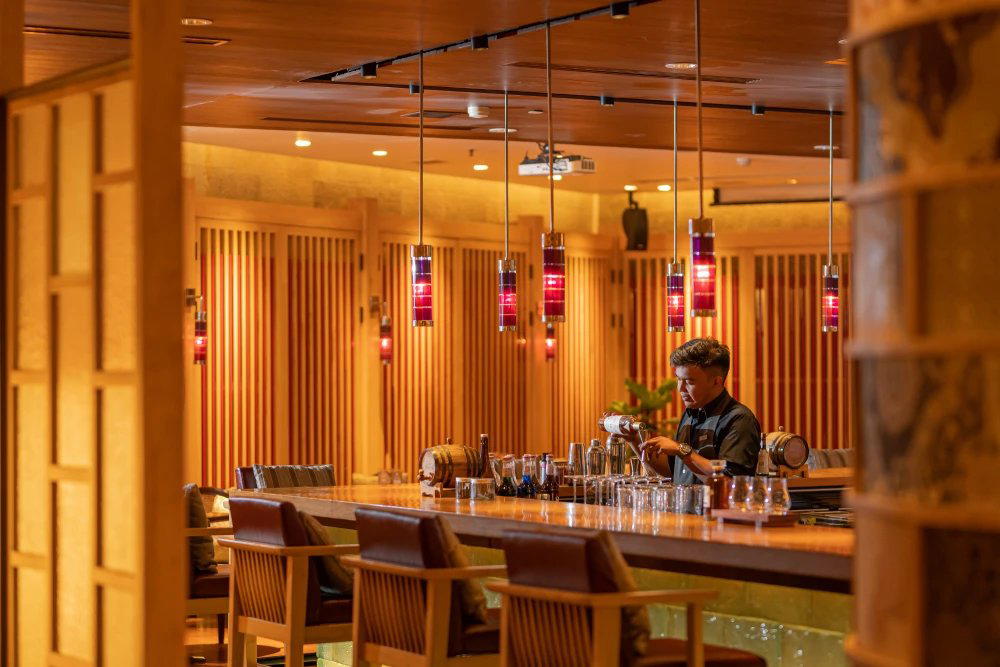
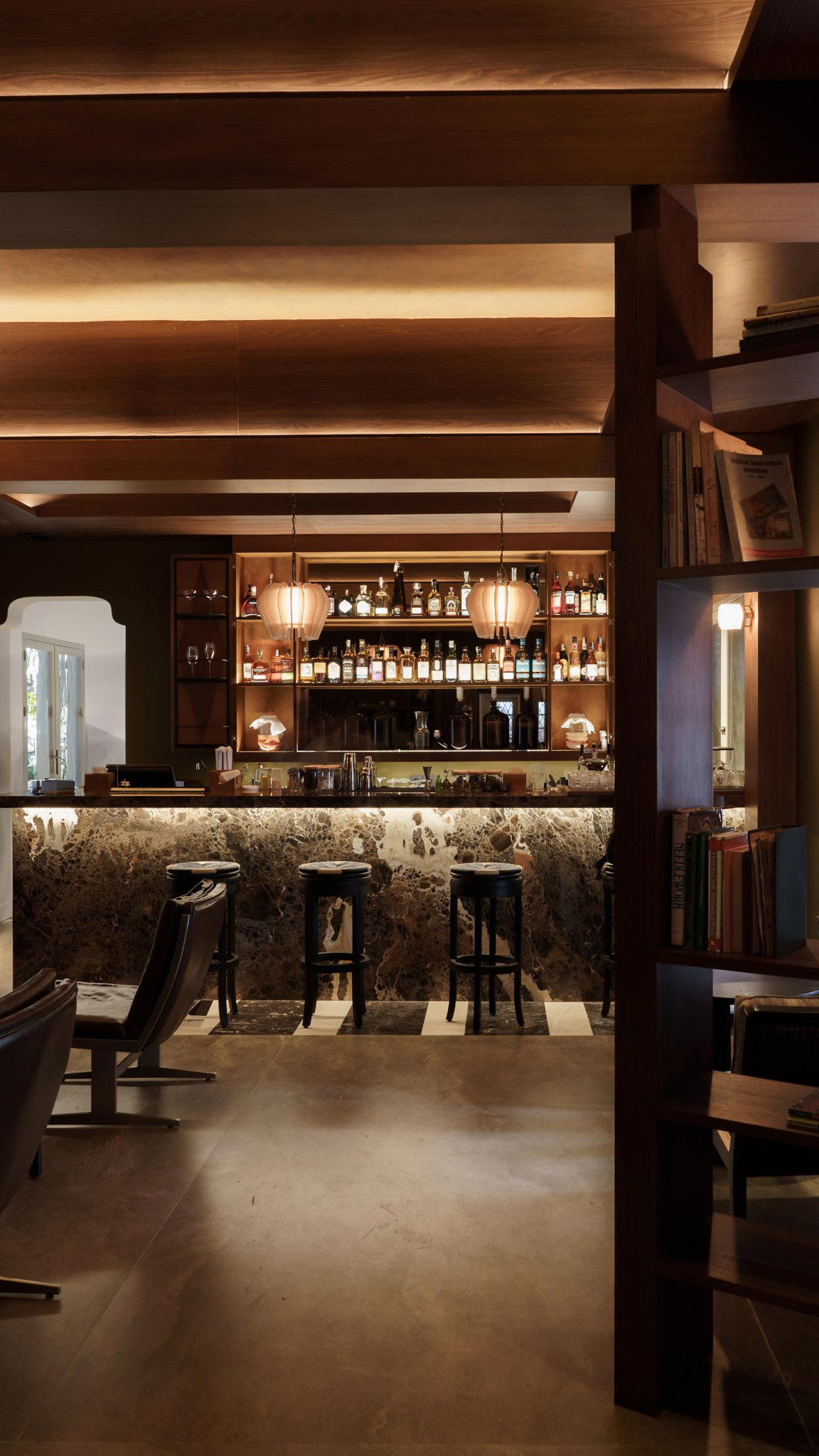
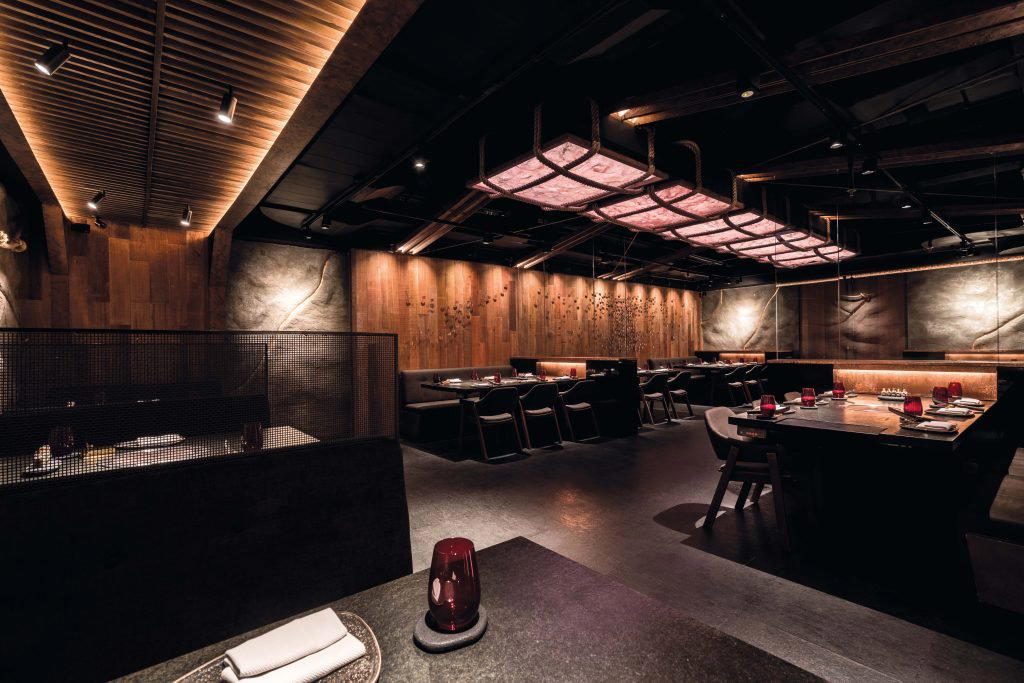
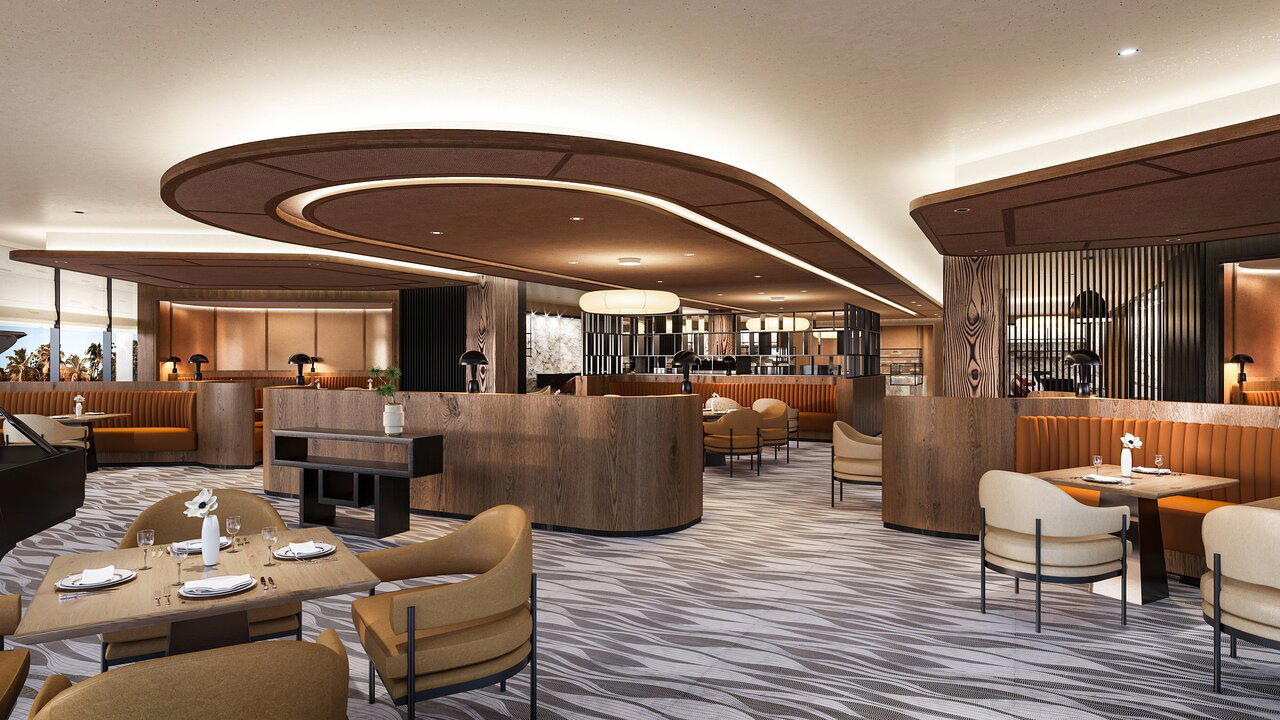
Colonial elegance with Art Deco style, Carrera marble accents, neoclassical design, quiet oasis in the city featuring plush bedding, oversized marble bathrooms, and serene nostalgic atmosphere.