The Grand Hotel sits on a hill above Zhongshan District in Taipei, occupying one of Taiwan's most architecturally assertive buildings, a palace-scale structure modeled on imperial Chinese palace design. The property draws visitors as much for its position in Taiwanese cultural memory as for its rooms and dining, making the experience of arrival as consequential as what follows inside.
Pearl is the En Primeur Club membership app — saves, bookings, and concierge access live there. Same editors, same standards.
- Address
- No. 1號, Section 4, Zhongshan N Rd, Zhongshan District, Taipei City, Taiwan 10427
- Phone
- +886 2 2886 8888
- Website
- grand-hotel.org
- Directions
- Get directions
 Saves & bookings on Pearl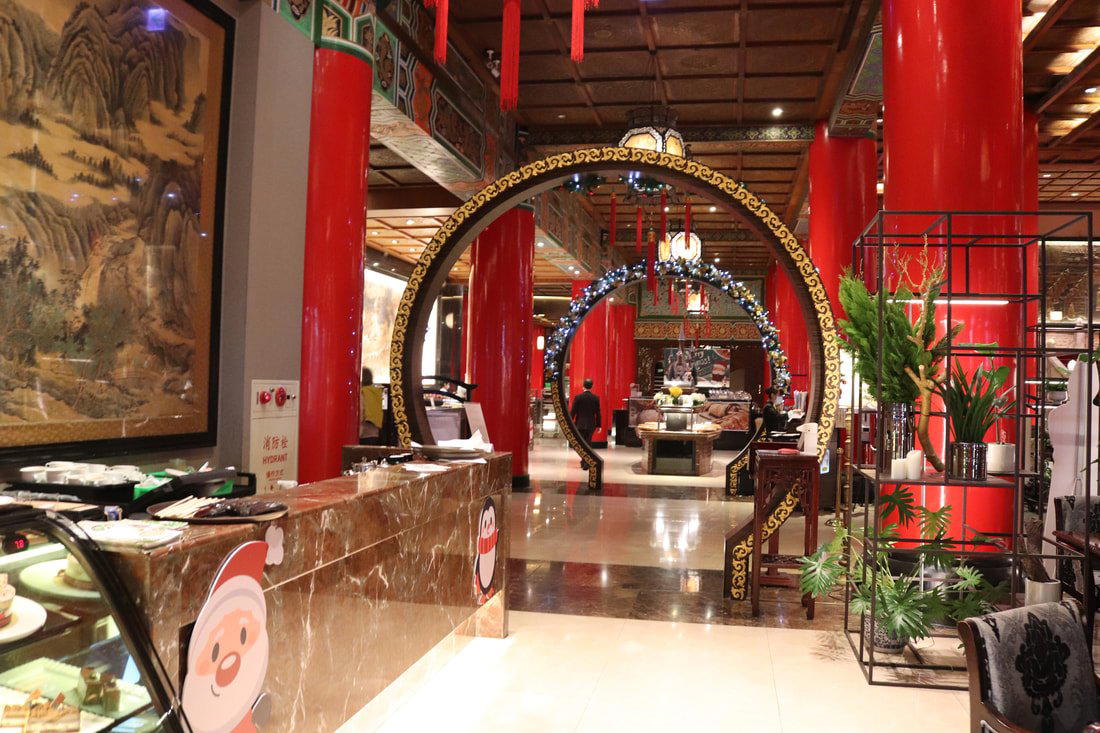
A Building That Arrives Before You Do
The structure, modeled closely on imperial Chinese palace architecture, was designed during the postwar period to project cultural authority at a moment when Taiwan's political identity was being actively constructed. Decades later, that intention has calcified into something rarer: a building that functions as a landmark before it functions as a hotel.
Properties like Capella Taipei or Grand Hyatt Taipei position themselves within the commercial and cultural rhythm of the city's core. The Grand sits apart, physically and historically, in a way that shapes everything from the approach road to the light in the corridors. Whether that separation reads as grandeur or isolation depends on what you're looking for from Taipei.
The Lunch Versus Dinner Question
The lunch-versus-dinner divide at a hotel of this scale and history is rarely trivial, and at The Grand it maps onto a broader pattern visible across Taipei's formal hotel dining rooms: daytime service draws a markedly different crowd and carries a different social register than evening service.
Across Taipei's grand hotel dining rooms generally, lunch functions as the practical entry point, shorter menus, lighter formats, and price structures that allow guests and non-staying visitors alike to access the kitchen without committing to a full evening's expenditure. This is particularly true in Chinese banquet-style settings, where the lunch dim sum or set menu tradition in Taiwan sits alongside a longer lineage of Cantonese and Shanghainese restaurant culture that arrived with mid-century migration from mainland China. Taipei's hotel dining rooms, including those at properties competing directly with The Grand, have historically used lunch as a democratic valve on an otherwise ceremony-heavy format.
Evening service in this category shifts register. The banquet infrastructure that hotels of The Grand's scale maintain, large round tables, lazy Susans, multi-course progression, is activated more completely at dinner, and the room fills with a different social mix: business entertaining, family celebrations, and occasion dining that requires the ceremonial dimension the building's interiors supply in abundance. The Grand's scale of public rooms makes it a reference point for exactly this kind of event-anchored dining, in the way that older grand hotels across East Asia have always functioned as more than sleeping quarters.
The ornate corridors, the views from the upper floors across the Keelung River basin toward the city, and the historical context of the interiors are all more navigable when the evening's formal machinery has not yet engaged. Hotels of this type in Taiwan, from Grand Mayfull Hotel Taipei to Grand Victoria Hotel, operate on a similar principle: daytime is when the building gives most freely to the curious visitor.
Where The Grand Sits in Taipei's Hotel Market
Taipei's premium hotel market has diversified considerably over the past decade. The city now supports design-forward boutique properties like Eslite Hotel, which draws on the Eslite cultural brand, and lifestyle-oriented addresses such as amba Taipei Zhongshan and amba Taipei Songshan, which pitch to travelers who want proximity to the city's contemporary creative districts. On the upper end, Hotel East Taipei competes in the international luxury tier alongside international-flag properties.
The Grand operates in a different competitive category from all of these. It is not competing primarily on design modernity, neighborhood integration, or lifestyle programming. Its position in the market is closer to that of a national institution that also happens to offer rooms, a category that has few peers in Taiwan and limited equivalents internationally outside of properties like grand colonial-era hotels in Southeast Asia or postwar civic monuments repurposed as luxury lodging. For a traveler mapping Taipei's options, The Grand belongs in a separate column from the contemporary luxury set, evaluated on different terms.
For those exploring Taiwan beyond Taipei, the country's resort and destination hotel market offers a range of contexts: Hoshinoya Guguan in Taichung represents the Japanese ryokan-influenced end of the spectrum, while Hotel Indigo Alishan and Hotel Beore Sun Moon Lake in Nantou anchor the mountain and lake resort categories. Coastal options include YOHO Beach Resort in Pingtung and Gloria Manor in Kenting National Park. In the east, Grand Cosmos Resort Ruisui, Hualien in Hualien County offers a different register entirely. The Grand sits at the opposite pole from all of them: urban, monumental, and steeped in a specific chapter of Taiwanese history.
Planning a Visit
For context on how Taipei's grand hotel format compares to international equivalents, properties like Aman New York, The Fifth Avenue Hotel in New York City, and Aman Venice each operate in the zone where architecture and cultural memory do as much work as the hospitality program itself, a useful frame for understanding what The Grand is and what it is not trying to be.
Taiwan's spa and hot spring tradition, active at properties like Volando Urai Spring Spa & Resort in Wulai District and Evergreen Resort Hotel (Jiaosi) in Yilan, represents a distinct category of Taiwanese hospitality that The Grand does not occupy. Its scale and formality align it more closely with the civic hotel tradition than with the wellness-resort circuit. Travelers combining both within a single Taiwan itinerary are essentially moving between two different hospitality cultures, which is part of what makes the island's accommodation range worth mapping carefully before arrival.
Standing Among Peers
Comparable venues nearby, for context on price, style, and recognition.
| Venue | Cuisine | Price | Awards | Notes |
|---|---|---|---|---|
| The Grand HotelThis venue — the venue you are viewing | Chinese palace-style landmark hotel with classical Chinese architecture and modern luxury amenities; designed to promote Chinese culture through extravagant design. | $$$$ | 5-Star | Not listed |
| The Okura Prestige Taipei The Pearl Lounge & Bar | Modern classic high-rise with Japanese refinement | $$$$ | 5-Star | Kangle |
| Éclat Hotel Taipei | Luxury art boutique hotel blending fashion, art, and professional service. | $$$$ | 5-Star | Yi'an |
| Eslite Hotel | Book-inspired urban design hotel | $$$ | 5-Star | Xinren |
| Humble House Taipei | Contemporary urban gallery hotel blending Eastern tradition with Western modernity. | $$$$ | 5-Star | Xingya |
| The Westin Yilan Resort | Zen-inspired hot spring resort blending Japanese-style architecture with modern simplicity. | $$$$ | 5-Star | Yuanshan |
Continue exploring
More in Taipei
Hotels in Taipei
Browse all →
Bars in Taipei
Browse all →
Restaurants in Taipei
Browse all →
Wineries in Taipei
Browse all →
At a Glance
- Well Known
- Elegant
- Ornate
- Classic
- Sophisticated
- Business Trip
- Celebration
- Group Retreat
- Destination Wedding
- Historic Building
- Panoramic View
- Garden
- Terrace
- Destination Spa
- Pool
- Fitness Center
- Restaurant
- Sauna
- Skyline
- Waterfront
- Pool
- Fitness Center
- Restaurant
- Sauna
Sumptuously classic with ornate palace aesthetics, featuring intricate murals, fine paintings, and reliefs throughout; grand and majestic with modern service amenities complementing the classical design.