
Michelin Selected
A Michelin Selected property on Kerala's northern Malabar coast, Taj Bekal Resort and Spa sits along the Kappil backwaters near the ancient Bekal Fort. The resort channels the region's distinctive geography through its architecture and setting, placing guests at the intersection of river, sea, and dense tropical greenery. For Kerala luxury, it occupies a tier above standard beach hotels and below the ultra-boutique circuit.

Pearl is the En Primeur Club membership app — saves, bookings, and concierge access live there. Same editors, same standards.
- Address
- Kappil Bch Rd, Kasargod, Bekal, India
- Phone
- +91 467 661 6612
- Directions
- Get directions
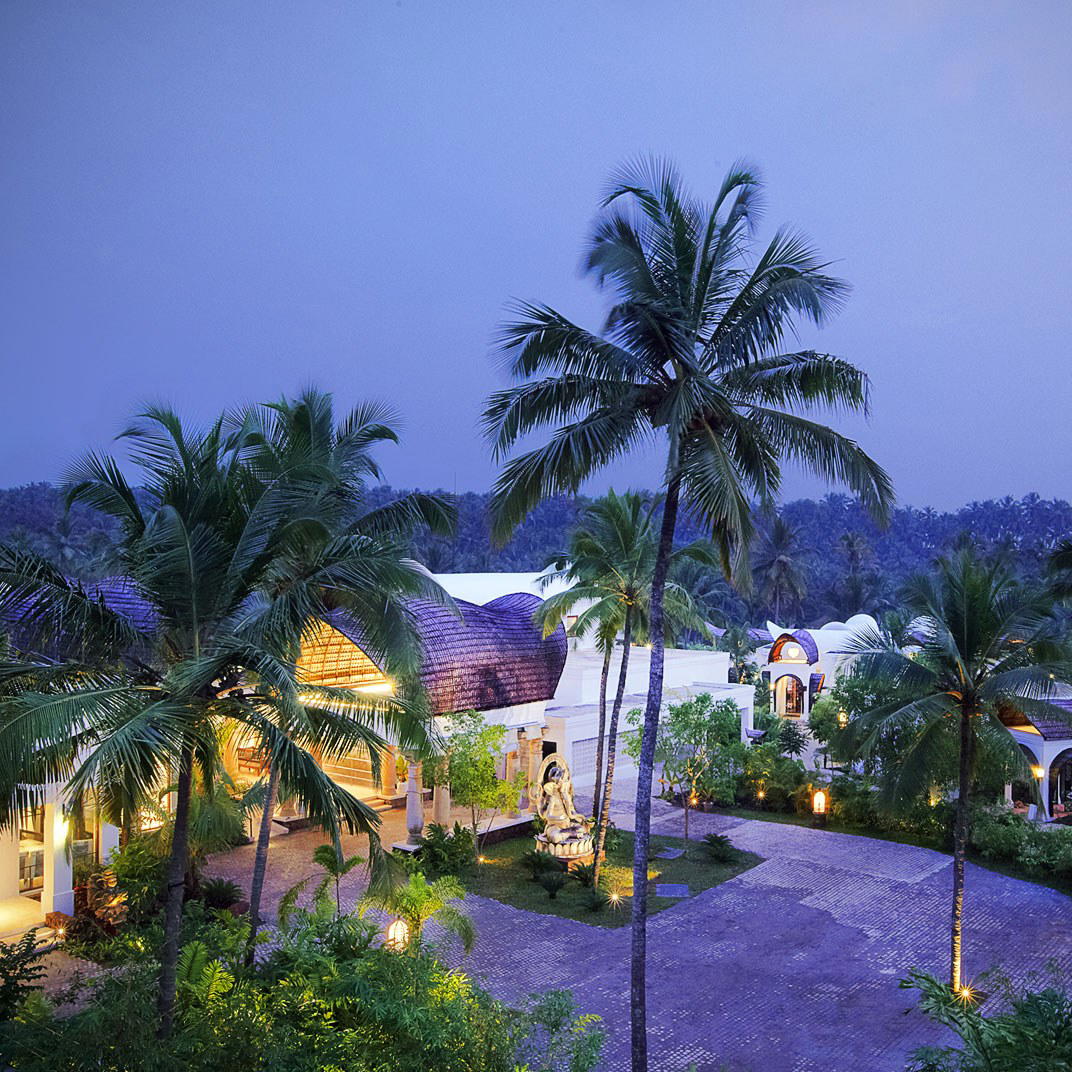
Where the Backwaters Meet the Arabian Sea
The northern Kerala coast operates on a different register from the more-trafficked beaches of Kovalam or Varkala. Around Bekal, in the Kasaragod district, the geography asserts itself without apology: the Kappil backwaters push inland behind a narrow strip of land, the Arabian Sea presses in from the west, and the silhouette of Bekal Fort — one of the largest surviving forts on the Kerala coast — anchors the horizon. This is the context in which Taj Bekal Resort and Spa sits, and understanding the location is inseparable from understanding what the property offers.
Kerala's premium hospitality has historically concentrated around the backwaters of Alleppey and Kumarakom, the houseboat corridor, and the tea-country hill stations further east. Bekal represents a third geography: coastal, fort-adjacent, and until recently underserved by properties with serious infrastructure. The Taj group's presence here positions the resort as a reference point for the area's slow emergence as a northern Kerala destination, rather than a stopover between Kochi and Mangalore. For travellers comparing options along this stretch of coastline, Kumarakom Lake Resort offers the classic Kerala backwater experience further south, while Taj Bekal trades on a more coastal, open-water character. Equally, Anantya By The Lake provides a quieter, smaller-scale interpretation of Kerala's water-edge aesthetic.
Architecture Shaped by Water and Land
The design logic at properties like this one is worth examining carefully, because it reflects a wider movement in Indian resort architecture that has matured significantly since the early 2000s. Rather than imposing an imported aesthetic onto a sensitive coastal site, the better-executed Taj properties in India have tended to use local building languages as their starting point. At Bekal, the physical environment demands engagement with Kerala's vernacular traditions: sloping tiled roofs designed to shed the heavy monsoon rainfall, covered walkways that create shade without enclosing, and the use of local laterite stone that appears throughout the region's older structures including the fort itself.
The result is a resort that reads as coastal Kerala in its massing and material palette, even as it delivers the facilities expected at the Taj group's upper tier. This approach places it in a broader category of Indian luxury properties that derive authority from rootedness in their physical setting rather than from imported grandeur. Compare this with The Oberoi Amarvilas in Agra, where the design dialogue is with Mughal architecture and the Taj Mahal itself, or with Taj Lake Palace in Udaipur, where the building is the heritage. Bekal operates differently: the fort provides the historical frame, the backwaters provide the spatial drama, and the resort's architecture is designed to not compete with either.
The Taj Network and What Michelin Selection Signals
Inclusion in the Michelin Selected Hotels list for 2025 is a trust signal worth contextualising. Michelin's hotel selection does not apply the same star-based ranking system used for restaurants; instead, it identifies properties meeting a threshold of quality across comfort, character, and overall experience. The Taj group's portfolio includes several Michelin-recognised addresses across India, from The Taj Mahal Palace, Mumbai, the group's flagship and one of India's most historically significant hotels, to Taj Swarna in Amritsar. Bekal sits within that portfolio as a resort-format property rather than an urban landmark, serving a different travel purpose but maintaining the group's quality floor.
Taj Bekal occupies a middle position: it offers the infrastructure of a large-group resort alongside a setting defined by natural and historical specificity.
Kerala's Spa and Wellness Tradition
The inclusion of a spa in the property's name is not incidental. Kerala holds a particular position in India's wellness geography. Ayurvedic medicine has been practiced continuously in the state for centuries, and the concentration of practitioners and treatment lineages in Kerala is substantially deeper than in regions where Ayurveda has been adopted more recently as a hospitality amenity. For international travellers, this distinction matters: a Kerala spa program at a serious property draws on a regional tradition rather than offering a generic wellness menu. Properties across the state, from smaller boutique addresses to large resort formats, have made Ayurvedic treatment a central offering. Taj Bekal's spa positioning sits within that established pattern, though the specific program depth would require verification through the property directly.
The broader Indian wellness resort circuit includes properties like Ananda in the Himalayas in Narendra Nagar, which represents arguably the most internationally recognised address in Indian destination wellness. Taj Bekal approaches wellness from a coastal Kerala angle rather than a Himalayan retreat format, with the backwater geography and maritime climate shaping the environment in which treatments take place.
Getting There and Planning the Visit
Bekal is accessible via Mangalore International Airport, approximately 55 kilometres to the north, which serves major Indian cities and some international routes. Kannur Airport, roughly 60 kilometres to the south, offers an alternative with fewer connections but growing domestic traffic. The nearest railway station is Kanhangad, around 8 kilometres from the resort, on the main Mangalore-Trivandrum coastal line that connects the property to both Kochi and Mumbai by overnight train. Road access from both airports takes around 90 minutes under normal conditions.
The Malabar coast receives heavy rainfall during the southwest monsoon, typically from June through September. Travellers comfortable with monsoon conditions will find the landscape at its most vivid during this period, though water activities are restricted and the Arabian Sea is rough. The driest and most comfortable window runs from October through March, which aligns with Kerala's peak tourist season; advance reservation during this period is advisable, particularly over the December-January holiday stretch.
For travellers building a broader Kerala itinerary, Bekal pairs naturally with further south along the coast or inland into Wayanad and Coorg. Those assembling a longer India trip that spans multiple property types might also consider how Taj Bekal connects to the wider network of properties reviewed on EP Club, from Alila Diwa Goa along the western coast to Shakti Prana in Kasar Devi for a Himalayan contrast. Our full Bekal guide covers the broader dining and experience context for the area.
How It Stacks Up
Comparable venues nearby, for context on price, style, and recognition.
| Venue | Cuisine | Price | Awards | Notes |
|---|---|---|---|---|
| Taj Bekal Resort and Spa, KeralaThis venue — the venue you are viewing | Contemporary classic resort with Kettuvallam houseboat-inspired architecture blending local Kerala elements and modern luxury. | Not listed | Michelin Selected | Not listed |
| Samode Palace | Heritage palace hotel blending Rajput-Mughal architecture with contemporary luxury | Not listed | Michelin Selected · Conde Nast Gold List | Samode |
| Brij Paraiso Goa | Restored Indo-Portuguese villa with sprawling courtyards and laterite stone walls | Not listed | Michelin Selected | Saligao |
| Roswyn, A Morgans Originals Hotel | Lifestyle, all‑suite design hotel positioned as a modern cultural address near Mumbai Airport. | $300–500 | Not listed | Chhatrapati Shivaji Maharaj International Airport T2 |
| Andaz Delhi - A Concept by Hyatt | Lifestyle hotel blending traditional Indian elements with modern design | $100–200 | Michelin Selected | Aerocity |
| Ambassador, New Delhi - IHCL SeleQtions | Contemporary heritage hotel blending colonial past with modern luxury | Not listed | Not listed | Lutyens' Delhi |
Recognition history
Dated appearances from independent guides and award organizations, with the underlying list record or original source where available.
Michelin Selected
Michelin
Continue exploring
More in Bekal
Restaurants in Bekal
Browse all →
Details
- Romantic
- Scenic
- Elegant
- Rustic
- Sophisticated
- Ornate
- Honeymoon
- Romantic Getaway
- Family Vacation
- Wellness Retreat
- Weekend Escape
- Beachfront
- Infinity Pool
- Private Villa
- Destination Spa
- Panoramic View
- Spa
- Pool
- Fitness Center
- Room Service
- Concierge
- Wi Fi
- Beach Access
- Kids Club
- Waterfront
- Garden
Serene and tranquil atmosphere set between backwaters and private beach, with lush greenery, peaceful courtyards, and classic local-inspired design.