


Michelin Selected · Conde Nast Gold List
A 475-year-old royal residence in the village of Samode, 40 kilometres from Jaipur, the palace converts 43 rooms across original royal apartments into a heritage stay framed by Sheesh Mahal mirror work, Mughal-era frescoes, and terraced Rajasthani gardens. For travellers working through the Golden Triangle, it offers a degree of architectural immersion that city-centre palace hotels rarely match.

Pearl is the En Primeur Club membership app — saves, bookings, and concierge access live there. Same editors, same standards.
- Address
- Village Samode, Tehsil, Chomu, Samod, Rajasthan 303806
- Phone
- +91 141 263 1397
- Website
- samode.com
- Directions
- Get directions
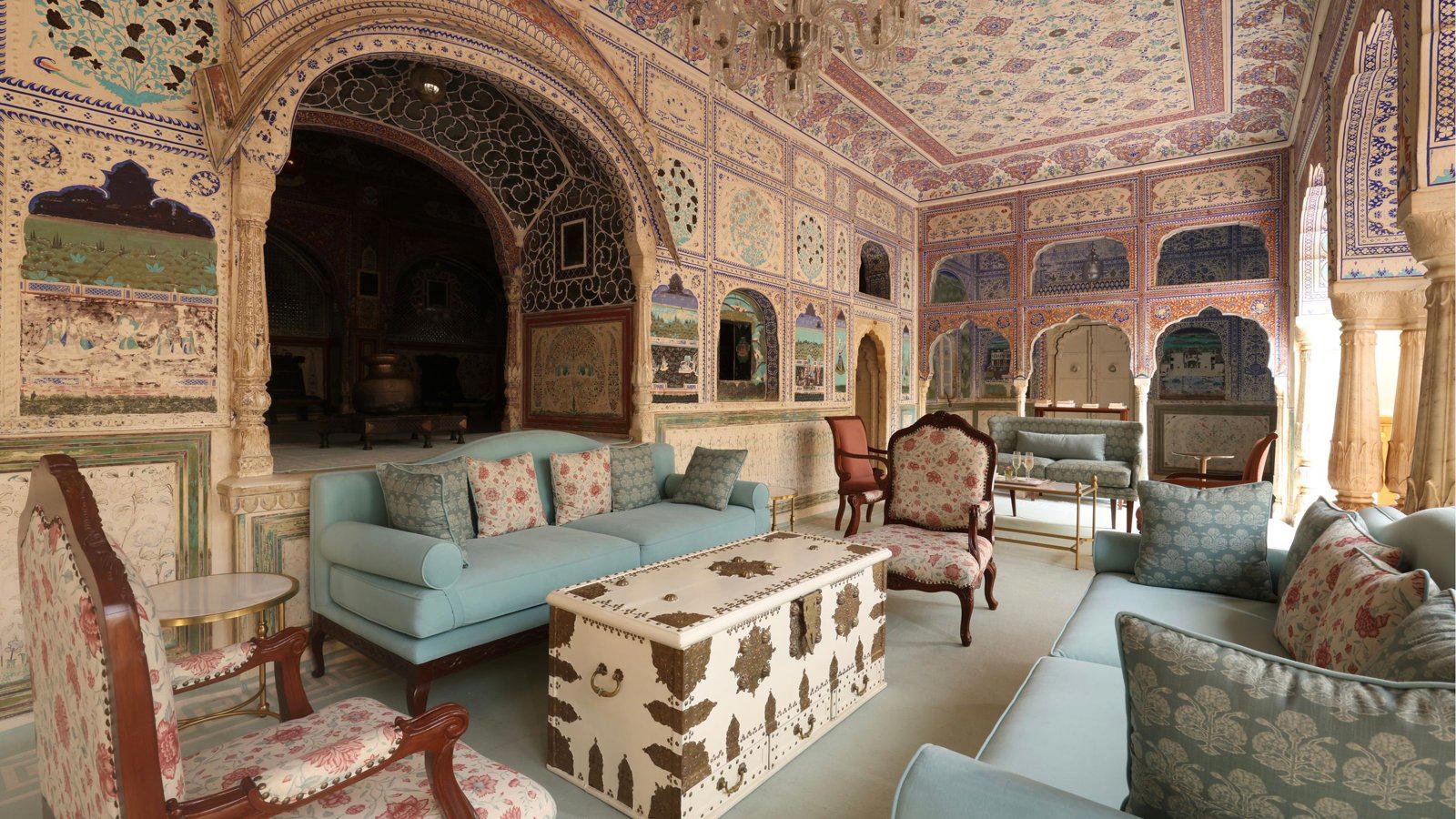
Stone, Mirror, and Five Centuries of Rajasthani Architecture
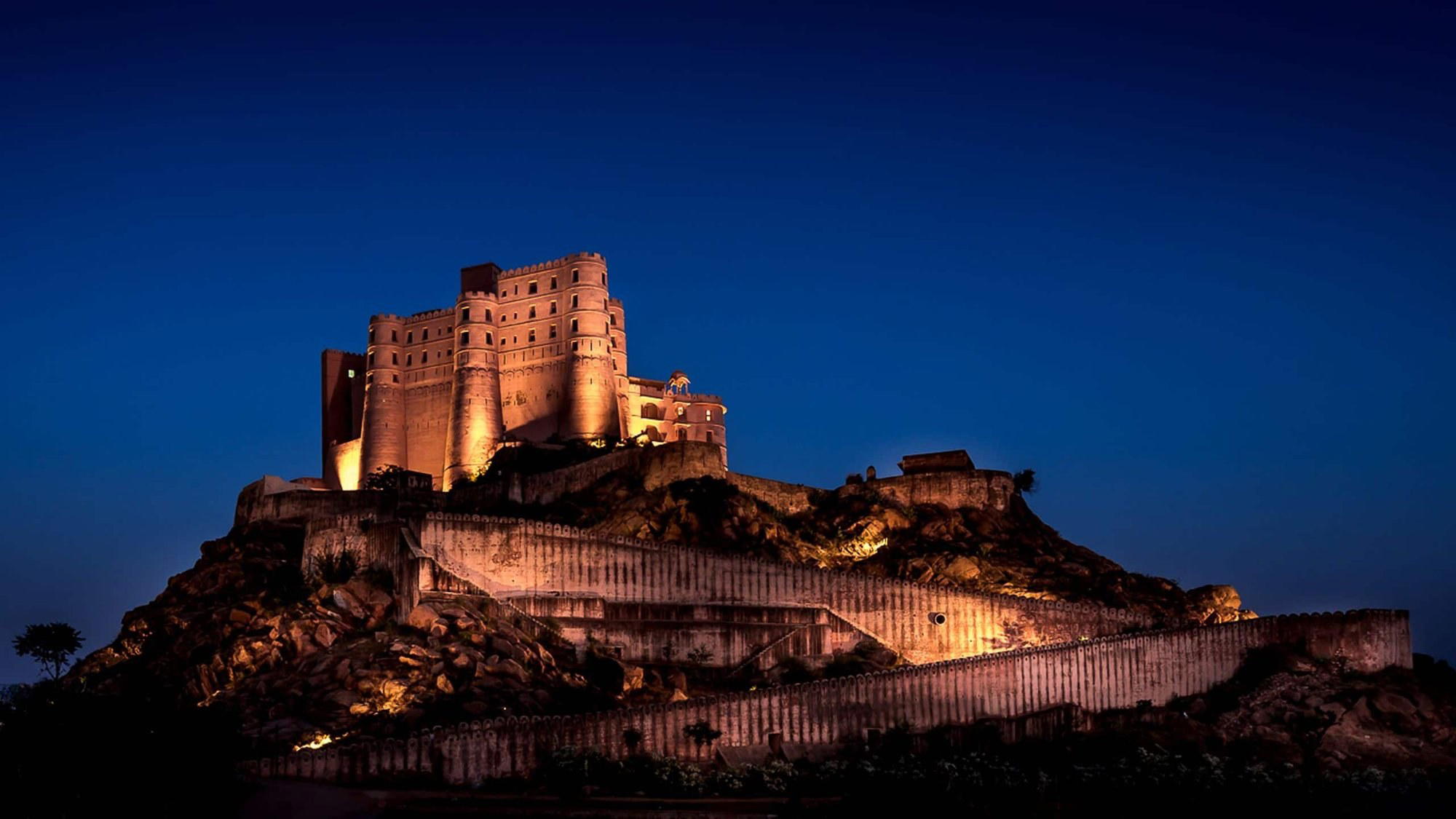
Rajasthan's palace hotel category divides broadly into two types: the grand city properties that anchor Jaipur's tourist infrastructure, and the smaller, more remote residences that survive as working architectural documents of a particular royal lineage. Samode Palace belongs to the second category. The approach through the village of Samode, roughly 40 kilometres north of Jaipur, matters here. The road narrows, the settlement closes in, and the palace emerges from the hillside not as a hotel facade but as a fortified residence that predates the concept of hospitality infrastructure by several centuries. For anyone who has spent time at The Leela Palace Jaipur in Jaipur or similar city-based luxury properties, the contrast is immediate and instructive.
The building is 475 years old. That figure is worth holding onto as a frame for everything that follows, because the architectural conversation at Samode is not about contemporary design sensibility or a hotel group's aesthetic programme. It is about what happens when Mughal decorative tradition and Rajasthani craft practice collide over centuries in a single complex, layering rooms and courtyards with frescoes, inlaid mirror work, and carved stone screens that were never installed for guest consumption. They were installed for a royal household, and they remain.
The Sheesh Mahal and the Grammar of the Interior
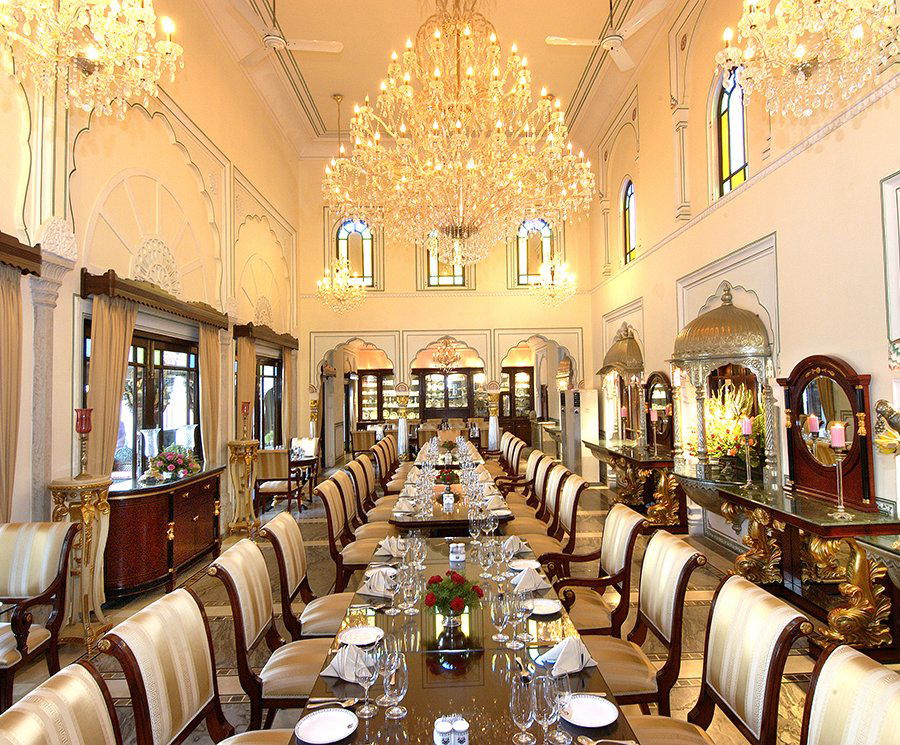
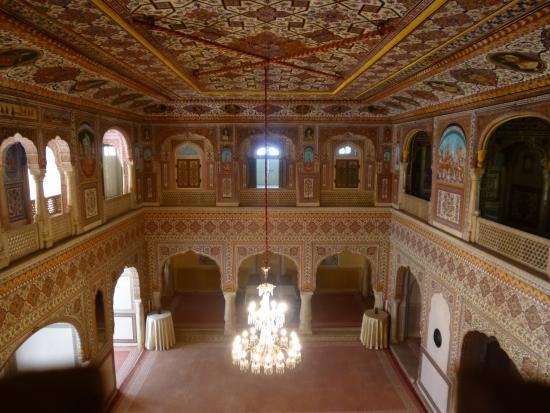
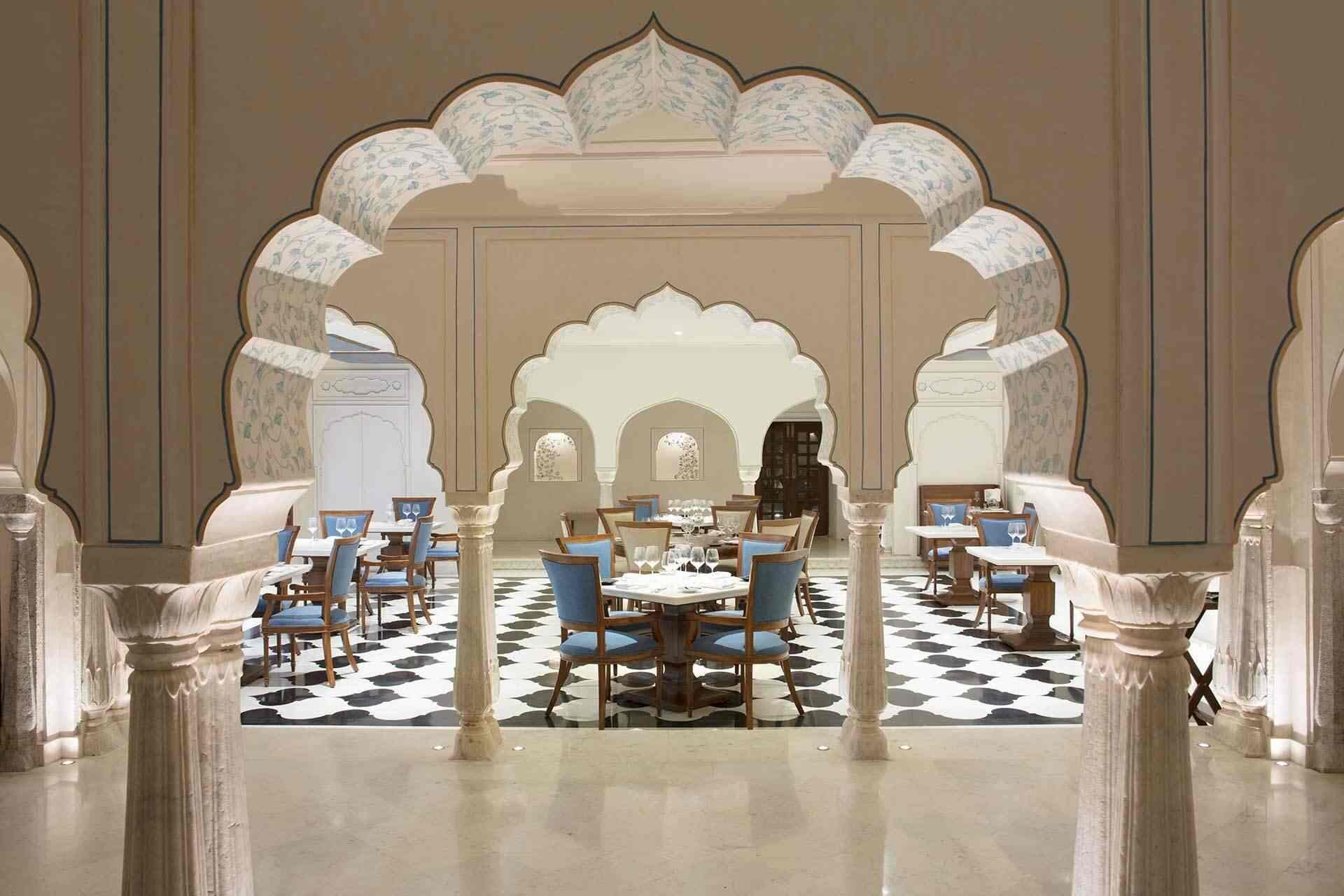
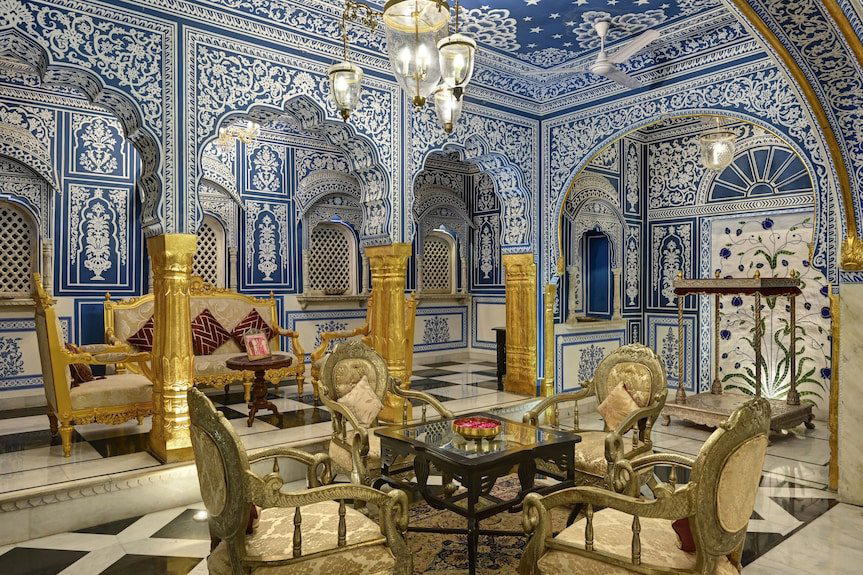
Among heritage hotel interiors in Rajasthan, mirror-work chambers — Sheesh Mahal — represent one of the most technically demanding expressions of the Mughal craft tradition. The technique involves embedding small convex mirrors into plasterwork to create surfaces that fracture and multiply candlelight, a practice that reached its apex in the seventeenth century and now survives largely in palaces that have remained outside continuous institutional renovation. At Samode, the Sheesh Mahal remains the architectural centrepiece of the interior, alongside the Durbar Hall, which displays the Indo-Saracenic vocabulary common to Rajputana courts: pointed arches, bracketed balconies, painted ceilings, and a spatial hierarchy that still reads as ceremonial rather than residential.
The frescoes present a different interpretive challenge. Unlike the mirror work, which is primarily abstract and optical, the painted surfaces at Samode carry figurative content, depicting courtly scenes, hunting parties, and mythological narratives in the miniaturist tradition that flourished across Shekhawati and the broader Jaipur region from the sixteenth century onward. For travellers with an interest in Rajasthani visual culture, the palace functions as a primary source in a way that purpose-built heritage hotels cannot replicate. Properties such as Alila Fort Bishangarh in Manoharpur and Amanbagh in Ajabgarh offer their own versions of Rajasthani heritage, but each operates within a different architectural register and a different degree of historical continuity with the original structure.
Forty-Three Rooms Inside Royal Apartments
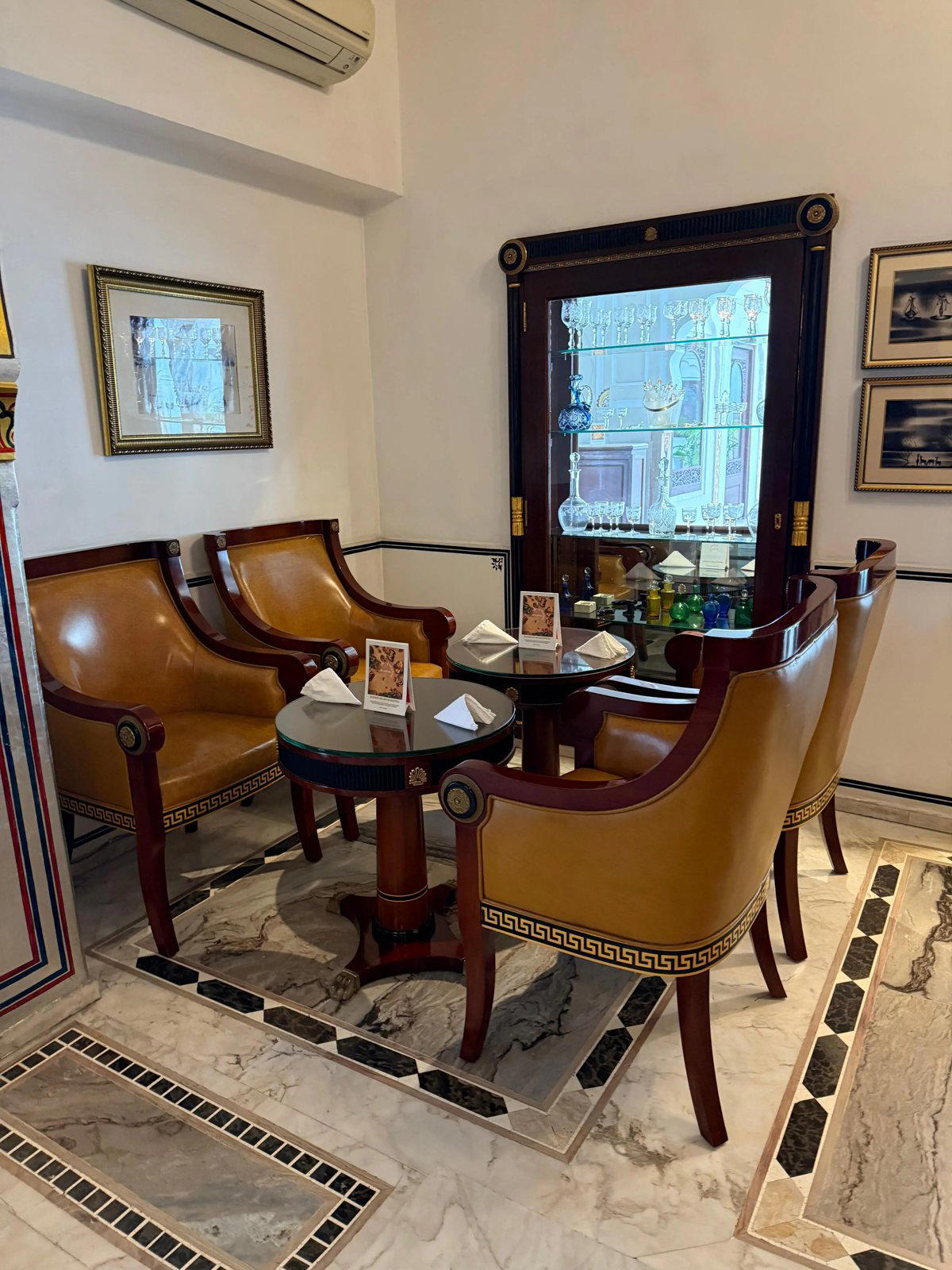
The 43 rooms and suites occupy the original royal apartments rather than purpose-built wings, which has practical consequences for the experience. Room sizes, ceiling heights, and outlook vary considerably more than they would in a new-build hotel. Some rooms open onto internal courtyards; others face the terraced gardens or the hillside. Period antiques, hand-painted surfaces, and traditional Rajasthani textiles furnish the spaces, with the quality of ornamentation varying between rooms in a way that reflects the hierarchy of the original palace programme rather than a hotel's room-tiering logic.
For guests who want the fullest architectural experience, suite-level accommodation within the more formal palace zones will generally offer closer proximity to the decorated public spaces, including the Sheesh Mahal. Standard rooms in peripheral sections of the palace may feel more residential and less ceremonially significant. At properties of this type, the booking decision is worth making with room category specifics rather than simply opting for the leading price tier, which may not always correspond to the most historically interesting position within the building. Checking the palace's room descriptions against courtyard or Sheesh Mahal adjacency is a reasonable approach before confirming.
Gardens, Courtyards, and the Outdoor Sequence
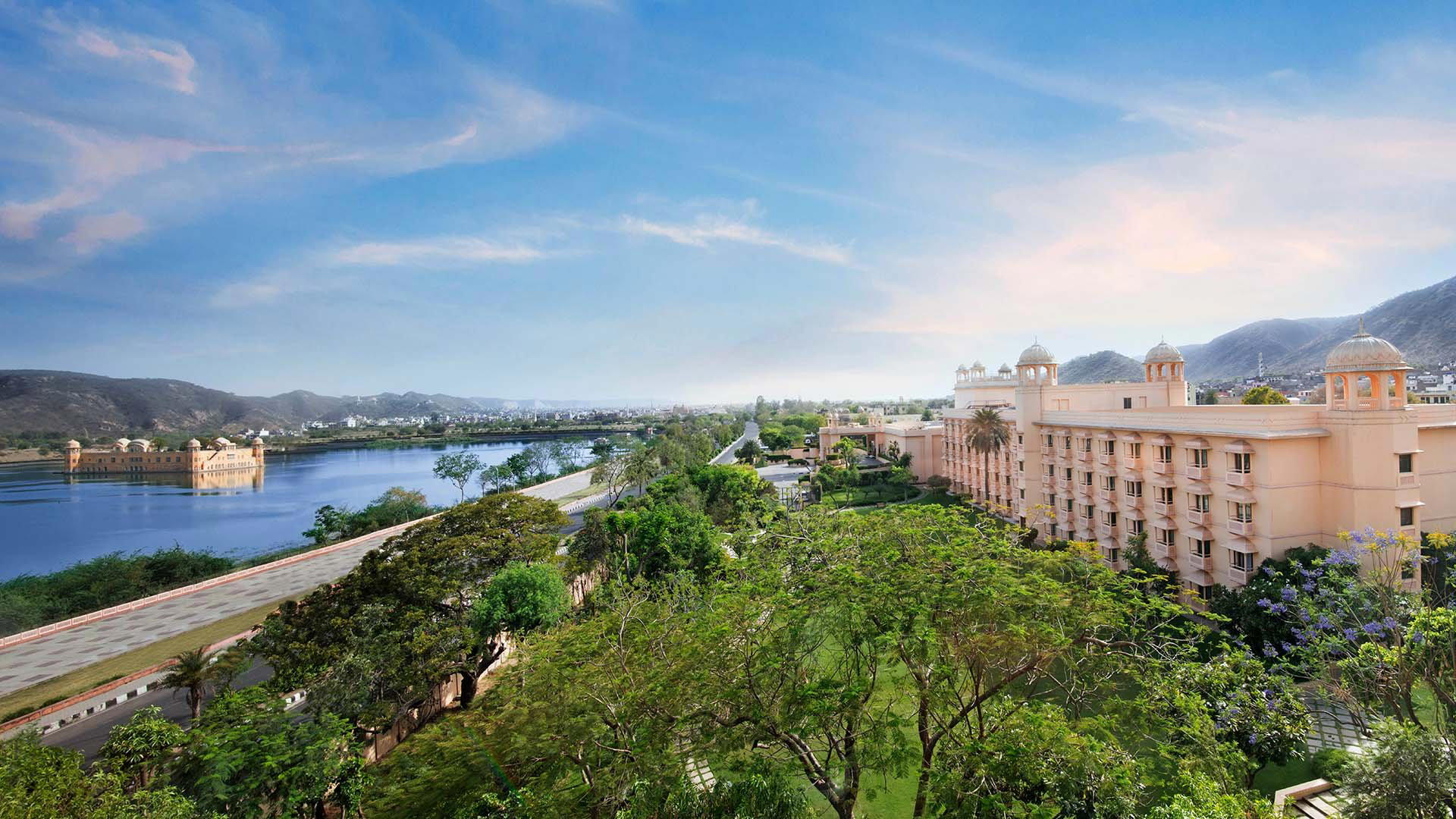
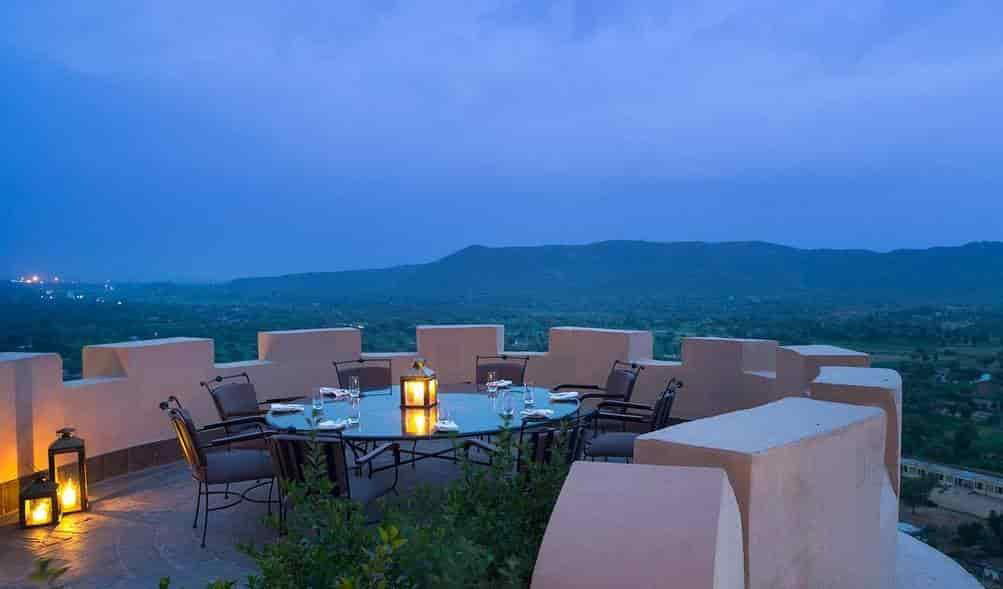
The exterior spaces at Samode follow the terraced garden tradition common to Mughal-influenced Rajasthani palaces: ascending levels connected by stone stairs, with fountains and planted enclosures that manage the hillside topography. The courtyard sequence within the palace itself provides the primary social architecture for guests, with dining served in these spaces under open sky. Authentic Rajasthani cuisine alongside international dishes appears across multiple dining venues, with the courtyard setting providing a physical context that indoor dining rooms rarely achieve at this category of heritage property.
Activities extend outward from the palace into the village and surrounding landscape: camel safaris, elephant rides, and guided village visits connect the property to the agricultural and craft traditions of the Samode region. The palace's stated commitment to supporting local artisans aligns this outward orientation with a broader trend in Indian heritage hospitality toward community-linked programming, seen in varying forms at properties including Aman-i-Khas in Ranthambore and Suján Jawai in Pali.
Situating Samode in the Golden Triangle
Rajasthan's premium heritage hotel market has expanded considerably over the past two decades, with properties at multiple price points now competing for the architectural-immersion traveller. Samode operates at a different scale and with a different value proposition: the building's historical integrity and the relative isolation of the village location are the primary differentiators, not pool size or spa range. The on-site spa does offer traditional Ayurvedic treatments in restored palace chambers, which extends the architectural experience into the wellness category, but the property's identity rests on its fabric rather than its facilities.
For travellers routing through the Golden Triangle, Samode sits 40 kilometres from Jaipur in a position that makes it a practical overnight or multi-night base for Jaipur exploration while removing the guest from the city's tourist density. That separation is a deliberate trade-off: gaining architectural authenticity and village quiet at the cost of walkable access to Jaipur's bazaars and monuments. Travellers who want Jaipur access with comparable city-centre positioning should consider The Leela Palace Jaipur as an alternative benchmark. Those whose itinerary extends to Agra should note The Oberoi Amarvilas in Agra as the reference property for that leg. For broader India planning context, our full Samode restaurants guide covers the local area in more depth, and properties including Haveli Dharampura in Delhi, Ananda in the Himalayas in Narendra Nagar, and The Taj Mahal Palace, Mumbai in Mumbai illustrate the range of heritage and luxury formats available across the subcontinent.
Planning Your Stay
Samode village sits approximately 40 kilometres from Jaipur, reachable in under an hour by road from Jaipur's city centre or railway station. The winter months, from October through February, represent the most comfortable period for Rajasthan travel, with daytime temperatures in the mild range and evenings cool enough to make outdoor courtyard dining a genuine pleasure rather than a concession to setting. Summer months bring intense heat to this part of Rajasthan and are generally avoided by international travellers. Booking through the palace directly or via a Rajasthan-specialist travel operator allows for room-category guidance, which matters more at a property with this degree of internal architectural variation than at a standardised hotel. The palace's 43-room scale means availability can tighten during peak season and around Indian festival dates, particularly Diwali and Holi, when heritage properties across Rajasthan fill months in advance.
Comparison Snapshot
Comparable venues nearby, for context on price, style, and recognition.
| Venue | Cuisine | Price | Awards | Notes |
|---|---|---|---|---|
| Samode PalaceThis venue — the venue you are viewing | Heritage palace blending Rajputana and Indo-Saracenic opulence | Not listed | Michelin Selected · Conde Nast Gold List | Not listed |
| Pratap Mahal, Ajmer | Modern luxury resort designed as a contemporary recreation of a traditional Rajasthani palace with haveli-inspired architecture. | $200–300 | Michelin Selected | Pushkar |
| Roswyn, A Morgans Originals Hotel | Lifestyle, all‑suite design hotel positioned as a modern cultural address near Mumbai Airport. | $300–500 | Not listed | Chhatrapati Shivaji Maharaj International Airport T2 |
| Purity at Lake Vembanad | Colonial-style boutique villa with contemporary minimalist furnishings | $200–300 | Michelin Selected | Muhamma |
| Taj Fort Aguada Resort & Spa | Portuguese-colonial heritage resort with modern luxury | $100–200 | Michelin Selected | Candolim |
| Samode Palace | Heritage palace hotel blending Rajput-Mughal architecture with contemporary luxury | Not listed | Michelin Selected · Conde Nast Gold List | Samode |
Recognition history
Dated appearances from independent guides and award organizations, with the underlying list record or original source where available.
Michelin Selected
Michelin
Conde Nast Gold List
Conde Nast
Robb Report The 50 Greatest Luxury Hotels on Earth #30
Robb Report
Details
- Romantic
- Elegant
- Ornate
- Sophisticated
- Scenic
- Classic
- Honeymoon
- Romantic Getaway
- Anniversary
- Destination Wedding
- Celebration
- Historic Building
- Infinity Pool
- Panoramic View
- Terrace
- Garden
- Pool
- Spa
- Fitness Center
- Room Service
- Concierge
- Wi Fi
- Restaurant
- Bar
- Meeting Rooms
- Mountain
- Garden
- Elevator
Regal and serene with ornate lighting from mirror work, lively hand-painted murals, and peaceful courtyards overlooking the Aravalli mountains.