
Swissôtel Poiana Brașov sits at the edge of one of Romania's most established ski resorts, where a Global Winner award for architectural design signals something beyond the standard alpine formula. The hotel holds its own against a small cohort of design-led mountain properties in Central and Eastern Europe, earning recognition as a Regional Luxury Mountain Hotel Winner and positioning it distinctly within Brașov's accommodation tier.
 Discover on Pearl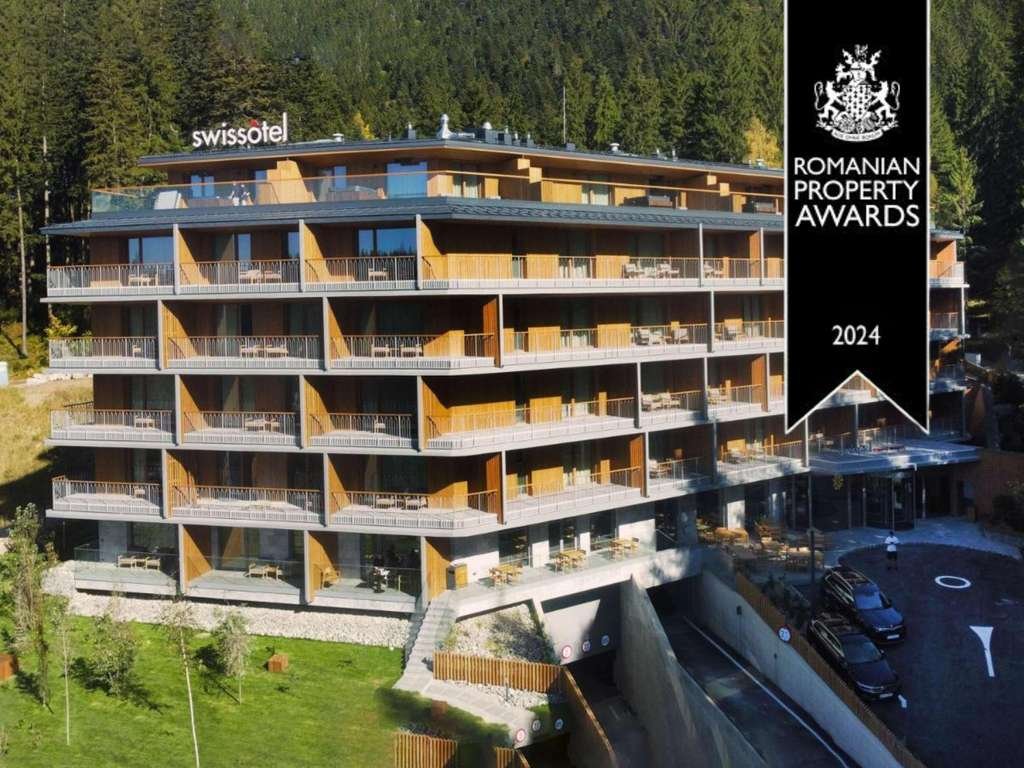
Architecture as the Argument
Mountain hotel design in Central and Eastern Europe has long trended toward two poles: the chalet-pastiche that leans on timber cladding and folk motifs, and the boxy international-chain block that imports no sense of place whatsoever. The more interesting work happens in the space between them, where a property commits to a formal architectural position without abandoning its physical context. Swissôtel Poiana Brașov, positioned on Drumul Sulinar in the Poiana Brașov resort zone above the city, sits in that rarer category — a conclusion underlined by its Global Winner award for Leading Architectural Design, an externally verified credential that places the building's physical presence at the centre of its competitive case.
Design awards of that category are not handed for surface styling. They typically reflect decisions about structure, siting, material logic, and how a building performs spatially across different seasons and light conditions. For a mountain property at this latitude, that means the building must read credibly against both summer green and winter white, must manage its relationship to the slope intelligently, and must create interior volumes that feel proportional to the landscape outside rather than defensive against it. Swissôtel Poiana Brașov's recognition in this category positions it alongside a small global cohort of hotels where the architecture itself is the primary editorial statement — more in the tradition of properties like Amangiri in Canyon Point or Castello di Reschio in Lisciano Niccone, where physical form sets the terms of engagement, than in the tradition of badge-collecting resort hotels where design is an afterthought to amenity lists.
The shortlist, unlocked.
Hard-to-book tables, cellar releases, and concierge-planned trips.
Get Exclusive Access →Poiana Brașov as a Setting
The resort of Poiana Brașov occupies a plateau roughly 1,000 metres above the city of Brașov, accessed via a winding road through dense fir forest that signals a deliberate departure from the medieval streetscape below. This vertical separation is part of what gives the mountain zone its character: the city functions as a cultural anchor , with its Saxon old town, Black Church, and restaurant corridor , while the plateau operates as a separate world oriented around the ski runs, trails, and the particular stillness that comes with altitude and tree cover.
Within Romanian mountain hospitality, Poiana Brașov holds a reference position. It has been functioning as an organised resort for decades, and its reputation pulls from across Romania as well as from regional European markets. That established demand base means the competitive set on the plateau is not starting from scratch in terms of visitor awareness, but it also means that properties distinguishing themselves above the mid-tier need clear signals. An architectural award of global scope, combined with a Regional Luxury Mountain Hotel designation, provides exactly that differentiation within a resort zone where much of the accommodation stock has converged on similar formats. For a broader view of the wider Brașov area's options, our full Brașov restaurants and hotels guide maps the city's tiered landscape in more detail.
Where It Sits in Romania's Luxury Hotel Picture
Romania's upper accommodation tier has expanded meaningfully over the past decade, though it remains stratified and geographically spread. Bucharest anchors the corporate and grand-hotel category, where properties like the Corinthia Grand Hotel du Boulevard Bucharest operate in a legacy European grand-hotel tradition. The rural and estate category has developed a distinct identity of its own, with properties such as Bethlen Estates Transylvania in Criș and Matca Hotel in Simon addressing a growing appetite for design-conscious retreats embedded in working landscapes. On the water, Lebada Luxury Resort and Spa in Crișan takes a different approach again, anchored in the Danube Delta ecosystem. Swissôtel Poiana Brașov represents the mountain variant of this category expansion: a property that aligns the alpine setting with an internationally recognised design sensibility, rather than treating mountain location as sufficient justification on its own.
At the global reference level, the design ambition implicit in a Leading Architectural Design award connects the Poiana Brașov property to a broader conversation about what luxury mountain hotels can be. Properties like Badrutt's Palace Hotel in St. Moritz demonstrate the long-term value of committing to architectural identity in a mountain resort context, building guest relationships that persist over decades precisely because the physical environment is irreplaceable. Swissôtel Poiana Brașov, working from a different price point and geographic context, pursues a version of that same logic: if the building itself is the credential, it does not compete on interchangeable amenity lists.
Planning Your Stay
Poiana Brașov operates two distinct seasons that reward different visitor profiles. The ski season, running roughly from December through March depending on snowfall, brings the highest demand and the most energy on the plateau. Summer and early autumn, by contrast, offer a quieter version of the same landscape: hiking trails through the fir forest, mountain air without the crowds, and Brașov city as a half-day excursion rather than a transit point. The hotel's architectural design , given its award recognition , is presumably readable across both seasons, which makes a seasonal preference primarily a question of activity rather than experience quality. Booking ahead is advisable for the December-to-March peak period, during which Poiana Brașov attracts both domestic Romanian visitors and regional European ski tourism. For those combining this stay with a wider Romanian itinerary, Hotel Snagov Club near Bucharest offers an alternative register for the return leg.
Swissôtel as a brand operates within the upper-international segment across its global portfolio, a positioning that contextualises the Poiana Brașov property within a peer set that includes city hotels across Asia, Europe, and the Middle East. Travellers familiar with the brand's standard from other markets will find the mountain context here a distinct departure from the urban formats , which is precisely the point. The architectural award suggests the property has committed to that specificity of place rather than defaulting to a transferable brand template. For reference, the award-winning design credentials here place this property in different territory from most international-chain mountain outposts, which tend to prioritise consistency of service format over formal architectural ambition.
Frequently Asked Questions
- Is Swissôtel Poiana Brașov more low-key or high-energy?
- The answer shifts considerably by season. During the ski season from December to March, the resort plateau operates at a noticeably higher energy level, with slopes, après activity, and peak domestic and European tourism converging on a compact zone. The hotel, as a Regional Luxury Mountain Hotel Winner, sits within that active environment rather than apart from it. Outside peak ski season, Poiana Brașov reads as a quieter destination, and the property's architectural focus becomes the dominant register. Guests who prioritise calm over scene are better served by visiting in late spring, summer, or early autumn. The price implications of seasonality are worth investigating directly with the hotel, as peak-season rates in established ski resorts typically shift meaningfully relative to shoulder periods.
- What room should I choose at Swissôtel Poiana Brașov?
- Without detailed room-category data available, the most reliable guidance is to weight your choice toward the considerations that drove the property's award recognition: architectural design and mountain setting. In practice, that means prioritising rooms with direct views toward the forested slopes or the ski terrain, where the building's spatial decisions are most legible. Properties that win Leading Architectural Design awards typically express that quality most fully in rooms where the interior volume and glazing engage directly with the exterior landscape. Confirm room orientation and view category at booking rather than leaving it to check-in assignment, particularly during the December-to-March peak period when the most sought-after room types fill earliest.
For further context on luxury hotel formats across Europe's mountain and city destinations, EP Club also covers properties including Hotel Sacher Wien in Vienna, Cheval Blanc Paris, Le Bristol Paris, Hotel Plaza Athénée in Paris, La Réserve Paris, Hôtel de Paris Monte-Carlo, Hotel Du Cap-Eden-Roc in Cap d'Antibes, Aman Venice, Hotel The Mitsui Kyoto, Bvlgari Hotel Tokyo, Mandarin Oriental Bangkok, Mandarin Oriental Ritz Madrid, Aman New York, The Fifth Avenue Hotel in New York City, Hotel Bel-Air in Los Angeles, and Hotel Esencia in Tulum.
At-a-Glance Comparison
These are the closest comparables we have in our database for quick context.
| Venue | Cuisine | Price | Awards | Notes |
|---|---|---|---|---|
| Swissôtel Poiana Brașov | This venue | |||
| JW Marriott Bucharest Grand Hotel | ||||
| Epoque Hotel | ||||
| Matca Hotel | ||||
| Bethlen Estates Transylvania | ||||
| Corinthia Grand Hotel du Boulevard Bucharest |
Preferential Rates?
Our members enjoy concierge-led booking support and priority upgrades at the world's finest hotels.
Get Exclusive AccessThe shortlist, unlocked.
Hard-to-book tables, cellar releases, and concierge-planned trips.
Get Exclusive Access →