Summerage sits in the Burren, one of Ireland's most geologically and ecologically singular landscapes, where limestone karst meets Atlantic light in a way that shapes everything built within it. As a destination in this region, it operates against a backdrop where the physical environment sets the terms for any hospitality experience worth considering. For travellers planning a serious west of Ireland itinerary, the Burren demands attention on its own terms.

Pearl is the En Primeur Club membership app — saves, bookings, and concierge access live there. Same editors, same standards.
- Address
- Burren, Ireland
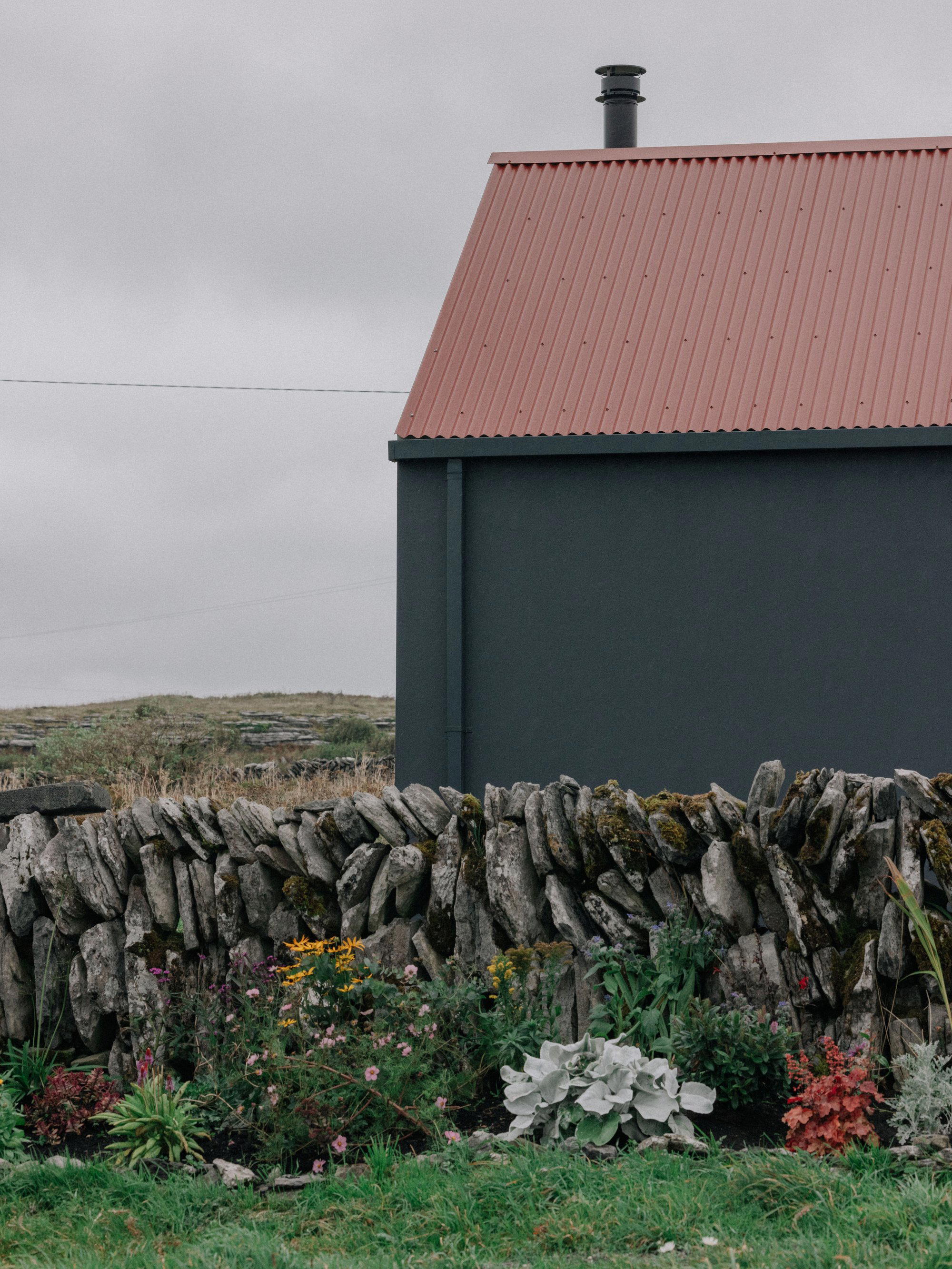
Stone, Light, and the Architecture of the Burren
The Burren does not offer the soft pastoral cues of most Irish countryside. Its surface is limestone pavement, fractured into clints and grikes, with wildflowers growing through the cracks in ways that botanists travel from across Europe to observe. The karst topography — exposed, oceanic, geologically ancient — sets an architectural logic that any serious building project in the region either responds to or ignores at its peril. Properties that earn long-term credibility here tend to be those whose physical form acknowledges what surrounds them: the grey-white rock, the horizontal sweep of the plateau, the quality of western light that shifts between silver and copper depending on the time of day and the position of Atlantic cloud cover.
Summerage, located in this part of County Clare, sits within that context. The Burren's built environment has historically trended toward the vernacular, dry-stone walls, low farm structures, limestone-dressed openings, rather than the grand country-house idiom that defines comparable properties in counties Wicklow or Kerry. That distinction matters when thinking about what a hospitality experience here should feel like. The landscape is not a backdrop to be photographed from a terrace; it is the primary material condition of the visit.
Positioning Within the West of Ireland Hospitality Register
The west of Ireland has developed a recognisable tier of high-quality, independently operated properties that trade on landscape immersion rather than ballroom scale. Gregans Castle Hotel in Ballyvaughan, a few kilometres from the Burren's interior, has long anchored the upper end of that local register, earning editorial recognition for its food programme and its relationship to the surrounding terrain. Further afield, Ballynahinch Castle in Recess and Glenlo Abbey Hotel and Estate in Galway occupy positions where castle or estate architecture does much of the contextual work. The Burren's offer is different: less monumental, more elemental.
Nationally, the Irish premium accommodation market has bifurcated clearly in recent years. On one side sit the internationally flagged city properties, The Leinster in Dublin, the large-format Dublin hotels serving corporate and event demand. On the other, a set of smaller, place-specific rural properties where the argument for staying is almost entirely environmental and experiential. Parknasilla Resort and Spa in Kerry, Liss Ard Estate in Skibbereen, and Ballyvolane House in Castlelyons each make that case with different architectural and programmatic means. Summerage belongs to the conversation about this second category, where the physical setting and the way a property inhabits it are the primary editorial criteria.
The Burren as Design Condition
Few parts of Ireland impose such clear constraints on architectural expression. The Burren's UNESCO-recognised landscape, it forms part of the Burren and Cliffs of Moher Geopark, carries informal but real expectations about how new or adapted structures should relate to their surroundings. The most considered properties in this region work with local stone, avoid height profiles that interrupt the plateau's horizontal character, and treat interior light as a design instrument given the frequency with which Atlantic weather changes the external illumination entirely.
This is not mere aesthetic preference. The Burren's geology produces specific thermal and acoustic qualities. Limestone retains and radiates heat differently from brick or timber construction, and the karst surface generates a particular quality of silence broken only by wind and, seasonally, the calls of birds using the upland for passage. Properties that acknowledge these conditions, in materials choice, in room orientation, in the calibration of indoor-outdoor thresholds, tend to produce experiences that feel genuinely located. Those that impose a generic hospitality template feel immediately incongruous against the rock.
Planning a Burren Visit: What the Region Requires
The Burren rewards visitors who treat it as a destination rather than a waypoint on a western Ireland circuit. The area is accessible from Galway city in under an hour, and from Ennis in less time than that, making Dromoland Castle in Newmarket on Fergus a logical staging point for those entering from the Shannon corridor. From Galway, The G Hotel Galway in Galway City serves as a useful urban base before moving into the karst interior.
Spring and early summer, April through June, are the Burren's most botanically active months, when the wildflower assemblages that make the area scientifically notable are at their most visible. Autumn brings lower visitor volumes and a quality of light that western Ireland photographers specifically seek out. Winter visits to exposed limestone plateau require preparation for rapid weather change, but the off-season reduction in traffic through the narrow local roads is a real practical benefit. For a broader Clare and west of Ireland programme, see our full Burren restaurants guide for context on where to eat across the region.
Travellers combining the Burren with a wider Irish itinerary frequently pair it with County Kerry, The Europe Hotel and Resort in Killarney operates at a different scale and formality than Burren properties, making the contrast deliberate and instructive, or with the country-house circuit that runs through Marlfield House in Wexford, Cashel Palace in Cashel, and Kilkea Castle in Castledermot. The Burren sits at the wilder, less formal end of any such sequence, and benefits from being treated that way in the planning.
For travellers arriving from outside Ireland and anchoring in the west before moving on, the broader network of considered Irish properties, from Mount Falcon Country House Hotel in County Mayo in the north to Inchydoney Island Lodge and Spa in Clonakilty in the south, maps a west-coast arc that the Burren sits at the geographic and experiential centre of. International arrivals comparing Ireland against other Atlantic European destinations may also find value in the contrast with coastal properties elsewhere: Badrutt's Palace Hotel in St. Moritz and Hôtel de Paris Monte-Carlo in Monte Carlo represent the opposite pole of European luxury hospitality, urban, monumental, historically dense, against which the Burren's stripped-back geological character reads as something genuinely different in register.
A Quick Peer Check
| Venue | Price | Awards |
|---|---|---|
| SummerageThis venue — the venue you are viewing | Not listed | Not listed |
| Conrad Dublin | $300–500 | Forbes 4-Star · Virtuoso Luxury Hotel Partner |
| InterContinental Dublin | Not listed | Michelin Selected · Forbes Recommended |
| The Shelbourne Dublin, Autograph Collection | $300–500 | Michelin Selected · La Liste Top Hotels |
| The Europe Hotel & Resort | Not listed | Michelin Guide New Hotels New Hotel · Michelin Selected |
| The Fitzwilliam Hotel Dublin | $300–500 | 1 Michelin Key · Virtuoso Luxury Hotel Partner |
Details
- Rustic
- Cozy
- Scenic
- Quiet
- Romantic Getaway
- Weekend Escape
- Mountain
Cosy escape with pure stillness of a fervent restorative quality amid wind-lashed expansive terrain.