

Built in traditional Norwegian lafta timber construction and positioned above the Storfjorden on Norway's west coast, Storfjord Hotel offers 30 rooms with fjord-facing balconies, a nightly four-course locally sourced dinner, and year-round access to fjord and forest excursions. Rates start from USD 365 per night, and Ålesund Airport is roughly 40 minutes by road, served by direct flights from London, Oslo, and Copenhagen.
Pearl is the En Primeur Club membership app — saves, bookings, and concierge access live there. Same editors, same standards.
- Address
- Øvre Glomset 110, 6260 Skodje
- Phone
- +47 70 27 49 22
- Website
- storfjordhotel.com
- Directions
- Get directions
 Saves & bookings on Pearl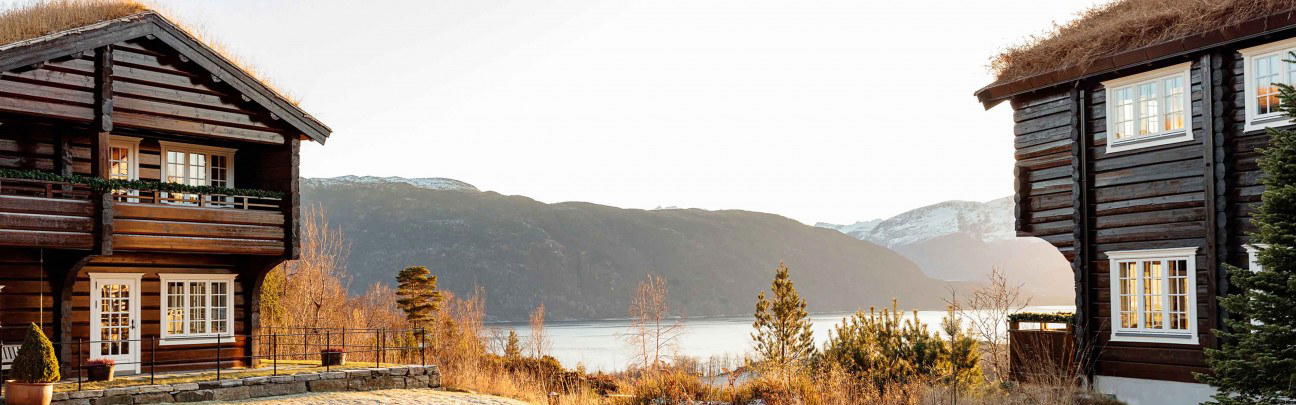
Timber, Fjord, and the Logic of Lafta Construction
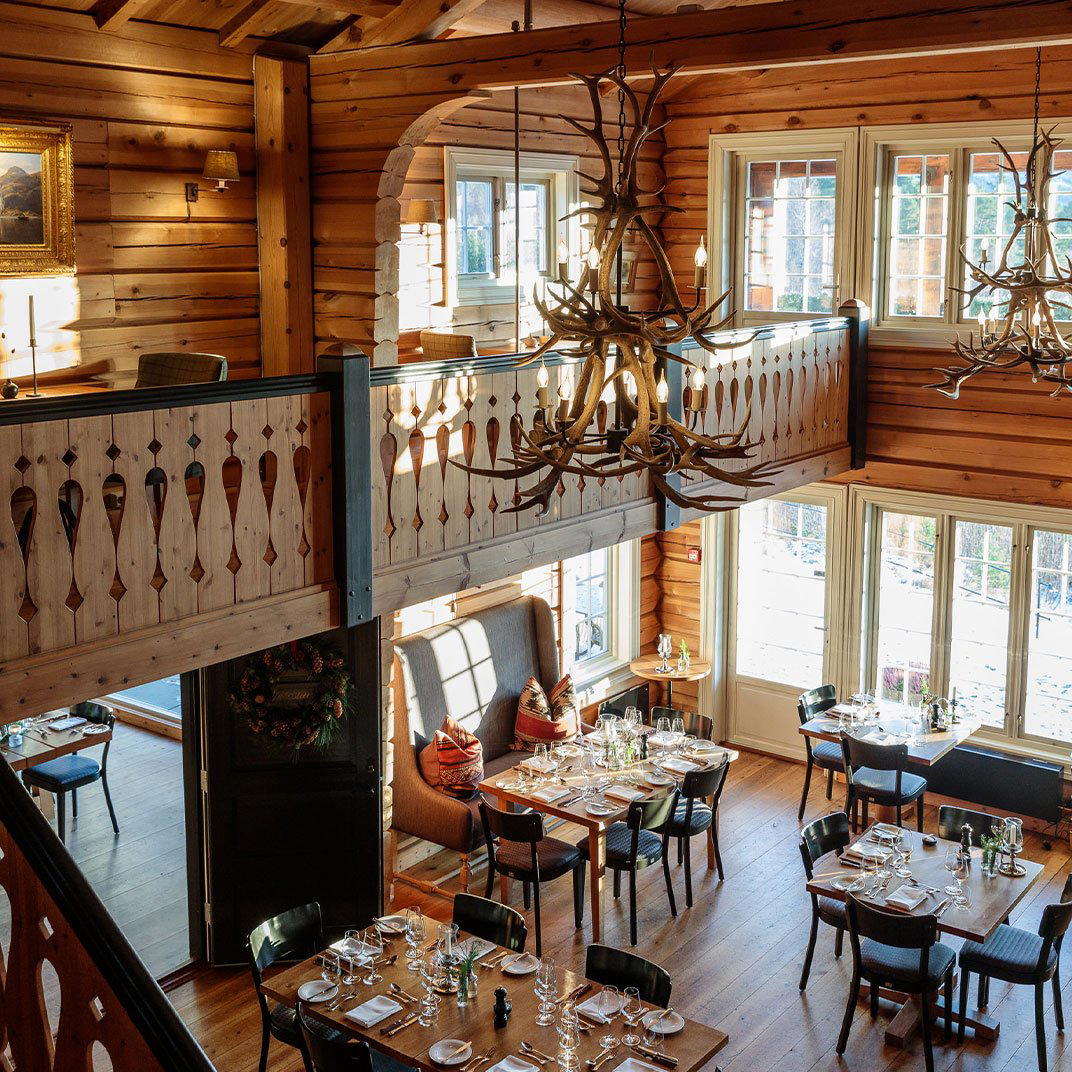
Norway's west coast boutique hotel scene has divided into two recognisable poles: design-forward properties that favour glass, steel, and landscape framing as architectural gestures, and a smaller cohort that looks backward to vernacular building traditions as the source of both aesthetic identity and structural integrity. Storfjord Hotel sits firmly in the latter camp. The building is constructed in the lafta style, a Scandinavian log-joinery method in which whole, unskinned timbers are stacked horizontally and notched at the corners without the use of nails or modern adhesives. The technique predates industrialised construction by centuries and produces walls of considerable thermal mass, a property that matters acutely in a climate where overnight temperatures and daytime highs can diverge by twenty degrees within a single season.
What lafta construction gives Storfjord Hotel that glass-and-concrete contemporaries cannot replicate is a specific quality of interior atmosphere: rooms that feel enclosed without feeling dark, corridors that smell faintly of resin, and surfaces that register touch differently than planed timber or painted drywall. The interiors carry that structural logic forward into furnishings, with antiques and classic Norwegian pieces selected to reinforce rather than contrast with the building's materiality. This is not a hotel that has bolted a Scandinavian aesthetic onto a neutral container. The aesthetic and the container are the same object.
Position on the Storfjorden and What That Actually Means
The Storfjorden is one of the Sunnmøre fjords on Norway's western seaboard, a region where the fjord system runs deep inland from the coast and where the surrounding terrain rises steeply enough to create microclimates that diverge meaningfully from what weather maps suggest. The hotel occupies a position above the waterline, within thousands of acres of protected woodland, with each of the 30 rooms oriented to give direct balcony views across the fjord and toward the mountain ridges beyond.
That orientation is an editorial choice as much as an architectural one. Properties at this price point along the Norwegian coast increasingly compete on view quality and setting drama, and the fjord-facing room layout at Storfjord is a deliberate answer to that competition. For comparison, Juvet Landscape Hotel in Valldal takes a more maximalist approach to the same landscape, using isolated glass pavilions to frame river and forest panoramas. Storfjord's approach is integrative rather than framing-focused: you are inside a timber structure looking out, rather than suspended in glass looking through. The experiential register is different, and which you prefer is a matter of how you want landscape mediated.
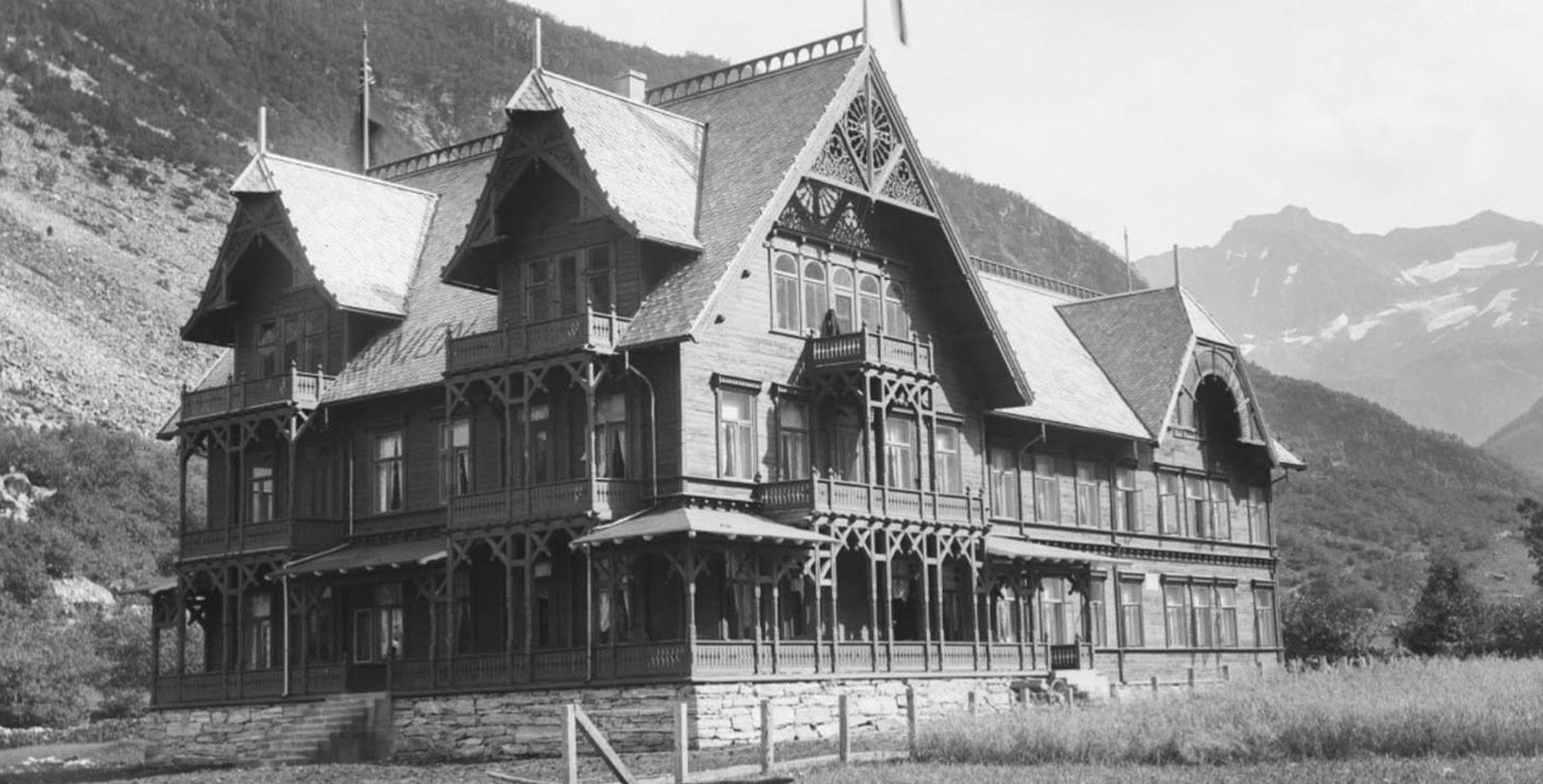
The Hotel Union Øye in Norangsfjorden offers a historical comparison point in the same broader region, a Victorian-era property whose guest list from the 19th century reads as a roll call of European royalty. Storfjord Hotel operates in a more contemporary register while retaining the same regional logic: that the Sunnmøre landscape is compelling enough to anchor a property, and that the hotel's job is to put you inside it rather than insulate you from it.
Seasonal Range and What Each Season Delivers
Norwegian west coast properties are increasingly marketed as year-round destinations, and in Storfjord's case that claim has genuine structural support rather than being a scheduling convenience. Summer along the Storfjorden produces temperatures that regularly reach levels associated with southern European destinations, though with far lower humidity and the added phenomenon of extended daylight at these latitudes. Hiking, fjord kayaking, and boat excursions are available throughout the warmer months, and the surrounding protected woodland amplifies the sense of isolation that draw guests to this corner of Norway.
Winter delivers an entirely different proposition. Snow cover, shorter days, and the possibility of northern lights visibility at this latitude turn the property into a base for a different set of activities. The same timber construction that provides thermal atmosphere in summer becomes practically relevant in winter: the walls hold warmth in a way that modern construction struggles to replicate without mechanical intervention. For guests whose preference runs to snow-adjacent activities and low-light landscapes, the winter season here is not a compromise version of the summer product. It is a distinct offering.
Properties like Aurora Lodge in Tromso sit further north and build their winter identity around northern lights access more explicitly. Storfjord operates at a latitude where aurora visibility is possible but not guaranteed, and its winter appeal is broader: the combination of landscape, architecture, and the specific quality of Norwegian winter light rather than a single atmospheric event.
Dining and the Logic of Remote Self-Sufficiency
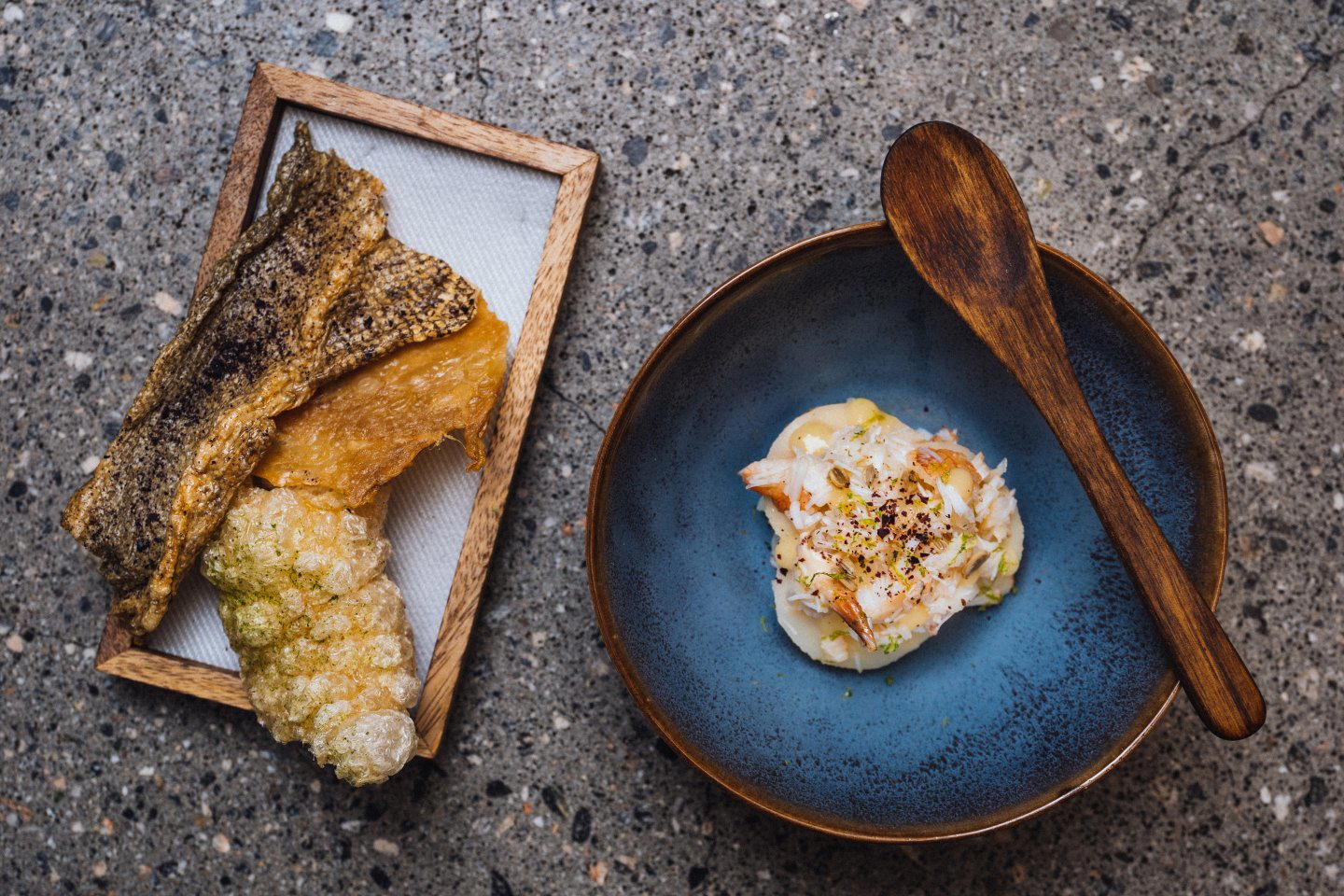
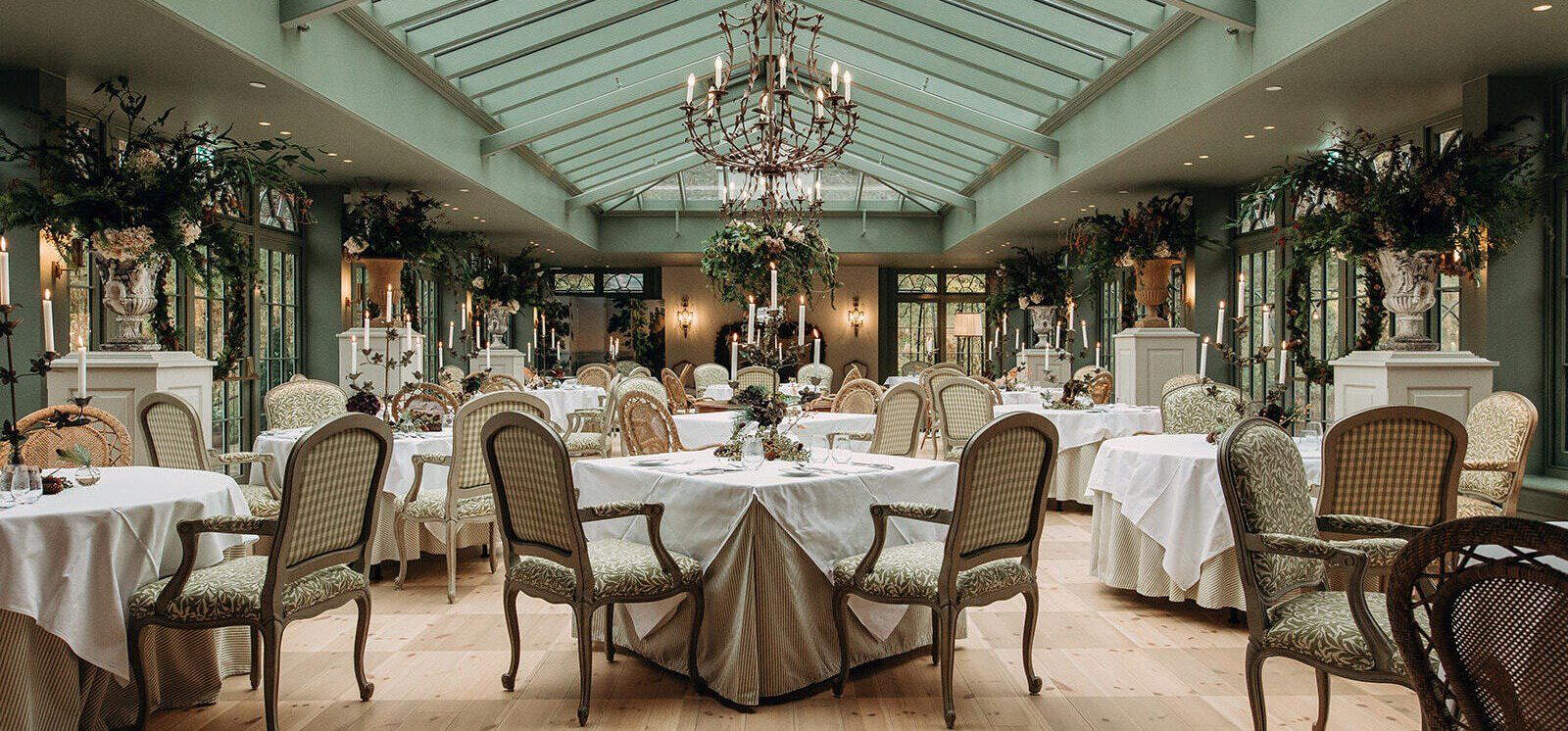
The dining situation at Storfjord Hotel is a direct consequence of its location. The surrounding area offers limited independent restaurant options, a condition common to boutique properties in Norway's rural west that is worth treating as information rather than complaint. The hotel's response is a nightly four-course dinner built on locally sourced ingredients, served in the dining room. This format, where the kitchen controls the entire evening's narrative through a set menu rather than offering à la carte choice, is increasingly the standard approach for remote luxury properties across Norway. It allows the kitchen to work with seasonal supply from nearby producers without maintaining the range of ingredients that à la carte service demands.
For guests staying multiple nights, the fixed-menu format means repetition is a possibility worth factoring into stay length decisions. That said, the logic of local sourcing at this latitude, where the growing season is compressed and ingredient quality varies sharply by week, makes the format defensible on culinary grounds rather than just operational ones.
Access and the Ålesund Connection
The property sits at Øvre Glomset 110, roughly 47 kilometres from Ålesund Vigra Airport (IATA: AES). In driving terms, the hotel's own figures put the journey at approximately 40 minutes, which aligns with the road distance and the quality of the route. Ålesund Airport operates direct services from London, Oslo, Copenhagen, Trondheim, and Riga, making it one of the better-connected regional airports on Norway's west coast relative to the size of the city it serves. A 45-minute flight from Oslo connects the capital to a functional regional hub, and from there the drive west delivers guests into the fjord landscape.
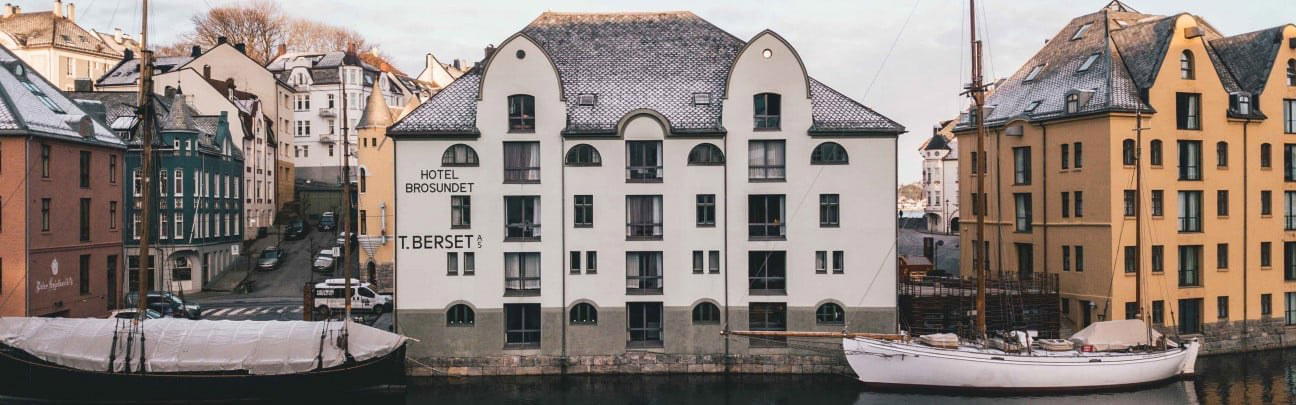
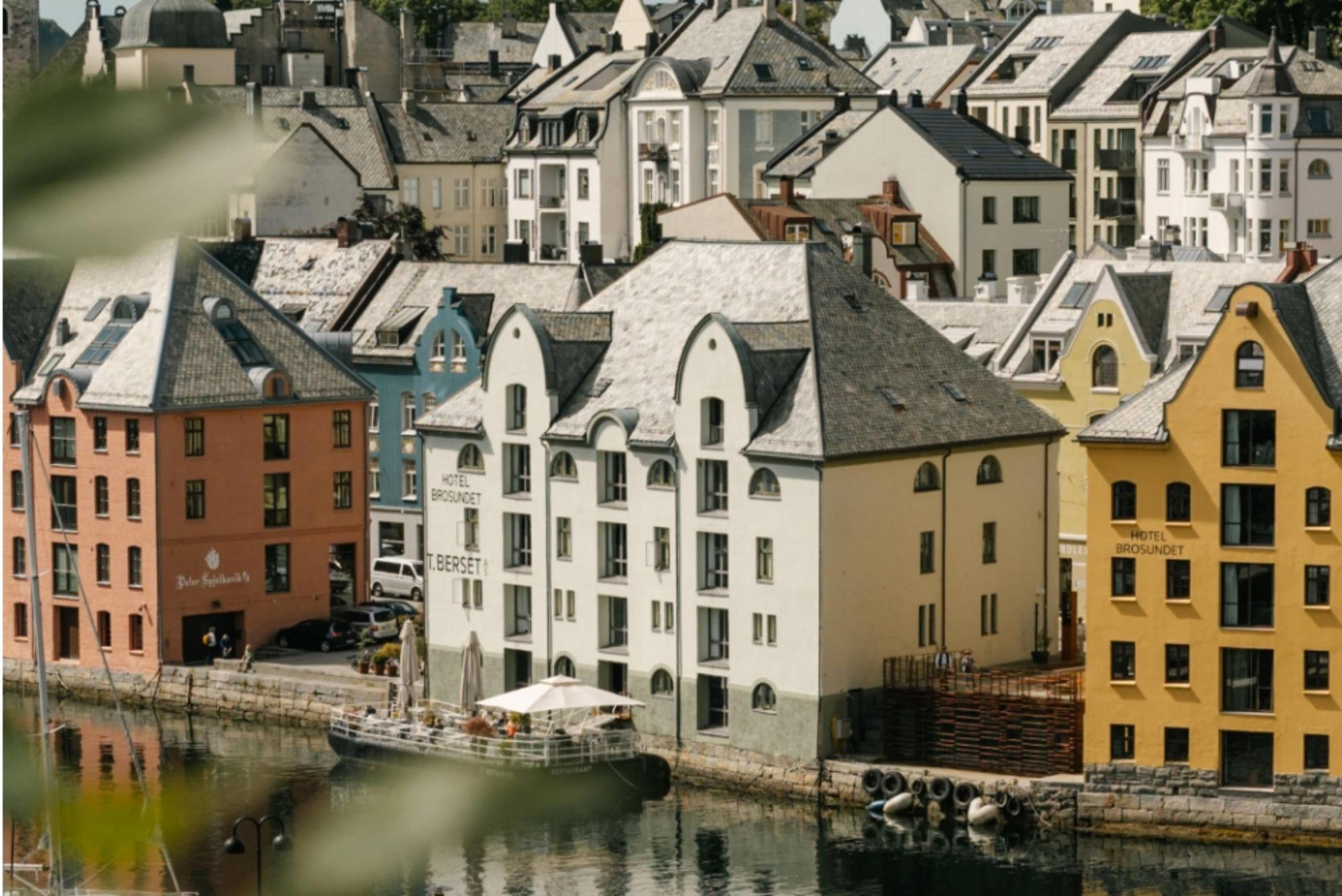
Hotel Brosundet in Ålesund offers an urban alternative for guests who want to anchor in the city before or after a stay at Storfjord, and Ålesund itself is worth time as one of the few Norwegian towns where Art Nouveau architecture dominates the streetscape, rebuilt in that style after a fire in 1904.
For guests building a longer Norwegian itinerary, the west coast corridor connects naturally to properties further afield. Walaker Hotel in Solvorn sits on the Sognefjord to the south; Opus XVI in Bergen anchors the southern end of this western arc. Broader Norwegian routes might include Britannia Hotel in Trondheim to the north or Eilert Smith Hotel in Stavanger to the south, depending on direction of travel. For those exploring Norway's rural accommodation range more broadly, Elva Hotel in Skulestadmo, Lilløy Lindenberg in Herdla, Manshausen in Manshausen Island, Nusfjord Village and Resort in Ramberg, Sakrisøy Rorbuer in Reine, and Vestlia Resort in Geilo represent different registers of Norwegian landscape accommodation worth considering alongside it. See our full Glomset restaurants and travel guide for broader regional context.
Rates begin at USD 365 per night. The 30-room scale keeps the property in boutique territory, which at this price point means you are paying partly for the building and landscape and partly for the low guest density that those figures produce.8 out of 5, a signal consistent with a guest base that arrived expecting a specific kind of remote, timber-framed Norwegian experience and received it.
Quick Comparison
Comparable venues nearby, for context on price, style, and recognition.
| Venue | Cuisine | Price | Awards | Notes |
|---|---|---|---|---|
| Storfjord HotelThis venue — the venue you are viewing | Secluded luxury boutique hotel comprising classic Norwegian log cabins with contemporary comfort and rustic elegance. | $$$$ | Michelin 2 Key | Not listed |
| Sommerro | Luxury heritage hotel blending restored 1930s Art Deco architecture with contemporary design in Oslo's elegant Frogner neighborhood. | $$$$ | Michelin 1 Key | Ruselokka |
| Walaker Hotel | Historic family-owned property blending traditional Norwegian coziness with modern comforts across multiple eras' buildings. | $$$ | Michelin 2 Key | Solvorn |
| Britannia Hotel | Classic British style luxury hotel with historic charm renovated in 2019 | $$$$ | Michelin 1 Key | city center |
| Hotel Continental | Grand classic hotel blending historic elegance with modern luxury | $$$$ | Michelin 1 Key | Vika |
| Hotel Brosundet | Historic warehouse converted to modern boutique luxury | $$$$ | Michelin 1 Key | historic district |
Recognition history
Dated appearances from independent guides and award organizations, with the underlying list record or original source where available.
Mr & Mrs Smith Smith Seal of Approval
Mr & Mrs Smith
Relais Chateaux Award
Relais Chateaux
Michelin 2 Keys
Michelin
Relais Chateaux Award
Relais Chateaux
At a Glance
- Romantic
- Quiet
- Scenic
- Cozy
- Elegant
- Rustic
- Honeymoon
- Romantic Getaway
- Wellness Retreat
- Anniversary
- Weekend Escape
- Waterfront
- Destination Spa
- Panoramic View
- Private Dining
- Garden
- Terrace
- Design Destination
- Wi Fi
- Spa
- Sauna
- Fitness Center
- Restaurant
- Room Service
- Concierge
- Free Parking
- Bicycle Rental
- Hot Tub
- Waterfront
- Mountain
- Garden
- Wi Fi
- Spa
- Sauna
- Fitness Center
- Restaurant
- Room Service
- Concierge
- Free Parking
- Bicycle Rental
- Hot Tub
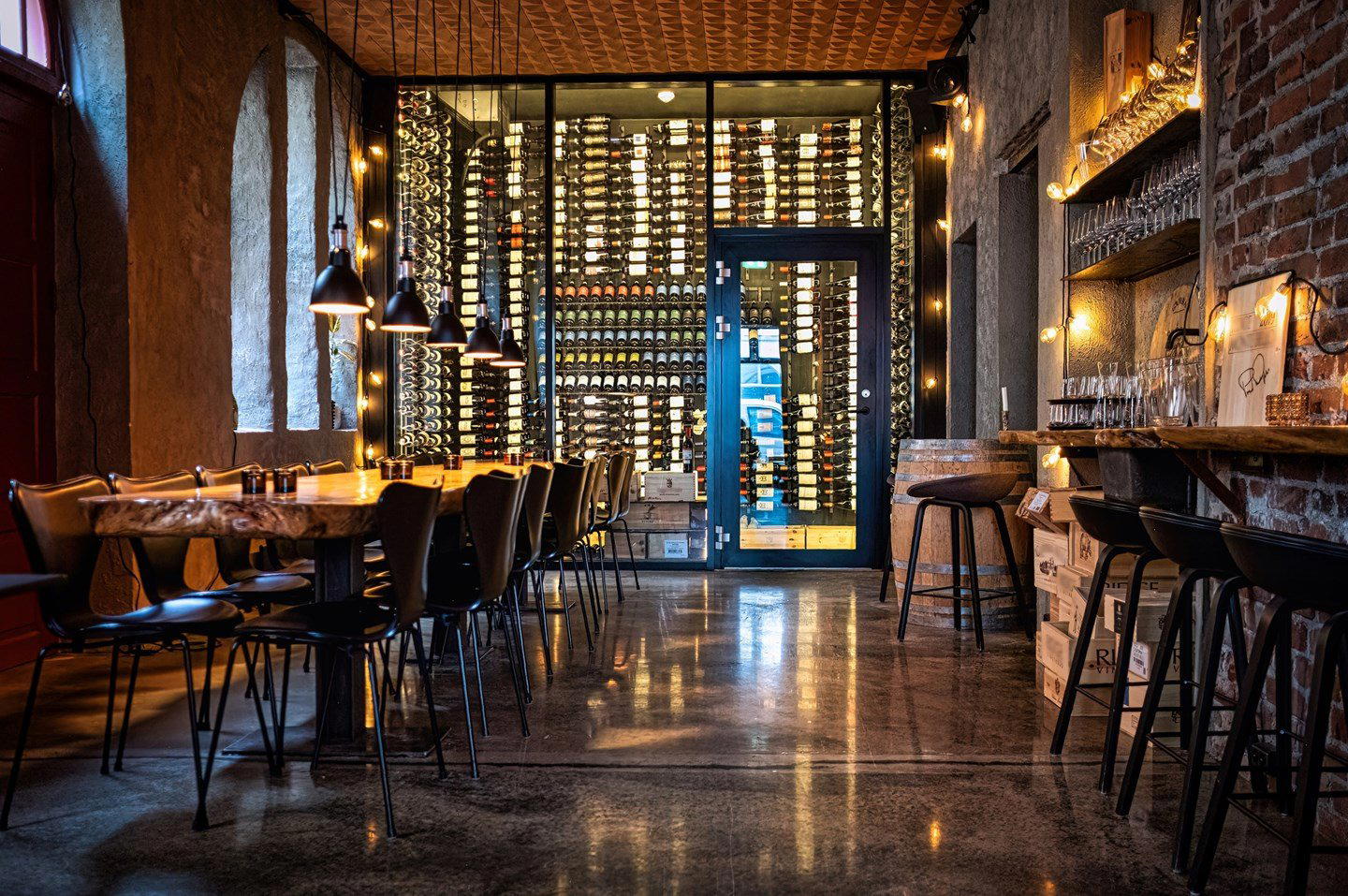
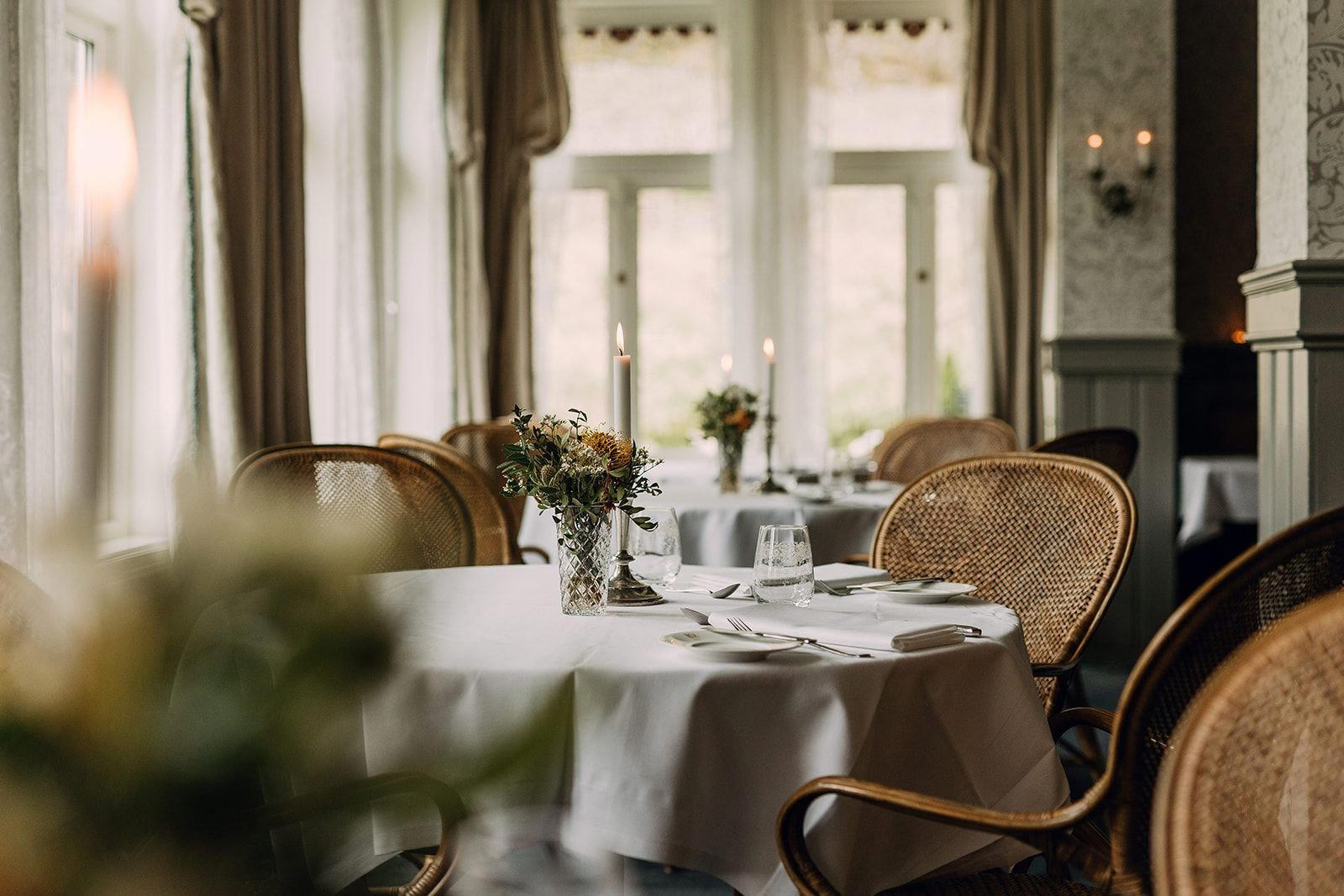
Warm and inviting with fireplaces throughout, soft natural lighting, rustic-chic interiors blending antiques and modern comfort, intimate fine-dining atmosphere by the fire.