Sakrisøy Rorbuer sits on its own islet in the Reine archipelago, where traditional Norwegian fishermen's cabins have been converted into waterfront accommodation against one of the Lofoten Islands' most photographed mountain backdrops. The rorbu format, red-painted timber on stilts above the fjord, is the defining architectural vernacular of this coast, and Sakrisøy distils it to its most immediate form.

Pearl is the En Primeur Club membership app, where members save venues, book tables and use the concierge.
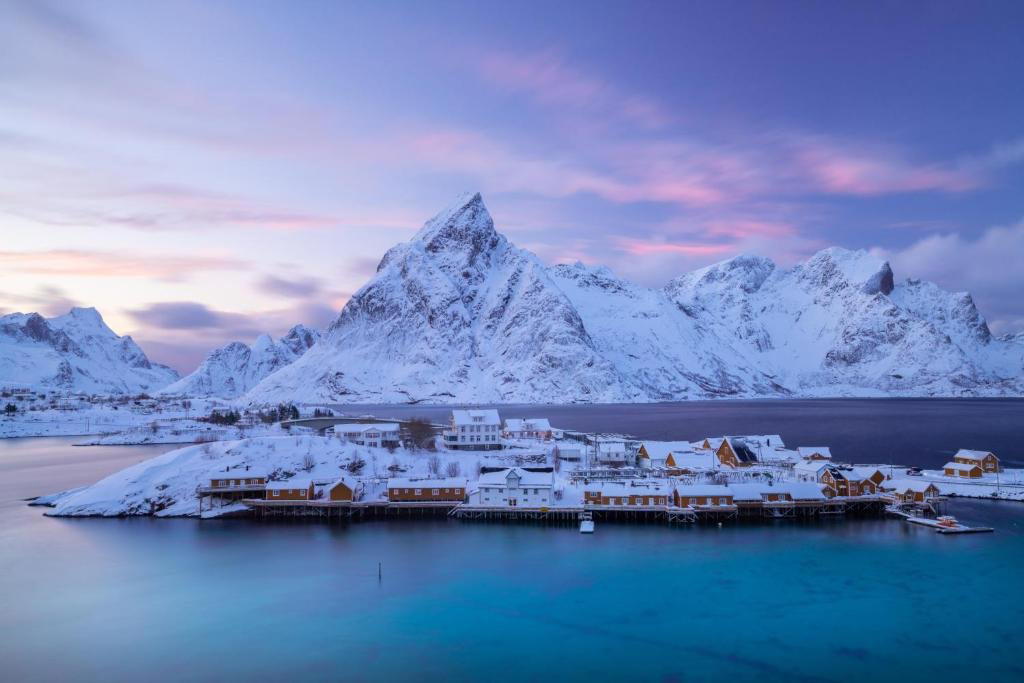
Red Timber on Water: The Rorbu Tradition at Sakrisøy
There is a particular quality of light in the Lofoten Islands that photographers and painters have been chasing for generations. It arrives low and lateral, even at midday in winter, turning the water around Reine into something close to a mirror and throwing the jagged Moskenesøya peaks into high relief. Against that backdrop, the red-painted timber cabins of Sakrisøy sit on their own small islet, connected to the main road by a short bridge, and the whole composition arrives so completely formed that it can feel almost staged. It is not. This is simply what the rorbu looks like when the setting cooperates fully.
The rorbu is one of Scandinavia's most coherent vernacular building types. Developed along the Norwegian coast from the twelfth century onward, these refined timber cabins on stilts or piers were built to house seasonal fishermen during the winter cod season. The form is functional first: proximity to the water, storage below or alongside, living quarters compact and insulated above. The red ochre pigment used across centuries of Norwegian coastal building was originally mixed with linseed oil and iron oxide, both cheap and locally available. What emerged was an architectural vernacular so consistent it became the visual signature of the entire Lofoten coast. Sakrisøy, one of the smallest islets in the Reine archipelago, holds a cluster of these cabins in a condition of extraordinary scenic concentration. For broader context on accommodation options across this part of Norway, see our full Reine restaurants guide.
What the Physical Setting Means in Practice
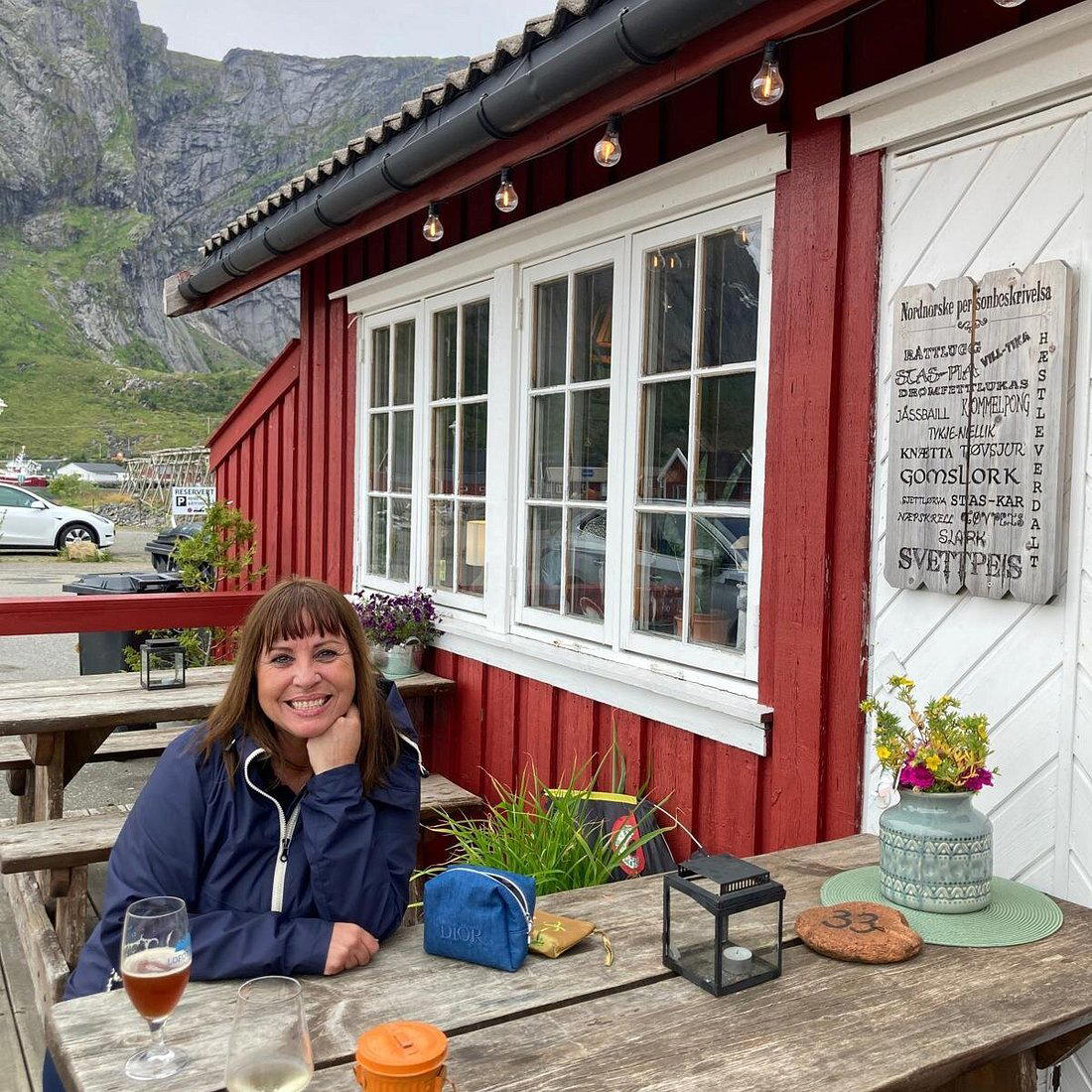
Accommodation at Sakrisøy places guests in direct contact with both the water and the mountain wall that rises behind Reine. The rorbu units sit at fjord level, not refined on a cliff above the view, but at it, with the water audible and, in calmer conditions, almost touchable from the deck. The mountain profile is the one that has become arguably the most reproduced image of the Norwegian Arctic: steep granite faces, snow-capped for much of the year, descending sharply to the village and the islets below. The geometry is so compressed that guests at Sakrisøy can observe the full scene, including the village of Reine, the bridge network connecting the islets, and the open water beyond, from a single vantage.
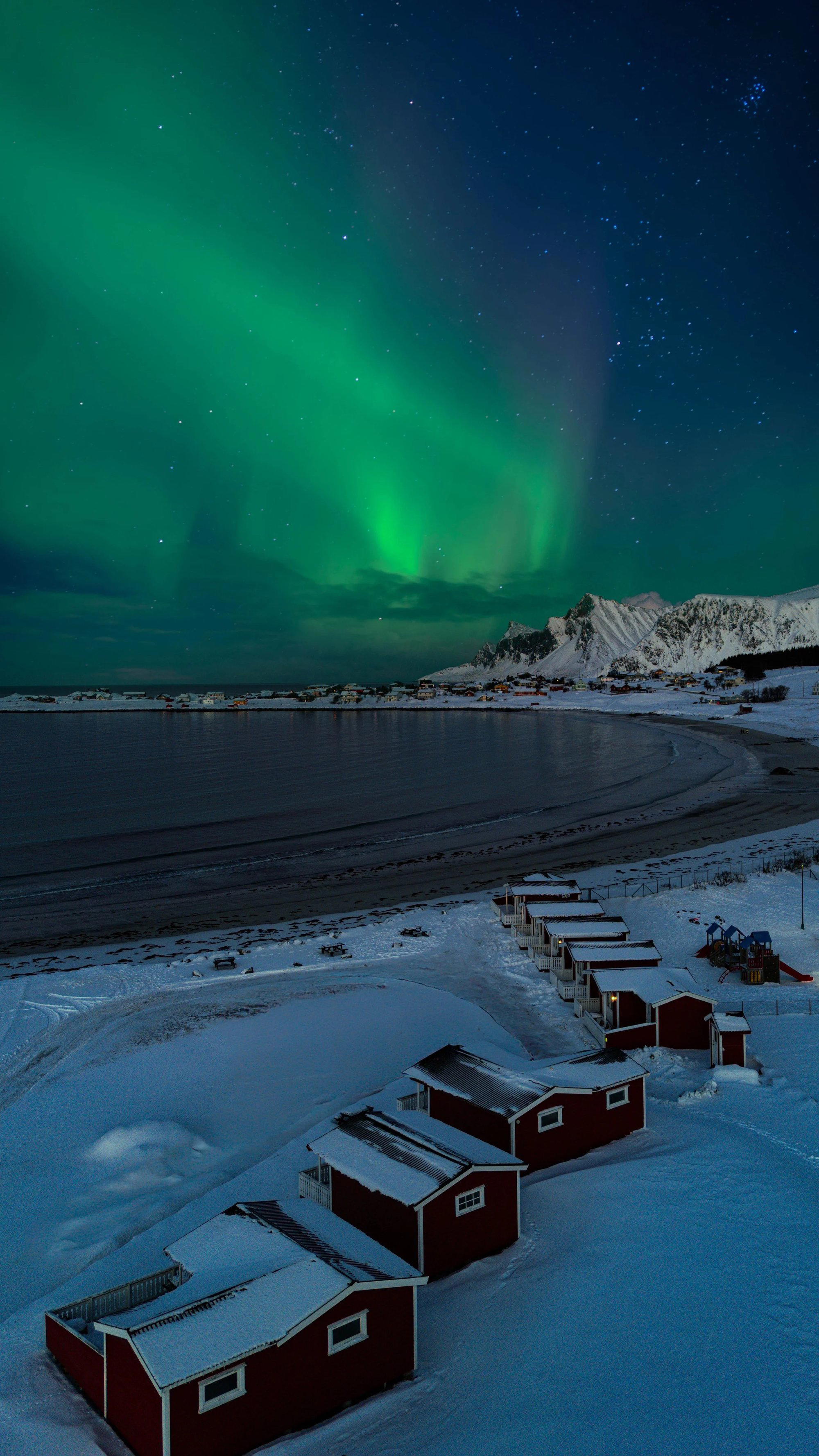
The Lofoten Islands sit above the Arctic Circle, which governs the experience as much as any interior design decision. Summer brings the midnight sun: twenty-four hours of usable light from late May through mid-July, which creates a disorienting and compelling extension of the outdoor day. Winter brings the opposite compression, with the potential for northern lights visible from the water's edge on clear nights between late September and March. Both conditions interact directly with the rorbu format, the cabins are small, weather-tight, and oriented toward the fjord, which means the Arctic light cycle is present at every hour. Properties across the broader Norwegian north work with this same dynamic; Aurora Lodge in Tromso occupies a different tier of that spectrum, purpose-built around winter light programming.
The Rorbu Format in a Competitive Context
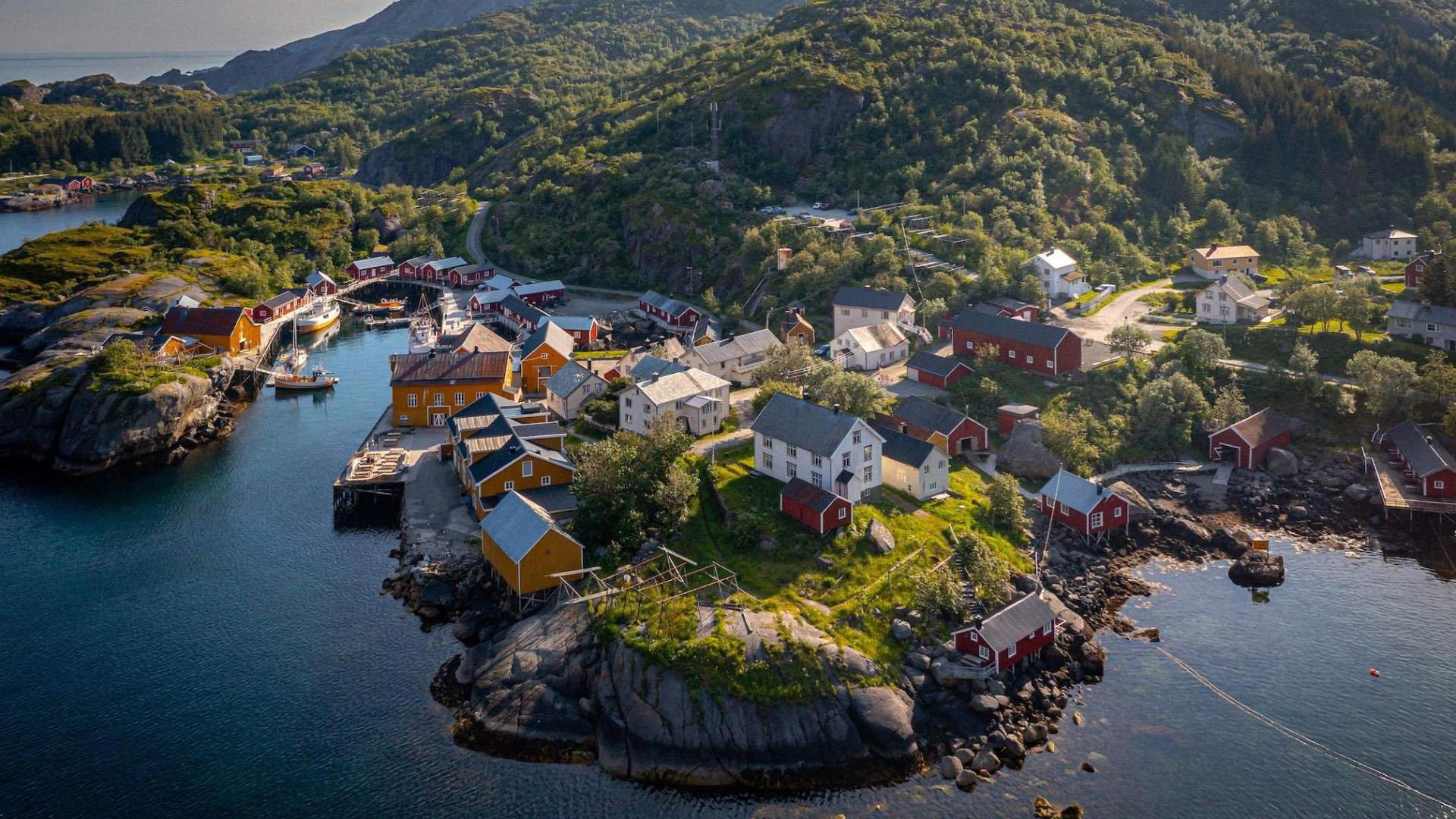
Norway's coastal accommodation market has split into two increasingly distinct categories over the past decade. On one side sit the renovated or newly built design properties that borrow the rorbu aesthetic while adding contemporary interiors, restaurant programming, and amenity depth. On the other sit the simpler, more direct conversions where the vernacular architecture is the offer and the setting does most of the work. Nusfjord Village and Resort in Ramberg, further along the E10 road on Flakstadøya, occupies a similar category: a preserved fishing village with rorbu accommodation where the UNESCO-listed environment shapes the stay. Sakrisøy operates in that same register, where authenticity of form and specificity of location carry more weight than programmed luxury.
That contrasts with what the broader Norwegian hotel scene has been developing in urban and resort contexts. Properties like Amerikalinjen in Oslo and Britannia Hotel in Trondheim represent the restoration and programming-heavy end of Norwegian hospitality, where history is curated and amenities are layered. Juvet Landscape Hotel in Valldal sits closer to Sakrisøy's category in one respect, landscape primacy, but is built around a contemporary architectural intervention rather than a preserved vernacular type. Storfjord Hotel in Glomset and Hotel Union Øye in Norangsfjorden occupy the historic country-house register that has little overlap with the rorbu offer.
What Sakrisøy offers is something those properties cannot replicate: the specific combination of islet isolation, authentic building type, and a mountain-fjord panorama that has been circulating in travel photography for long enough to have become a reference image for the entire Lofoten archipelago. That kind of location primacy tends to matter most to guests who are coming to the islands specifically for the physical environment, not for restaurant programming or spa facilities.
Getting There and Planning the Stay
Reine is reached via the E10, the main road that runs the length of the Lofoten Islands chain. The nearest airport is Leknes, approximately thirty kilometres north, served by Widerøe regional flights from Bodø, which connects to Oslo and other major Norwegian cities. Alternatively, Svolvær airport at the northern end of the archipelago handles similar regional traffic. The drive from Leknes to Reine takes roughly forty minutes and covers some of the most dramatic coastal scenery on the road. Sakrisøy itself is signposted just before Reine village, with the islet visible from the main road before the bridge crossing.
Lofoten travel has become substantially more popular in the past decade, driven in part by the social media circulation of exactly the kind of images that Sakrisøy generates. Summer bookings, particularly for July, fill early in the calendar year. The midnight sun period is the peak, but shoulder seasons, May and September, offer reduced competition, lower light temperatures that are often superior for photography, and the realistic possibility of northern lights in September and October. Winter visits, from December through February, are the least crowded and offer the highest aurora probability, though daylight hours are minimal and sea conditions can restrict some outdoor activities.
For those planning a wider Norwegian coastal itinerary, the rorbu experience pairs well with the fjord-country properties further south. Walaker Hotel in Solvorn, on the Sognefjord, and Elva Hotel in Skulestadmo each represent distinct fjord-accommodation registers that provide useful contrast with the Arctic-island setting of the Lofoten experience. Further afield, Manshausen in Manshausen Island offers an island-based alternative in Nordland that shares the water-level intimacy of the rorbu tradition while operating at a different amenity tier.
A Quick Peer Check
| Venue | Price | Awards |
|---|---|---|
| Sakrisøy RorbuerThis venue (the venue you are viewing) | Not listed | Not listed |
| Amerikalinjen | Not listed | 1 Michelin Key · La Liste Top Hotels |
| Hotel Union Øye | Not listed | 1 Michelin Key · Relais Chateaux Award |
| Sommerro | $300–500 | 1 Michelin Key · Virtuoso Luxury Hotel Partner |
| Storfjord Hotel | $750–1,000 | 2 Michelin Keys · Mr & Mrs Smith Seal of Approval |
| Boen Gård | $200–300 | 1 Michelin Key · Star Wine List |
Details
- Scenic
- Cozy
- Rustic
- Quiet
- Romantic
- Romantic Getaway
- Weekend Escape
- Family Vacation
- Waterfront
- Panoramic View
- Terrace
- Wi Fi
- Bicycle Rental
- Restaurant
- Waterfront
- Mountain
Cozy wooden interiors with warm, rustic charm, big windows framing dramatic sea and mountain vistas, and a peaceful, nostalgic fishing village atmosphere.