St Martins Lane Hotel

Michelin Selected for 2025, St Martins Lane Hotel occupies a Philippe Starck-designed building on one of Covent Garden's most culturally loaded streets, steps from the English National Opera and the West End theatre district. The property has been a reference point for design-led hospitality in London since the late 1990s, when the Morgans Hotel Group redefined what a central London hotel could look like.
Pearl is the En Primeur Club membership app — saves, bookings, and concierge access live there. Same editors, same standards.
- Address
- 45 St. Martin's Lane, London, UK
- Phone
- +44 20 7300 5500
- Website
- morgansoriginals.com
- Directions
- Get directions
 Saves & bookings on Pearl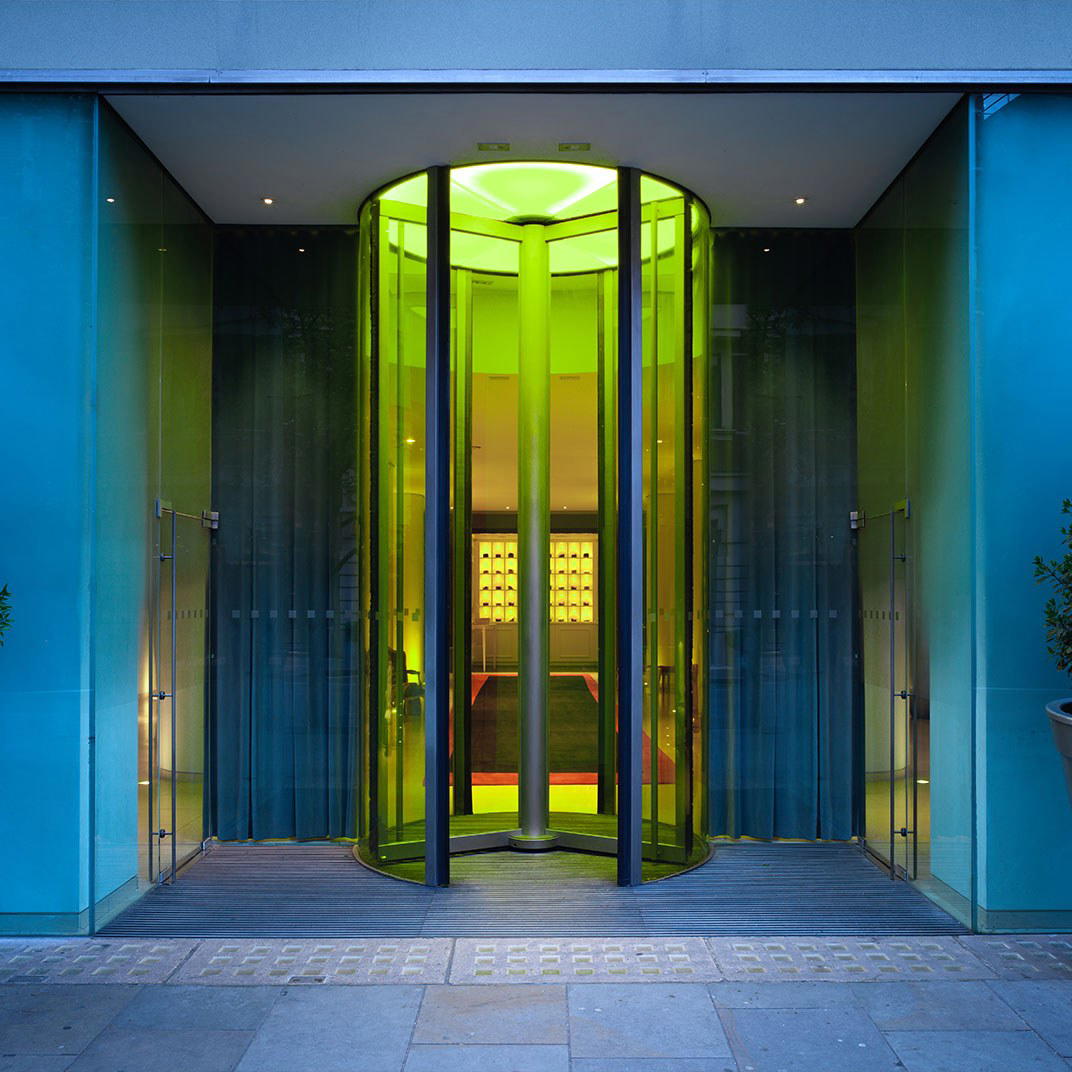
A Street With History, A Building That Changed the Conversation
St. Martin's Lane is not a neutral address. The street runs from Trafalgar Square northward into the heart of Covent Garden, passing the English National Opera, a cluster of West End theatres, and the ghost of the old Coliseum crowd. Hotels here compete not just on rooms and service but on proximity to a particular kind of London cultural life — one that rewards guests who want to step out the door and into something. St Martins Lane Hotel, at number 45, has held that position since 1999, when Ian Schrager and Philippe Starck delivered a property that read as a deliberate provocation to the Mayfair establishment.
That provocation has aged in interesting ways. The Starck-era hotel aesthetic — all-white lobby, monolithic reception desk, theatrical lighting, furniture as sculpture, was once read as futuristic. In 2025, it occupies a different position: a documented moment in the design history of London hospitality, now recognisable as part of a lineage that would influence boutique hotels across two decades. The Michelin Selected designation for 2025 places it in a curated tier that rewards consistent quality rather than the most fashionable new entrant.
The Covent Garden Competitive Set
Understanding St Martins Lane Hotel means understanding where Covent Garden sits in London's hotel geography. Mayfair carries the old-money Anglophone luxury standard, Claridge's, The Connaught, and The Savoy define that tier with pre-war heritage and deep institutional infrastructure. The Strand and the West End represent a different logic: hotels that serve the theatre-going, opera-attending, gallery-hopping visitor who wants cultural density rather than residential quiet.
St Martins Lane operates in that second geography. St Martins Lane's position is distinct from both: it is neither the heritage conversion nor the recent arrival, but the 25-year-old design hotel that has outlasted several trends while remaining the same building on the same street.
The Starck Interior in 2025
Philippe Starck's 1999 interior was always conceived as theatre rather than background. The all-white lobby, sometimes described as an art installation as much as a reception space, deployed furniture at unexpected scales and used artificial light to shift the room's mood across the day. That approach positioned the hotel not as a place that displayed art but as a place that was, in a specific sense, art.
Design-led hotels in London have multiplied considerably since 1999. Properties like The Emory and 1 Hotel Mayfair have raised the baseline for what design investment looks like at the luxury tier. What St Martins Lane retains is specificity: the Starck signature is not generic luxury-hotel polish but a documented point of view from a particular moment in design history. Whether that reads as a feature or a constraint depends on the guest's relationship to late-1990s maximalist minimalism.
Location as the Primary Asset
The argument for St Martins Lane Hotel is, in large part, geographical. The property sits within walking distance of the English National Opera, the National Portrait Gallery (post-renovation), the National Gallery on Trafalgar Square, Covent Garden Market, and a concentration of West End theatres that makes it one of the most culturally convenient hotel addresses in central London. For guests whose visit is structured around a performance or an exhibition, the logistics matter as much as the room.
That same density creates noise and foot traffic that quieter properties in Mayfair or Knightsbridge do not face. Guests who prioritise residential calm over cultural proximity are better served by properties like 11 Cadogan Gardens in Chelsea or, further afield, something like Lime Wood in Lyndhurst. The trade-off at St Martins Lane is deliberate: you are in the city, specifically and unapologetically.
For the London restaurant picture, our full London restaurants guide covers the neighbourhood in detail. Covent Garden has moved considerably beyond its tourist-trap reputation of the 1990s and now holds serious dining addresses within a short radius of the hotel.
The Michelin Selected Designation
Michelin's hotel selection programme, separate from its restaurant star system, identifies properties across a quality spectrum from comfortable to exceptional. The Selected tier, which St Martins Lane holds for 2025, is the programme's broadest category, indicating that Michelin's inspectors found the property to meet a consistent standard across accommodation, service, and setting. It is not an equivalence to a restaurant Michelin star, but it does signal that the property passed independent review at a moment when Michelin's hotel coverage in London includes a significant number of competitors.
That context matters for comparison. The Michelin Selected list in London includes properties across price points and styles. St Martins Lane's inclusion confirms its continued relevance in a market that has welcomed significant new competition since the hotel opened. Properties like Gleneagles in Auchterarder in Scotland or Badrutt's Palace Hotel in St. Moritz in Switzerland occupy the upper brackets of the same Michelin framework, which illustrates the breadth of what the programme covers internationally.
Planning Your Stay
The hotel's address at 45 St. Martin's Lane places it about a ten-minute walk from both Charing Cross mainline station and Leicester Square Underground. For guests arriving by rail or tube into central London, the location is among the most accessible of any London hotel at this tier, no cab required from the mainline stations, which simplifies arrival with luggage.
Booking lead times for Covent Garden hotels vary significantly by season. The West End theatre calendar concentrates demand in autumn and the pre-Christmas period, and ENO season openings draw a specific audience that books well ahead. Guests planning around a specific performance should confirm room availability before finalising ticket purchases rather than after. For comparison, centrally located London hotels at the design-led tier are typically available further in advance than their Mayfair counterparts, where shoulder-season compression is less pronounced.
Guests comparing this property against the broader UK market may find useful reference points in properties like Estelle Manor in North Leigh or The Newt in Somerset in Castle Cary, country-house alternatives that trade the Covent Garden cultural immediacy for space, grounds, and a different pace entirely. Within London, the design-forward tier extends from St Martins Lane through NoMad and across to South Bank properties, each with its own cultural catchment area.
Budget and Context
Comparable venues nearby, for context on price, style, and recognition.
| Venue | Price | Awards | Notes |
|---|---|---|---|
| St Martins Lane HotelThis venue — the venue you are viewing | $$$$ | 5-Star | Not listed |
| Virgin Hotel London Shoreditch | $$$$ | 5-Star | Shoreditch, Industrial-chic luxury with warehouse-loft aesthetic and contemporary 1970s-inspired design elements. |
| The Soho Hotel | $$$$ | 5-Star | Soho, Contemporary luxury neighborhood hotel inspired by Soho's creative spirit. |
| Kaya Great Northern Hotel | $$$$ | 5-Star | King's Cross, Historic boutique hotel with railway heritage |
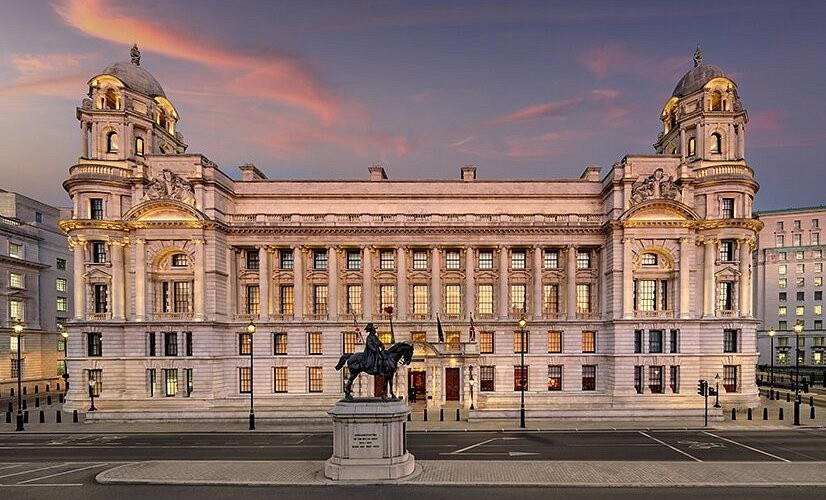
| Waldorf Astoria London – Admiralty Arch- A Virtuoso Preview Property | $$$$ | 5-Star | St. James's, Ultra-luxury heritage hotel blending Edwardian Baroque architecture with contemporary design, positioned as a ceremonial hospitality destination for informed travelers. |
| Mandarin Oriental Hyde Park | $$$$ | 5-Star | Belgravia, Timeless luxury heritage property blending Edwardian grandeur with contemporary sophistication. |
Recognition history
Dated appearances from independent guides and award organizations, with the underlying list record or original source where available.
Michelin Selected
Michelin
Continue exploring
More in London
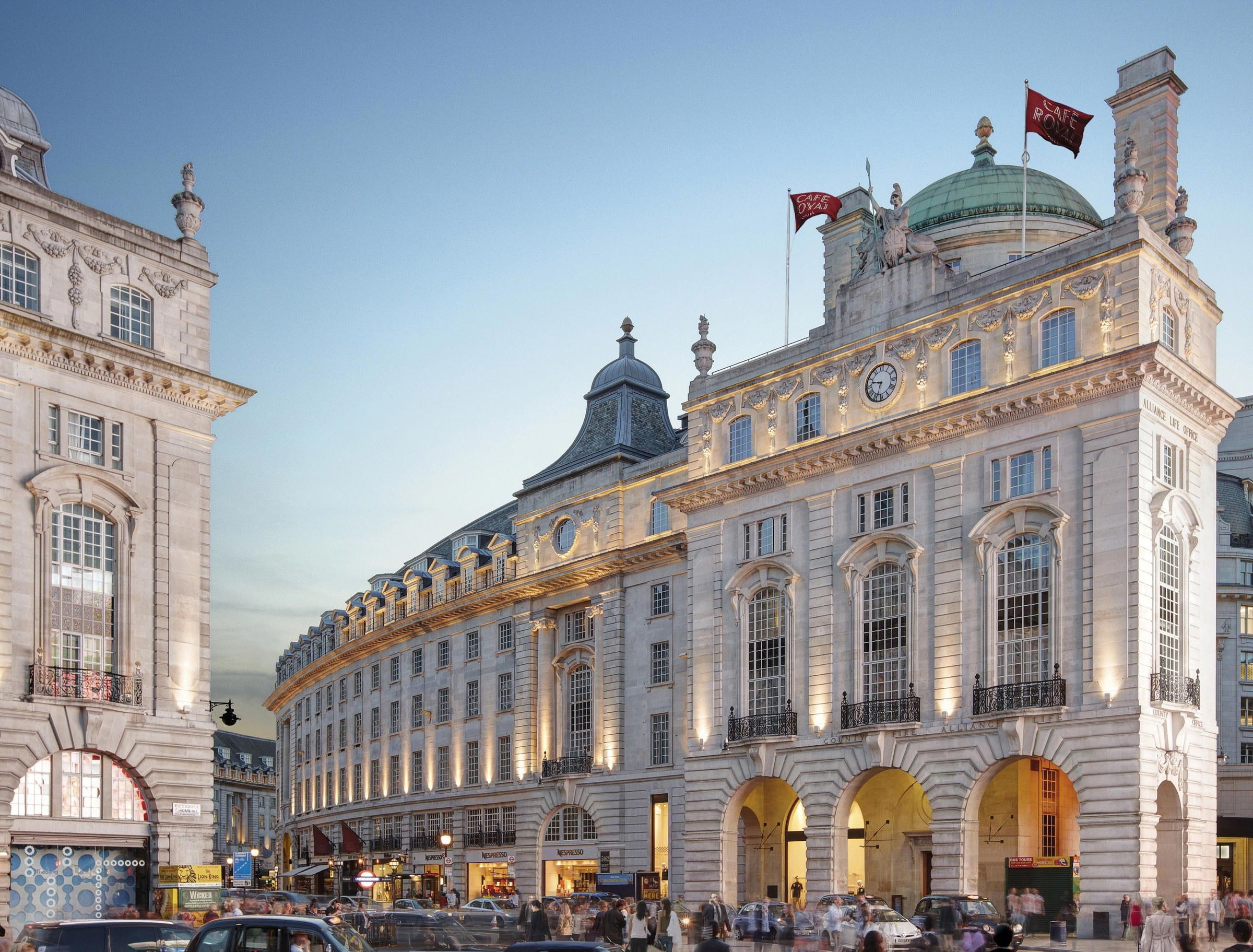
Hotels in London
Browse all →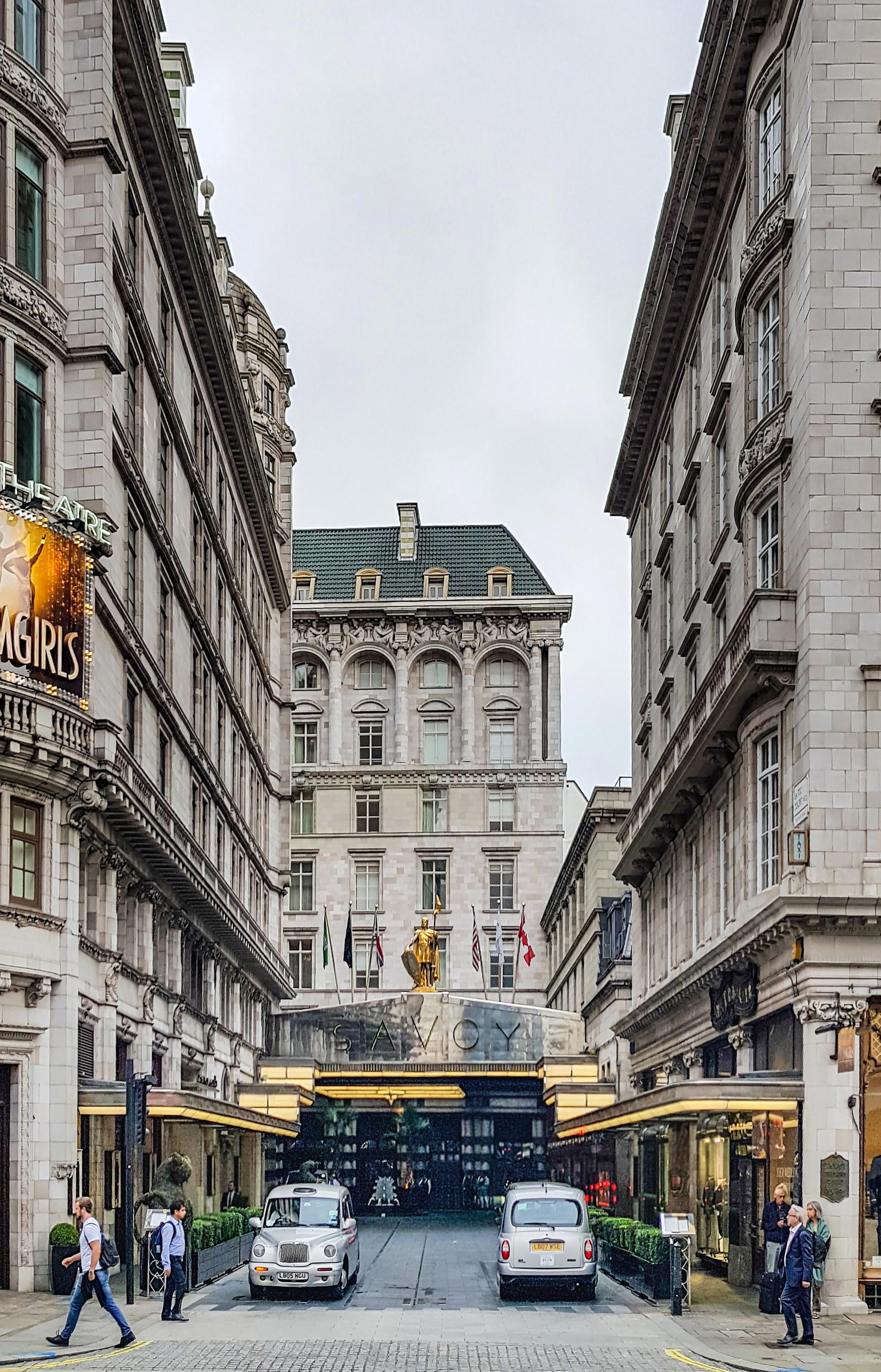
Bars in London
Browse all →
Restaurants in London
Browse all →



At a Glance
- Modern
- Trendy
- Sophisticated
- Elegant
- Whimsical
- Romantic Getaway
- Business Trip
- Weekend Escape
- Historic Building
- Design Destination
- Panoramic View
- Fitness Center
- Room Service
- Concierge
- Skyline
- Street Scene
- Fitness Center
- Room Service
- Concierge
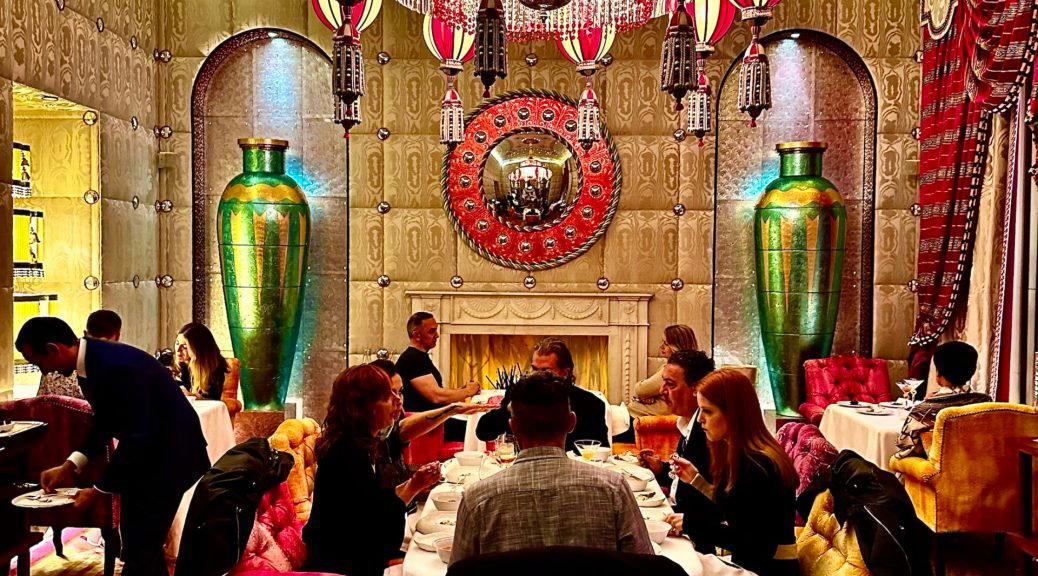
Sophisticated and energetic atmosphere with witty, irreverent design, lively color-changing lights, and a speakeasy bar vibe.
Know Before You Go
- Getting there
- 45 St. Martin's Lane, London, UK