Soho Warehouse DTLA

Michelin Selected · Mr & Mrs Smith Seal of Approval
Soho Warehouse DTLA occupies a converted warehouse on South Santa Fe Avenue in the Arts District, operating as a members' club and hotel that earned a Michelin Key in 2024. It sits within a cohort of design-conscious properties redefining Downtown Los Angeles hospitality, where industrial architecture and curated programming distinguish the experience from conventional hotel stays.

Pearl is the En Primeur Club membership app — saves, bookings, and concierge access live there. Same editors, same standards.
- Address
- 1000 S Santa Fe Ave, Los Angeles, CA 90021
- Phone
- (213) 205-1000
- Website
- sohohouse.com
- Directions
- Get directions
Arts District Hospitality and the Members' Club Format
Downtown Los Angeles's Arts District has spent the better part of a decade absorbing the kind of creative and hospitality investment that once defaulted to West Hollywood or Beverly Hills. The result is a corridor along Santa Fe Avenue where converted warehouses now house galleries, restaurants, and, in the case of Soho Warehouse DTLA at 1000 S Santa Fe Ave, a members' club and hotel that earned a Michelin Key in 2024.
The Michelin Key recognition, introduced as Michelin's formal framework for evaluating hotels, signals that the inspectors found something worth documenting here beyond room count or thread count. In Los Angeles, a city where the hospitality conversation has long defaulted to properties in Bel-Air, Beverly Hills, and West Hollywood, a Downtown property landing that credential reflects a broader shift: DTLA's Arts District is now a serious hospitality address, not a consolation option for those priced out of the Westside.
The Industrial Setting as Editorial Statement
Warehouse conversions in Los Angeles exist on a spectrum from perfunctory to considered. The Arts District has seen both ends. What distinguishes the more deliberate examples is the degree to which the original structure is allowed to assert itself rather than be smoothed away by renovation. Exposed brick, raw concrete, and high ceilings are not styling choices here; they are what remains when a building's original purpose is respected. The result is a vertical compression of texture that more conventional hotel lobbies, with their low ceilings and carpet, cannot replicate.
That physical context sets expectations for everything that follows. Properties that commit to an industrial aesthetic tend to attract a guest cohort that reads the architecture as a signal about programming, food and beverage, and the general approach to curation.
The Team Dynamic Inside a Members' Club Hotel
The members' club format creates a particular kind of operational pressure that conventional hotels do not face. Front-of-house staff at a members' club property are not simply processing check-ins; they are managing the relationship between resident guests and the club membership, a dynamic that requires a different calibration of service. The sommelier and bar team operate across multiple formats simultaneously, from casual drinks at a rooftop to more composed dining service, which demands range rather than specialization in a single register.
This is worth noting because the Michelin Key framework, unlike the restaurant star system, evaluates the property as a whole. Inspectors are assessing whether the kitchen, the floor team, and the rooms all communicate the same editorial point of view. A property that achieves that coherence in an industrial warehouse conversion in Downtown LA, rather than in a purpose-built luxury hotel with decades of infrastructure, is doing something operationally demanding. The 2024 Key suggests the coordination is holding.
For comparison, the members' club model in Los Angeles has a complicated history. Properties that blend private membership with hotel access walk a line between exclusivity and utility. When the calibration works, guests benefit from programming and atmosphere that a purely public hotel cannot sustain. When it fails, paying hotel guests feel like outsiders in the spaces they are ostensibly accessing. The Arts District location matters here: the surrounding neighbourhood generates a natural membership cohort drawn from the creative industries, tech, and film, which gives the club a more specific identity than a property in a more generic urban zone.
Positioning Within Downtown Los Angeles Hotels
Downtown LA's hotel stock has diversified substantially over the past decade. The Downtown LA Proper Hotel represents one approach: a historic building with a design-forward renovation and a restaurant program with genuine critical standing. Soho Warehouse operates with a different premise, one rooted in the members' club infrastructure that Soho House Group has built across London, New York, and other cities, rather than in a single-property design commission. The two models attract overlapping but distinct guest profiles.
Westside properties like L'Ermitage Beverly Hills, The Maybourne Beverly Hills, and The Peninsula Beverly Hills operate in a different competitive tier entirely, oriented around the entertainment industry geography of Beverly Hills and Century City. For guests whose business or itinerary centers on the Arts District, the fashion district, or Downtown cultural institutions like the Broad or MOCA, Soho Warehouse's location carries a practical logic that those properties cannot offer. The Sun Rose West Hollywood occupies yet another register, oriented toward the Sunset Strip creative economy.
Across the wider EP Club portfolio, the design-led boutique hotel category has expanded considerably. Properties like Troutbeck in Amenia and SingleThread Farm Inn in Healdsburg show how design coherence and programming depth can distinguish a property from its peers across very different geographic contexts. 1 Hotel San Francisco offers a West Coast parallel in the sustainability-conscious design category. See our full Los Angeles restaurants and hotels guide for further context on where Soho Warehouse sits within the city's broader hospitality picture.
Planning Your Stay
Soho Warehouse DTLA is located at 1000 S Santa Fe Avenue in the Arts District, a neighbourhood that rewards walking: the density of food and beverage options within a few blocks is higher than most first-time visitors expect. Access to the hotel's full programming is structured around membership, but hotel guests receive access to spaces and amenities during their stay. Booking through the Soho House platform is the standard route, and given the property's profile since the 2024 Michelin Key, lead time matters more than it did in earlier years.
For travelers building an itinerary around multiple US properties, Soho Warehouse fits logically alongside properties with strong design credentials and programming depth. Amangiri in Canyon Point, Post Ranch Inn in Big Sur, and Auberge du Soleil in Napa each occupy a similar tier of experience-led hospitality in their respective geographies. For East Coast comparison, The Fifth Avenue Hotel in New York City, Aman New York, and Raffles Boston offer reference points for what Michelin-recognized hotels in urban American markets are delivering. Further afield, Aman Venice and Badrutt's Palace Hotel in St. Moritz provide international benchmarks for what a coherent property identity looks like across different hospitality traditions.
At-a-Glance Comparison
Comparable venues nearby, for context on price, style, and recognition.
| Venue | Cuisine | Price | Awards | Notes |
|---|---|---|---|---|
| Soho Warehouse DTLAThis venue — the venue you are viewing | Members-only club hotel in a restored 1916 warehouse. | $300–500 | Michelin Selected · Mr & Mrs Smith Seal of Approval | Not listed |
| The Langham Huntington, Pasadena | Timeless historic resort with Old Hollywood glamour and lush 23-acre gardens | $300–500 | La Liste Top Hotels · Star Wine List | Oak Knoll |
| Chamberlain West Hollywood | discreet urban oasis and fashionable boutique retreat | Not listed | 1 Michelin Key · Mr & Mrs Smith Seal of Approval | West Hollywood North |
| Sunset Tower Hotel | Historic Art Deco luxury boutique | $500–750 | 1 Michelin Key · Virtuoso Luxury Hotel Partner | Crescent |
| The Prospect Hollywood | Hollywood Regency-style boutique hotel | Not listed | 1 Michelin Key · Mr & Mrs Smith Seal of Approval | Yucca Corridor |
| The West Hollywood EDITION | Design-forward luxury boutique on the Sunset Strip | Not listed | Michelin Selected · Star Wine List | WeHo |
Recognition history
Dated appearances from independent guides and award organizations, with the underlying list record or original source where available.
Michelin Selected
Michelin
Mr & Mrs Smith Seal of Approval
Mr & Mrs Smith
Full recognition history (3 entries)
Michelin 1 Key
Michelin
Continue exploring
More in Los Angeles
Hotels in Los Angeles
Browse all →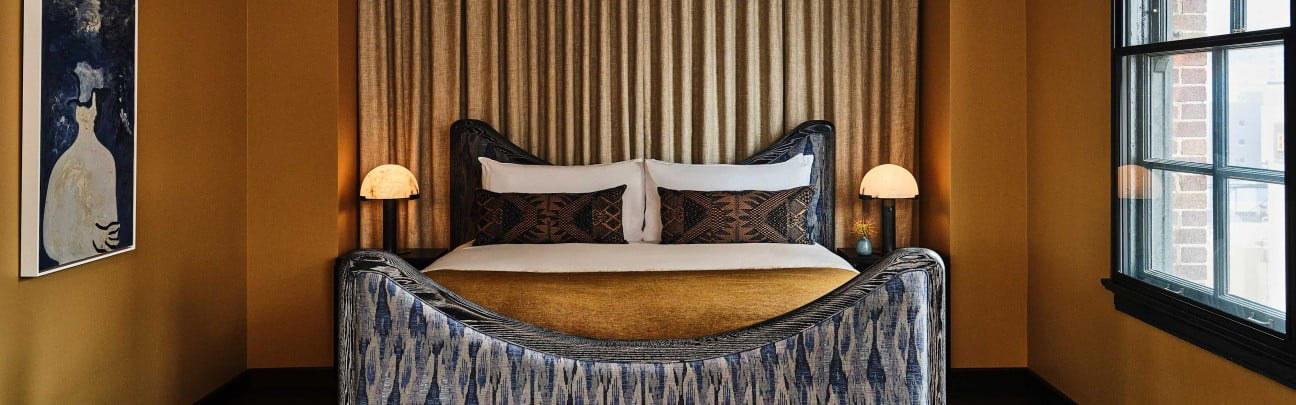
Bars in Los Angeles
Browse all →
Restaurants in Los Angeles
Browse all →
Wineries in Los Angeles
Browse all →

Details
- Trendy
- Sophisticated
- Modern
- Elegant
- Industrial
- Romantic Getaway
- Business Trip
- Weekend Escape
- Rooftop Pool
- Historic Building
- Panoramic View
- Terrace
- Wi Fi
- Pool
- Spa
- Fitness Center
- Room Service
- Concierge
- Valet Parking
- Skyline
- Wheelchair Accessible
- Elevator
- Step Free Entrance
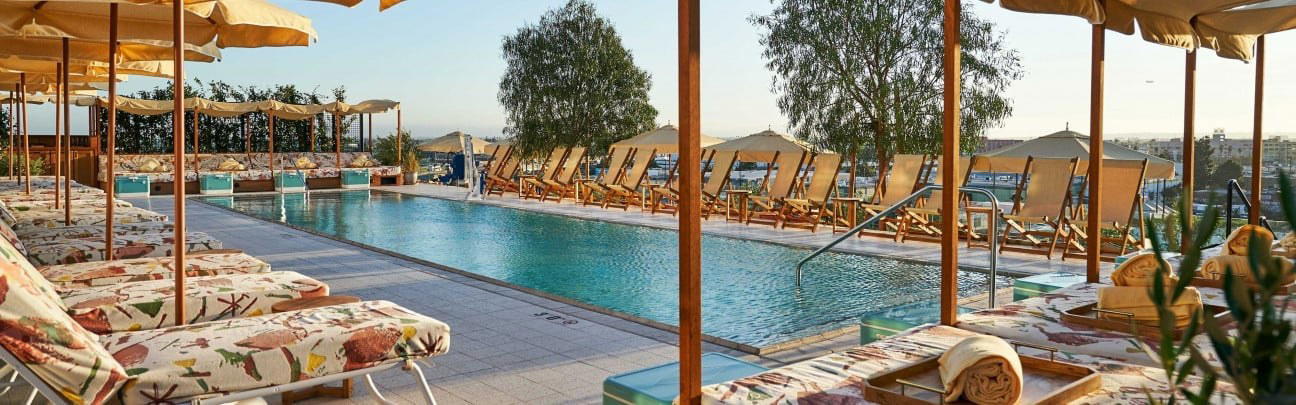
Lush 1970s Art Deco with industrial chic elements, exposed brick, warm lighting, and an artsy, private atmosphere.