Skopje Marriott Hotel
The Skopje Marriott occupies a central position on Plostad Makedonija, placing guests within walking distance of the city's Ottoman bazaar quarter and its post-independence neoclassical monuments. As one of Skopje's few internationally affiliated properties, it functions as the default address for business travellers and regional visitors seeking a known standard in a capital that remains underserved by global hotel brands.
Pearl is the En Primeur Club membership app — saves, bookings, and concierge access live there. Same editors, same standards.
- Address
- Plostad Makedonija 7, Skopje 1000, North Macedonia
- Phone
- +389 2 510 2510
- Website
- marriott.com
- Directions
- Get directions
 Saves & bookings on Pearl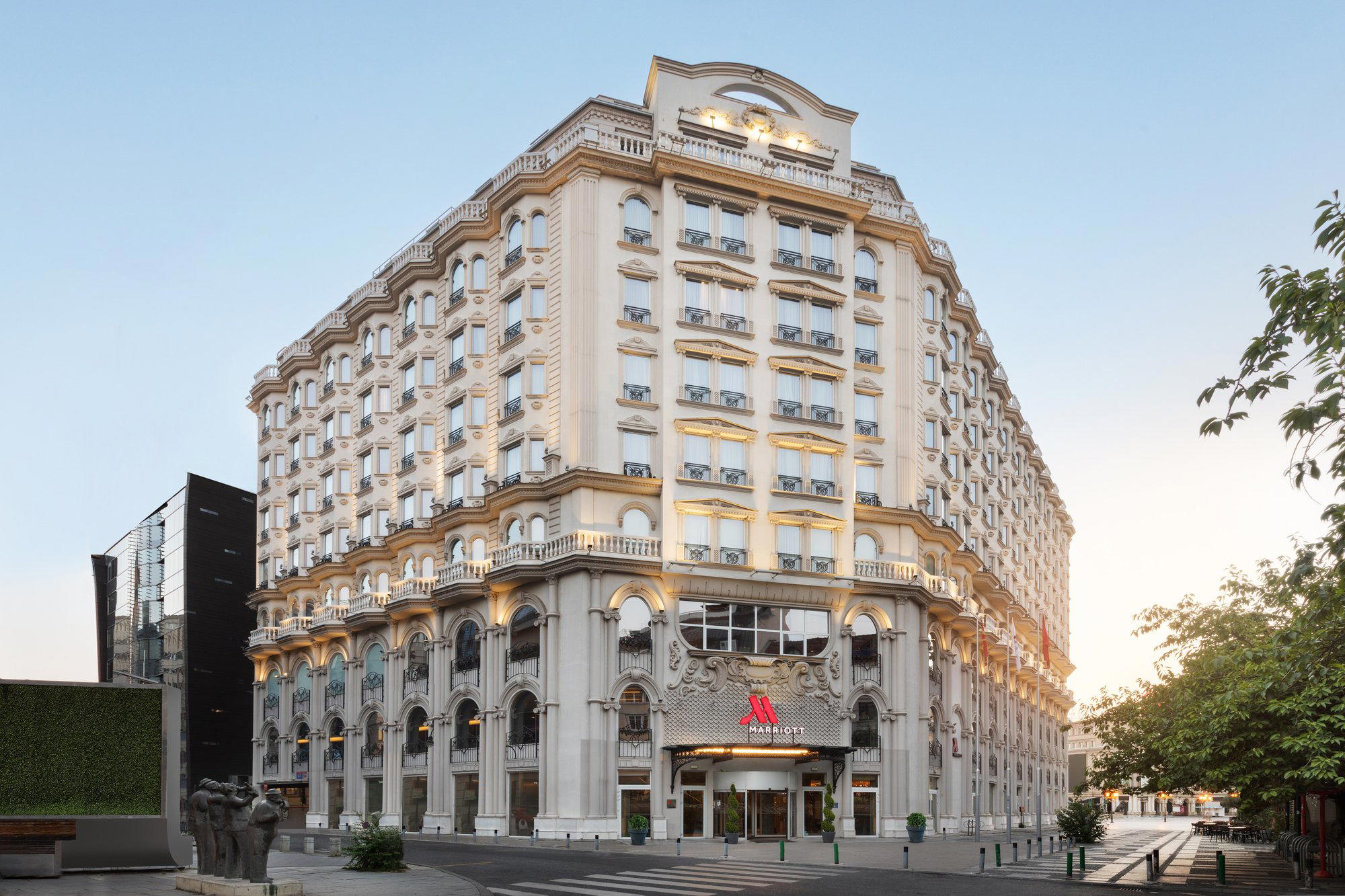
Where Skopje's International Hospitality Tier Begins
Most European capitals of comparable size have a layered hotel market: a handful of grand historic addresses, a clutch of design independents, and a band of international brands occupying the middle tier. Skopje's market is considerably thinner. The city's rapid physical transformation over the past two decades created a recognisable civic centre without generating the depth of hospitality infrastructure that usually follows urban investment. The Skopje Marriott, at Plostad Makedonija 7, sits at the summit of what that market currently offers in terms of brand recognition and central positioning, which says as much about the city's development stage as it does about the property itself.
For context, compare the comparable set available in other Balkan capitals. Belgrade has several established international flags alongside strong design independents. Tirana is seeing rapid entry from boutique operators. Skopje, by contrast, remains a market where the presence of a Marriott-affiliated property at the main square functions less as a competitive benchmark and more as a category anchor. Travellers who might otherwise reach for a Hotel Senigallia Skopje for a locally rooted experience will find that international brand standardisation and square-facing position represent the other end of the local spectrum.
The Address and What It Implies
Plostad Makedonija, Macedonia Square, is the formal civic heart of the capital. The square connects to the Stone Bridge, one of the city's few genuinely Ottoman-era structures, which leads across the Vardar into the Čaršija, the old bazaar district. A hotel address here means immediate proximity to both the administrative and cultural layers of the city. Guests stepping outside reach the National Theatre, the Archaeological Museum of Macedonia, and the river promenade within minutes on foot. The Čaršija, with its mosques, hans, and craft workshops, sits a short walk across the bridge. In a city that is still building out its tourism infrastructure, that kind of walkable centrality matters more than it would in a city with reliable transit coverage across multiple districts.
Booking practicalities for internationally branded properties in Skopje generally follow the pattern of other secondary European capitals: advance booking is advisable during peak conference periods and around national holidays, though the city does not generate the same demand compression as, say, a major Western European festival city.
The Dining Programme in a City Still Finding Its Culinary Register
Hotel dining in capital cities that sit outside the main international travel circuits tends to serve a particular function: it becomes the default for business guests, visiting delegations, and travellers who have not yet oriented themselves to local options. Whether that dining programme reads as a genuine expression of local culinary identity or as a globally standardised safe harbour depends almost entirely on editorial decisions made at the property level. The Skopje Marriott's position on the main square suggests the kind of visibility that could support a dining programme with real civic relevance, given that Macedonian cuisine, with its Ottoman-influenced grilled meats, its ajvar and turshija preserves, and its white wines from the Tikveš and Povardarie regions, offers genuine material to work with.
North Macedonia's wine output remains underrecognised internationally despite the country producing over 80 million litres annually, much of it exported in bulk. The Tikveš region in the south of the country grows Vranec, a thick-skinned red variety that produces structured, tannic wines with some ageing capacity, alongside Smederevka for whites. A hotel dining room in Skopje that anchors its wine programme to these domestic producers would be positioned differently from one defaulting to international labels. That editorial choice, where it has been made by Balkan hotel operators, has tended to generate stronger local identity and more distinctive guest experience than the alternative.
The same logic applies to the broader food programme. Macedonian culinary tradition draws from a confluence of Ottoman, Greek, Serbian, and Bulgarian influences without resolving cleanly into any of them, which gives a thoughtful kitchen real range: tavče gravče (baked beans in earthenware), pastrmajlija (the flatbread oval from Štip), the dairy traditions of the Shar mountain villages. A hotel programme that treats those traditions as source material rather than decoration occupies a different register from one that defaults to continental European standards. The choice represents the consequential editorial decision available to any hotel food programme in this market.
The Wider Benchmark: What International Positioning Means in This Context
Placing the Skopje Marriott in a global comparable set of internationally affiliated urban hotels reveals something useful about what international brand affiliation actually delivers in a secondary market. Properties like the Mandarin Oriental Bangkok or Hotel Plaza Athénée in Paris operate in markets so deep with alternatives that brand membership is one differentiator among many. At the other end of the spectrum, addresses like the Amangiri in Canyon Point or Castello di Reschio in Lisciano Niccone have defined their own category through radical specificity of place. The Skopje Marriott operates in a different logic: in a thin market, brand recognition functions as a trust signal for guests who are arriving in an unfamiliar capital and need a known operational baseline.
That is a legitimate and useful role. Properties like Badrutt's Palace Hotel in St. Moritz, Cheval Blanc Paris, or Aman Venice are not the comparison set here. The more instructive references are hotels in other secondary European capitals that have managed to convert central positioning and international affiliation into something with genuine local character. The Hotel Sacher Wien in Vienna, at its founding moment, represented that kind of civic-hotel synthesis, though at a scale and vintage Skopje cannot replicate. The question for the Skopje Marriott is whether it functions as a gateway to the city or primarily as an insulation from it. The Fifth Avenue Hotel in New York City, Aman New York, Bvlgari Hotel Tokyo, HOTEL THE MITSUI KYOTO, Hôtel de Paris Monte-Carlo, Hotel Du Cap-Eden-Roc, Hotel Esencia in Tulum, Hotel Bel-Air in Los Angeles, La Réserve Paris, Le Bristol Paris, Mandarin Oriental Ritz, Madrid, One&Only Mandarina, Casa Maria Luigia in Modena, Cipriani, A Belmond Hotel, Venice, and The Beverly Hills Hotel in Los Angeles.
The hotel's address at Plostad Makedonija 7 places it within Skopje's compact central zone, walkable to the Stone Bridge and the Čaršija bazaar quarter. Skopje International Airport sits approximately 23 kilometres east of the city centre, with transfer time varying between 25 and 40 minutes depending on traffic. Taxis and rideshare services connect the airport to the central square directly. Given the limited depth of Skopje's hotel market, room availability at centrally located international properties can tighten quickly around national events, regional conferences, and summer travel periods. Booking several weeks in advance is advisable for those periods.
Continue exploring
More in Skopje
Restaurants in Skopje
Browse all →
At a Glance
- Elegant
- Modern
- Sophisticated
- Business Trip
- Family Vacation
- Weekend Escape
- Panoramic View
- Historic Building
- Wi Fi
- Pool
- Spa
- Fitness Center
- Room Service
- Concierge
- Business Center
- Skyline
- Street Scene
- Wi Fi
- Pool
- Spa
- Fitness Center
- Room Service
- Concierge
- Business Center
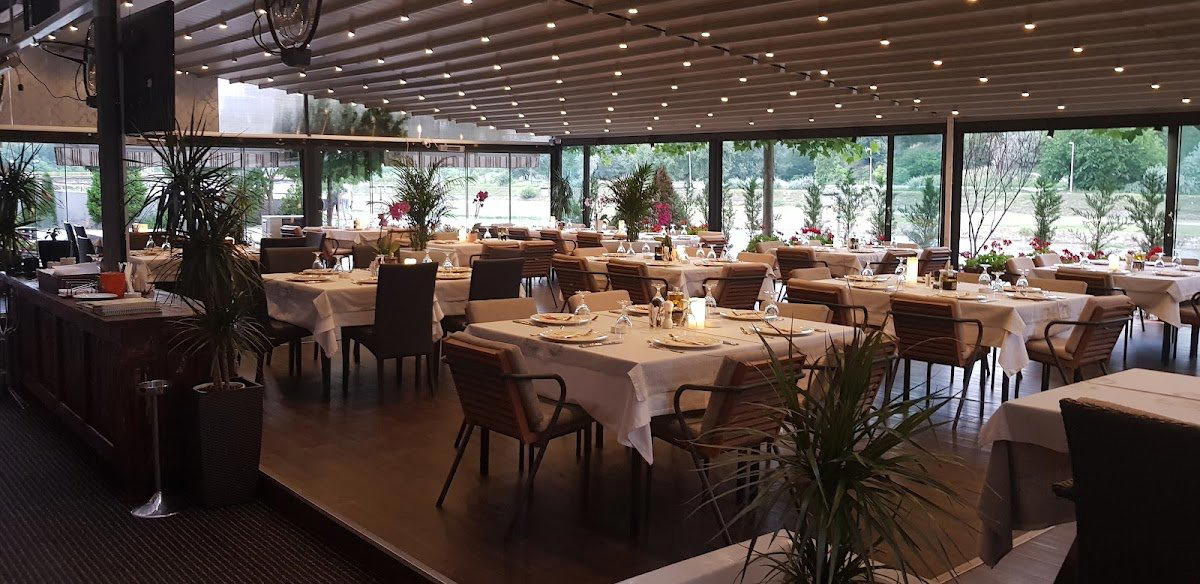
Timelessly elegant atmosphere with luxurious Greatroom lobby, fashionable furnishings, and a sense of sophistication.