

Sir Victor Hotel occupies a distinctive position on Carrer del Rosselló in Barcelona's Eixample district, where a striking limestone façade gives way to function-driven design and a culinary programme that rewards attention. The hotel places itself in the design-led, independently minded tier of Barcelona accommodation, sitting apart from the large international chain properties that dominate the upper end of the city's hotel market.
Pearl is the En Primeur Club membership app — saves, bookings, and concierge access live there. Same editors, same standards.
- Address
- Carrer del Rosselló, 265, Barcelona 8008, Spain
- Website
- marriott.com
- Directions
- Get directions
 Saves & bookings on Pearl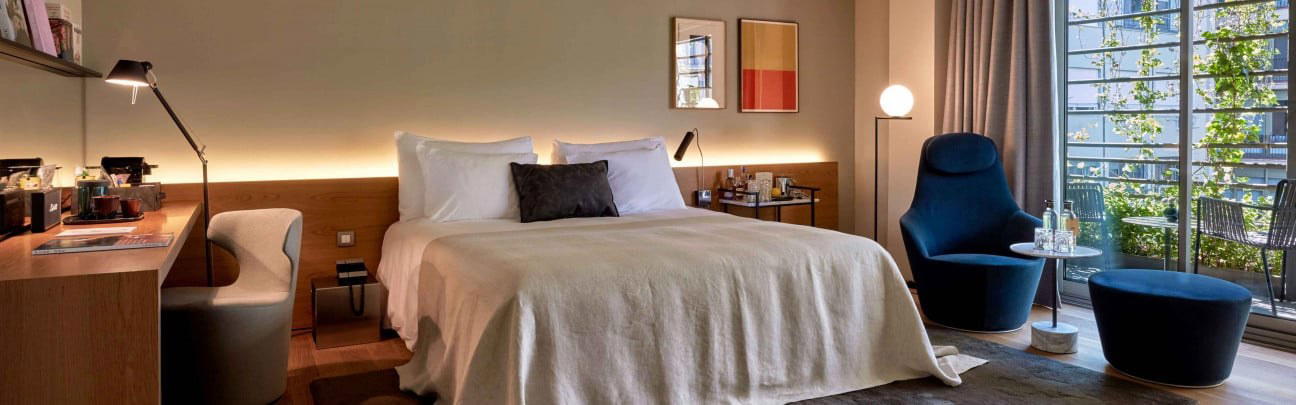
Where Eixample's Grid Meets a Different Kind of Hotel Architecture
Barcelona's Eixample district runs on a logic of repetition: Cerdà's octagonal blocks, regularised street widths, and chamfered corners that give the neighbourhood its characteristic rhythm. Against that backdrop, Sir Victor Hotel's limestone façade registers as a deliberate interruption. The material choice and the way the building reads from Carrer del Rosselló, 265 places it immediately in a different conversation from the beige-and-glass international hotel stock that lines much of the upper grid. Architecture in this part of the city tends to either defer to Modernisme precedent or ignore it entirely. The building here does something more considered: it peels away from both conventions while remaining embedded in the neighbourhood's structural logic.
That tension between integration and distinction is the defining characteristic of Barcelona's current generation of design-led hotels. The city's premium accommodation has separated into two broad camps over the past decade: large international properties with substantial footprints and standardised luxury delivery, and smaller, more architecturally specific projects that compete on atmosphere and spatial identity rather than amenity breadth. Sir Victor belongs to the latter group, alongside peers such as Alma Barcelona and Almanac Barcelona, both of which operate with a similar emphasis on design coherence over scale.
The Culinary Programme as Architecture's Extension
In Barcelona's better design hotels, the food and drink offering has become as much a signal of positioning as the rooms themselves. A decade ago, a hotel restaurant in this city was often a convenience amenity, something guests used once before discovering the neighbourhood. That pattern has shifted. Properties in the Eixample and around the Passeig de Gràcia corridor now treat their dining programme as a primary identity marker, partly because the competition for a certain kind of guest has intensified, and partly because Barcelona's broader restaurant scene has raised the baseline expectations considerably.
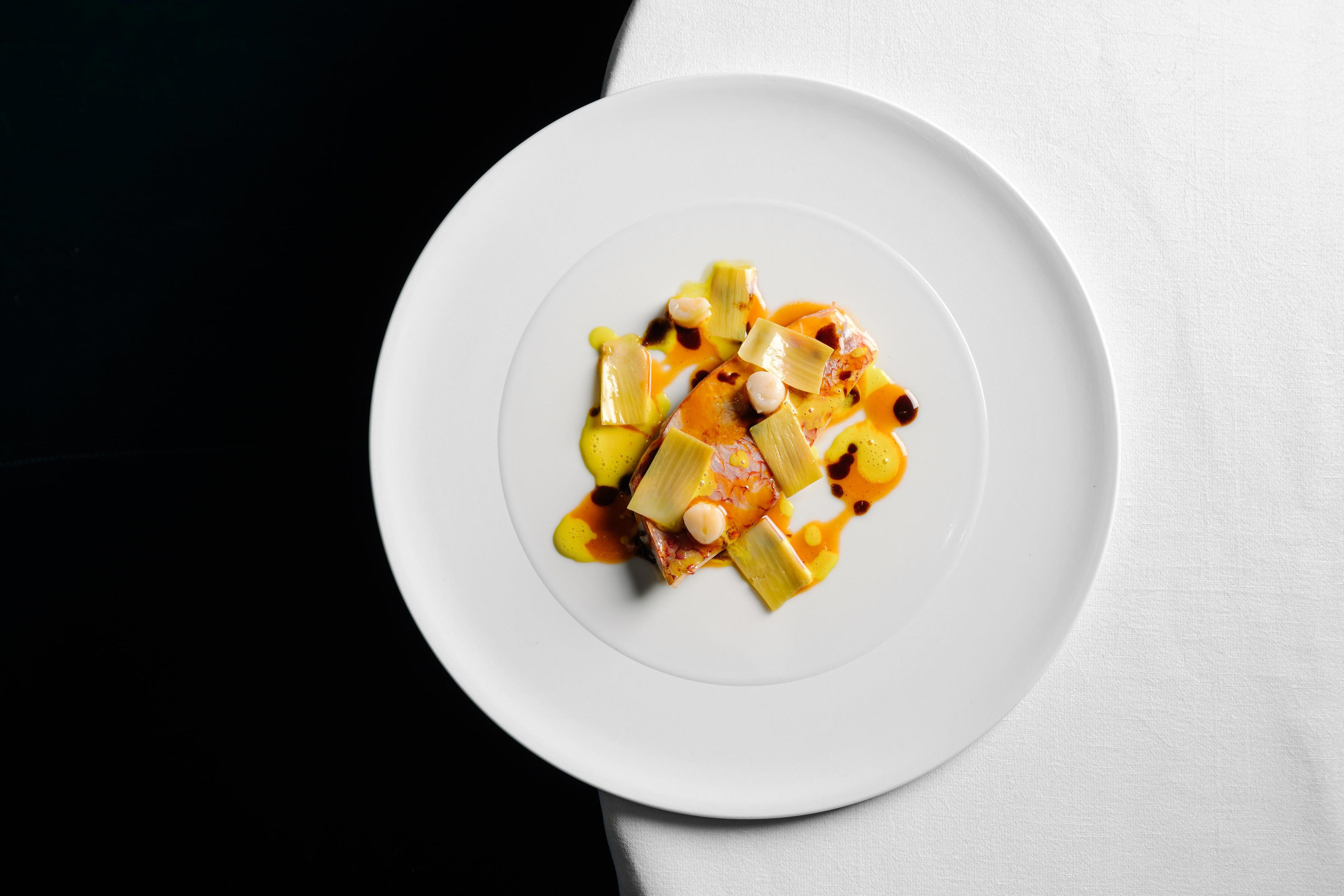
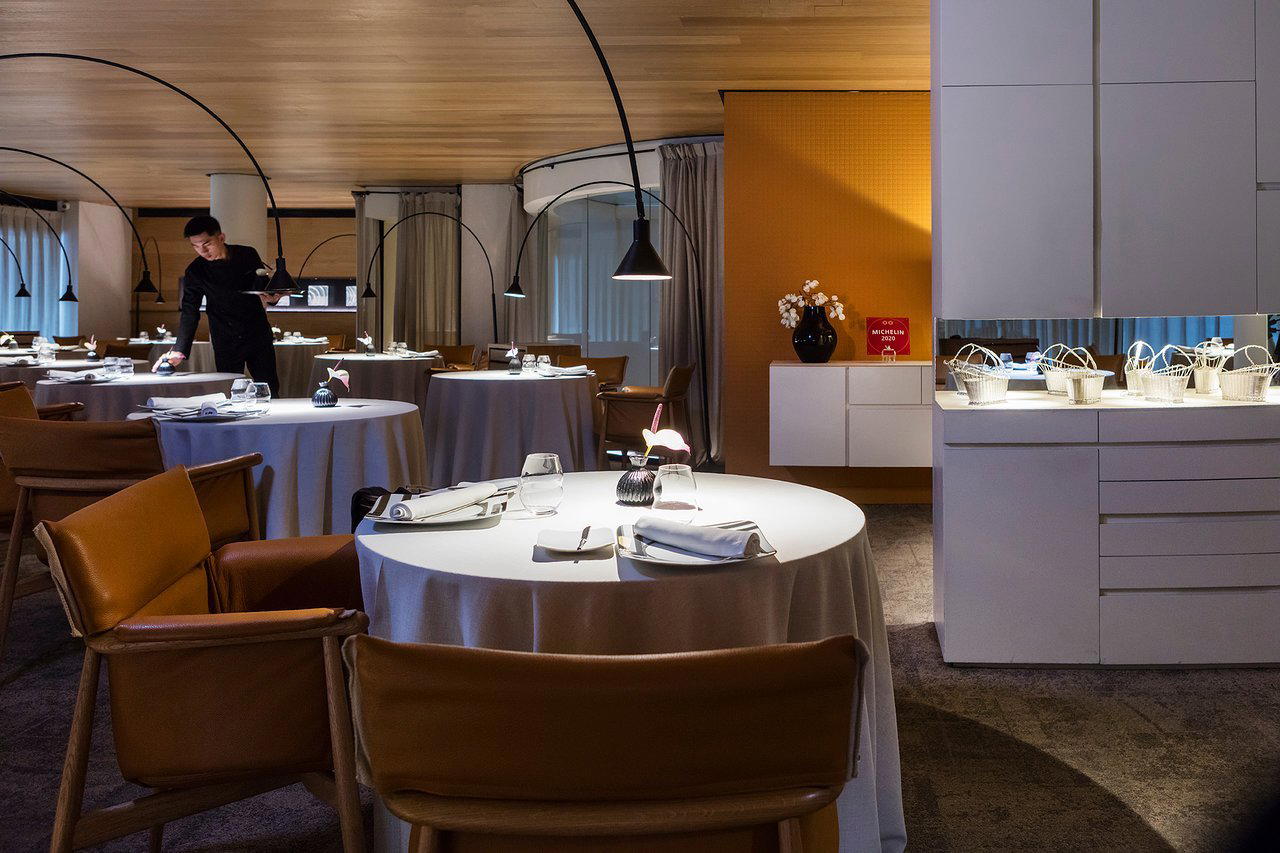
Sir Victor's culinary scene functions as part of the hotel's overall design argument rather than as a separate commercial operation. This distinction matters because it shapes everything from the physical integration of the dining space into the building to the sourcing logic and service register. The strongest hotel dining programmes in Barcelona, whether at Mandarin Oriental Barcelona, or at more intimate properties like Mercer Hotel Barcelona, succeed when the food operation reads as native to the building rather than imported into it.
The broader competitive reference point here is telling. ABaC Restaurant and Hotel sets the bar in terms of culinary ambition within a hotel context in Barcelona. Sir Victor operates in a different register, one where the dining programme enhances the atmosphere and rewards guests who engage with it, rather than demanding the kind of planning and formality that a starred tasting menu requires. That positioning serves a particular type of traveller well.
Eixample as Context: What the Neighbourhood Demands
Carrer del Rosselló sits in the upper Eixample, within reasonable walking distance of both the Diagonal corridor and the density of Gràcia to the north. The neighbourhood's character at this point in the grid is residential and commercial in roughly equal measure, which means the hotel operates within a lived-in urban context rather than a tourist-facing strip. That matters for the guest experience in practical terms: the streets are quieter than the area around Passeig de Gràcia proper, and the immediate surroundings include a mix of local cafés, design showrooms, and the kind of food shops that indicate a neighbourhood where people actually eat.
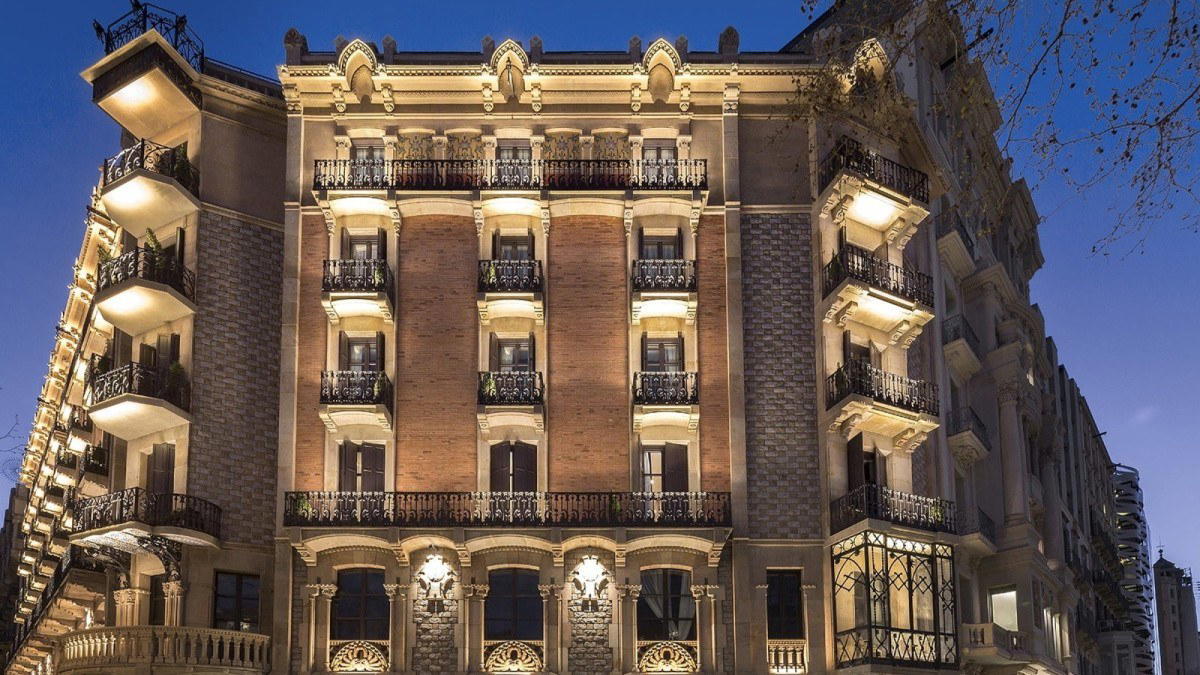
For comparison, properties like Hotel Arts Barcelona anchor themselves to the waterfront and the spectacle of the Olympic port area, while Antiga Casa Buenavista and Hotel Boutique Mirlo operate at the more intimate, residential end of the boutique spectrum. Sir Victor occupies the middle ground: architecturally specific enough to have a genuine identity, but positioned on a street that connects the hotel to the broader Eixample without the self-consciousness of particularly design-forward boutique properties.
Barcelona's hotel market has also benefited from the city's sustained status as a congress and design destination. The Eixample in particular draws guests who are in the city for reasons beyond leisure tourism, and that mix tends to create a more varied atmosphere in the lobby and dining spaces of mid-to-upper tier properties. The audience for a hotel like Sir Victor is not confined to one type of visitor, which is both a design challenge and, when handled well, a genuine asset.
Planning a Stay: What to Know Before Booking
Guests considering Sir Victor alongside the broader field of Barcelona design hotels would do well to compare it against the specific character of its Eixample peers. Alma Barcelona leans toward a quiet, residential atmosphere, while Almanac Barcelona operates with a more overt design statement. Sir Victor's limestone-and-function identity sits between these poles. For a wider view of where this property fits within Barcelona's accommodation field, the EP Club Barcelona guide maps the full range of options across neighbourhoods and price tiers.
Peers Worth Knowing
Comparable venues nearby, for context on price, style, and recognition.
| Venue | Cuisine | Price | Notes |
|---|---|---|---|
| Sir Victor HotelThis venue — the venue you are viewing | Cultural design hotel inspired by Catalonian lifestyle with emphasis on comfort, nature, and local art. | $$$$ | Not listed |
| The ROOF | contemporary urban luxury | $$$$ | Sant Pere, Santa Caterina i la Ribera |
| BLESS Hotel Barcelona | Contemporary luxury urban hotel blending stately architecture with sophisticated interiors. | $$$$ | la Dreta de l'Eixample |
| Ohla Barcelona | Boutique hotel in historic neoclassical building with contemporary renovation | $$$$ | Barri Gotic |
| Grand Hotel Central | Contemporary luxury boutique in historic 1920s building with Catalan Noucentisme refurbishment. | $$$$ | Sant Pere, Santa Caterina i la Ribera |
| Gran Hotel La Florida | Historic landmark blending Catalan Noucentisme with contemporary luxury. | $$$$ | Vallvidrera, el Tibidabo i les Planes |
Recognition history
Dated appearances from independent guides and award organizations, with the underlying list record or original source where available.
Design Hotels Member
Design Hotels
Mr & Mrs Smith Smith Seal of Approval
Mr & Mrs Smith
Michelin Selected
Michelin
Continue exploring
More in Barcelona
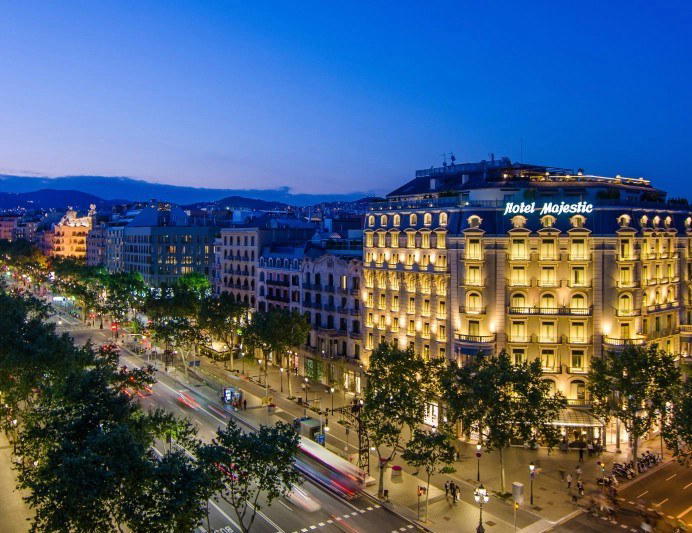
Hotels in Barcelona
Browse all →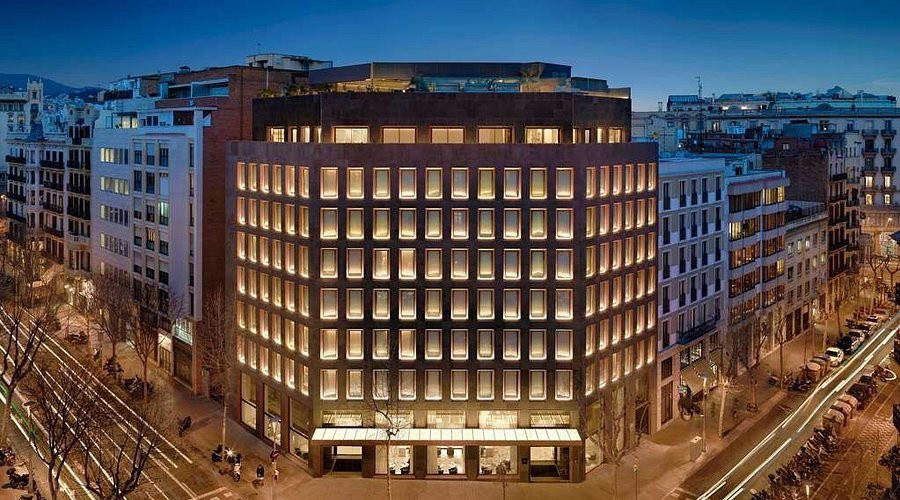

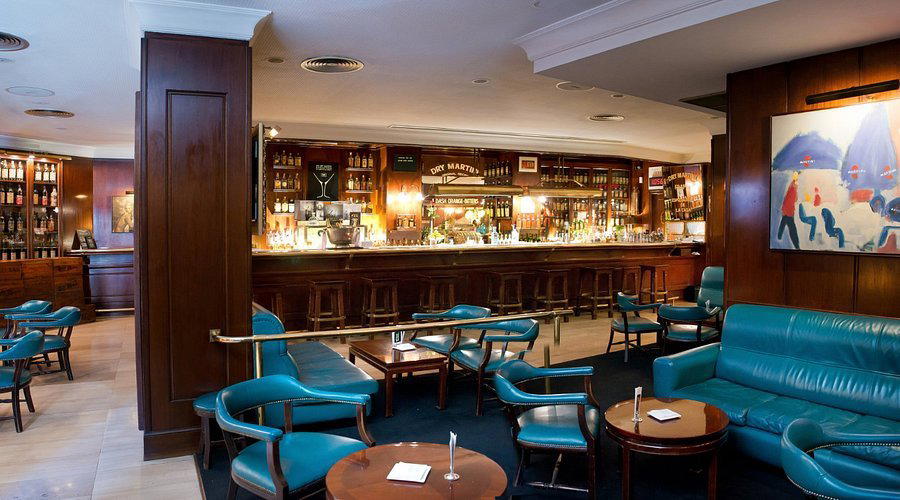
Bars in Barcelona
Browse all →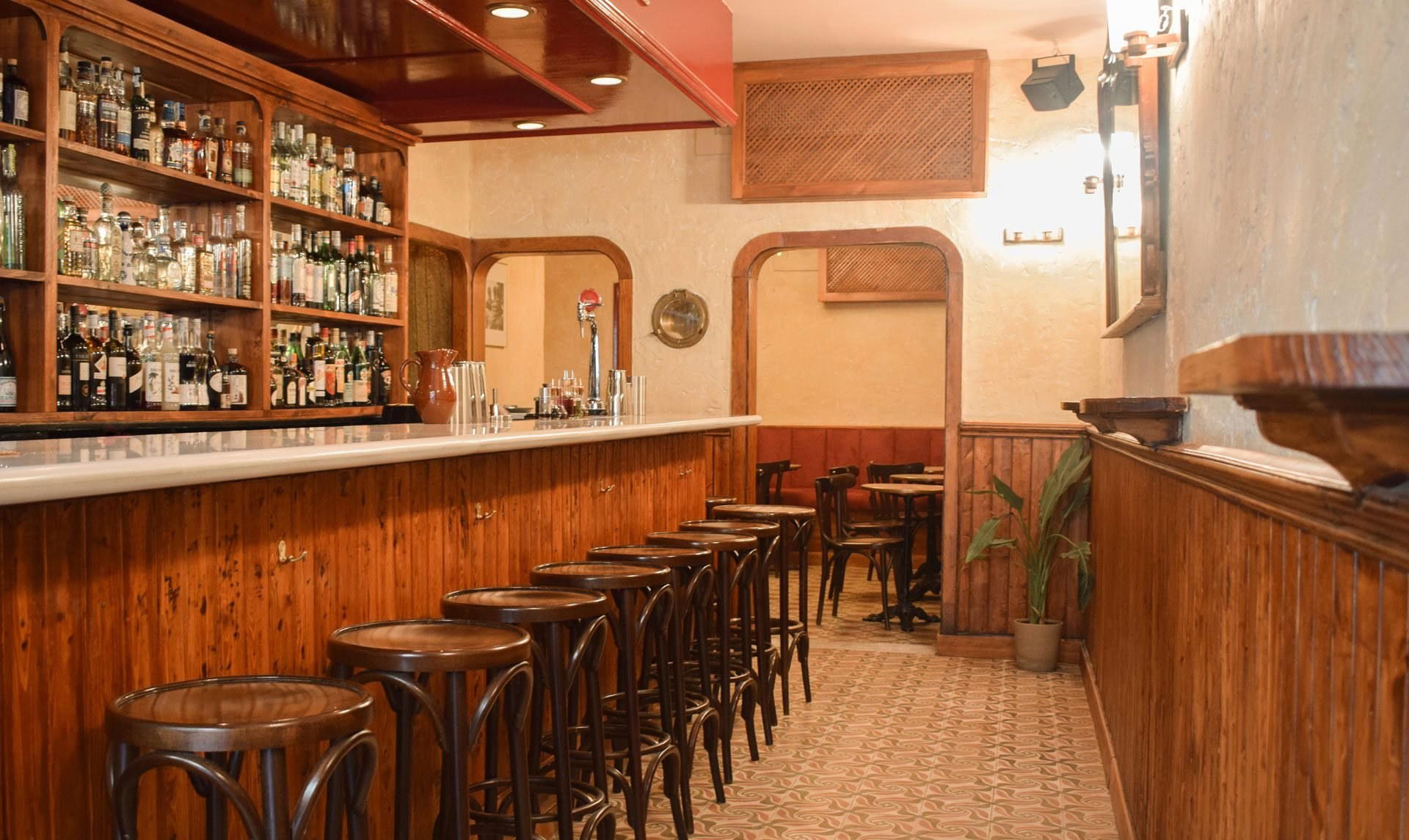
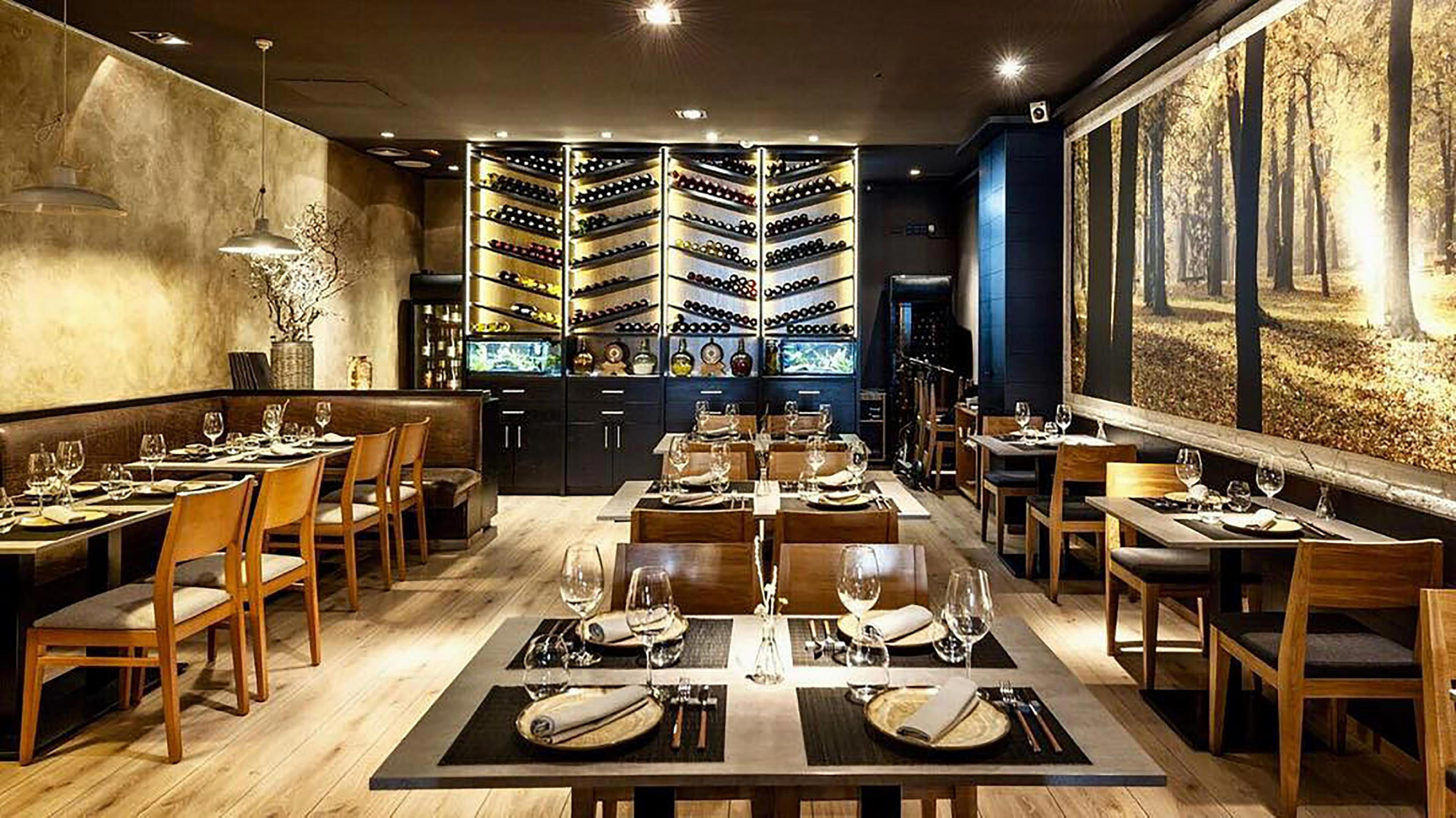
Restaurants in Barcelona
Browse all →
At a Glance
- Modern
- Elegant
- Sophisticated
- Trendy
- Romantic Getaway
- Business Trip
- Weekend Escape
- Rooftop Pool
- Panoramic View
- Terrace
- Wi Fi
- Pool
- Spa
- Fitness Center
- Room Service
- Concierge
- Business Center
- Valet Parking
- EV Charging
- Skyline
- Wi Fi
- Pool
- Spa
- Fitness Center
- Room Service
- Concierge
- Business Center
- Valet Parking
- EV Charging
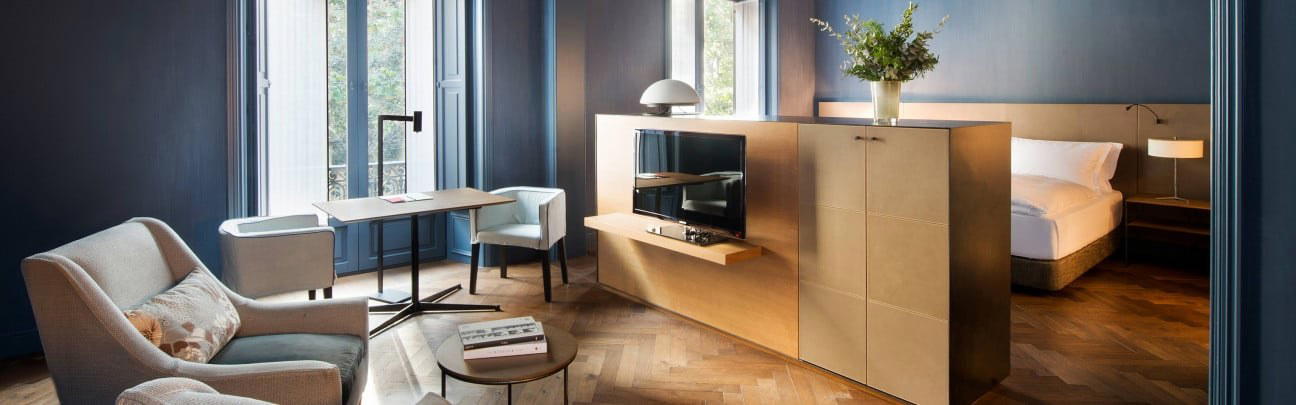
Sophisticated and lively atmosphere with stylish lighting, artistic elements, and a trendy rooftop vibe blending relaxation and urban energy.