

AFAR Best New Hotels · Conde Nast Hot List Hotels
On the southernmost tip of Gotland island, Sibbjäns occupies 198 acres of grassland, forest, and coastline that its owners have quietly turned into Sweden's first boutique farm stay. Stone buildings refurbished with local artisans, a five-course regenerative-farm dinner, and rates from $275 per night make it one of the more considered new arrivals in Scandinavian rural hospitality.

Pearl is the En Primeur Club membership app — saves, bookings, and concierge access live there. Same editors, same standards.
- Address
- VAMLINGBO SIBBJÄNS 102, 623 31 Burgsvik, Sweden
- Phone
- +46 498 60 15 65
- Website
- sibbjans.se
- Directions
- Get directions
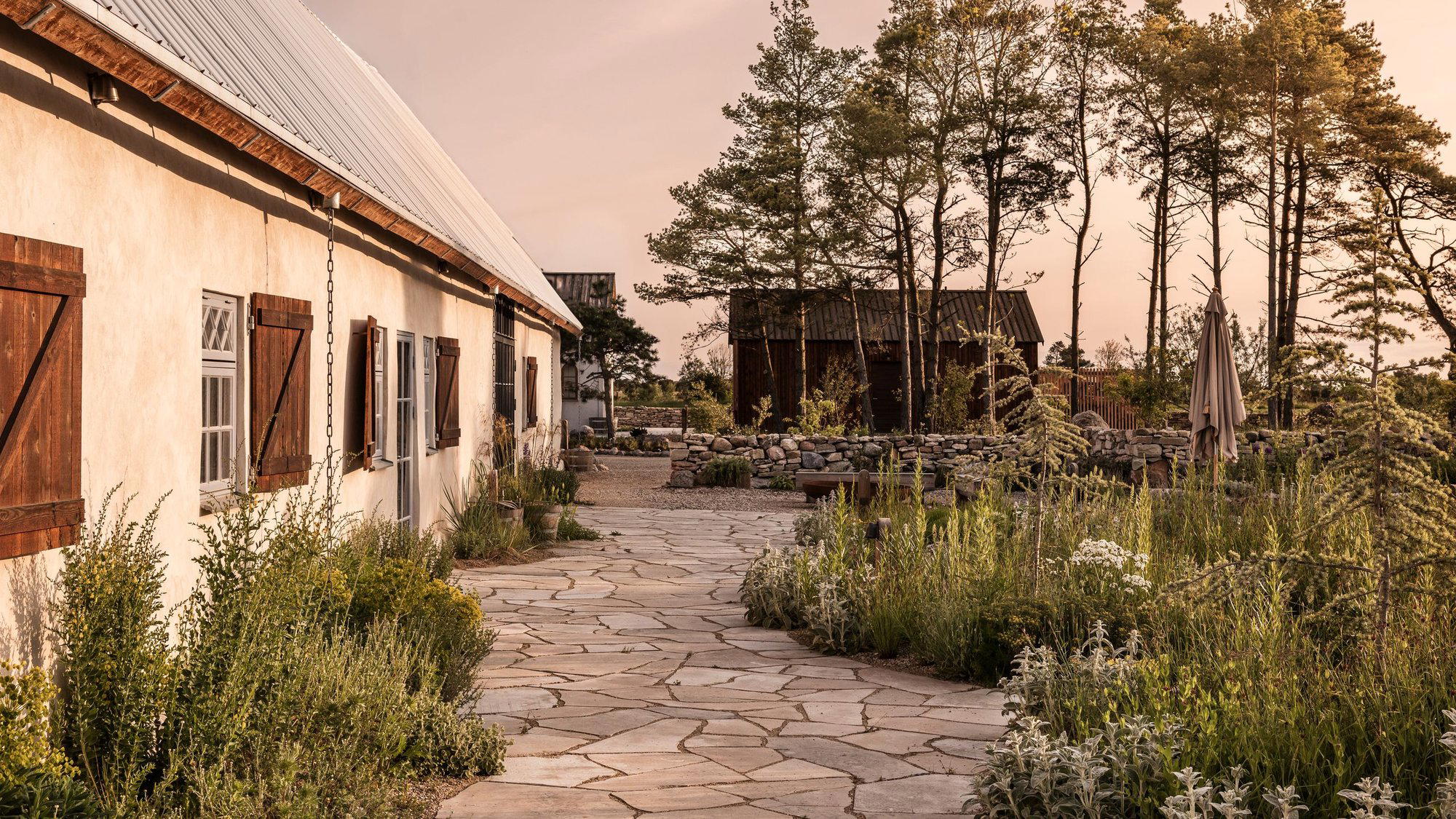
Where the Stone Walls Do the Talking
Approach Sibbjäns along a road hemmed by wildflowers and the architecture answers before anyone does. The centerpiece of the property is a cluster of stone farm buildings that read, from a distance, as if they have barely changed since they were raised. Up close, the revamp is unmistakable but deliberately unshowy: local artisans have worked the interiors rather than a brand-name design studio, and the result sits closer to the Swedish tradition of crafted restraint than to the international boutique-hotel template. In a country that has produced this kind of considered rural property before — Ett Hem in Stockholm being the urban equivalent of the sensibility — Sibbjäns represents something genuinely new in format: a regenerative farm stay that places the working land at the centre of the guest experience rather than as a scenic backdrop.
The 198 acres encompass grassland, forest, and a coastline that belongs to the southernmost reach of Gotland island. Paths between the buildings pass a natural pool floating with water lilies before arriving at a 19th-century nine-room farmhouse. The property is not large by Swedish rural estate standards, but the acreage is productive rather than decorative: the farm has nearly reached self-sufficiency in food production, which shapes the restaurant program directly. For context on how this kind of land-integrated model compares elsewhere in Scandinavia, Eco by StrandNara in Morbylanga takes a related but more coastal-focused approach on Öland, while Görvälns Slott in Järfälla operates on similar estate-scale grounds but within reach of Stockholm rather than on an island.
Design Decisions That Read as Convictions
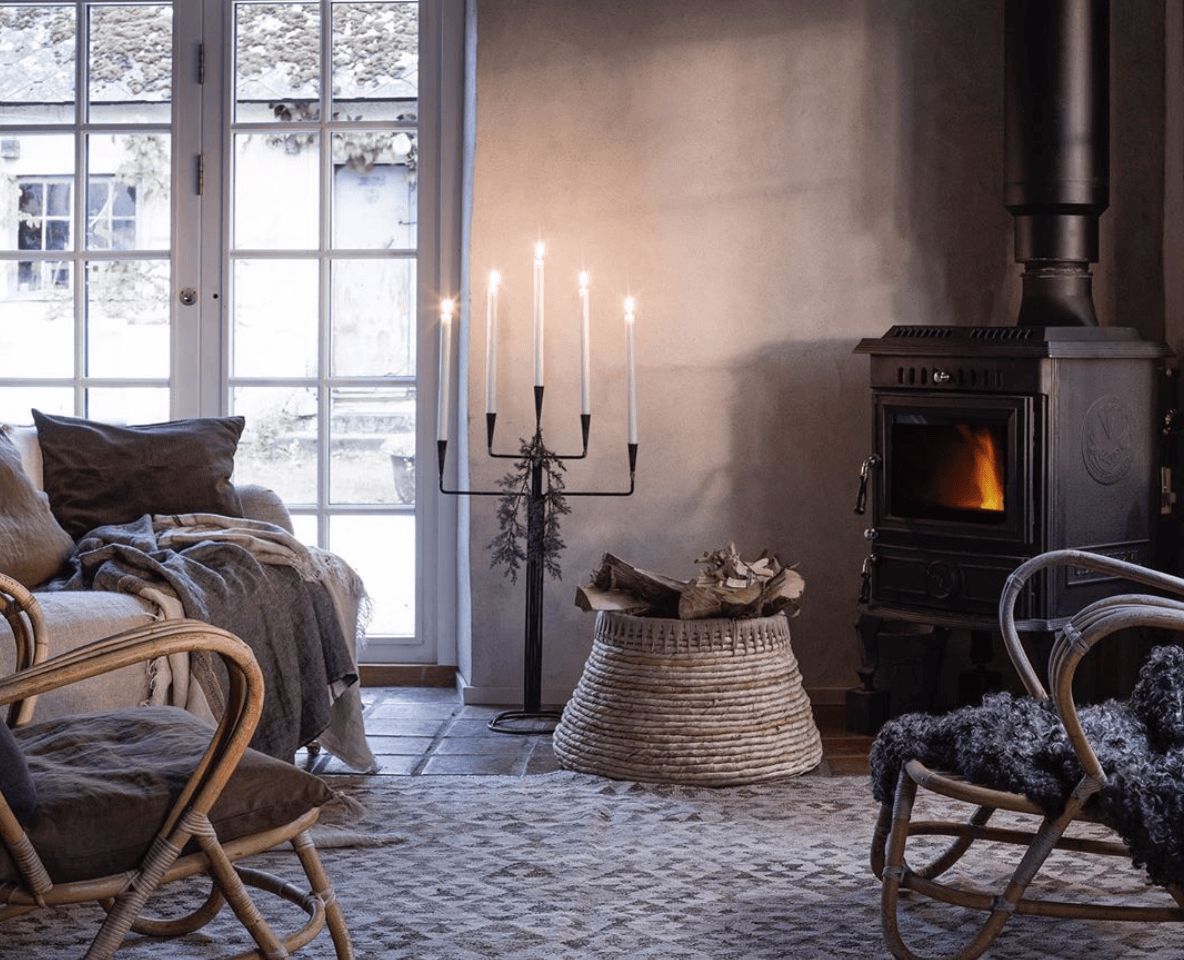
The interior palette, pale sage, cream, chocolate, avoids the overworked Scandinavian minimalism that has become a global export. Shaggy sheepskin chairs signal that the rooms are meant to be occupied in cold-weather comfort as much as summer light. The rooms are not identical: one contains a bathtub, others have larger showers fitted with digital displays showing real-time water savings from the property's recycling system. That last detail is worth dwelling on. Most properties that position themselves as eco-conscious install the signage at check-in and leave it there.
Stone building stock provided the structural bones, but the owners, two couples, Pontus and Sanna Rönn alongside Jonas Nordlander and Kina Zeidler, made deliberate choices about who would finish the interiors. Local artisans rather than imported talent, materials that the island already produces rather than those sourced from design trade shows. The effect is a coherence that takes longer to achieve than a studio brief but tends to last longer on the eye. Properties that have taken a similarly artisan-sourced approach to interiors in Sweden include Maryhill Estate in Glumslöv and, at the urban end, Story Studio in Malmö, though neither operates on farmland of this scale.
The Restaurant as Extension of the Farm
Five-course dinner format sits at the centre of the food program and draws directly from what the farm produces. Documented dishes include Wrangebáck cheese served with cucumber marmalade, and lamb with cabbage and burnt cream, preparations that reflect the ingredient logic of a kitchen working with what is available rather than reverse-engineering a menu from a concept. The chef responsible for this output is Bob Speakman, whose name appears in the property's early documentation but whose background is not on public record.
What the menu does reflect, regardless of kitchen biography, is a broader Swedish shift toward hyperlocal sourcing that has accelerated since the early 2010s. Gotland as a food region brings particular advantages: the island's limestone-rich soil produces lamb, cheeses, and root vegetables with distinct characteristics, and the island's relative isolation has kept food producers smaller and more traceable than those serving the mainland. The restaurant at Sibbjäns is positioned to benefit from that provenance infrastructure in a way that urban properties, however well-intentioned, cannot replicate. For a comparison point on farm-to-table ambition in Sweden's wider hospitality set, Vyn Restaurant in Östra Nöbbelöv operates on related principles in Skåne. See also our full Burgsvik restaurants guide for the wider local dining picture.
The Activity Layer and What It Signals
The activity program at Sibbjäns reflects the flat, coastal geography of southern Gotland: e-bike routes on flat roads, kitesurfing, canoeing, and birdwatching are all on the current slate. The owners also maintain what the property describes as a secret alfresco lunch spot, a detail that positions the discovery element as part of the stay's architecture rather than an add-on. A tennis court, yoga pavilion, sauna, outdoor gym, farm shop, and glasshouse events space are all in planning, which means this review captures an early-stage property that will look substantially different in two or three seasons.
That trajectory matters for timing. Sibbjäns in its current form is smaller, quieter, and less programmed than it will become. Properties at this stage of development often attract a self-selecting cohort, in this case, the property filled with guests the owners described as drawn from the creative and fashion industries, with reported visits from within the Swedish royal circle. The demand signal is clear: the property was fully booked in its opening season despite operating, by its own description, in stealth mode. Rates start from $275 per night, which positions Sibbjäns at the lower end of the premium Swedish rural stay market, closer to Hjortviken Country Club in Hindas than to destination-resort pricing at Copperhill Mountain Lodge in Åre or Arctic Bath in Harads.
Planning a Stay
Sibbjäns sits at Vamlingo Sibbjäns 102, Burgsvik, on the southern tip of Gotland island. Gotland is accessible by ferry from Nynäshamn or Oskarshamn on the Swedish mainland, with the crossing taking roughly three hours; flights operate seasonally from Stockholm Arlanda and a small number of other Swedish airports to Visby, which sits at the island's northern end, roughly an hour's drive from Burgsvik. Given that the property filled on a quiet launch with no public-facing booking infrastructure, anyone planning a visit should move early in the booking window. No direct booking link or phone number is currently available through EP Club's records, so reaching the property directly through its ownership group is the advised route. The nine-room capacity means availability windows are narrow and unlikely to widen significantly even as the property matures.
For a broader map of where Sibbjäns sits within Swedish rural hospitality, the most useful comparisons outside of Gotland include Hotel Flora Göteborg in Gothenburg for a design-led urban counterpoint, Marstrands Kurhotell in Marstrand for a coastal-heritage alternative on the west coast, and Stora Hotellet in Umeå or Huskvarna Stadshotell in Huskvarna for the broader picture of Swedish regional hotel stock. At the international end of the reference set, the farm-stay format has been executed at a more established scale at properties such as Aman Venice, Le Bristol Paris, and Mandarin Oriental Ritz, Madrid, though none of those operate on working regenerative farmland. For a sense of what architectural coherence at this price level looks like in other European formats, Badrutt's Palace in St. Moritz, Hôtel de Paris Monte-Carlo, Cipriani in Venice, and Bvlgari Hotel Tokyo or The Fifth Avenue Hotel in New York City offer useful calibration points, even if the format and scale are entirely different. Also worth a look for the design-forward Swedish property niche: Fjällbacka in Fjällbacka, Steam Hotel in Västerås, and ICEHOTEL in Jukkasjarvi.
Side-by-Side Snapshot
Comparable venues nearby, for context on price, style, and recognition.
| Venue | Cuisine | Price | Awards | Notes |
|---|---|---|---|---|
| SibbjänsThis venue — the venue you are viewing | Boutique farm stay with regenerative agriculture | $300–500 | AFAR Best New Hotels · Conde Nast Hot List Hotels | Not listed |
| Ruby Hotels Stockholm | Urban lean-luxury design hotel with a strong lifestyle and music narrative. | $100–200 | Not listed | Kungsholmen |
| Ruby Hotel Malmö | Lean Luxury design hotel | Not listed | Not listed | Davidshall |
| Story Hotel Stockholm North - JDV by Hyatt | Boutique hotel in historic 19th-century building with industrial-chic design. | Not listed | Not listed | Sundbyberg |
| Hobo Hotel | Contemporary boutique in Brutalist architecture | Not listed | Michelin Selected · White Guide Sweden Hotels - Very Fine Level | Norrmalm |
| Haymarket by Scandic | Modern Art Deco in historic department store building | Not listed | White Guide Sweden Hotels - Exceptional Level | Norrmalm |
Recognition history
Dated appearances from independent guides and award organizations, with the underlying list record or original source where available.
AFAR Best New Hotels
AFAR · AFAR 40 Best New Hotels 2026
Conde Nast Hot List Hotels
Conde Nast
Continue exploring
More in Burgsvik
Hotels in Burgsvik
Browse all →
Details
- Cozy
- Rustic
- Scenic
- Quiet
- Elegant
- Romantic Getaway
- Wellness Retreat
- Weekend Escape
- Garden
- Pool
- Sauna
- Wi Fi
- Breakfast Included
- Garden
- Step Free Entrance
- Wheelchair Accessible
Nordic farm idyll with sustainable chic, featuring limewashed walls, soft colors, cozy sheepskin throws, and natural light in a serene rural setting.