ICEHOTEL


Michelin Selected · White Guide Sweden Hotels - Exceptional Level
Selected by the Michelin guide in 2025, ICEHOTEL in Jukkasjärvi occupies a position that no conventional hotel can replicate: its guest rooms are sculpted from river ice each winter, then returned to the Torne River come spring. The property sits at the northern edge of Swedish Lapland, where the Arctic light and sub-zero temperatures are not obstacles to be managed but the very material from which the architecture is made.

Pearl is the En Primeur Club membership app — saves, bookings, and concierge access live there. Same editors, same standards.
- Address
- Marknadsvägen 63, 981 91 Jukkasjärvi, Sweden
- Phone
- +46 980 668 00
- Website
- icehotel.com
- Directions
- Get directions
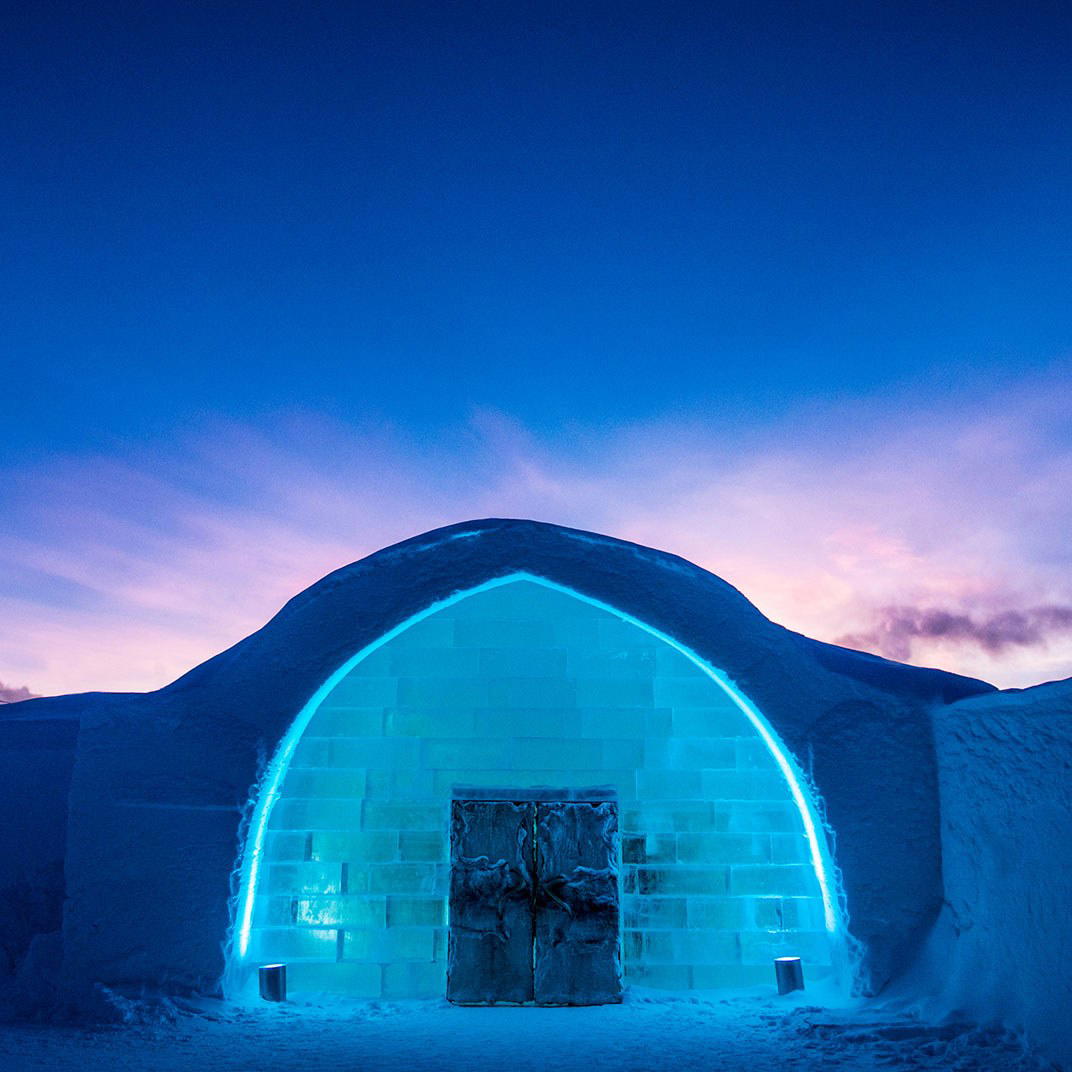
Where the Building Is Also the Experience
Most hotels are permanent structures that host temporary experiences. ICEHOTEL in Jukkasjärvi inverts that logic entirely. The winter hotel is rebuilt from scratch each November using ice harvested from the Torne River, and by April it has melted back into the same waterway. What guests sleep inside is not a themed room or a novelty suite appended to a conventional property; it is the primary architectural act of the year, repeated and reinvented annually since the property first opened in 1989. That three-decade-plus continuity, combined with a 2025 Michelin Selection, positions ICEHOTEL within a very small category of properties where the physical structure and the guest experience are functionally inseparable.
Swedish Lapland sits roughly 200 kilometres above the Arctic Circle, and Jukkasjärvi is a village of fewer than one thousand residents. The nearest airport of significant size is Kiruna, approximately 17 kilometres to the southeast, which receives scheduled flights from Stockholm Arlanda. That logistical remoteness is part of the property's structural identity: the effort required to reach it is calibrated to a guest who has already made a deliberate decision, not one who wandered in from a city break. For broader context on what the area offers beyond the hotel itself, our full Jukkasjärvi guide covers the surrounding region in detail.
The Architecture of Cold
In northern Scandinavia and a handful of other high-latitude locations, ephemeral ice construction has developed into a recognised architectural discipline. Buildings made from snow and ice carry structural constraints that do not apply to timber or concrete: compressive strength without tensile resilience, surfaces that respond to ambient temperature in real time, and a material that requires continuous management rather than one-time construction. ICEHOTEL has become the most documented venue within this tradition, partly through longevity and partly through the annual commission model that invites artists and architects from outside the permanent team to contribute room designs each season.
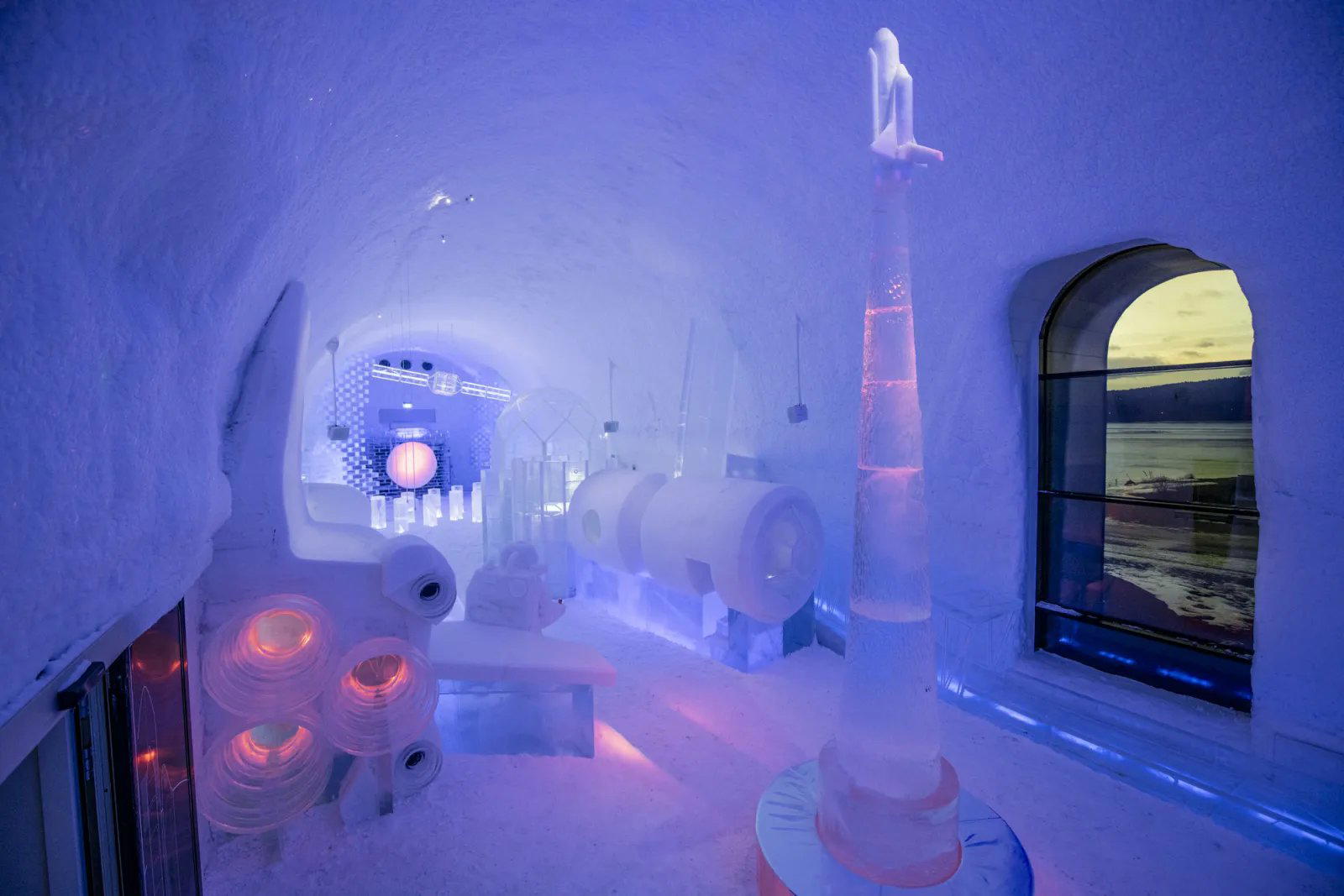
The commissioned suites vary considerably in their aesthetic approach from year to year. Some lean toward abstract sculptural work, using the translucency of ice as a light-diffusing medium. Others reference Sami cultural motifs or Nordic natural forms. What holds across iterations is the base material: blocks harvested from the Torne River, which carries a clarity and density suited to fine carving. The Michelin selection in 2025 recognises the property within the hotels category, placing it alongside Swedish properties selected for distinctiveness and quality rather than for luxury in the conventional sense of the term.
Within Swedish accommodation, the design-led hotel segment includes properties such as Ett Hem in Stockholm, a converted townhouse where interior design is central to the proposition, and Görvälns Slott in Järfälla, which operates within a heritage castle framework. ICEHOTEL sits in neither of those categories. Its design reference points are closer to installation art and vernacular Arctic construction than to Scandinavian minimalism or historic preservation.
Permanence and Impermanence in the Same Address
One detail that distinguishes ICEHOTEL from earlier and simpler iterations of the ice hotel concept is the presence of ICEHOTEL 365, the year-round facility that uses mechanical refrigeration to maintain a section of ice suites through the summer months. This means the property is not strictly seasonal for guests who cannot or do not want to travel in the November-to-April winter window. The 365 component operates in parallel with the annual winter build rather than replacing it; the winter structure remains the primary architectural event, with the refrigerated rooms serving a supplementary function for off-season visits.
Temperatures inside the ice rooms sit consistently around minus five degrees Celsius regardless of external conditions, which shapes the overnight stay in practical terms. Sleeping systems are rated for Arctic conditions. The approach to bedding and insulation is functional rather than decorative. This is not the same accommodation proposition as, say, Arctic Bath in Harads, which combines cold-water bathing with conventional warm-room accommodation in a floating structure further south on the Lule River. Each property addresses the Arctic environment differently: Arctic Bath integrates the cold as a wellness ritual alongside comfortable heated rooms, while ICEHOTEL places guests directly inside the cold as the primary architectural condition.
Other Swedish properties selected by the Michelin guide in 2025 include Sibbjäns in Burgsvik, a boutique farm-stay format on Gotland, and Stora Hotellet in Umeå, an urban property in the northern coastal city. The selection across these venues suggests a Michelin hotels editorial that values distinctiveness of concept alongside quality of execution, rather than simply tracking star ratings or room counts. ICEHOTEL's inclusion reflects that broader curatorial stance.
Planning the Visit
The winter hotel operates from approximately December through April each year, with precise opening dates varying by season depending on ice harvest conditions on the Torne River. The ICEHOTEL 365 facility provides access to ice rooms outside that window, though the scale and artistic range of the seasonal build is not replicated in the permanent section. Kiruna Airport serves as the primary arrival point, with ground transfers to Jukkasjärvi taking under half an hour. Winter visits coincide with the period of maximum northern lights activity in Lapland, which typically runs from late September through March, with the darkest, clearest nights in December and January offering the highest probability of visibility.
For travellers building a broader Scandinavian itinerary around the ICEHOTEL visit, comparison with Michelin-selected urban properties in the country is instructive. Hotel Flora Göteborg in Gothenburg and Story Studio Malmö in Malmö represent the design-led urban end of the Swedish hotel selection, while ICEHOTEL and Arctic Bath define the remote-nature end. The gap between those two poles, in terms of both geography and experience format, is substantial. Properties such as Copperhill Mountain Lodge in Åre or Steam Hotel in Västerås occupy the middle ground, combining natural setting with more conventional hotel infrastructure.
For those situating ICEHOTEL within a wider international frame of reference for singular-concept properties, the comparison set broadens considerably. Properties such as Badrutt's Palace Hotel in St. Moritz or Aman Venice offer a different version of destination-specific architecture, one defined by permanence and historical accumulation rather than annual reconstruction. Le Bristol Paris and Mandarin Oriental Ritz, Madrid belong to a further category still: institutions whose architecture is fixed and whose identity is carried by service tradition over decades. ICEHOTEL's proposition sits apart from all of them. The building's impermanence is not a limitation; it is the mechanism through which the property remains architecturally current without renovation cycles, and through which each season's guest can claim an experience that no returning guest has had in exactly the same form before.
Comparable Venues
Comparable venues nearby, for context on price, style, and recognition.
| Venue | Cuisine | Price | Awards | Notes |
|---|---|---|---|---|
| ICEHOTELThis venue — the venue you are viewing | Annual ice and snow art installation with warm accommodations | Not listed | Michelin Selected · White Guide Sweden Hotels - Exceptional Level | Not listed |
| Ruby Hotels Stockholm | Urban lean-luxury design hotel with a strong lifestyle and music narrative. | $100–200 | Not listed | Kungsholmen |
| Ruby Hotel Malmö | Lean Luxury design hotel | Not listed | Not listed | Davidshall |
| Ruby Hotel Stockholm | Large urban design hotel in a mixed-use development on Drottningholmsvägen, positioned as Ruby’s ‘lean luxury’ lifestyle concept for both visitors and locals. | Not listed | Not listed | Kungsholmen |
| Hagastrand | Social wellness hotel in Royal Haga Park with generous communal spaces, contemporary Scandinavian architecture, and a nature-connected retreat feel. | $200–300 | White Guide Sweden Hotels - Exceptional Level | Solna |
| Treehotel | Contemporary eco-luxury treehouse resort designed by leading Scandinavian architects, emphasizing minimalist design and sustainable practices. | $750–1,000 | Michelin Selected · Mr & Mrs Smith Seal of Approval | Harads |
Recognition history
Dated appearances from independent guides and award organizations, with the underlying list record or original source where available.
Michelin Selected
Michelin
White Guide Sweden Hotels - Exceptional Level
White Guide
Continue exploring
More in Jukkasjarvi
Details
- Well Known
- Scenic
- Whimsical
- Rustic
- Romantic Getaway
- Honeymoon
- Weekend Escape
- Design Destination
- Panoramic View
- Wi Fi
- Sauna
- Room Service
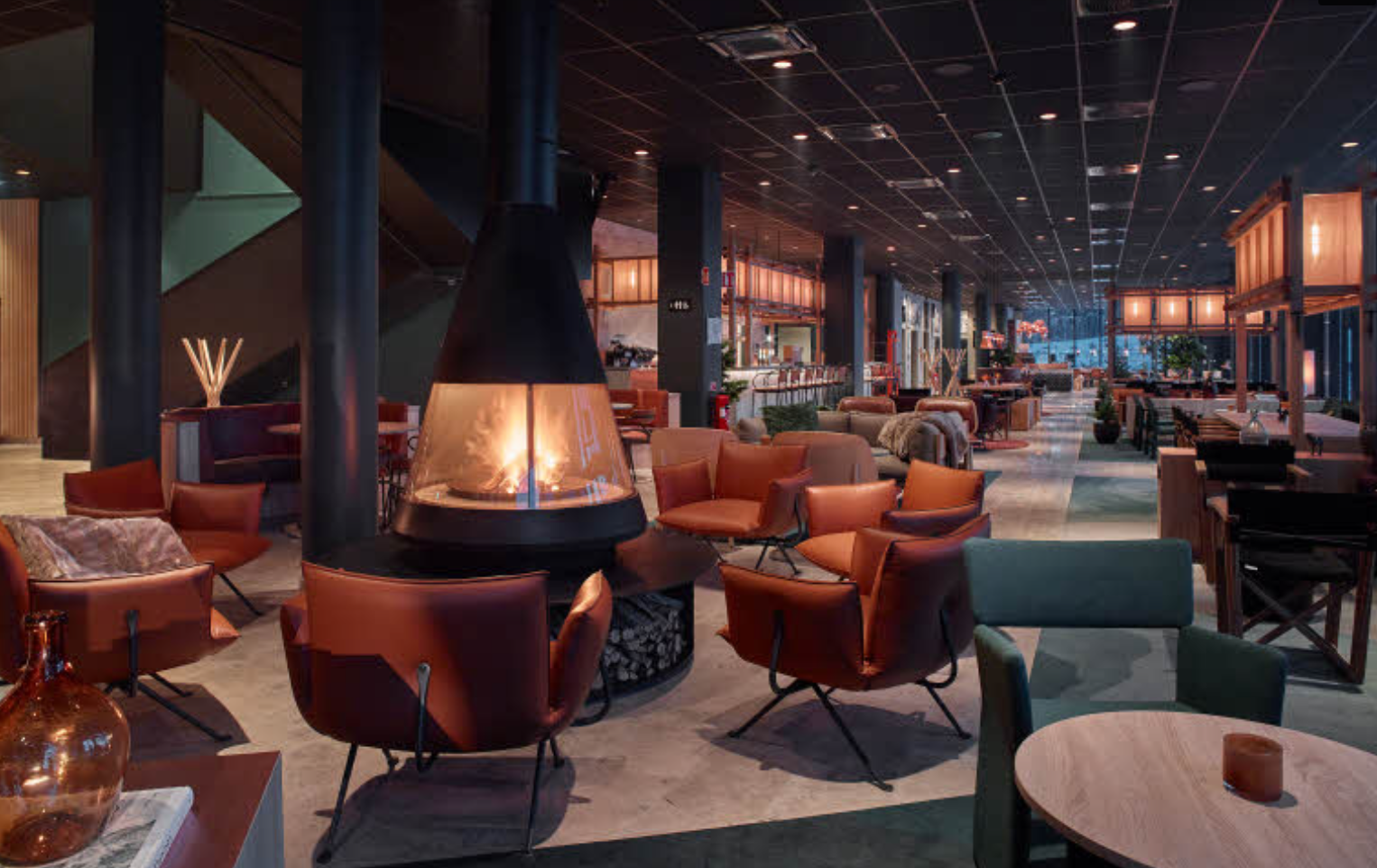
Magical and enchanting with ice sculptures and sub-zero temperatures around -5°C, complemented by warm lobbies, roaring fires in the bar, and artistic, ephemeral atmosphere.