
Marstrands Kurhotell sits on the car-free island of Marstrand, one of Sweden's most architecturally preserved coastal retreats, and holds a Regional Winner award for Luxury Coastal Hotel. The property's position at Kungsplanen places it at the heart of a nineteenth-century resort town where the built environment itself sets the tone. For travellers seeking the Swedish west coast at a slower, more considered pace, this is a credible base.
Pearl is the En Primeur Club membership app — saves, bookings, and concierge access live there. Same editors, same standards.
- Address
- Kungsplanen, 442 67 Marstrand, Sweden
- Phone
- +46 303 600 10
- Website
- marstrandskurhotell.com
- Directions
- Get directions
 Saves & bookings on Pearl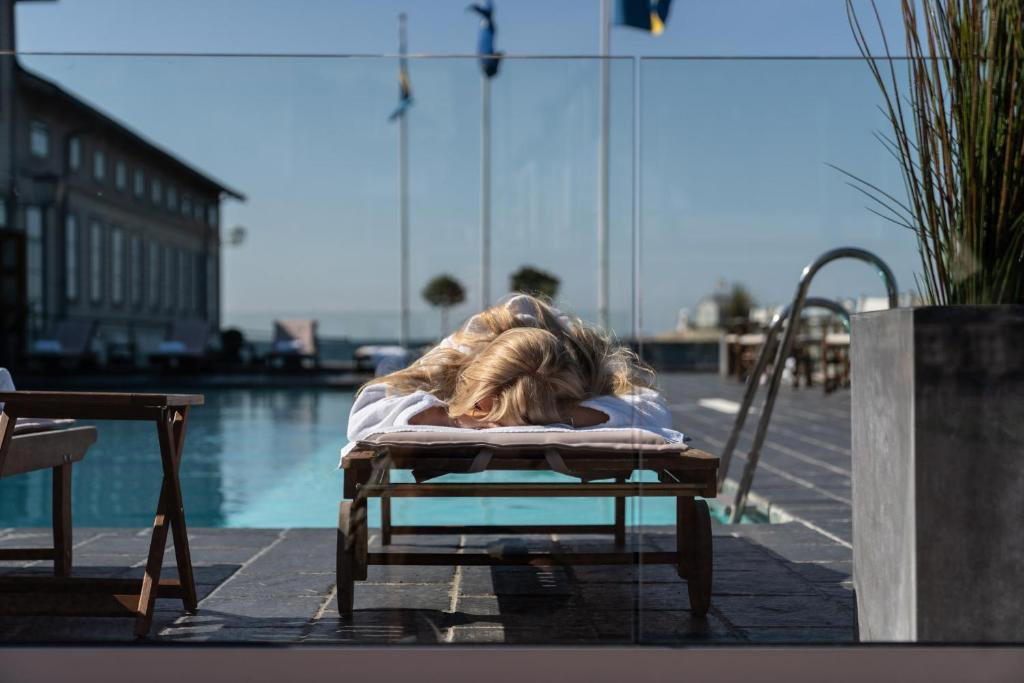
Marstrand and the Architecture of a Swedish Coastal Resort
The Swedish west coast has two registers. There is the working harbour, salt-weathered, functional, indifferent to visitors, and there is the resort town, purpose-built for leisure in the nineteenth century and preserved, in places, with notable fidelity to that original intention. Marstrand belongs to the second category, and it does so more completely than almost anywhere else along the Bohuslän coastline. The island is car-free, which removes the persistent intrusion on architectural reading: you move through it on foot, at a pace that lets the painted timber facades, the granite sea walls, and the silhouette of Carlsten Fortress register properly. Arriving by ferry from the mainland takes roughly ten minutes from Koön, and the transition from road traffic to foot traffic happens fast enough to feel like a deliberate scene change.
Marstrands Kurhotell occupies a position at Kungsplanen, the open square that functions as the island's social centre of gravity. In resort towns of this era, the kurhotell, literally a cure hotel, the Scandinavian equivalent of a grand spa or hydropathic establishment, was always the anchor building, the structure around which the summer season organised itself. That typology carries architectural expectations: a certain scale, a degree of public-facing grandeur, an orientation toward the water or the main gathering point. The Kurhotell at Kungsplanen meets those expectations through its placement rather than through any overt formal gesture; it reads as part of the town's historic fabric rather than as a standalone object dropped into it.
The Physical Character of a Kur Property
The kurhotell format, common across Scandinavian coastal and spa towns from the 1880s onward, combined hotel accommodation with therapeutic facilities, initially hydrotherapy and sea bathing, later evolving into more generalised wellness programming. The buildings that housed these functions were designed for extended stays rather than overnight stops, which shaped their proportions and their relationship to outdoor space. Verandas, terraces, and proximity to water were structural priorities, not decorative additions. Reading a kurhotell today, you are partly reading a theory of healthy leisure that was specific to late-Victorian Scandinavian bourgeois culture.
At Marstrand, that theory is reinforced by the island's own logic. Swimming access, sailing, and the rhythm of island life were the original draws, and the built environment was scaled to support them. The Kurhotell's address at Kungsplanen puts it within easy reach of the harbour, the boat connections, and the walking routes that circle the island's perimeter. The fortress, a seventeenth-century fortification that now operates as a museum and occasional events venue, is visible from much of the waterfront and provides the kind of historical backdrop that resort towns in other countries spend considerable effort manufacturing artificially. Here it is simply present, part of the view.
Positioning Within the Swedish Coastal Hotel Category
Sweden's premium coastal hotel category has split in recent years between large conference-oriented properties and smaller, design-conscious houses that prioritise atmosphere over facilities breadth. Marstrands Kurhotell, as a Regional Winner in the Luxury Coastal Hotel category, sits within a comparable set that includes properties like Fjällbacka in Fjallbacka and Vyn Restaurant in Ostra Nobbelov, both of which operate on the logic that west coast Sweden's strongest asset is its natural and architectural setting, not its ability to replicate urban hotel amenities at sea level. The regional award signals that within its competitive geography, the Bohuslän coast, the islands of Västra Götaland, the Kurhotell is recognised as the reference point for coastal luxury rather than a secondary option.
For context on where Swedish hotel quality benchmarks sit more broadly, Ett Hem in Stockholm represents the discussed design-led property in the country, and Dorsia Hotel & Restaurant in Gothenburg is the strongest urban comparator on the west coast. Marstrand operates in a different register entirely: the appeal here is inseparable from the island setting, and the hotel functions as an access point to that setting as much as a destination in its own right. Internationally, the closest analogues are properties where a historic built fabric and a car-free or otherwise restricted-access location do the primary work, Aman Venice in Venice and Castello di Reschio in Lisciano Niccone share that structural logic, even if they operate at a different scale and price point.
When to Go and How to Approach the Stay
Marstrand's summer season runs from late June through August, when the island is at its most animated, regattas, sailing traffic in the harbour, and the full complement of seasonal businesses operating. This is also when demand for accommodation on the island peaks sharply, and the Kurhotell's position at Kungsplanen puts it at the centre of that activity rather than on the quieter margins. Guests travelling outside the core summer months encounter a different island: fewer visitors, more direct access to the fortress and the walking routes, and a quality of light on the granite that the high-season crowds obscure. September and early October are increasingly considered strong windows by those who know the west coast well, the water is still swimmable by Scandinavian standards, and the tourist density has dropped considerably.
Access to Marstrand requires crossing from the mainland by ferry; the island's car-free status means all luggage is carried on foot from the ferry terminal to the hotel. For those arriving from Gothenburg, the drive to the ferry point at Koön takes roughly 45 minutes depending on traffic, and the ferry crossing itself adds under fifteen minutes. Stockholm-based travellers typically fly or take the train to Gothenburg before continuing by road. For comparison within Sweden's broader hotel geography, Arctic Bath in Harads and Görvälns Slott in Järfälla operate on similar access logics, remote or semi-remote properties where the journey is part of the proposition, though Marstrand is considerably more accessible than either.
For those building a broader Swedish itinerary, Marstrand pairs naturally with Gothenburg as a base and can be treated as a two-to-three night extension rather than a standalone destination. The island has enough to occupy a long weekend at a reasonable pace: the fortress, the perimeter walk, the harbour, and whatever the season's sailing calendar offers. A longer stay demands a higher tolerance for the island's inherent smallness, which is either its central virtue or its primary limitation, depending on what you are looking for.
Planning Your Stay at Marstrands Kurhotell
The hotel's address is Kungsplanen, 442 67 Marstrand, Sweden. Given the island's limited accommodation stock and the concentration of summer demand, reservations for July and the peak regatta weeks in particular should be treated as advance-planning requirements rather than last-minute decisions. Off-season flexibility is considerably greater. For further context on coastal luxury hotel standards globally, properties such as Hotel Du Cap-Eden-Roc in Cap d'Antibes and Hotel Esencia in Tulum illustrate how the kurhotell's logic, therapeutic setting, controlled access, seasonally driven, translates across different geographies.
At-a-Glance Comparison
Comparable venues nearby, for context on price, style, and recognition.
| Venue | Cuisine | Price | Awards | Notes |
|---|---|---|---|---|
| Marstrands KurhotellThis venue — the venue you are viewing | Historic spa retreat with traditional elegance and modern comfort, emphasizing wellness and recovery in a serene island setting. | $$$ | 4-Star | Not listed |
| Treehotel | Contemporary eco-luxury treehouse resort designed by leading Scandinavian architects, emphasizing minimalist design and sustainable practices. | $$$ | 4-Star | Harads |
| Huskvarna Stadshotell | Boutique design hotel just off the E4 motorway. | $$$ | 4-Star | Huskvarna |
| Hotel Riverton | Contemporary independent design hotel with family-owned heritage since 1991, blending comfort, charm, and modern style. | $$$ | 4-Star | Skeppsbron |
| Hotel MJ's | Modern classic boutique hotel with eclectic, playful design elements and contemporary furnishings. | $$$ | 4-Star | Centrum (Norr) |
| Akademihotellet - Clason House Rooms | Charming boutique extension of a classic city hotel set within a 17th‑century heritage property in Uppsala’s historic core. | $$ | 3-Star | historic quarter |
Recognition history
Dated appearances from independent guides and award organizations, with the underlying list record or original source where available.
World Luxury Hotel Awards WLHA Regional Winner
World Luxury Hotel Awards
Continue exploring
More in Marstrand
Hotels in Marstrand
Browse all →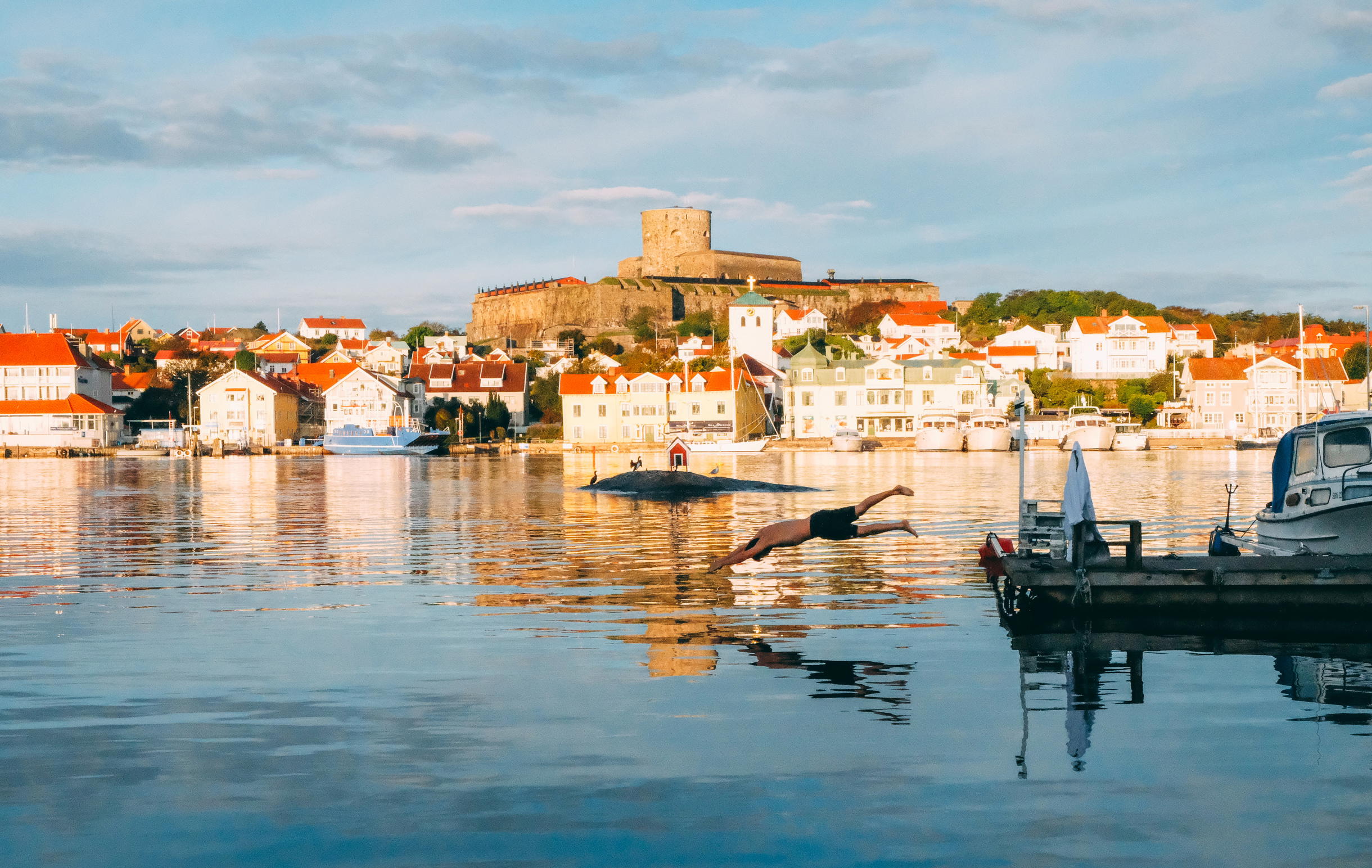
Bars in Marstrand
Browse all →
Restaurants in Marstrand
Browse all →
Wineries in Marstrand
Browse all →
At a Glance
- Quiet
- Romantic
- Elegant
- Scenic
- Wellness Retreat
- Romantic Getaway
- Anniversary
- Beachfront
- Waterfront
- Garden
- Terrace
- Historic Building
- Panoramic View
- Pool
- Spa
- Sauna
- Fitness Center
- Wi Fi
- Garden
- Room Service
- Restaurant
- Beach Access
- Waterfront
- Pool
- Spa
- Sauna
- Fitness Center
- Wi Fi
- Garden
- Room Service
- Restaurant
- Beach Access
Serene and peaceful with soft natural light from sea views, calm throughout the property with emphasis on relaxation and recovery.