
A Michelin Selected palace hotel 42 kilometres northwest of Jaipur, Samode Palace is a layered example of Rajput and Mughal architecture that has been receiving guests within its original royal complex for decades. The painted durbar halls, mirrored chambers, and tiered courtyards place it in a different register from purpose-built luxury resorts, this is a building that accumulated its character over centuries, not a single design commission.
Pearl is the En Primeur Club membership app — saves, bookings, and concierge access live there. Same editors, same standards.
- Address
- Village Samode, Tehsil Chomu, 42 Kms NW of Jaipur, Rajasthan, India
- Phone
- 91 1423 240023
 Saves & bookings on Pearl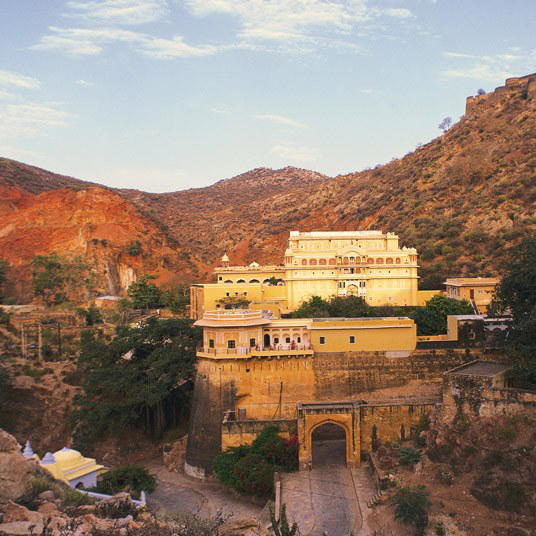
A Palace That Earned Its Grandeur Over Centuries
Forty-two kilometres northwest of Jaipur, on the edge of the Aravalli hills in the village of Samode, the approach to Samode Palace sets a particular kind of expectation. The building rises from the surrounding landscape in stages: outer walls, then towers, then a layered progression of terraces and jharokha windows that reveal themselves as you draw closer. This is not a resort built to evoke royal heritage, it is the royal structure itself, repurposed for hospitality while retaining the architectural logic of its original function. That distinction matters when understanding where it sits among India's palace hotel category.
India's heritage hotel tier has expanded considerably over the past two decades, drawing in restored havelis, converted forts, and purpose-renovated hunting lodges alongside full-scale palace conversions. Samode Palace belongs firmly to the last cohort. Properties in this bracket, including Taj Lake Palace in Udaipur and Amanbagh in Ajabgarh, share a defining characteristic: the architecture is not decorative framing for a hotel programme, it is the primary experience. At Samode, the painted durbar hall alone operates as an argument for the stay. Floor-to-ceiling frescoes, executed in the Rajput miniature tradition, cover surfaces that most hotels would leave bare. The mirrored Sheesh Mahal chambers add a different register entirely, a Mughal-influenced aesthetic layer that reflects the political and artistic alliances of the palace's working history.
The Architectural Logic of a Rajput Compound
Samode Palace's structure follows the logic of a working royal compound rather than a single grand statement. It is tiered across multiple levels, with each courtyard acting as a transition between a more public zone below and more private residential quarters above. This means the spatial experience of moving through the property involves a genuine sense of progression, open courtyards give way to intimate galleries, public reception rooms to narrower corridors lined with painted panels. For guests accustomed to the horizontal spread of resort architecture, the verticality and sequential enclosure of Samode reads quite differently.
The Mughal and Rajput synthesis expressed in the building is characteristic of the regional aristocratic architecture that flourished in Shekhawati and the Jaipur periphery between the seventeenth and nineteenth centuries. Painted havelis across the broader Shekhawati belt share some of this visual language, but the scale and interior elaboration at Samode places it in a smaller subset. The frescoes here were produced for a ruling family's own residence, which accounts for their density and the ambition of their subject matter, court scenes, hunting parties, processional figures, rather than the commercial or devotional imagery more common in merchant-commissioned painting of the same period.
Among the India properties carrying Michelin Selected recognition for 2025, the hotel represents the heritage-immersion end of the spectrum, distinct from urban luxury addresses like The Leela Palace New Delhi or resort-format properties such as Ananda in the Himalayas. The Michelin Selected designation confirms a standard of hospitality quality, but the reason to choose Samode over comparable-tier alternatives is architectural and historical, not amenity-driven.
Rajasthan's Palace Hotel Tier in Context
Rajasthan concentrates more palace-conversion hotels than any other Indian state, which creates a genuinely competitive comparable set. Properties like Suryagarh in Jaisalmer and Suján Sher Bagh in Ranthambhore draw from the same regional heritage market but emphasise different experiences, desert landscape in the first case, wildlife proximity in the second. Samode's specific proposition is the palace fabric itself: the quantity and quality of surviving decorative work inside a building that remains in continuous use. For travellers whose primary interest is the architecture and painting traditions of Rajput-era construction, the village of Samode and its palace sit at the centre of that interest, not on the periphery.
The property's location, 42 kilometres from Jaipur, positions it as an accessible detour from the Pink City's own circuit of forts and palaces. Jaipur's Amber Fort and City Palace draw the majority of heritage-focused visitors, and Samode offers a counterpoint, comparable decorative ambition, significantly fewer visitors, and the additional dimension of staying inside the structure rather than moving through it as a day-tripper. For context on Jaipur's broader hotel range, The Leela Palace Jaipur represents the city-centre luxury alternative for those who prefer an urban base. See our full Rajasthan restaurants and hotels guide for broader context on the region's accommodation tier.
Elsewhere in India, properties that draw meaningful architectural comparisons, places where the building's original social function is still legible in its spatial organisation, include The Oberoi Amarvilas in Agra, though that property is purpose-built in a Mughal-influenced style rather than a genuine conversion. The distinction is worth holding onto when reading property descriptions: the hotel is the historical structure, and that fact carries weight in the experience.
Planning Your Stay
The cooler months between October and March are the primary window for Rajasthan travel, and Samode draws accordingly from the circuit of international visitors touring Jaipur, Jodhpur, Udaipur, and Jaisalmer. Booking well ahead of the November-to-February peak is advisable, particularly for travellers integrating Samode into a wider Rajasthan itinerary that might also include properties like Suján Jawai in Pali or Taj Lake Palace in Udaipur. Road access from Jaipur takes approximately one hour, and the village setting means there is no significant independent dining or activity infrastructure beyond the palace itself, guests should expect and plan for a self-contained stay.
Quick Comparison
Comparable venues nearby, for context on price, style, and recognition.
| Venue | Cuisine | Price | Awards | Notes |
|---|---|---|---|---|
| Samode PalaceThis venue — the venue you are viewing | Heritage palace hotel blending Rajput-Mughal architecture with contemporary luxury | $$$$ | 5-Star | Not listed |
| Taj Bekal Resort and Spa, Kerala | Contemporary classic resort with Kettuvallam houseboat-inspired architecture blending local Kerala elements and modern luxury. | $$$$ | 5-Star | Bekal |
| Taj Green Cove Resort & Spa, Kovalam | Luxury tropical resort combining contemporary Balinese design with traditional Kerala architecture on a hillside setting. | $$$$ | 5-Star | Kovalam |
| RAAS Jodhpur | Heritage haveli restored with modern additions | $$$$ | 5-Star | Walled City |
| Haveli Dharampura | Boutique heritage haveli blending Mughal grandeur with modern comforts | $$$$ | 5-Star | Chandni Chowk |
| Taj Holiday Village Resort and Spa, Goa | Indo-Portuguese inspired beachfront resort | $$$$ | 5-Star | Candolim |
Recognition history
Dated appearances from independent guides and award organizations, with the underlying list record or original source where available.
Michelin Selected
Michelin
At a Glance
- Ornate
- Elegant
- Romantic
- Scenic
- Sophisticated
- Classic
- Honeymoon
- Romantic Getaway
- Anniversary
- Destination Wedding
- Celebration
- Historic Building
- Panoramic View
- Infinity Pool
- Private Dining
- Terrace
- Pool
- Spa
- Fitness Center
- Room Service
- Concierge
- Wi Fi
- Sauna
- Mountain
- Garden
- Pool
- Spa
- Fitness Center
- Room Service
- Concierge
- Wi Fi
- Sauna
Regal and ornate atmosphere with lively murals, mirror-lined halls, chandelier-lit dining rooms, and bougainvillea-fringed courtyards evoking royal Rajputana living.