
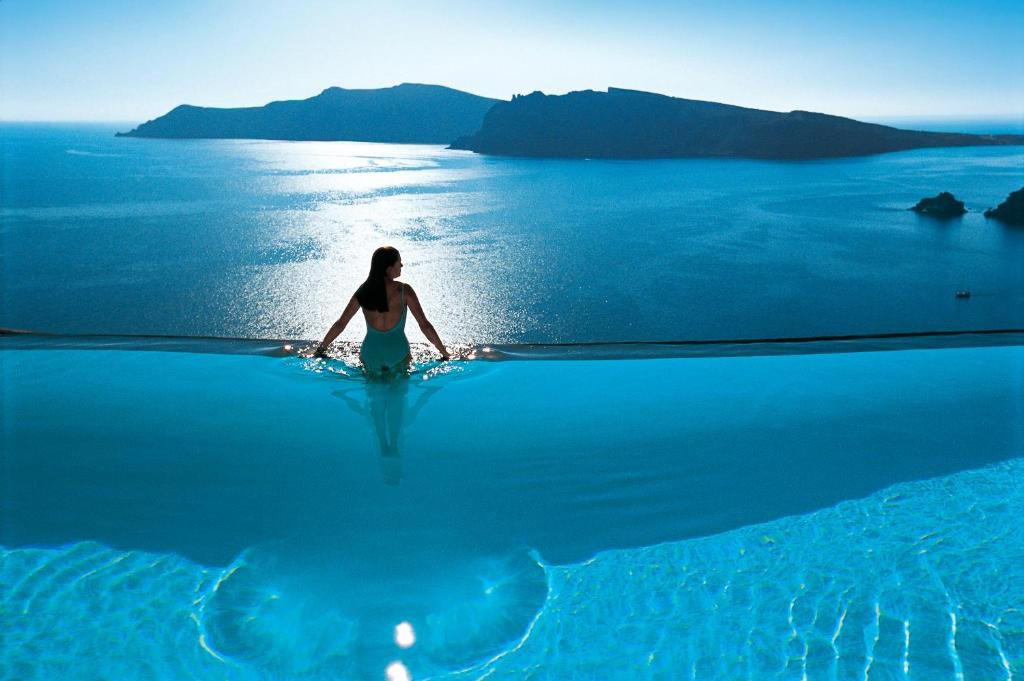
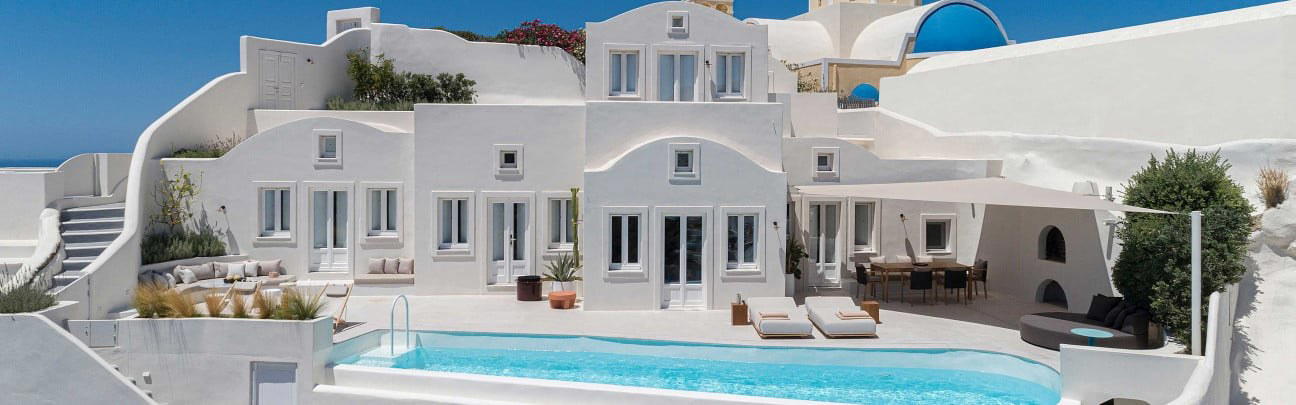
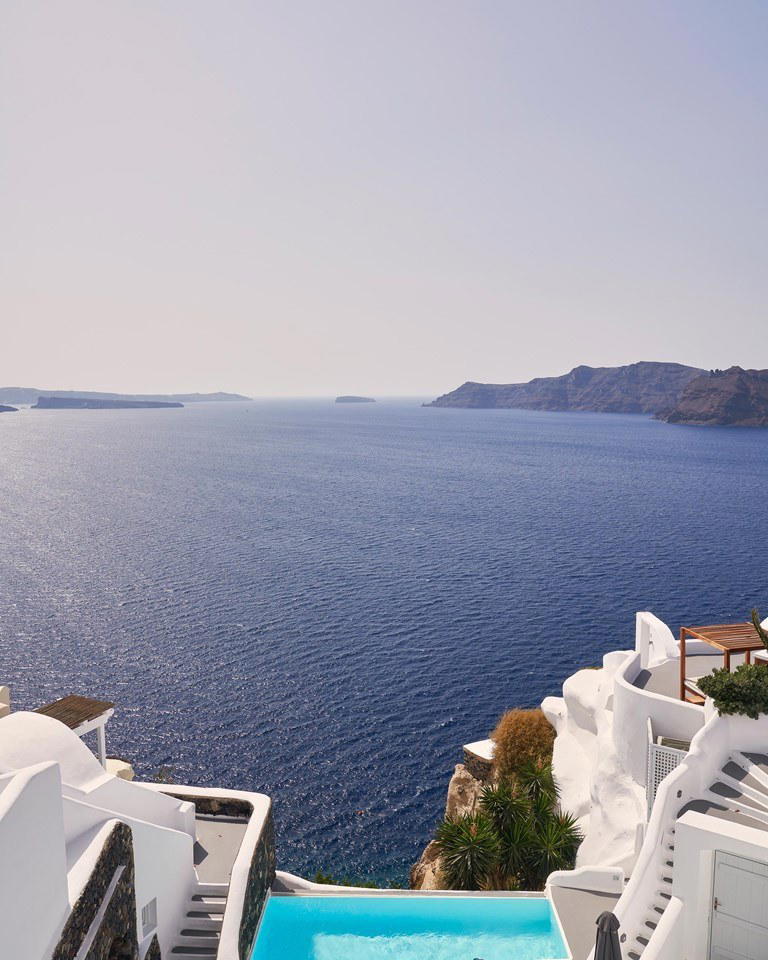
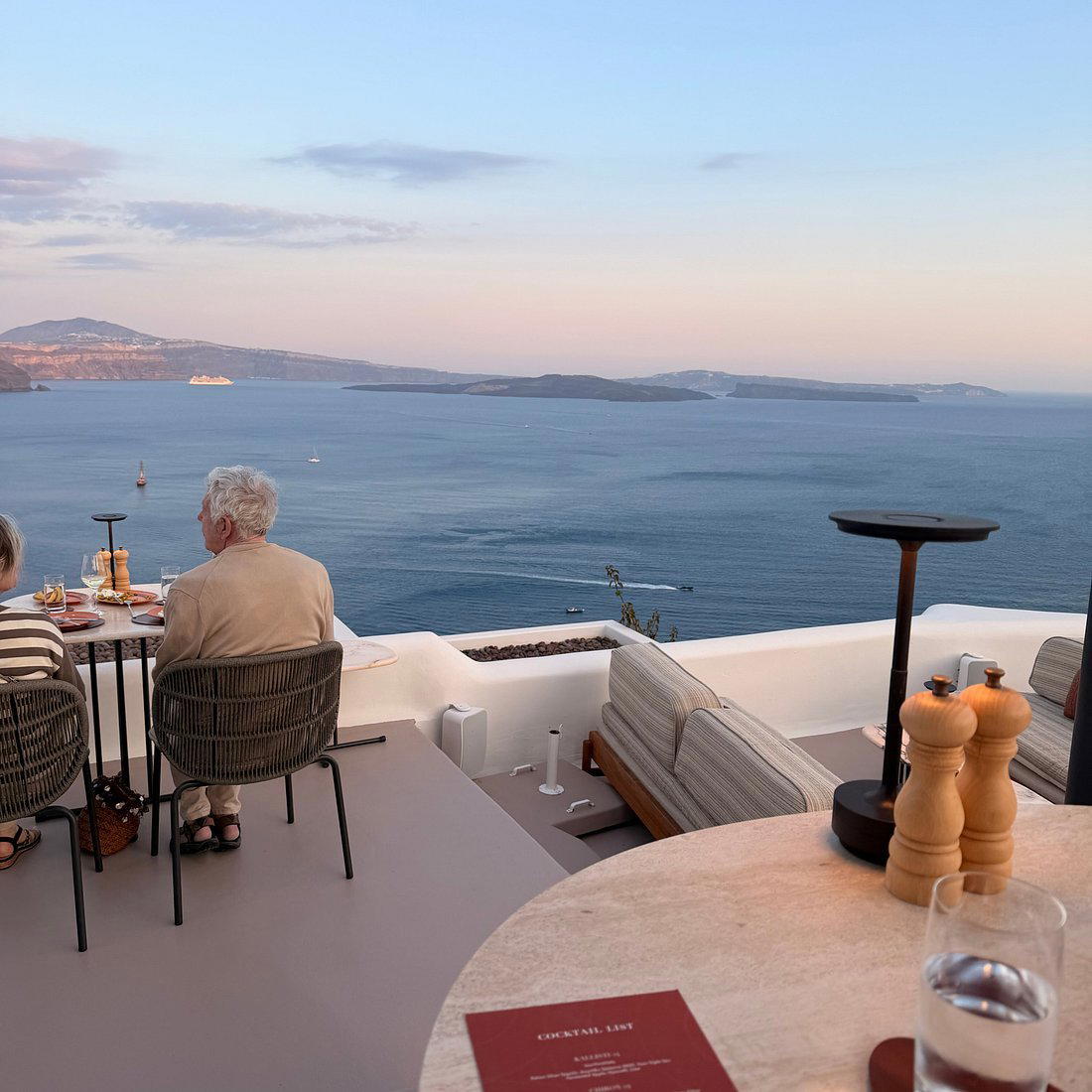
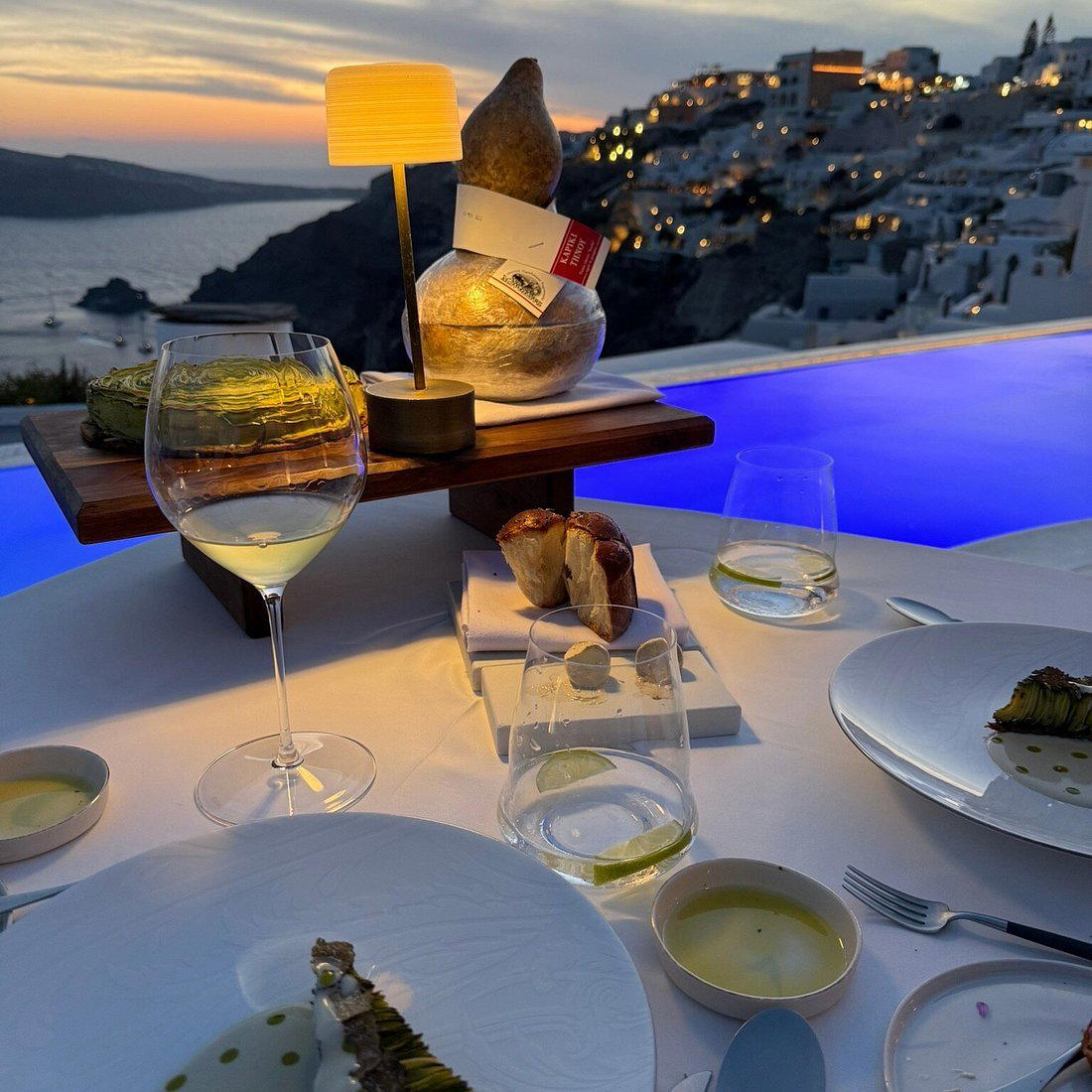
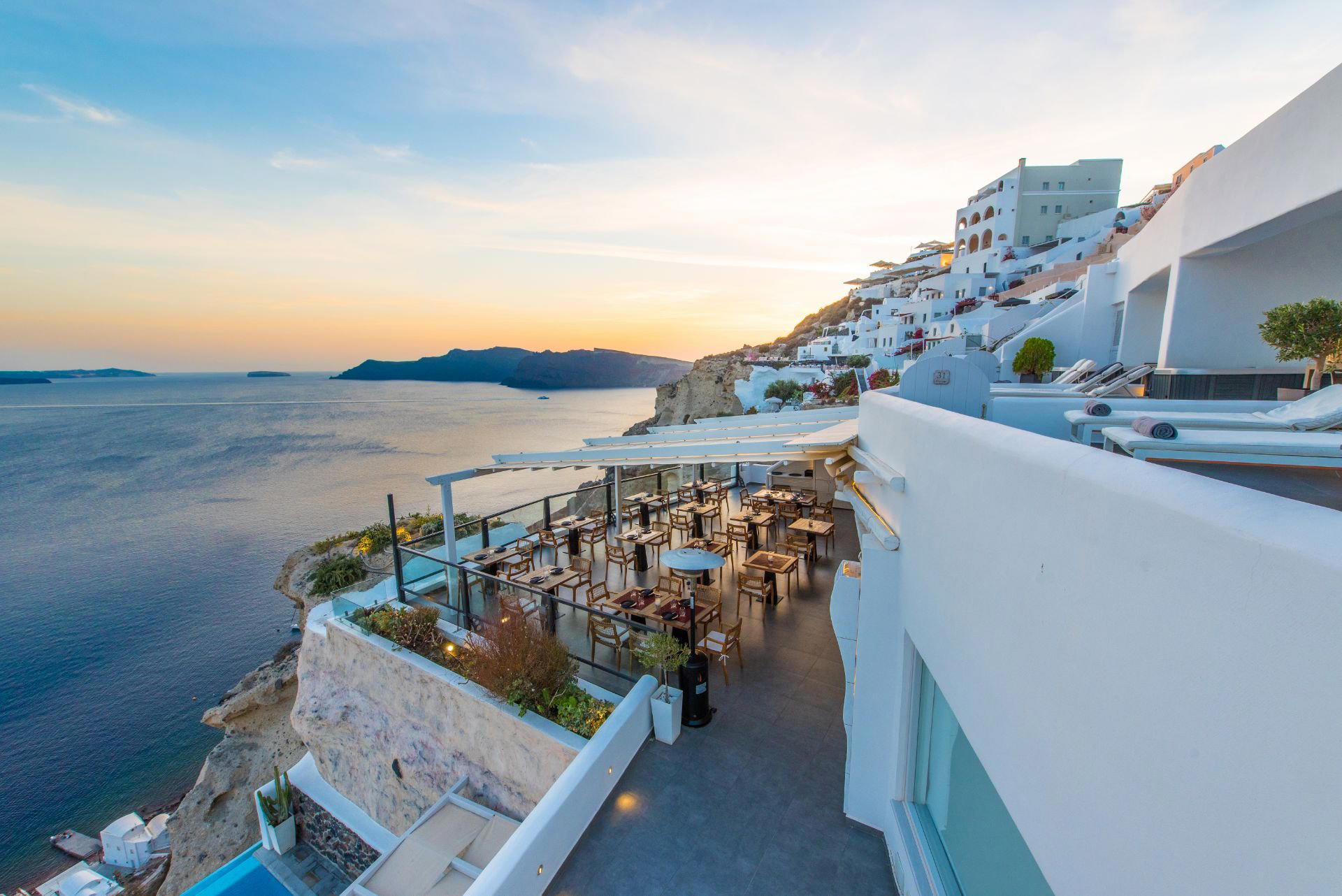
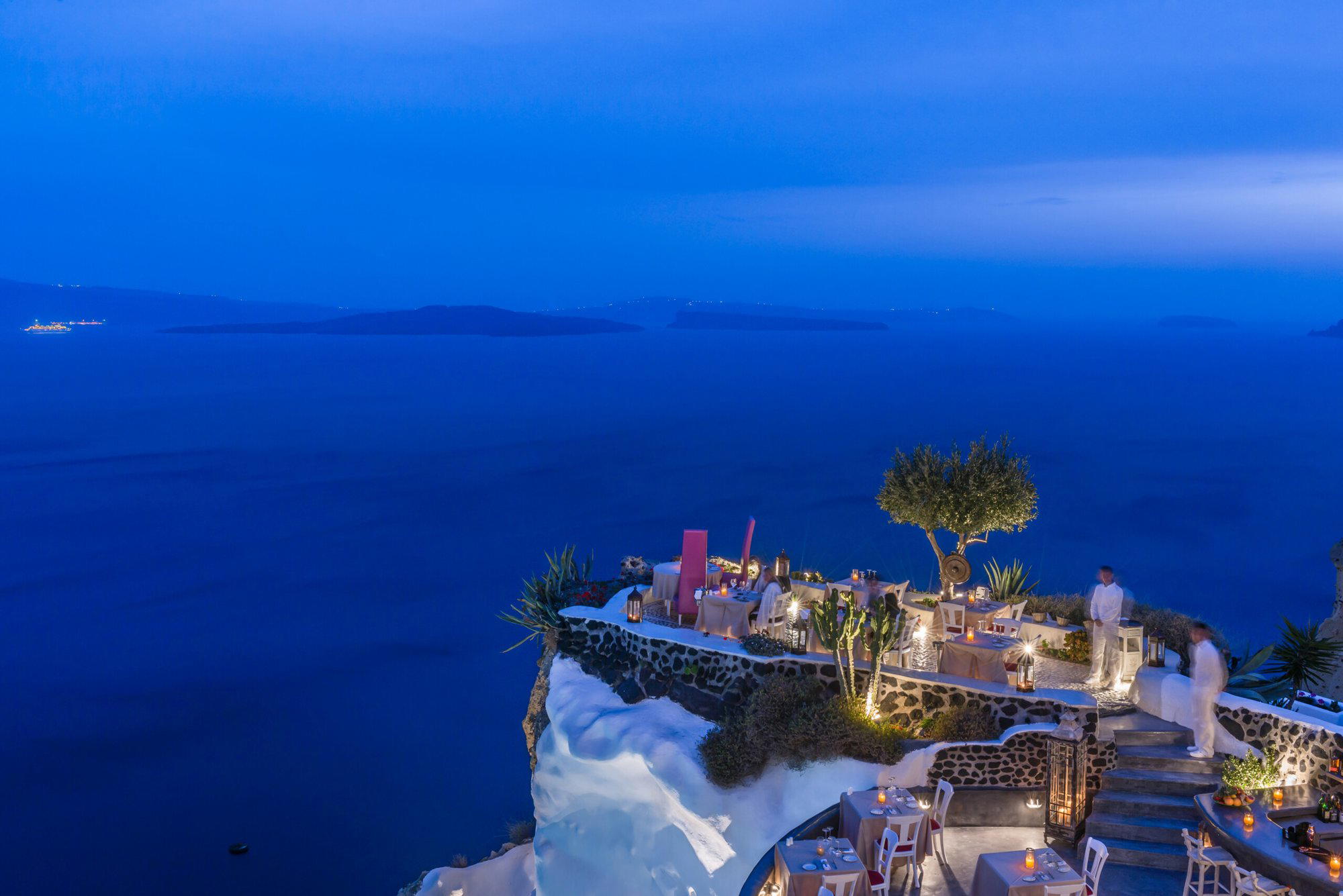
All of Santorini qualifies as a highly desirable destination, but even within this picturesque crescent, the hilltop village of Oia, with its astonishing view of the island’s volcanic caldera, is as good as it gets. And among the fine luxury boutique hotels of Oia is Saint, an all-suite hotel that takes the features common to the island’s best lodgings, cascading terraces of whitewashed structures descending the hillside like theatre seats, and dials up the minimalism just enough to create a feeling that is genuinely otherworldly. It says something about Saint’s approach that the entry-level suites are termed nothing less than “Well-known,” and that private plunge pools are universal across the range. The Element Suite goes one further with a jacuzzi built into a recessed cave. And the interiors are visually consistent with buildings’ geometric white-on-white forms, but rather than pursue the cave-like local aesthetic, they take a slight turn in an upscale modernist direction. Equally heavenly: the hotel’s Sacred Spa, and the restaurant, Trinity, set by the side of the central infinity pool. And a pair of yachts are on hand for guests who wish to see Santorini from a lower elevation.
Pearl is the En Primeur Club membership app — saves, bookings, and concierge access live there. Same editors, same standards.
- Address
- Oia 847 02, Greece
- Phone
- +30 2286 072473
- Website
- saintsuitesoia.com
- Directions
- Get directions
 Saves & bookings on Pearl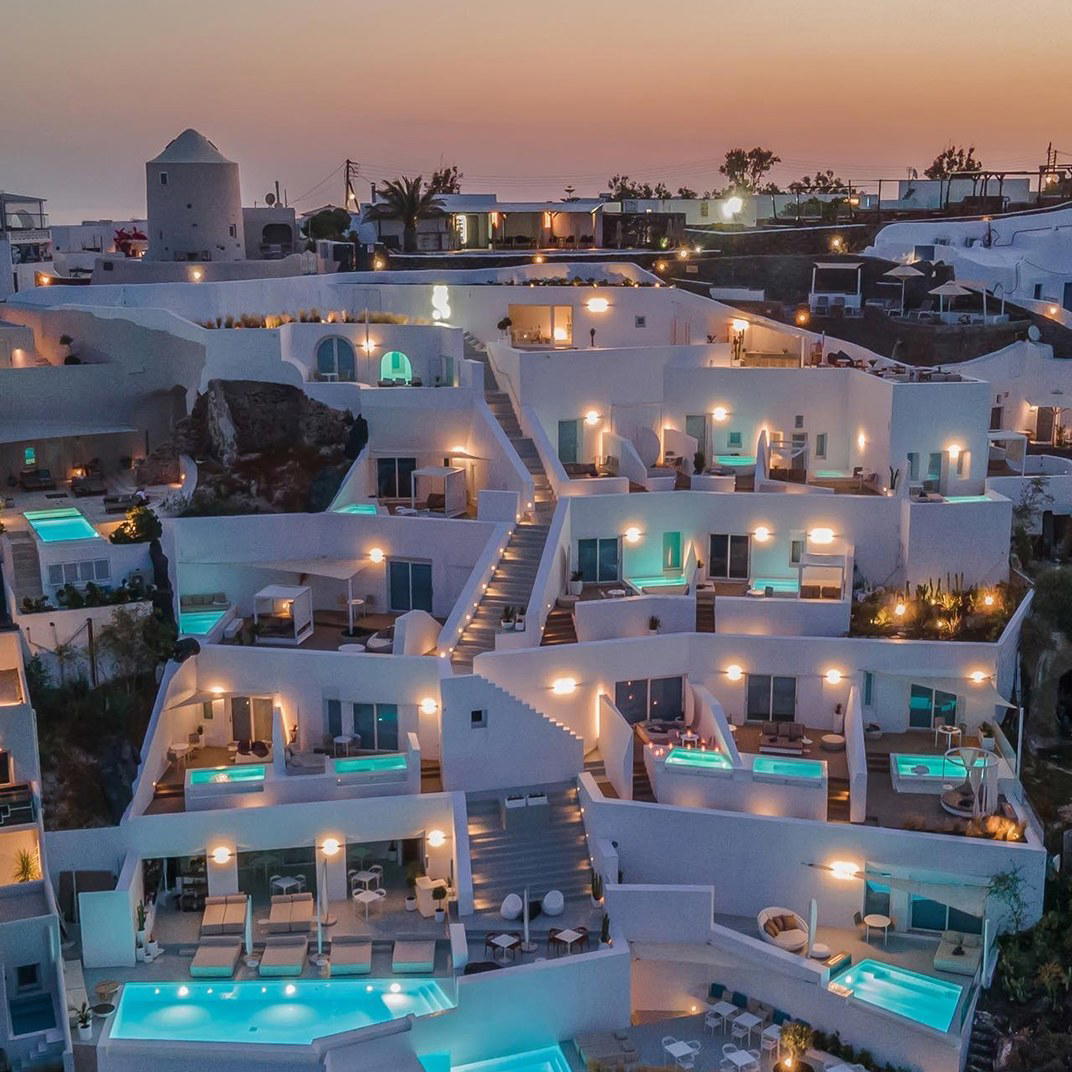
Oia, Seen From the Inside
Arriving in Oia by foot along the caldera path, you pass whitewashed walls that all look more or less the same until they don't. Saint Santorini occupies a position in Oia where the village's famous geometry, curved edges, cave-cut terraces, and the particular quality of Aegean light at the cliff's edge, becomes something you're inside rather than observing. That distinction matters in a village where the line between hotel and scenery is genuinely thin.
Oia sits at Santorini's northwestern tip, roughly 11 kilometres from the capital Fira and about 14 kilometres from Santorini Airport. The transfer is typically 25 to 35 minutes depending on summer congestion, which can be considerable from June through August. Within Oia itself, most of the village is pedestrian-only, which means arrival involves luggage handling on foot or by mule path in some cases. Guests who time their arrival to avoid peak afternoon heat and the sunset-crowd surge, which peaks roughly 40 minutes before sundown and fills Oia's castle overlook with several thousand visitors, will find the property substantially quieter and more navigable.
Where Santorini's Small-Property Model Works well
Greek island hospitality has split, over the past decade, into two broadly distinct approaches. One follows the international resort template: large room counts, branded spa facilities, poolside volume service. The other, more specific to the Cyclades, operates through small-key cliff properties where spatial intimacy and view access are the core product. Oia concentrates the highest density of this second type anywhere in Greece, and Saint Santorini operates within that smaller, more considered tier.
Properties like Andronis Arcadia, Andronis Boutique Hotel, and Andronis Luxury Suites have built recognisable brand equity within Oia specifically, while older addresses like Aigialos and 1864 The Sea Captain's House carry historical character as their primary credential. In that context, a Michelin Selected designation for 2025 provides Saint Santorini with a cross-category reference point that most Oia properties lack. Michelin's hotel selection, sourced through the same editorial lens applied to its restaurant guide, tends to reward properties where quality signals are legible across experience categories, not just room appointments.
The Ingredient Logic of the Santorini Table
Santorini has a more specific food geography than most Aegean islands, and that specificity shapes what any serious property in Oia puts on a table. The island's volcanic soil, a consequence of the Minoan eruption and the subsequent caldera formation, produces conditions that stress vines and root vegetables in ways that concentrate flavour. Santorini's Assyrtiko grape, grown in basket-trained kouloura vines that protect fruit from the meltemi wind, yields wine with a salinity and mineral precision found nowhere else in the Aegean at the same expression. Fava from Santorini, the yellow split pea variety grown on the island since antiquity and protected by PDO status, has a sweetness and texture that distinguishes it from mainland fava in ways that become obvious once you've eaten both. Cherry tomatoes grown on the island's scarce water supply develop intense flavour through hydric stress, and they appear in almost every serious Santorini kitchen from July through September.
This is the sourcing context that shapes Aegean hospitality at the higher end of the market. Properties operating in Oia's premium tier are expected to reflect this local ingredient identity, whether through breakfast programmes anchored in island produce, dining offerings built around Santorini wine lists, or at minimum a kitchen literacy that treats the island's PDO products as a starting point rather than a garnish. For visitors arriving from broader Greek destinations, the contrast is instructive: the same dish made with Santorini fava and mainland fava tells you something about why the island commands the premiums it does across food and accommodation alike.
Greece's broader hospitality circuit reinforces this point by comparison. Amanzoe in Porto Heli operates from a position of landscape and Peloponnesian scale; Mandarin Oriental Costa Navarino in Pylos anchors its food offer to the western Peloponnese's olive and wine culture; Four Seasons Astir Palace Hotel Athens works from an urban Athenian reference. Santorini properties operate from a different brief entirely: the island's ingredient specificity is the argument, and a property's willingness to honour it is a credibility test.
Oia in the Context of the Island
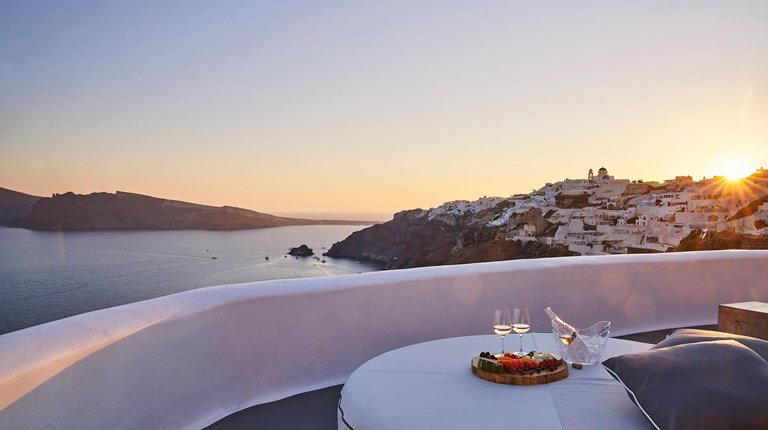
Choosing Oia over Fira or Imerovigli involves a set of trade-offs that experienced Santorini visitors tend to understand clearly. Fira offers more restaurant density, better transport connections, and the practical ease of the island's main settlement. Imerovigli provides caldera access with a slightly quieter street presence. Oia, by contrast, concentrates the island's visual drama at the northern tip, where caldera views face the submerged volcano and the smaller islands of Thirasia and Aspronisi. The famous sunset here is a genuine geographical event, not marketing shorthand: the angle of the caldera at Oia means the sun drops into water rather than behind land, producing a light sequence that photographers and painters have worked on for generations.
The trade-off is that Oia's popularity is real and summer-specific. Between late June and late August, the main pedestrian lane through the village reaches crowd densities that test any sense of the contemplative. Early morning, before 9am, and late evening, after sunset crowds disperse around 10pm in peak summer, reveal the village in a different register. Properties that understand this tend to build their service rhythms accordingly, with breakfast served through mid-morning and terrace service continuing late into the night.
Other Santorini properties worth considering alongside Saint Santorini include Astarte Suites, Aeifos Boutique Hotel Santorini, and Aressana Spa Hotel and Suites. The full range of Santorini options is covered in our full Santorini restaurants and hotels guide.
For Greek island comparisons beyond Santorini, Myconian Ambassador in Mykonos and Kivotos Mykonos on Mykonos Island represent the Cycladic alternative, while Acro Suites in Agia Pelagia and Olea All Suite Hotel in Zakynthos cover different island registers. Anemos Luxury Grand Resort in Chania, Eagles Palace in Halkidiki, Rodos Park in Rhodes, The Met Hotel in Thessaloniki, ALERO Seaside Skyros Resort in Skyros, and Elix by Mar-Bella Collection in Perdika extend the Greek mainland and island comparison set further. Internationally, The Fifth Avenue Hotel in New York City, Badrutt's Palace Hotel in St.
Planning Your Stay
Saint Santorini carries a Michelin Selected designation for 2025, placing it within the curated tier of the Michelin hotel guide, which covers properties across food, comfort, and overall stay quality rather than dining alone. Specific pricing, room categories, and booking details are best confirmed directly, as Santorini's small cliff properties tend to adjust availability and rates seasonally. The shoulder season months of May and October offer the most practical conditions: caldera views without peak crowds, moderate temperatures suitable for walking the village, and easier availability at properties that fill completely from mid-July through August. Arriving outside the July-August peak also allows access to the island's market and produce culture at a pace that the height of summer makes difficult.
How Saint Santorini compares with similar nearby venues.
| Venue | Awards |
|---|---|
| Saint Santorini | MICHELIN Guide, Hotels Selected (2025) |
Recognition history
Dated appearances from independent guides and award organizations, with the underlying list record or original source where available.
Michelin Selected
Michelin
Continue exploring
More in Santorini
Hotels in Santorini
Browse all →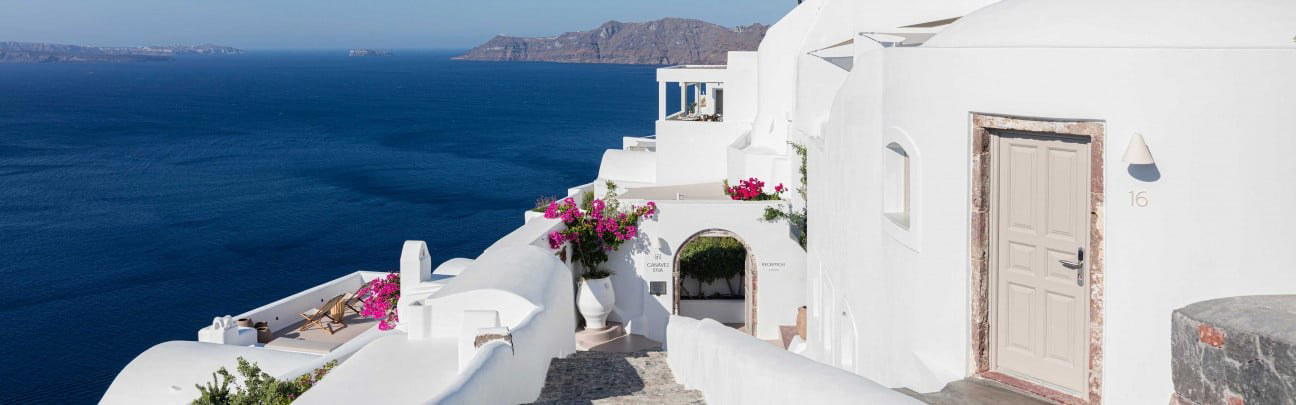
Bars in Santorini
Browse all →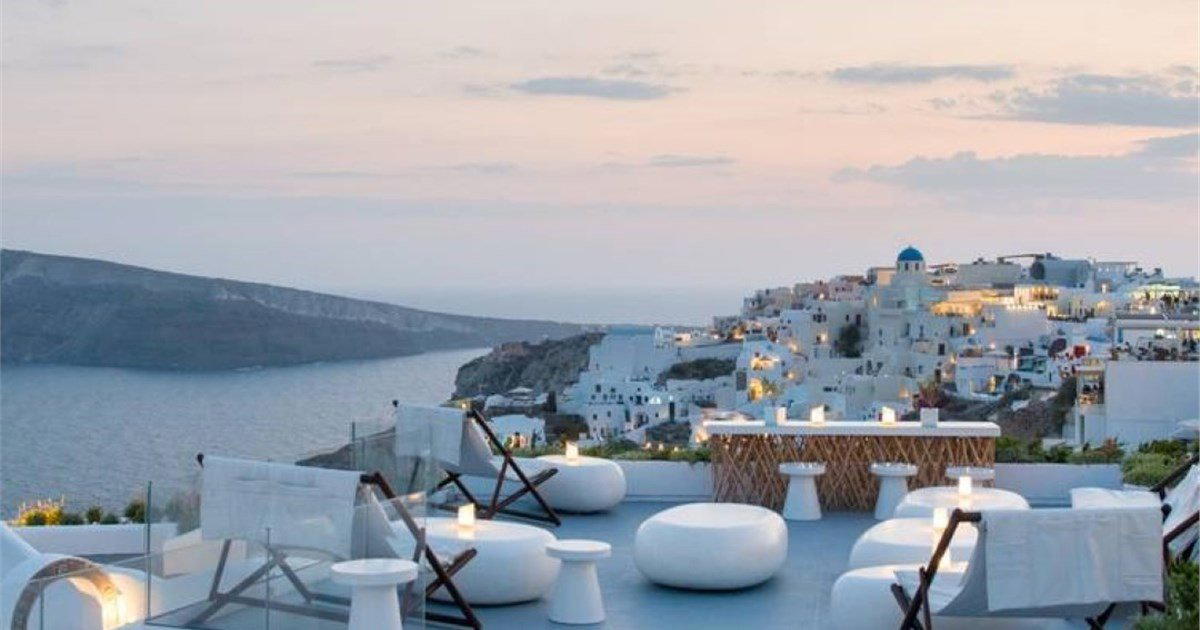
Restaurants in Santorini
Browse all →
At a Glance
- Romantic
- Elegant
- Sophisticated
- Minimalist
- Scenic
- Honeymoon
- Romantic Getaway
- Anniversary
- Infinity Pool
- Panoramic View
- Wi Fi
- Pool
- Spa
- Fitness Center
- Room Service
- Concierge
- Waterfront
- Wi Fi
- Pool
- Spa
- Fitness Center
- Room Service
- Concierge
Minimalist white-on-white interiors with modern luxury, serene atmosphere, and panoramic Aegean Sea views from cascading terraces.