




Mandarin Oriental's first Greek property sits on Navarino Bay in the Peloponnese, earning 90.5 points on the 2026 La Liste Top Hotels ranking. Ninety-nine rooms, all with water views, are furnished with latticed olive-wood details and locally made textiles. Eight dining venues, including a Roman-style pizza omakase counter, complete a resort that reads less like a beach retreat and more like a considered argument for Messenia as a serious luxury destination.
Pearl is the En Primeur Club membership app — saves, bookings, and concierge access live there. Same editors, same standards.
- Address
- Navarino Bay, Costa Navarino, 24001 Pylos, Messenia, Greece
- Phone
- +30 27230 99888
- Website
- mandarinoriental.com
- Directions
- Get directions
 Saves & bookings on Pearl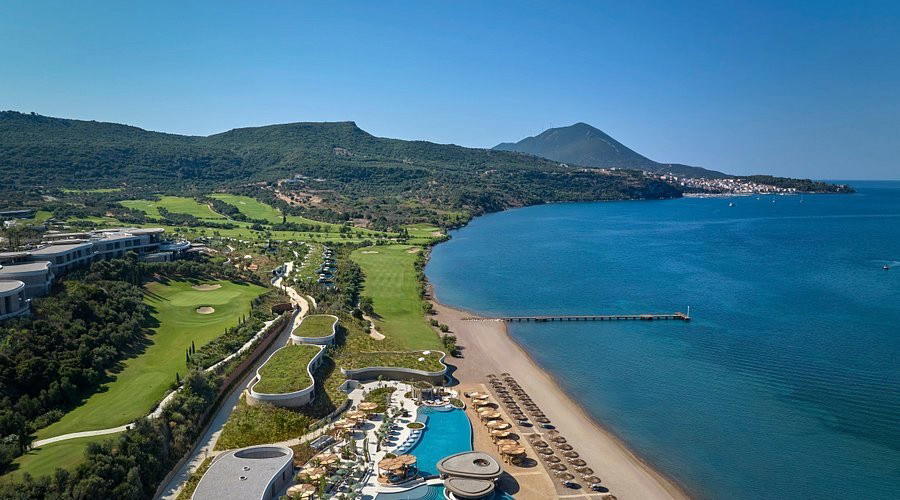
Stone, Linen, and the Bay of Navarino: How Mandarin Oriental Arrived in Greece
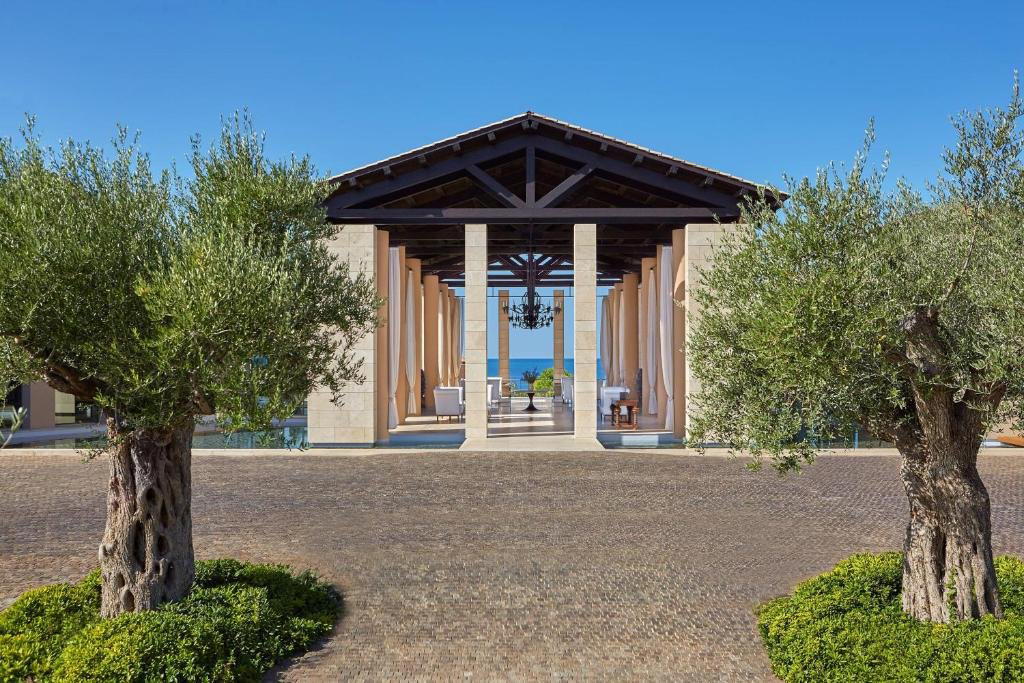
The Peloponnese has long occupied a different register from the Aegean island circuit. Where Mykonos and Santorini built their reputations on whitewashed geometry and summer crowds, Messenia's coastline offers something slower and more geologically dramatic: dense olive groves running down to a protected bay, Bronze Age fortifications visible from the water, and light that photographers describe as distinctly softer than the Cycladic glare. It is into this context that Mandarin Oriental made its first entry into Greece, choosing Navarino Bay rather than Athens or the islands, a decision that signals clearly which tier of the Greek luxury market the brand is addressing.
The property earned 90.5 points on the 2026 La Liste Leading Hotels ranking, placing it within the credible upper tier of Mediterranean resort hotels. For comparison, the Greek market includes Four Seasons Astir Palace Hotel Athens in Athens, which operates in a urban palace-hotel tradition, and Amanzoe in Porto Heli, which holds Michelin 2 Keys and anchors the small-key villa end of the Greek luxury spectrum. Mandarin Oriental, Costa Navarino occupies a middle position: larger in room count than Aman's format, more design-specific and regionally embedded than a standard international flag.
The Architecture of Arrival
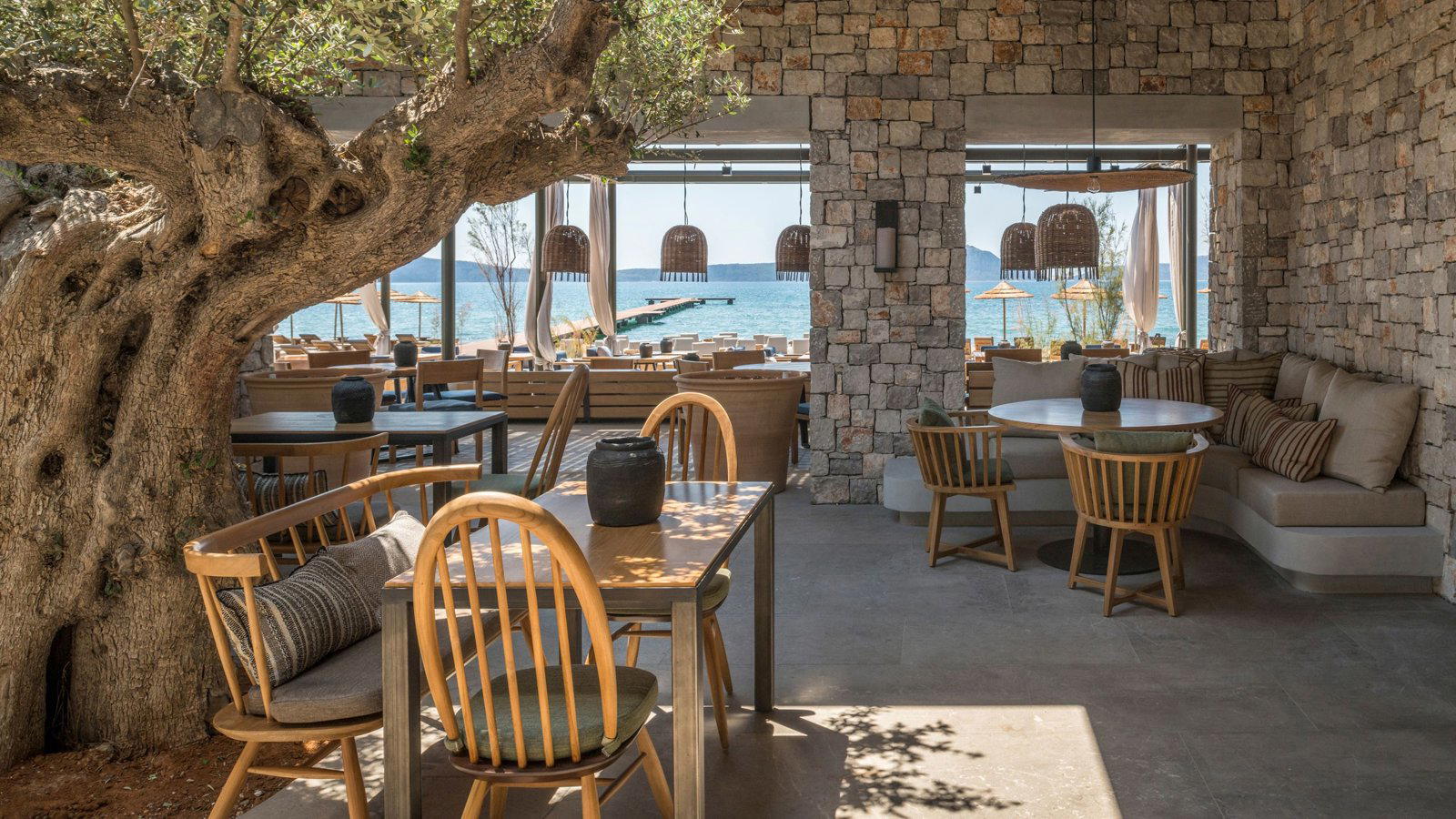
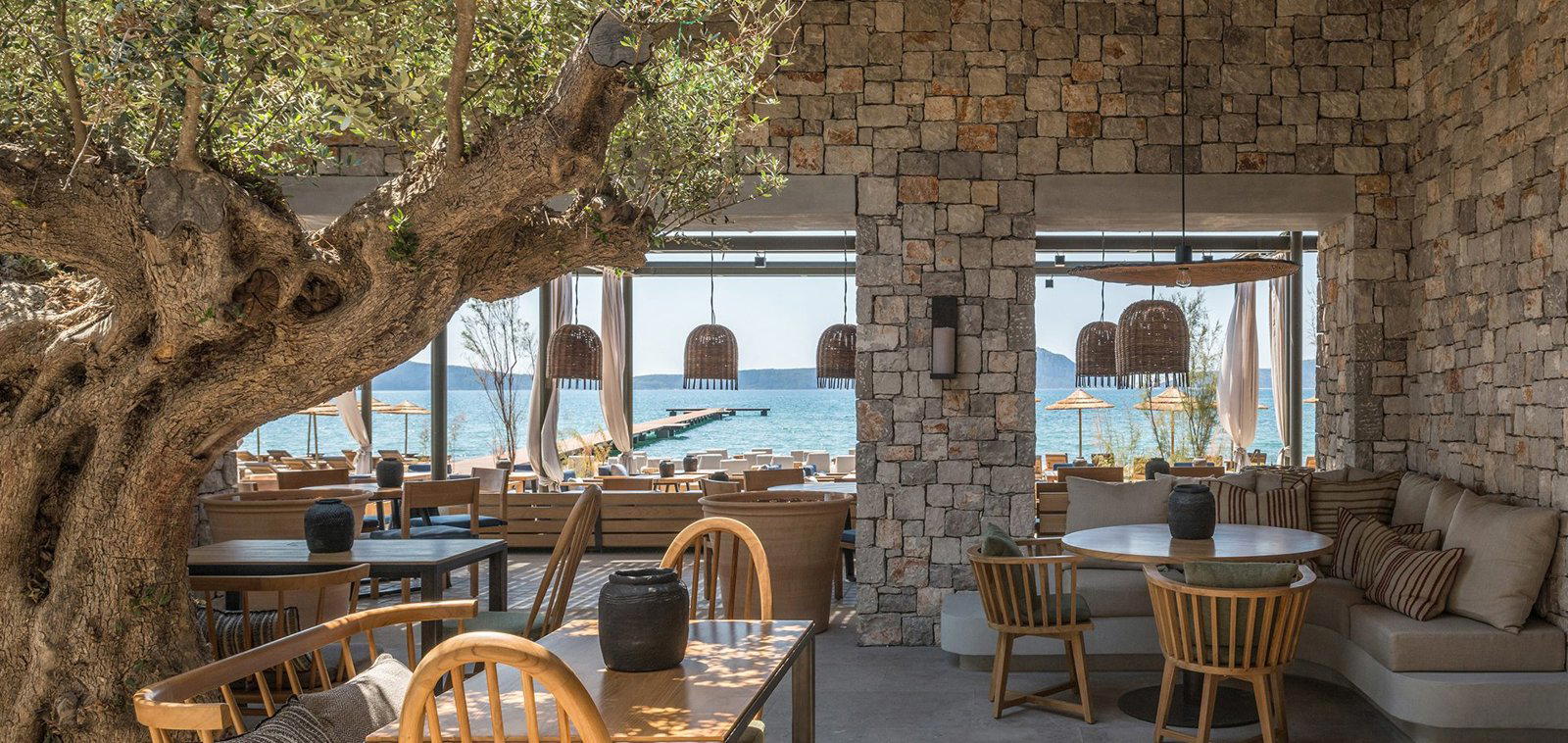
Peloponnesian resort design has increasingly moved toward what might be called honest materiality: rough-hewn local stone, timber that references traditional building methods, fabrics in undyed or earth-toned palettes. Mandarin Oriental, Costa Navarino follows this logic without mimicking vernacular architecture directly. The spa building demonstrates the approach most clearly, combining rough stone walls with billowing linen curtains and an indoor pool surrounded by floor-to-ceiling windows that frame the sea. The effect is less decorative than structural: the materials do not ornament the space so much as define its sensory register.
The 99 accommodations extend the same grammar. Latticed wooden bedframes, locally made rugs that reference traditional Messenian textile patterns, and handmade olive-wood board games function as a design argument rather than souvenir-shop gestures. Coffee table books on Greek mythology and framed fans printed with antique maps add an archival layer. Every room faces the water, a planning decision that shapes the guest experience more than any individual design element. Pool villas take this further, with both indoor and outdoor lounges and floor-to-ceiling windows that dissolve the boundary between the bay and the interior.
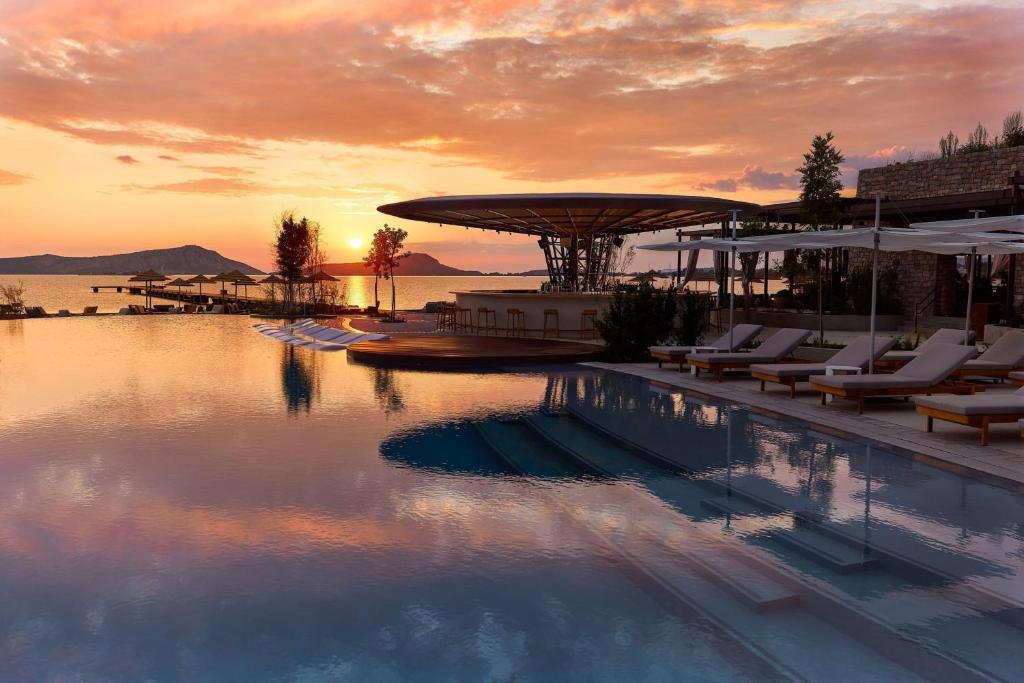
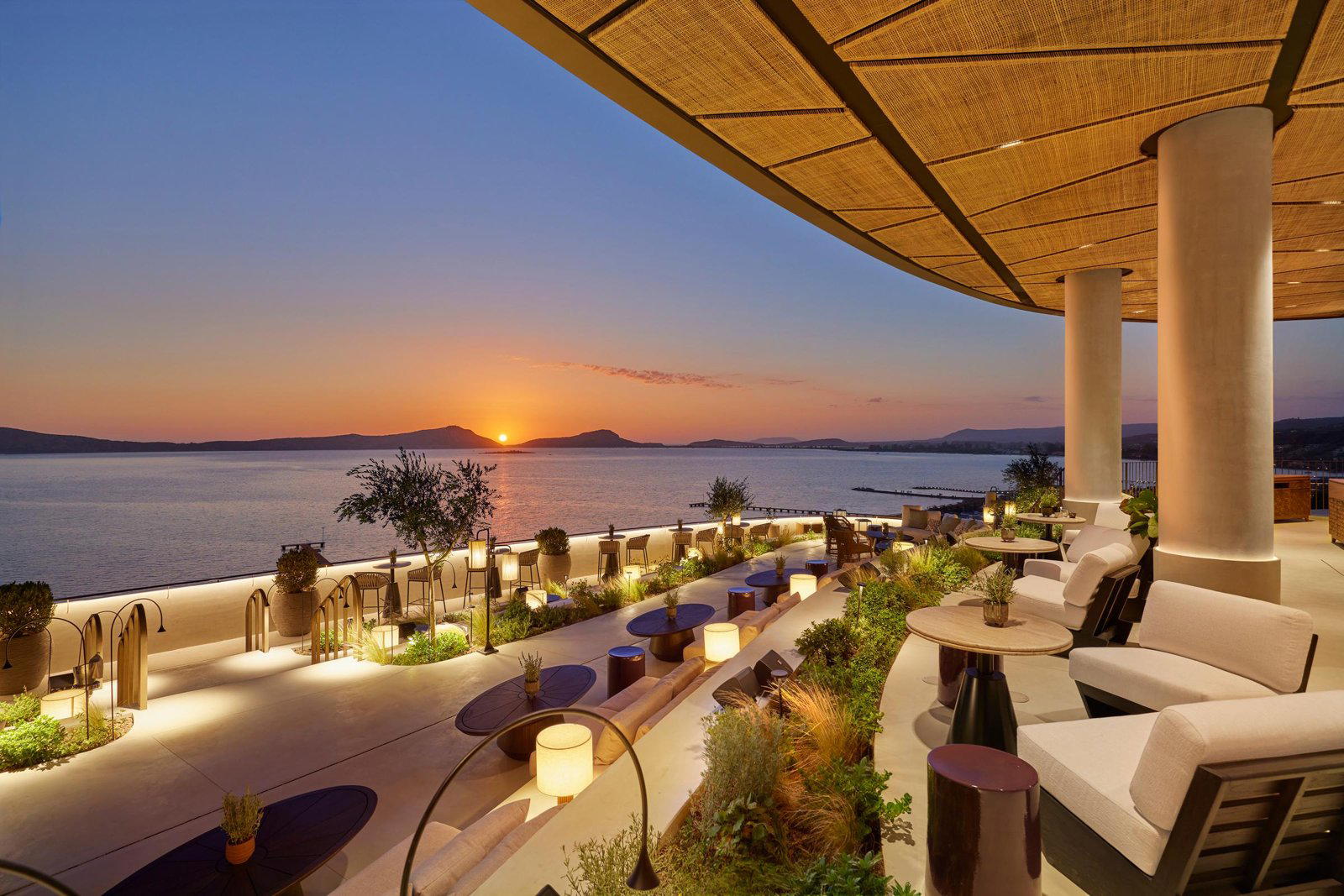
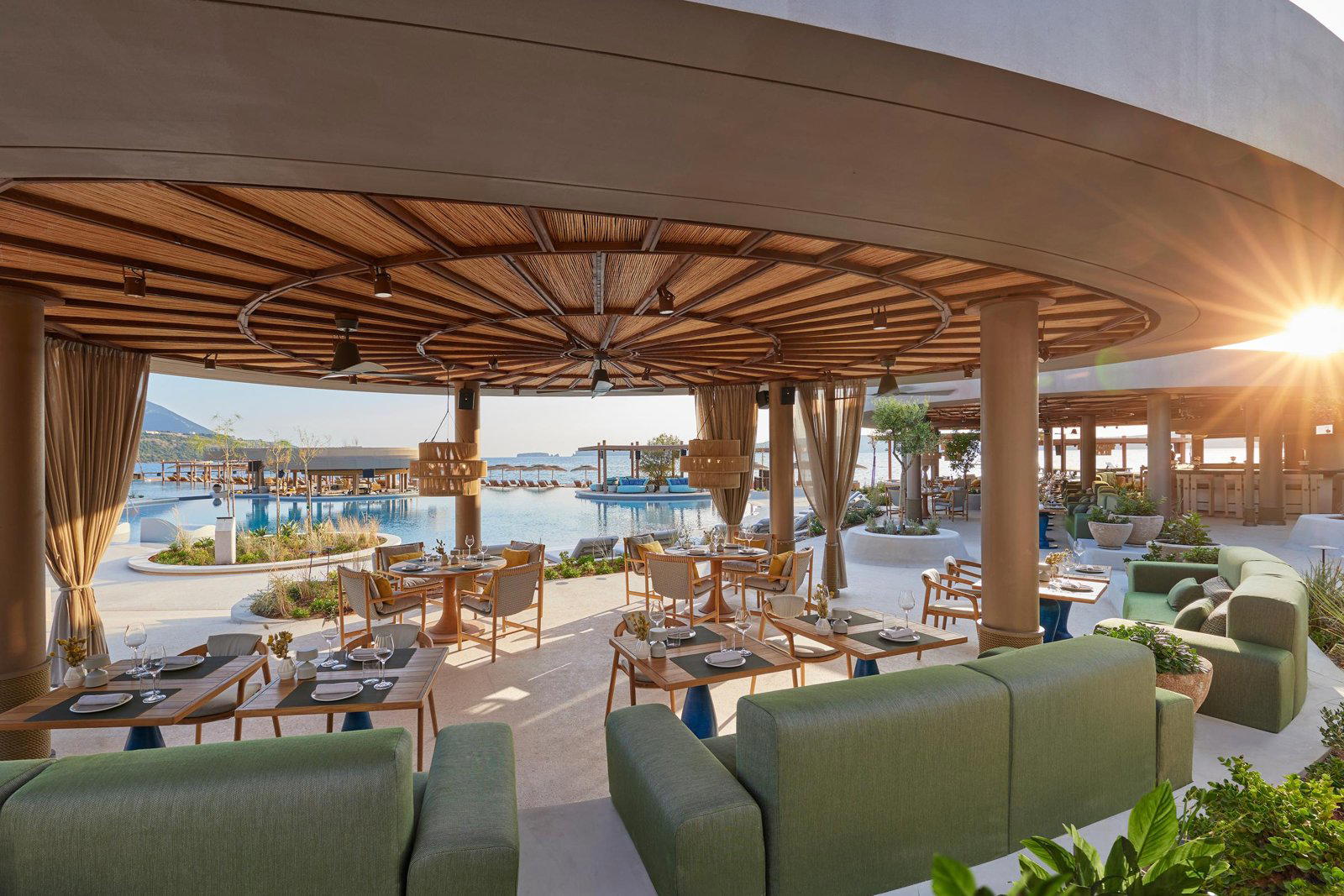
The infinity pool, positioned to look out over Navarino Bay toward the nearby islands, operates as the property's primary social and visual axis. This is a common device in Greek resort design, from Andronis Arcadia in Santorini to Grace Hotel, Auberge Resorts Collection in Imerovigli, but the Navarino setting adds specificity: the Bay of Navarino is a historically documented site, the scene of an 1827 naval battle that effectively ended Ottoman rule in Greece, which means the view carries a weight that most Aegean infinity pools cannot claim. Sunset faces west across the bay, making late afternoon the moment when the pool's visual logic reaches its clearest expression.
Eight Venues and One Omakase Pizza Counter
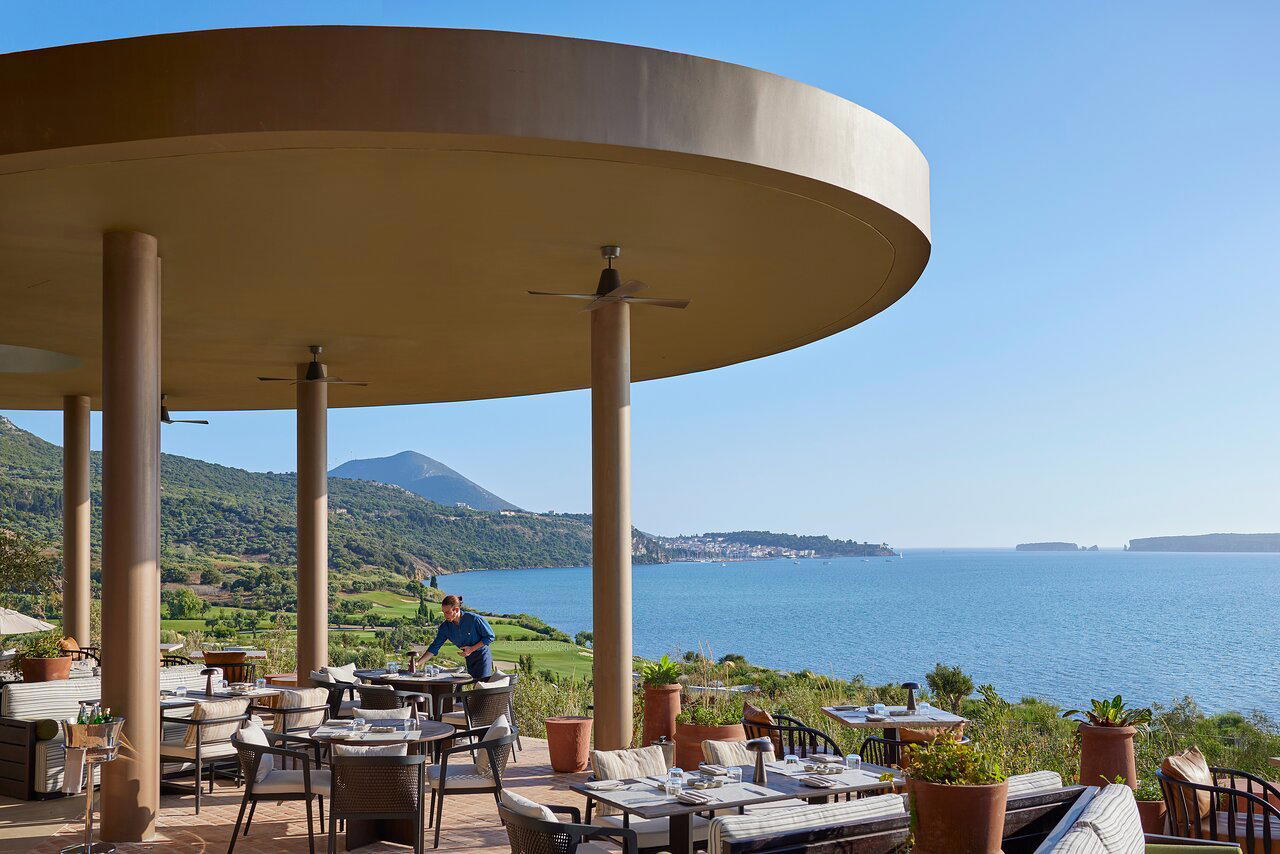
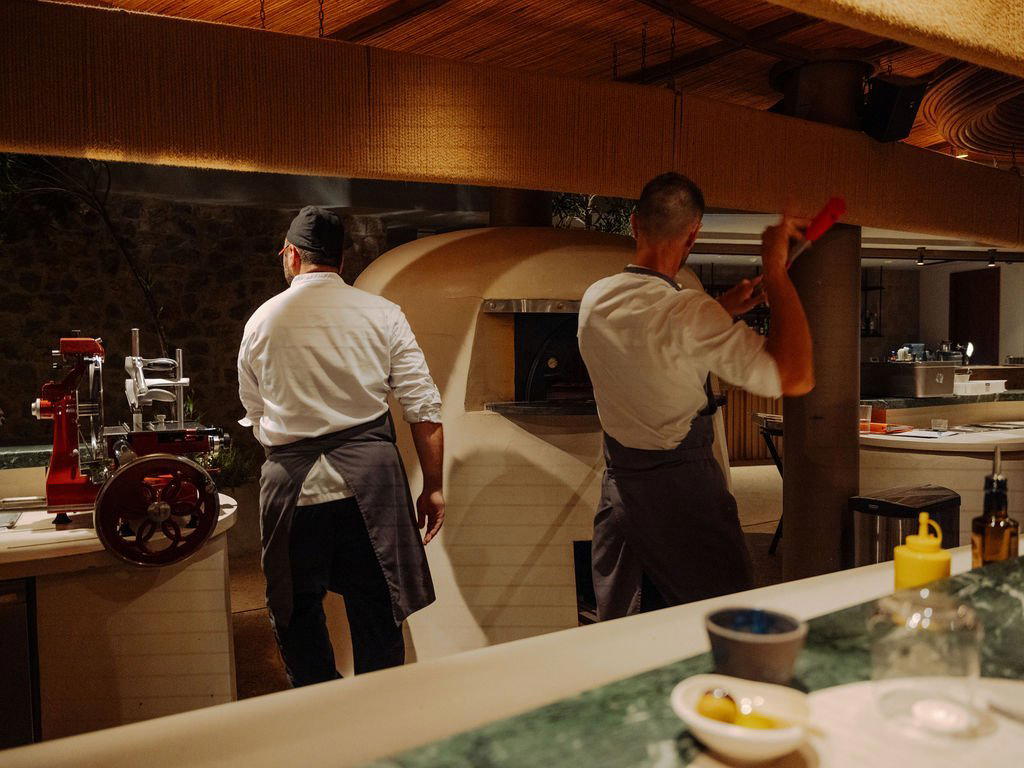
Greek resort dining has broadly split between large buffet operations designed to absorb high occupancy and smaller, more format-specific restaurants that can generate a reservation culture of their own. Mandarin Oriental, Costa Navarino runs eight onsite dining and drinking venues, which is a substantial number for a 99-room property and requires each space to carry a distinct identity. The most format-specific of these is Pizza Sapienza, where Chef Daniele Cason runs an eight-course Roman-style pizza omakase. The dough proves for 48 hours before service, a standard Roman technique that produces a lighter, more extensible base than Neapolitan methods, and the toppings draw on locally sourced ingredients.
Pizza omakase as a format has gained traction globally over the past several years, applying the chef's-counter logic of Japanese omakase to a product that can absorb regional variation more flexibly than sushi. At a Greek resort, the format allows the kitchen to work with Messenian produce in a structured, course-by-course sequence rather than a conventional à la carte menu. It also creates a reason to dine at Pizza Sapienza specifically, rather than treating it as one of several interchangeable options.
The breakfast program at the property takes a similarly deliberate approach to format. Rather than the standard luxury-resort buffet, guests receive a platter of breakfast tapas designed for grazing: housemade yogurt parfaits with honeycomb and pistachios, locally sourced figs, and cocoa-coated smoked turkey. The platter format is not unusual in Mediterranean breakfast culture, but positioning it as the default rather than an alternative signals that the kitchen is applying the same format discipline to morning service that Pizza Sapienza applies to dinner. For a broader view of where to eat and drink in the surrounding area, our full Pylos restaurants guide and [our full Pylos bars guide]() cover the regional context in full.
The Spa as Architectural Statement
Luxury spa design in Greece has moved through several phases, from the generic treatment-room model to the thermal-circuit format borrowed from central European spa culture, and more recently toward architecturally anchored spaces that use the landscape as a primary material. The spa at Mandarin Oriental, Costa Navarino belongs to this last category. The combination of rough stone, soft linen, and a view-facing indoor pool is a considered response to the Peloponnesian environment, and the design places it closer to Euphoria Retreat in Mystras, a Peloponnesian spa property with strong architectural identity, than to a conventional resort wellness center.
The minibar program reinforces the property's sourcing philosophy in a minor but telling way: Adonis keto crackers and Corphes thyme-infused chocolate are Greek specialty products that a guest would be unlikely to encounter outside the region, while Ortigia toiletries in full-size format signal an approach to bathroom amenity that prioritizes experience over cost control. These are small signals, but in aggregate they confirm that the property's regional embeddedness is a design intention rather than a marketing claim.
Planning a Stay: Practical Notes
Mandarin Oriental, Costa Navarino sits on Navarino Bay in Messenia, in the southwestern Peloponnese. The nearest major airport is Kalamata International, approximately 60 kilometres to the north, with seasonal international connections and year-round domestic flights via Athens. The property operates as a resort, so all standard amenities including a gym, outdoor and indoor pools, tennis, golf access, and babysitting services are available on site. For guests arriving by road from Athens, the drive runs roughly three to three and a half hours via the E65 motorway.
The property's position within the broader Greek luxury hotel market places it in the same general tier as 100 Rizes Seaside Resort in Gytheio and Dexamenes Seaside Hotel in Kourouta on the Peloponnese coast, each of which takes a different design position within the same regional hospitality conversation. For other strong options across Greece, our guides to Andronis Minois in Paros, Archipelagos Hotel in Mykonos, Avaton Luxury Beach Resort in Halkidiki, Aristi Mountain Resort in Zagori, Avant Mar in Naoussa Paros, Aristide Hotel in Syros, Acro Suites in Agia Pelagia, Casa Delfino Hotel & Spa in Chania, Domes Aulūs Elounda in Elounda, and Eliamos Villas Hotel & Spa in Leivathou provide comparative context. Our [full Pylos hotels guide](), [full Pylos wineries guide](), and full Pylos experiences guide cover the wider Messenia region in detail.
Recognition history
Dated appearances from independent guides and award organizations, with the underlying list record or original source where available.
Forbes 5-Star
Forbes
La Liste Top Hotels
La Liste
Star Wine List
Star Wine List
Virtuoso Luxury Hotel Partner
Virtuoso
Forbes 5-Star
Forbes
Michelin Selected
Michelin

At a Glance
- Scenic
- Elegant
- Sophisticated
- Quiet
- Modern
- Honeymoon
- Romantic Getaway
- Family Vacation
- Wellness Retreat
- Anniversary
- Weekend Escape
- Destination Wedding
- Beachfront
- Private Villa
- Garden
- Terrace
- Panoramic View
- Wi Fi
- Pool
- Spa
- Fitness Center
- Room Service
- Concierge
- Kids Club
- Beach Access
- Golf Course
- Waterfront
- Garden
- Wi Fi
- Pool
- Spa
- Fitness Center
- Room Service
- Concierge
- Kids Club
- Beach Access
- Golf Course
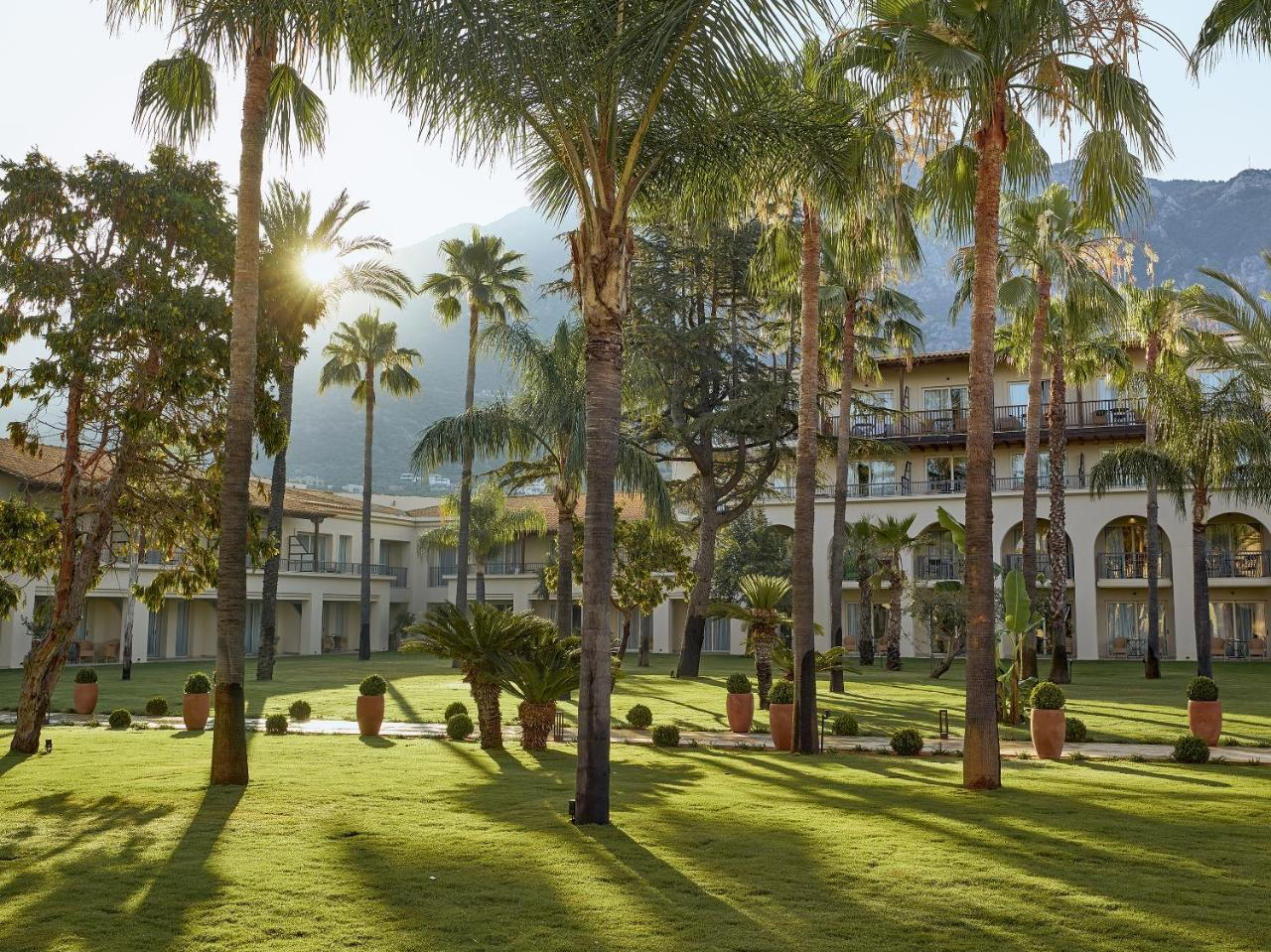
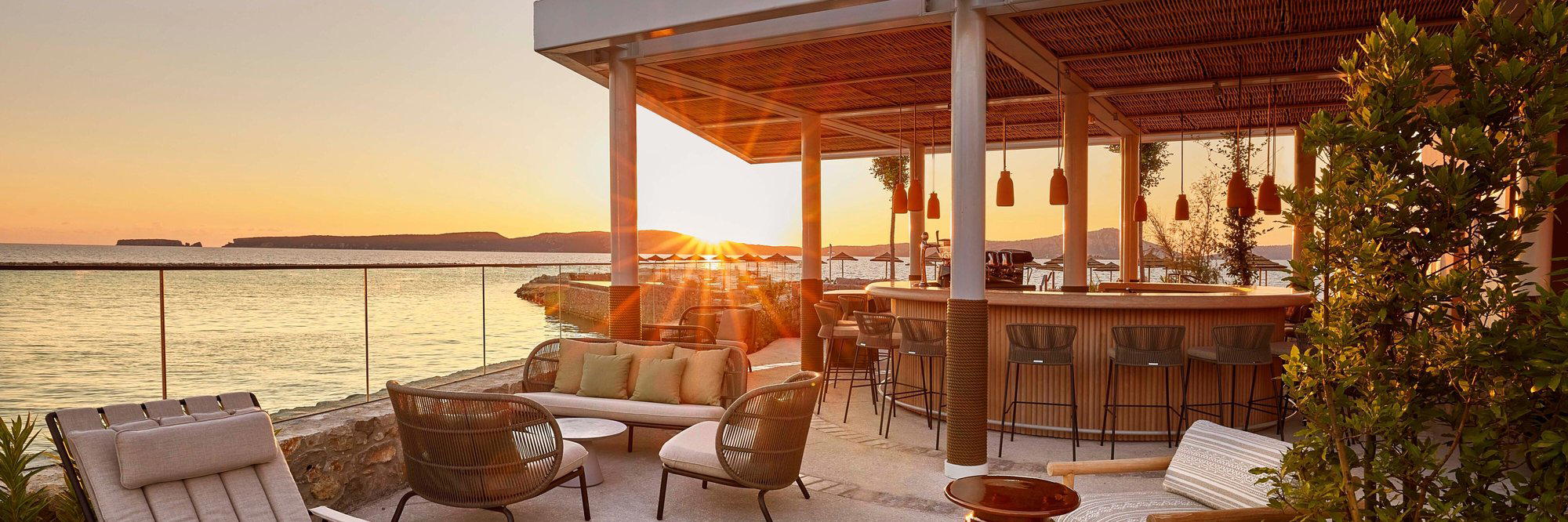
Relaxed, elegant, and nature-connected, with light-filled spaces, earthy tones, and a calm beachfront resort atmosphere.
Know Before You Go
- Getting there
- Navarino Bay, Costa Navarino, 24001 Pylos, Messenia, Greece