


Housed in a converted Soviet-era publishing house on Merab Kostava Street, Rooms Hotel Tbilisi occupies a distinctive place among the city's design-led boutique properties. Its 140 rooms layer warm textiles and vintage pieces over an industrial bones, while the Kitchen restaurant and Bar Room draw a local crowd alongside visiting guests. At around $100 per night, it sits at the accessible end of Tbilisi's emerging premium hotel tier.
 Discover on Pearl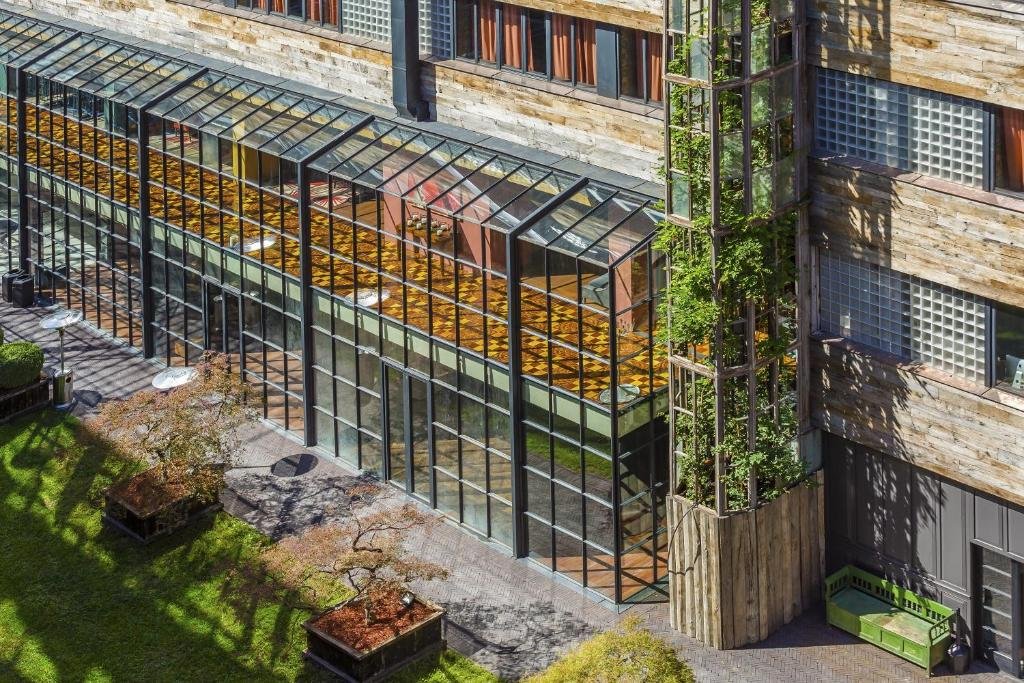
A Publishing House Repurposed: How Rooms Hotel Tbilisi Fits the City's Design Moment
Tbilisi's hotel scene has split sharply over the past decade. On one side sit the international chains that followed Georgia's tourism boom, offering familiar amenity packages in generic towers. On the other, a smaller cohort of design-led conversions has taken root in the city's existing architectural fabric, treating Soviet-era and pre-revolutionary buildings as raw material rather than obstacles. Rooms Hotel Tbilisi, at 14 Merab Kostava Street, belongs firmly to that second group. The building was an old publishing house, and the eight-story conversion retains enough of that industrial skeleton to give the property genuine character without sliding into the studied grittiness that often passes for design ambition in similar projects elsewhere.
That restraint is the point. Where many adaptive-reuse hotels in European and Central Asian cities lean hard into exposed concrete and salvaged factory fittings, the design here adds warmth as a deliberate counterweight: faded Persian rugs, velvet throws, handmade wallpaper, leather headboards, and glowing chandeliers soften the cold steel and iron that define the structure. The result reads less as a monument to the building's past and more as a liveable space that happens to carry its history lightly. It is a harder balance to strike than it looks, and the fact that Rooms pulls it off places it in a smaller peer set than the 140-room count might suggest. For context, properties like Stamba Hotel have pursued a comparable conversion strategy in Tbilisi — the two are the most discussed local examples of this approach and are frequently weighed against each other by visitors researching the city.
The shortlist, unlocked.
Hard-to-book tables, cellar releases, and concierge-planned trips.
Get Exclusive Access →The Rooms Themselves: Industrial Bones, Domestic Texture
Guest rooms in this category of conversion hotel tend to face a specific problem: the generous ceiling heights and structural drama of industrial buildings create spaces that can feel cold or cavernous when underfurnished, yet cluttered when over-styled. The approach here threads that needle with wide wood-planked floors and old-fashioned writing desks that anchor each room's proportions, while the leather headboards and velvet throws introduce enough tactile density to make the spaces feel inhabited rather than staged. The chandeliers do real work in this scheme: they drop the visual ceiling and create zones of warm light within what would otherwise read as open, austere volumes.
At a rate of approximately $100 per night, Rooms Hotel Tbilisi prices at the lower end of what the city's design-conscious properties charge, which partly explains its draw for a mixed audience of international travellers and Tbilisi residents who use the public spaces as much as the rooms. The 140-key count is large enough to give the hotel operational scale without losing the intimacy that defines the better properties in its peer set. Compare that to smaller boutique options in the city, such as The Blue Fox Hotel or The Telegraph Hotel, and the difference in scale becomes clear: Rooms is the larger, more socially active option; the others offer tighter, more contained experiences.
The Kitchen and Bar Room: Where the Hotel Earns Its Place in the Neighbourhood
Georgian hospitality culture is rooted in the feast as social institution. The traditional supra, with its succession of toasts delivered by a designated tamada, is not a tourist performance but an active social practice that extends into everyday restaurant and bar culture. The hotels that integrate most successfully into Tbilisi's social fabric are those whose food and drink spaces operate as neighbourhood venues rather than hotel amenities, and Rooms Hotel Tbilisi has managed that positioning deliberately. The Kitchen restaurant draws local regulars alongside guests, which is the clearest possible signal that the space reads as a genuine part of the city rather than a hermetic hotel bubble. Its emphasis on sustainably sourced ingredients places it in a growing Georgian hospitality movement that connects producers directly to urban tables.
The Bar Room functions as the natural extension of this, offering traditional Georgian wines in a setting that encourages the kind of extended, convivial drinking that defines local socialising. Georgia's wine tradition runs to at least 8,000 years, making it one of the oldest documented wine cultures in the world, and the country's amber wines produced via the ancient qvevri clay-vessel method have attracted serious international attention over the past fifteen years. A hotel bar that gives those wines proper shelf space and a knowledgeable service context is not simply a nice-to-have; in Tbilisi specifically, it is a statement of cultural alignment. For those wanting to explore the city's broader wine scene beyond the hotel, our full Tbilisi wineries guide covers the key producers and tasting venues.
The hotel's fireplace lounge, furnished with leather sofas, completes the picture of a property that understands its social role. Tbilisi winters are cold, and a genuinely warm gathering space at the centre of a hotel is both practical and symbolic: it signals a commitment to lingering rather than passing through.
Where This Fits in a Broader Tbilisi Stay
Merab Kostava Street positions Rooms Hotel Tbilisi within walking reach of the city's central cultural axis, giving guests direct access on foot to the museums, galleries, and café-lined lanes that define Tbilisi's intellectual character. Old Town's cobblestoned terrain and vernacular architecture sit nearby, as do the fortresses and thermal bath district that give the city its most recognisable visual identity. The hotel's location makes it an effective base for the kind of unhurried urban exploration that the city rewards: Tbilisi is compact enough to navigate on foot but layered enough to justify several days of concentrated attention.
Travellers extending their Georgia itinerary into the wine regions should note that the Kakheti valley, the country's primary wine-producing area, lies roughly two hours east of Tbilisi. Properties in that corridor worth considering include Lopota Lake Resort & Spa in Napareuli, Tsinandali Estate, A Radisson Collection Hotel in Tsinandali, and Vazisubani Estate in Gurjaani Municipality. For those using Tbilisi as a single-city destination, our full Tbilisi hotels guide, restaurants guide, bars guide, and experiences guide map the broader scene.
For reference, the design-led boutique tier that Rooms Hotel Tbilisi occupies has parallels in other cities where adaptive reuse has become the dominant mode of serious hotel-making: Casa Maria Luigia in Modena and Castello di Reschio in Lisciano Niccone operate in a comparable register of architectural sensitivity and lived-in texture, even if the specific cultural contexts differ substantially. At the opposite end of the scale and price spectrum, properties like Aman Venice or Cheval Blanc Paris represent what the conversion-hotel model looks like when applied with unlimited capital; Rooms Hotel Tbilisi is a more instructive case precisely because it achieves comparable spatial intelligence at a fraction of the cost.
Planning a Stay
Rates run at approximately $100 per night, which makes Rooms Hotel Tbilisi one of the more accessible entry points into Tbilisi's design-hotel tier. The 140-room inventory means availability is less pressured than at smaller properties, though the hotel's profile has risen consistently with Tbilisi's growing international visibility, and advance booking is sensible during peak travel months. Spring and autumn offer the most temperate conditions for exploring the city on foot; summer brings heat but also the extended outdoor café culture that makes Old Town particularly animated. The hotel's central location reduces reliance on taxis or ride-share apps for reaching the key cultural sites, which is a practical consideration worth factoring into any comparison with properties in the quieter residential districts.
The shortlist, unlocked.
Hard-to-book tables, cellar releases, and concierge-planned trips.
Get Exclusive Access →Frequently Asked Questions
Quick Comparison
A quick look at comparable venues, using the data we have on file.
| Venue | Cuisine | Price | Awards | Notes |
|---|---|---|---|---|
| Rooms Hotel Tbilisi | Warehouse is an enchanting natural wine bar and wine shop located in Tbilisi, wi… | This venue | ||
| Stamba Hotel | ||||
| The Blue Fox Hotel | ||||
| The Telegraph Hotel |
Preferential Rates?
Our members enjoy concierge-led booking support and priority upgrades at the world's finest hotels.
Get Exclusive AccessThe shortlist, unlocked.
Hard-to-book tables, cellar releases, and concierge-planned trips.
Get Exclusive Access →