Vazisubani Estate

A restored 19th-century manor in Kakheti's Gurjaani Municipality, Vazisubani Estate sits among its own vineyards and parkland, with 19 rooms furnished in Victorian antiques and a kitchen built around estate-grown produce. Rates from $161 per night place it in the mid-tier of Georgian wine-country hospitality, well below the international-brand pricing of Radisson-flagged competitors in the same region.
Pearl is the En Primeur Club membership app — saves, bookings, and concierge access live there. Same editors, same standards.
- Address
- Vazisubani Estate Kakheti Region, Vazisubani, 1504
- Phone
- +995 353 20 02 22
- Website
- vazisubaniestate.ge
- Directions
- Get directions
 Saves & bookings on Pearl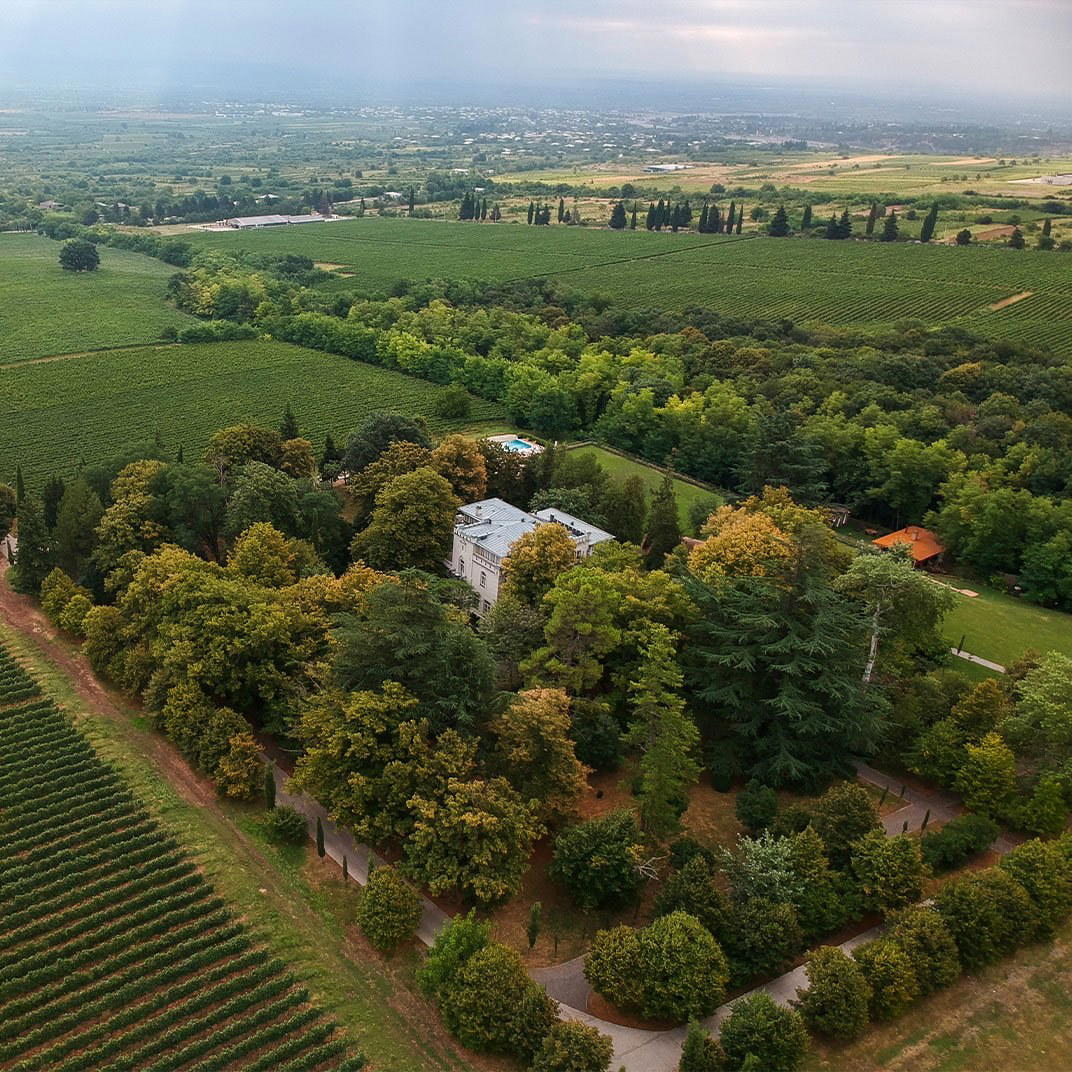
A Manor in the Vines: What Vazisubani Estate Represents in Kakheti
Kakheti has been producing wine for longer than most civilisations have existed. Georgia holds the earliest archaeological evidence of grape cultivation and winemaking anywhere on earth, a tradition stretching back roughly 8,000 years, and Kakheti remains its living centre. Against that time horizon, a property established in 1891 is historically recent, but within the context of Georgian hospitality, Vazisubani Estate carries the kind of physical weight that newer wine-country hotels cannot manufacture: a genuine 19th-century manor house, restored rather than reimagined, surrounded by working vineyards that still produce wine through the ancient Qvevri method.
This is the relevant competitive frame for Vazisubani. Kakheti's accommodation tier now splits roughly between international-flagged estate hotels, such as Tsinandali Estate, A Radisson Collection Hotel, and smaller, owner-managed properties with deeper local character. Vazisubani sits firmly in the latter category, with 19 rooms and a design brief rooted in the building's own history rather than a brand standard. At $300 per night, it is priced within the estate-hotel segment, with a limited 19-room inventory.
The Architecture of the House
The design programme at Vazisubani is the clearest expression of what the estate is trying to do. A joint team of Georgian and British architects and designers led the restoration, working with the original fabric of the building rather than against it. The decision to furnish the rooms with an authenticated collection of Victorian-era antiques, sourced from English makers, produces an atmosphere that reads as historically coherent rather than decoratively opportunistic. Antique furniture in this context is not nostalgic dressing; it is the correct furniture for the period of the building's construction, and its presence gives the interiors a density of character that contemporary reproductions cannot replicate.
This is a broader pattern worth noting in premium wine-country hospitality. Properties that commit to period-authentic restoration tend to occupy a different emotional register than those that pursue modern-minimalist aesthetics, however well executed. The former connects guests to a place's specific history; the latter signals comfort and neutrality. Vazisubani has clearly chosen the former, and the restored 19th-century grandeur of the manor house provides the spatial and atmospheric logic for everything else on the property, from the parkland surrounding the house to the vineyards beyond it.
For comparison, the design-led estate restoration approach can be seen at properties like Castello di Reschio in Lisciano Niccone, where the architecture of an existing structure shapes the guest experience. Vazisubani operates at a different price point and scale, but the underlying logic is the same: the building itself is the primary design asset.
Rooms and the Victorian Collection
The estate's 19 rooms and suites benefit directly from the architectural restoration, but the differentiation lies in the furniture programme. Authentic English-made, Victorian-era antiques are not simply placed in rooms; they are the rooms' defining objects, and their quality determines how the interiors age and how they feel in use. This is a choice with long-term implications: antique furniture requires specialist care, develops patina in ways that reproductions cannot, and carries provenance that guests with knowledge of the period will recognise and appreciate.
For travellers choosing between room types, the suite-level accommodation will typically offer more of this furniture programme in concentrated form, along with greater space to appreciate it. In a 19-room property, the difference between room categories is usually the scale of the space rather than a fundamental shift in design language, but at Vazisubani the Victorian collection is central enough that the larger rooms provide a more immersive version of the same aesthetic.
The Vineyards, the Qvevri Method, and the Kitchen
Beyond the parkland surrounding the manor, the estate's working vineyards connect the property to Georgia's most distinctive contribution to global wine culture. The Qvevri method, in which grapes ferment and age in large clay vessels buried in the earth, is the foundational technique of Georgian winemaking, now recognised by UNESCO as an intangible cultural heritage practice. That Vazisubani produces wine this way, and that those wines appear on the estate restaurant's list, is not incidental. It creates a vertical integration from vine to glass that most wine-country hotels achieve only partially, sourcing wine from nearby producers rather than from their own land.
The kitchen builds on this integration through a farm-to-table approach that draws on ingredients grown within the estate's grounds. Georgian cuisine in this context means something quite specific: a tradition of intense herb-forward cooking, walnut-based sauces, slow-braised meats, and fermented vegetables that has developed largely independently of European culinary influence. Creative interpretations of these dishes, rooted in estate produce and served alongside Qvevri wines made metres away, represent the clearest argument for choosing Vazisubani over a hotel with a more generic international kitchen.
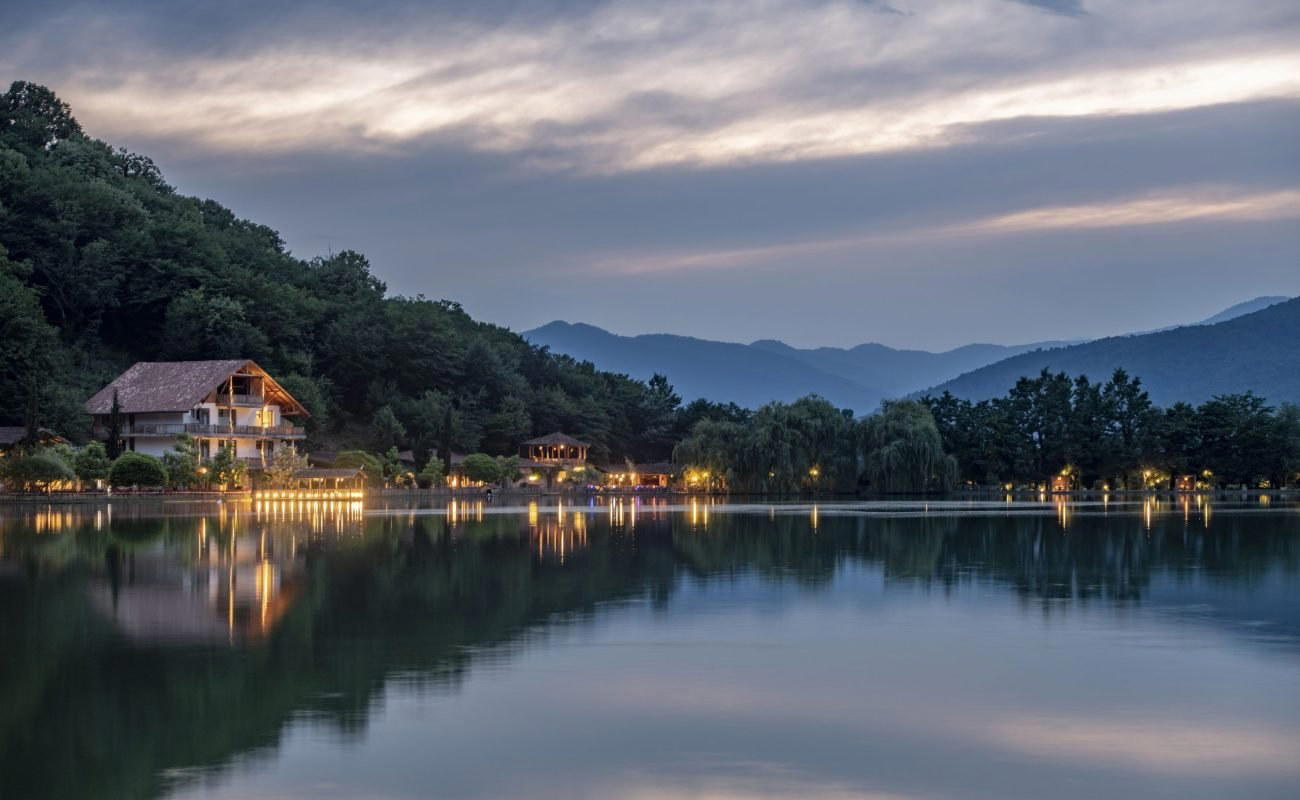
This positions the estate within a small group of Georgian properties where food and wine programming is genuinely site-specific. For guests who prioritise that dimension, it changes the calculus significantly. Mountain and resort properties elsewhere in Georgia, including Lopota Lake Resort and Spa in Napareuli and Mtserlebi Mountain Resort By Graz, offer different landscape contexts but do not have the same vineyard-to-table integration.
Planning a Stay
Vazisubani Estate is located in the Gurjaani Municipality of the Kakheti region, Georgia's principal wine-producing area. The estate's address places it within the village of Vazisubani, accessible by road from Tbilisi in approximately two hours, making it a viable base for extended stays or a focused two-to-three night wine-country itinerary.
Rates from $161 per night place the estate in a manageable bracket for wine-country travel, particularly given that the restaurant, estate wines, and parkland are all on-site. The property's 19-room scale means availability can be limited, particularly in autumn when Kakheti's harvest season draws significant visitor numbers to the region. Booking in advance for September and October travel is advisable. Spring, from April through June, offers a quieter alternative with the vineyards in growth and the parkland at its most generous.
Vazisubani fills the wine-country, heritage-manor position in that itinerary with more specificity than any of them.
In Context: Similar Options
Comparable venues nearby, for context on price, style, and recognition.
| Venue | Cuisine | Price | Awards | Notes |
|---|---|---|---|---|
| Vazisubani EstateThis venue — the venue you are viewing | Restored 19th-century noble estate turned boutique hotel | $$$$ | Michelin 1 Key | Not listed |
| Lopota Lake Resort & Spa | Modern luxury resort with handcrafted hospitality, blending contemporary design with Georgian cultural authenticity and natural landscape integration. | $$$$ | Michelin 1 Key | Napareuli, Kakheti Region |
| Tsinandali Estate, A Radisson Collection Hotel | Contemporary luxury on historic estate | $$$$ | Michelin 1 Key | Tsinandali |
| Stamba Hotel | Post-industrial repurposed publishing house with artistic and eco-conscious elements. | $$$$ | Michelin 1 Key | Tbilisi |
| Rooms Hotel Tbilisi | Post-industrial publishing house converted into a contemporary boutique hotel with bohemian charm. | $$$ | Michelin 1 Key | Tbilisi |
| Artizan - Design Hotel | Luxurious curated design hotel with narrative and substance. | $$$$ | 5-Star | Tbilisi |
Recognition history
Dated appearances from independent guides and award organizations, with the underlying list record or original source where available.
Michelin 1 Key
Michelin
Continue exploring
More in Gurjaani Municipality
Hotels in Gurjaani Municipality
Browse all →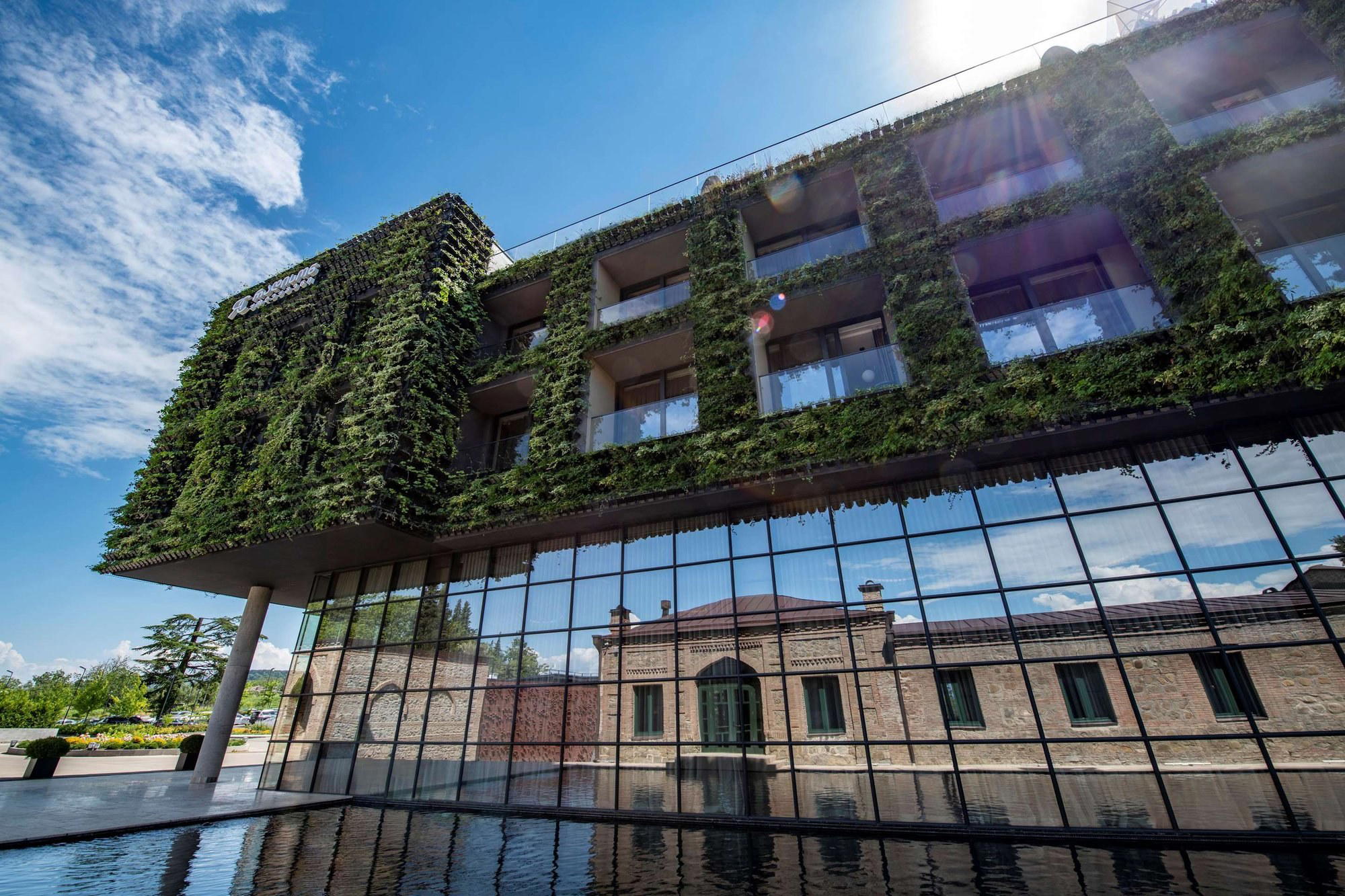
Restaurants in Gurjaani Municipality
Browse all →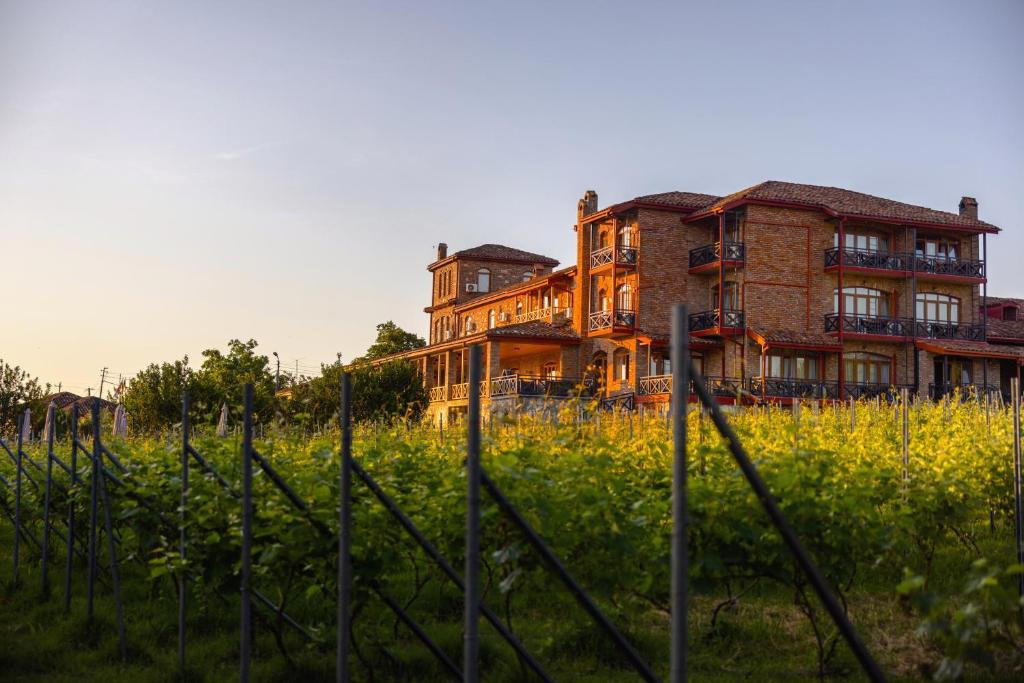
Wineries in Gurjaani Municipality
Browse all →
At a Glance
- Quiet
- Scenic
- Elegant
- Rustic
- Cozy
- Romantic
- Romantic Getaway
- Weekend Escape
- Honeymoon
- Anniversary
- Infinity Pool
- Garden
- Terrace
- Panoramic View
- Historic Building
- Wi Fi
- Pool
- Restaurant
- Garden
- Air Conditioning
- Mountain
- Garden
- Vineyard
- Wi Fi
- Pool
- Restaurant
- Garden
- Air Conditioning
Relaxing and peaceful atmosphere with dramatic mountain and vineyard views, enhanced by colonial-style furniture and natural surroundings.