
Nobu Hotel & Restaurant Toronto belongs to a newer Toronto category: hospitality built around a dining identity rather than a conventional grand-hotel script. With Japanese cuisine at the centre and a hotel format attached to the same name, it reads as part of the city’s design-led shift, where architecture, restaurant culture, and neighbourhood momentum matter as much as room count or old-guard formality.

Pearl is the En Primeur Club membership app — saves, bookings, and concierge access live there. Same editors, same standards.
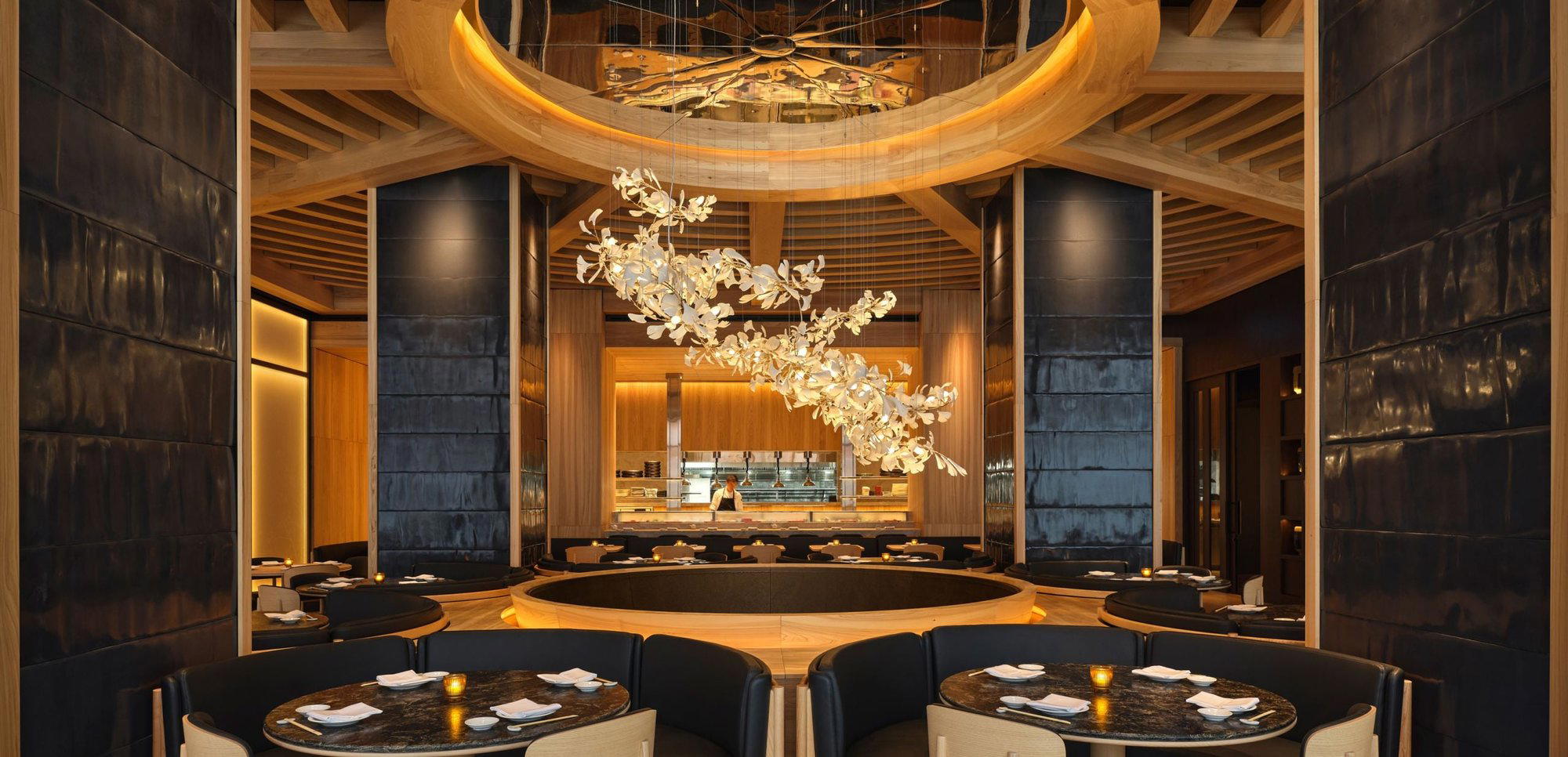
Toronto hospitality is becoming more architectural, and more food-led
The arrival point for a hotel-restaurant hybrid in Toronto matters because the city has spent the past decade changing the way luxury announces itself. The older model was easy to read: limestone, porte cochère, hushed lobby, formal service. The newer model is sharper and less deferential. It uses restaurant energy, darker materials, tighter sightlines, and a social ground floor to make the building feel less like a sealed private club and more like a piece of the city. Nobu Hotel & Restaurant Toronto sits in that shift. The name places Japanese cuisine in the foreground, while the hotel component turns the meal into a wider design proposition: stay, dine, circulate, and read the space as one continuous hospitality environment.
That matters in Toronto because the city’s hotel scene is unusually split. Yorkville remains the established luxury district, with polished addresses such as Four Seasons Hotel Toronto, The Hazelton Hotel, and Park Hyatt Toronto defining a certain type of residential calm. King West and the downtown west corridor have pushed a different language, closer to nightlife, galleries, restaurants, and branded design. In that company, Nobu Hotel & Restaurant Toronto is less about retreat and more about compression: the hotel is judged through the restaurant, and the restaurant is judged through the building around it.
The design story is the main story
When a hotel carries a restaurant name this prominently, the architecture has to do more than provide rooms above a dining room. It has to manage mood. Toronto has plenty of competent hotels, but fewer properties where the building’s identity is tied so directly to how people eat and gather after dark. That is the useful lens here. Nobu Hotel & Restaurant Toronto should be understood as part of the international shift from amenity-led hotels to experience-led buildings, where the ground-floor or signature restaurant shapes the entire property’s reputation.
The design comparison in Toronto is instructive. 1 Hotel Toronto uses an eco-material language and a softened, greenery-heavy urban mood. Ace Hotel Toronto speaks in the grammar of creative-industry lodging: lobby life, local adjacency, and a less formal social register. Bisha Hotel Toronto belongs to the entertainment-district school, where visual drama and nightlife proximity are part of the offer. Nobu’s Toronto presence falls closer to the restaurant-led end of this spectrum, using cuisine type and brand recognition to define the guest’s expectations before any practical detail enters the conversation.
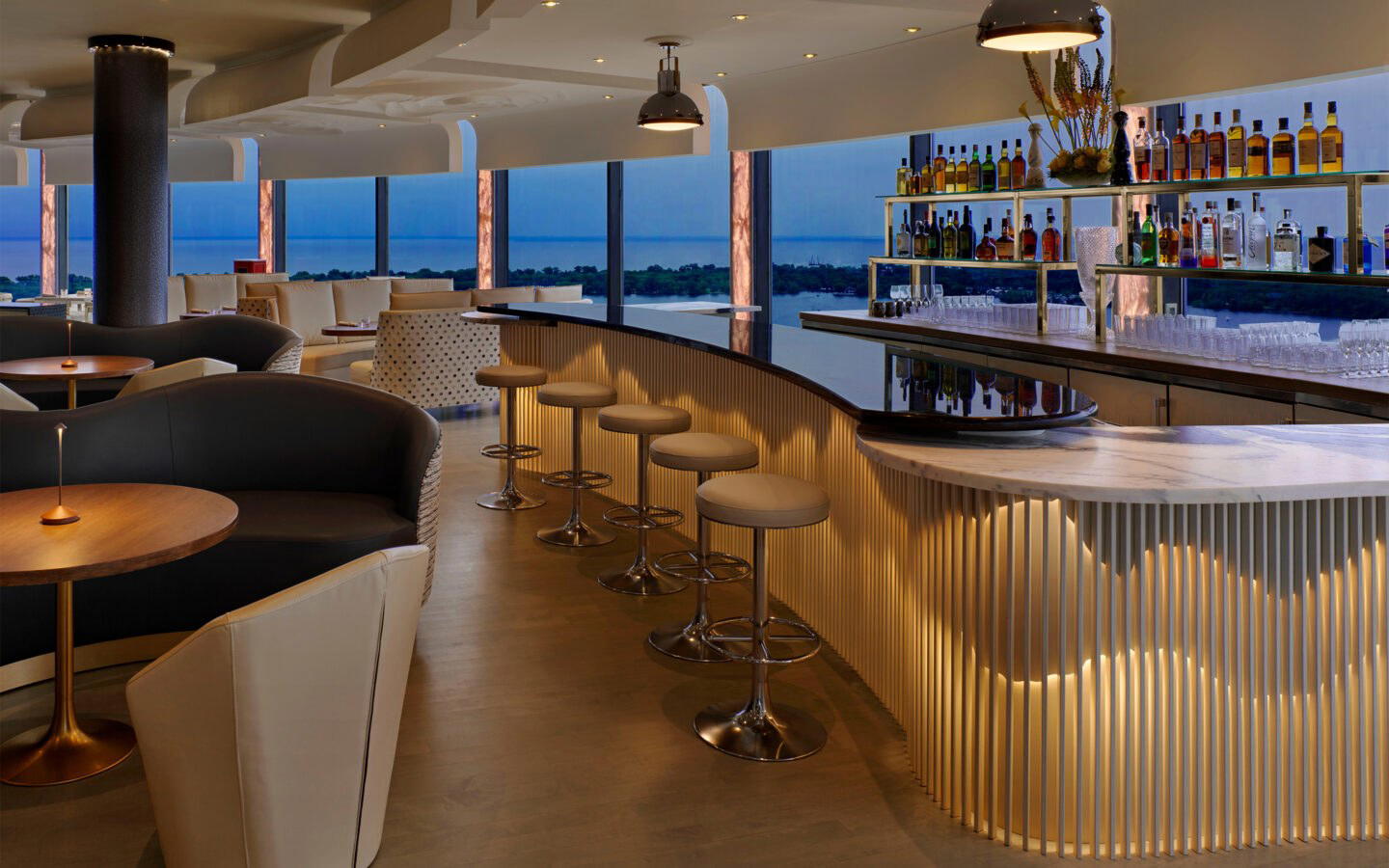
This is not a minor distinction. In hotel criticism, architecture is often treated as surface, but in a restaurant-led property it becomes operational. Lighting has to flatter dining rooms without making the hotel feel theatrical in daylight. Circulation has to separate overnight guests from restaurant traffic without draining the room of energy. The public spaces have to feel composed, not merely crowded. The design succeeds or fails on those tensions, not on decorative vocabulary alone.
Japanese cuisine changes the hotel equation
Japanese dining in Toronto has widened well beyond sushi counters and casual izakaya rooms. The city now supports omakase formats, ramen specialists, whisky bars, polished hotel dining rooms, and pan-Japanese luxury brands, each serving a different audience. Nobu Hotel & Restaurant Toronto enters that field with the advantage and burden of a name that many travellers already understand. Japanese cuisine carries more weight here than it would at a conventional hotel restaurant. Here, cuisine is not an amenity. It is the organising principle.
That positioning changes how the property competes. A guest comparing Toronto hotels may look at Hotel, Toronto for an international luxury framework, or Executive Hotel Cosmopolitan Toronto for a more compact downtown stay. Nobu belongs to a different decision tree. It appeals to travellers who want the restaurant to set the tone of the night, and who treat dinner as part of the hotel’s design rather than a separate reservation elsewhere in the city.
The absence of listed chef name, price range, hours, and seat count should shape expectations. It means the reading is contextual. There is no basis here to claim a particular tasting format, dish, chef lineage, booking window, or service ritual. What can be said with confidence is narrower and more useful: this is a Toronto hotel-restaurant address built around Japanese cuisine, and its competitive logic sits between luxury lodging and destination dining.
Where it fits among Toronto hotels
Toronto’s premium hotels have become easier to divide by temperament than by star language. Yorkville hotels trade on established luxury codes: private-car arrivals, gallery proximity, quieter streets, and a client base that often values discretion over spectacle. Downtown west properties tend to be more social, more design-forward, and more intertwined with the city’s restaurant and bar circuits.
For travellers building a Toronto itinerary, that distinction matters. A stay anchored around museum time, luxury retail, and a calmer neighbourhood rhythm may point toward Yorkville. A stay built around dinner, late drinks, performance venues, and a dense downtown schedule may make a restaurant-led hotel more logical. Toronto is a city where neighbourhood selection changes the entire trip. The practical question is not simply which property has the strongest name recognition, but which hotel matches the day’s pattern.
The broader EP Club Toronto ecosystem reflects that split. Readers comparing overnight stays can use Our full Toronto hotels guide, while those planning tables around the stay should cross-check Our full Toronto restaurants guide. For evenings that extend beyond dinner, Our full Toronto bars guide is the more relevant companion. The city’s winery and experience coverage, through Our full Toronto wineries guide and Our full Toronto experiences guide, helps frame a stay that moves beyond the hotel without treating Toronto as a one-neighbourhood city.
The restaurant-hotel hybrid is a sharper format than it looks
Restaurant-led hotels can be misread as branding exercises, but the format answers a real travel problem. Many luxury travellers no longer want a hotel that feels disconnected from the city’s dining culture. They want the first night handled with confidence, the design language consistent, and the after-dinner transition shortened. That does not make every branded hotel-restaurant compelling, but it explains why the category has grown. The property becomes a schedule tool as much as an aesthetic choice.
In Toronto, that schedule logic is particularly strong. The city’s restaurant scene is dispersed across downtown, King West, Queen West, Yorkville, Ossington, Dundas West, and beyond. A hotel with a serious dining identity simplifies at least one evening, especially for travellers arriving late or those using Toronto as a short urban stop between longer Canadian itineraries. This is the point at which Nobu Hotel & Restaurant Toronto has its clearest editorial role: it condenses lodging and dinner into a single decision while participating in the city’s more design-conscious hospitality tier.
That said, travellers should avoid treating the name alone as a substitute for planning. In a city where peak dinner periods can compress availability, especially around weekends, major events, and holiday weeks, advance planning is the safer assumption. The responsible approach is to verify current restaurant and hotel details through official channels before locking an itinerary.
How it compares with Canada's wider luxury circuit
Canadian luxury lodging is not one category. It includes remote design pilgrimage, historic railway hotels, resort properties, wilderness lodges, and urban dining-led addresses. A Toronto stay built around Nobu belongs to the urban end of that map. It is a different proposition from Fogo Island Inn in Joe Batt's Arm, where geography and cultural remoteness drive the experience, or Clayoquot Wilderness Lodge in Tofino, where nature and access define the stay. Those properties ask the traveller to leave the city behind. Toronto’s restaurant-led hotels ask the traveller to enter the city more efficiently.
The same contrast holds with heritage and resort addresses. Manoir Hovey in North Hatley, Fairmont Chateau Whistler in Whistler, Rosewood Hotel Georgia in Vancouver, and Le Mount Stephen in Montréal each speak to a different Canadian hotel tradition: country-house calm, mountain resort scale, urban heritage, and mansion-to-hotel adaptation. Toronto’s Nobu address is more contemporary in premise, closer to the international city hotel as dining stage.
That comparison helps define its comparable set. It is not trying to be Fairmont Chateau Lake Louise in Lake Louise, where landscape, in the literal sense, carries the drama. It is not Fairmont Empress Hotel in Victoria, where history and civic presence do much of the work. Nor is it Hôtel Quintessence in Mont-Tremblant, where resort pacing shapes the stay. Its logic is metropolitan: compressed, social, design-aware, and tied to dinner.
Internationally, the category has become more competitive
The Toronto opening also belongs to a wider international hotel pattern. Urban travellers increasingly compare cities through hotels that combine architecture, restaurants, bars, and a strong sense of arrival. In New York, The Fifth Avenue Hotel in New York City shows how design-rich city hotels can turn eccentricity and dining into a central part of the stay. In Monaco, Hôtel de Paris Monte-Carlo in Monte Carlo represents a much older model, where palace-hotel status, civic theatre, and grand dining history merge. In the Alps, Badrutt's Palace Hotel in St. Moritz operates through resort ritual and seasonal society.
Toronto’s version is less about inherited grandeur and more about contemporary alignment. The city has the restaurant audience, business travel base, entertainment calendar, and condo-era architecture to support hotels that feel plugged into the present. Nobu Hotel & Restaurant Toronto is part of that alignment. Its promise is not old-world ceremony. Its interest lies in how a Japanese dining identity can shape the design and social reading of a Canadian downtown hotel.
Planning notes before you go
Planning should be handled with verification rather than assumption. Treat restaurant timing as the first constraint if dinner is central to the stay. Toronto can tighten around convention periods, sports events, film festival dates, and winter holiday dining, and restaurant-led hotels are exposed to both overnight demand and table demand. If the trip depends on eating on-site, confirm the restaurant details before finalising the hotel schedule.
Price should also be checked directly. There is no responsible basis for placing the restaurant or hotel into a fixed spend bracket here. The safer editorial read is comparative rather than numeric: this is positioned in the city’s premium, design-conscious hotel conversation rather than the functional business-hotel tier. Travellers deciding between Nobu, Yorkville luxury hotels, and downtown design properties should compare location, dining plans, and the desired social temperature of the stay.
Comparable venues nearby, for context on price, style, and recognition.
| Venue | Cuisine | Price | Awards | Notes |
|---|---|---|---|---|
| Nobu Hotel & Restaurant TorontoThis venue — the venue you are viewing | Intimate luxury urban sanctuary perched atop a mixed-use tower, combining Nobu’s lifestyle brand energy with a residential, retreat-like feel. | $$$$ | 5-Star | Not listed |
| Hotel X Toronto, a Destination by Hyatt Hotel | Urban resort with resort-style amenities in a downtown waterfront setting | $$$$ | 5-Star | Niagara |
| Nobu Hotel Toronto - A Virtuoso Preview Property | Contemporary luxury boutique hotel emphasizing Japanese minimalism, discretion, and personalized service within a 45-story mixed-use tower. | $$$$ | 5-Star | Entertainment District |
| The St. Regis Toronto | Contemporary luxury with bespoke personalization; a five-star property redefining urban hospitality through signature butler service and curated wellness experiences. | $$$$ | 5-Star | Financial District |
| Nobu Hotel Toronto | Ryokan-inspired urban sky sanctuary atop residential towers | $$$$ | 5-Star | Entertainment District |
| InterContinental Toronto Centre | Urban luxury with penthouse-like suites | $$$$ | 4-Star | Entertainment District |
Recognition history
Dated appearances from independent guides and award organizations, with the underlying list record or original source where available.
AHEAD Awards AHEAD Americas Suite Shortlist
AHEAD Awards · AHEAD Americas Awards 2026 Shortlist - Suite
AHEAD Awards AHEAD Americas Hotel Conversion Shortlist
AHEAD Awards · AHEAD Americas Awards 2026 Shortlist - Hotel Conversion
Continue exploring
More in Toronto
Hotels in Toronto
Browse all →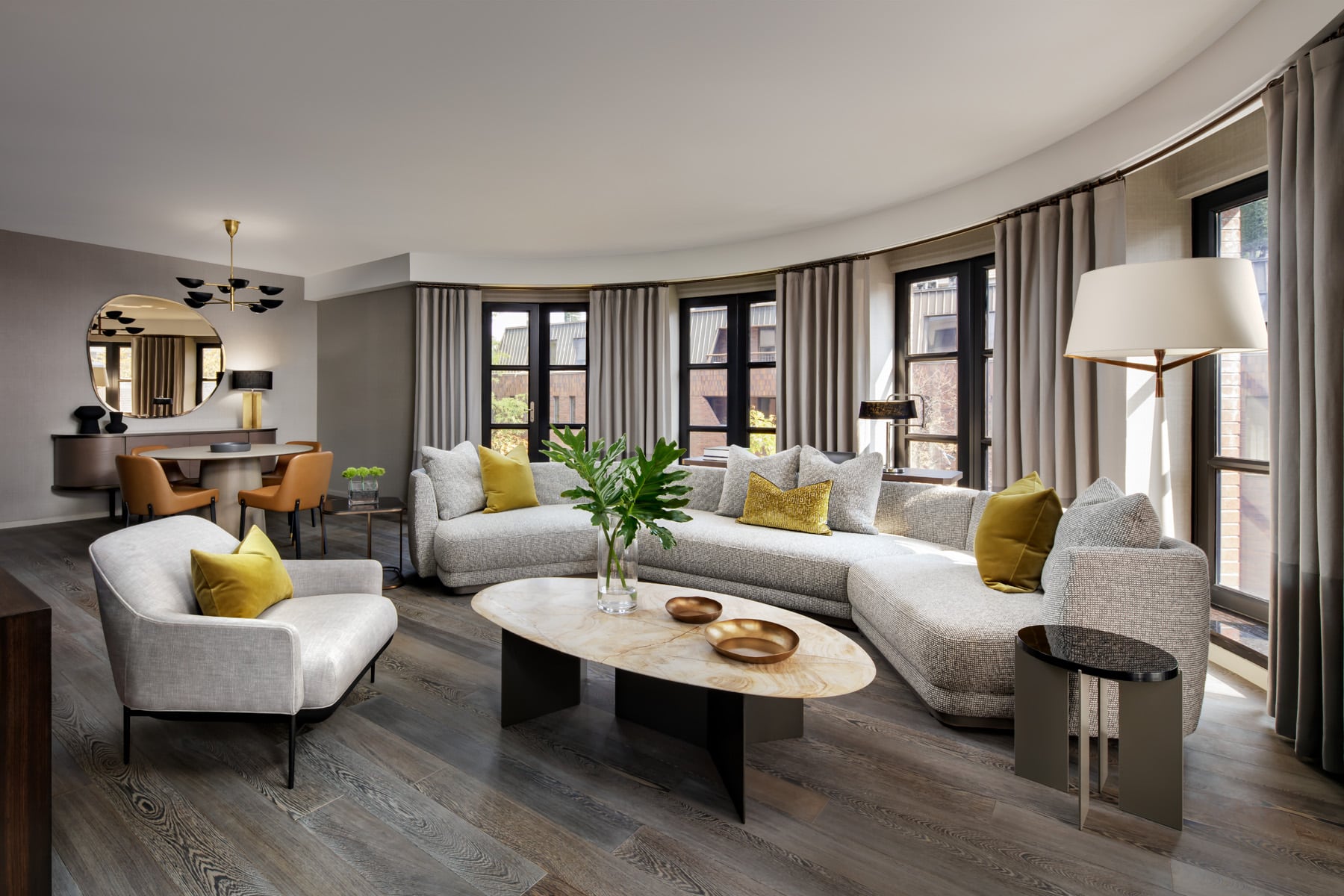
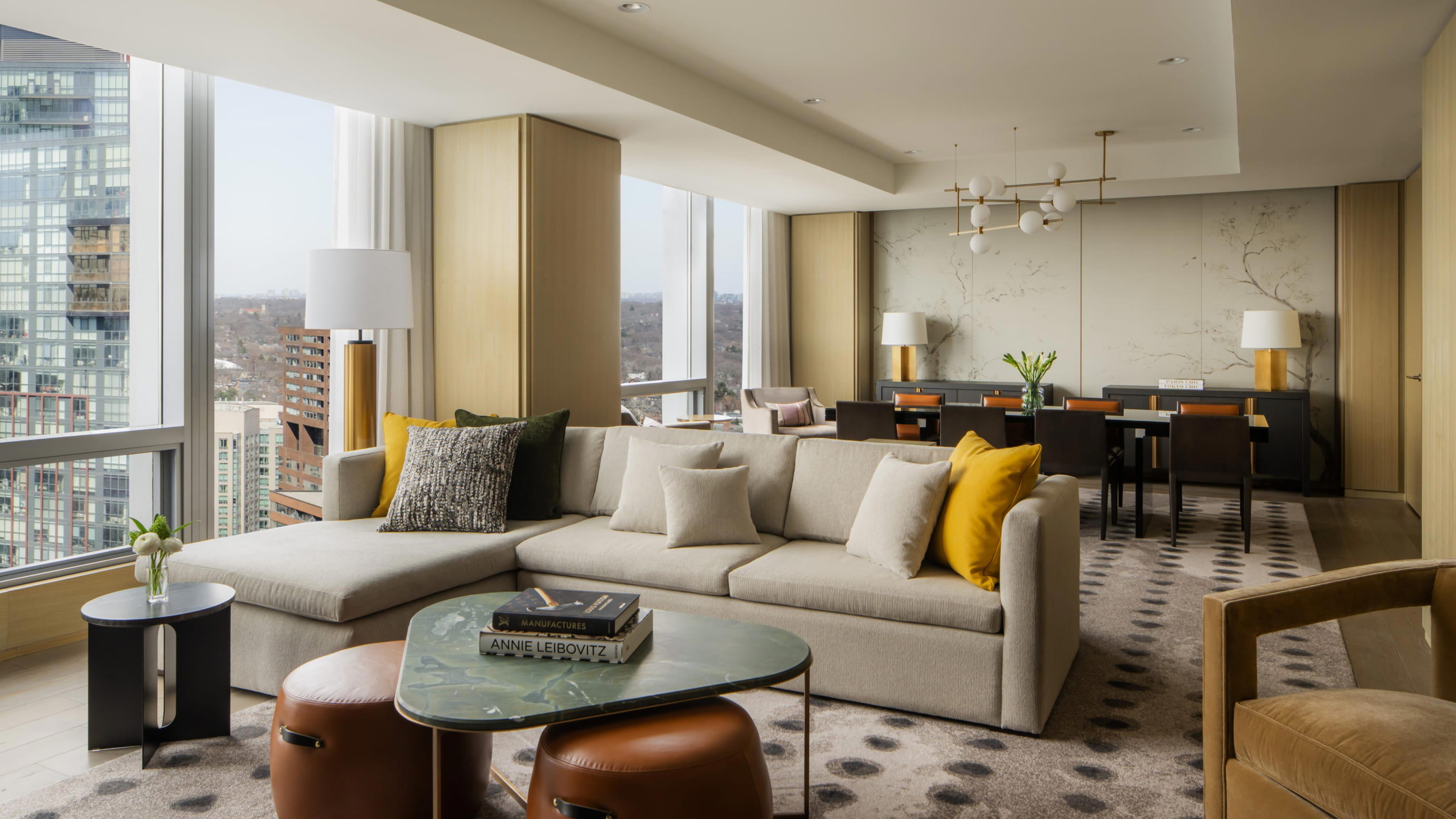
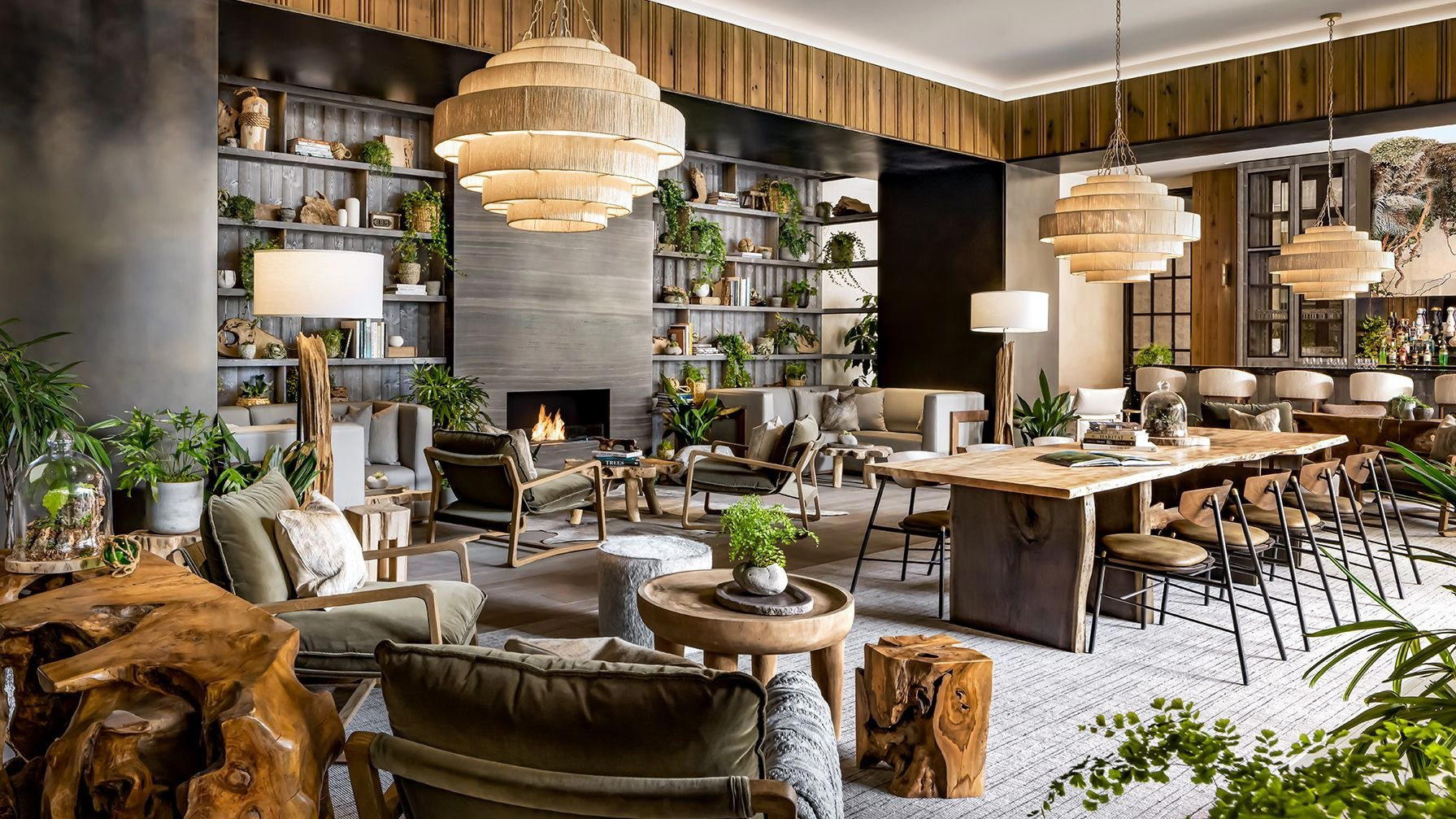
Bars in Toronto
Browse all →
Restaurants in Toronto
Browse all →
Wineries in Toronto
Browse all →
At a Glance
- Elegant
- Sophisticated
- Modern
- Trendy
- Well Known
- Intimate
- Business Trip
- Romantic Getaway
- Weekend Escape
- Celebration
- Group Retreat
- Design Destination
- Panoramic View
- Private Dining
- Wi Fi
- Fitness Center
- Concierge
- Room Service
- Business Center
- Skyline
- Wi Fi
- Fitness Center
- Concierge
- Room Service
- Business Center
A discreet, quiet-luxury atmosphere with Japanese-inspired minimalism, warm materials, and soft lighting, creating a serene sanctuary above the city paired with a buzzy but polished dining and bar scene below.