

Michelin Selected · Preferred Hotels Member
Milano Verticale UNA Esperienze occupies a thoughtfully designed property on Via Carlo de Cristoforis in Milan's Repubblica district, offering 173 rooms that position it as a mid-to-large-scale option within a city increasingly defined by design-led hospitality. The hotel draws visitors who want considered interiors and central access without the formality of the palace tier. It sits in a compelling bracket for those approaching Milan through its architecture as much as its amenities.

Pearl is the En Primeur Club membership app — saves, bookings, and concierge access live there. Same editors, same standards.
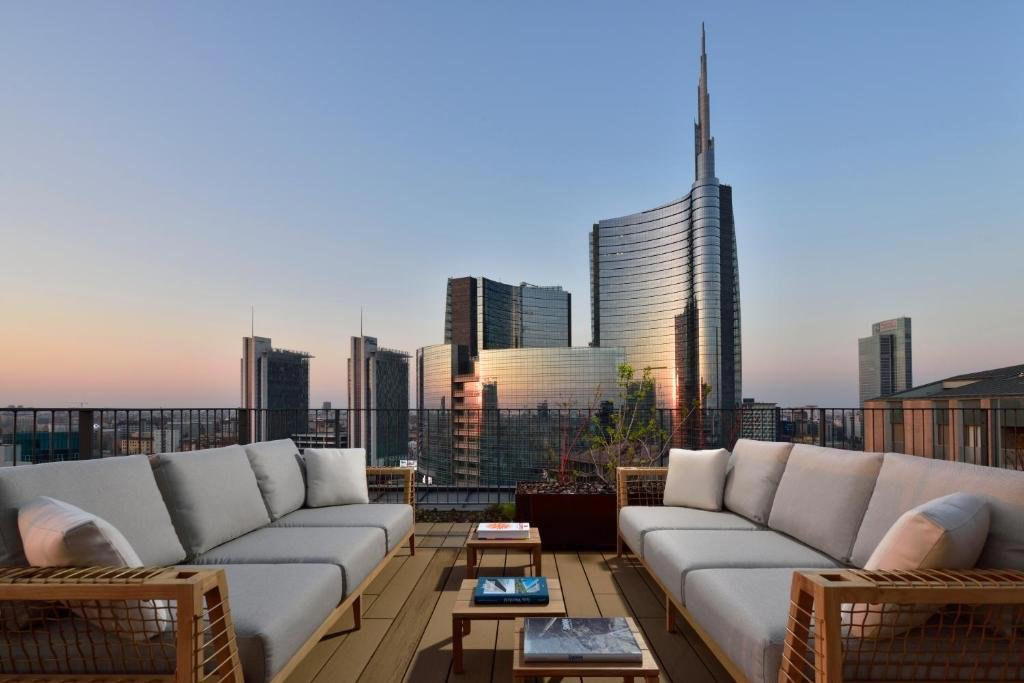
Where the Building Does the Talking
Milan's hotel scene has spent the better part of two decades splitting into two distinct camps: the palace-era grand hotels clustered around the historic centre, and a newer wave of design-forward properties that treat architecture and interior language as their primary credential. Milano Verticale UNA Esperienze, on Via Carlo de Cristoforis in the Repubblica district, belongs to the second camp. With 173 rooms, it operates at a scale that puts it above the boutique tier without reaching the anonymous volume of a convention-grade property — a position that defines its identity as much as any single design choice.
The name itself signals intent. "Verticale" — vertical, implies a relationship with height, layering, and upward movement through space. In a city where horizontal sprawl dominates the residential fabric and even many luxury hotels stretch across palazzo footprints, a vertical architectural premise reads as a deliberate counter-statement. Milan's newer design hotels have increasingly used this kind of spatial vocabulary to differentiate themselves from the heavier, more ornate language of properties like the Grand Hotel et de Milan or the Hotel Principe di Savoia, Dorchester Collection, whose identities are rooted in accumulated history rather than architectural proposition.
The Repubblica District and What It Tells You
Via Carlo de Cristoforis places the property at a useful distance from both the Duomo cluster and the Brera neighbourhood. The Repubblica area around Milano Centrale station has undergone meaningful repositioning over the past decade, evolving from a transit-adjacent zone into a district with genuine hospitality density. That shift reflects a broader Milanese pattern: as Brera and the Golden Triangle have become saturated with luxury retail and high-end restaurant pressure, surrounding districts have absorbed creative and hospitality investment. For a guest whose primary agenda is design, the Triennale, or northern Milan's emerging restaurant scene, the location works efficiently. For someone orienting around the Quadrilatero d'Oro, it requires a transit calculation.
The hotel's positioning within UNA Esperienze's wider Italian portfolio matters here. The group operates across multiple tiers and city types, but Milano Verticale has been positioned as a flagship-level property within that system, the kind of anchor that justifies comparison, at least at the design-ambition level, with independent design hotels in the same city.
Interior Architecture as the Core Credential
At 173 rooms, the property's spatial decisions carry weight at scale. Design-led hotels in Milan tend to face a particular pressure: the city's visual culture is sophisticated enough that guests arrive with calibrated expectations around material quality, proportion, and finish. Properties that lean on a design premise without executing it through the detail of individual rooms, lighting transitions, acoustic separation, the way natural light behaves across a corridor, tend to lose credibility quickly in a market where Mandarin Oriental Milan and Bvlgari Hotel Milan set a reference point for material investment at the upper tier.
Milano Verticale's architectural framing aligns it with a European hotel category that has grown significantly since the mid-2010s: properties that use interior architecture as a narrative device rather than a decorative layer. This approach treats each floor or zone as a distinct spatial chapter, with the vertical axis of the building functioning as an editorial sequence rather than a repeated stack of identical rooms. Whether that plays out in corridor design, in how the lobby mediates between street level and upper floors, or in the relationship between public and private space, the verticality concept creates a structural logic that better-executed examples of this type carry through consistently.
For context within Italy's design hotel conversation, the properties setting the clearest spatial intentions operate at smaller scale: Passalacqua in Moltrasio and Castello di Reschio in Lisciano Niccone both demonstrate how architectural premise and interior language can carry a property's entire identity. At 173 rooms in an urban context, Milano Verticale is operating under different constraints, but the same principle applies: the design concept needs to survive contact with occupancy at scale.
Milan's Mid-Tier Design Hotel Bracket
Positioning a 173-room property in Milan's current hotel market means accepting comparison across a wide range. At the upper end, the Portrait Milano and Bvlgari operate with a combination of brand weight, spatial luxury, and service-to-key ratios that define the city's premium ceiling. At the other end, a growing number of smaller design properties use limited inventory to create scarcity signals. Milano Verticale occupies the middle ground, a position that requires clear editorial identity to avoid the anonymity that can affect mid-scale properties in markets with strong upper and lower poles.
That said, the 173-room scale brings genuine advantages: consistent amenity provision, bar and food programming that can sustain genuine quality without the economic pressure that pushes smaller properties toward minimum-viable offerings, and a public-space investment that smaller hotels cannot justify. In cities like Milan, where guests increasingly treat the hotel's ground-floor programming as part of the social infrastructure of their trip, that scale is an asset rather than a liability, provided the programming matches the spatial ambition.
For a broader map of where Milano Verticale sits within Milan's hospitality offer, our full Milan hotels and restaurants guide covers the city's key districts and property types in detail. Those planning an extended Italian itinerary might also consider pairing a Milan stay with design-led properties elsewhere in the country: Aman Venice and Four Seasons Hotel Firenze represent the upper bracket in their respective cities, while Casa Maria Luigia in Modena offers a radically different spatial register for those willing to travel for it. Southern Italy adds further contrast: Borgo Santandrea on the Amalfi Coast, Il San Pietro di Positano, and Borgo Egnazia in Puglia each demonstrate how Italian hospitality uses landscape and regional architecture as spatial raw material in ways that urban hotels cannot replicate.
Planning Your Stay
The hotel's address at Via Carlo de Cristoforis, 6, Milano places it within walking reach of Milano Centrale for rail connections to the rest of Italy, with the M2 and M3 metro lines providing access to the Duomo and Brera within a short ride. For guests arriving by air, Linate airport is closer than Malpensa and serves a growing number of European routes, making it the practical choice for short-haul arrivals. Booking directly with UNA Esperienze's reservation system is the standard approach for this property tier; rates and availability should be confirmed there rather than assumed from third-party aggregators, which may not reflect current room category configurations across the 173-key inventory.
Side-by-Side Snapshot
Comparable venues nearby, for context on price, style, and recognition.
| Venue | Cuisine | Price | Awards | Notes |
|---|---|---|---|---|
| Milano Verticale UNA EsperienzeThis venue (the venue you are viewing) | Contemporary urban hotel reinterpreting Milanese style with eclectic dynamism. | $200–300 | Michelin Selected · Preferred Hotels Member | Not listed |
| Starhotels E.c.ho. | Eco-contemporary urban boutique | $100–200 | Michelin Selected · Preferred Hotels Member | Stazione Centrale - Ponte Seveso |
| Urban Hive Milano | Contemporary boutique hotel with co-working integration, designed for cosmopolitan travelers blending business and leisure. | $100–200 | Michelin Selected | Brera |
| Room Mate Giulia | Contemporary boutique blending traditional materials with modern design | $200–300 | Michelin Selected | Duomo |
| Maison Borella | Charming 18th-century balustrade house with modern comforts and internal courtyard. | $100–200 | Michelin Selected | Porta Ticinese - Conchetta |
| Starhotels Anderson | Metropolitan chic design hotel | $100–200 | Michelin Selected | Stazione Centrale - Ponte Seveso |
Recognition history
Dated appearances from independent guides and award organizations, with the underlying list record or original source where available.
Michelin Selected
Michelin
Preferred Hotels Member
Preferred Hotels
Continue exploring
More in Milan
Hotels in Milan
All hotels in Milan →
Bars in Milan
All bars in Milan →
Restaurants in Milan
All restaurants in Milan →
Details
- Modern
- Elegant
- Sophisticated
- Trendy
- Business Trip
- Romantic Getaway
- Weekend Escape
- Panoramic View
- Terrace
- Historic Building
- Wi Fi
- Spa
- Pool
- Fitness Center
- Room Service
- Concierge
- Business Center
- Restaurant
- Skyline
- Wheelchair Accessible
- Step Free Entrance
- Elevator
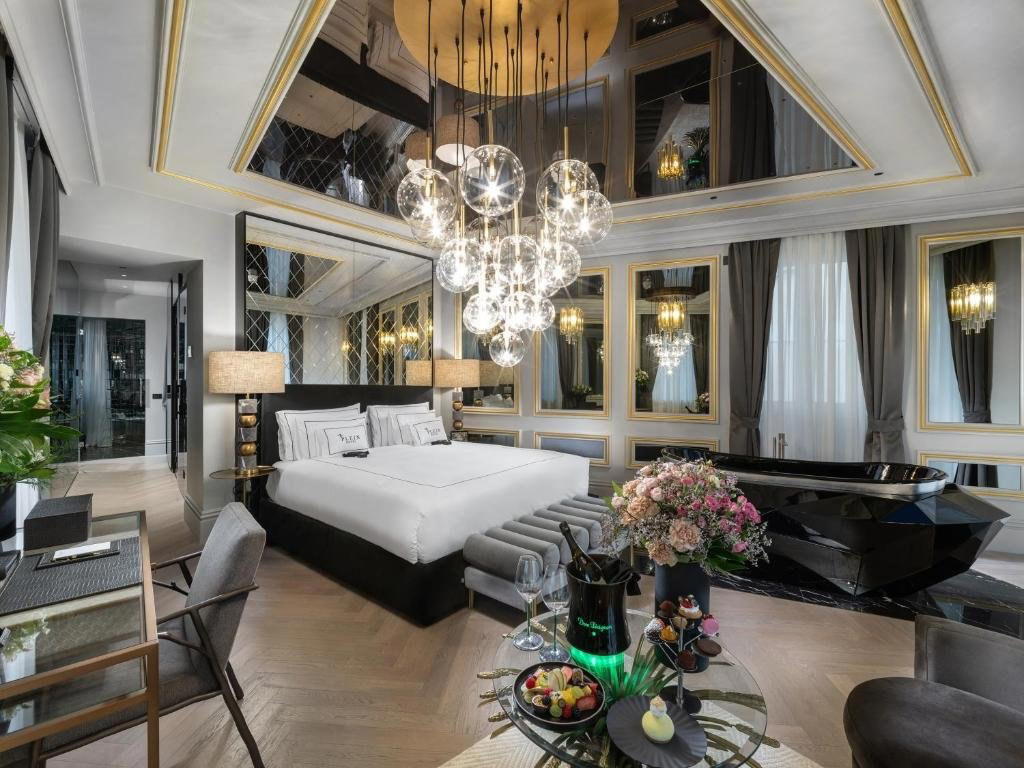
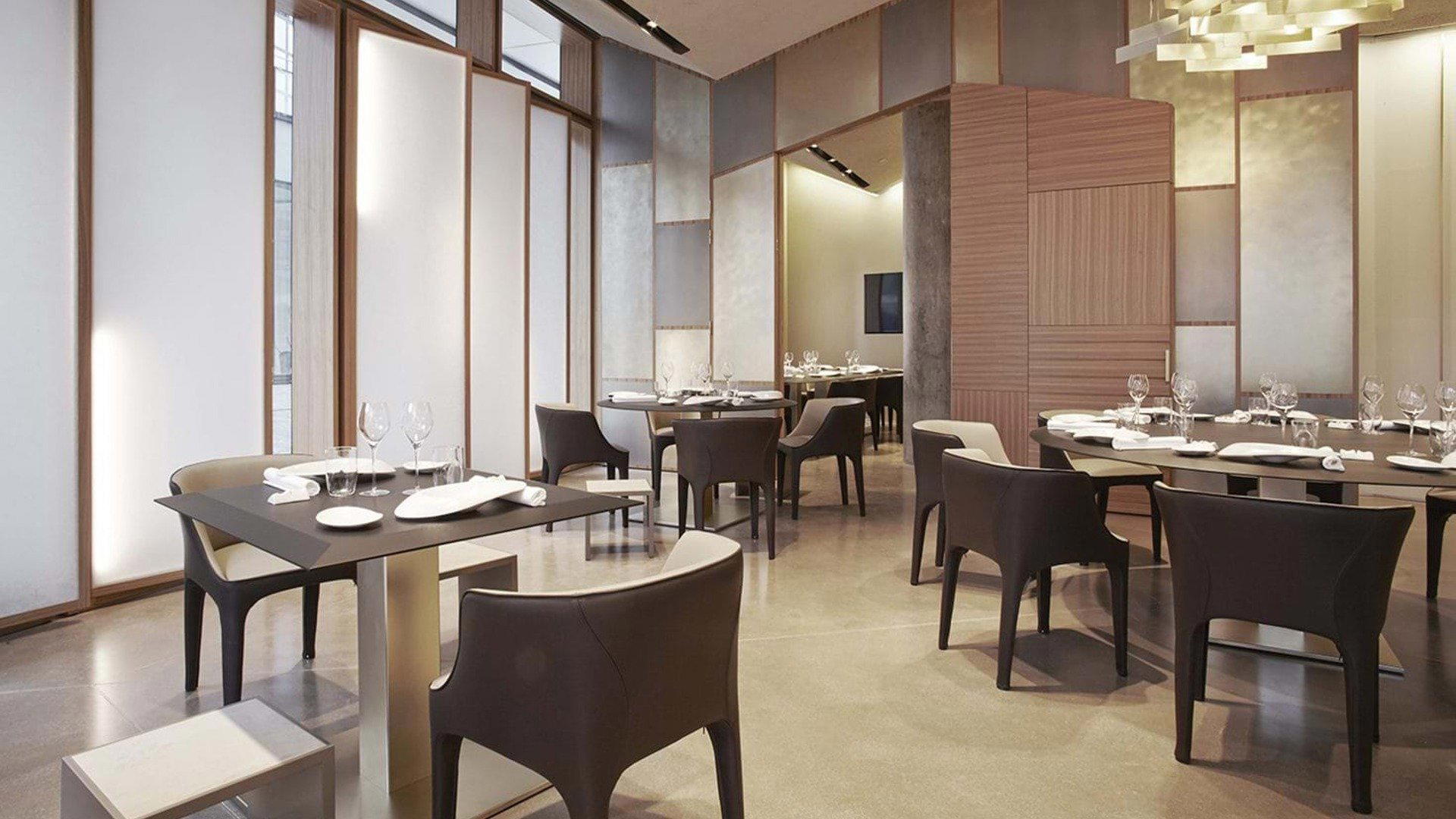
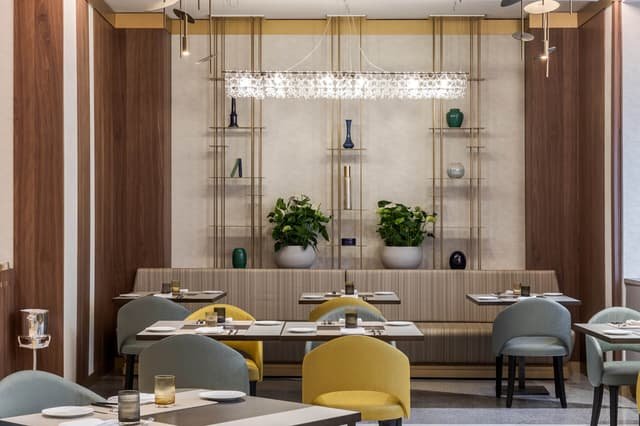
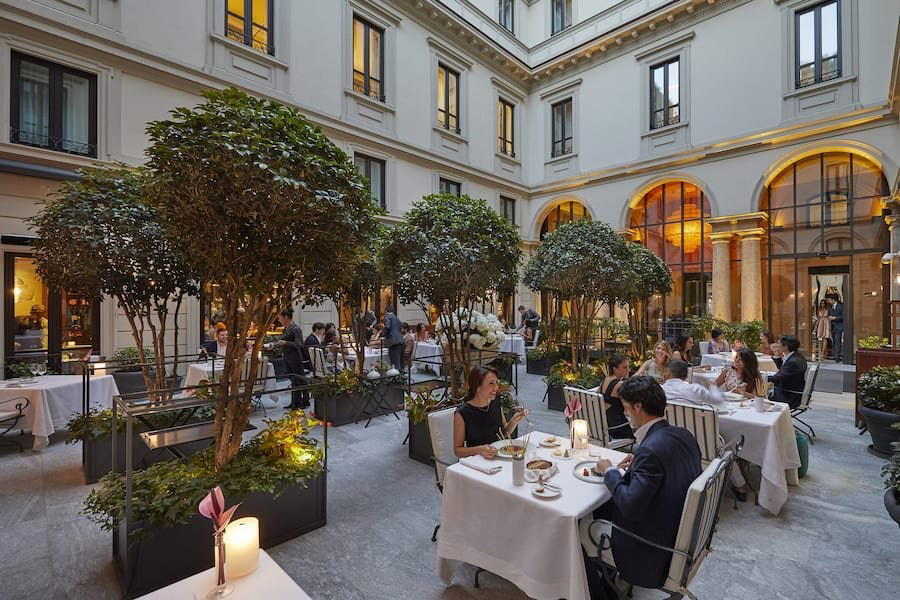
Contemporary elegant atmosphere with modern Milanese design, stylish lighting, and a relaxing wellness-oriented feel enhanced by soundproof rooms.