Löwenbräukeller sits at Stiglmaierplatz as one of Munich's most architecturally commanding beer halls, a nineteenth-century structure whose vaulted interior and tiered chestnut garden define the physical grammar of Bavarian communal drinking. It operates in the original tradition of the Löwenbräu brewery estate, distinct from the tourist-facing Oktoberfest circuit and anchored instead in the neighbourhood rhythms of the city's Maxvorstadt-adjacent west end.

Pearl is the En Primeur Club membership app — saves, bookings, and concierge access live there. Same editors, same standards.
- Address
- Stiglmaierplatz, Nymphenburger Str. 2, 80335 München, Germany
- Phone
- +49 89 998209185
- Website
- loewenbraeukeller.com
- Directions
- Get directions
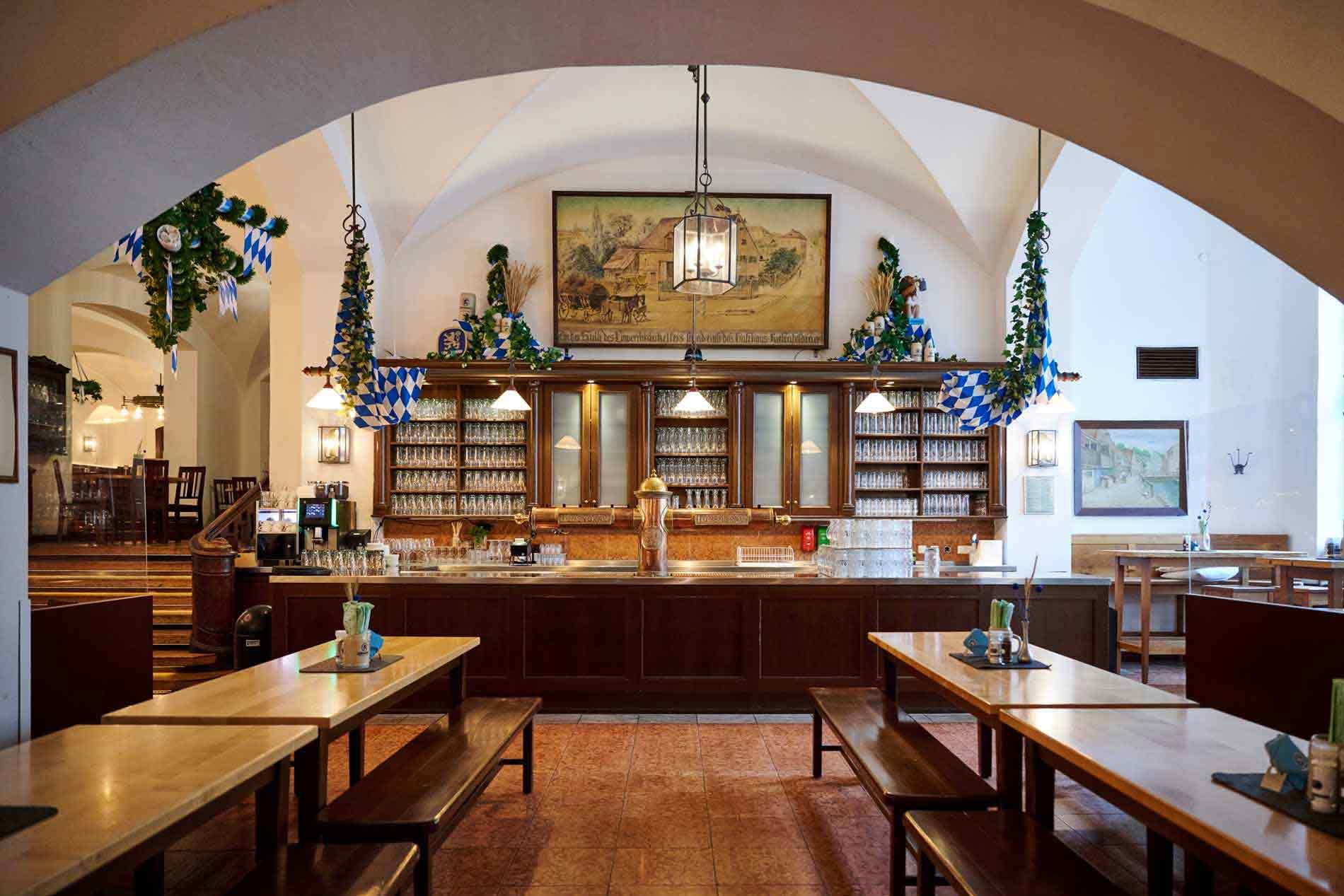
The Architecture of Communal Drinking in Munich
Before the first litre arrives, Löwenbräukeller makes its argument through stone and ceiling height. The building at Stiglmaierplatz, constructed in the latter half of the nineteenth century as part of the Löwenbräu brewery complex, belongs to a category of Bavarian public architecture that no longer gets built: load-bearing civic ambition expressed through beer. The exterior presents a Historicist facade scaled for a different era of pedestrian life, when arriving on foot from the Maxvorstadt or Neuhausen meant approaching a structure that announced itself well before you reached the door.
Inside, the main hall operates on the vertical logic of the traditional Bavarian Festsaal. Barrel-vaulted ceilings, heavy timber elements, and a floor plan designed for hundreds rather than dozens create an acoustic environment that is inescapably communal. This is not incidental. The spatial design of the great Munich beer halls, Löwenbräukeller among them, was always intended to dissolve the boundary between strangers. Long shared tables force adjacency. The room's volume absorbs noise at a threshold that conversation remains possible even at capacity, a calibration that smaller venues rarely achieve.
A Brewery Estate Turned Public Institution
The Munich beer hall tradition splits into at least two distinct categories. There are the Oktoberfest tents, temporary structures rebuilt annually on the Theresienwiese, and there are the permanent establishments with year-round identities tied to specific brewery estates. Löwenbräukeller belongs firmly to the second category. Its address, Nymphenburger Strasse 2, places it on the western edge of the inner city, away from the Marienplatz tourist concentration that draws visitors to the Hofbräuhaus. The guest profile at Löwenbräukeller reflects that geography: a denser proportion of Munich residents, particularly from the surrounding Maxvorstadt and Neuhausen districts, alongside visitors who have done enough research to look beyond the central axis.
The brewery connection that gives the venue its name is Löwenbräu, one of the six breweries traditionally granted licences to pour at Oktoberfest. That institutional position within Munich's brewing hierarchy carries real weight in a city where beer credentials are assessed with the seriousness applied elsewhere to wine appellations. Drinking Löwenbräu at Löwenbräukeller, on the original estate rather than in a bar pulling it from a keg, carries a different contextual register, even if the liquid is technically the same. Munich visitors staying at properties such as the Mandarin Oriental Munich or the Rosewood Munich and seeking an evening that sits outside the hotel dining circuit will find the twenty-minute walk or short U-Bahn ride to Stiglmaierplatz a more editorially credible choice than the Hofbräuhaus circuit.
The Chestnut Garden and Seasonal Rhythm
Outdoor beer garden behind the main building operates under a different temporal logic than the interior. Munich's beer garden culture is intensely seasonal, shaped by the Bavarian weather window that opens sometime in April and closes by October, with the precise dates varying year to year. The Löwenbräukeller garden, shaded by mature chestnut trees in the old Bavarian tradition (the trees were originally planted to keep the underground ice cellars cool before mechanical refrigeration), holds a substantial number of seats and fills on warm evenings with a crowd that skews noticeably local. Families occupy tables from early evening; the later hours shift toward a younger demographic from the surrounding university districts.
This seasonal dimension places the beer garden visit in a different planning category than the interior hall. The garden functions at its finest on weekday evenings in late spring and early summer, before the tourist volume of peak July and August compresses the experience. Those arriving from destinations further afield in Bavaria, whether from Schloss Elmau in Elmau or Althoff Seehotel Überfahrt in Rottach-Egern for a Munich stopover, would do well to time the beer garden visit for a shoulder-season evening rather than the height of summer.
Situating Löwenbräukeller in Munich's Broader Hospitality Geography
Munich's hotel market has consolidated around several distinct zones: the historic centre near Marienplatz, the Maxvorstadt museum quarter, and the Schwabing corridor extending north. Properties like the Rocco Forte Charles Hotel, the Andaz Munich Schwabinger Tor, and the Bayerischer Hof Munich all sit within reasonable range of Stiglmaierplatz by foot or public transport. The Löwenbräukeller's position at the U2 Stiglmaierplatz stop makes it accessible from most of these bases without a taxi.
Visitors comparing Munich's beer hall options will generally be choosing between Löwenbräukeller, the Augustinerkeller on Arnulfstrasse, the Augustiner Grossgaststätten on Neuhauserstrasse, and the Hofbräuhaus on Platzl. Each occupies a distinct position. The Hofbräuhaus is the most internationally recognised and, by the same token, the most tourist-saturated. The Augustiner establishments trade on a slightly different brand mythology rooted in Munich's oldest independent brewery. Löwenbräukeller's distinction lies in its physical fabric: the combination of a preserved nineteenth-century Festsaal and a proper chestnut garden on a site with direct brewery lineage is a configuration that the more centrally located competitors cannot replicate.
For those whose German itinerary extends beyond Munich, the logic of visiting an original brewery estate beer hall applies even more directly as a baseline experience before moving on to properties like Hotel Bareiss in Baiersbronn, Excelsior Hotel Ernst in Cologne, Hotel de Rome in Berlin, or Fairmont Hotel Vier Jahreszeiten in Hamburg. The beer hall format is specific to Bavaria in a way that makes the Löwenbräukeller worth treating as a cultural reference point rather than a restaurant choice.
Practical Planning Notes
Löwenbräukeller sits at Stiglmaierplatz, reachable directly on the U2 line from Marienplatz in approximately eight minutes. The main hall and beer garden operate under different seasonal conditions: the garden is weather-dependent and functions from spring through early autumn, while the interior Festsaal runs year-round. Large group bookings for the Festsaal are a known use case, particularly around the Starkbierfest season in March, when Munich's strong beer festival tradition concentrates activity at the established brewery-tied beer halls. Those visiting from further afield in the German-speaking region, whether from Breidenbacher Hof in Düsseldorf, Bülow Palais in Dresden, or Esplanade Saarbrücken, will find Löwenbräukeller worth the Stiglmaierplatz detour on any Munich visit.
Comparable Spots, Quickly
| Venue | Cuisine | Price | Awards |
|---|---|---|---|
| Löwenbräukeller - Das OriginalThis venue — the venue you are viewing | This venue | Not listed | Not listed |
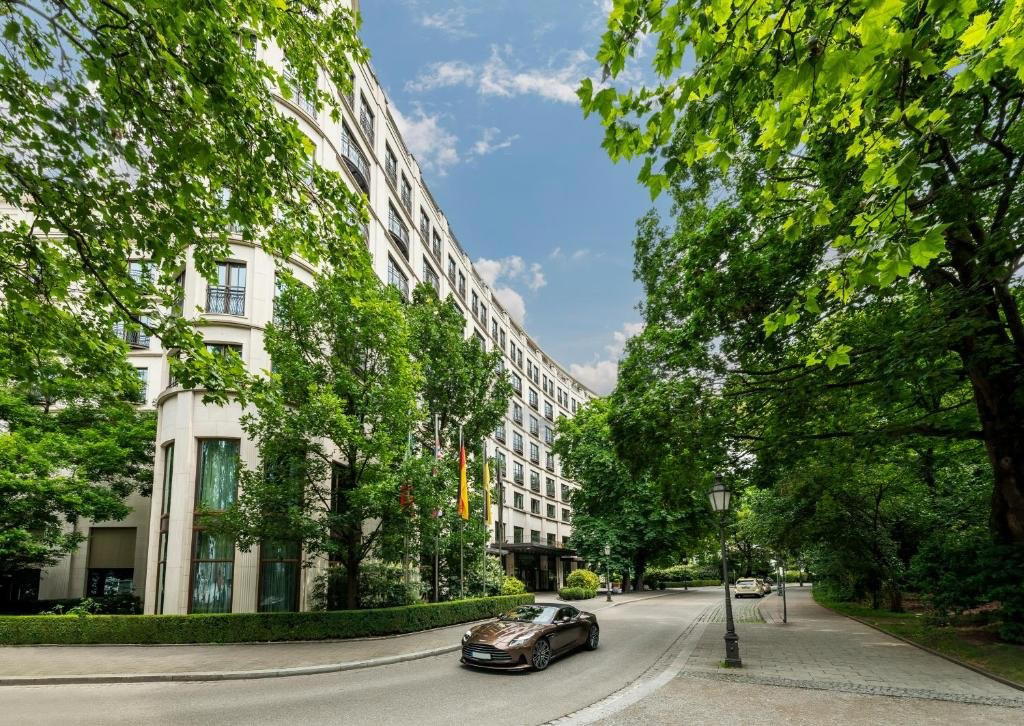
| Mandarin Oriental Munich | Michelin 2 Key | Not listed | 2 Michelin Keys · La Liste Top Hotels |
| Rocco Forte Charles Hotel | Michelin 2 Key | $300–500 | 2 Michelin Keys · La Liste Top Hotels |
| Rosewood Munich | Michelin 2 Key | $1,000–1,500 | 2 Michelin Keys · Virtuoso Luxury Hotel Partner |
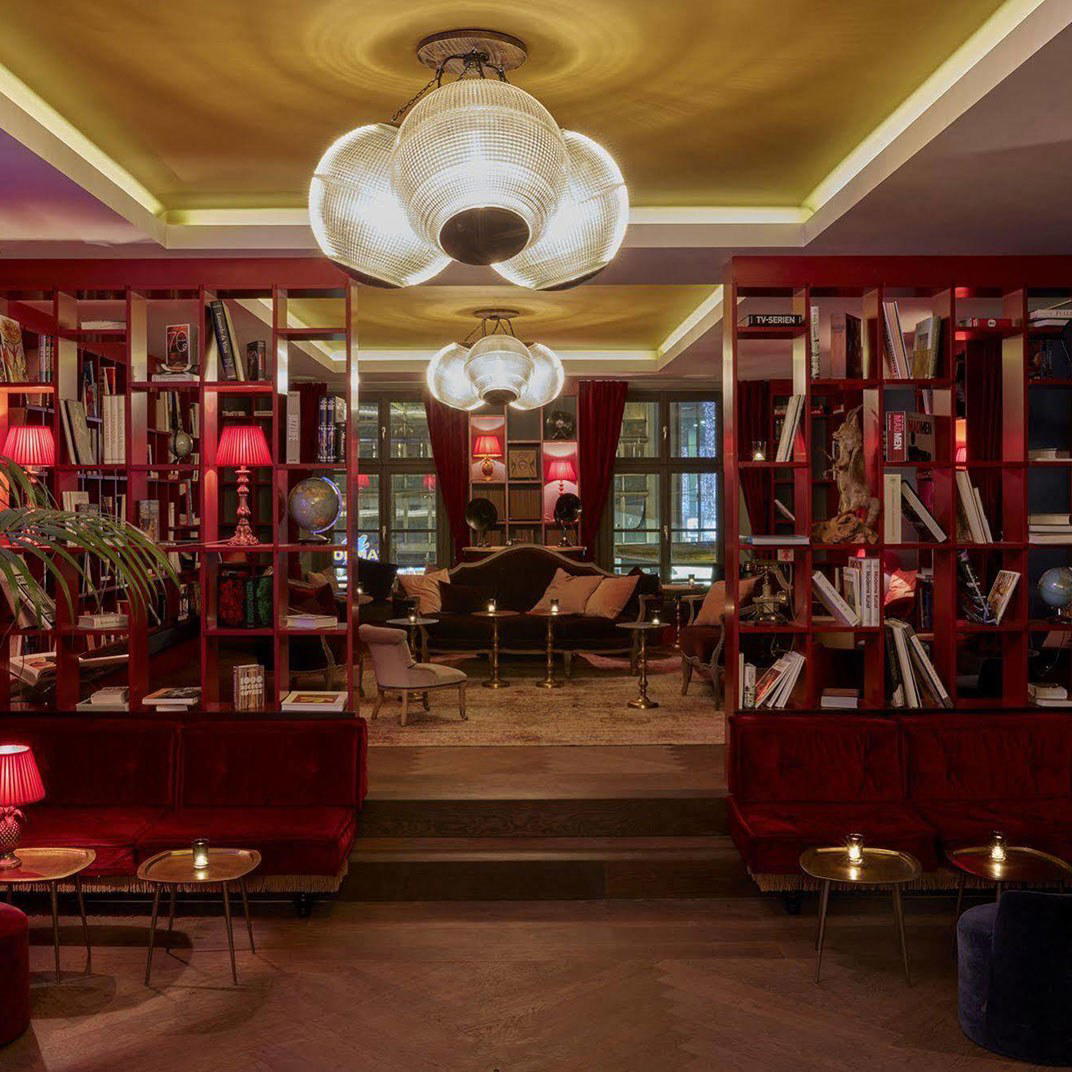
| Hotel Vier Jahreszeiten Kempinski Munich | Not listed | Not listed | 1 Michelin Key · La Liste Top Hotels |
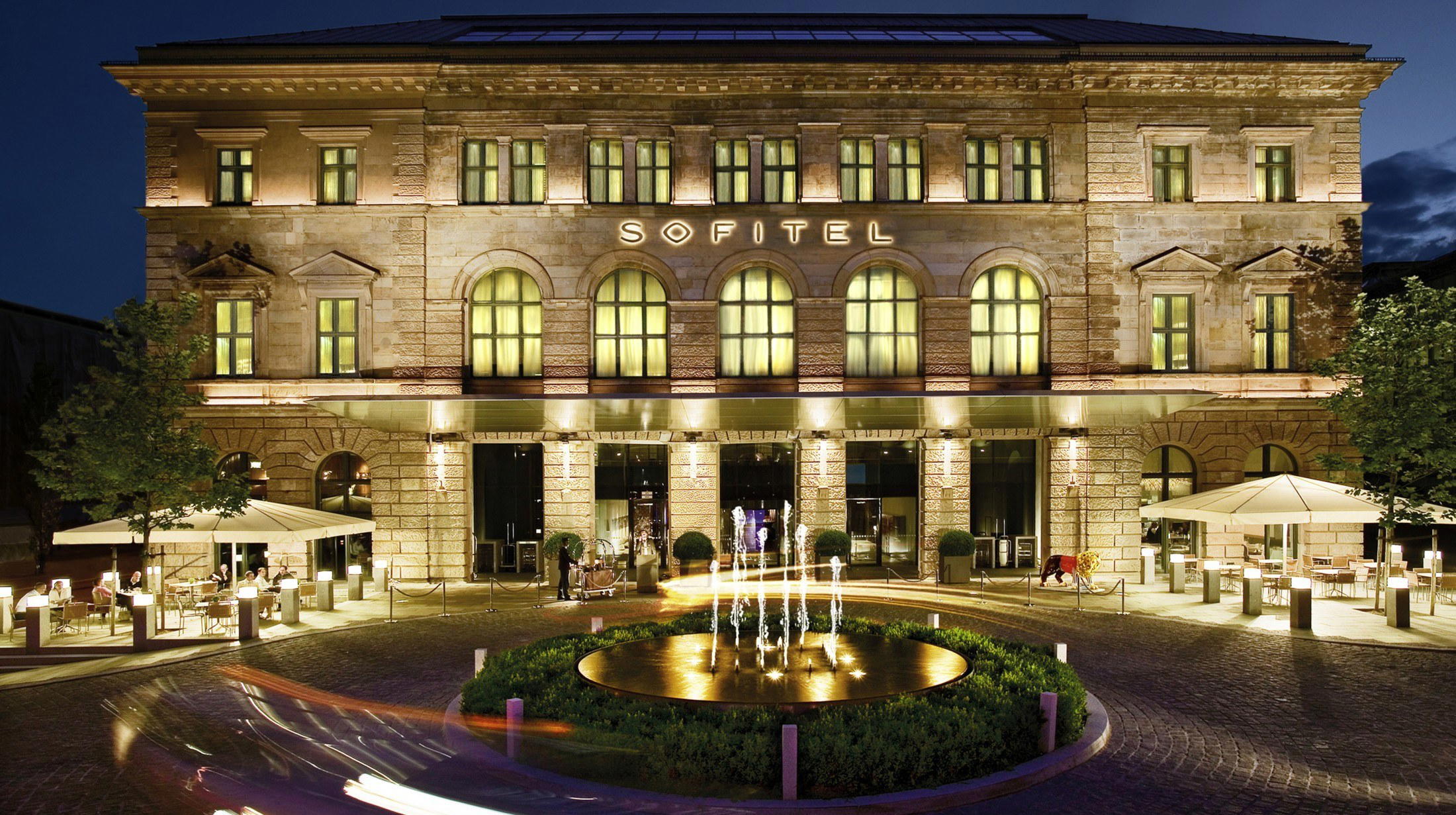
| Sofitel Munich Bayerpost | Not listed | Not listed | Michelin Selected · Forbes Recommended |
Details
- Lively
- Well Known
- Rustic
- Celebration
- Historic Building
Festive and energetic atmosphere with traditional Bavarian banquet celebrations.