Little America Hotel
Little America Hotel sits along East Butler Avenue in Flagstaff, Arizona, occupying a generous footprint that feels deliberately unhurried against the pace of a Route 66-adjacent corridor. The property belongs to a mid-century American road hospitality tradition that prized space and self-sufficiency over boutique minimalism. For travelers using Flagstaff as a base for the Grand Canyon's South Rim or northern Arizona's canyon country, its scale and location offer practical advantages that smaller downtown properties cannot match.
Pearl is the En Primeur Club membership app — saves, bookings, and concierge access live there. Same editors, same standards.
- Address
- 2515 E Butler Ave, Flagstaff, AZ 86004
- Phone
- +1 928 779 7900
- Website
- flagstaff.littleamerica.com
- Directions
- Get directions
 Saves & bookings on Pearl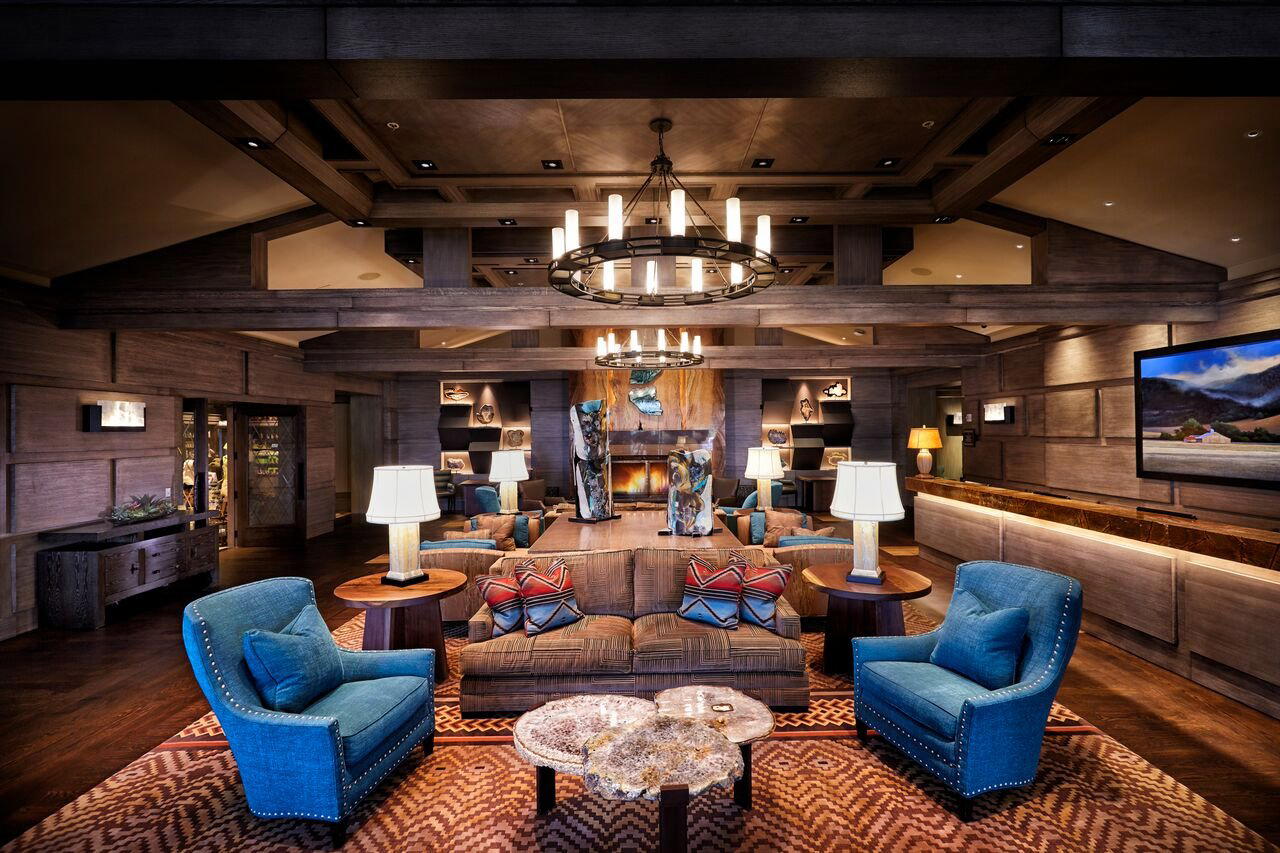
Ponderosa Country, Midcentury Bones
Flagstaff sits at 7,000 feet, ringed by ponderosa pine forest and positioned on old Route 66 between the Grand Canyon and the Colorado Plateau. It is a transit city that many visitors treat as a single night rather than a destination, which creates an odd pressure on its hotels: they must absorb road-weary travelers arriving after long drives through high desert while also holding the attention of those who notice Flagstaff deserves more time than that. Little America Hotel at 2515 East Butler Avenue occupies a large forested lot on the eastern edge of the city. The property belongs to a category of American roadside institution that the hospitality industry largely stopped building after the 1970s: the self-contained, generously landscaped motor hotel scaled for comfort rather than compactness, sitting on enough land to let guests decompress before or after the plateau.
The Architecture of the Property
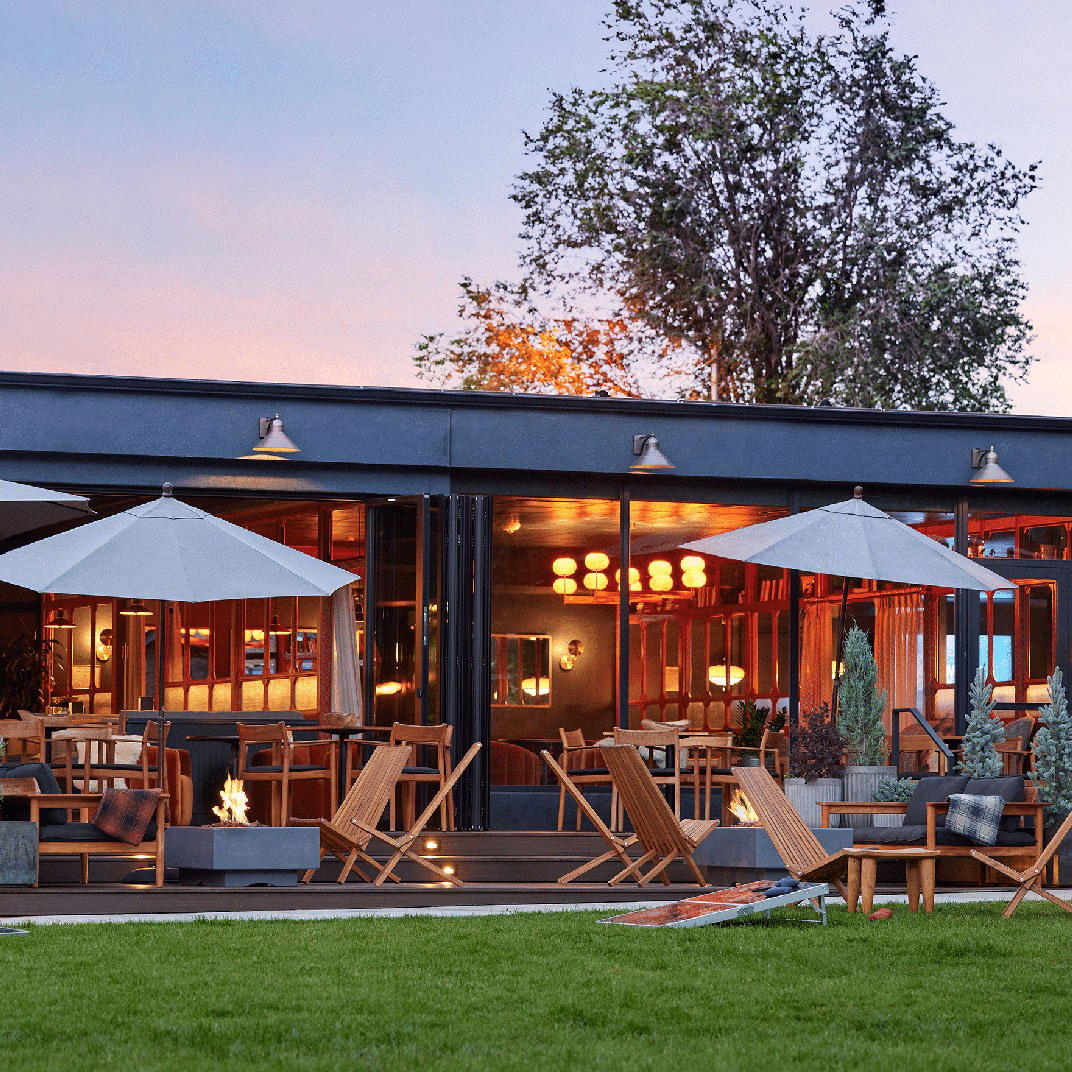
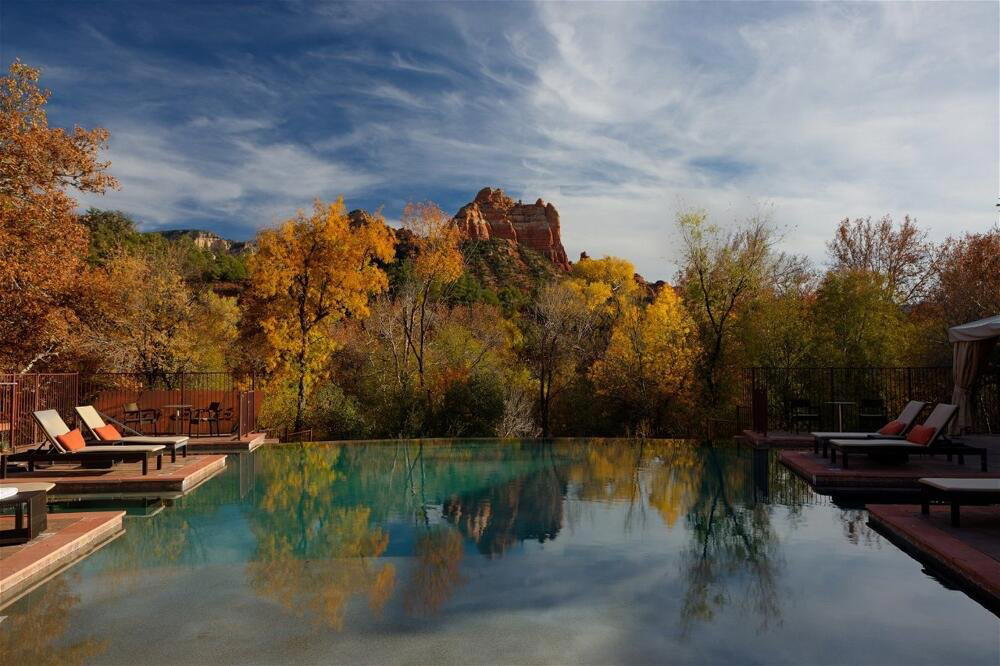
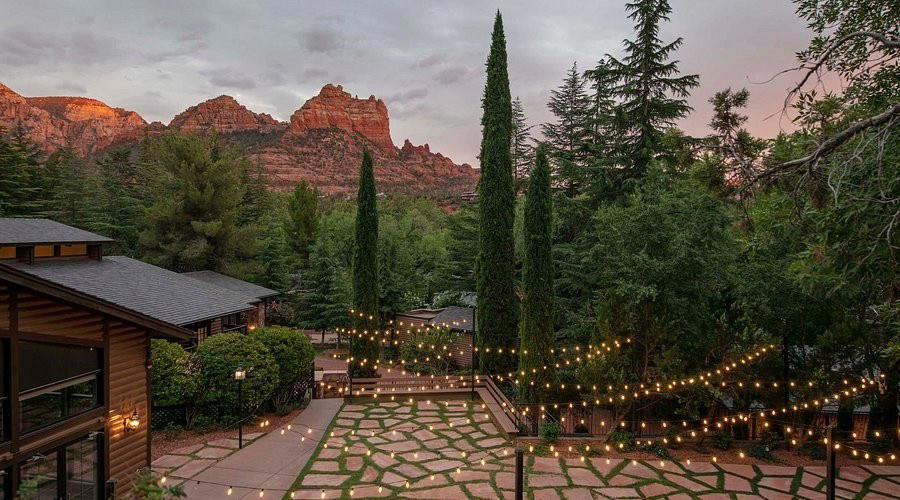
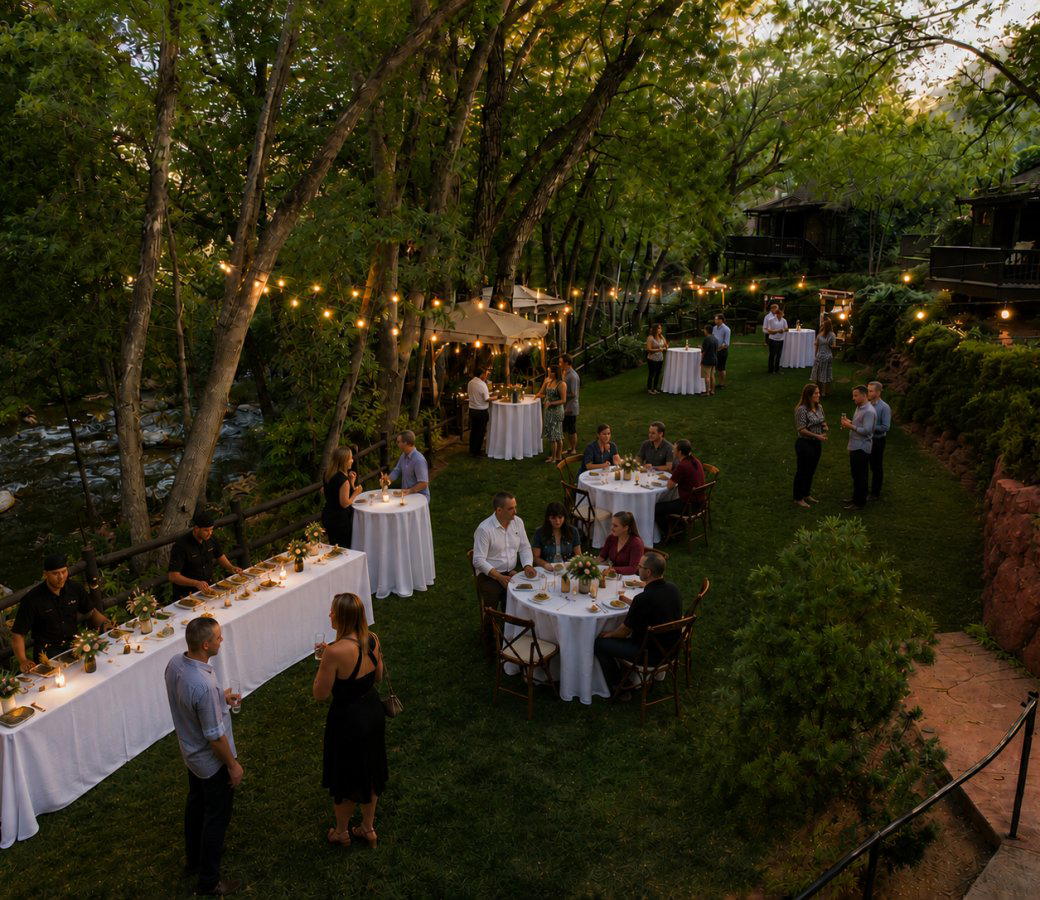
The design language at Little America is mid-century American resort, the kind where the relationship between building and land carries as much weight as the interiors. The grounds extend across a substantial wooded lot, unusual for a property this close to a commercial corridor, and the ponderosa pines are the dominant visual element. The tree canopy produces the sensation of being further from the road than the address suggests, which is an architectural trick achieved through site planning rather than any single design flourish. Low-slung structures keep the buildings from competing with the tree line, and the pedestrian scale of the property distinguishes it immediately from the chain-format hotels along Butler Avenue that prioritize parking visibility over guest experience.
This approach to siting is more deliberate than it might appear at first pass. Properties built at this scale, on this kind of land, during this era of American hospitality were making an argument about what a rest stop could be: not a room to pass through but a place to actually stop. That argument holds up in Flagstaff because the alternative lodging supply along this corridor is almost entirely standard-format hotel boxes with minimal grounds. When the comparable set is that compressed, a forested lot becomes especially consequential design decision on the site.
Flagstaff as a Context
Understanding Little America requires understanding what Flagstaff does and does not offer in its hotel market. The city lacks the design-forward boutique tier that has emerged in Sedona, where properties like Ambiente, A Landscape Hotel have redefined the category by treating the geology itself as the primary design material. Flagstaff has a different identity: a working university town, a railroad stop, and a gateway, and its hotel supply reflects that functional character. At the upper end, you get properties with genuine acreage and amenities; below that, the market thins quickly. Little America sits at that upper tier within the local context, though by the standards of Amangiri in Canyon Point or Post Ranch Inn in Big Sur, it operates in a completely different register of scale and intention. The value of it is local: it is the property in Flagstaff that takes the grounds seriously.
Travelers using Flagstaff as a staging point for Grand Canyon visits, or those crossing between Phoenix and the Four Corners region, make up the primary guest profile. The I-40 corridor brings consistent demand, and the property's position on Butler Avenue keeps it accessible without requiring knowledge of Flagstaff's street grid. That logistical convenience is part of its appeal: you can arrive late, park without ceremony, and leave early, which matters on a drive-through itinerary. For travelers who are actually staying in Flagstaff for its own sake, the wooded grounds reward a slower pace than the usual one-night pass.
Situating It in the American Hotel Landscape
The American West has produced two distinct traditions of destination accommodation. One is the grand wilderness lodge, exemplified by properties that either use their landscape as a primary design statement or operate at a scale where the land itself is the amenity, Amangani in Jackson Hole, Sage Lodge in Pray, or Alpine Falls Ranch in Superior each sit in that category. The other tradition is the well-appointed motor hotel, which represents an entirely American mode of travel infrastructure: the properties that grew along the postwar highway system and offered a step above motels without claiming the ambitions of resort hotels. Little America, as a brand with multiple properties across the Mountain West, belongs to this second tradition. The Flagstaff location carries those same midcentury values, scaled to a high-altitude forest setting.
Comparing it to the full luxury tier, properties like Hotel Bel-Air in Los Angeles or The Fifth Avenue Hotel in New York City, is less useful than placing it against other well-run, landscape-conscious properties at regional highway junctions. By that measure, the wooded lot, the service consistency, and the facilities hold up. What it does not offer is the kind of design specificity that characterizes a Canyon Ranch Tucson or the editorial identity of a Troutbeck in Amenia. It is a different kind of property, built to solve a different problem, and it succeeds at that problem without pretending to solve any other.
Planning a Stay
Flagstaff's demand peaks in summer, when Grand Canyon visitors flood the region between June and August, and again during the Thanksgiving and Christmas ski periods when the Arizona Snowbowl draws regional traffic. Booking ahead for those windows matters; the compressed hotel supply at the upper tier means rooms go quickly. Travelers arriving in spring or fall encounter a quieter city with favorable conditions for the ponderosa forest and the surrounding plateau. The property's address on Butler Avenue puts it a short drive from downtown Flagstaff's restaurants and the Lowell Observatory, and within reasonable reach of the trailheads on the San Francisco Peaks.
Quick Comparison
Comparable venues nearby, for context on price, style, and recognition.
| Venue | Cuisine | Price | Awards | Notes |
|---|---|---|---|---|
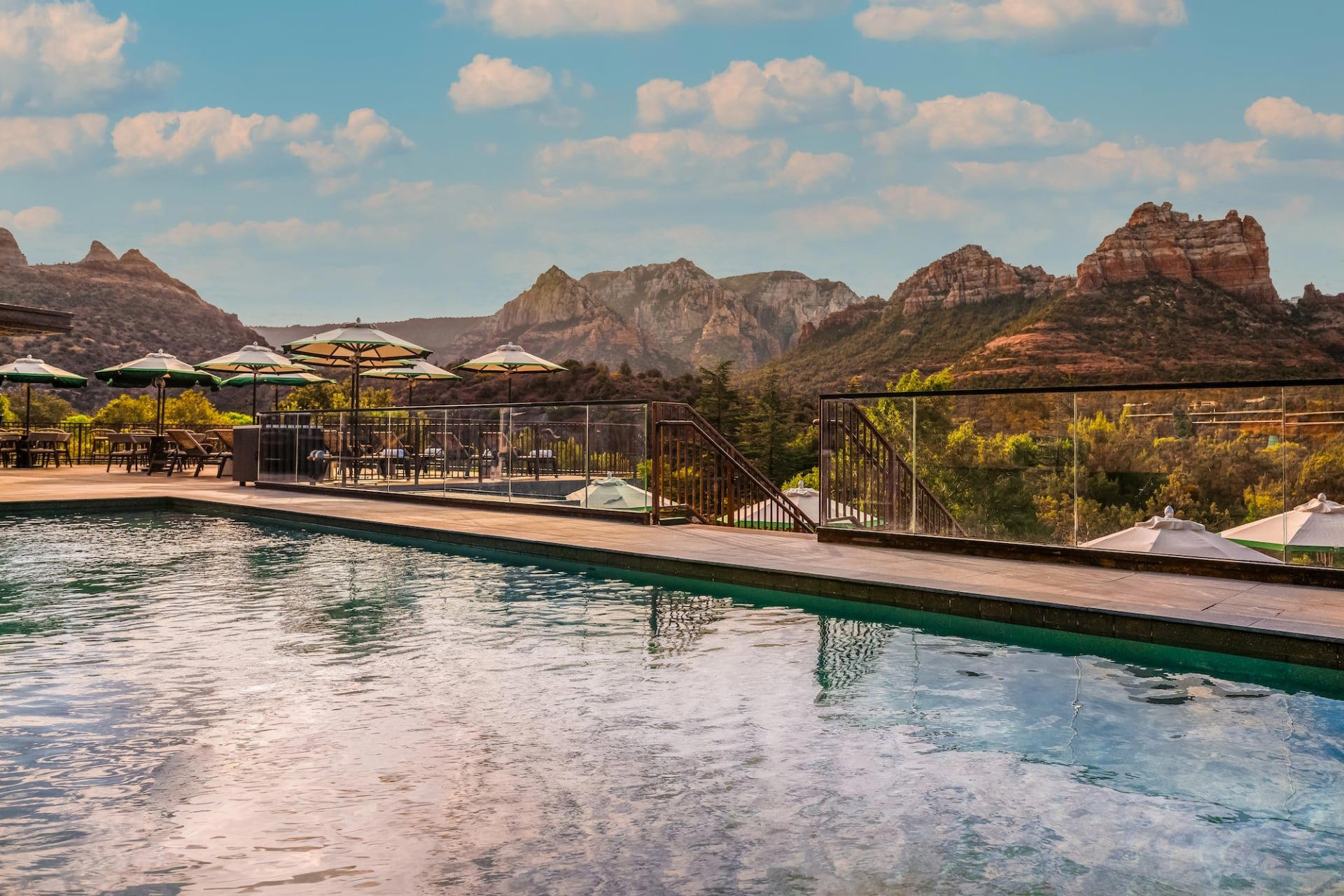
| Little America HotelThis venue — the venue you are viewing | Upscale mountain retreat blending luxury with natural ponderosa pine forest surroundings | $$$ | 4-Star | Not listed |
| High Country Motor Lodge | Re-imagined 1960s roadside motel blending vintage Route 66 culture with contemporary mountain vernacular architecture. | $$ | Not listed | Route 66 |
| Kimpton Miralina Resort & Villas | Large, luxury desert resort with a relaxed, residential feel that blends indoor-outdoor living across 40 acres beneath Camelback and Mummy Mountains. | $$$$ | 4-Star | Paradise Valley |
| RISE Uptown | mid-century modern boutique | $$$ | 4-Star | Uptown Phoenix |
| Amara Resort and Spa | Boutique resort with tree lodge aesthetic inspired by Sedona's natural surroundings | $$$$ | 4-Star | Uptown Sedona |
| Gila River Resorts & Casinos - Vee Quiva | Casino resort oasis | $$$ | 4-Star | Laveen |

At a Glance
- Scenic
- Cozy
- Rustic
- Classic
- Family Vacation
- Romantic Getaway
- Weekend Escape
- Panoramic View
- Historic Building
- Pool
- Hot Tub
- Fitness Center
- Wi Fi
- Room Service
- Concierge
- Business Center
- Mountain
- Garden
- Pool
- Hot Tub
- Fitness Center
- Wi Fi
- Room Service
- Concierge
- Business Center
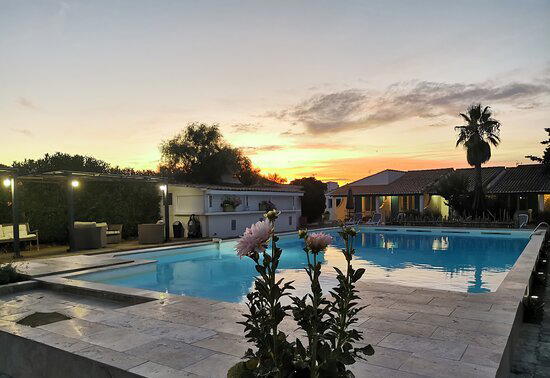
Warm and inviting with a grand wood-burning lobby fireplace, Southwestern rustic decor, and natural stone elements creating a cozy, tranquil atmosphere amid pine forests.