Ruby Hotel Malmö is best read through Malmö’s hotel context: a compact Nordic city where design, walkability, and practical comfort matter more than grand-lobby theatre. With public venue data still thin, the useful lens is comparative rather than promotional, placing it beside Malmö’s established city hotels and Sweden’s broader design-led accommodation culture.

Pearl is the En Primeur Club membership app — saves, bookings, and concierge access live there. Same editors, same standards.
- Address
- Malmö, Sweden
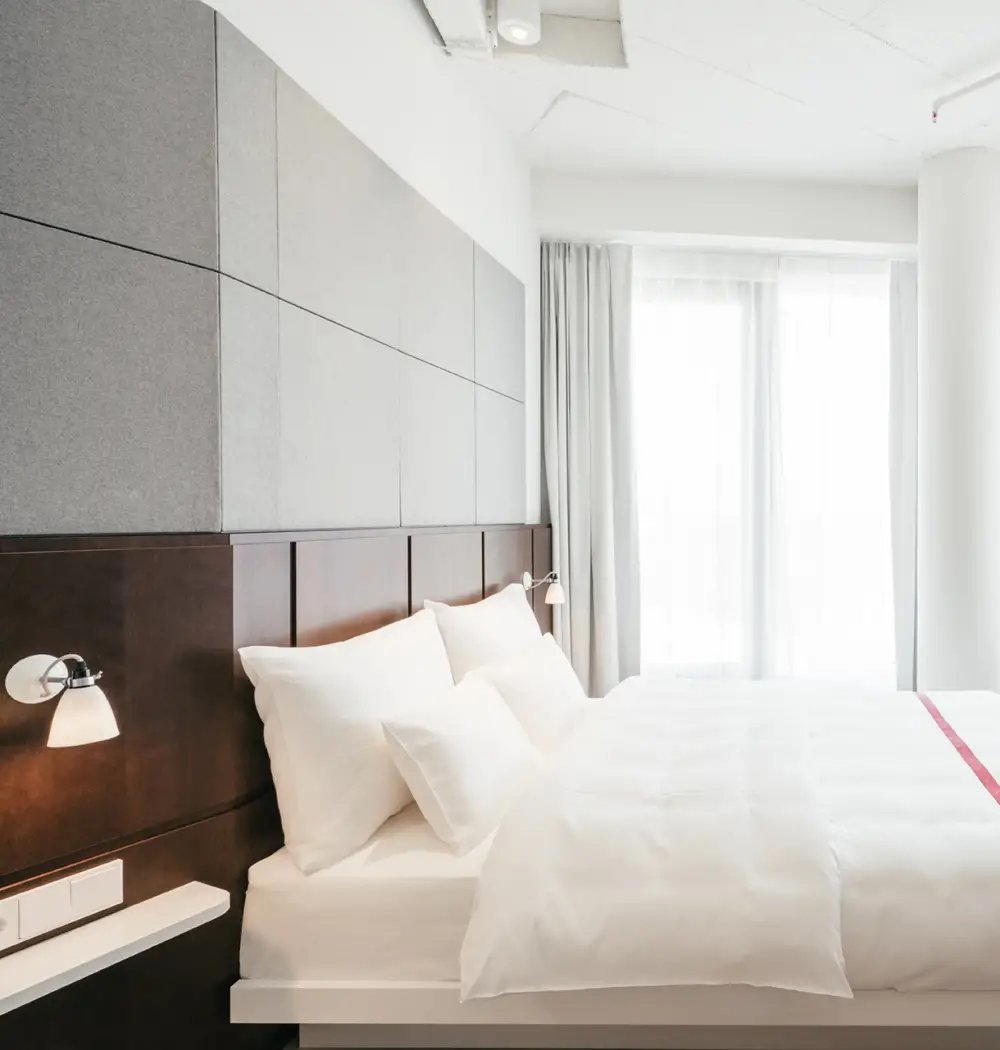
Design-first Malmö, with the volume turned down
Approaching a hotel in Malmö rarely carries the ceremonial drama of a palace entrance or resort driveway. The city works at a lower register: brick, water, cycling lanes, compact streets, and a design culture that tends to prize proportion over spectacle. That matters when assessing Ruby Hotel Malmö, because the hotel sits in a market where architecture and atmosphere do much of the work. Malmö is not a destination where visitors need acres of marble or theatrical service rituals to feel properly placed. The stronger hotel experiences here understand scale, daylight, street life, and the city’s mixed Swedish-Danish rhythm.
Rather than inventing detail, the more useful reading is to place the property inside Malmö’s hotel culture and the wider Swedish preference for design that can be lived with. In this city, a hotel is judged less by grand statements than by how well it handles the basics: a lobby that does not feel stranded from the street, rooms that make sense for short stays, and a visual identity that survives contact with actual travel.
The comparable set in Malmö is varied enough to make the question interesting. Leading Western Plus Hotel Noble House represents the established city-centre hotel mode, built around reliability and access. Hotel MJ's belongs to the more character-led side of the city, where hospitality is tied to mood and social space. Story Studio Malmö points toward the apartment-hotel and longer-stay logic that has become increasingly relevant in Nordic cities. Ruby Hotel Malmö should be read against these categories rather than as an isolated object.
Why architecture carries more weight in Malmö hotels
Malmö’s modern identity is built partly on reinvention. The city has moved from shipbuilding and industry toward education, design, food, and cross-border life with Copenhagen. Hotels here inherit that transition. The successful ones do not simply provide beds; they translate a post-industrial, pedestrian city into interiors that feel neither generic nor self-conscious. That is where architecture and design become more than decoration. They tell the guest what kind of Malmö they have entered: businesslike, bohemian, residential, maritime, or urban-weekend.
For Ruby Hotel Malmö, the architecture-and-design lens is the safest and most relevant angle because the public record does not supply culinary, spa, awards, or service data. Malmö rewards properties that are easy to use for a two-night stay, close enough to the city’s restaurant and bar circuits to avoid wasted transit, and visually coherent without turning the stay into a themed set. In Nordic hotel culture, restraint is not a lack of ambition. It is often the point.
There is also a practical economic context. Malmö is frequently used as a lower-pressure alternative to Copenhagen, with cross-border travellers taking advantage of the Øresund connection while staying in a Swedish city with its own food and design identity. That creates a hotel market where compact rooms, efficient public areas, and strong interiors can matter more than resort-style amenities. The reader deciding on Ruby Hotel Malmö should compare it with properties by trip purpose: a business night, a design weekend, a food-focused stay, or a base for moving between Malmö and Copenhagen.
The scene around the stay
Malmö’s hospitality character is inseparable from its dining and drinking culture. The city’s restaurant scene has become confident without mimicking Stockholm or Copenhagen outright. It is smaller, more neighbourhood-driven, and often shaped by immigration, coastal produce, baking, coffee, and a relaxed approach to service. A hotel stay here is rarely just about the room; it is about how easily the property connects to the city’s food map.
The same applies after dinner. Malmö’s bar culture does not operate at the same scale as London, New York, or Copenhagen, but that smaller scale can work in the traveller’s favour. The city is compact enough for an evening to move between wine, cocktails, and late-night neighbourhood rooms without turning the night into logistics. For that layer, Our full Malmö bars guide gives a clearer picture of where the city drinks. If wine is the trip’s centre of gravity, Our full Malmö wineries guide and Our full Malmö experiences guide help separate dedicated wine or cultural planning from the hotel decision itself.
For hotels specifically, Our full Malmö hotels guide is the right comparison point. Ruby Hotel Malmö should be assessed within that local set: not by imported luxury expectations, but by how well it answers Malmö’s actual travel patterns. A guest coming for restaurants needs location and late-evening comfort. A guest crossing to Copenhagen needs frictionless transit planning. A design-led traveller needs interiors with enough discipline to feel intentional after the first five minutes.
How it compares within Sweden's design-hotel culture
Sweden’s stronger hotels often express place through editing rather than excess. In Stockholm, Ett Hem in Stockholm helped define the domestic, townhouse style of high-touch Swedish hospitality. In Järfälla, Görvälns Slott in Järfälla works from the opposite direction, using estate architecture and a more retreat-like frame. Akademihotellet - Clason House Rooms in Uppsala shows how university-town heritage can shape a different kind of stay, while Hotel Flora Göteborg in Gothenburg sits closer to the urban boutique tradition.
Those comparisons are useful because they show how Swedish hotels tend to sort themselves by building type, mood, and regional character rather than by amenities alone. Eco by StrandNara in Morbylanga belongs to a rural sustainability register. Maryhill Estate in Glumslöv points toward the country-house and estate category. Sibbjäns in Burgsvik and Vyn Restaurant in Ostra Nobbelov connect accommodation with smaller-place identity and, in the latter case, destination dining context. Malmö’s hotel scene is more urban and compressed, so Ruby Hotel Malmö needs to win through clarity: the right room for the right trip, a design language that suits the city, and enough operational transparency for travellers to plan with confidence.
Further north, Stora Hotellet in Umeå uses its city’s maritime and northern identity as part of the narrative, while Huskvarna Stadshotell in Huskvarna reflects the Swedish town-hotel tradition. Coastal and resort contexts shift the criteria again: Marstrands Kurhotell in Marstrand, Fjällbacka in Fjällbacka, and Arctic Bath in Harads are judged partly by setting. Hjortviken Country Club in Hindas belongs to the social-retreat category. Ruby Hotel Malmö is playing a different game: urban usefulness with design credibility.
The international comparison set
It is tempting to compare every design-conscious hotel to high-profile global properties, but that can distort the decision. The Fifth Avenue Hotel in New York City operates in a theatrical, high-design Manhattan register. Hôtel de Paris Monte-Carlo in Monte Carlo belongs to a grand European palace tradition tied to casino-era glamour and formal service. Badrutt's Palace Hotel in St. Moritz is an alpine institution shaped by winter society, scale, and historical reputation.
Malmö does not need to imitate any of those categories. Its stronger hotel proposition is smaller, more practical, and more connected to daily urban life. Ruby Hotel Malmö, on the information available, should be evaluated as a city hotel in a design-conscious Nordic market, not as a palace hotel or resort. That distinction protects the traveller from mismatched expectations. The right question is not whether the property delivers grand luxury theatre. The right question is whether it offers a visually coherent, well-situated, and efficiently run base for experiencing Malmö.
Planning the stay
Room choice should be based on trip purpose rather than assumed hierarchy. For a single night between trains or flights, the sensible category is usually the one that gives enough workspace and a quiet sleeping setup without paying for space that will not be used. For a weekend built around restaurants and bars, the better value often lies in a room that handles late returns well: good storage, practical lighting, and a bathroom layout that does not slow two people down. For longer stays, confirm whether the property offers room types suited to luggage, work, and downtime, since no room-category data is available in the record.
Timing is also worth treating seriously. Malmö’s demand can shift around conferences, university events, summer travel, and Copenhagen spillover. A cautious planner should compare rates across several Malmö hotels for the same dates, then decide whether the design proposition and location justify the spread. That comparative step is especially useful in this city, where differences between hotels can be more about mood and layout than formal luxury classification.
Who should consider it
Ruby Hotel Malmö is most relevant for travellers who care about design coherence but do not need a resort program attached to the stay. The likely sweet spot is the urban weekender, the Copenhagen-Malmö traveller, or the guest using the hotel as a base for restaurants, bars, galleries, and city walking. It is less suitable for anyone who needs confirmed luxury markers before booking, such as a published star rating, award list, named architect, spa facilities, or a detailed room inventory, because those details are not present in the available record.
The editorial position is therefore conditional but clear. In a city where hotels are part of the urban fabric rather than sealed-off destinations, Ruby Hotel Malmö deserves attention if its verified booking details support the design-led promise implied by its category. The absence of public data in the record should not be ignored.
Comparable venues nearby, for context on price, style, and recognition.
| Venue | Cuisine | Price | Awards | Notes |
|---|---|---|---|---|
| Ruby Hotel MalmöThis venue — the venue you are viewing | Lean Luxury design hotel | Not listed | Not listed | Not listed |
| Story Studio Malmö | Boutique hotel in a 14-storey building on floors 10-13 with timeless architecture and sustainable materials. | Not listed | Michelin Selected · White Guide Sweden Hotels - Very Fine Level | Universitetsholmen |
| Hotel MJ's | Modern classic boutique hotel with eclectic, playful design elements and contemporary furnishings. | $100–200 | Michelin Selected · White Guide Sweden Hotels - Exceptional Level | Centrum (Norr) |
| Best Western Plus Hotel Noble House | Modern urban hotel with classical art elements and personal service | $1–100 | Michelin Selected | Centrum |
| Hobo Hotel | Contemporary boutique in Brutalist architecture | Not listed | Michelin Selected · White Guide Sweden Hotels - Very Fine Level | Norrmalm |
| Story Hotel Stockholm North - JDV by Hyatt | Boutique hotel in historic 19th-century building with industrial-chic design. | Not listed | Not listed | Sundbyberg |
Continue exploring
More in Malmö
Hotels in Malmö
Browse all →
Bars in Malmö
Browse all →
Restaurants in Malmö
Browse all →
Wineries in Malmö
Browse all →
Details
- Modern
- Lively
- Trendy
- Sophisticated
- Industrial
- Business Trip
- Weekend Escape
- Group Retreat
- Design Destination
- Street Scene
Contemporary, design-led, and atmosphere-focused, with lively public areas and an urban creative-district feel.