



1 Michelin Key · La Liste Top Hotels · Forbes Recommended
Operational since 1407, Hotel Goldener Hirsch occupies a medieval building on Getreidegasse in Salzburg's Altstadt, four kilometres from the airport and steps from the city's principal historic sites. Across 70 rooms, the Luxury Collection property layers Salzburg-crafted textiles and antique furnishings against modern amenities, with two in-house restaurants focused on Austrian regional cuisine. La Liste ranked it 92.5 points in its 2026 Top Hotels list.

Pearl is the En Primeur Club membership app, where members save venues, book tables and use the concierge.
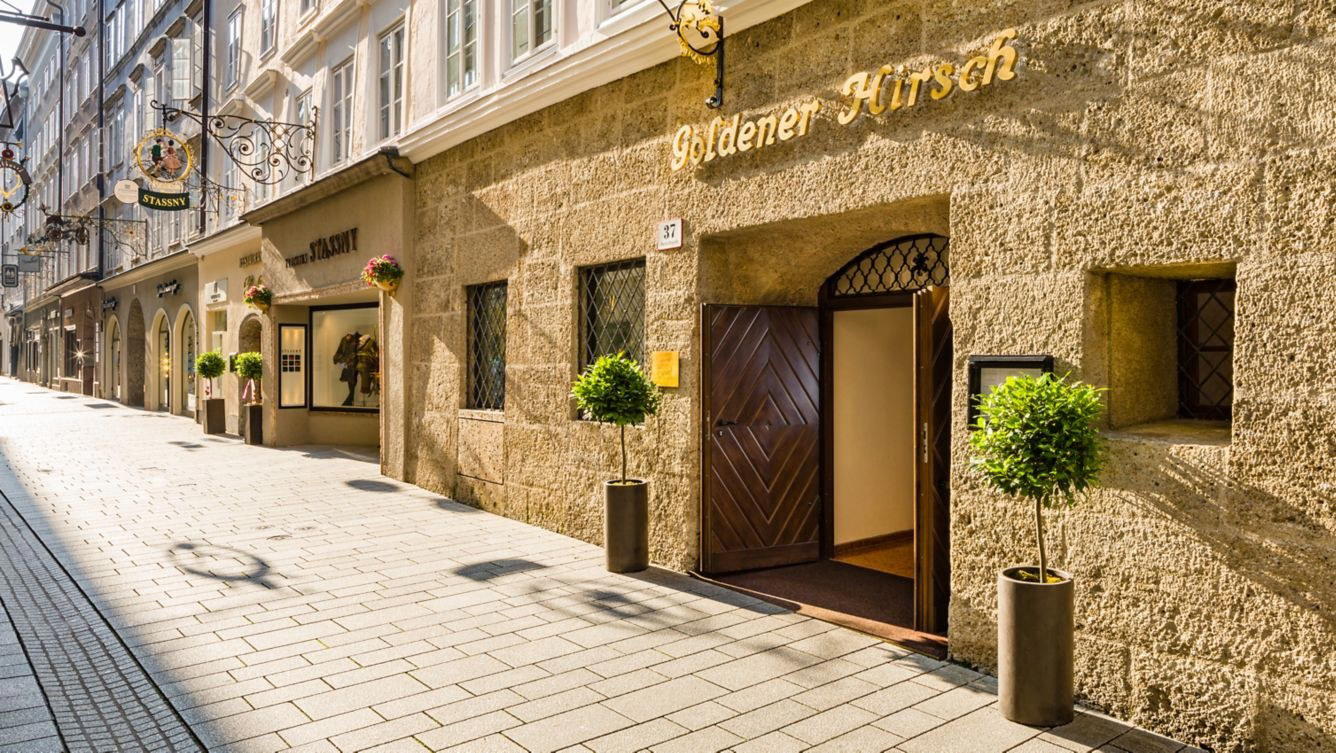
A Street That Has Not Changed Much Since Mozart
Getreidegasse is one of those addresses that photograph identically across centuries. The wrought-iron guild signs hang above shop fronts that have served different trades at different points in time but the lane itself, cobbled and narrow, runs through the Altstadt much as it did when Salzburg was an archbishopric and its residents had not yet heard the name Mozart. Hotel Goldener Hirsch sits at number 37, its gilded stag sign extending over the pavement at the same height as a dozen other trade signs along the street. The entrance is easy to miss. That is not a design failure; it is evidence of how completely a 600-year-old building can absorb itself into its surroundings.
For travellers choosing a Salzburg base, address is the operative variable. The Altstadt is compact, UNESCO-listed, and measurably more useful as a walking point for the city's principal sites than any hotel positioned across the Salzach or on the city's periphery. Goldener Hirsch's position on Getreidegasse places guests within walking distance of the Festspielhaus, the Residenzplatz, the Dom, and Mozart's birthplace. The hotel is four kilometres from W.A. Mozart Airport and approximately 300 kilometres from Vienna, accessible by rail or road. That proximity calculus is the primary argument for this address over competitors positioned for views of the river rather than immediate access to the historic core.
What Six Centuries of Continuous Use Looks Like Inside
Premium historic hotels in European old towns tend to bifurcate: those that acknowledge their age through restoration and those that retrofit a contemporary design layer over old bones. Goldener Hirsch belongs to the former category, and the choice reads immediately on arrival. The lobby presents whitewashed walls, ancient arches, a hand-carved reception desk identified as a genuine artefact from the property's past, and a wooden key case of comparable age. The staff wear Tracht-inspired uniforms, a reference to early 19th-century Austrian dress that functions less as costume and more as continuity signal.
The property's current character was substantially fixed in 1948, when Countess Harriet Walderdorff directed a post-war redesign that Marriott, as the current operator under the Luxury Collection flag, has maintained with deliberate fidelity. Across 70 rooms and suites, Salzburg-crafted textiles from the firm Jordis appear in hand-printed fabrics in pink, cornflower blue, and red. Fleckerlteppich rugs cover solid wood floors. Shoemaker's benches have been repurposed as tables. Bathrooms are finished in marble with porcelain by Villeroy and Boch. A full property renovation completed in July 2019 updated mechanical and technical infrastructure while preserving the aesthetic register Walderdorff established. Rooms face either Herbert-von-Karajan-Platz or Getreidegasse; soundproof windows manage street noise from both directions.
The scale is worth noting. Seventy rooms in a medieval structure means room dimensions are constrained by original load-bearing walls, not by operator preference. Reviewers consistently describe the feeling as cosy rather than confining, which is the accurate characterisation for well-proportioned historic rooms.
Two Restaurants, One Register
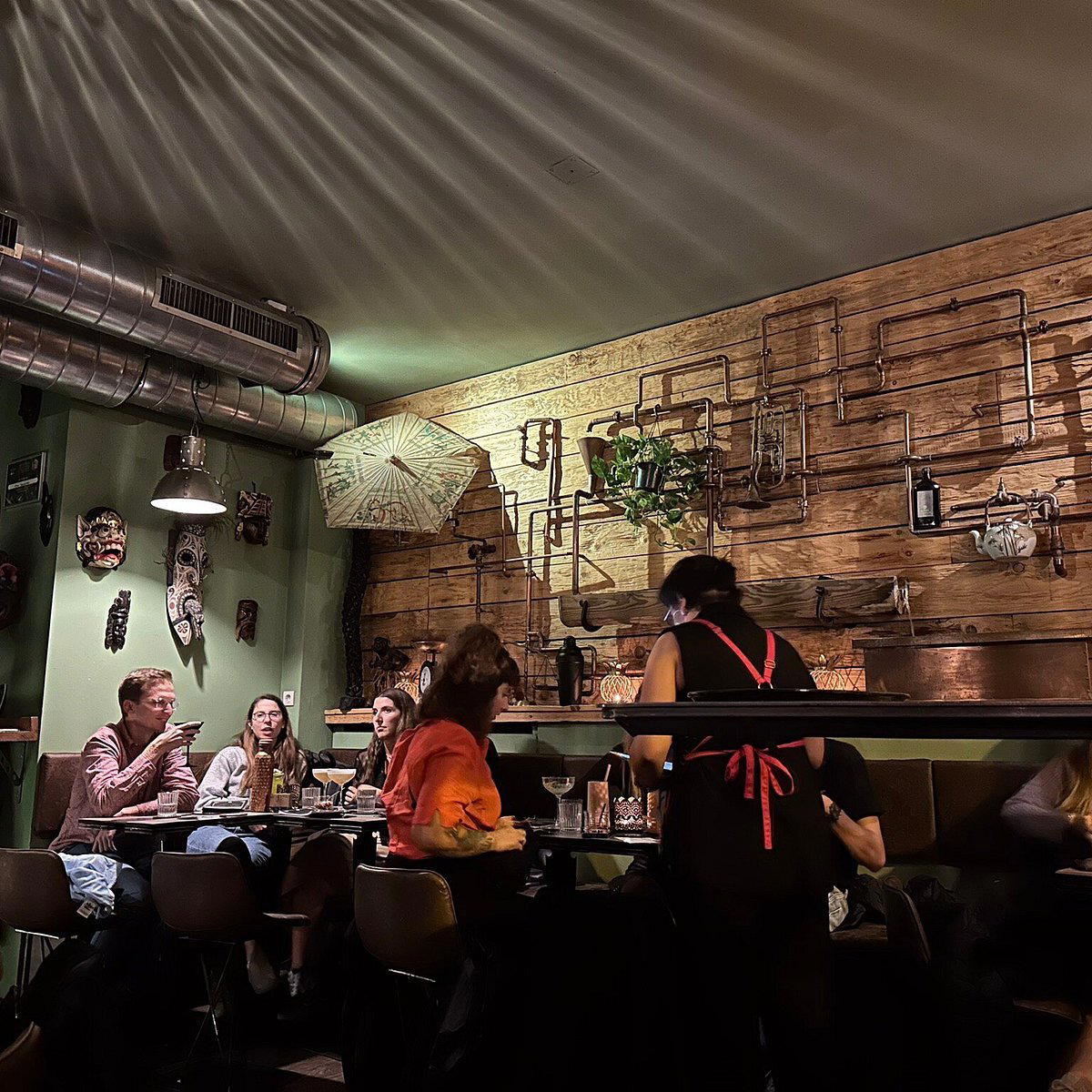
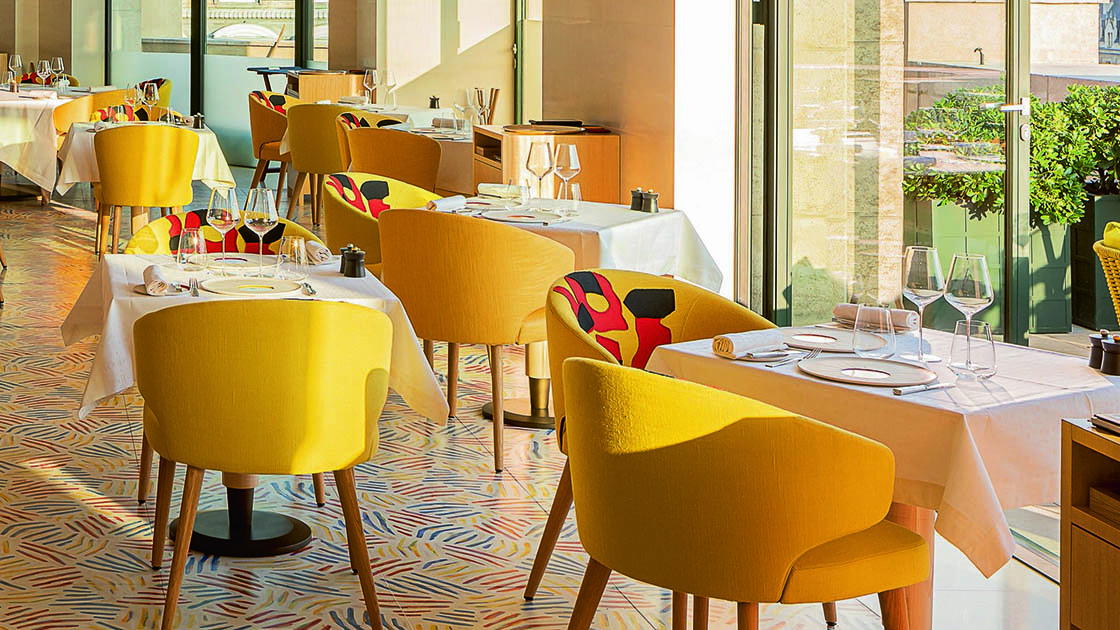
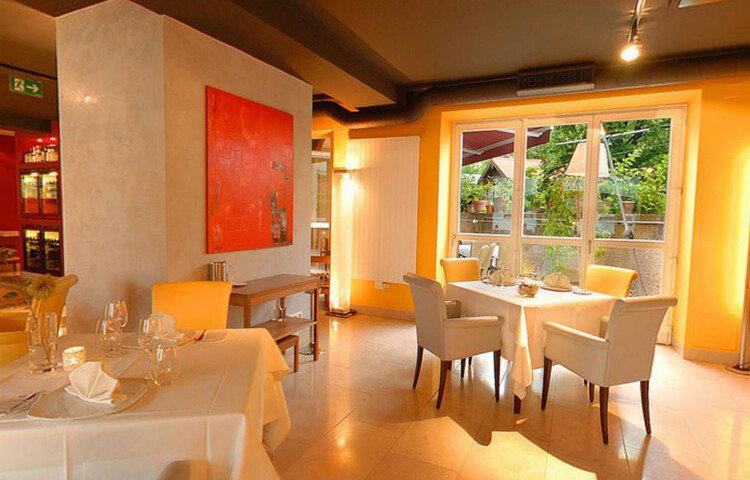
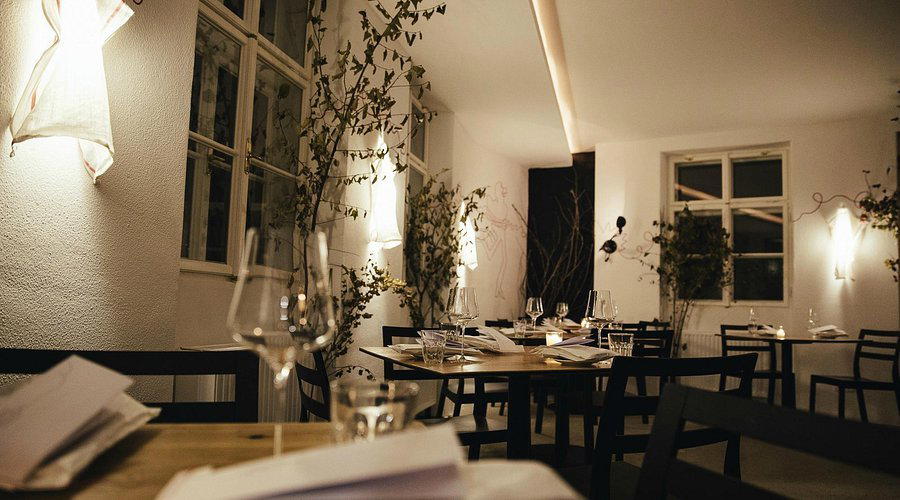
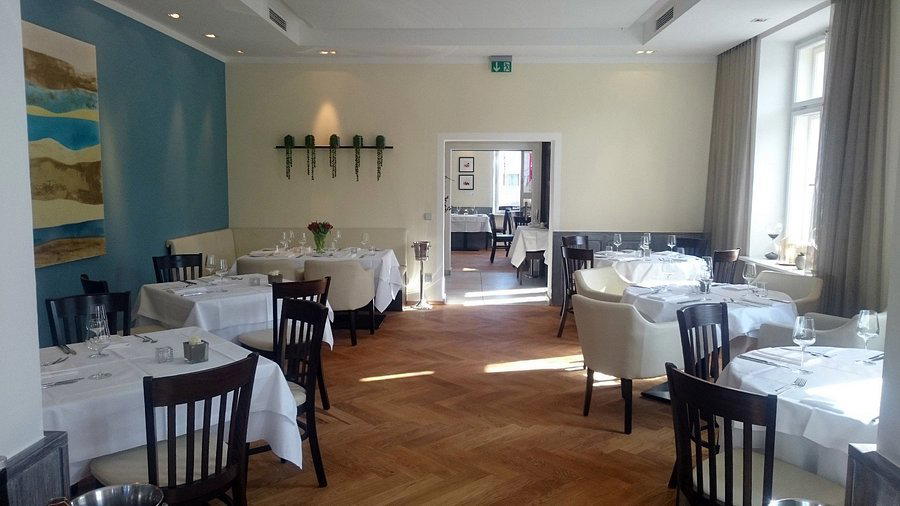
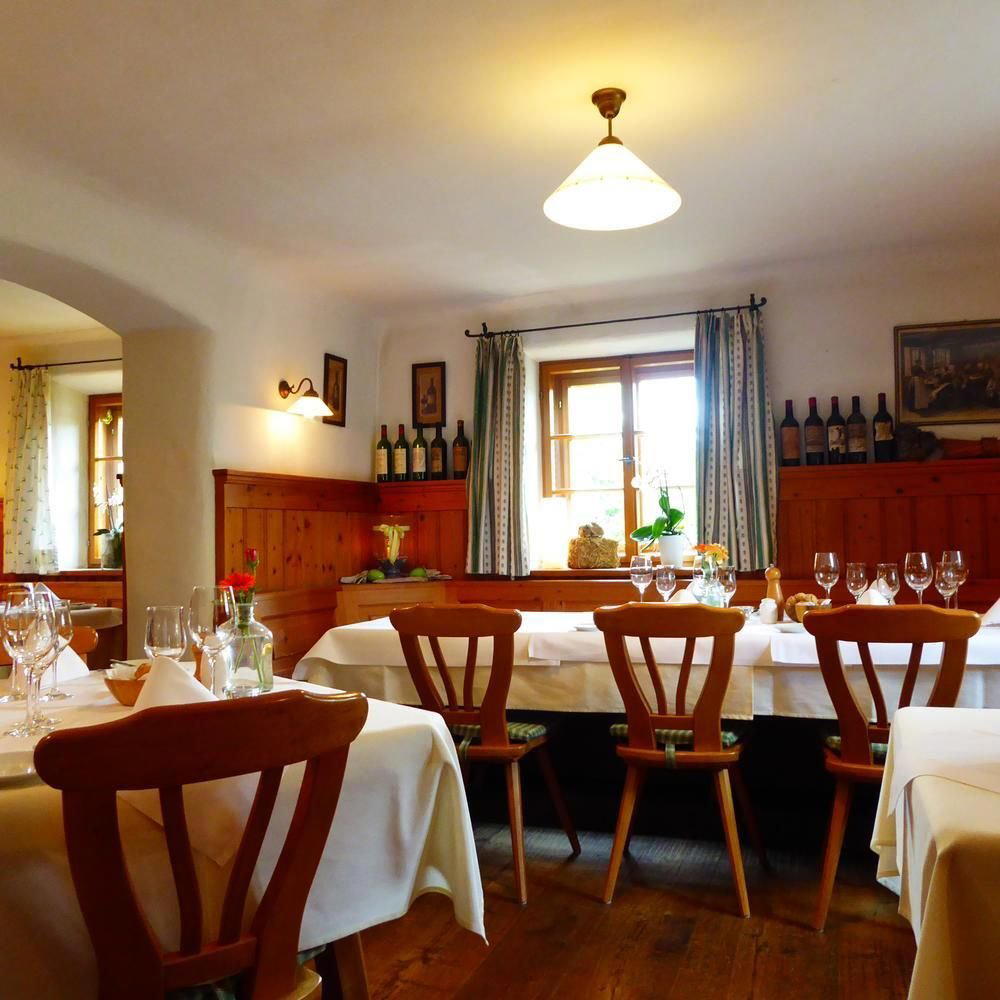
Austrian fine dining's shift toward regional sourcing has been gradual but consistent, and Goldener Hirsch's two in-house restaurants sit inside that movement. Restaurant Goldener Hirsch operates as the formal dining room, drawing on local producers and pairing regional dishes with a list anchored in Austrian wines alongside broader European selections. Restaurant Herzl, positioned in an adjacent building with dark wood-paneled walls, rugged columns, and lamp-lit interiors referencing the property's earlier hunting-lodge character, covers the casual end: hearty Alpine fare, afternoon tea, the kind of midday meal that makes sense after a morning walking the Altstadt.
Neither restaurant is positioned as a destination in its own right the way some hotel dining programs are constructed to draw external reservation traffic. Both function primarily as extensions of the hotel's broader proposition, which is informed, unhurried immersion in a specific version of Salzburg. The unpretentious register of the food and service is deliberate; this is not a property trying to import international fine-dining signals into an Austrian context. Visitors looking for Salzburg's full restaurant range beyond these two rooms will find a useful orientation in our full Salzburg restaurants guide.
Where Goldener Hirsch Sits in the Salzburg Hotel Market
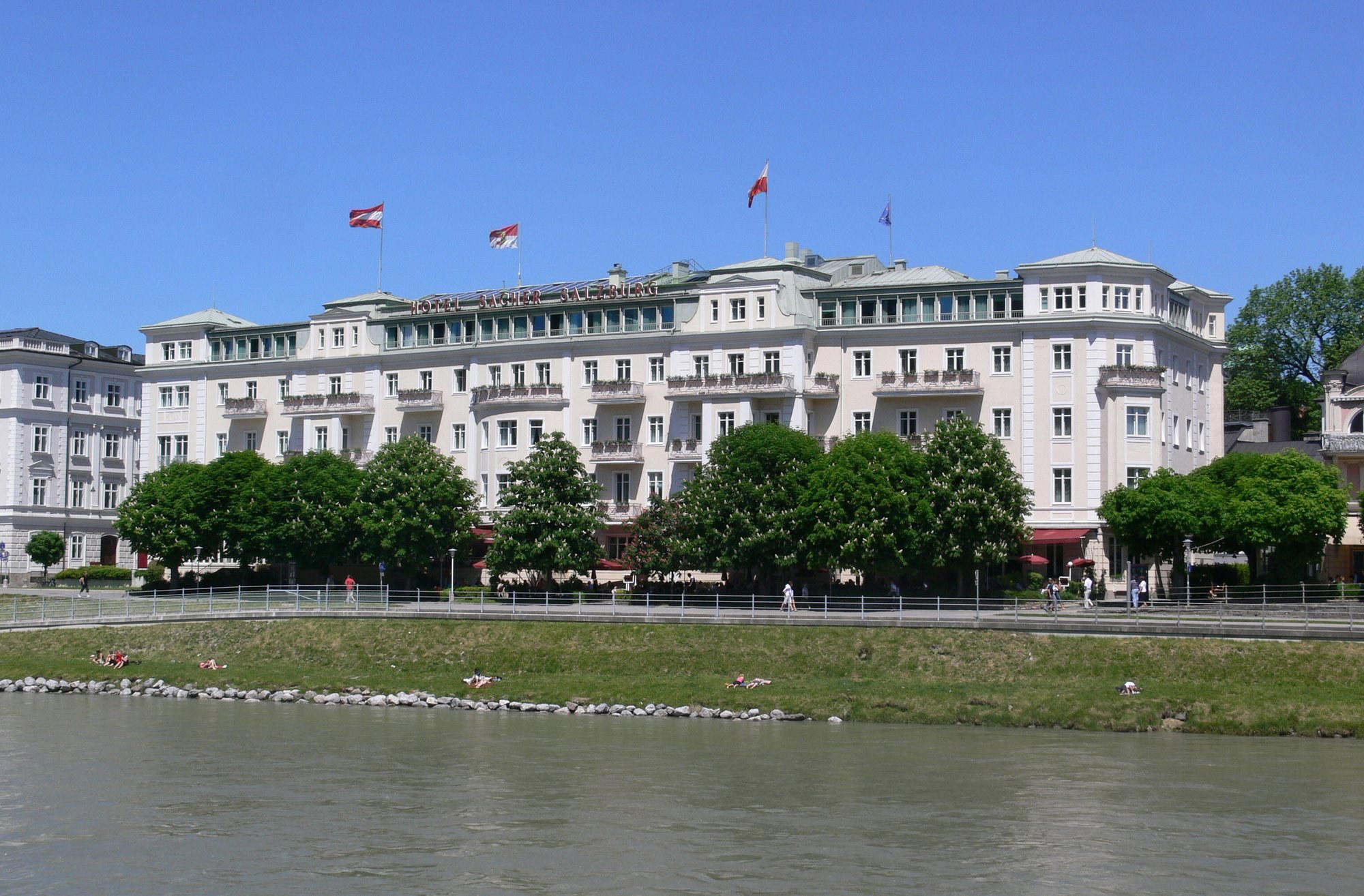
Salzburg's premium hotel market splits along two axes: Old Town positioning versus scenic perimeter properties, and historic-fabric preservation versus contemporary design. Hotel Sacher Salzburg and Hotel Bristol Salzburg represent the grand-hotel tradition with more formal public areas and a different scale of operation. Schloss Mönchstein offers castle positioning on the Mönchsberg with more seclusion and panoramic access, a different trade-off between location type and proximity. Hotel Stein takes the contemporary-design approach in the Old Town, appealing to travellers who want Altstadt access without the historic-interior commitment.
Goldener Hirsch's 2026 La Liste score of 92.5 points places it in recognised international company. La Liste aggregates critical assessments across publications and platforms, so a score at that level reflects consistent performance across a range of evaluators rather than a single editorial opinion. For context on Austria's broader luxury hotel tier, Hotel Sacher Wien in Vienna and Rosewood Schloss Fuschl in Hof bei Salzburg represent the comparable price and recognition tier, each with a different geographic and design proposition.
For travellers considering the Austrian Alps and lake regions more broadly, the market includes properties such as Falkensteiner Schlosshotel Velden in Velden am Wörthersee, Grand Tirolia Kitzbühel in Kitzbühel, Hotel Schloss Seefels in Techelsberg, and DAS EDELWEISS in Grossarl for those combining a Salzburg stay with mountain or lake access. Wellness-oriented alternatives in the Alpine region include Aktiv and Wellnesshotel Bergfried in Tux, Alpen-Wellness Resort Hochfirst in Obergurgl, Naturhotel Waldklause in Längenfeld, and LEADING Hotel Hochgurgl in Hochgurgl. Wine-focused travellers in Austria might also consider LOISIUM Wine and Spa Resort Langenlois in Langenlois. Closer to Salzburg, Chalet Untersberg in Grodig represents the self-catering end of the proximity market. Further afield in the Tyrol, Hotel Schwarzer Adler Innsbruck in Innsbruck offers comparable historic character in a different city context. For those extending into the Alps with a focus on ski access, Hotel Almhof Schneider in Lech occupies the premium tier in Vorarlberg. Internationally, the low-key-luxury-in-a-historic-building proposition has analogues at Aman Venice in Venice and, at a different scale, at The Fifth Avenue Hotel in New York City and Aman New York in New York City.
Planning a Stay
Room rates start from approximately $428 per night. The Salzburg Festival, held annually in July and August, is the city's highest-demand period; hotels across the Altstadt book substantially in advance during those weeks, and Goldener Hirsch is no exception given its position on Getreidegasse at the centre of festival foot traffic. Outside festival season, Salzburg draws steady year-round visitor volumes, with shoulder months offering more availability. The hotel is pet-friendly, maintains 24-hour room service, and includes bar and meeting room facilities. Augustiner Bräu Mülln, one of the city's most characterful beer halls, is accessible on foot from the property for those wanting a contrast to the hotel's dining rooms.
The Quick Read
Comparable venues nearby, for context on price, style, and recognition.
| Venue | Price | Awards | Notes |
|---|---|---|---|
| Hotel Goldener HirschThis venue (the venue you are viewing) | $300–500 | 1 Michelin Key · La Liste Top Hotels | Not listed |
| Hotel Sacher Salzburg | $300–500 | 1 Michelin Key · La Liste Top Hotels | Rechte Altstadt, Historic luxury heritage hotel with classical Austrian elegance; individually designed rooms and suites reflecting Salzburg's refined aesthetic; blend of 19th-century charm with modern amenities. |
| Hotel Goldgasse | Not listed | 1 Michelin Key · La Liste Top Hotels | Linke Altstadt, Historic boutique luxury in a 14th-century building with modern comforts. |
| Hotel Bristol Salzburg | $300–500 | La Liste Top Hotels | Rechte Altstadt, Historic luxury boutique hotel built in 1892, family-run for generations. |
| Schloss Mönchstein | Not listed | 2 Michelin Keys · La Liste Top Hotels | Mönchsberg, Historic castle blending medieval architecture with modern luxury |
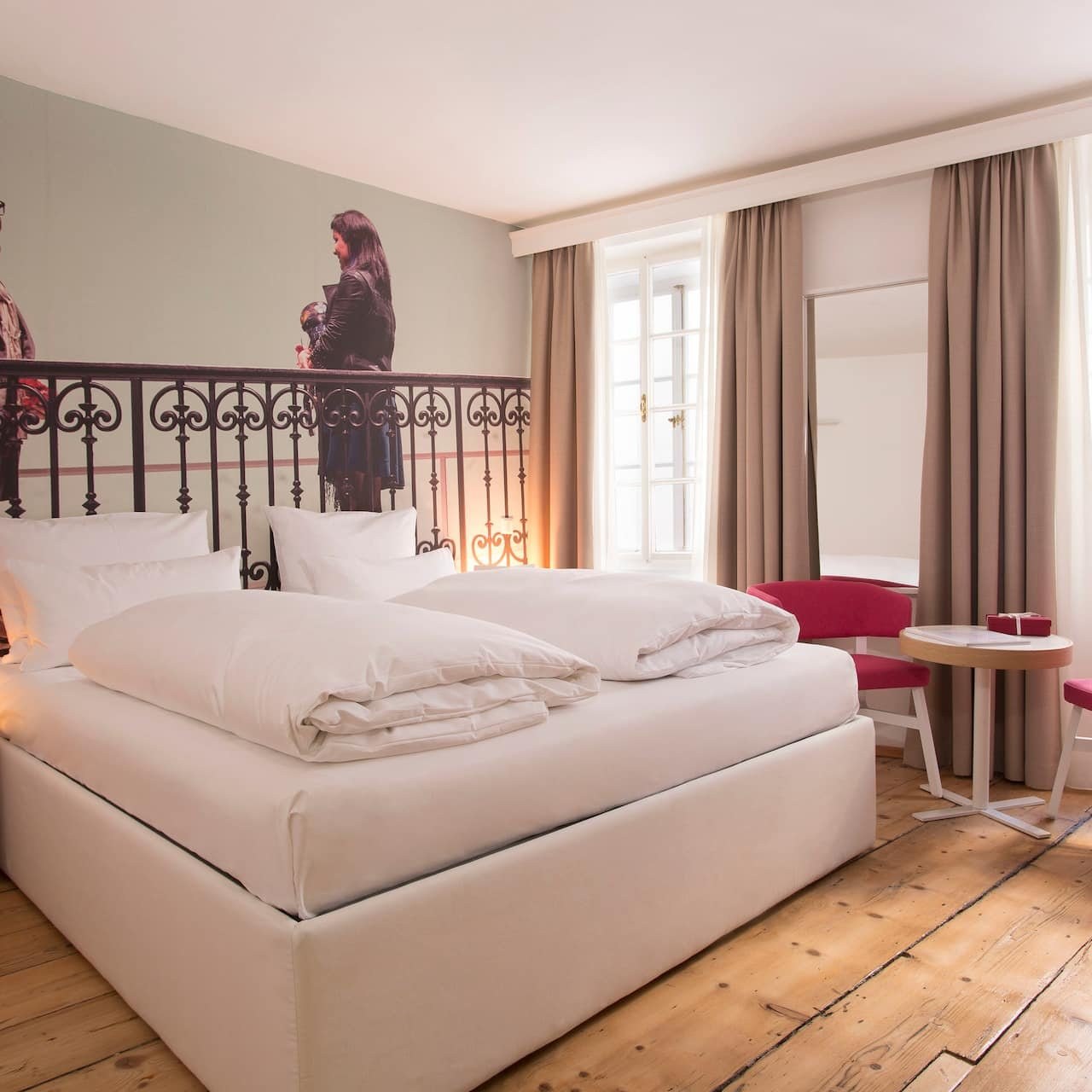
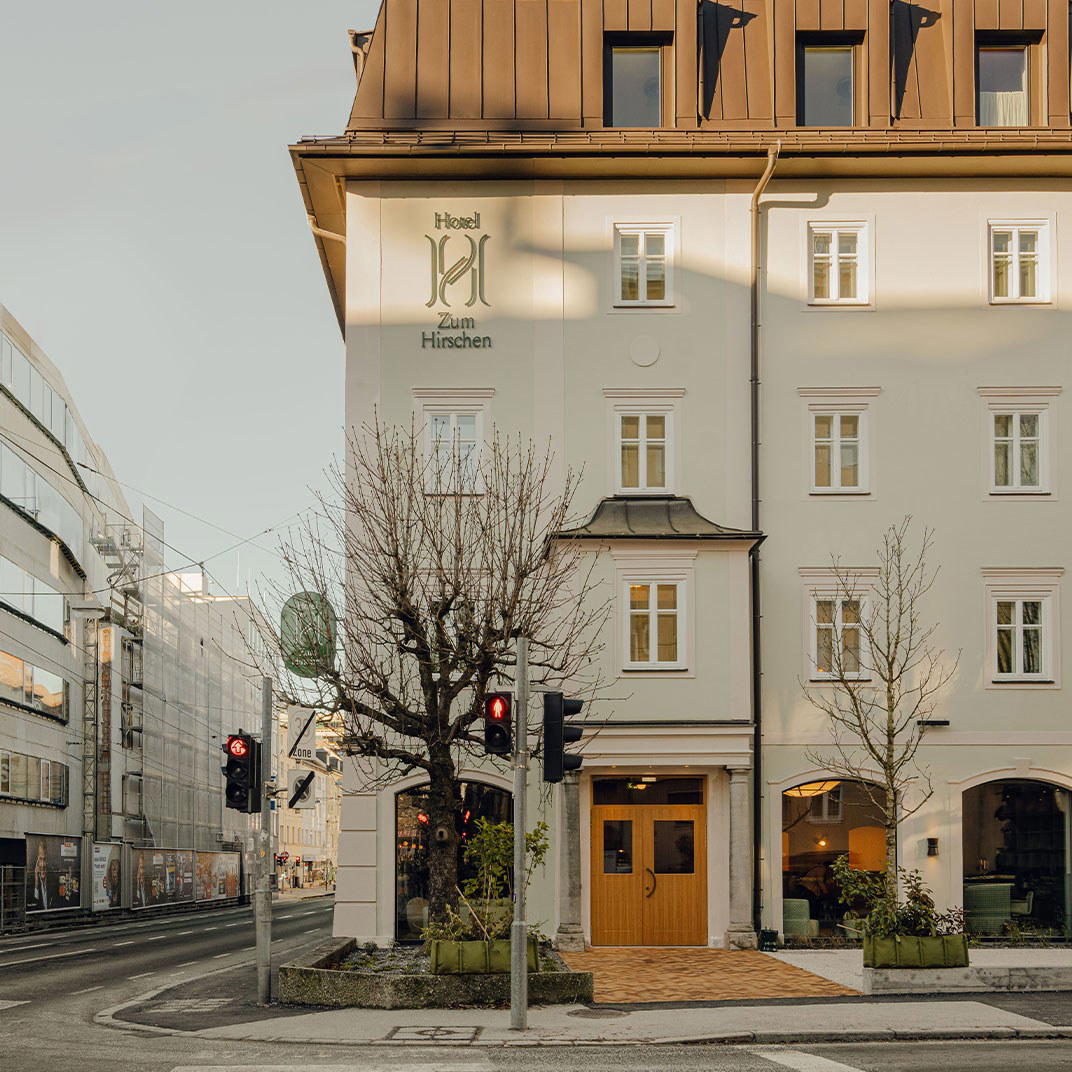
| Design Hotel zum Hirschen Salzburg | Not listed | Michelin Selected | Elisabeth Vorstadt, Historic 15th-century inn revitalized as a fashionable design hotel. |
Recognition history
Dated appearances from independent guides and award organizations, with the underlying list record or original source where available.
Michelin 1 Key
Michelin
La Liste Top Hotels
La Liste
Forbes Recommended
Forbes
Virtuoso Luxury Hotel Partner
Virtuoso
Full recognition history (6 entries)
Forbes Recommended
Forbes
Michelin 1 Key
Michelin
Continue exploring
More in Salzburg
Hotels in Salzburg
All hotels in Salzburg →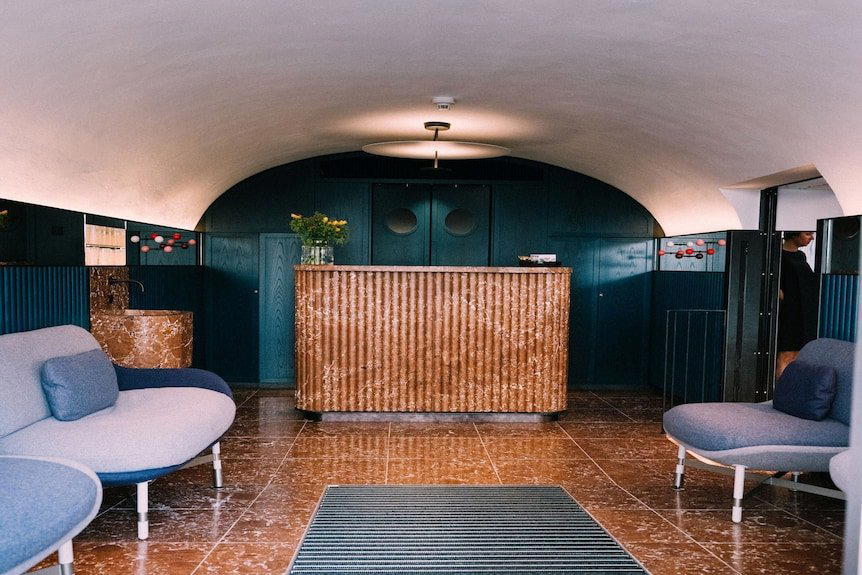
Bars in Salzburg
All bars in Salzburg →
Details
- Romantic
- Classic
- Elegant
- Cozy
- Sophisticated
- Romantic Getaway
- Anniversary
- Honeymoon
- Weekend Escape
- Historic Building
- Garden
- Terrace
- Private Dining
- Wi Fi
- Restaurant
- Bar
- Room Service
- Concierge
- Business Center
- Valet Parking
- EV Charging
- Laundry Service
- Garden
- Street Scene
- Wheelchair Accessible
- Elevator
- Accessible Restroom
- Step Free Entrance
Warm, intimate, and refined with rustic-chic charm; guests consistently praise the cozy yet sophisticated atmosphere enhanced by period details, soft lighting, and attentive service that feels like staying in a gracious private home.