Hotel Cesar occupies a storied address in Tijuana's Zona Norte, a property whose name is inseparable from the city's early 20th-century identity as a destination for cross-border travelers. The building carries architectural weight that few hotels in Baja California can match, positioning it as a reference point for understanding Tijuana's hospitality history rather than simply a place to sleep.
Pearl is the En Primeur Club membership app — saves, bookings, and concierge access live there. Same editors, same standards.
- Address
- C. Coahuila 8137, Zona Nte., 22000 Tijuana, B.C., Mexico
- Phone
- +52 664 685 1606
- Website
- hotelcaesars.com.mx
- Directions
- Get directions
 Saves & bookings on Pearl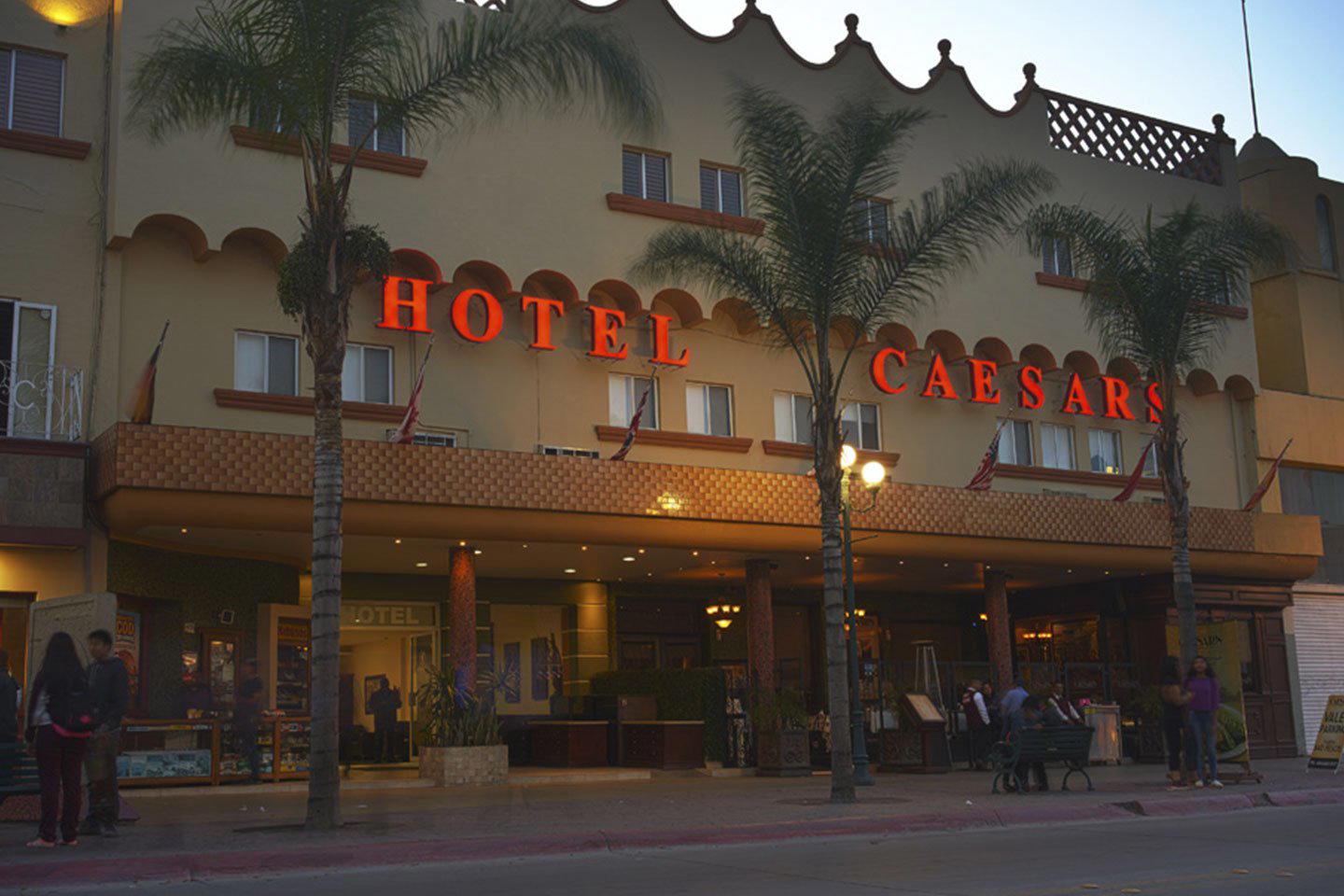
A Building That Predates the Border as We Know It
Tijuana's oldest hotel district was never built for residents. It was built for arrivals: Prohibition-era Americans crossing south in search of what couldn't be had at home, and later, for the steady commercial traffic that the US-Mexico border generates year-round. Hotel Cesar, on Calle Coahuila in the Zona Norte, sits inside that history in a way that newer properties along the Paseo de los Héroes corridor simply cannot replicate. The address alone, C. Coahuila 8137, places the property at the geographic and historical center of Tijuana's original tourism infrastructure, within the grid of streets that defined the city long before maquiladoras and airport expansions reshaped Baja California's economy.
In cities like Tijuana, where development pressure has demolished or repurposed most early 20th-century commercial buildings, a property that has maintained its original address and name carries a kind of architectural permanence worth considering on its own terms. The Zona Norte's built environment tells the story of a border town that grew faster than it was planned, and Hotel Cesar is one of the few structures in the district that grounds that narrative in physical form rather than oral history.
The Cesar Salad Connection and What It Means for the Building's Identity
Hotel Cesar is widely associated with the origin of the Caesar salad. The account, which appears in multiple food history sources, holds that Caesar Cardini created the dressing at this Tijuana address during the 1920s, serving weekend crowds from San Diego and Los Angeles who made the drive south when American restaurants were operating under Prohibition restrictions. It anchors the hotel's identity in a specific cultural moment rather than in marketing language.
For a building that might otherwise be evaluated purely on its current accommodation offering, this origin story functions as a form of architectural provenance. It connects the physical address to a moment when Tijuana's hospitality industry was at its most inventive and most internationally visible. Properties from that period were, briefly, defining the experience of dining and lodging for a significant cross-section of American coastal society. Hotel Cesar's address is evidence of that period.
This puts the hotel in a different category than the resort-market hotels that define Mexico's premium hospitality sector today. Properties like One&Only; Mandarina in Riviera Nayarit, Las Ventanas al Paraíso in San José del Cabo, or Zadun, A Ritz-Carlton Reserve in Los Cabos compete on amenity depth, design investment, and beach or clifftop positioning. The hotel competes on something harder to manufacture: an address that predates the modern hotel industry's logic entirely.
Zona Norte: The Neighborhood Context
The Zona Norte is Tijuana's most historically dense district and also its most misread. International coverage of the neighborhood has long focused on the aspects of border-zone life that make for dramatic journalism, but the area also contains the oldest commercial fabric in the city: pharmacies, curio shops, the Avenida Revolución strip, and the hotels that served the original wave of cross-border leisure tourism. The hotel sits within this fabric, not adjacent to it.
Understanding the Zona Norte as a neighborhood means recognizing that it operates on a different urban logic than the planned commercial corridors of Tijuana's newer districts. Streets are narrower, buildings are older, and the density of pedestrian activity reflects the area's design for a different era of movement. For travelers who arrive expecting the polished infrastructure of Los Cabos or the design-forward boutique hotels of Mexico City's Roma Norte, the Zona Norte will read as something more functional and less composed. That contrast is part of what makes a stay here informative rather than merely comfortable.
Tijuana's dining scene, which has drawn sustained attention from American food media over the past decade, is distributed across the city rather than concentrated in a single district. Visitors based in the Zona Norte will find that some of the city's most-discussed kitchens require a short taxi or rideshare to reach. The tradeoff is proximity to the border crossing itself, which matters for day-trip logistics and for guests arriving without a vehicle.
How Hotel Cesar Positions Against Mexico's Wider Hotel Market
Mexico's premium hotel market has expanded significantly over the past two decades, with international brands and design-led independent properties raising the expectation floor for what a hotel stay in the country should involve. Chablé Yucatán in Merida, Hotel Esencia in Tulum, and Casa de Sierra Nevada in San Miguel de Allende each represent different versions of what design-conscious Mexican hospitality looks like in its current form. The hotel does not position against that tier. Its reference points are historical rather than contemporary, and its value proposition is legibility: a traveler who wants to understand Tijuana's origin as a hospitality destination will find more context here than at any recently opened property in the city.
For travelers whose framework for Mexican hotels runs through properties like Montage Los Cabos, Maroma in Riviera Maya, or Four Seasons Resort Punta Mita, the hotel will require a recalibration of expectations. The property is not a resort, not a spa-focused retreat, and not a design showcase in the contemporary sense. It is a functioning hotel on a historically significant address in a border city that rewards travelers who engage with it on its own terms.
Comparable in spirit, if not in scale or geography, to properties like Casa Polanco in Mexico City or Hotel Demetria in Guadalajara, which also derive their identity from neighborhood context rather than resort amenities, the hotel represents a strand of Mexican hospitality that is becoming harder to find as development pressure pushes investment toward purpose-built leisure destinations.
Planning a Stay
The property sits at C. Coahuila 8137 in the Zona Norte, within walking distance of the San Ysidro pedestrian crossing from San Diego, making it accessible for travelers arriving without a vehicle. The surrounding neighborhood is active around the clock given its position as the commercial center of Tijuana's original tourist district. The hotel has 53 rooms, a casual dress code, and reservations are recommended.
How It Stacks Up
Comparable venues nearby, for context on price, style, and recognition.
| Venue | Cuisine | Price | Awards | Notes |
|---|---|---|---|---|
| Hotel CesarThis venue — the venue you are viewing | Historic hotel on Tijuana's main entertainment avenue blending charm and modern comfort. | $$ | 3-Star | Not listed |
| Hotel Volga | Adults-only urban lifestyle hotel combining luxury hospitality with art, music, and gastronomy just off Reforma. | $$$$ | 4-Star | Cuauhtémoc |
| Santa Casa | Historic Mexican Colonial Revival mansion thoughtfully restored with contemporary design elements, positioned as a charming boutique hotel that honors its 1930s heritage while offering modern comforts. | $$$ | 4-Star | Roma Norte |
| Hyde Mexico City Reforma | Boho-chic lifestyle hotel | $$$$ | 5-Star | Reforma |
| Real de Minas San Miguel de Allende | Colonial hacienda with modern conveniences | $$$ | 5-Star | Centro |
| Baja Off the Grid Coastal Vacation Homes & Events | off-grid coastal vacation homes and events | $$$$ | 4-Star | Cabo Punta Banda |
Continue exploring
More in Tijuana
Hotels in Tijuana
Browse all →
Bars in Tijuana
Browse all →
Restaurants in Tijuana
Browse all →
At a Glance
- Historic
- Classic
- Well Known
- Business Trip
- Weekend Escape
- Historic Building
- Wi Fi
- Parking
- Room Service
- Restaurant
- Air Conditioning
- Street Scene
- Wi Fi
- Parking
- Room Service
- Restaurant
- Air Conditioning
Classic historic atmosphere with attentive service and comfortable, clean rooms in a lively central location.