
Michelin Selected
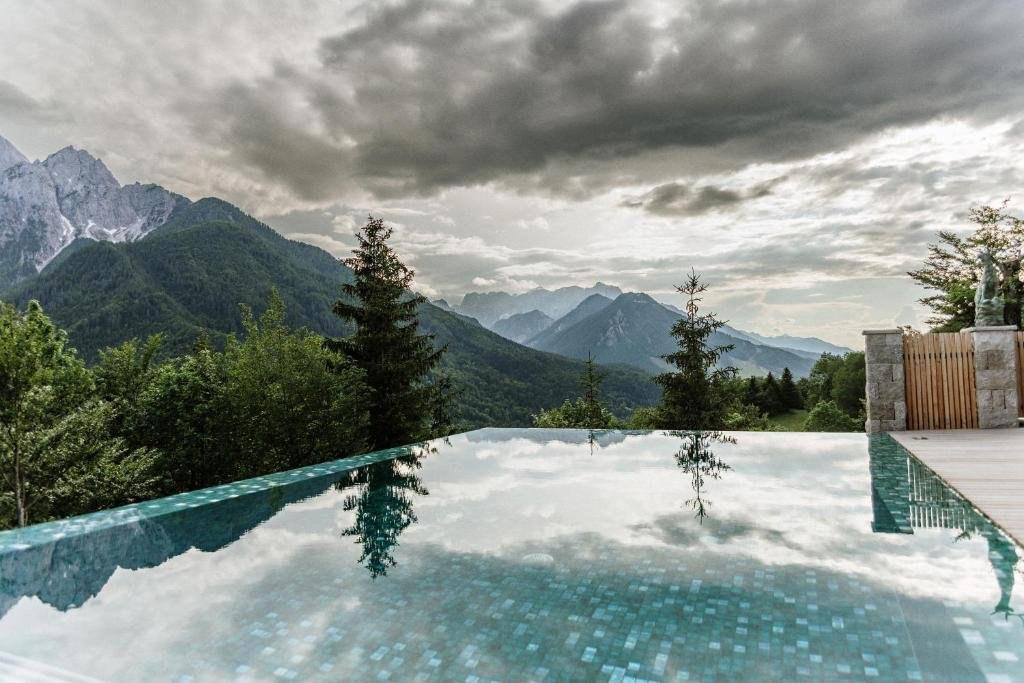
Selected by the Michelin Guide Hotels 2025, Hotel Bohinj sits at Ribčev Laz on the eastern shore of Lake Bohinj, Slovenia's largest permanent lake and one of the Julian Alps' most architecturally coherent resort settings. The property places guests within walking distance of the lake's edge in a valley that prioritises low-density, landscape-integrated building over resort sprawl.

Pearl is the En Primeur Club membership app — saves, bookings, and concierge access live there. Same editors, same standards.
- Address
- Ribčev Laz 45, 4265 Bohinjsko jezero, Slovenia
- Phone
- +386 597 64401
- Website
- hotelbohinj.si
- Directions
- Get directions
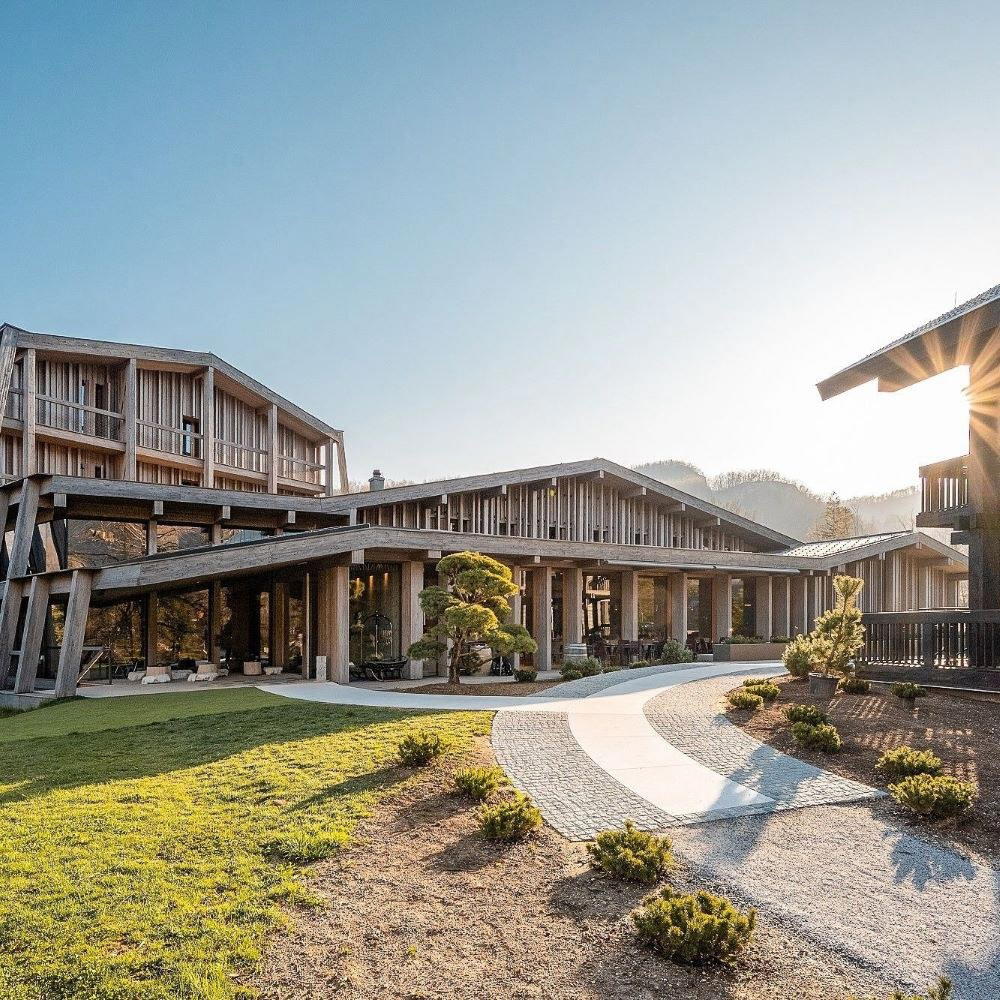
Where Alpine Architecture Earns Its Setting
The Julian Alps have produced a distinct hospitality model: properties that earn their credentials less through interior grandeur and more through calibrated integration with a landscape that demands restraint. Lake Bohinj, the larger and less touristically dense of the two famous Triglav-area lakes, anchors this approach more firmly than its better-known neighbour Bled. Where Bled organises itself around a single photogenic island and a castle ridge, Bohinj operates as a valley ecosystem, with accommodation distributed along the lake's edges at a scale that the terrain appears to permit rather than impose. Hotel Bohinj, addressed at Ribčev Laz 45 on the lake's eastern access point, sits within this lower-density tradition and carries a 2025 Michelin Selected designation that places it in the guide's curated tier for the region.
The Physical Logic of Ribčev Laz
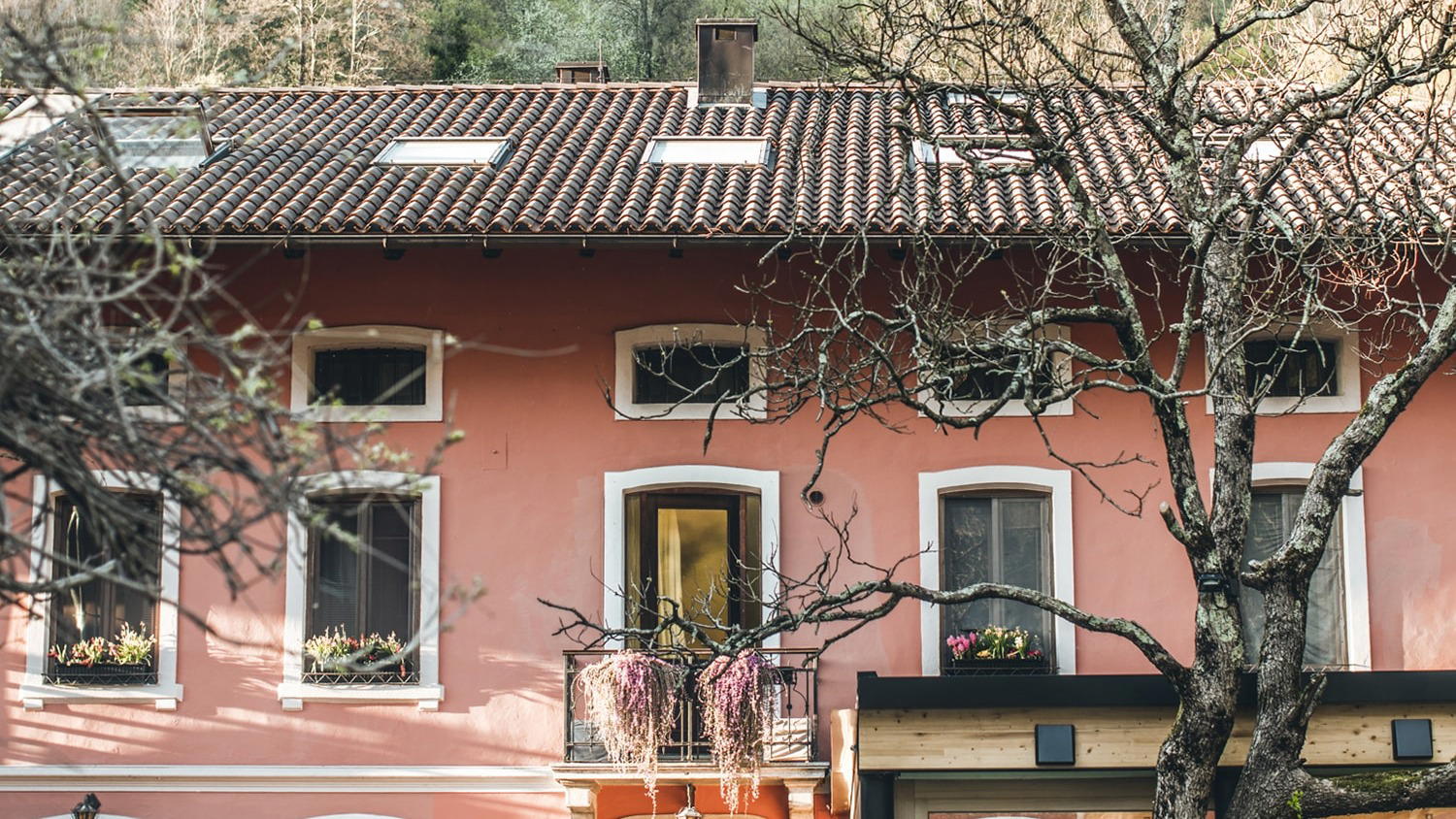
Ribčev Laz is the small settlement that functions as Bohinj's primary arrival node: it holds the bus terminus, the stone bridge over the Sava Bohinjka river, and the Church of St John the Baptist, a late-Gothic structure whose frescoed interior is among the best-preserved in Slovenia. Hotels positioned here have a geographic advantage that is also a discipline problem. The views are immediate and the lake access genuine, but the architecture must negotiate a vernacular that rewards stone, timber, and pitched-roof forms over the kind of contemporary glass-and-steel signatures that read well in cities. The buildings that work in Ribčev Laz tend to be those that acknowledge the village scale rather than compete with it. Hotel Bohinj sits at this intersection, in a settlement where the built environment is still oriented toward the lake rather than away from it.
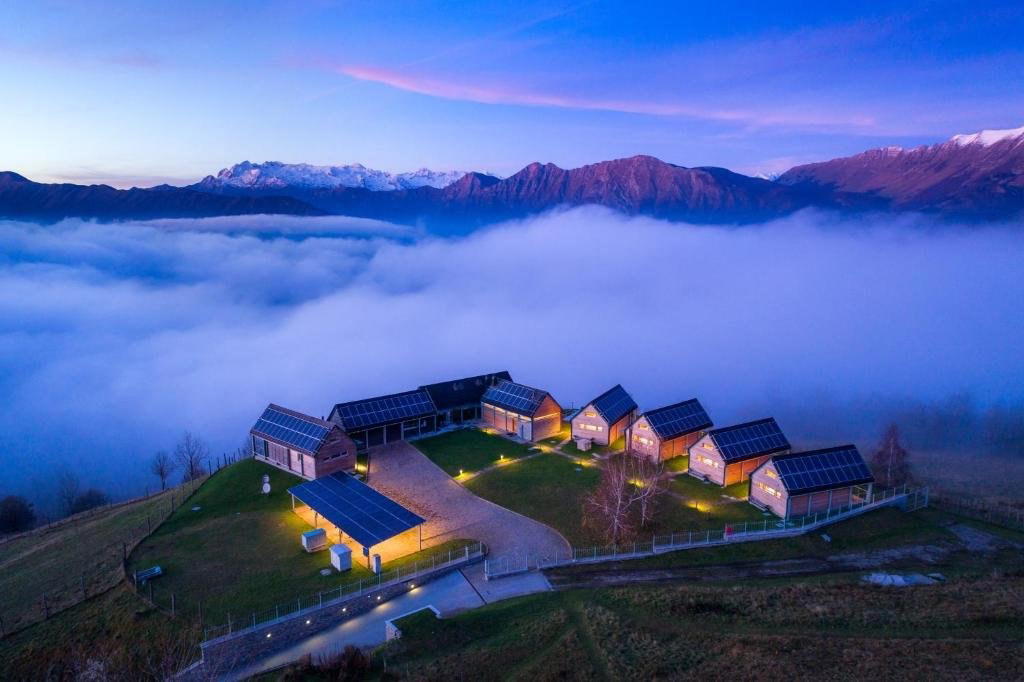
For context on how Slovenian properties handle mountain-village integration at different price points and scales, ALPIK Chalets operates within the same Bohinj valley and represents an alternative format — chalet-scale rather than hotel-scale accommodation. The two properties address different guest profiles within the same geography. Further afield in the Julian Alps corridor, Nebesa Chalets in Kobarid and Chalet Sofija in Kranjska Gora represent the region's premium chalet segment, while Vila Planinka in Zgornje Jezersko shows how the northern Kamnik-Savinja Alps handle the same design challenge with a different valley character.
Michelin Selection in the Slovenian Hotel Context
Michelin's hotel selection programme, which expanded significantly through 2023 and 2024, applies criteria broadly aligned with those used for restaurant selection: quality of welcome, comfort consistency, and a sense of place that goes beyond generic hospitality. In Slovenia, the guide's hotel coverage remains relatively thin compared with Austria or Italy, which means a Michelin Selected designation carries disproportionate signal weight. These properties share Michelin's endorsement but operate in entirely different landscape and architectural registers, illustrating how the guide's Slovenian selection spans terrain rather than converging on a single resort corridor.
The distinction also positions Hotel Bohinj relative to properties elsewhere in the Bled-Bohinj corridor. Grand Hotel Toplice in Bled carries its own history as the lakeside grande dame of the Gorenjska region. Hotel Bohinj operates in a quieter, less commercially pressured valley — Bohinj receives a fraction of Bled's visitor volume, which shapes both the pace and the architectural expectations placed on the property.
Design Logic in a Protected Landscape
Bohinj sits within Triglav National Park, Slovenia's only national park and one of the oldest protected areas in the Alps, established in its current form in 1981. Construction within the park's buffer zones and adjacent settlement areas operates under planning constraints that have, in practice, enforced a degree of architectural consistency that deliberate design policy alone rarely achieves. New build volume is limited, facade materials are regulated, and roof pitches conform to regional tradition. The result is that Bohinj's built environment reads as coherent not because it was designed as such, but because the regulatory and geographic pressure produced convergence over decades. A hotel operating in Ribčev Laz is working within this inherited coherence, which makes the design conversation less about individual expression and more about calibration: how well does the property fit its inherited context?
This is the standard against which Alpine architecture in protected settings tends to be judged, and it is a more demanding standard than the one applied to properties in open-market urban or coastal settings. For comparison, consider how design-led mountain properties in steeper regulatory environments across the Alps approach the same question: Badrutt's Palace Hotel in St. Moritz operates in a Swiss resort town where civic grandeur is itself part of the tradition, a very different brief than a Slovenian lakeside village governed by national park adjacency.
Planning a Stay: Practical Reference
Bohinj is accessible by a combination of train and bus from Ljubljana in approximately two hours, with the Bohinjska Bistrica station serving as the rail terminus and local connections covering the final kilometres to Ribčev Laz. The valley's peak seasons run July through August for summer hiking and swimming, and December through March for the Vogel ski area above the lake's western end. Shoulder periods, particularly May to June and September to October, offer lower occupancy, better weather stability than the high-mountain passes above, and the kind of reduced visitor density that makes the lake's character legible. Booking in advance for July and August is standard practice across all Bohinj accommodation. For broader orientation across the region's dining and accommodation options, our full Bohinj guide maps the valley's current hospitality picture. Those building a wider Slovenian itinerary might also consider Hotel Palace Portoroz in Portorož on the Adriatic coast or Hostel Celica in Ljubljana as a capital-city base, each operating in a register distinct from the Alpine interior.
For travellers building a reference set that includes properties well outside Slovenia, the Michelin Selected tier that Hotel Bohinj now occupies globally includes properties as varied as Aman Venice in Venice, Le Bristol Paris in Paris, and Mandarin Oriental Bangkok in Bangkok. The tier spans format and price category; what the designation signals is a consistent floor of quality and place-specificity, not a single aesthetic or service model.
At-a-Glance Comparison
Comparable venues nearby, for context on price, style, and recognition.
| Venue | Cuisine | Price | Awards | Notes |
|---|---|---|---|---|
| Hotel BohinjThis venue — the venue you are viewing | Alpine-style boutique hotel revitalized with modern architecture | Not listed | Michelin Selected | Not listed |
| ALPIK Chalets | Modern alpine-inspired chalets with balconies or terraces in natural surroundings. | $200–300 | Michelin Selected | Ukanc |
| Tivoli Boutique Inn | Modern boutique inn with sleek minimalist architecture next to Tivoli Park | Not listed | Michelin Selected | Tivoli Park |
| Grand Hotel Union Eurostars | Historic Art Nouveau hotel blending tradition with modern comfort | $200–300 | Michelin Selected | Center District |
| InterContinental - Ljubljana, an IHG Hotel | Contemporary luxury design hotel with well-known glass façade; Slovenia's first 5-star property positioned as the capital's premier luxury destination. | $100–200 | Michelin Selected · Virtuoso Luxury Hotel Partner | City Centre |
| Hotel Nox | Contemporary Slovenian design boutique hotel managed by an interior design company specializing in hospitality. | $100–200 | Michelin Selected | northern edge of Ljubljana |
Recognition history
Dated appearances from independent guides and award organizations, with the underlying list record or original source where available.
Michelin Selected
Michelin
Continue exploring
More in Bohinj
Hotels in Bohinj
Browse all →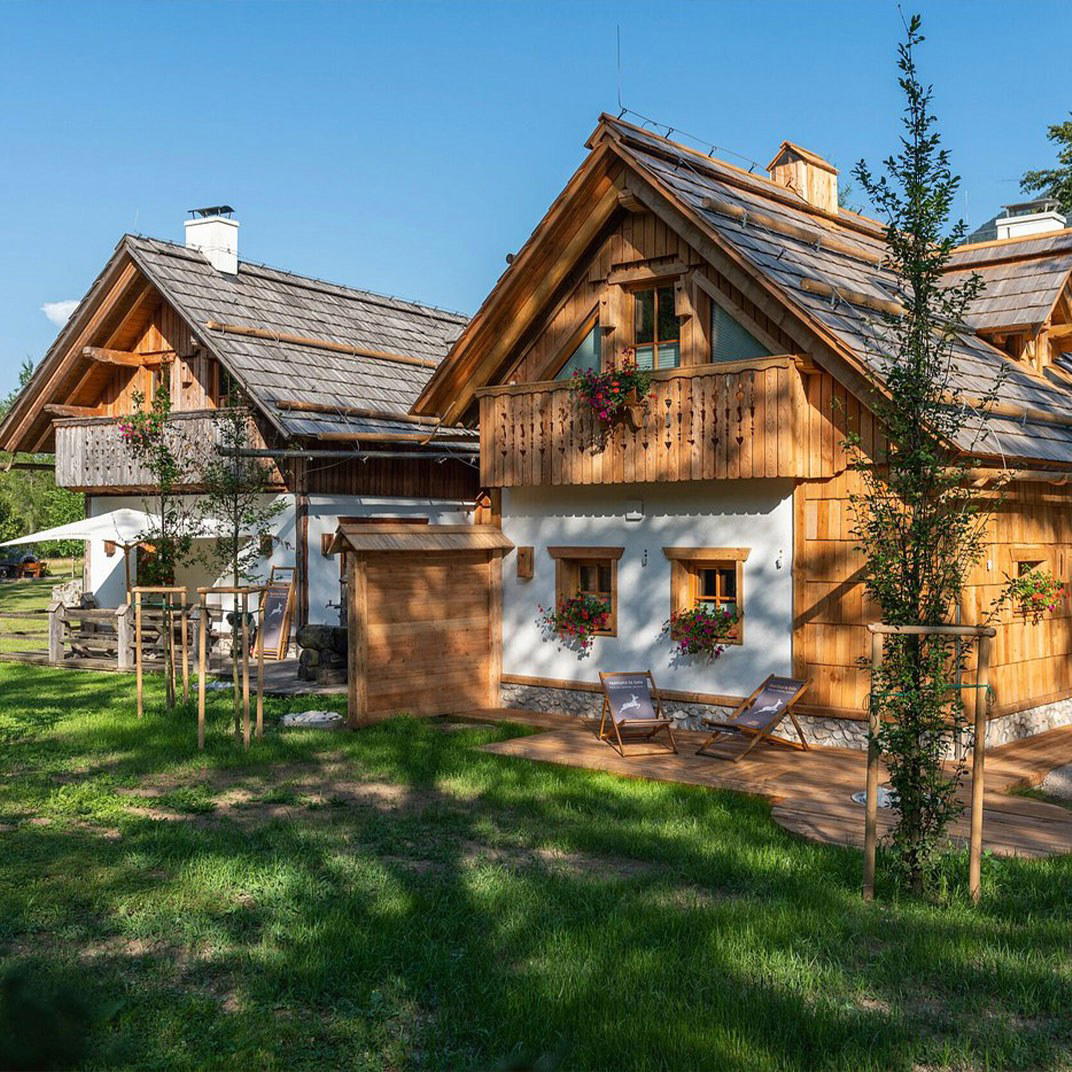
Bars in Bohinj
Browse all →
Restaurants in Bohinj
Browse all →
Details
- Scenic
- Cozy
- Modern
- Rustic
- Romantic Getaway
- Wellness Retreat
- Weekend Escape
- Panoramic View
- Wi Fi
- Spa
- Pool
- Restaurant
- Bar
- Fitness Center
- EV Charging
- Mountain
- Waterfront
- Wheelchair Accessible
- Elevator
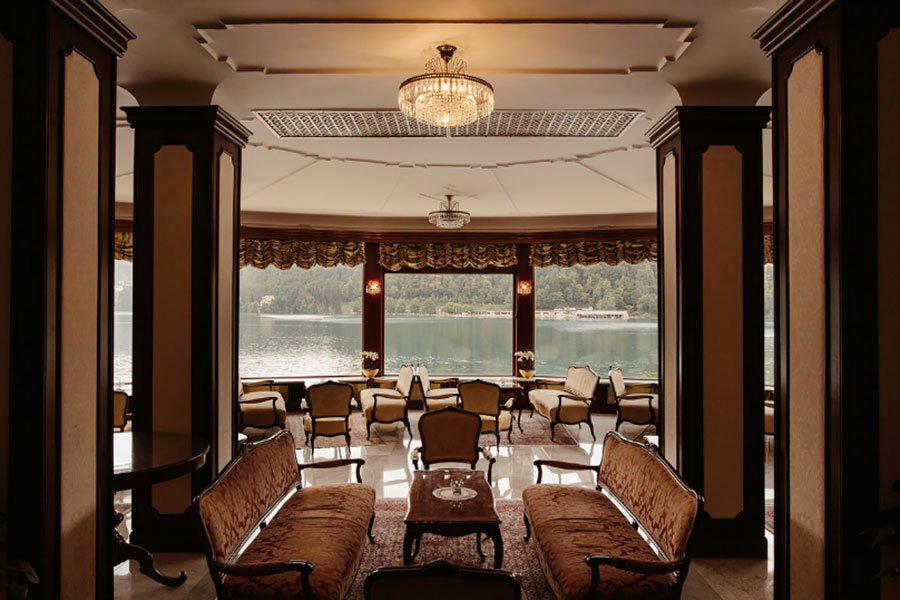
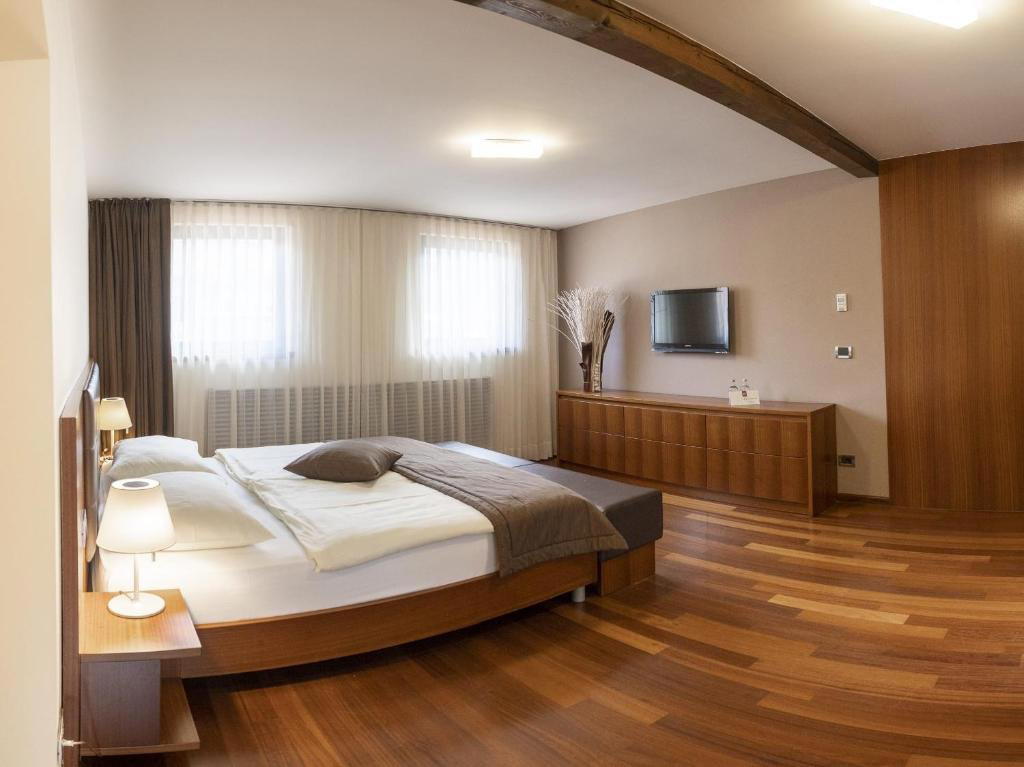
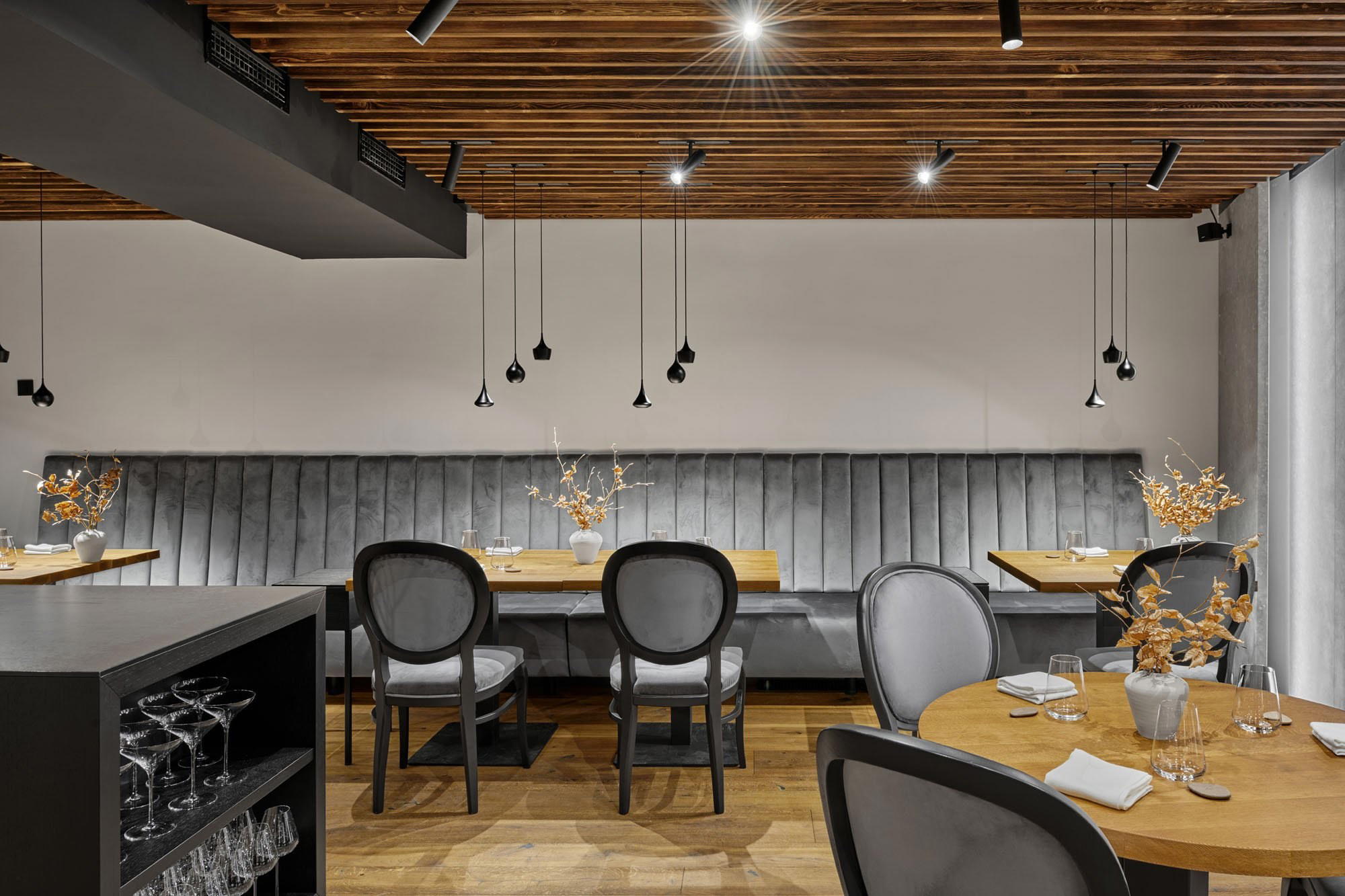
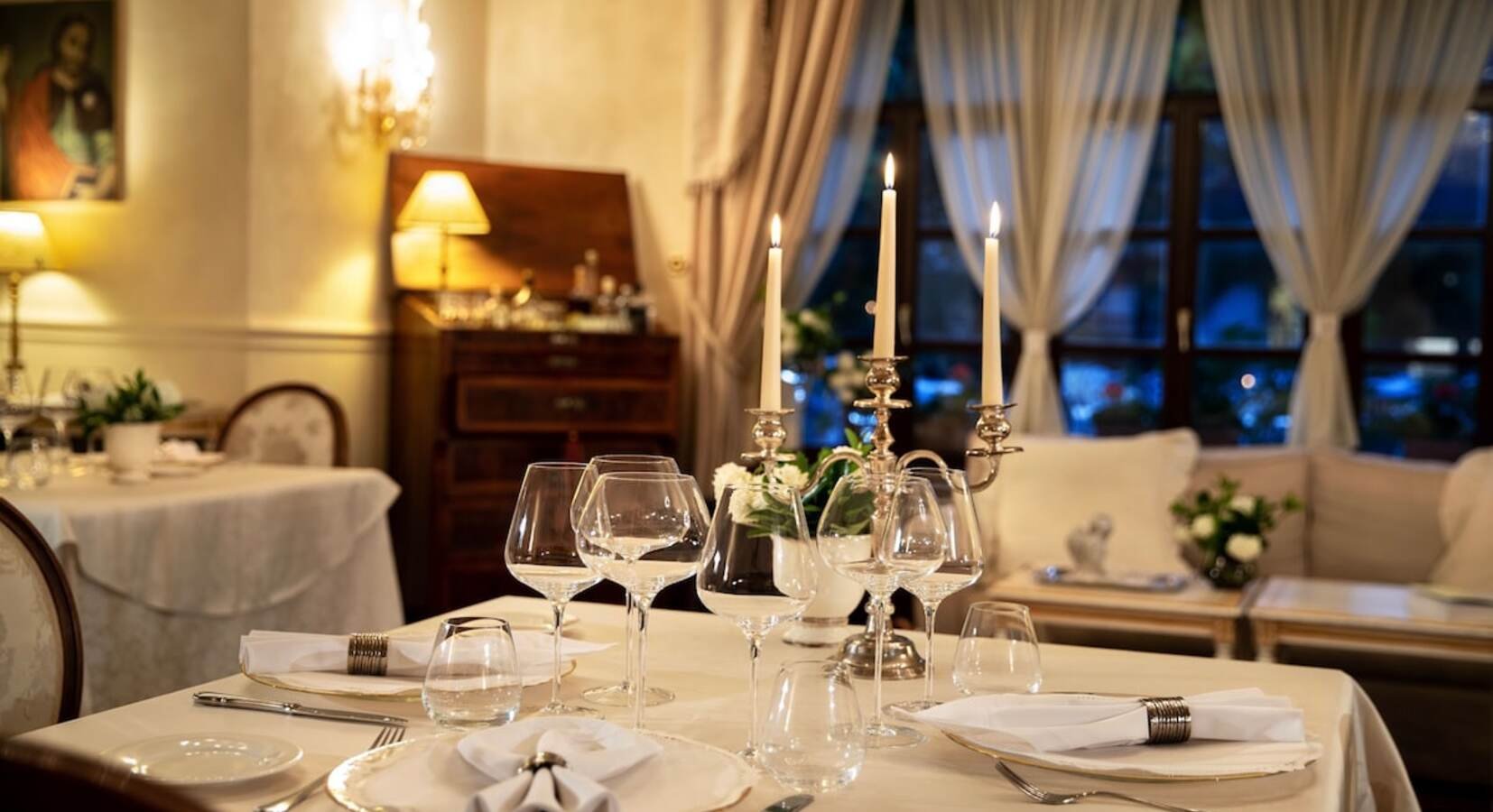
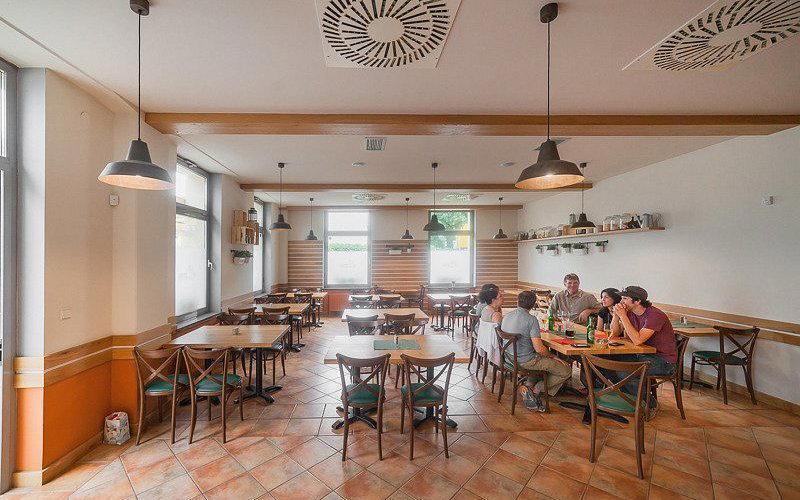
Cozy Alpine atmosphere with wooden furnishings, natural light from panoramic windows, and serene mountain and lake vistas.