Hotel at the Lafayette, Trademark Collection by Wyndham
The Hotel at the Lafayette occupies one of Buffalo's most significant Beaux-Arts structures at 391 Washington Street, a building that has shaped the city's downtown character since the early twentieth century. As part of the Trademark Collection by Wyndham, it positions itself within a tier of characterful independent-minded properties that trade on architectural heritage rather than brand uniformity. For visitors to Buffalo who want proximity to the theatre district and a tangible sense of the city's civic ambition, the Lafayette is the most architecturally coherent choice downtown.
Pearl is the En Primeur Club membership app — saves, bookings, and concierge access live there. Same editors, same standards.
- Address
- 391 Washington St, Buffalo, NY 14203
- Phone
- +1 716 853 1505
- Website
- wyndhamhotels.com
- Directions
- Get directions
 Saves & bookings on Pearl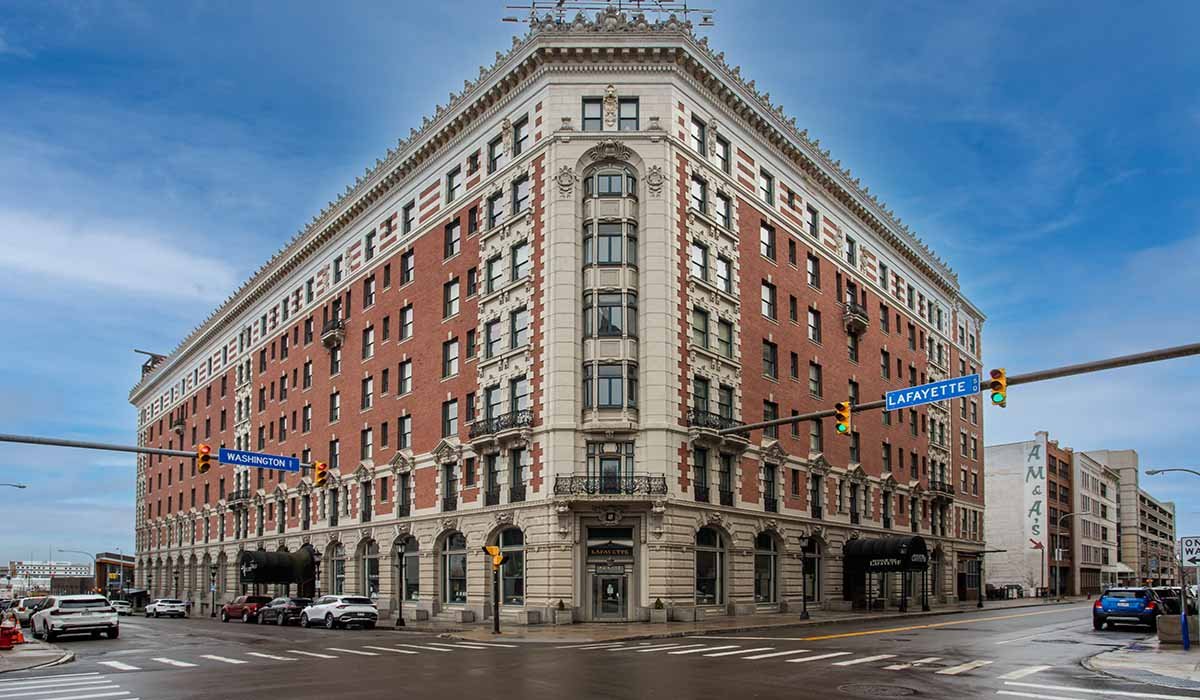
Buffalo's Beaux-Arts Landmark, Checked In
Washington Street in downtown Buffalo carries a particular kind of weight. The street runs through a district shaped by late-nineteenth and early-twentieth-century civic investment, when Buffalo was flush with Great Lakes commerce and its architects were working in a league with New York and Chicago. The Hotel at the Lafayette, at 391 Washington Street, is one of the surviving arguments for that era's ambition. The building's Beaux-Arts facade, with its articulated stonework and formal massing, reads as civic architecture as much as hospitality, which is precisely what it was designed to be. Arriving on foot from the theatre district, you encounter it as a set piece: a structure built to signal that Buffalo understood what a great hotel was supposed to look like.
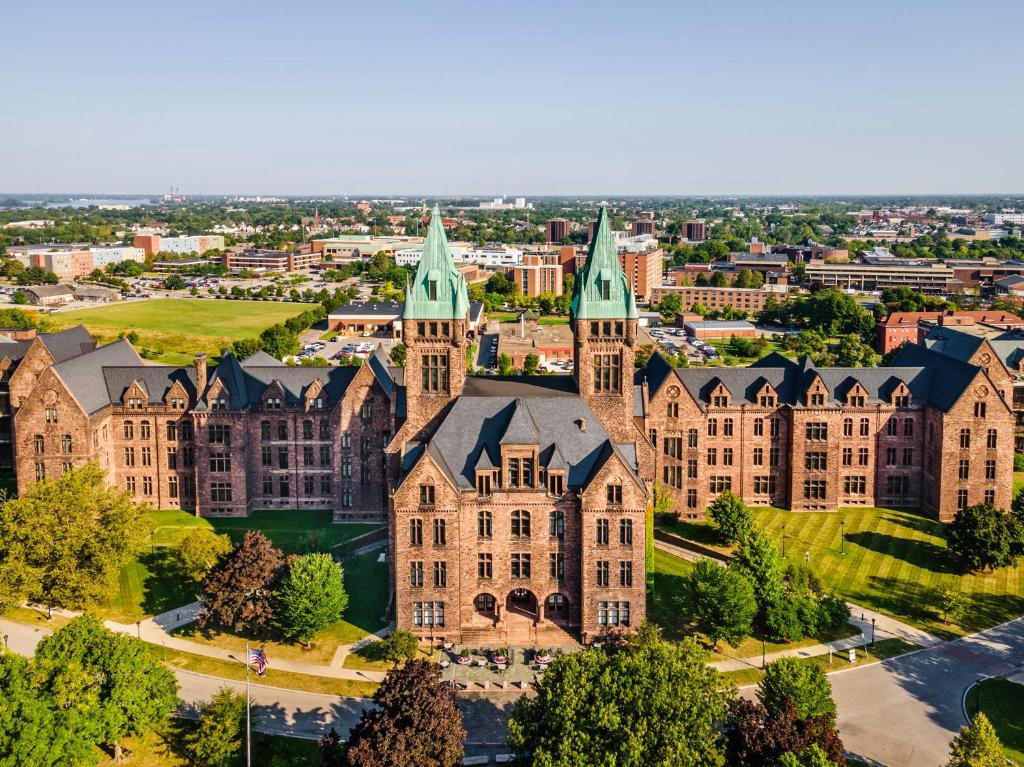
The Trademark Collection by Wyndham affiliation places the Lafayette in an interesting competitive tier. Trademark properties are selected for architectural or historical character rather than brand homogeneity, which means the group functions less like a chain and more like a soft endorsement of buildings that already had a reason to exist. In that sense, the Lafayette fits the model. The building's identity preceded the flag by roughly a century, and the Wyndham connection provides distribution and loyalty infrastructure without flattening the property's character into generic hospitality. For travelers comparing options in Buffalo, that distinction matters. The Curtiss Hotel occupies a similar space in the market, trading on Buffalo's aviation history and a mid-century design sensibility. The The Richardson Hotel, housed in the former H.H. Richardson-designed state hospital complex, arguably carries the highest architectural pedigree of any property in the city. The Lafayette competes in that conversation through sheer urban centrality and the formality of its original design language.
The Architecture as the Amenity
Beaux-Arts hotels were built around the proposition that grandeur is itself a service. The lobby sequence, the proportions of public rooms, the relationship between ornament and structure — these were not decorative choices but load-bearing elements of the guest experience. At the Lafayette, the bones of that logic remain. The building dates from 1904, designed by Louise Blanchard Bethune, one of the first professionally recognized female architects in the United States, which gives the structure a historical footnote that goes beyond standard preservation interest. That credential places the Lafayette in a specific architectural lineage, one that a visitor interested in design history will find meaningful beyond the immediate comfort of the room.
For context, American hotels with comparable Beaux-Arts roots and adaptive reuse histories tend to split into two outcomes: those that have been so thoroughly renovated that the original architecture functions only as backdrop, and those where the renovation respects the structural logic of the original design. The quality of that conversation between old fabric and new use is what separates properties that merely occupy interesting buildings from those that actually deliver architectural hospitality. Where the Lafayette sits on that spectrum is worth assessing on arrival, particularly in the public spaces, where Beaux-Arts design is most legible.
Properties like the Chicago Athletic Association in Chicago demonstrate what thoughtful adaptive reuse of a historically significant building can achieve when the renovation commits to the original volume and material language. The Raffles Boston in Boston represents the opposite pole: a new build that grafts heritage brand values onto contemporary construction. The Lafayette's position is closer to the Chicago model, working within an existing structure rather than simulating one.
Downtown Buffalo's Accommodation Logic
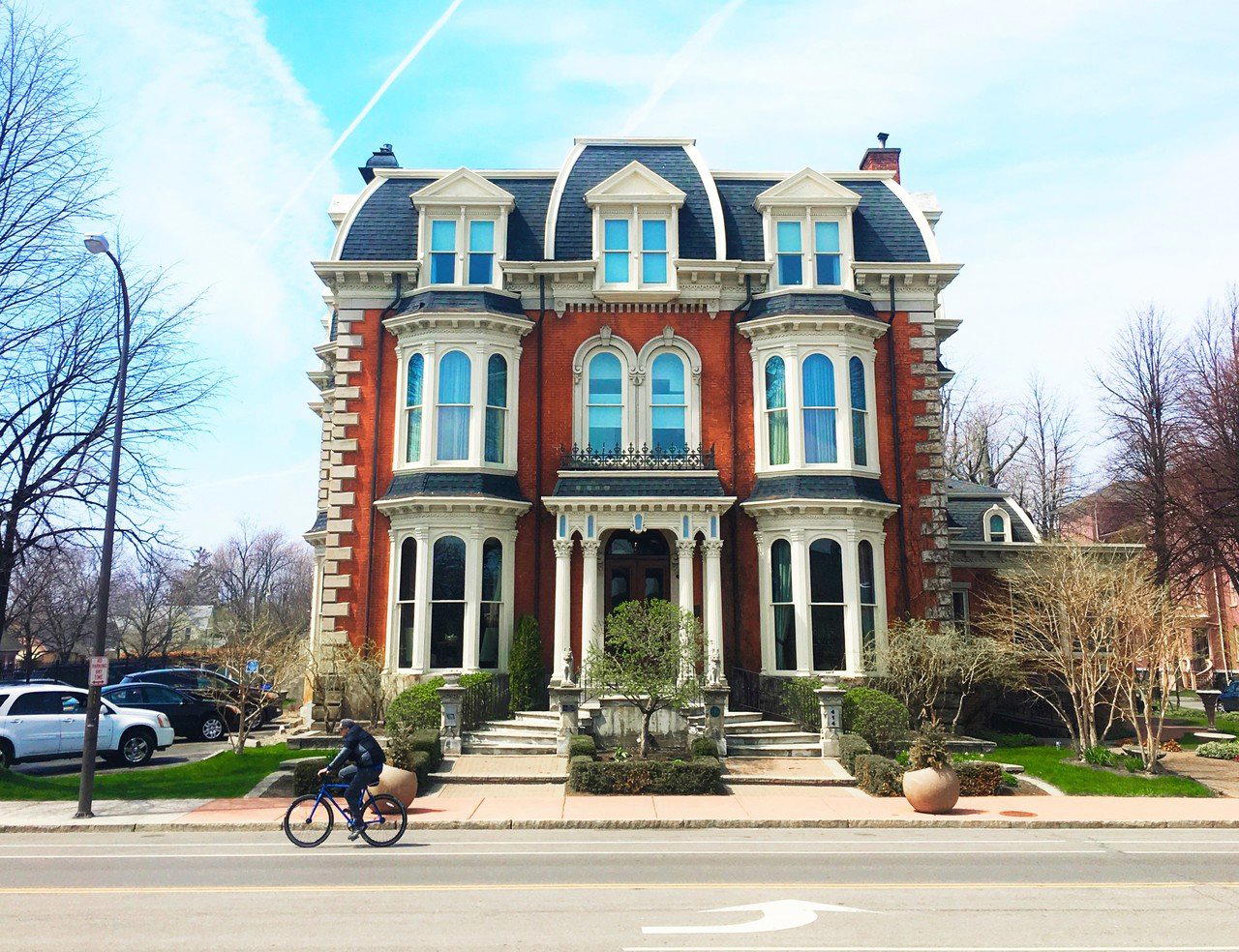
Buffalo's downtown hotel market has been reshaped over the past decade by a sustained investment in adaptive reuse, driven partly by the city's undervalued building stock and partly by state and federal historic tax credits that made conversion economics viable. The Lafayette sits within that wave, alongside the The Mansion on Delaware Avenue and the InnBuffalo off Elmwood, each of which occupies a distinct neighbourhood register and price point. The Mansion operates as a boutique property in the residential Delaware Avenue corridor, closer to Allentown's bars and galleries. InnBuffalo sits in the Elmwood Village, a walkable neighbourhood with independent retail and a younger dining scene. The Lafayette is the most centrally located of the group, within reasonable walking distance of Canalside, KeyBank Center, and the concentration of theatres and performance venues that anchor Buffalo's cultural calendar.
For visitors coming specifically for a Bills game, a Sabres match, or a performance at Shea's Performing Arts Center, the Lafayette's Washington Street address compresses transit time in a way that properties on Delaware or Elmwood cannot. That logistical advantage is worth factoring against whatever room rate differential exists at the time of booking.
Travelers looking to calibrate expectations against properties in other markets might find the comparison useful. The The Fifth Avenue Hotel in New York City or Aman New York in New York City represent what the top tier of historic urban hospitality looks like when capital investment is unrestricted. The Lafayette operates at a different scale and price point, serving a city where the comp set is defined by regional rather than global competition. For other architecturally grounded alternatives across the country, Troutbeck in Amenia, Post Ranch Inn in Big Sur, and Amangiri in Canyon Point each demonstrate how a strong sense of place can be the primary product. Further afield, Aman Venice in Venice and Badrutt's Palace Hotel in St. Moritz show what happens when heritage architecture and capital investment align at the highest level. The Lafayette is not in that conversation, but it is making an honest argument for Buffalo's version of it.
For wider Buffalo dining and hospitality context, see our full Buffalo restaurants guide. Other US properties worth considering alongside the Lafayette for architecture-led travel include Four Seasons at The Surf Club in Surfside, Kona Village, A Rosewood Resort in Kailua Kona, Little Palm Island Resort & Spa in Little Torch Key, Auberge du Soleil in Napa, Canyon Ranch Tucson in Tucson, SingleThread Farm Inn in Healdsburg, 1 Hotel San Francisco in San Francisco, Sage Lodge in Pray, Alpine Falls Ranch in Superior, PARADISE RANCH, and Hotel Bel-Air in Los Angeles.
Planning Your Stay
The Lafayette sits at 391 Washington Street, placing it within the central downtown grid, close to the NFTA Metro Rail's Lafayette Square station. For visitors flying into Buffalo Niagara International Airport, the drive downtown runs roughly 15 to 20 minutes depending on traffic, making the Lafayette accessible without requiring significant transit planning. Booking directly or through the Wyndham Rewards platform is the standard approach; the Trademark Collection flag means loyalty points apply, which is relevant for frequent Wyndham guests comparing this property against a generic branded alternative.
Quick Comparison
| Venue | Cuisine |
|---|---|
| Hotel at the Lafayette, Trademark Collection by WyndhamThis venue — the venue you are viewing | This venue |
Continue exploring
More in Buffalo
Hotels in Buffalo
Browse all →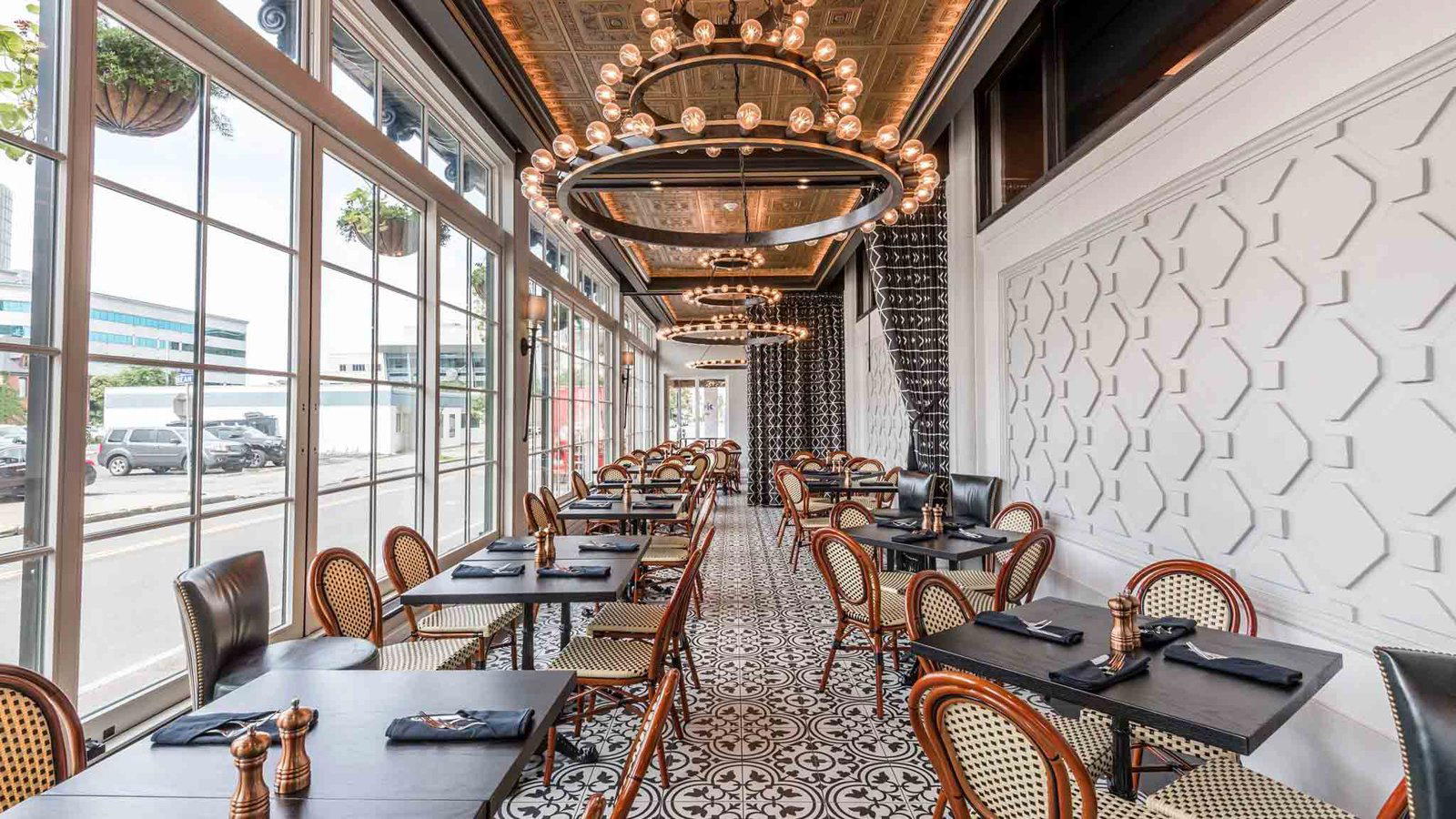
Bars in Buffalo
Browse all →
Restaurants in Buffalo
Browse all →

At a Glance
- Classic
- Elegant
- Historic
- Sophisticated
- Business Trip
- Weekend Escape
- Anniversary
- Historic Building
- Wi Fi
- Fitness Center
- Concierge
- EV Charging
- Street Scene
- Wi Fi
- Fitness Center
- Concierge
- EV Charging
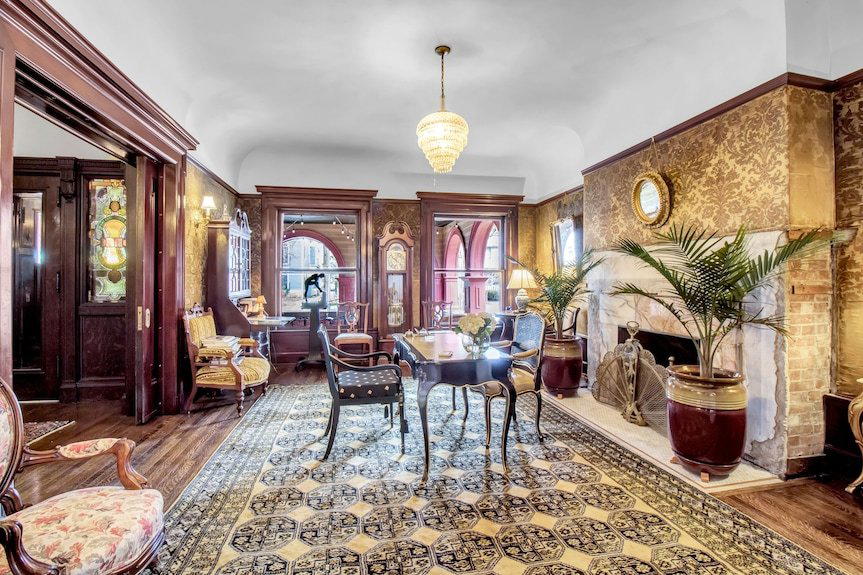
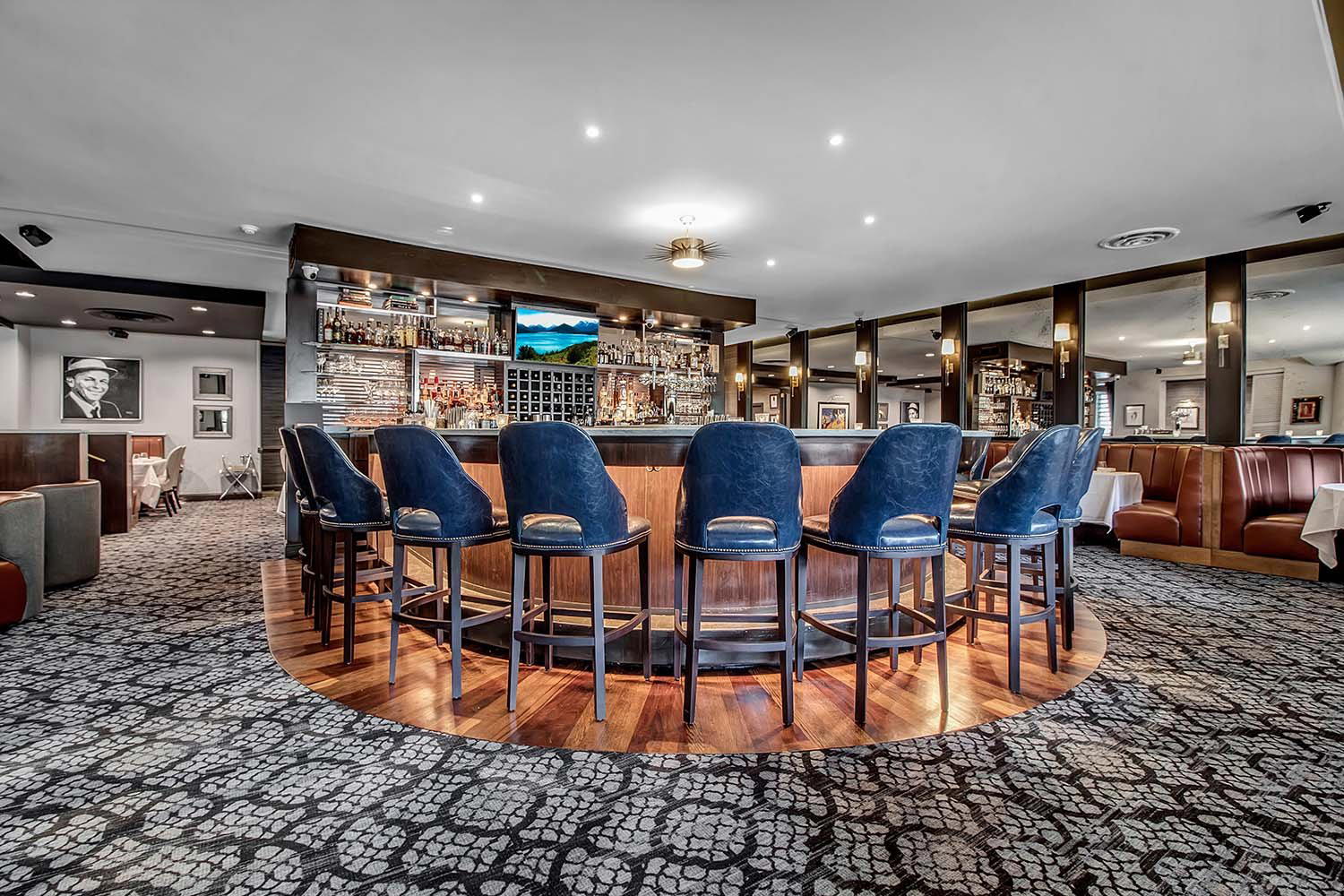
Elegant historic atmosphere with Art Moderne lobby featuring fireplace, combining old-world charm and contemporary comfort.
Know Before You Go
- Getting there
- 391 Washington St, Buffalo, NY 14203