The Richardson Hotel
The Richardson Hotel occupies one of Buffalo's most architecturally significant addresses, a landmark Richardson Romanesque building on Forest Avenue that frames every stay within layers of 19th-century stone and civic history. The property sits within the Elmwood Village corridor, positioning guests close to Buffalo's most concentrated stretch of independent dining, galleries, and neighbourhood character. For travellers drawn to historic adaptive-reuse hotels, it belongs in the same conversation as Buffalo's other heritage properties.
Pearl is the En Primeur Club membership app — saves, bookings, and concierge access live there. Same editors, same standards.
- Address
- 444 Forest Ave, Buffalo, NY 14213
- Phone
- +1 716 493 2610
- Directions
- Get directions
 Saves & bookings on Pearl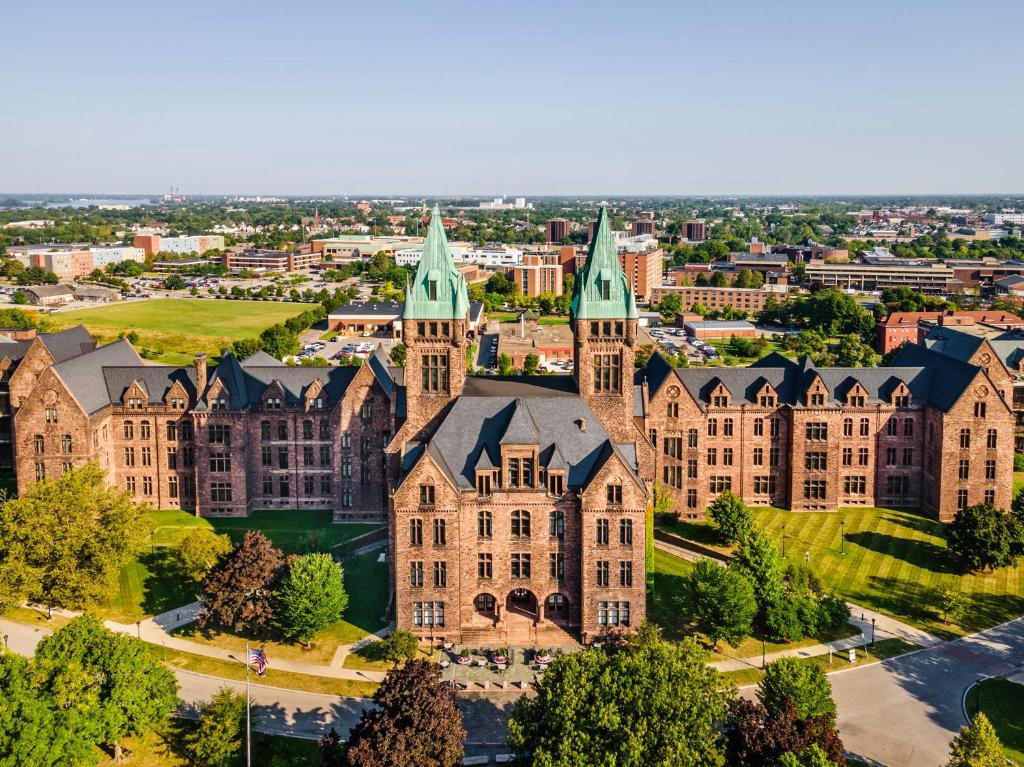
Stone, Arches, and the Weight of Buffalo's Past
Approaching 444 Forest Avenue, the building announces itself before you reach the entrance. The heavy rusticated stonework, the Romanesque arches, the asymmetrical massing that speaks to an era when civic architecture was expected to project permanence: this is a structure that predates Buffalo's twentieth-century industrial rise and outlasted much of what followed. The Richardson Hotel takes its name from Henry Hobson Richardson, one of the most consequential American architects of the nineteenth century, whose Romanesque Revival work left a physical imprint on cities from Boston to Albany. In Buffalo, the building now housing this property stands as one of the more intact examples of that lineage, which places it in a different category from the adaptive-reuse hotels that simply strip a warehouse and pour concrete floors. The bones here carry specific cultural weight.
Richardson's influence on American architecture is well-documented. His Trinity Church in Boston and the Allegheny County Courthouse in Pittsburgh remain studied as foundational texts of the movement. When a hotel operates inside a Richardson-attributed structure, the building itself becomes the primary amenity. That is a different value proposition from properties where design is applied from the outside in, as at the Chicago Athletic Association in Chicago, where the athletic club history gives the property its narrative. Here, the architectural provenance does that work.
Where It Sits in Buffalo's Hotel Geography
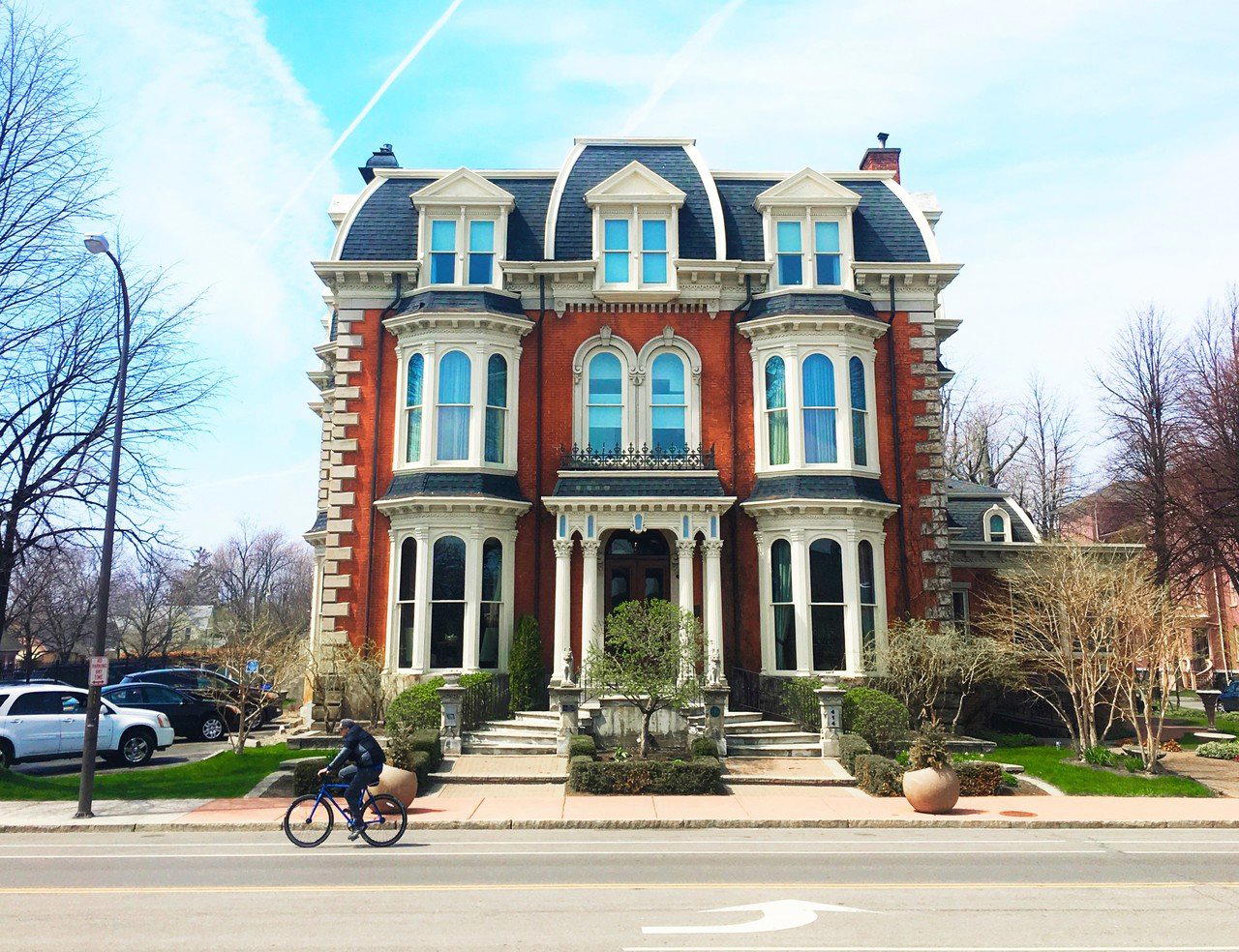
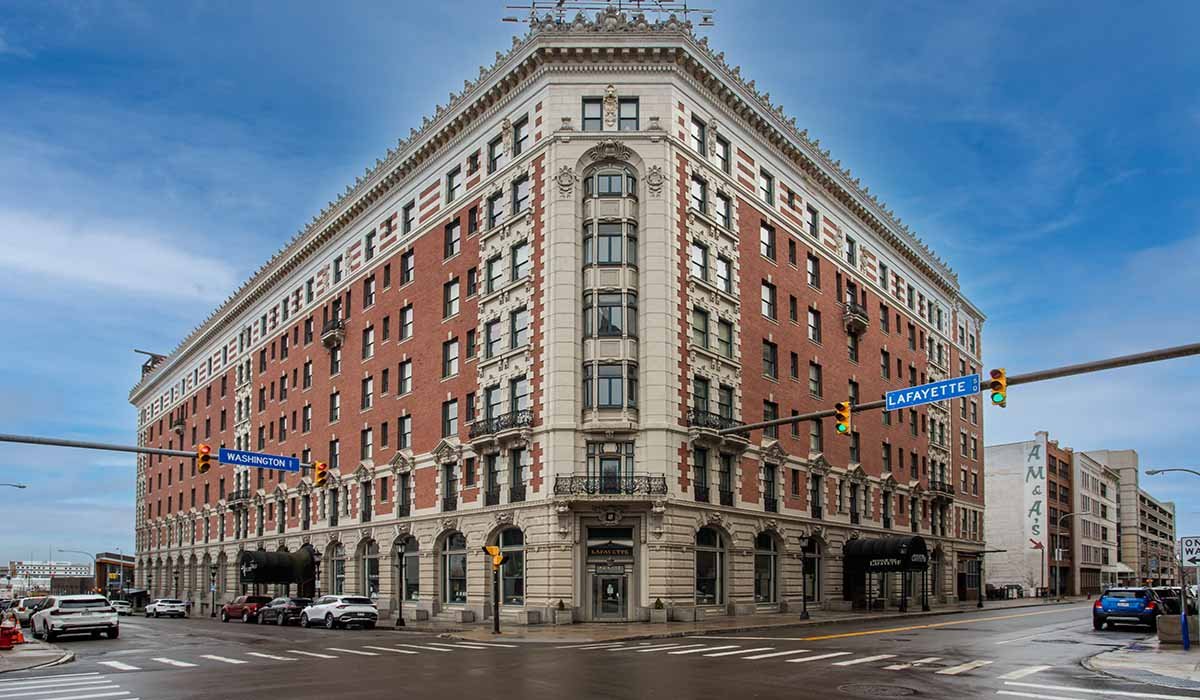
Buffalo's premium accommodation market has consolidated around a handful of historic properties in and around downtown, each drawing identity from the city's Gilded Age and early twentieth-century building stock. The Curtiss Hotel and the Hotel at the Lafayette, Trademark Collection by Wyndham anchor the downtown core, while The Mansion on Delaware Avenue occupies the residential corridor that runs north from Niagara Square. The Richardson sits slightly further west, on Forest Avenue in the Elmwood Village, which puts it in proximity to the neighbourhood's dense concentration of independent restaurants, coffee shops, and bookstores rather than the convention-adjacent hotel district. That positioning will appeal to guests who want walkable access to Buffalo's most functional neighbourhood without routing every movement through downtown.
For guests who want something closer in scale and character to a guesthouse format, InnBuffalo off Elmwood operates a few blocks away and functions as the boutique lower-key alternative in the same corridor. The Richardson occupies a larger footprint and a more pronounced architectural identity, which positions it differently even within the immediate neighbourhood. See our full Buffalo restaurants guide for detail on what the Elmwood Village dining scene looks like at street level.
The Heritage Hotel Tier, Placed in Broader Context
Across the United States, the adaptive-reuse hotel sector has matured enough to support genuine distinctions within it. At one end, properties like Troutbeck in Amenia or Raffles Boston in Boston carry institutional heritage and the kind of restoration budgets that sustain international credibility. At the other end, smaller independent conversions trade on local provenance and a more personal format. The Richardson sits within this spectrum as a property whose primary credential is architectural: the building's documented history and its association with one of America's most studied architects gives it a trust signal that no amount of design work can fabricate after the fact.
For travellers whose hotel selections are shaped by architectural significance, the relevant peer comparison is less about city tier and more about building provenance. Properties like The Fifth Avenue Hotel in New York City or Aman New York in New York City operate in markets where the surrounding real estate context amplifies the property's value. Buffalo operates differently. The Richardson's building, in that context, is not competing against a dense field of comparably significant structures. It is one of a small number of architecturally documented properties in the city, which gives it a narrower but more defensible position.
Seasonal Timing and the Elmwood Village Context
Buffalo's winters are substantive, and the Elmwood Village reads differently depending on when you arrive. The period from May through October delivers the neighbourhood at its most functional for a walking-based stay: the Saturday Elmwood-Bidwell Farmers Market, one of the region's longest-running, draws producers from across Western New York and runs from late spring into autumn. Winter visits shift the calculus toward the city's indoor cultural assets, with the Albright-Knox Art Gallery's successor institution and the broader Museum District within reach by car or rideshare. The hotel's Forest Avenue address keeps guests close to neighbourhood life in either season, but visitors who want maximum walkability should time arrival accordingly.
For comparison, heritage properties in climates with stronger year-round tourism pressure, such as Hotel Bel-Air in Los Angeles or Four Seasons at The Surf Club in Surfside, don't face the same seasonal calculus. Buffalo's condensed peak window means that summer and early fall bookings at The Richardson and its peer properties tend to tighten faster than the overall market would suggest.
Planning Your Stay
The Richardson Hotel is located at 444 Forest Avenue, Buffalo, NY 14213, in the Elmwood Village. The hotel's website and direct booking contact are not listed in current public records; reservations should be confirmed through the property directly or via third-party booking platforms where the property is listed. Given the hotel's architectural profile and the relatively limited inventory of comparable properties in Buffalo, advance booking is advisable for summer and early fall visits, when the city's event calendar, including the National Buffalo Wing Festival and broader summer programming, compresses availability across the market. Guests arriving by air will route through Buffalo Niagara International Airport, approximately eight miles east of the Forest Avenue address.
For travellers building a broader itinerary around heritage properties, the range runs from the intimate and residential, as at InnBuffalo off Elmwood or The Mansion on Delaware Avenue, to the more formally scaled, as at Hotel at the Lafayette. The Richardson occupies its own position in that set, defined primarily by the building's documented architectural identity rather than by amenity stack or brand affiliation.
Peers You’d Cross-Shop
| Venue | Cuisine |
|---|---|
| The Richardson HotelThis venue — the venue you are viewing | This venue |
Continue exploring
More in Buffalo
Hotels in Buffalo
Browse all →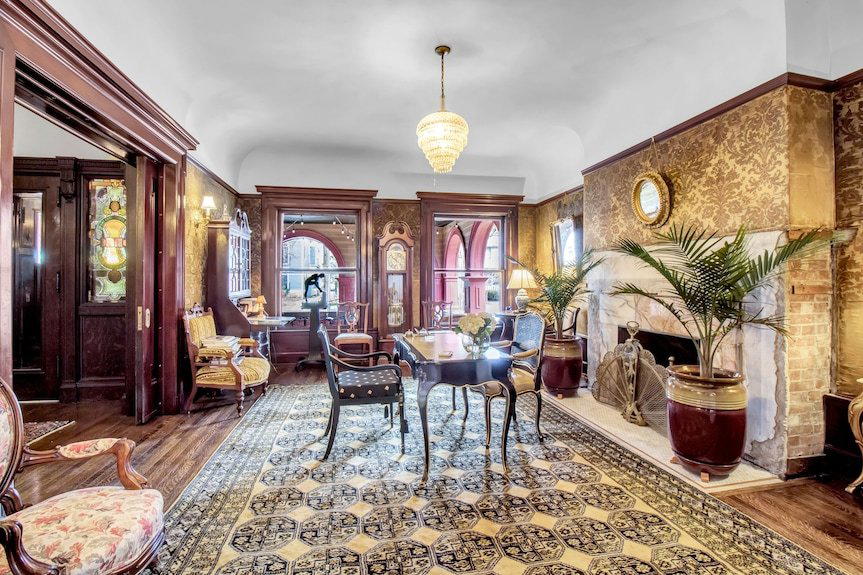
Bars in Buffalo
Browse all →
Restaurants in Buffalo
Browse all →

At a Glance
- Historic
- Elegant
- Sophisticated
- Romantic Getaway
- Business Trip
- Weekend Escape
- Historic Building
- Garden
- Wi Fi
- Fitness Center
- Restaurant
- Concierge
- Room Service
- Garden
- Wi Fi
- Fitness Center
- Restaurant
- Concierge
- Room Service
Well-lit spaces with pristine white hallways, high ceilings, high windows, colorful art, and preserved historic elements creating an open, welcoming, and timelessly sophisticated atmosphere.
Know Before You Go
- Getting there
- 444 Forest Ave, Buffalo, NY 14213