
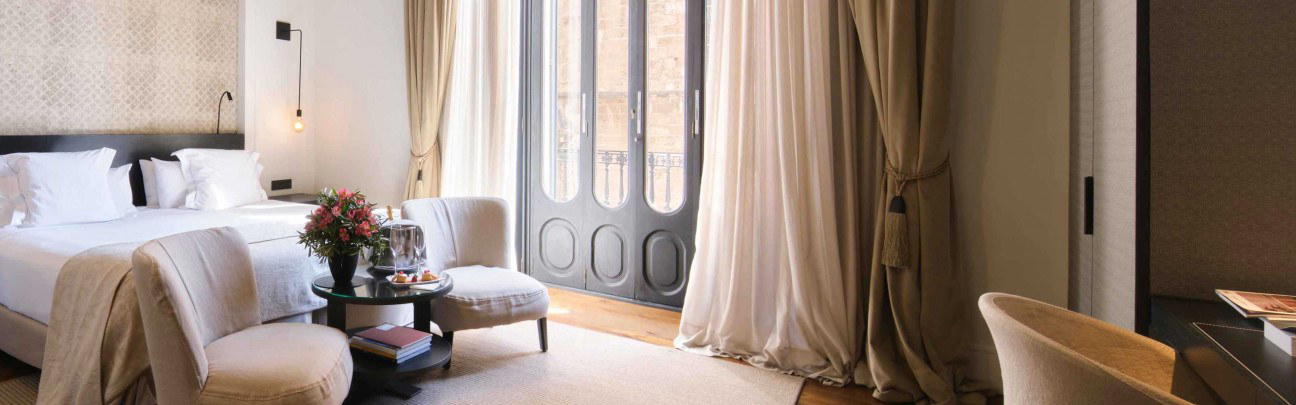
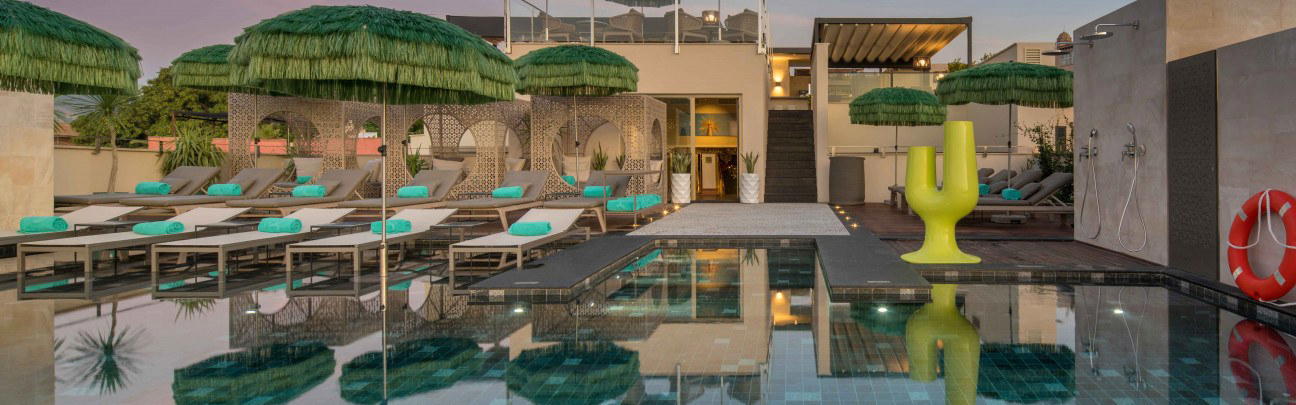
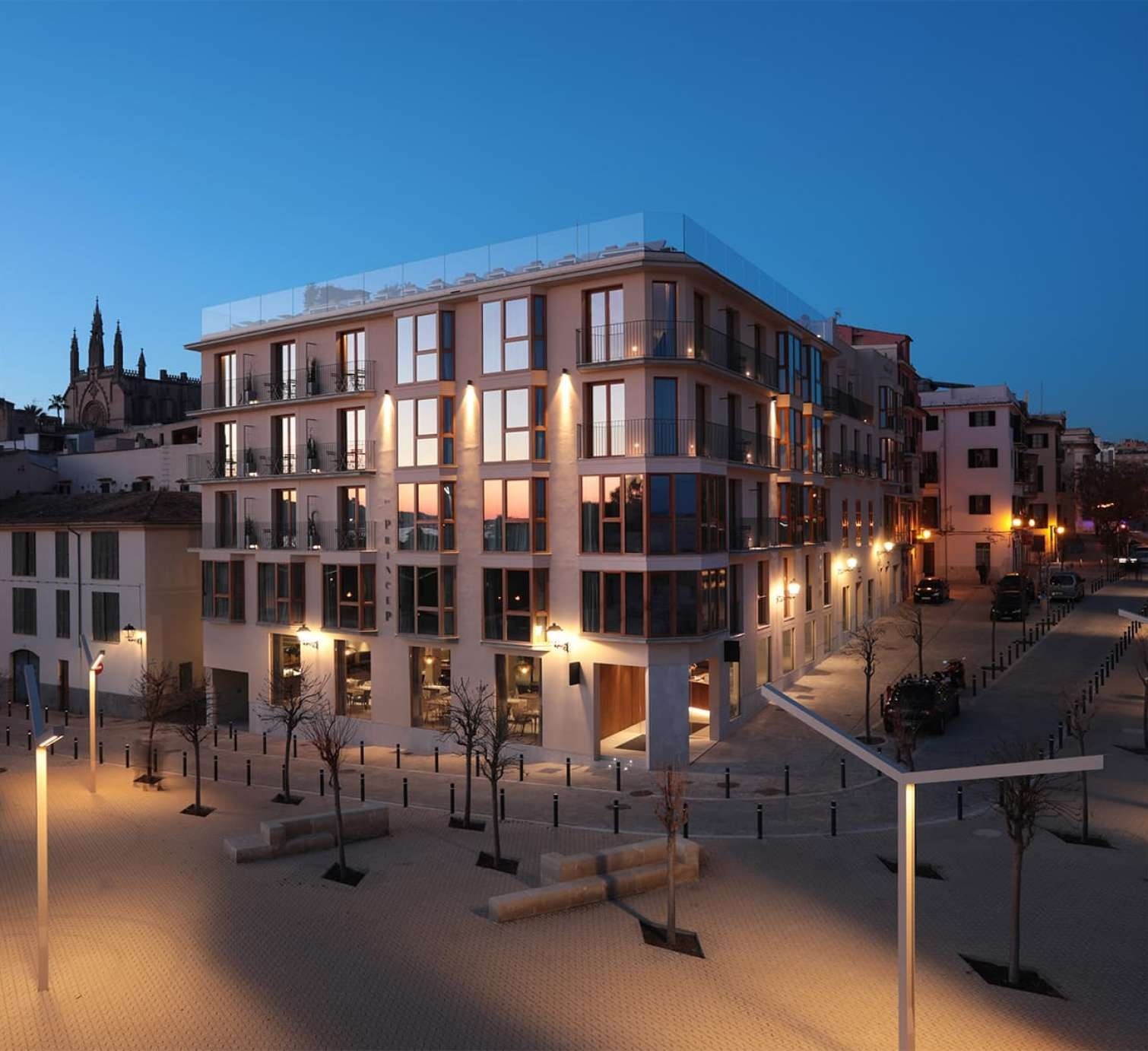
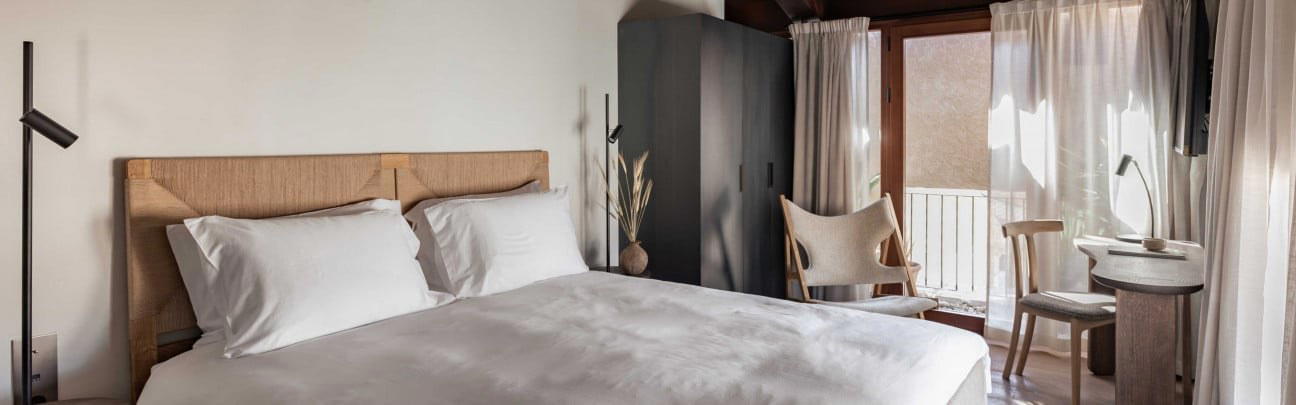
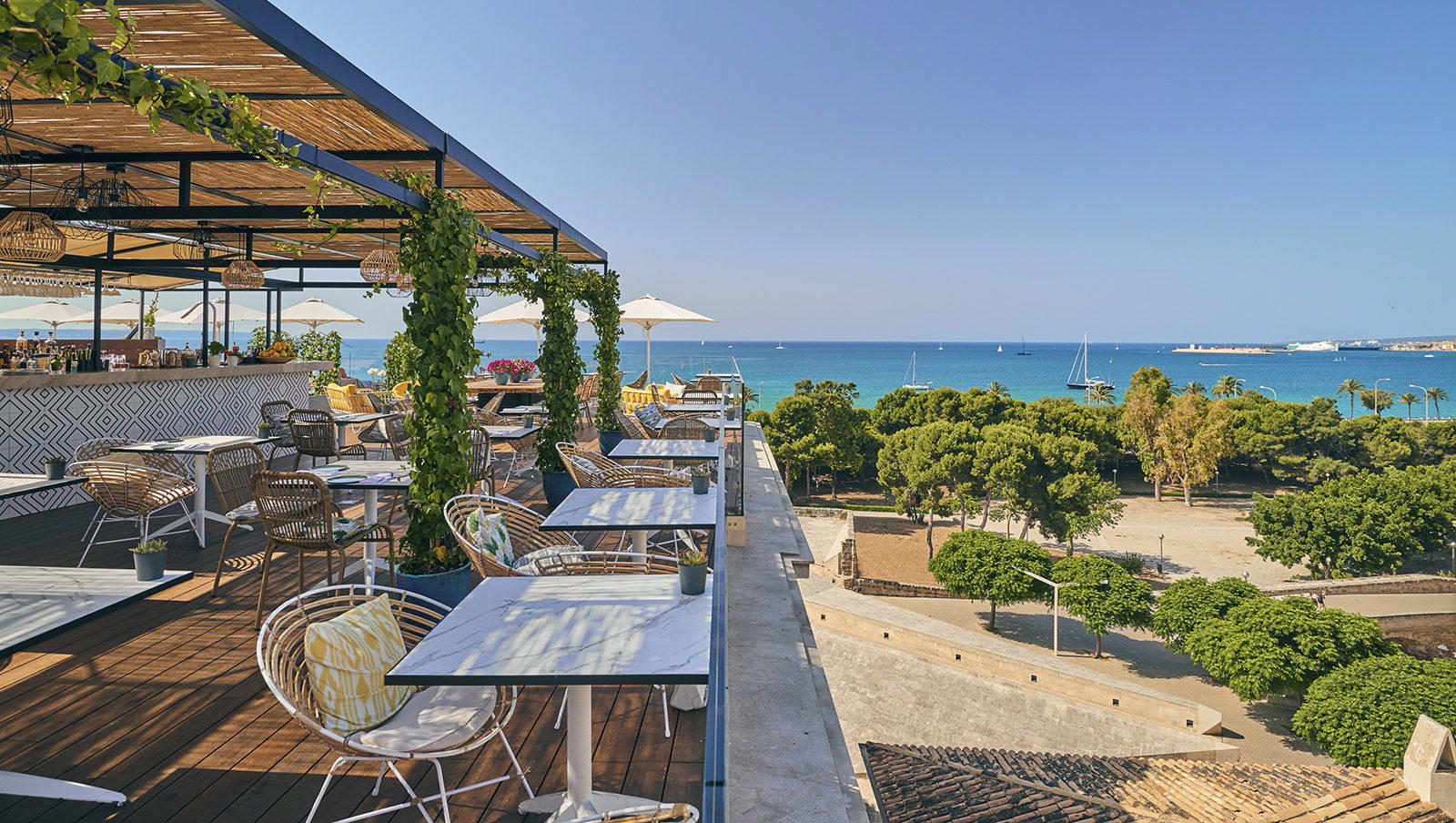
Lately, visitors to the Mallorcan capital with a taste for boutique hospitality find themselves spoiled for choice, on a per-capita basis there are few small cities with quite so many exquisitely individual boutique hotels. Hotel Antigua Palma, in the medieval Jewish quarter on the south side of the old city center, is a fine example: an aristocratic residence from the 17th century, remodeled in the 18th, and most recently converted into a 27-room luxury boutique hotel that combines classic architecture and well-preserved period details with contemporary furnishings and the high-end modern comforts demanded by 21st-century travelers. The rooms and suites, naturally, are all different, and vary from the relatively cozy Classic rooms to the properly palatial two-room Family Suite. The colors are restrained, even minimal, but the spaces are given life by the subtle play of textures and the plentiful natural light. There’s a rooftop terrace with a refreshing little plunge pool and views of the old town, as well as a spa, inspired by the city’s historic Arab Baths, featuring a heated pool, a sauna and hammam, and a chromotherapy/aromatherapy shower. In the house’s old vault is the Antigua Bar, and Terracotta, the terrace restaurant, is open all day long.
Pearl is the En Primeur Club membership app — saves, bookings, and concierge access live there. Same editors, same standards.
- Address
- Carrer del Sol, 1, Centre, 07001 Palma, Illes Balears, Spain
- Phone
- +34 971 46 04 62
- Website
- hotelantiguapalma.com
- Directions
- Get directions
 Saves & bookings on Pearl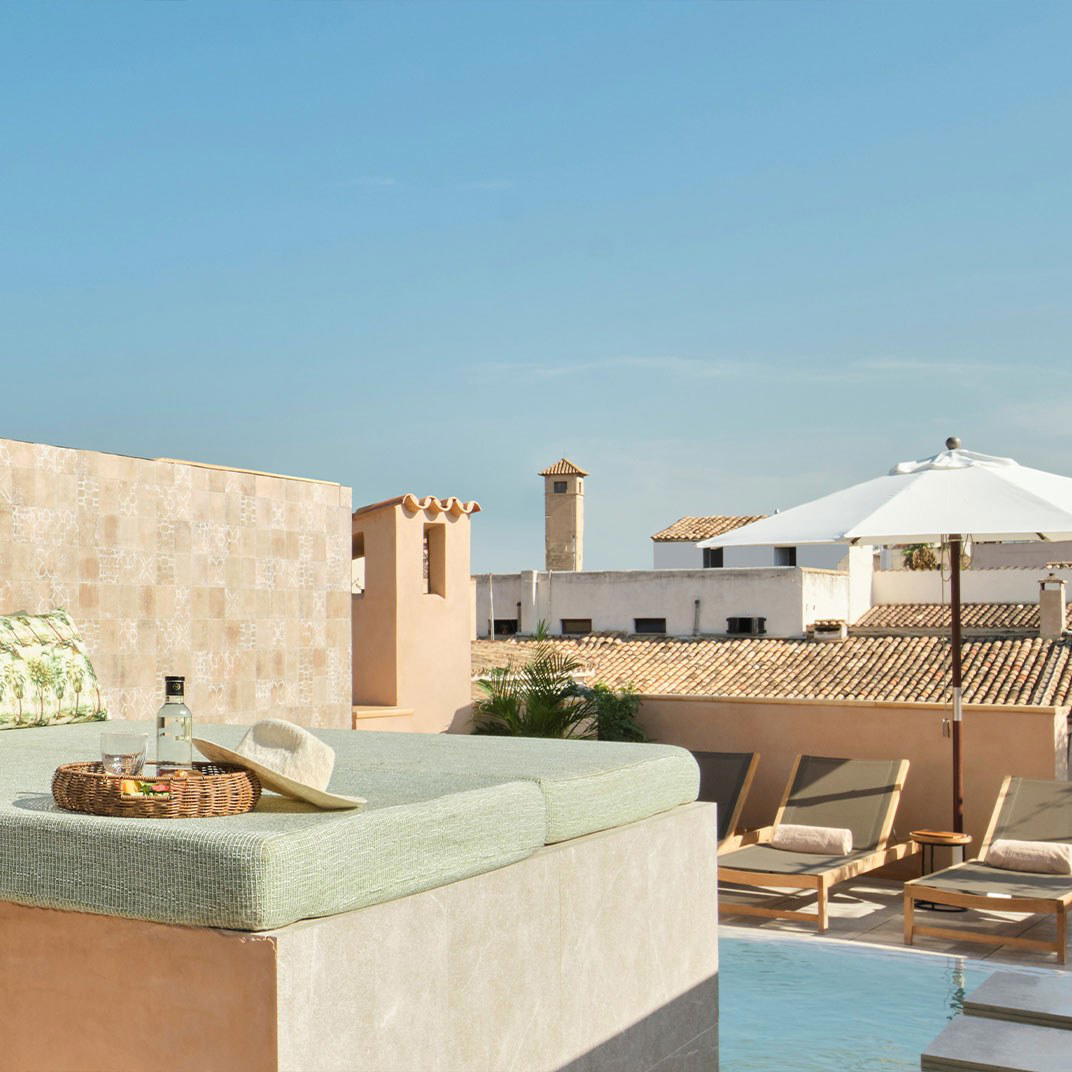
A Palimpsest in Stone: Palma's Old Quarter and the Hotel That Fits It
Palma's historic centre carries its centuries in plain sight. The streets around the cathedral quarter read as a compressed archive of Mallorcan architectural history: Gothic ecclesiastical stonework, Baroque merchant palaces with shaded courtyards, early-twentieth-century modernisme flourishes on corner facades. Hotel Antigua Palma, addressed at Calle del Sol 1, sits inside this fabric rather than beside it. The building's structure announces itself before any interior detail does, and that relationship between container and context is the first thing to understand about what kind of stay this is.
Palma has become a benchmark for the urban boutique hotel format within the Mediterranean circuit. Over the past decade, the city's centre has attracted a tier of properties that treat historic building fabric as the primary design asset rather than something to be worked around. The pattern holds across comparable addresses in the old town: thick walls, high ceilings, compressed street-level footprints that open into courtyard volumes.
The Physical Container as the Argument
In Palma's historic core, the building envelope tends to set the terms of the guest experience in ways that newer-build hotels elsewhere rarely achieve. The stone walls that define these structures were not designed for hospitality; they were merchant residences, clerical buildings, aristocratic town houses. The conversion logic, done well, preserves the spatial hierarchy those origins created: the transition from a narrow street entrance through a vestibule into a courtyard, the variation in ceiling height between ground-floor public rooms and upper-floor sleeping quarters, the asymmetry that comes from centuries of incremental change rather than a single architectural moment.
That spatial sequence, common to the leading conversions in this part of Palma, creates a particular quality of arrival that newer resort properties in the island's coastal zones cannot replicate. Properties like Cap Vermell Grand Hotel or Aethos Mallorca offer a different register of experience oriented around outdoor space and landscape. Hotel Antigua Palma's register is interior, layered, and urban.
Where This Property Sits in Mallorca's Accommodation Spectrum
Mallorca's premium accommodation market has fragmented into distinct sub-categories. The rural finca tradition, represented by properties like La Residencia, A Belmond Hotel, Mallorca in the Serra de Tramuntana, occupies one pole. Coastal resort formats, from the refined informality of Bikini Island & Mountain Port de Soller to the meditative approach at Cal Reiet Holistic Retreat, occupy others. The urban boutique tier in Palma is narrower, defined by proximity to the city's cultural infrastructure: the Museu Fundació Juan March, the Palau de l'Almudaina, the cathedral, and the concentrated restaurant and bar activity of the Santa Catalina and La Llotja neighbourhoods.
For stays oriented around the city rather than the coastline, the Michelin Selected distinction provides a useful filter. It does not rank within the tier but signals that the property has met a minimum threshold of quality across physical fabric, service consistency, and contextual integrity. Among Palma properties in this category, Hotel Antigua Palma joins a small group that includes Can Aulí, Can Simoneta, and Casa Portella as properties that have cleared that bar.
Within Spain's broader range of city-centre heritage hotels, the Palma urban boutique format has a recognisable parallel in properties like Atrio Restaurante Hotel in Cáceres, where architectural context and carefully managed scale do more editorial work than brand affiliation. The comparison is instructive: both cities have historic centres with protected building stock that limits what can be constructed or altered, and both have attracted operators who treat those constraints as a brief rather than a problem.
Palma as a Base: What the Location Enables
Calle del Sol sits within walking distance of the cathedral quarter and the network of lanes between the Plaça Major and the waterfront. The geography matters because Palma's worthwhile restaurant and bar activity is concentrated rather than dispersed. The city's dining scene has attracted sustained attention from the Michelin Guide and from the broader Spanish food press, and the properties leading positioned to access it are those within the old town perimeter rather than resort-adjacent addresses outside the city.
That concentration also means arrivals are direct: Palma Airport lies roughly eight kilometres east of the city centre, with taxi transfers running reliably under thirty minutes outside peak summer traffic. For travellers arriving in high season (June through August), Palma's streets become compressed in the evenings, and properties within walking distance of dining options avoid the logistical friction of transfers to and from outlying resort zones.
For a broader orientation to what the city and island offer across dining, bars, and cultural programming, the EP Club Mallorca guide maps the full picture. Comparable urban heritage properties across Spain worth cross-referencing include Mandarin Oriental Barcelona and Mandarin Oriental Ritz, Madrid, both of which operate in similar historically loaded city-centre contexts, though at a significantly different scale and price register.
For those weighing Mallorca against other Spanish coastal or island options, Marbella Club Hotel and Cap Rocat in Cala Blava represent the resort-format alternative, while Akelarre in San Sebastián illustrates what a food-led coastal property looks like when the kitchen is the primary draw rather than the building or the beach.
Planning a Stay
Given its position in the Michelin Selected tier and its address in one of Palma's most accessed neighbourhoods, availability during the June-to-September peak compresses. Enquiring outside that window, particularly April-May and October, typically offers more flexibility and more temperate conditions for walking the old town. The address at Calle del Sol 1 places guests within the historic perimeter, which means limited or no on-site parking; arrivals by taxi or transfer from the airport is the practical approach for most guests.
How Hotel Antigua Palma compares with similar nearby venues.
| Venue | Awards |
|---|---|
| Hotel Antigua Palma | MICHELIN Guide, Hotels Selected (2025) |
Recognition history
Dated appearances from independent guides and award organizations, with the underlying list record or original source where available.
Michelin Selected
Michelin
Continue exploring
More in Mallorca
Hotels in Mallorca
Browse all →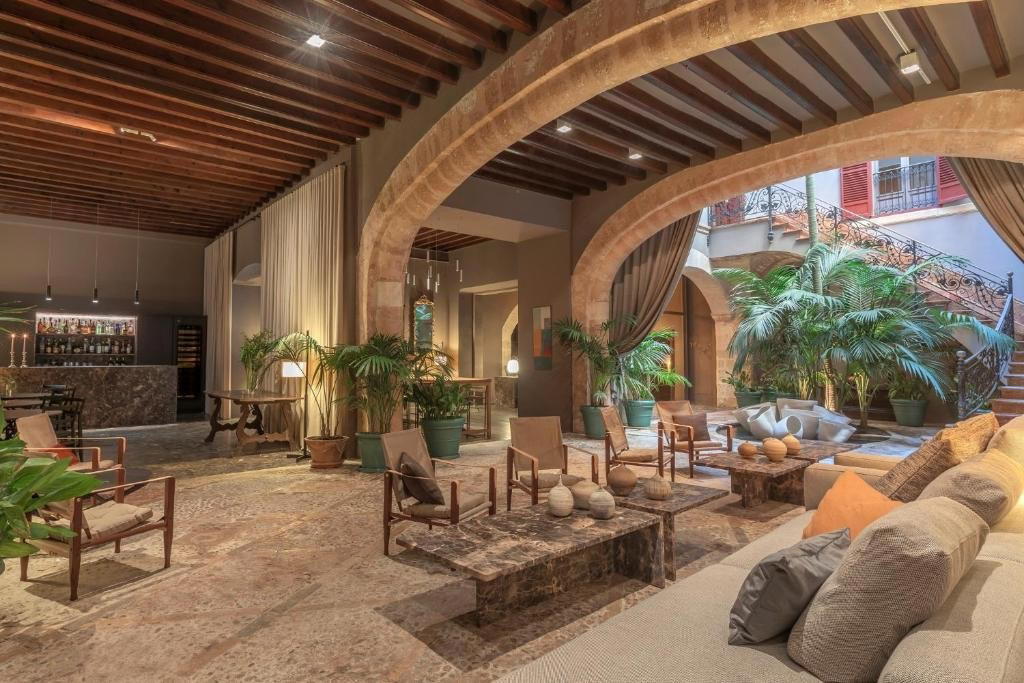
Bars in Mallorca
Browse all →
Restaurants in Mallorca
Browse all →
At a Glance
- Romantic
- Elegant
- Intimate
- Classic
- Sophisticated
- Romantic Getaway
- Anniversary
- Weekend Escape
- Rooftop Pool
- Historic Building
- Panoramic View
- Terrace
- Destination Spa
- Wi Fi
- Rooftop Pool
- Spa
- Sauna
- Bar
- Restaurant
- Room Service
- Concierge
- Skyline
- Street Scene
- Wi Fi
- Rooftop Pool
- Spa
- Sauna
- Bar
- Restaurant
- Room Service
- Concierge
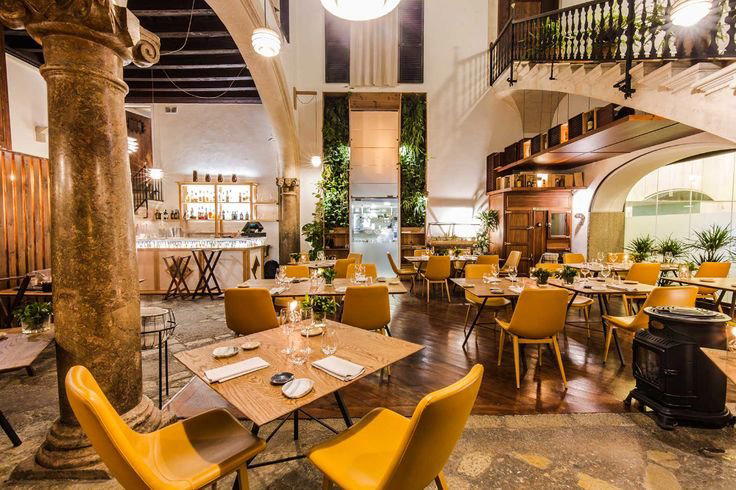
Atmospheric and intimate with original architectural features including Baroque-style patio and vaulted ceilings; rooftop terrace offers serene sunset views with artisanal furnishings and Mediterranean plants.
Know Before You Go
- Getting there
- Carrer del Sol, 1, Centre, 07001 Palma, Illes Balears, Spain