
Small Luxury Hotels of the World Member
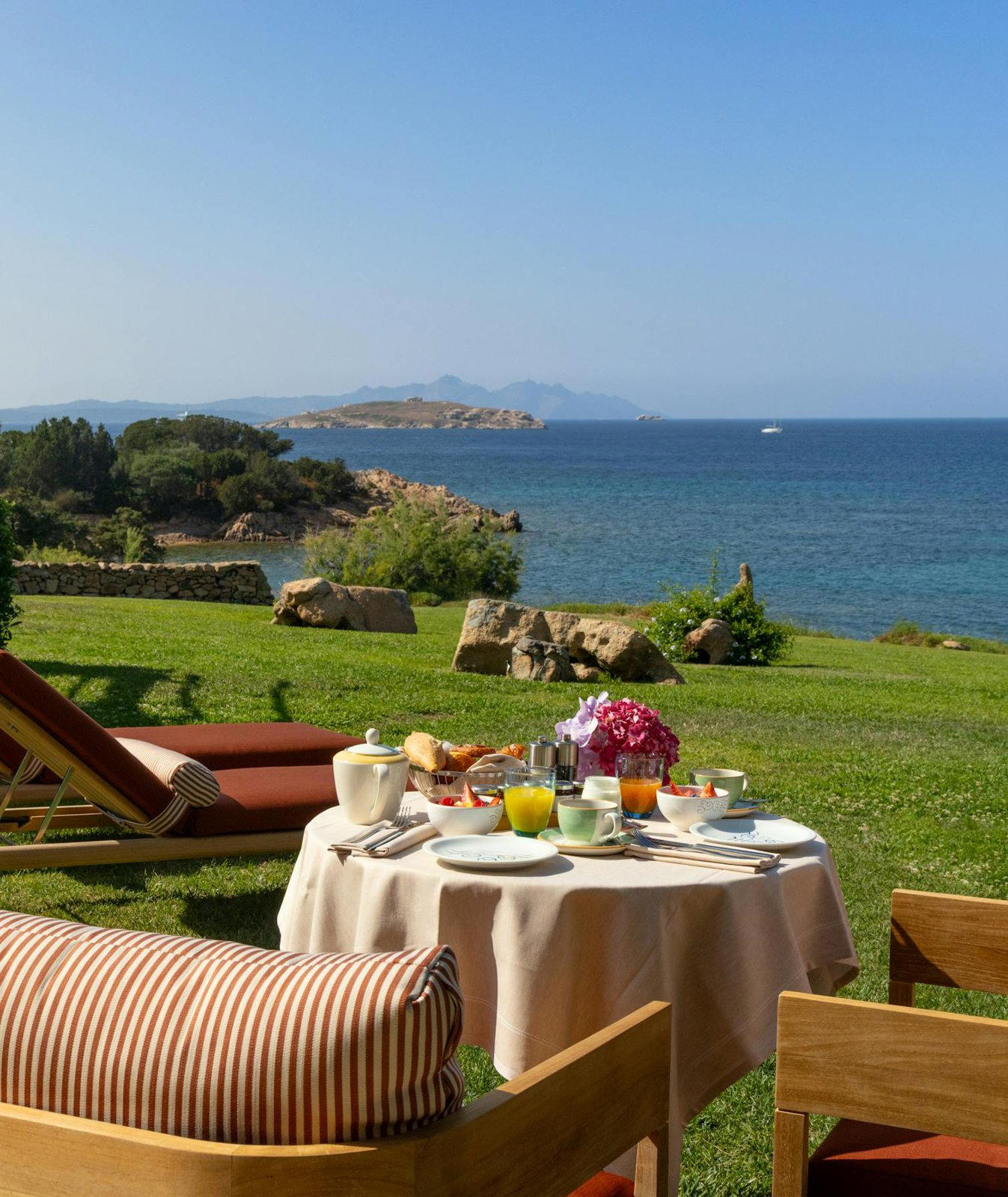
On the private Island of Cavallo, off Corsica's southernmost tip, Hotel and SPA des Pecheurs occupies a position that few Mediterranean properties can match: directly at the water's edge, with a white sand beach, a restaurant carrying a strong local reputation, and a spa built around indoor thalassotherapy. Access is by boat only, which determines the entire character of the stay.

Pearl is the En Primeur Club membership app — saves, bookings, and concierge access live there. Same editors, same standards.
- Address
- Ile de Cavallo, 20169 Bonifacio
- Phone
- +33 4 95 70 36 39
- Website
- hoteldespecheurs.com
- Directions
- Get directions
An Island That Filters Its Own Guests
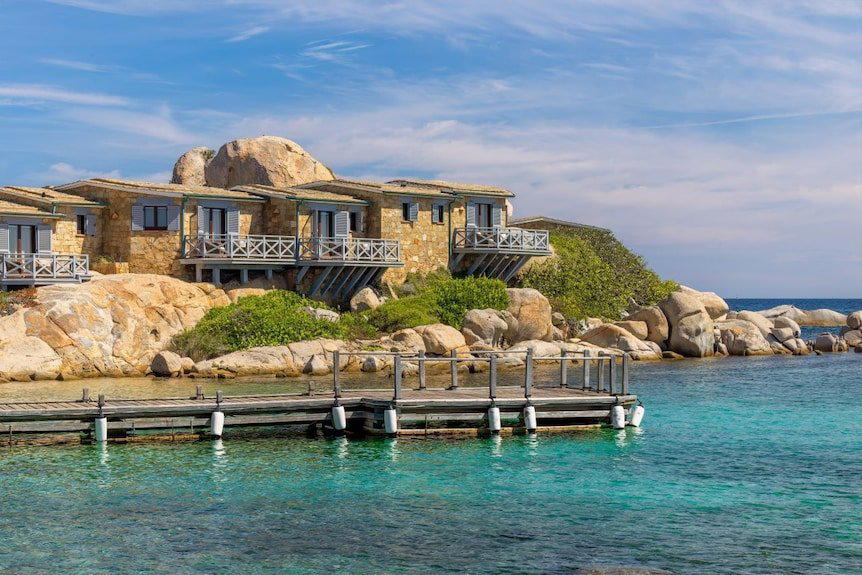
The approach to Cavallo says more about Hotel and SPA des Pecheurs than any room description could. The island sits off the Strait of Bonifacio, the narrow channel between Corsica's southern tip and Sardinia, and it is reachable only by private boat. There are no cars on Cavallo, no through traffic, no casual day-trippers wandering past the terrace. The physical logistics of arrival function as a form of curation: what you encounter on the other side of that boat crossing is a property where the ambient noise levels, the pace of movement, and the quality of light over open water define the guest experience before a single door is opened. In the Mediterranean luxury tier, where properties from Saint-Tropez to the Cap d'Antibes compete on pool size and celebrity adjacency, this kind of enforced remoteness is a genuinely different proposition.
For broader context on where this property sits within Bonifacio's accommodation options, see our full Bonifacio restaurants and hotels guide, which maps the area's key properties against each other.
Architecture at the Water's Edge
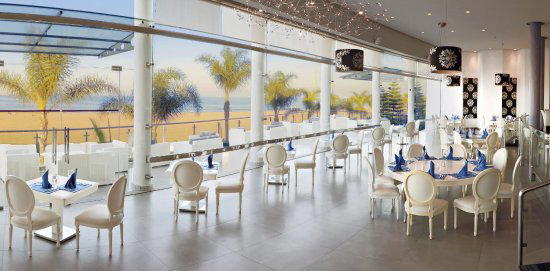
Mediterranean coastal architecture tends toward two registers: the grand clifftop statement, all terraced gardens and infinity pools angled at the horizon, and the low-slung village aesthetic, whitewashed walls and bougainvillea framing narrow passages. Hotel and SPA des Pecheurs belongs to a third, less common category: the property built not above the water but beside it, at beach level, where the boundary between land and sea is genuinely porous. The white sand beach is not a facility attached to the hotel; it is the threshold through which the hotel meets the Mediterranean.
This ground-level relationship with the sea shapes the physical experience of the building. Rather than commanding a panorama from a height, the architecture places guests inside the landscape rather than above it. The thalassotherapy spa reinforces this logic: indoor seawater treatments are most effective when the seawater supply is short and direct, and Cavallo's position makes that proximity literal. Properties elsewhere in the French Mediterranean, such as La Réserve Ramatuelle or Hotel Du Cap-Eden-Roc, have long understood the architectural value of the coastal threshold, though their approaches to scale and formality differ considerably from what Cavallo's isolation permits.
The design approach here reads as restrained rather than demonstrative. An island without cars, without a village commercial centre, and without day visitors does not need its hotel to perform grandeur as a signal of quality. The setting absorbs that function entirely.
The Restaurant Within the Wider Corsican Context
Corsica's restaurant reputation has been slower to consolidate than its hotel reputation. The island produces serious indigenous ingredients, from chestnut-fed charcuterie in the interior to line-caught fish from waters that remain relatively unpressured by industrial trawling, but translating those materials into the kind of dining programme that travels internationally by reputation has been uneven. Bonifacio's position at the island's southern extreme, closest to Sardinia and the seasonal ferry traffic from mainland France and Italy, gives it a slightly different character from inland Corsican cooking, leaning more toward the sea.
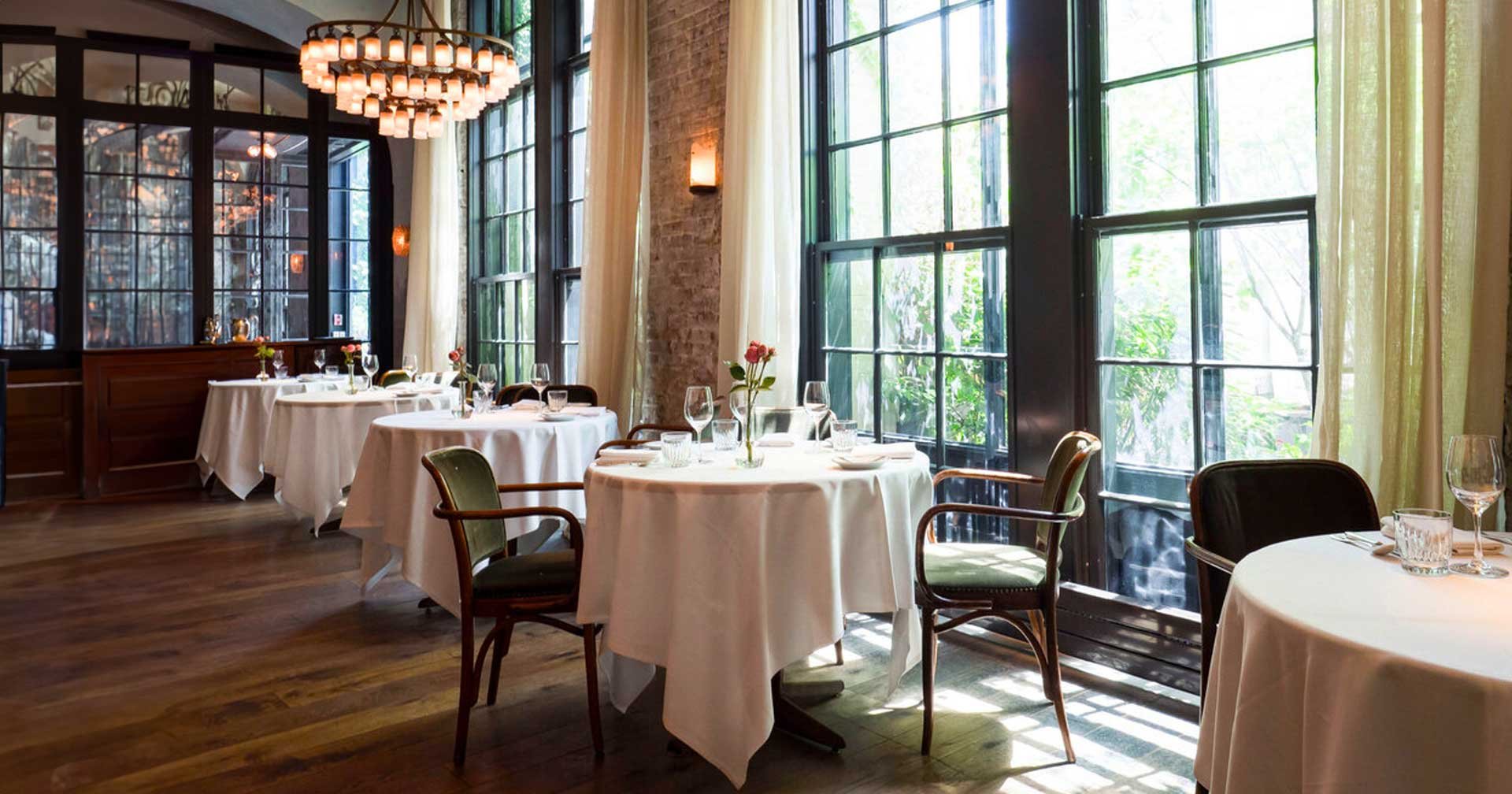
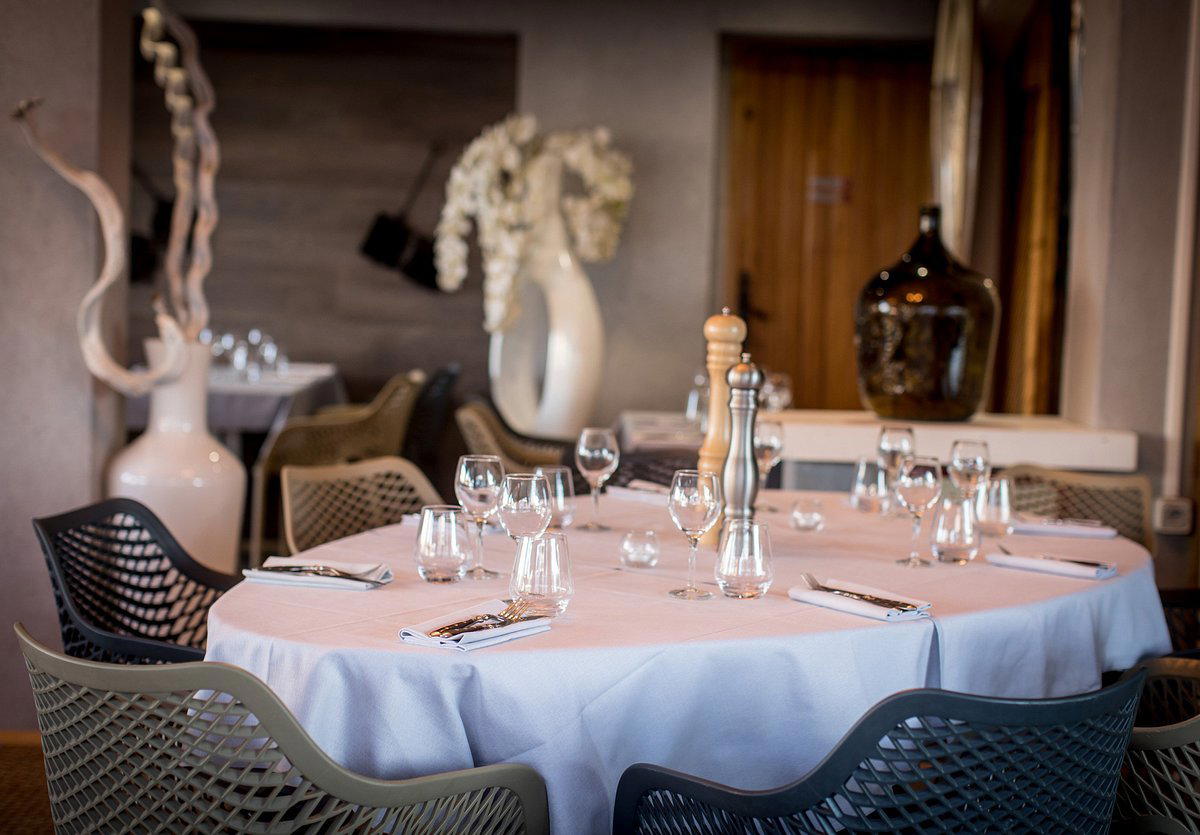
Hotel and SPA des Pecheurs carries what its own record describes as an excellent restaurant reputation, which in a location as removed as Cavallo means the kitchen is doing genuine work rather than relying on captive-audience economics. Guests who arrive by boat for a two-week stay on a private island are not without culinary options if the house restaurant disappoints; the choice to dine here repeatedly is a revealed preference worth noting. For comparison with what serious restaurant programming looks like in adjacent French coastal contexts, Casadelmar in Porto-Vecchio represents the Corsican high-end hotel dining benchmark most often cited in the same conversation.
The Thalassotherapy Offer in Context
Thalassotherapy, seawater-based treatment using locally sourced marine water, algae, and mud, has a long French coastal tradition that predates the modern spa industry. The French Atlantic coast, particularly Brittany, built the first dedicated thalasso centres in the nineteenth century, and the format migrated to the Mediterranean through the twentieth. A spa positioned as thalassotherapy rather than simply a wellness centre signals a specific commitment: the marine water has to be drawn fresh and local, the treatment menu has to be built around seawater immersion and associated therapies, and the indoor pool infrastructure has to support temperature-controlled marine bathing as a core rather than peripheral activity.
On an island with direct sea access and no industrial development, the conditions for genuine thalassotherapy are close to ideal. Hotels in more developed coastal zones have to work harder to maintain the integrity of the marine water supply. This is one area where Cavallo's isolation, often discussed primarily as a lifestyle feature, has a direct functional consequence for the quality of the spa offer. Properties such as Hôtel and Spa du Castellet and Les Sources de Caudalie have built serious spa identities around terroir-specific treatments; the logic at Cavallo is analogous, with marine proximity as the defining input.
Planning the Stay
The Strait of Bonifacio can be rough outside the summer window, which concentrates the property's seasonal operating period into the months when the crossing is reliable and the Mediterranean climate is at its warmest. Guests considering the property should factor in the logistics of the Bonifacio transfer when planning arrival and departure days, particularly if connecting through Figari airport, which serves the southern Corsican region and handles the majority of summer charter and scheduled traffic to the area.
For travellers benchmarking this property against other French properties with a similar balance of remoteness, spa depth, and restaurant credibility, the relevant comparators include Version Maquis Citadelle in Bonifacio itself, Baumanière Les Baux-de-Provence for the combination of serious restaurant and strong regional identity, and La Bastide de Gordes for the boutique-scale approach to southern French hospitality. Further afield, Cheval Blanc Paris, The Maybourne Riviera, Domaine Les Crayères, Royal Champagne Hotel and Spa, Villa La Coste, Airelles Saint-Tropez, Château de la Chèvre d'Or, Château de la Gaude, Château de Montcaud, Château du Grand-Lucé, Castelbrac, Four Seasons Megève, Cheval Blanc Courchevel, Aman Venice, Aman New York, and The Fifth Avenue Hotel represent the range of properties EP Club tracks in this price tier globally.
Comparison Snapshot
Comparable venues nearby, for context on price, style, and recognition.
| Venue | Cuisine | Price | Awards | Notes |
|---|---|---|---|---|
| Hotel and SPA des PecheursThis venue — the venue you are viewing | Seaside luxury boutique on a private island | $300–500 | Small Luxury Hotels of the World Member | Not listed |
| Lodge de Charme A Cheda | charming Corsican lodge in organic gardens | $100–200 | Michelin Selected | Bonifacio |
| A Speranza | Eco-friendly boutique extension of A Cheda with original Corsican architecture. | $300–500 | Michelin Selected | Bonifacio |
| U Capu Biancu | Rustic Corsican luxury with Mediterranean charm; hidden by fragrant maquis and built above the sea with elegant, colorful design. | $500–750 | Michelin Selected | Domaine de Pozzoniello |
| Cala di Greco | Contemporary architecture blending seamlessly with 3-hectare natural parkland and olive groves. | Not listed | Michelin Selected | Bancarello |
| Version Maquis Santa Manza | Art Deco boutique in Corsican countryside | Not listed | Michelin Selected | Santa Manza |
Recognition history
Dated appearances from independent guides and award organizations, with the underlying list record or original source where available.
Small Luxury Hotels of the World Member
Small Luxury Hotels of the World
Continue exploring
More in Bonifacio
Hotels in Bonifacio
Browse all →
Bars in Bonifacio
Browse all →
Restaurants in Bonifacio
Browse all →

Details
- Romantic
- Elegant
- Scenic
- Sophisticated
- Intimate
- Honeymoon
- Romantic Getaway
- Wellness Retreat
- Weekend Escape
- Beachfront
- Panoramic View
- Destination Spa
- Spa
- Pool
- Fitness Center
- Private Beach
- Tennis Court
- Restaurant
- Room Service
- Wi Fi
- Concierge
- Waterfront
Tranquil seaside atmosphere with dramatic sea views, relaxed elegance, and a serene spa setting praised for its peaceful paradise vibe.