
Ocean Drive Madrid occupies a historic address at Plaza de Isabel II in the Centro district, offering 72 rooms at one of Madrid's most architecturally charged intersections. Positioned between the Royal Theatre and the city's classical core, it sits in a different competitive register from the grand-palace hotels of the Paseo del Prado corridor, trading monumental scale for a more contained, centrally located proposition.
Pearl is the En Primeur Club membership app — saves, bookings, and concierge access live there. Same editors, same standards.
- Address
- Pl. de Isabel II, 7, Centro, 28013 Madrid
- Phone
- +34 910 88 28 04
- Website
- od-hotels.com
- Directions
- Get directions
 Saves & bookings on Pearl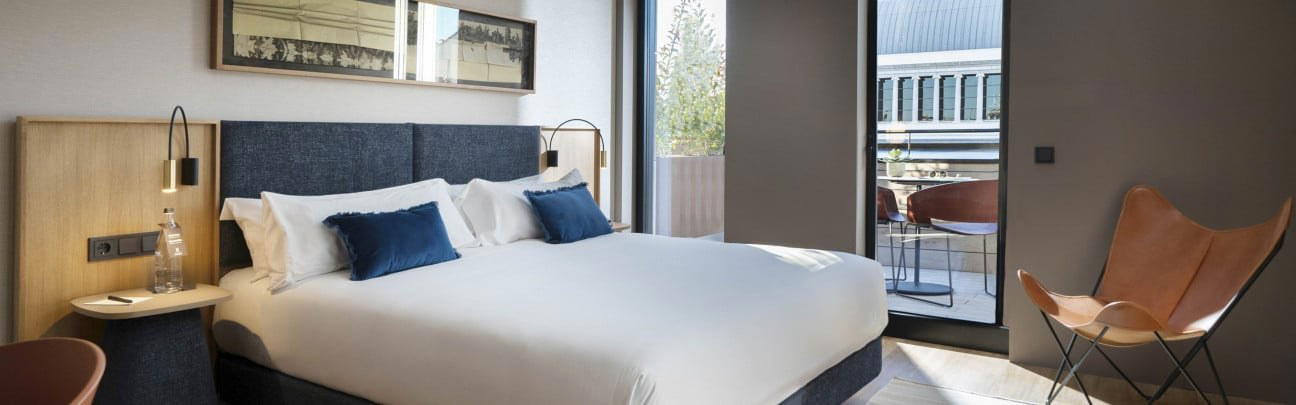
Plaza de Isabel II and the Hotel It Anchors
Madrid's hotel map has split along a familiar axis over the past decade. On one side sit the grand-restoration properties, the Mandarin Oriental Ritz, Madrid and the Four Seasons Hotel Madrid, which occupy landmark buildings and carry the kind of square footage that supports multiple restaurants, spa floors, and ballroom-scale event space. On the other side, a smaller cohort of properties trades volume for position: fewer rooms, tighter footprints, addresses chosen for proximity to cultural landmarks rather than boulevard grandeur. Ocean Drive Madrid belongs to that second category. Its 72 rooms sit at Plaza de Isabel II, one of the more historically loaded squares in central Madrid, a short walk from the Royal Theatre and within the tightly woven street grid of the Habsburg city.
That address does real work. Plaza de Isabel II is not a hotel district in the way that the Paseo de la Castellana or the streets around Retiro Park are. It is a civic square, flanked by the Teatro Real on one side and connected to the old commercial Madrid of Arenal and Opera on the others. Hotels here compete less on amenity breadth and more on location density: proximity to the city's cultural programme, to the restaurants of La Latina and the tapas bars of Cava Baja, to the weekend markets at El Rastro. For a guest whose itinerary is built around the city rather than the hotel itself, that trade-off is deliberate.
A 72-Room Property in a City of Palace Hotels
The 72-room count places Ocean Drive Madrid in a specific tier of the Madrid market. Properties at this scale, away from the mega-footprint of the Gran Meliá Palacio de los Duques or the 200-plus-key international flags, tend to operate with a different service ratio and a more curated room mix. Spain has developed a productive category here: the boutique-adjacent city hotel that doesn't carry a boutique hotel's sometimes-problematic lack of amenities. The Gran Hotel Inglés in Barrio de las Letras and the Rosewood Villa Magna on Castellana operate at different price points and with different character, but they share the logic of controlled inventory as a deliberate choice rather than a limitation.
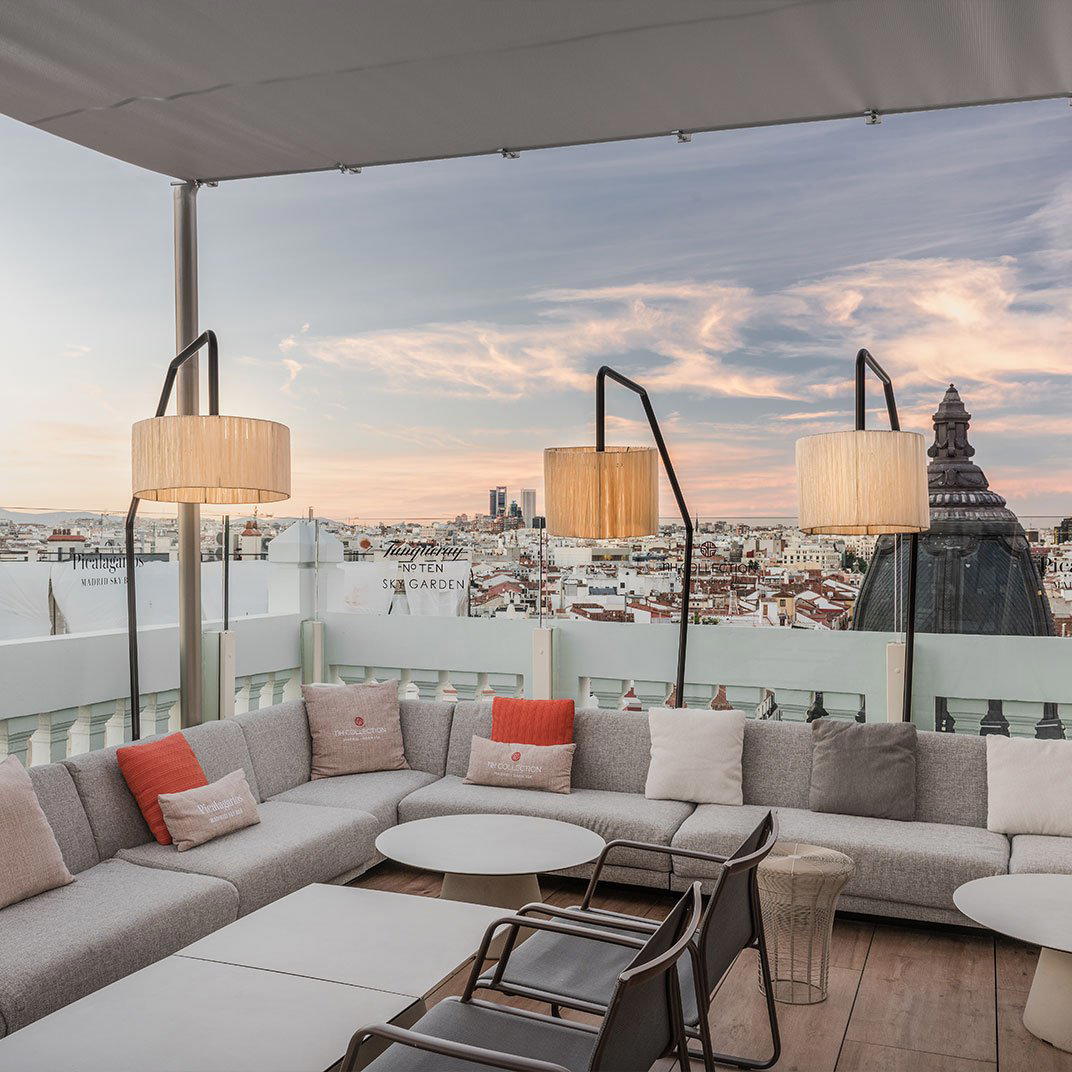
At 72 rooms, Ocean Drive Madrid is large enough to support a credible food and beverage programme without requiring the multi-outlet complexity that a 300-key property demands. What the scale does suggest is that any dining offer here is necessarily more focused: a single-room restaurant or rooftop bar format rather than a spread of outlets competing for internal guests across multiple day-parts.
The Opera District as Context
The neighbourhood around Plaza de Isabel II rewards some unpacking. The Opera district sits between the tourist-heavy Puerta del Sol and the more residential slope that drops toward the Manzanares river and the Casa de Campo. It is dense with post-performance dining: restaurants along Calle de la Independencia and Calle del Arenal that fill hard after Teatro Real curtain calls, bars that have served the theatre crowd since the nineteenth century. The square itself has been a transit point rather than a destination for most of Madrid's modern history, which makes a hotel address here an interesting signal: it implies a guest who reads the city laterally, who wants to be in the middle of things rather than positioned on one of the prestige corridors.
For comparison, the CoolRooms Palacio de Atocha anchors a similar logic near the Atocha station, trading on proximity to the museum triangle rather than the traditional luxury hotel zones. Both represent a Madrid that has learned to distribute its hotel interest across the city's actual cultural geography rather than concentrating it on the Castellana spine.
Spain's Wider Hotel Context
Madrid is not the only Spanish city developing this kind of mid-scale, high-location property. Across Spain, the tension between grand-palace heritage hotels and more compact, address-driven alternatives has produced some of the country's most interesting lodging. Akelarre in San Sebastián leads with its restaurant credential; Cap Rocat in Cala Blava leads with landscape and conversion architecture; Hotel Can Cera in Palma operates within a historic townhouse in the old city. The logic in each case is the same: the hotel's identity is inseparable from its physical and cultural context. Beyond Spain, properties like Aman Venice demonstrate how a contained key count paired with a notable address can anchor a hotel's positioning more securely than amenity volume alone.
Within Madrid specifically, the peer conversation for a 72-room Centro property also includes the Hotel Unico Madrid in Salamanca and the Hotel Rector, both of which operate at comparable scales with defined neighbourhood identities. The hotel's version of that identity is the Opera district address: culturally specific, architecturally weighted, and positioned at a remove from the corporate hotel corridors that dominate the northern stretches of the city. See our full Madrid restaurants and hotels guide for a broader map of where each of these properties sits in the city's hospitality picture.
Planning a Stay
The Plaza de Isabel II location means that Madrid's central Metro network is immediately accessible, with the Opera station on lines 2 and 5 directly adjacent to the square. The Royal Theatre's season runs from autumn through spring, and guests attending performances will find the walk to the hotel negligible. For those extending travel beyond Madrid, the wider Spanish hotel circuit connects naturally: Abadía Retuerta LeDomaine in Teruel, the Atrio Restaurante Hotel in Cáceres, and Pepe Vieira Restaurant and Hotel in Poio represent the kind of destination-led properties that pair well with a Madrid anchor. Further afield, Mandarin Oriental Barcelona and Marbella Club Hotel cover the coastal and second-city extensions of a Spain itinerary anchored in the capital.
The Short List
Comparable venues nearby, for context on price, style, and recognition.
| Venue | Price | Notes |
|---|---|---|
| Ocean Drive MadridThis venue — the venue you are viewing | $$$ | Not listed |
| Casa Almagro | $$$ | Almagro, Contemporary boutique hotel blending heritage architecture with modern design, positioned as a sophisticated urban retreat for informed travelers seeking refined Madrid experiences. |
| NH Collection Madrid Eurobuilding | $$$ | Hispanoamerica, Towering high-rise convention hotel in Madrid's financial district with ultramodern design. |
| TÓTEM Madrid | $$$$ | Recoletos, Modern boutique in restored heritage building |
| ARTIEM Madrid | $$$ | Concepcion, Modern wellness-oriented urban hotel |
| Hotel Atlántico | $$$ | Malasana, Historic neoclassic hotel in well-known Gran Vía location |
Recognition history
Dated appearances from independent guides and award organizations, with the underlying list record or original source where available.
Mr & Mrs Smith Smith Seal of Approval
Mr & Mrs Smith
Preferred Hotels Member
Preferred Hotels
Continue exploring
More in Madrid
Hotels in Madrid
Browse all →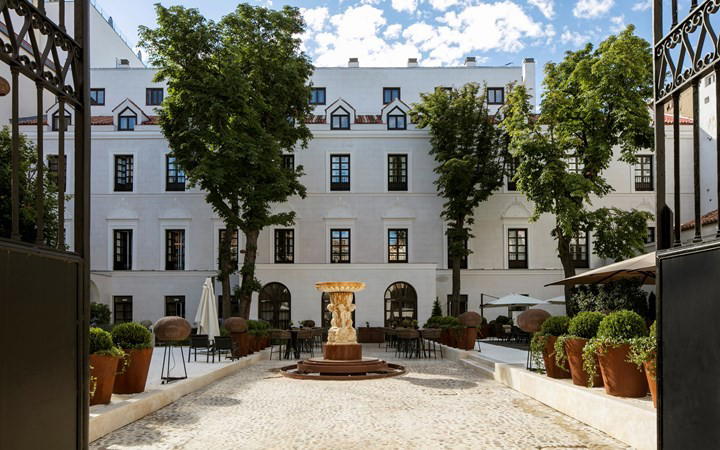
Bars in Madrid
Browse all →
Restaurants in Madrid
Browse all →

At a Glance
- Modern
- Elegant
- Trendy
- Sophisticated
- Romantic Getaway
- Business Trip
- Weekend Escape
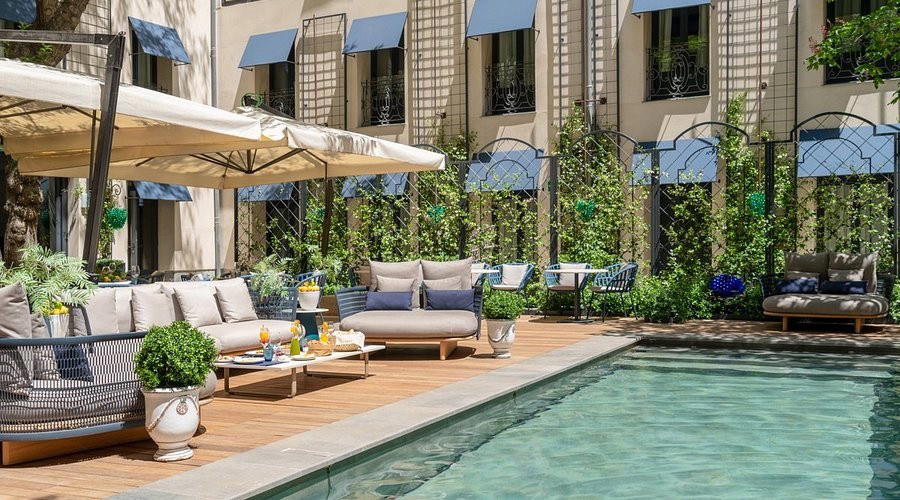
- Rooftop Pool
- Terrace
- Wi Fi
- Pool
- Spa
- Fitness Center
- Room Service
- Concierge
- Restaurant
- Street Scene
- Skyline
- Wi Fi
- Pool
- Spa
- Fitness Center
- Room Service
- Concierge
- Restaurant
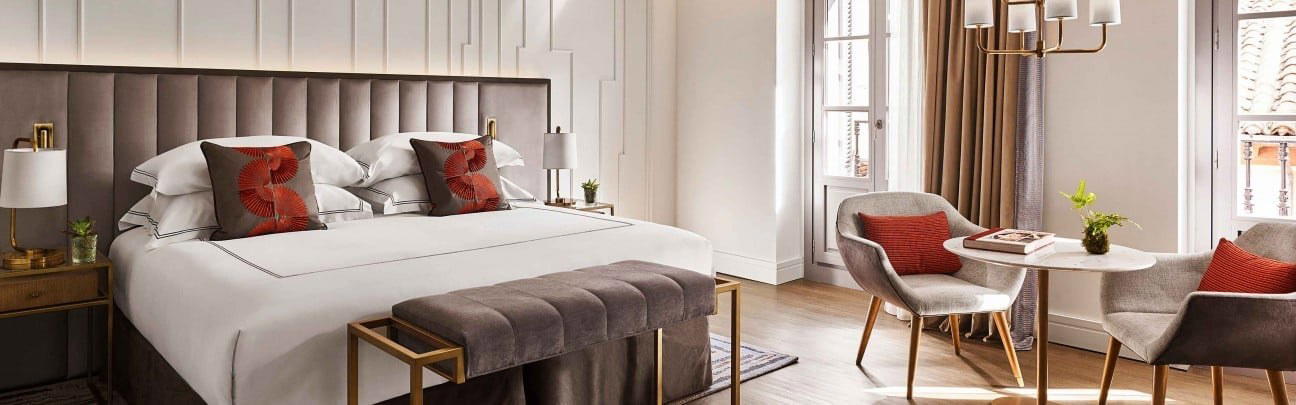
Bright, modern, and stylish with natural textiles, design furniture, and a quiet yet central atmosphere.