Dun Aluinn
Dun Aluinn brings seasonally driven, locally sourced Scottish cooking to Aberfeldy, a town that sits at the geographic heart of Highland Perthshire's larder. The approach here reflects a broader shift in Scottish dining away from ceremonial tartanry and toward produce-first restraint. For travellers already planning time in the Tay valley, it represents a logical and well-reasoned stop on any serious eating itinerary.
 Discover on Pearl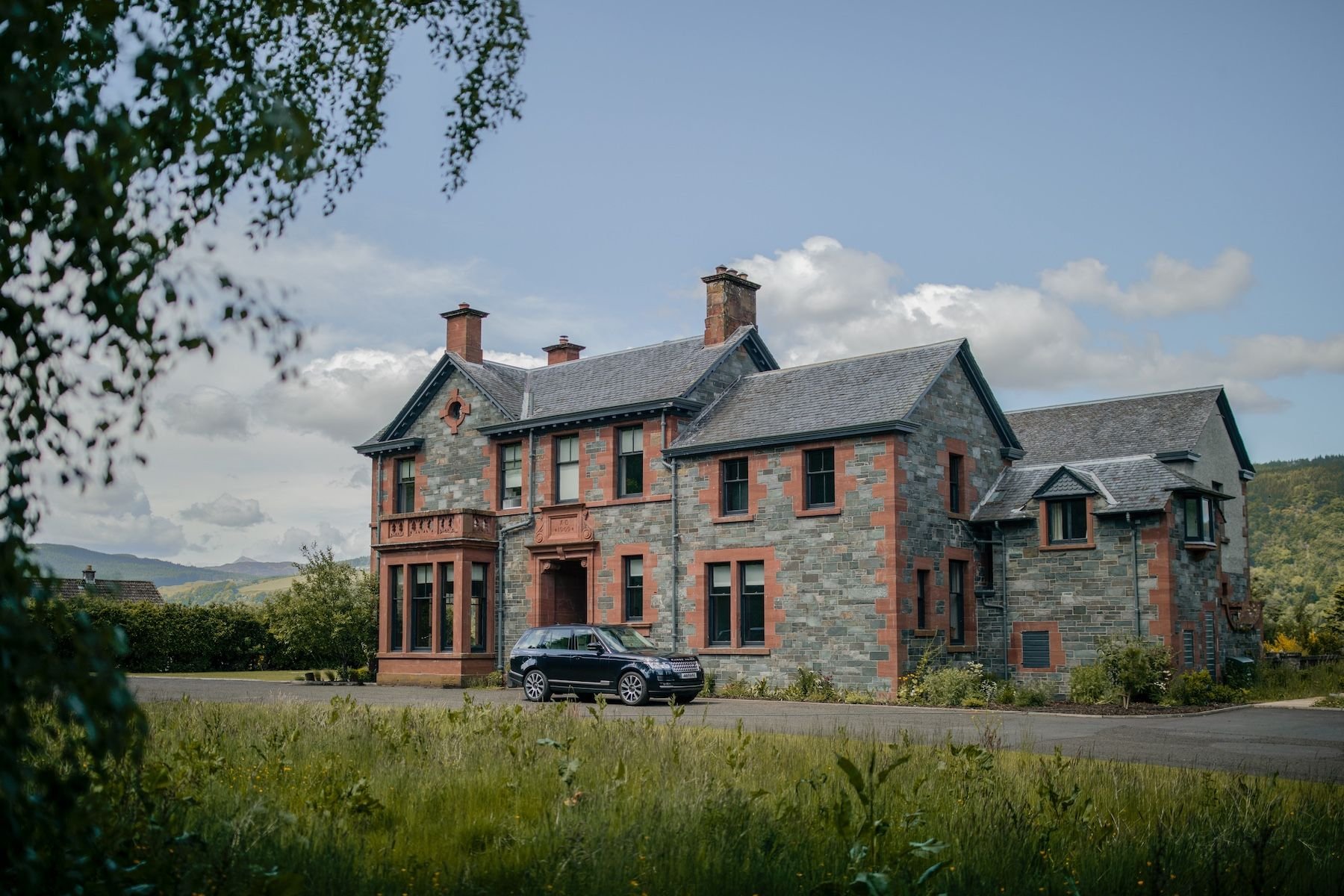
Stone, Timber, and the Architecture of a Highland Table
Aberfeldy occupies a specific kind of Scottish topography: the broad strath of the River Tay, where the land flattens just enough between the Ben Lawers massif to the north and the wooded drumlin country to the south to feel both sheltered and purposefully placed. Buildings here tend to respond to that environment rather than compete with it. The vernacular vocabulary is grey stone, pitched slate, timber details that weather honestly rather than resist the climate. Dun Aluinn, whose name draws on Gaelic roots meaning something akin to a beautiful or noble fort or hillock, operates inside that tradition, framing the dining experience through a physical identity rooted in Highland materiality rather than imported aesthetic language.
That framing matters in the context of Scottish hospitality more broadly. Over the past decade, the more credible end of the country's dining and lodging scene has split between two tendencies: large-footprint hotel estates that use the landscape as backdrop for a globalised luxury grammar, and smaller, place-specific rooms and restaurants that treat local materials, local suppliers, and local building tradition as the primary content. Properties such as Monachyle Mhor Hotel in Stirling and Langass Lodge in Na H-Eileanan An Iar belong firmly in the second camp. Dun Aluinn's positioning in Aberfeldy places it in conversation with that cohort rather than with the large estate model exemplified by Gleneagles in Auchterarder, thirty-odd miles to the south.
The shortlist, unlocked.
Hard-to-book tables, cellar releases, and concierge-planned trips.
Get Exclusive Access →What the Kitchen Actually Does with Highland Perthshire
Highland Perthshire is one of the more genuinely productive larder zones in Britain. The Tay system supports wild salmon and sea trout, the surrounding upland carries red deer and game birds, and the agricultural pockets of Strathtay and Strathbraan yield soft fruit, heritage vegetable varieties, and dairy that does not have to travel far to reach a plate. The challenge for any kitchen working in this territory is not finding quality ingredients but resisting the temptation to over-process them into something that erases their provenance.
Dun Aluinn's stated approach is seasonally driven Scottish cuisine built on locally sourced produce. That description is deliberately direct rather than elaborate, and it places the kitchen inside a tradition of Scottish cooking that has gained serious critical ground since roughly 2015: precision without theatrics, ingredients treated as the primary argument rather than a supporting cast. The Scottish restaurant scene's most-discussed practitioners in Edinburgh and Glasgow have made that argument compellingly at the higher end, and the philosophy has since filtered into smaller market towns and rural settings, where proximity to primary producers gives kitchens structural advantages that city restaurants have to construct artificially.
For travellers arriving from properties elsewhere in Britain, the shift in register is instructive. The polished, London-referencing menus found at Claridge's in London or the curated estate-dining formats at Estelle Manor in North Leigh share a language of controlled luxury that is deliberately legible to an international audience. A kitchen like Dun Aluinn's speaks a more local dialect. That is a deliberate editorial choice by the operation, not a limitation, and it requires a different kind of attention from the diner.
Aberfeldy as a Dining Town
Aberfeldy itself is not a large place. Its population sits below two thousand, and its main street functions as a working Highland market town rather than a curated heritage destination. That distinction is relevant to how you read its hospitality offer. The town is not performing itself for visitors in the way that some more heavily touristed Perthshire locations do. The Birks of Aberfeldy, the Black Watch memorial, and access to the Tay draw walkers and anglers on their own terms, and the food and drink scene has historically reflected local appetite rather than visitor expectation.
That context is changing. Aberfeldy has developed a small but serious food and drink identity around distilling, cheese-making, and independent retail. The Aberfeldy Distillery, operational since 1898, anchors the town's drinks identity with aged single malt. The presence of Dun Aluinn with a produce-first kitchen fits the direction the town's reputation is moving, toward a quieter, less performative version of Highland food culture. For those wanting a broader picture of eating in the area, our full Aberfeldy restaurants guide maps the scene in detail.
Travellers who base themselves at Glen Mhor Hotel and Apartments in Highland or further north and make Aberfeldy a day stop will find the town small enough to cover on foot but with enough to justify a deliberate half-day. The A9 corridor and the A827 route through Strathtay connect it to Pitlochry, Kenmore, and the wider Loch Tay area in under an hour, making Dun Aluinn a natural anchor point for an itinerary built around the central Highlands rather than a single fixed base.
The Broader Pattern of Scottish Rural Dining
Across Scotland's more accessible rural zones, a particular hospitality format has emerged: operations that function as both destination and local resource, drawing from an immediate geographic radius for their kitchen and often their clientele. Burts Hotel in Melrose in the Borders demonstrates one version of this: a long-standing town hotel with a kitchen that speaks clearly to its agricultural surroundings. Ardbeg House in Port Ellen on Islay represents a more remote variant, where the island's identity inflects everything from produce to atmosphere.
Dun Aluinn sits in this continuum. Its Gaelic name signals an alignment with place rather than category, and its cuisine description suggests a kitchen that understands its geography as the primary source of meaning rather than decoration. For travellers accustomed to the design-literate country house format of properties like The Newt in Somerset or Babington House in Kilmersdon, Dun Aluinn will read as less produced and more contingent on the actual season and actual local supply. That is its point.
Planning Your Visit
Aberfeldy is leading reached by car. The A9 from Perth takes under an hour in average conditions, and the drive through Strathtay on the B846 or A827 is itself worth the routing. Public transport connections exist via Perth but are infrequent for a market-town destination of this scale. Given the limited database information currently available for Dun Aluinn, prospective guests should make direct contact for current opening hours, reservation availability, and any updated service details before travelling. Seasonal shifts in a kitchen of this type can affect both what is on the menu and when the operation runs, and a Highland Perthshire autumn or spring table will differ materially from midsummer.
Those combining the Aberfeldy visit with a broader Scottish itinerary might consider Malmaison Edinburgh as a city anchor, or build northward through the Cairngorms corridor. For travellers arriving from further afield who want a full picture of comparable regional lodging before committing to an itinerary, properties such as Glasgow Grosvenor Hotel or Lime Wood in Lyndhurst offer useful reference points for the calibration of expectation across different formats and price tiers, even if the settings are categorically different.
Frequently Asked Questions
- What is the general vibe at Dun Aluinn?
- The atmosphere at Dun Aluinn reflects Aberfeldy's character as a working Highland town rather than a curated tourist destination. If you are looking for a room or table that performs luxury through international reference points, this is not that. If you want a Scottish dining experience grounded in local produce and a physical environment that reads from its Highland Perthshire setting, the register fits well. The name itself, drawn from Gaelic, signals that orientation from the outset.
- What room category do guests tend to prefer at Dun Aluinn?
- Detailed room category data is not available in the current record for Dun Aluinn. Given the scale and character of the town, this is likely a smaller operation where the distinctions between room types are less pronounced than at a larger estate property. Contacting the venue directly will give the clearest picture of what is currently on offer and which configurations suit specific travel needs.
- What is the main draw of Dun Aluinn?
- The kitchen's commitment to seasonally driven, locally sourced Scottish cooking in a town that sits at the centre of one of Highland Perthshire's most productive food and drink zones is the core argument for making the trip. Aberfeldy's larder, including game, freshwater fish, and agricultural produce from the Tay valley, gives a produce-first kitchen material to work with that many urban operations have to source from considerably further away.
- How far ahead should I plan for Dun Aluinn?
- Without current booking and operational data in the record, a precise lead-time recommendation would be speculative. For a small Highland Perthshire operation of this type, particularly through the summer walking and fishing season and during the autumn game calendar, demand can exceed capacity significantly. Planning two to four weeks ahead for a table, or further for any accommodation component, is a reasonable baseline. Direct contact with the venue is the most reliable route to current availability.
- Is Dun Aluinn focused on Scottish produce specifically, or does the kitchen draw from broader British and European suppliers?
- Based on the venue's stated cuisine description, the focus is explicitly on locally sourced Scottish produce rather than a broader British or European supply network. This aligns Dun Aluinn with a school of Scottish cooking that treats geographic specificity as a defining constraint rather than a marketing label, placing it in the same philosophical bracket as other Highland and island kitchens that work strictly within their regional radius. Travellers who value traceability and seasonal contingency in a menu, rather than year-round consistency, are likely to find that approach most compelling.
How It Stacks Up
These are the closest comparables we have in our database for quick context.
| Venue | Cuisine | Price | Awards | Notes |
|---|---|---|---|---|
| Dun Aluinn | Seasonally driven Scottish cuisine, locally sourced | This venue | ||
| Lime Wood | ||||
| Muir, A Luxury Collection Hotel, Halifax | Michelin 1 Key | |||
| Raffles London at The OWO | World's 50 Best | |||
| The Connaught | World's 50 Best | |||
| 51 Buckingham Gate, Taj Suites and Residences |
Preferential Rates?
Our members enjoy concierge-led booking support and priority upgrades at the world's finest hotels.
Get Exclusive AccessThe shortlist, unlocked.
Hard-to-book tables, cellar releases, and concierge-planned trips.
Get Exclusive Access →