

Michelin Selected · Relais Chateaux Award
A 13th-century castle in the Odsherred UNESCO Global Geopark, Dragsholm Slot has been family-run for four generations and sits within the Relais & Châteaux network. Rates from USD 250 per night place it at the accessible end of Danish castle hospitality, with locally sourced cuisine and one of the country's most atmospheric settings outside Copenhagen.

Pearl is the En Primeur Club membership app, where members save venues, book tables and use the concierge.
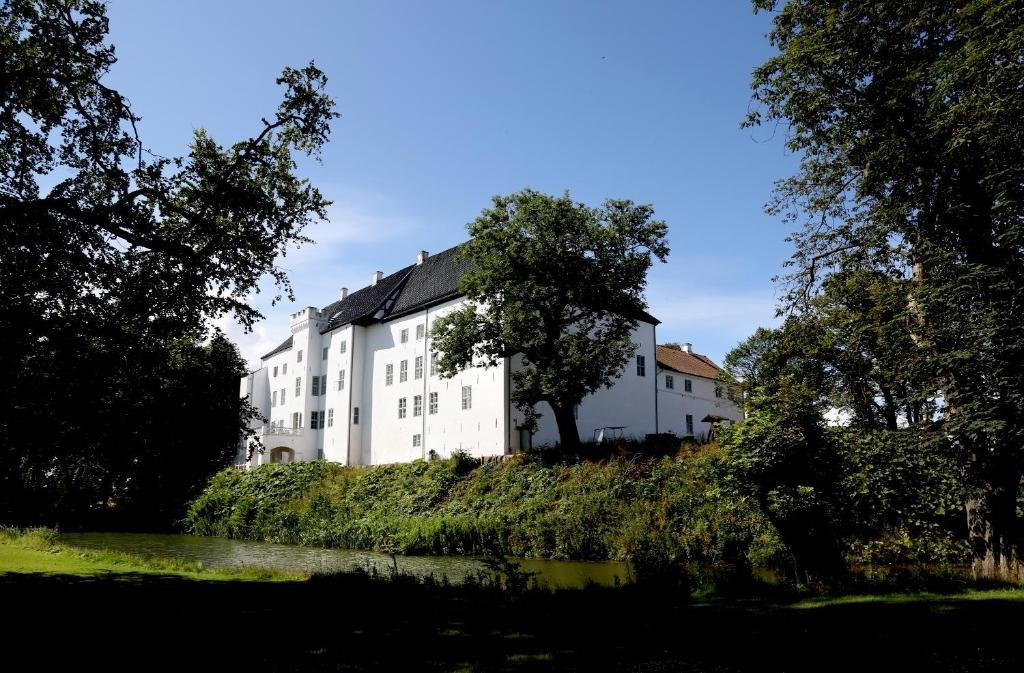
A Castle That Has Outlasted Most Hospitality Concepts by Seven Centuries
The approach to Dragsholm Slot establishes the terms of the stay before you reach the entrance. The road narrows through Odsherred's low-slung agricultural terrain, the fjord visible on clear days to the west, and the castle's silhouette appears as it has since the 13th century: heavy, deliberate, and improbably intact. Few European hospitality properties can claim a physical structure that genuinely precedes the concept of the hotel by half a millennium. Dragsholm can. That historical weight is not decorative, it is the architecture, and every subsequent design decision inside the property is made in negotiation with it.
For those researching Denmark's broader castle hotel category, context matters. The country has a cluster of manor and castle properties that have converted to hospitality use, several of which sit within premium networks. Kokkedal Castle Copenhagen in Horsholm represents one variant of this format, oriented toward event and wedding business closer to the capital. Dragsholm operates differently: it sits 90 kilometres northwest of Copenhagen in the Odsherred peninsula, within a UNESCO Global Geopark, and its four generations of family management have kept it outside the orbit of large international hotel groups. That independence shapes everything from the table programme to the pace of guest experience.
Stone, Plaster, and Centuries of Accumulated Decisions
The architectural character of Dragsholm is not the product of a single renovation or a hired designer's brief. The building has absorbed interventions across centuries, medieval fortification, Renaissance remodelling, Baroque additions, and the present-day interior carries the evidence of all of them. Low vaulted ceilings in some wings give way to taller, plastered rooms in others. Staircases that would be considered antiques in any other context are simply the functional infrastructure here. The property is also classified as a castle-museum, which means preservation obligations govern what can be changed and what cannot. Guests are, in a technical sense, sleeping inside a working historical document.
This positions Dragsholm in a distinct tier of European heritage hospitality, one that includes properties like Castello di Reschio in Lisciano Niccone, where the architectural restoration is itself a statement of intent. The difference is that Dragsholm has not undergone a single headline restoration by a prominent architect; it has been maintained continuously by the same family, which produces a different quality of authenticity. There is less curation and more accumulation. Guests who respond to the former may find this less controlled than they expect. Guests who respond to the latter will find it more honest than most competitors in this category.
The Geopark Setting and What It Means for the Kitchen
Dragsholm's location within the Odsherred UNESCO Global Geopark is not incidental to the food programme. The geopark designation covers a landscape shaped by glacial activity, with clay soils and coastal proximity that produce distinctive agricultural conditions. The castle's kitchen draws on locally sourced ingredients as a core operating principle, which in this context means produce from farms and coastlines within a radius that the surrounding geopark makes unusually coherent. This is not the broad Scandinavian localism that became a culinary trend in the 2010s and has since been adopted at varying levels of sincerity across the region; it is place-specific, grounded in the actual terrain guests can see from the windows.
The wider Scandinavian approach to produce-led, land-anchored cooking has made Denmark a reference point for this style internationally. Within Denmark, the story has often been told through Copenhagen's restaurant scene. Dragsholm represents a rural strand of the same tradition, where the sourcing claim is harder to make abstractly because the source is visibly present. For guests arriving from properties in Copenhagen's urban hospitality cluster, the shift in register is significant. See our full Hørve restaurants guide for the broader dining context in this part of Odsherred.
Where Dragsholm Sits in the Danish Hospitality Market
Membership in the Relais & Châteaux network provides a useful reference point for positioning. The network's entry criteria require demonstrated quality in both accommodation and cuisine, along with a commitment to independent ownership, which rules out the major international chains by definition. Dragsholm's inclusion signals a peer group that prioritises character over standardisation, and its contact through the Relais & Châteaux reservation system (dragsholmslot@relaischateaux.com, or directly at +45 5965 3300) reflects that infrastructure. Rates from USD 250 per night position it at the more accessible end of the network, particularly relative to urban European Relais & Châteaux addresses. For comparison, properties like Cheval Blanc Paris or Le Bristol Paris operate in a fundamentally different price register. Dragsholm's entry point reflects its Danish rural context and the genuine value proposition of a heritage property managed without the overhead of a large group.
Among Danish alternatives, the comparison set is smaller than it first appears. Falsled Kro in Falsled offers a comparable Nordic countryside format, though in a smaller inn format rather than a castle structure. Dyvig Badehotel in Nordborg operates in the badehotel (bathing hotel) tradition, a distinctly Danish hospitality format oriented around coastal access rather than heritage architecture. Dragsholm is the more self-contained proposition: a single property that contains dining, accommodation, and seven centuries of built environment in one address.
It indicates consistent delivery across a wide sample of international and domestic guests, and given the property's distance from major transport hubs, that guest base is by definition a self-selecting, motivated one.
Planning the Visit
Dragsholm Slot is located at Dragsholm Alle 1, 4534 Hørve, approximately 90 kilometres northwest of Copenhagen. The property is most practically reached by car, which also allows access to the wider Odsherred landscape. Bookings can be made directly at dragsholm-slot.dk or through the Relais & Châteaux reservation network at dragsholmslot@relaischateaux.com, with the switchboard reachable at +45 5965 3300. Rates from USD 250 per night represent the entry point; room type selection is worth discussing directly with the property given the architectural variation between wings and floors in a building of this age and complexity.
For guests building a broader Scandinavian itinerary that includes urban counterpoints, the Copenhagen hotel market ranges from design-forward independents like Herman K to larger-format properties. Dragsholm works as a deliberate contrast to urban Copenhagen stays: the pace is different, the setting is different, and the rationale for being there is different. That contrast is the point.
A Quick Peer Check
Comparable venues nearby, for context on price, style, and recognition.
| Venue | Cuisine | Price | Awards | Notes |
|---|---|---|---|---|
| Dragsholm SlotThis venue (the venue you are viewing) | Historic castle hotel with modern comforts | Not listed | Michelin Selected · Relais Chateaux Award | Not listed |
| Villa Provence Hotel Aarhus | Charming French-style boutique in a traditional Danish townhouse. | $200–300 | Michelin Selected · White Guide Denmark Hotels - Exceptional Level | Fredens Torv |
| Skt Petri | Laid-back luxury in a historic Modernist building. | Not listed | 1 Michelin Key · Travel + Leisure It List Hotels | Indre By |
| 25hours Hotel Paper Island | Scandinavian summer house-inspired holiday home on a harbor island | Not listed | 1 Michelin Key | Indre By |
| Andersen Hotel | Boutique hotel emphasizing design, personality, and heart in a trendy urban setting. | $100–200 | Michelin Selected · World Luxury Hotel Awards WLHA Regional Winner | Vesterbro-Kongens Enghave |
| NH Copenhagen Grand Joanne | heritage design hotel | Not listed | Michelin Selected | Vesterbro-Kongens Enghave |
Recognition history
Dated appearances from independent guides and award organizations, with the underlying list record or original source where available.
Michelin Selected
Michelin
Relais Chateaux Award
Relais Chateaux
Full recognition history (3 entries)
Relais Chateaux Award
Relais Chateaux
Continue exploring
More in Hørve

Details
- Romantic
- Elegant
- Quiet
- Classic
- Scenic
- Sophisticated
- Ornate
- Romantic Getaway
- Honeymoon
- Anniversary
- Weekend Escape
- Historic Building
- Garden
- Terrace
- Wi Fi
- Pool
- Spa
- Fitness Center
- Room Service
- Concierge
- Business Center
- Free Parking
- EV Charging
- Garden
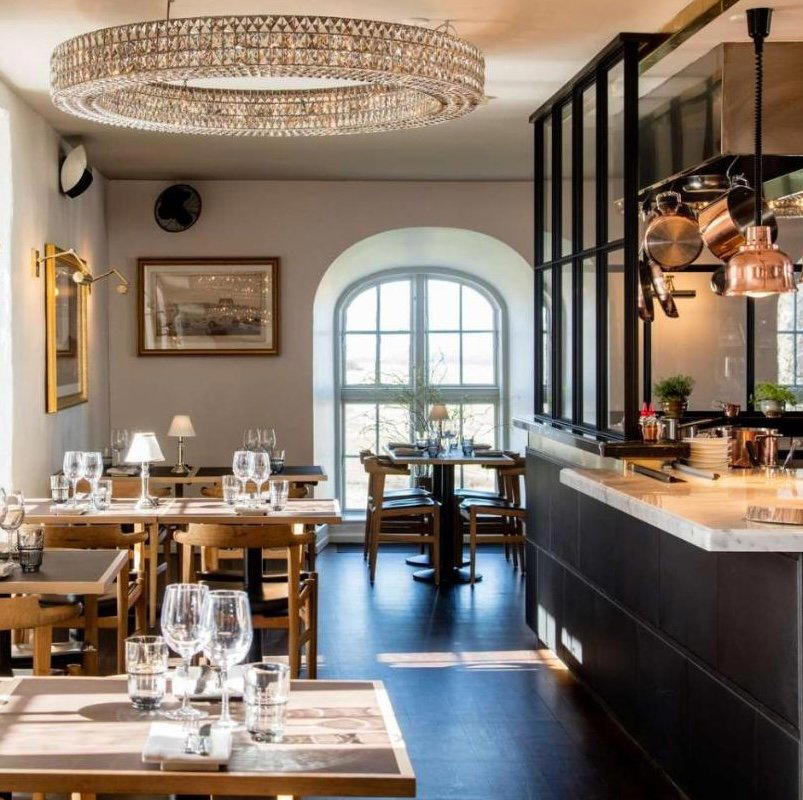
Contemporary classic and quiet atmosphere in a baroque castle with a mix of antique and modern elements.