
A Regional Winner for Luxury Heritage Hotels, Curia Palace sits in Anadia at the heart of Portugal's Bairrada wine country, occupying a late Belle Époque pile that once anchored the town's thermal spa circuit. The architecture alone makes a case for the detour: monumental scale, ornate façade detailing, and grounds that carry the particular gravity of a property built to impress rather than to accommodate. For travellers moving between Porto and Coimbra, it represents one architecturally serious option in the corridor.
Pearl is the En Primeur Club membership app — saves, bookings, and concierge access live there. Same editors, same standards.
- Address
- Av. Plátanos, 3780-541 Anadia, Portugal
- Phone
- +351 231 510 300
- Website
- almeidahotels.pt
- Directions
- Get directions
 Saves & bookings on Pearl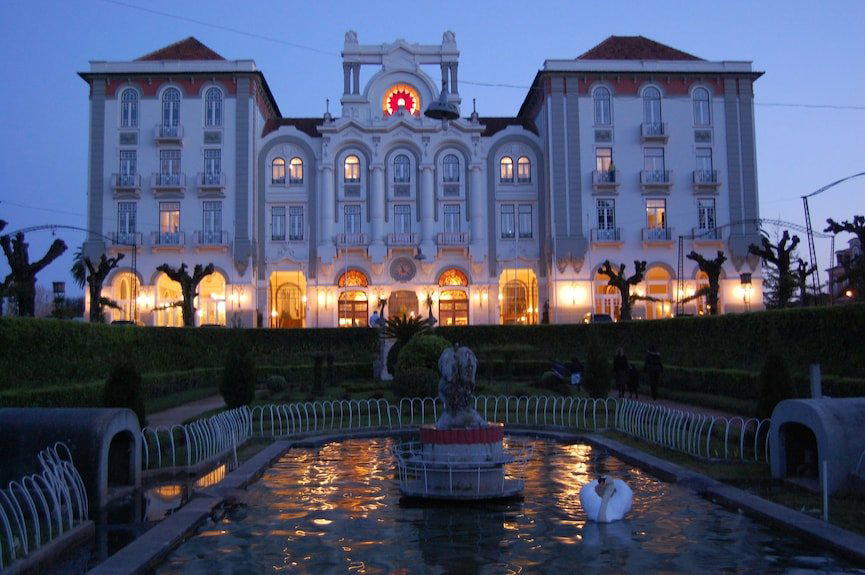
A Palace in the Pines: Curia's Belle Époque Heritage Hotel
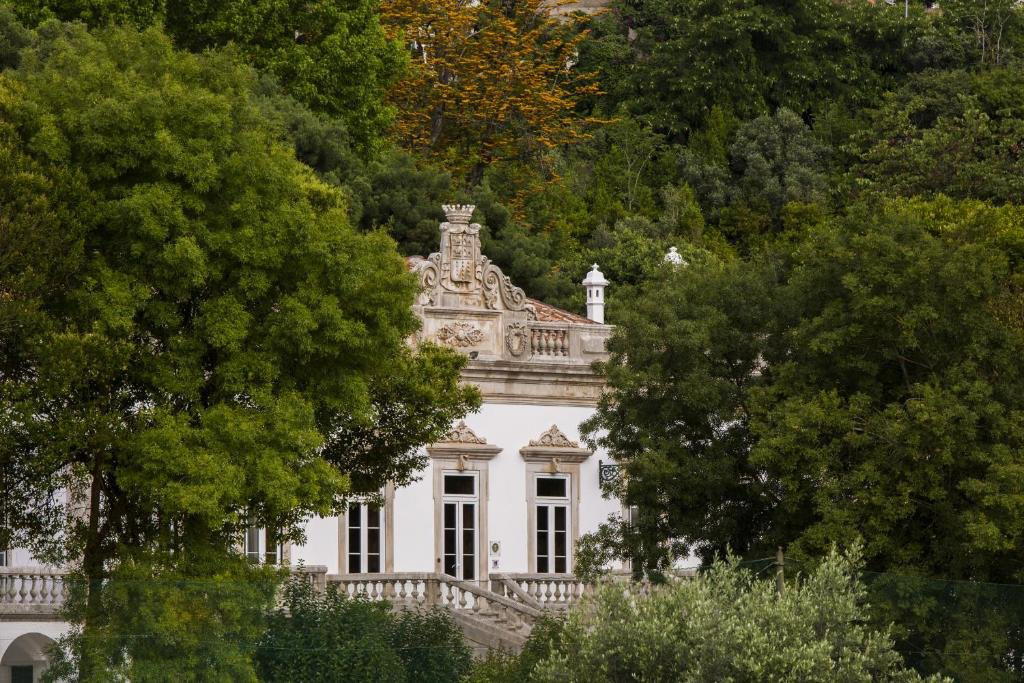
Approaching Curia Palace Hotel along the Avenida dos Plátanos, the boulevard of plane trees that gives the street its name frames the building before you reach it. The canopy thins, and a neoclassical facade rises into view: symmetrical, pale, and proportioned in a way that places it unmistakably in the thermal resort architecture of early twentieth-century Portugal. Curia, a small spa town in the Anadia municipality of the Bairrada region, developed its identity around mineral springs and the prosperous families who travelled from Lisbon and Porto to take the waters. The Palace was built to serve that clientele, and the building's architecture still answers to that original brief: formal, composed, and designed to impress from the moment of arrival.
Curia Palace holds a specific position within that group: it is a thermal-era grand hotel rather than a converted rural estate or a redesigned monastery, and Large public rooms, formal corridors, and a garden layout calibrated for promenade belong to a tradition of hospitality architecture that was producing buildings across Europe from the 1880s to the 1930s, and that survives today in relatively few intact examples.
The Architecture as the Experience
The building's design operates on a scale that smaller heritage properties cannot replicate. Grand hotel architecture of this period was deliberately theatrical: staircases were sized for descent rather than transit, reception halls were proportioned to make movement through them feel significant, and facades were composed as much for the approaching guest as for any functional purpose. The Curia Palace holds to these principles, and the physical experience of moving through its public spaces connects visitors to a European leisure culture that predates mass tourism.
That architectural integrity is not simply a preservation achievement. It is the central editorial fact about the property, the reason it holds a Regional Winner designation for Luxury Heritage Hotel. Properties such as the Bussaco Palace Hotel in Luso, situated in the same general area of central Portugal, occupy a comparable register: grand nineteenth and early twentieth-century structures where the architecture itself is the amenity. The Hotel Britania Art Deco in Lisbon illustrates a different but related point, where period design integrity commands attention in a crowded urban market. At Curia, the setting is quieter, the surroundings more pastoral, and the scale of the building even more pronounced against its context.
The gardens extend the spatial logic of the building outward, with formal planting schemes that reflect the same compositional instincts as the facade. Thermal resort gardens were not designed as naturalistic retreats. They were engineered for social use, with paths, pavilions, and planting arranged to support outdoor promenade, conversation, and the display of leisure that the guest culture of the period demanded. Reading the grounds of Curia Palace as a designed landscape rather than incidental green space gives the visit a different quality of attention.
Bairrada Context: Wine, Spa, and Slow Travel
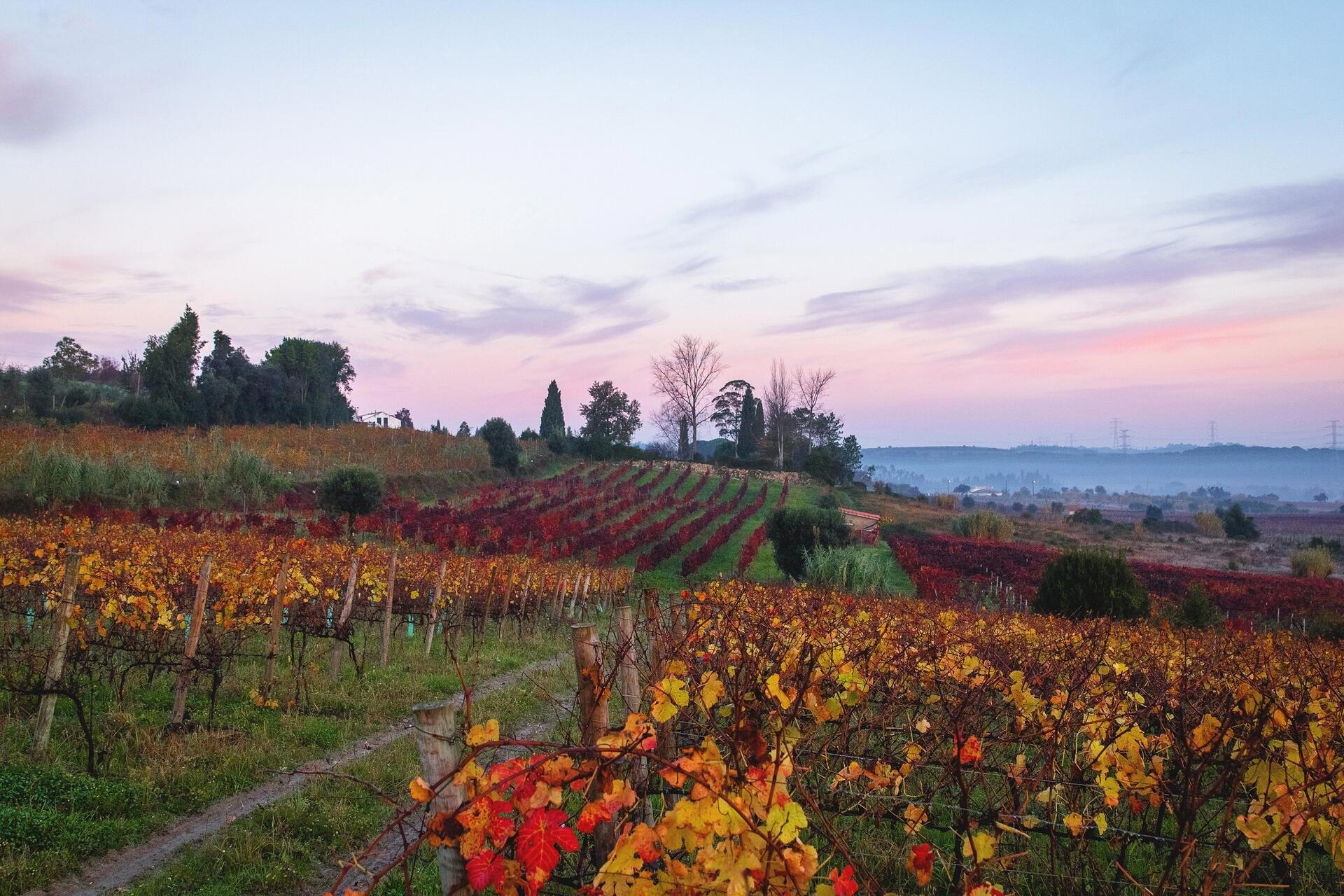
Anadia sits at the northern edge of Bairrada, one of Portugal's most historically significant wine regions, where Baga remains the anchor grape and sparkling wine production has a long documented tradition. The surrounding agricultural terrain, relatively flat compared to the dramatic topography of the Douro to the north, supports a kind of slow travel that is less Instagram-legible than the river valley estates but no less rewarding for guests who engage with it deliberately. Visiting producers in Bairrada, including those making both still and sparkling wines under the regional denomination, can be arranged as a programme alongside a stay at the Palace, though booking those visits independently and in advance is advisable.
The thermal dimension of Curia is also worth taking seriously rather than treating as a quaint historical footnote. Spa cultures built around mineral springs have distinct protocols and a different rhythm from wellness facilities in conventional luxury hotels. The approach tends toward treatment over atmosphere, with water-based therapies at the centre of the offer. Guests arriving for architectural immersion alone may find that engaging even partially with the thermal side of Curia extends the visit in productive directions. For comparable examples of properties where the setting and the therapeutic programme are equally weighted, the Casas da Lapa, Nature and Spa Hotel in Seia and the Casa das Penhas Douradas in Manteigas both operate in the interior of Portugal with wellness as a structural part of the offering rather than an add-on.
Where the Curia Palace Sits in the Portuguese Luxury Market
Portugal's luxury accommodation market has consolidated around a small number of formats. International chain properties in Lisbon and the Algarve, including addresses such as the Four Seasons Hotel Ritz Lisbon, the Conrad Algarve, and the InterContinental Porto Palacio das Cardosas, hold the upper tier in their respective urban and resort markets. The Anantara Vilamoura Algarve Resort in Quarteira and the Bela Vista Hotel and Spa in Praia da Rocha sit in the coastal resort segment. Heritage independents occupy a different quadrant, one where architectural integrity and regional identity carry more weight than brand recognition.
Within that independent heritage segment, Curia Palace's Regional Winner award for Luxury Heritage Hotel signals that it is being assessed against a peer group that takes both criteria seriously. Guests comparing it with properties such as the Ventozelo Hotel and Quinta in Ervedosa do Douro, the Casa da Calçada in Amarante, or the Carmo's Boutique Hotel in Ponte de Lima are navigating a category where scale, setting, and period authenticity all factor into the choice. Curia's principal differentiator in that comparison is its thermal resort identity, the scale of its public spaces, and the architectural ambition of the original building, all of which are harder to find in converted estates and manor houses.
For those considering Portugal more broadly, the country's heritage offer extends from the rural Alentejo and Algarve, where properties such as the Craveiral Farmhouse in Sao Teotonio and the Hospedaria da Pensão Agrícola in Conceicao e Cabanas de Tavira represent the agricultural estate format, to the urban boutique addresses of Porto and Lisbon. Curia sits at a remove from all of those, which is part of its appeal to a specific kind of traveller.
Planning a Stay
Curia is reachable from Porto in under an hour by road, and from Coimbra in approximately thirty minutes, making it accessible as a destination stay without requiring an extended journey from the principal entry points of central and northern Portugal. The A1 motorway connects the area to both cities. Guests driving from Lisbon can expect roughly two and a half hours depending on traffic, placing Curia within reach as a mid-route stop between the capital and Porto for those travelling by car.
M Maison Particulière Porto and Douro Valley Casa Vale do Douro in Cambres offer reference points for the broader northern Portugal heritage stay category.
Quick Comparison
Comparable venues nearby, for context on price, style, and recognition.
| Venue | Cuisine | Price | Awards | Notes |
|---|---|---|---|---|
| Curia Palace HotelThis venue — the venue you are viewing | Historic Art Deco palace with golden era grandeur | $$$ | 4-Star | Not listed |
| Lisbon Cheese & Wine Suites | Boutique guesthouse with handmade hospitality in trendy districts | $$$ | 4-Star | Santos |
| Vale d'Azenha Hotel & Residences | Contemporary rural retreat with traditional Portuguese influences, positioned as a serenity destination balancing modern architecture with comfortable rurality. | $$$ | 4-Star | Cela |
| The Lince Braga | Contemporary refuge in historic convent setting | $$$ | 4-Star | Falperra |
| Luz Charming Houses | Reimagined historic village with authentic stone houses restored in contemporary style | $$$ | 4-Star | Moimento |
| 1908 Lisboa Hotel | Historic Art Nouveau building with modern industrial interiors | $$$ | 4-Star | Estefania |
Recognition history
Dated appearances from independent guides and award organizations, with the underlying list record or original source where available.
World Luxury Hotel Awards WLHA Regional Winner
World Luxury Hotel Awards
Continue exploring
More in Anadia
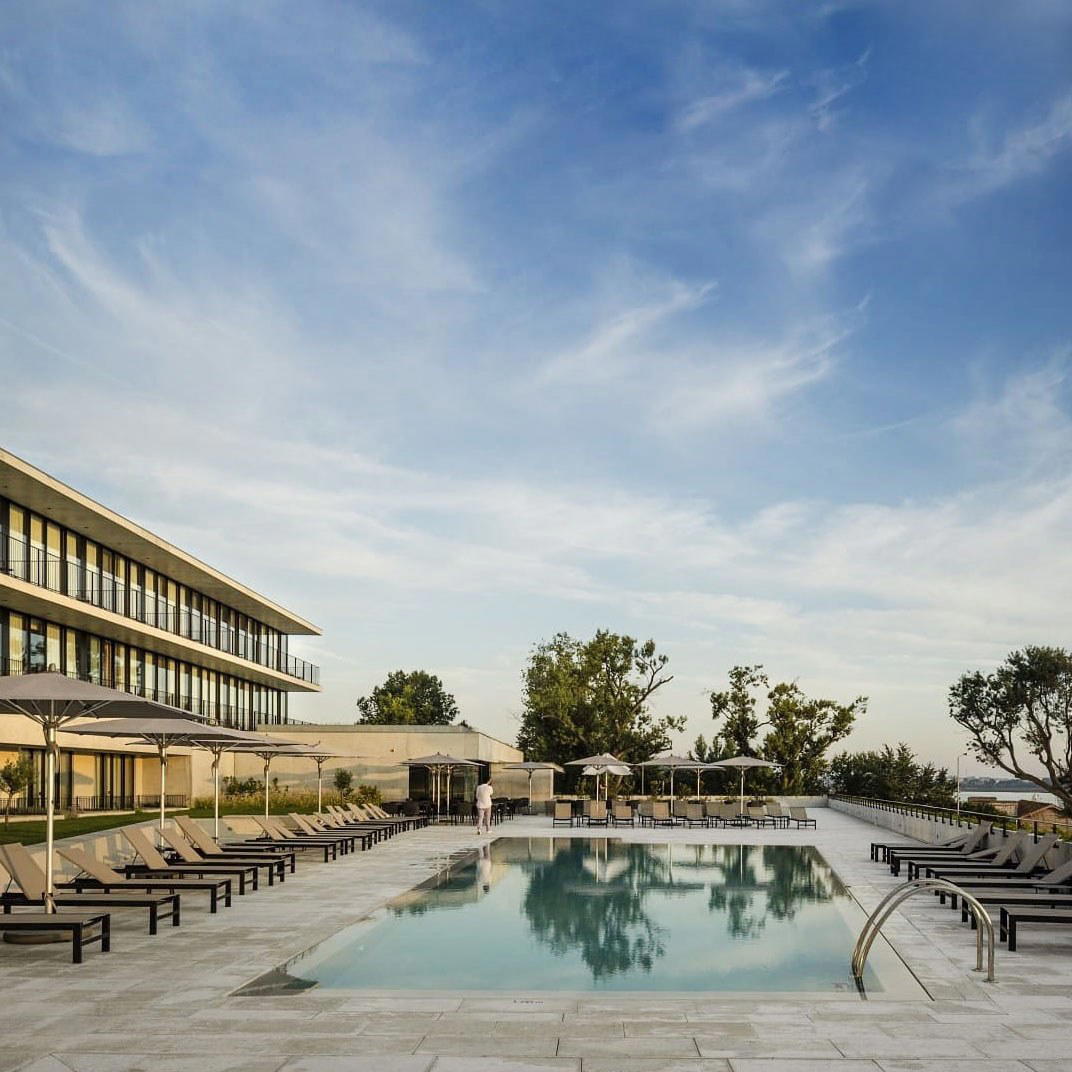
Hotels in Anadia
Browse all →
Bars in Anadia
Browse all →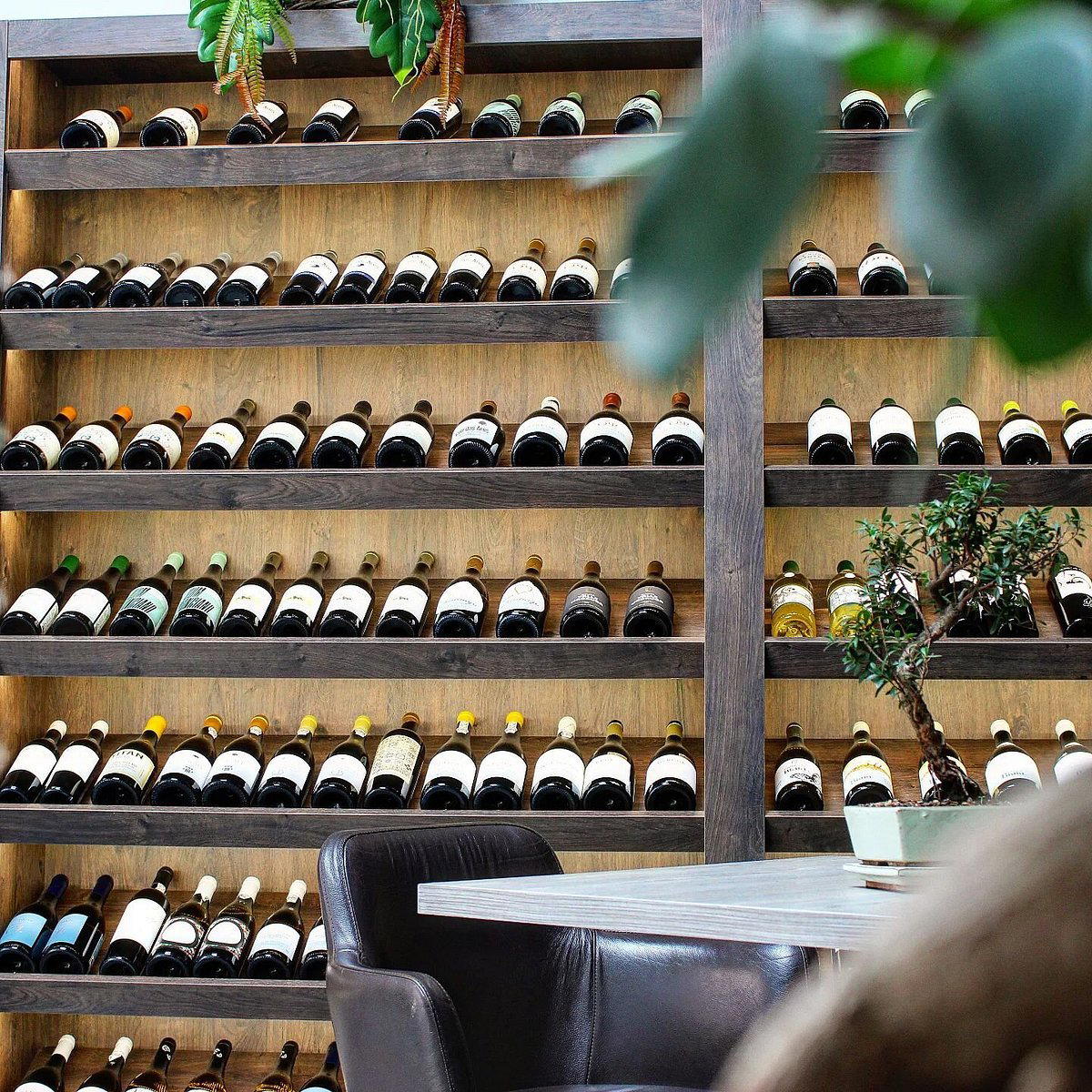
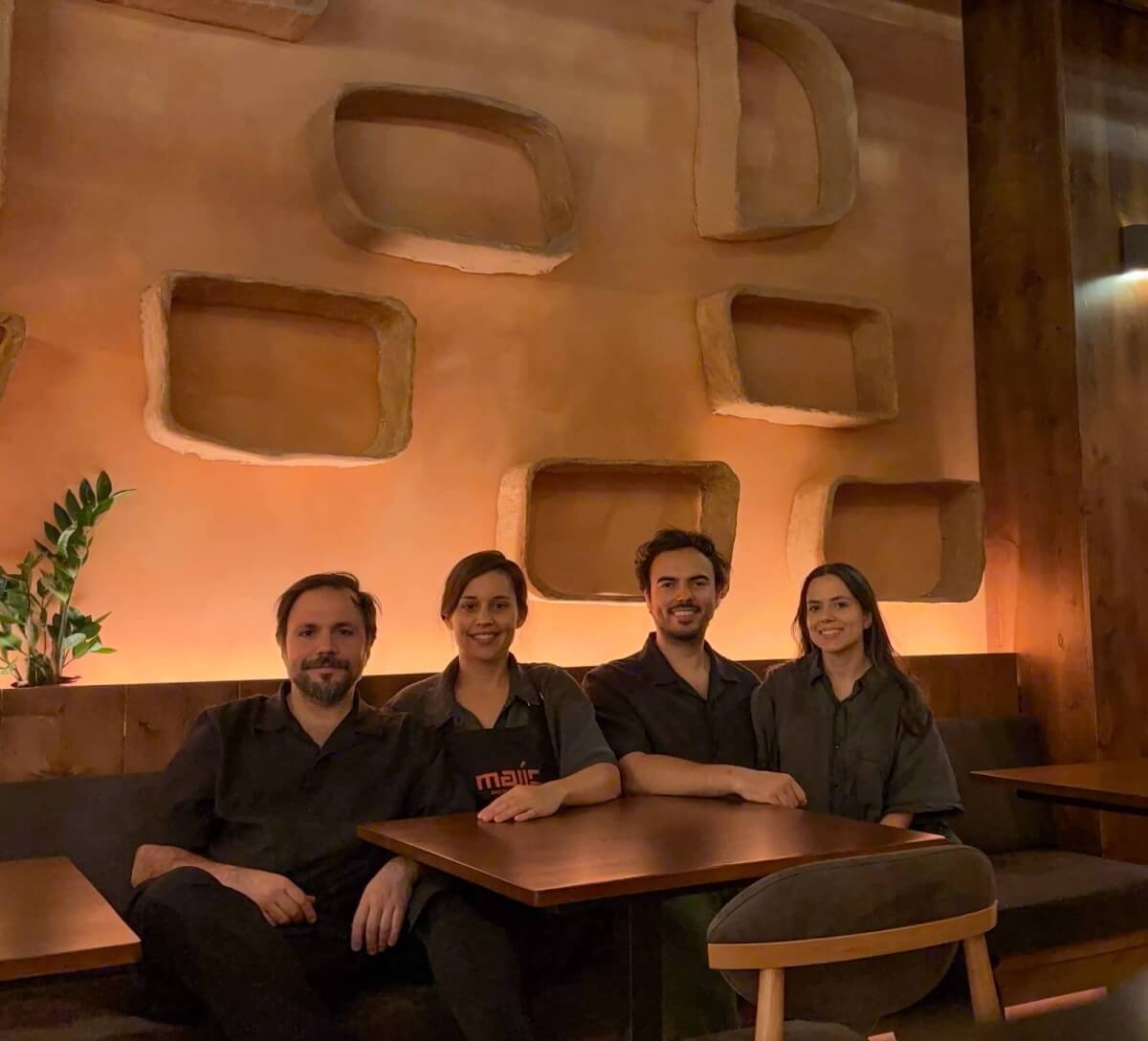
Restaurants in Anadia
Browse all →

At a Glance
- Classic
- Elegant
- Romantic
- Scenic
- Romantic Getaway
- Weekend Escape
- Family Vacation
- Golf Course
- Historic Building
- Terrace
- Panoramic View
- Pool
- Spa
- Indoor Pool
- Outdoor Pool
- Sauna
- Hot Tub
- Room Service
- Restaurant
- Wi Fi
- Garden
- Elevator
- Fitness Center
- Concierge
- Business Center
- Garden
- Pool
- Spa
- Indoor Pool
- Outdoor Pool
- Sauna
- Hot Tub
- Room Service
- Restaurant
- Wi Fi
- Garden
- Elevator
- Fitness Center
- Concierge
- Business Center
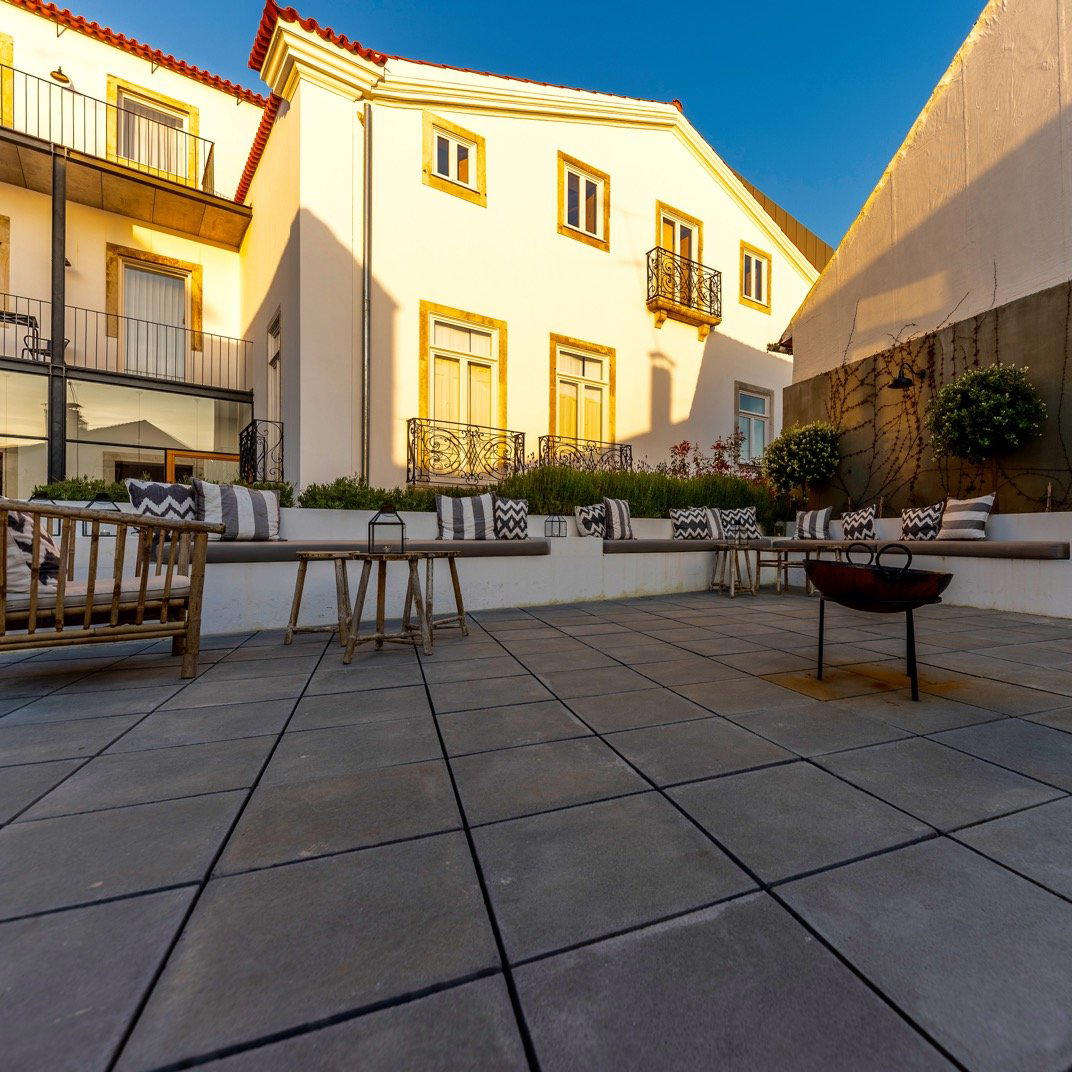
Elegant Art Deco interiors blending antiques with modern comforts, lush gardens, and a tranquil countryside retreat atmosphere.