

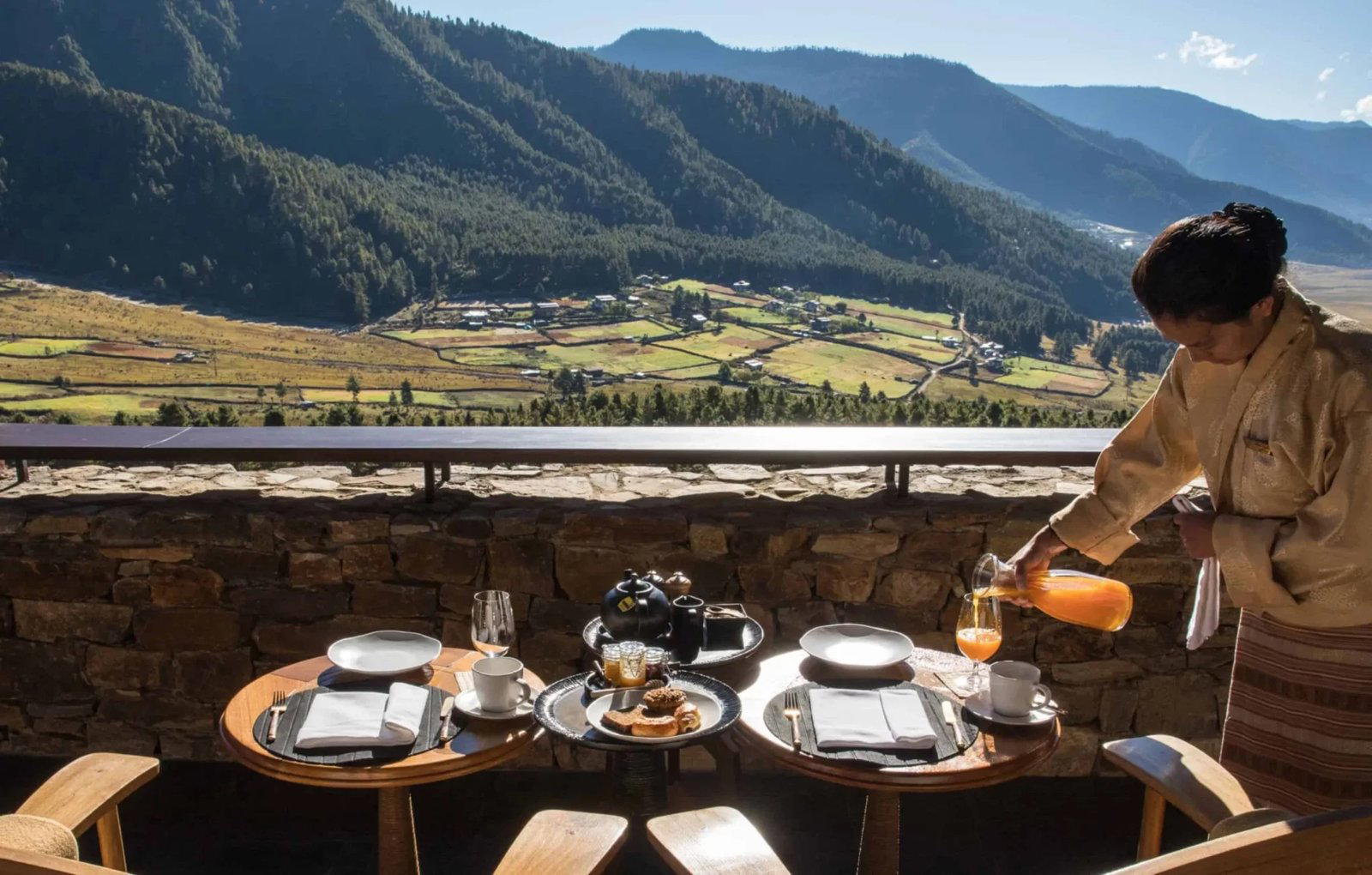
COMO Uma Punakha sits in Bhutan's fertile Punakha Valley, framing one of the country's most historically significant river confluences through a property designed around deliberate stillness. Ranked #43 among Condé Nast's Best Resorts in 2025, it occupies a position in the small-footprint, design-led tier of Bhutanese luxury that prioritises landscape integration over resort-scale amenity.
Pearl is the En Primeur Club membership app — saves, bookings, and concierge access live there. Same editors, same standards.
- Address
- Botokha Kabesa Punakha, Punakha
- Phone
- +975 2 584 688
- Website
- comohotels.com
- Directions
- Get directions
 Saves & bookings on Pearl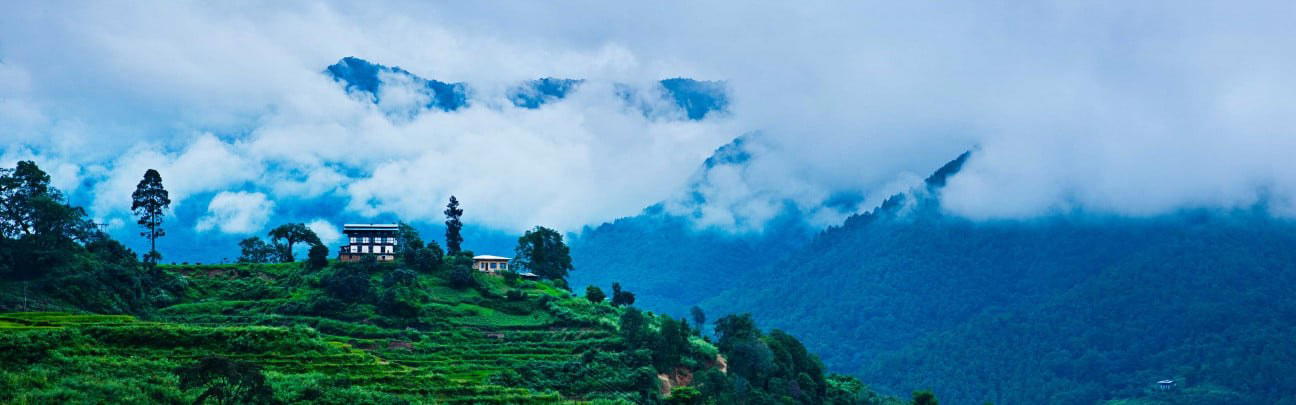
Where Bhutan's Luxury Lodges Plant Their Flag
Bhutan's premium lodge sector has settled into a recognisable pattern: small capacity, strong landscape integration, and food programmes that anchor guests to place rather than import foreign culinary frameworks. Properties like Amankora in Paro, Six Senses Bhutan in Thimphu, and Gangtey Lodge in Gangtey have each staked out a version of this position. COMO Uma Punakha operates within the same logic, drawing on the COMO group's broader wellness-led editorial identity while placing it inside Punakha Valley, one of Bhutan's most historically layered settings. The valley floor runs between the Mo Chhu and Pho Chhu rivers, the site of Punakha Dzong, a 17th-century fortress monastery that remains among the more architecturally significant buildings in the Himalayas. Arriving here is not neutral geography, the setting is an argument in itself about where Bhutan's character concentrates outside Thimphu.
The Dining Programme: Grounded, Not Imported
Across Bhutan's upper lodge tier, the dining question is less about celebrity chefs and more about how a kitchen translates altitude, altitude-grown produce, and Buddhist food culture into something a guest from London or Tokyo will find readable. The country's food traditions lean toward red rice, buckwheat, dried meat, and ema datshi, chilli and cheese, as structural ingredients. Properties that simply replicate a generic spa-hotel menu miss the point. Those that read local product carefully and build menus around what the valley actually produces operate on more credible ground.
COMO's culinary approach across its properties has historically shown a preference for lighter, ingredient-led cooking with a wellness coherence, rather than the tasting-menu performance model common in urban luxury. In a setting like Punakha, that tendency maps well onto Bhutanese food culture, which is not built around elaborate presentation but around direct, often pungent flavour. The friction between COMO's refinement instinct and Bhutanese directness is where particularly interesting meals tend to emerge in properties of this type. For context on the broader dining scene in the valley, see our full Punakha restaurants guide.
Setting as Programme: What the Valley Does to a Stay
Punakha sits at roughly 1,200 metres, substantially lower than Paro or Thimphu, which gives it a warmer, more agricultural character. The valley floor is padded with rice paddies for much of the year, and the two rivers converge just below Punakha Dzong in a way that makes the dzong appear to float between them when water levels are high, typically in the monsoon months from June through August. Outside the monsoon, October through December offers clear skies and lower humidity, and February through April brings the valley's mustard flower bloom, which turns the terraced fields yellow.
Guests arriving in the drier months get a different physical experience from those who come during summer rains. The property's food programme, walks, and general orientation should ideally align with seasonal conditions rather than treat the year as uniform. Properties in the andBeyond Punakha River Lodge tier have leaned into the river's seasonal character more explicitly; COMO's version here tends toward the contemplative rather than the adventure-activity model.
Peer Context: The Small-Footprint Bhutan Set
The competitive reference for COMO Uma Punakha is not the large international resort model seen at properties like Mandarin Oriental Bangkok or Cheval Blanc Paris. Bhutan's model by necessity runs smaller. Bhutan Spirit Sanctuary in Shaba positions further toward spiritual programming; Gangtey Lodge orients toward the black-necked crane migration and its specific valley. COMO Uma Punakha draws on the same small-footprint logic, placing its credibility on valley position, wellness coherence, and the Condé Nast recognition it received in 2025.
That recognition places it within a global cohort of properties recognised for the combination of location quality and programme integrity, rather than for scale or urban dining pedigree.
Planning a Stay: Logistics and Timing
Bhutan operates a tourism system that requires visitors to book through licensed operators. This applies regardless of accommodation category, which means the entry cost to Bhutan is relatively high before accommodation pricing is even factored in. Properties at the hotel level operate at the upper end of the country's lodge pricing.
Punakha is approximately three hours by road from Paro International Airport, the country's sole international entry point. The drive crosses the Dochu La pass at roughly 3,100 metres, which offers mountain views in clear conditions and can close briefly in heavy snowfall during winter months. Guests arriving from long-haul flights in December or January should factor potential road delays into their transfer planning.
What to Expect: Atmosphere Over Amenity
Properties in this category do not deliver in the way that a hotel like Badrutt's Palace Hotel in St. Moritz or Hotel Plaza Athénée in Paris delivers, through density of service, urban dining choice, and a surrounding city that multiplies the stay's content. In Punakha, the valley is the activity, the dzong is the cultural anchor, and the property's job is to create the conditions for quiet absorption rather than high-programme stimulation. Guests expecting the amenity architecture of Bvlgari Hotel Tokyo or Hotel du Cap-Eden-Roc will find themselves in a fundamentally different register.
Price Lens
Comparable venues nearby, for context on price, style, and recognition.
| Venue | Price | Awards | Notes |
|---|---|---|---|
| COMO Uma PunakhaThis venue — the venue you are viewing | $$$$ | 5-Star | Not listed |
| andBeyond Punakha River Lodge | $$$$ | 5-Star | Punakha Valley, Luxury adventure lodge blending traditional Bhutanese architecture with contemporary design, featuring suspended safari-style tents and private villas positioned for maximum privacy and natural immersion. |
| Zhiwaling Heritage | $$$$ | 5-Star | Paro Valley, Traditional Bhutanese architecture blended with modern luxury, featuring locally sourced stone and timber with hand-carved details inspired by dzong and monastery design. |
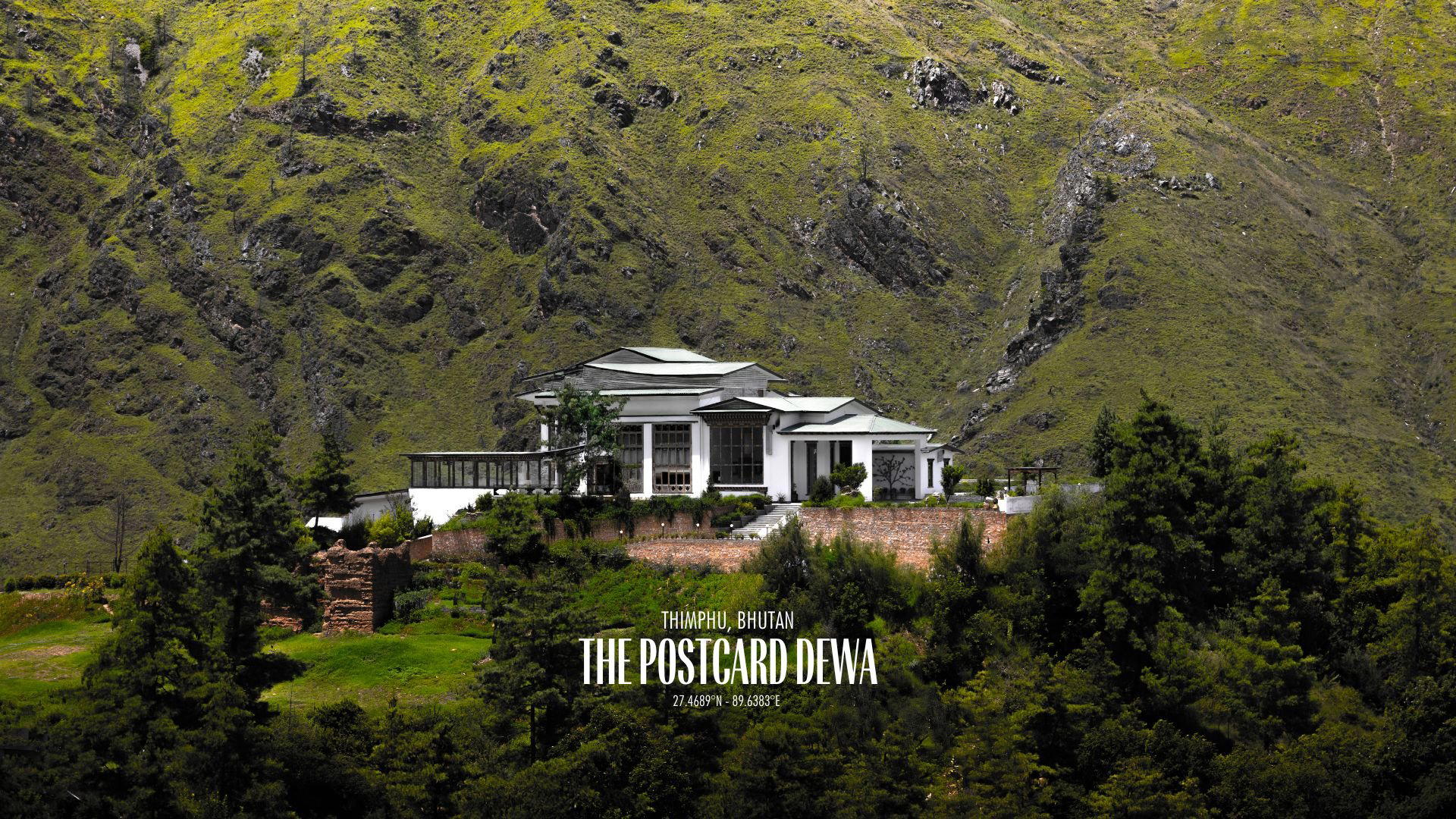
| The Postcard Dewa, Thimphu | $$$$ | 5-Star | Thimphu, Luxury boutique hotel with spacious rooms and private terraces overlooking dramatic mountain vistas. |
| COMO Uma, Bhutan | $$$$ | 5-Star | Paro Valley, Contemporary Bhutanese luxury resort blending local craftsmanship with modern minimalism |
| Gangtey Lodge | $$$$ | 5-Star | Gangtey Valley, Traditional Bhutanese farmhouse blending rural architecture with luxury comforts |
Recognition history
Dated appearances from independent guides and award organizations, with the underlying list record or original source where available.
Forbes Recommended
Forbes
Mr & Mrs Smith Smith Seal of Approval
Mr & Mrs Smith
Conde Nast Best Resorts #43
Conde Nast
At a Glance
- Quiet
- Elegant
- Scenic
- Intimate
- Sophisticated
- Honeymoon
- Romantic Getaway
- Wellness Retreat
- Anniversary
- Panoramic View
- Private Villa
- Spa
- Wi Fi
- Room Service
- Concierge
- Laundry Service
- Airport Transfer
- Mountain
- Garden
- Spa
- Wi Fi
- Room Service
- Concierge
- Laundry Service
- Airport Transfer
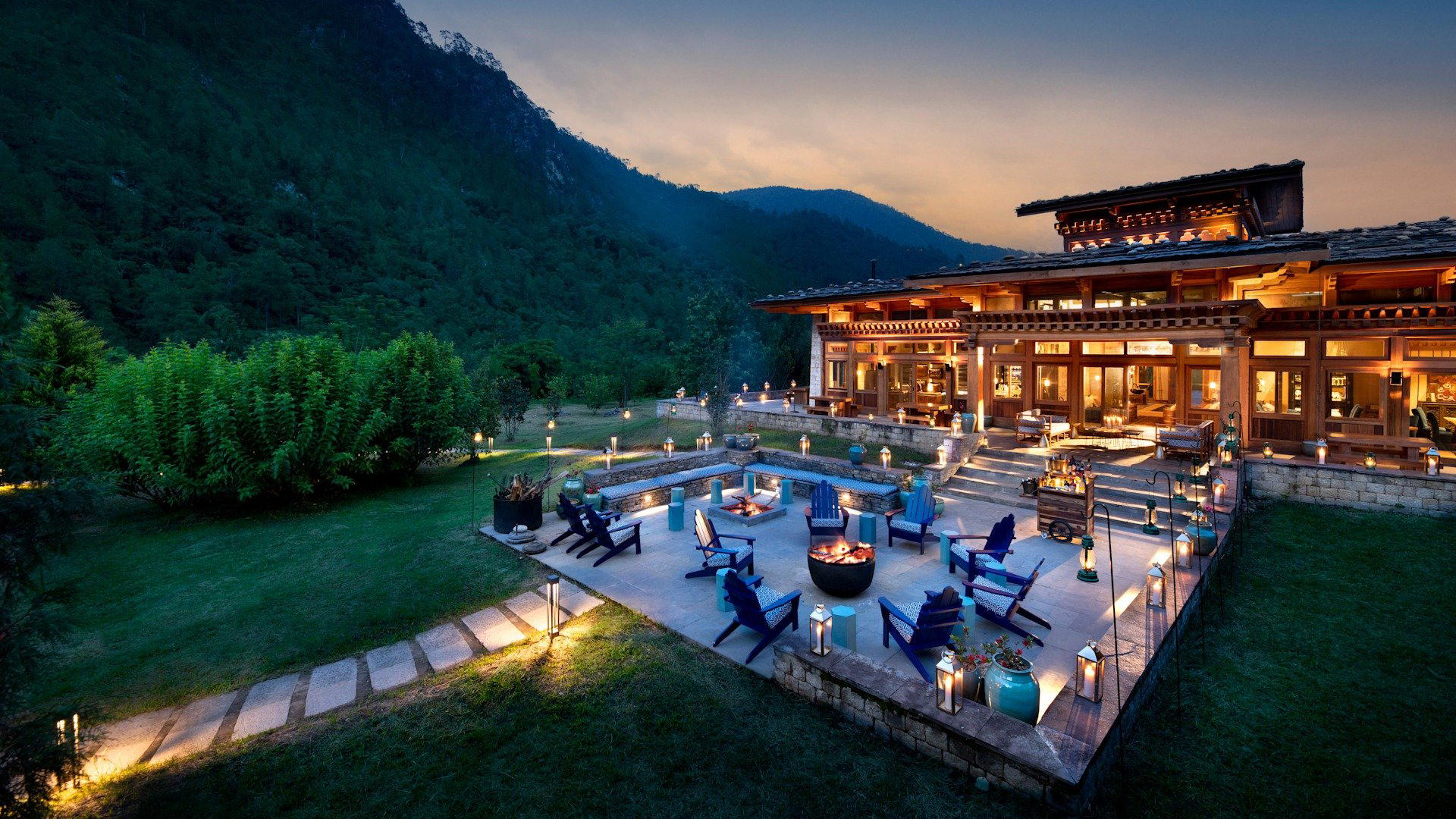
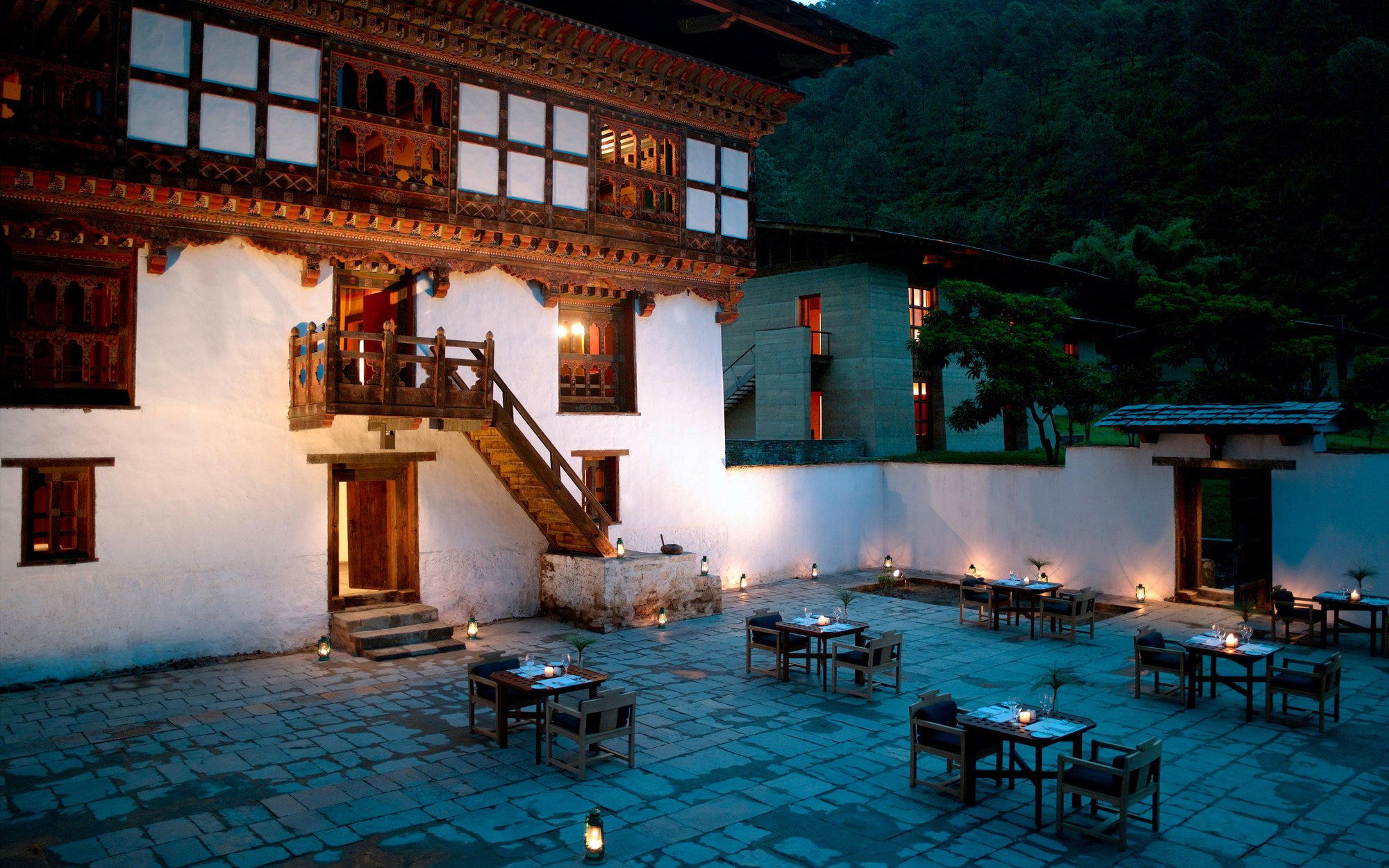
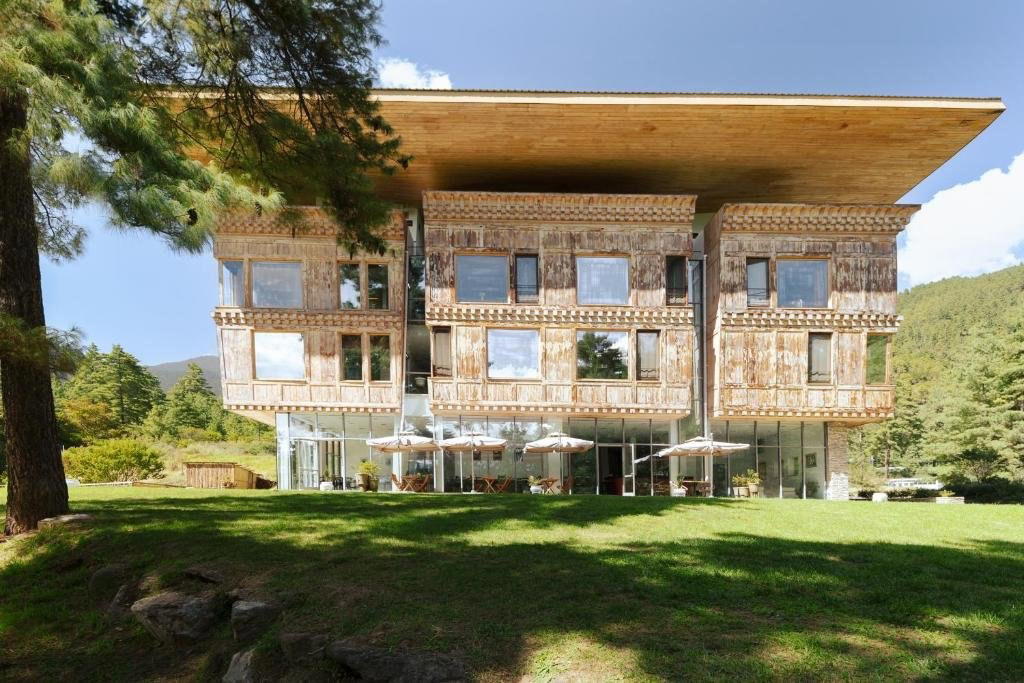
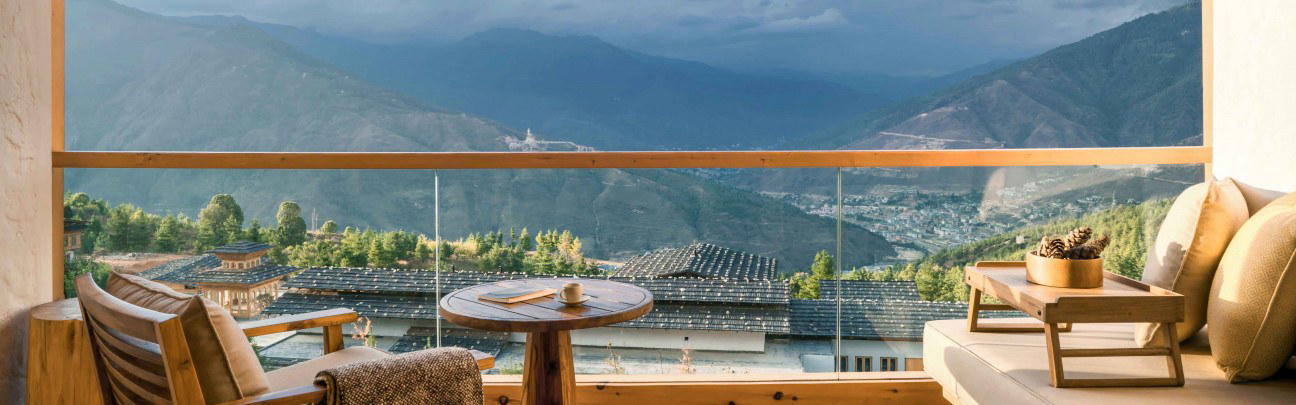
Serene and light-filled with valley views, featuring sheesham-wood furniture, traditional Bhutanese elements, and a peaceful woodland glade spa setting.