
A nine-room tented lodge on the banks of the Mo Chhu river, andBeyond Punakha River Lodge sits within one of Bhutan's most historically significant valleys. The intimate scale places it in a different category from larger Bhutan properties, with the surrounding monastery landscape and river as the dominant architectural reference points rather than the lodge itself.
Pearl is the En Primeur Club membership app — saves, bookings, and concierge access live there. Same editors, same standards.
- Address
- Punakha River Lodge, Punakha 13001
- Phone
- +975 2 584 720
- Website
- go.andbeyond.com
- Directions
- Get directions
 Saves & bookings on Pearl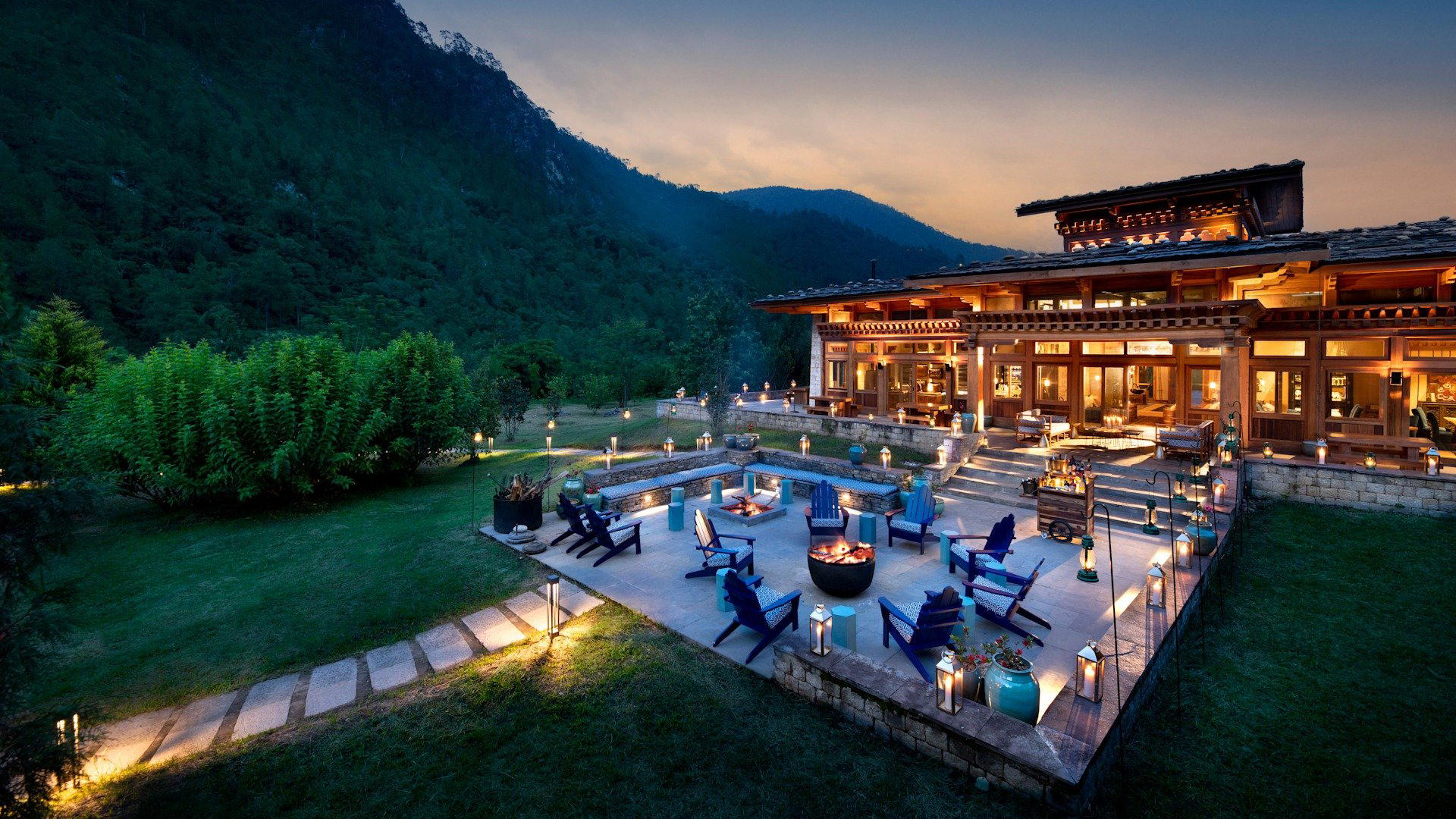
River, Valley, and the Logic of Nine Rooms
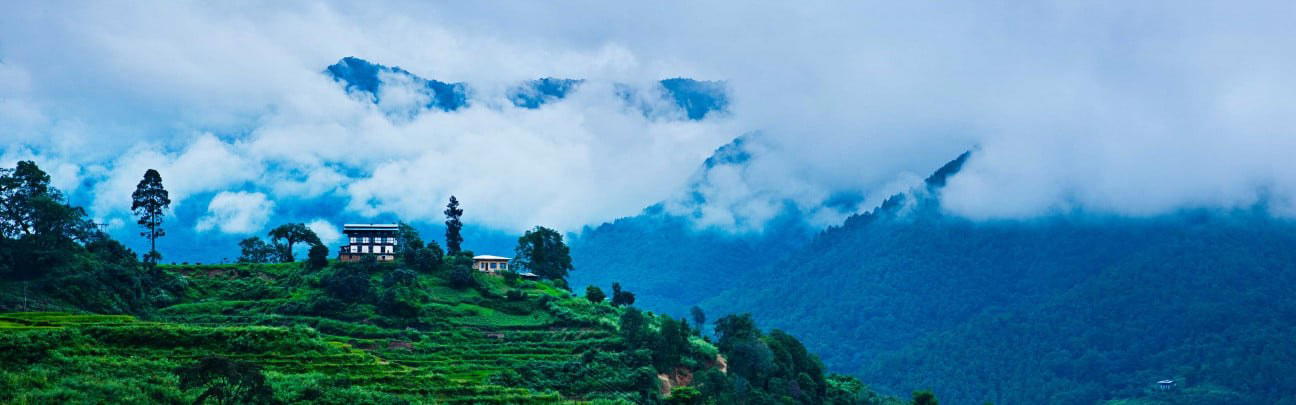
Arriving at the Mo Chhu riverbank in Punakha, the relationship between structure and landscape becomes immediately apparent. The Punakha valley sits at roughly 1,200 metres above sea level, which makes it one of Bhutan's warmer, more temperate districts, a distinct contrast to the higher-altitude zones around Paro or Gangtey. The dzong at the confluence of the Pho Chhu and Mo Chhu rivers, a 17th-century fortress monastery that served as Bhutan's capital until 1955, anchors the valley's visual and historical register. andBeyond Punakha River Lodge is positioned inside that context, with eight rooms that make proximity to the river the central spatial logic rather than a scenic amenity.
The eight-room count is a deliberate constraint that places this lodge within a tier of Bhutan accommodation where the ratio of staff to guests, the degree of environmental immersion, and the absence of resort-scale infrastructure are all features rather than limitations. That tier now represents a defined niche in Bhutan's premium market, sitting alongside properties like COMO Uma Punakha in the valley and Gangtey Lodge in Gangtey, each with their own approach to low-footprint luxury in geographically specific settings.
The Design Grammar of a Tented River Lodge
In Bhutan's premium accommodation sector, two broad design philosophies have emerged. The first draws on traditional rammed-earth and timber construction, referencing dzong architecture and vernacular farmhouse forms, the approach taken by properties like Bhutan Spirit Sanctuary in Shaba and the Six Senses Bhutan in Thimphu. The second, rarer approach takes a tented or semi-permanent structure format, where the architecture makes a deliberate argument for impermanence: the land is not transformed, the river is not redirected, and the visual mass of the property remains subordinate to its setting.
andBeyond Punakha River Lodge belongs to that second category. Tented lodge formats in landscapes with this kind of historical and spiritual density carry a particular logic: by not competing with the dzong, the terraced fields, or the river itself, the accommodation becomes a frame rather than a statement. The andBeyond group, which operates tented camp properties across East Africa and South Asia, applies a consistent spatial grammar, canvas and timber structures that read as temporary against geological and agricultural permanence. In the Punakha valley, that approach is especially coherent, given that the landscape itself has been shaped over centuries by Bhutanese governance, Buddhism, and subsistence farming rather than by tourism infrastructure.
At eight rooms, the lodge sits comfortably within the small-footprint tier that Bhutan's Sustainable Development Fee structure was designed to support. Bhutan's per-day visitor levy, which applies to international travellers and funds conservation and infrastructure, effectively prices out volume tourism and concentrates the international market in properties with correspondingly higher nightly rates and lower guest counts. For context, comparable andBeyond tented properties in East Africa operate on similar principles of ecological minimum footprint and concentrated, high-quality service delivery.
Punakha as a Setting: What the Valley Offers
Punakha's appeal as a base is not incidental. The valley's lower elevation means rhododendrons bloom earlier than in higher districts, making late February to April a period when the visual contrast between flowering trees and the grey stone of Punakha Dzong is at its most pronounced. The Mo Chhu is also one of Bhutan's more accessible rivers for white-water rafting at a Class III level, which gives the lodge's riverside positioning an activity dimension beyond passive landscape observation.
The dzong itself, which suffered flood and earthquake damage over its history and was last substantially restored in the 1990s, functions as both a spiritual and administrative centre for the valley. Access is regulated and dress codes apply, as with all dzong visits in Bhutan. Walking the suspension bridge across the Mo Chhu to reach the dzong gates is among the more atmospheric short walks in the country, covering a distance of several hundred metres across swaying cable and timber.
Amankora in Paro covers the airport-arrival end of that circuit, while properties in the Phobjikha valley or further east extend it. The Punakha segment, anchored at a river lodge, gives the itinerary a physical and textural counterpoint to the more land-bound monastery and town experiences elsewhere.
Placing the Lodge in Its comparable set
Within Bhutan's premium accommodation tier, the relevant comparisons are properties that similarly operate at or below twelve rooms and prioritise landscape access over facility breadth. Gangtey Lodge operates with a similar guest-count philosophy in the Phobjikha valley, though its built form references traditional Bhutanese architecture more explicitly. COMO Uma Punakha, in the same valley, takes a villa-in-the-fields approach with a fixed structure and spa programming. The River Lodge, by contrast, holds a tented format that commits more fully to the riverbank as the design site.
Internationally, the andBeyond group's own portfolio offers useful comparative context. Properties like Amangiri in Canyon Point represent a different end of the small-count luxury spectrum, with large-format architecture shaped by desert geology. The Punakha lodge sits at the other end of that spectrum, where the architecture minimises its own mass. For travellers familiar with andBeyond's East African camps, the Punakha property translates that operational model into a Himalayan Buddhist context.
Bhutan's tourism framework requires visitors to book through licensed operators or directly with qualifying hotels, and the Sustainable Development Fee must be settled before arrival. For a nine-room property in a high-demand valley during peak season (March-April and October-November), availability operates on a compressed timeline. Travellers planning a Bhutan circuit that includes the Punakha valley should treat this lodge as the constraint around which other elements are scheduled, rather than an add-on confirmed after flights and broader itinerary are set.
Comparison Snapshot
Comparable venues nearby, for context on price, style, and recognition.
| Venue | Cuisine | Price | Awards | Notes |
|---|---|---|---|---|
| andBeyond Punakha River LodgeThis venue — the venue you are viewing | Luxury adventure lodge blending traditional Bhutanese architecture with contemporary design, featuring suspended safari-style tents and private villas positioned for maximum privacy and natural immersion. | $$$$ | 5-Star | Not listed |
| COMO Uma Punakha | Intimate luxury lodge blending traditional Bhutanese design with contemporary comfort | $$$$ | 5-Star | Punakha Valley |
| Zhiwaling Heritage | Traditional Bhutanese architecture blended with modern luxury, featuring locally sourced stone and timber with hand-carved details inspired by dzong and monastery design. | $$$$ | 5-Star | Paro Valley |
| Bhutan Spirit Sanctuary | Wellness-inclusive luxury resort inspired by traditional Bhutanese dzong architecture | $$$$ | 5-Star | Shaba |
| COMO Uma, Bhutan | Contemporary Bhutanese luxury resort blending local craftsmanship with modern minimalism | $$$$ | 5-Star | Paro Valley |
| Gangtey Lodge | Traditional Bhutanese farmhouse blending rural architecture with luxury comforts | $$$$ | 5-Star | Gangtey Valley |
Recognition history
Dated appearances from independent guides and award organizations, with the underlying list record or original source where available.
Preferred Hotels Member
Preferred Hotels
At a Glance
- Romantic
- Scenic
- Quiet
- Elegant
- Rustic
- Honeymoon
- Romantic Getaway
- Wellness Retreat
- Anniversary
- Private Villa
- Butler Service
- Destination Spa
- Waterfront
- Garden
- Panoramic View
- Private Dining
- Wi Fi
- Pool
- Spa
- Room Service
- Concierge
- Restaurant
- Waterfront
- Mountain
- Garden
- Wi Fi
- Pool
- Spa
- Room Service
- Concierge
- Restaurant
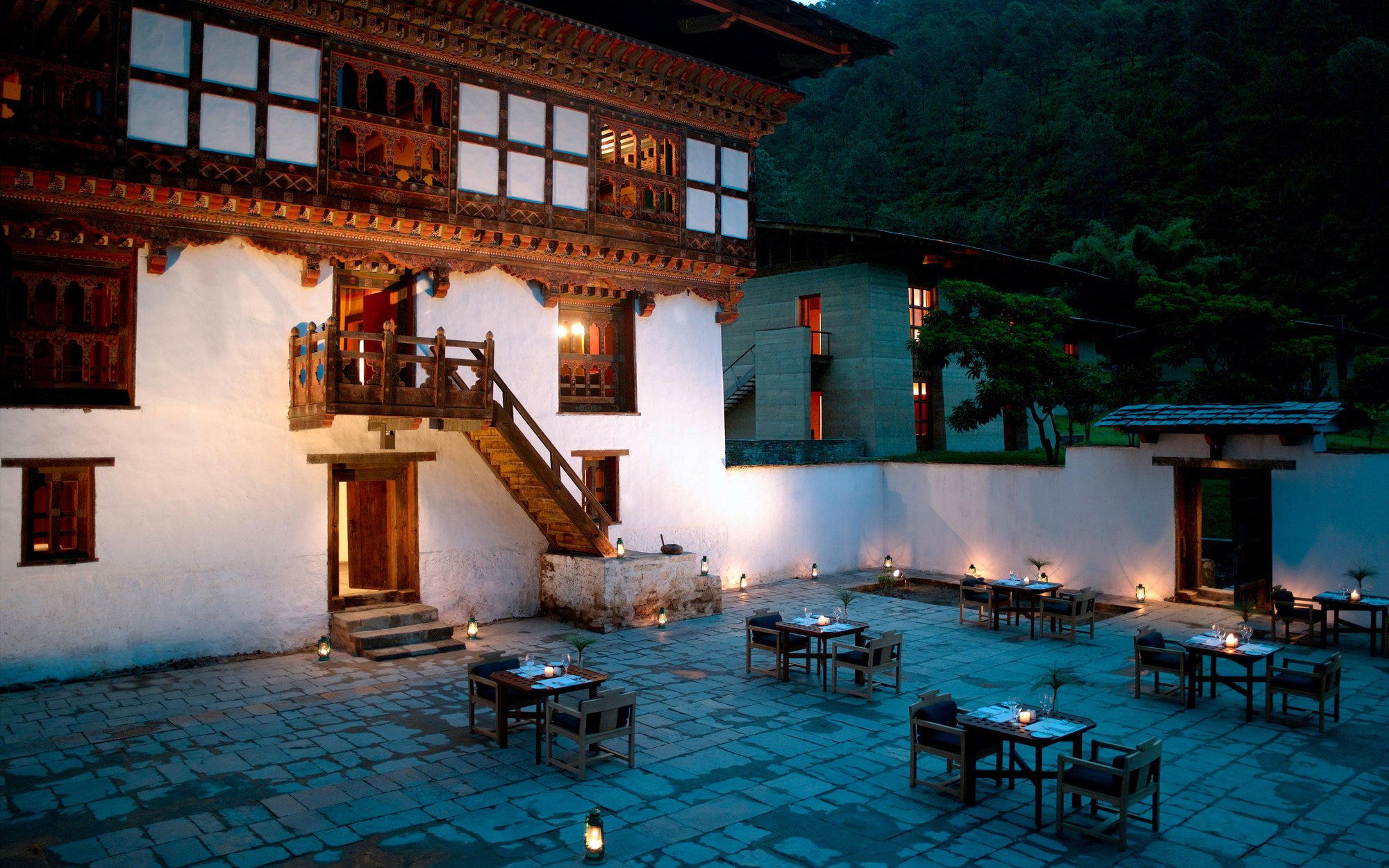
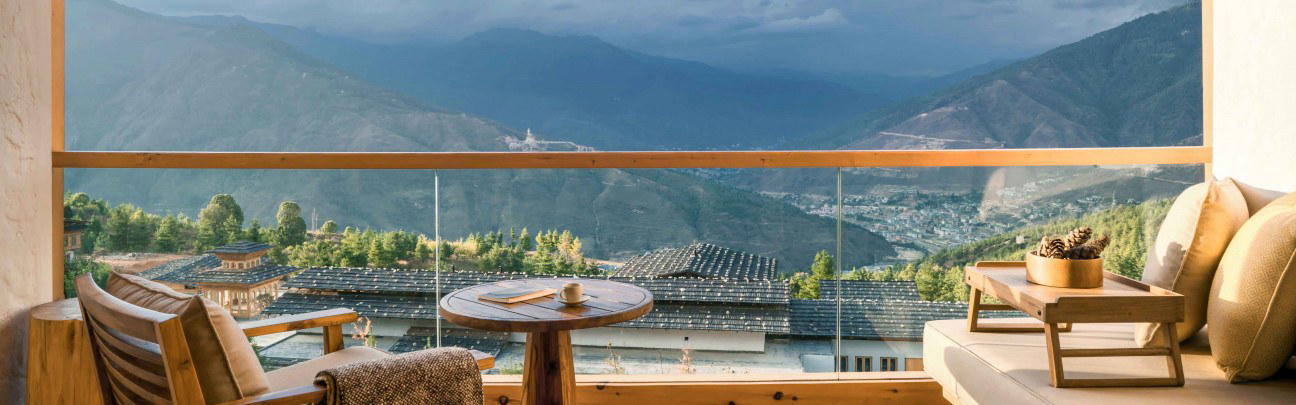
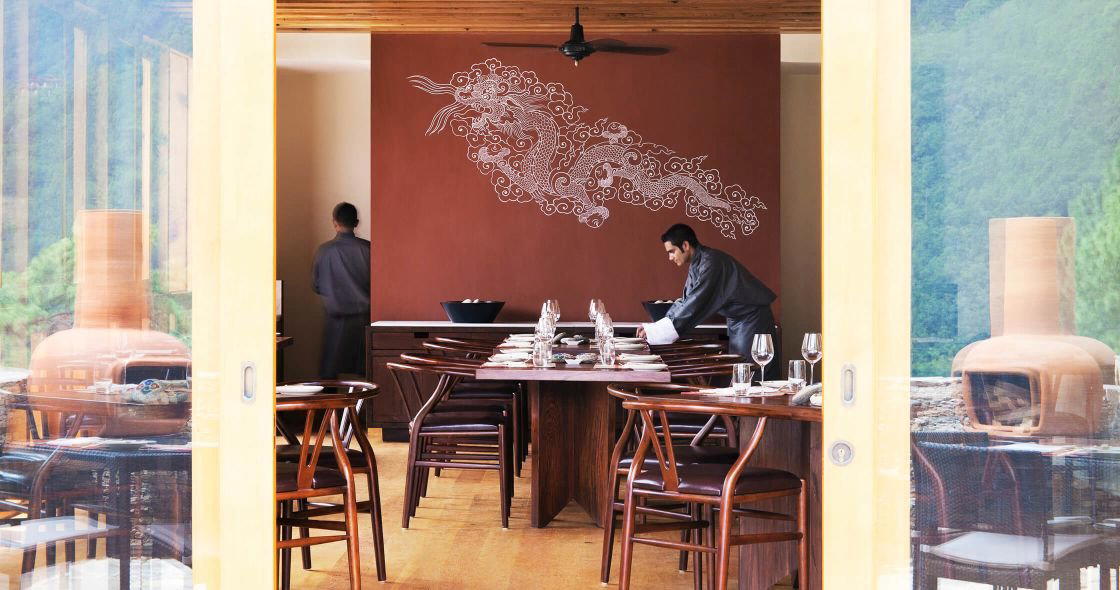
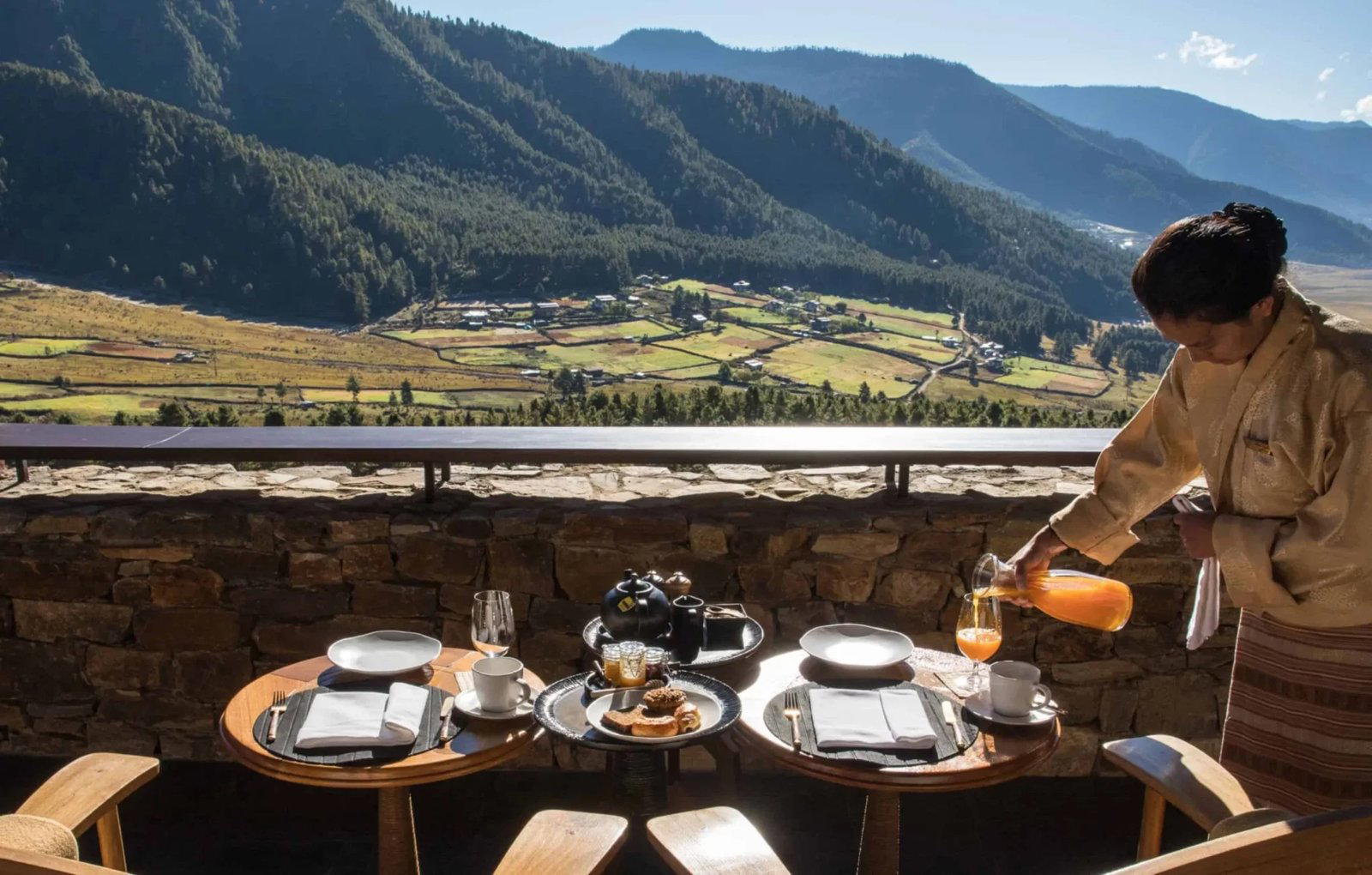
Serene and peaceful with natural lighting from floor-to-ceiling windows in suites, candlelit outdoor dining areas overlooking the river, and warm hospitality creating an intimate luxury atmosphere.