




2 Michelin Keys · Mr & Mrs Smith Seal of Approval · Virtuoso Luxury Hotel Partner
Spread across five lodge properties in Paro, Thimphu, Punakha, Gangtey, and Bumthang, Amankora is the Aman group's multi-lodge circuit through Bhutan's western and central valleys. Each property draws on traditional rammed-earth architecture and blue pine forest settings, with rates from USD 1,700 per night and inclusion in Tatler's Best Hotels Asia-Pacific 2025. Bhutan's USD 100-per-day Sustainable Development Fee applies on top.

Pearl is the En Primeur Club membership app — saves, bookings, and concierge access live there. Same editors, same standards.
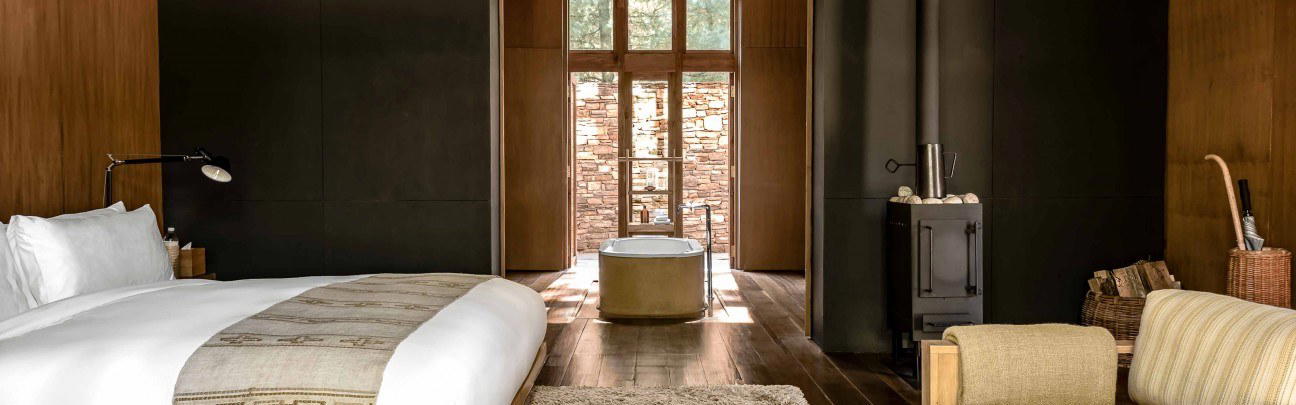
Architecture as Arrival: How Amankora Frames Bhutan's Built Environment
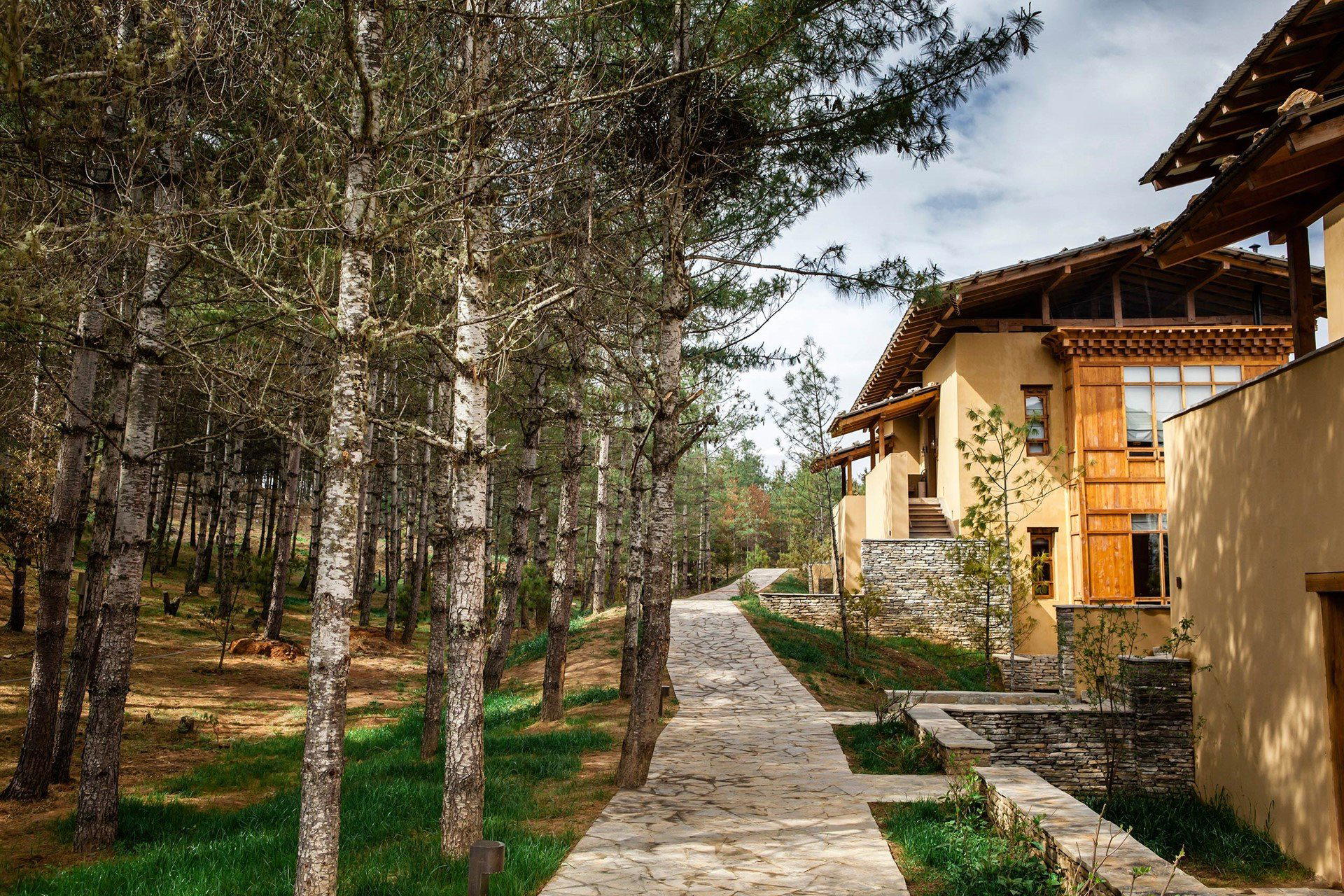
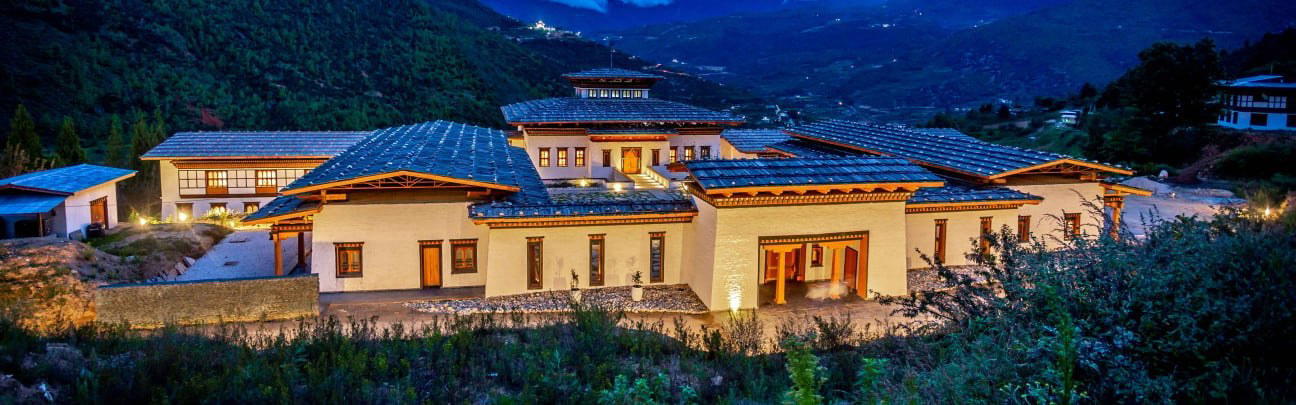
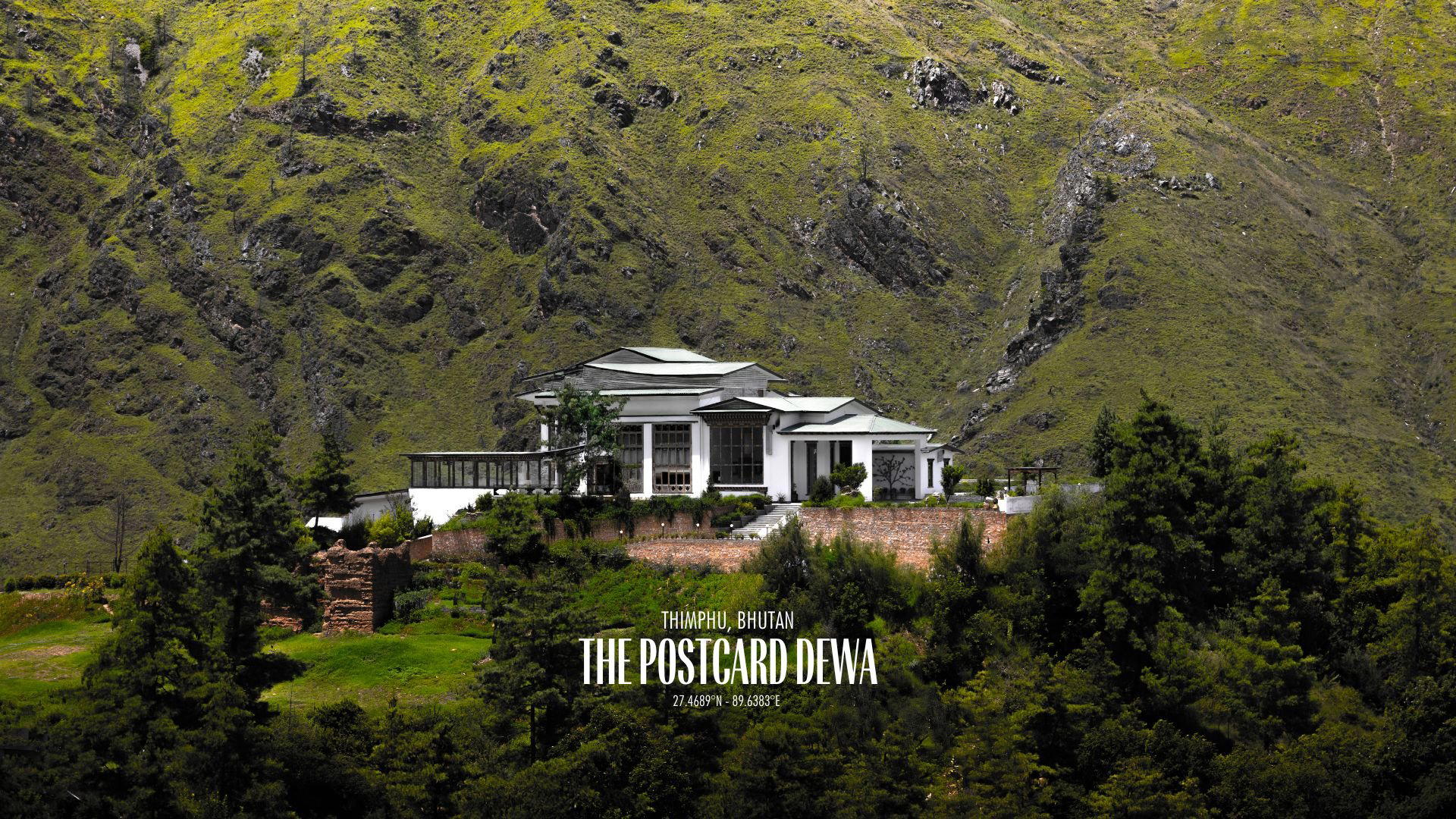
The approach to Amankora Paro tells you something important about how the Aman group decided to enter Bhutan. Rather than clearing land for a signature statement building, the lodge sits within a blue pine forest in the Paro Valley, its lime-washed stone pavilions half-absorbed by the treeline. The architecture does not announce itself. It positions itself as a condition of the surrounding landscape, and that restraint is deliberate: in a country where the built environment carries centuries of symbolic weight, the most defensible architectural posture is one of deference.
Bhutanese construction tradition operates through a specific visual grammar. Sloping roofs with deep overhangs, rammed-earth or stone walls finished in white lime wash, heavy timber framing, and interior wood panelling define the vernacular from farmhouses to dzong fortresses. What distinguishes Amankora's design approach is not invention but calibration: these forms are applied with the material discipline of a contemporary minimalist program rather than literal reproduction. The result sits at a recognisable distance from both pastiche and pure modernism.
The Lodge Structure: Five Properties, One Circuit
Where most Aman properties are singular destinations, Amankora operates as a network. Five lodges span Bhutan's western and central valleys: Paro, Thimphu, Punakha, Gangtey, and Bumthang. The total across all five properties reaches 76 rooms, which means each individual lodge remains intimate by design. Amankora Paro holds 24 suites; Amankora Thimphu, 16. Guests can move through all five as a circuit, or anchor at one. This distributed model is unusual within the Aman portfolio, where properties like Amangiri in Canyon Point or Aman Venice in Venice function as standalone destinations. Here, the network is the product.
The positioning reflects Bhutan's own approach to tourism. The Royal Government has maintained strict controls on visitor numbers for decades, deliberately avoiding the mass-market trajectory of neighbouring Nepal. The Sustainable Development Fee, adjusted in September 2023, now charges USD 100 per adult per day (USD 50 for children aged six to twelve), applying regardless of length of stay. Combined with Amankora's rates, which begin at USD 1,700 per night and are otherwise quoted on request, the cost of access removes a significant portion of the travel market from consideration. Amankora sits at the top of what is already a filtered field.
Paro: The Physical Context
Amankora Paro occupies the upper portion of the Paro Valley, 20 minutes from Paro's international airport, which remains the country's only commercial gateway. The lodge elevation sits well above the valley floor, with views of the 17th-century Drukyel Dzong and Mount Jhomolhari at 7,300 metres. These are not incidental backdrops. Bhutanese dzongs function simultaneously as administrative centres and monastic complexes, and their visual presence in the surrounding landscape carries institutional weight that no amount of interior design can replicate.
The Paro Valley is also the entry point for most international visitors and home to the Taktsang Monastery (Tiger's Nest), one of the country's most visited sites. This gives Amankora Paro a practical advantage over its sister lodges in more remote valleys: it works as both a starting point and a standalone base. For travellers comparing Paro's high-end options, Six Senses Paro and COMO Uma, Bhutan occupy the same upper tier with different architectural and programmatic approaches.
Suite Design: Material Logic
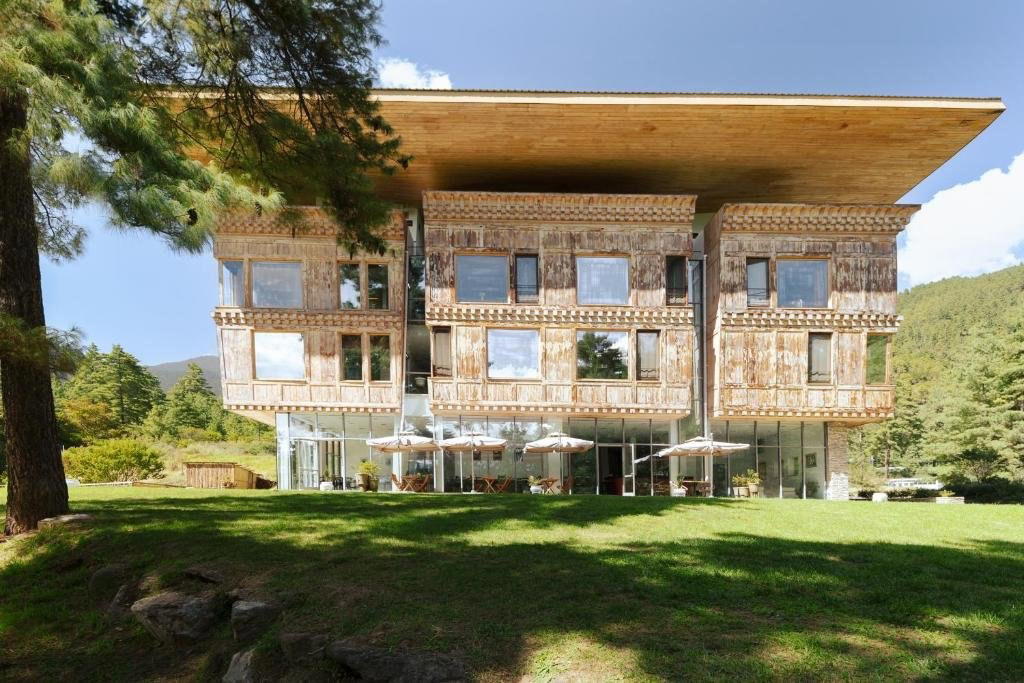
Each suite across the Amankora properties follows a consistent material vocabulary: rammed-earth walls, gently sloping roofs, and wood-panelled interiors. The central fixture in each room is a traditional bukhari, a wood-burning stove historically used throughout the Himalayas, positioned to serve as both heat source and spatial anchor. In Amankora Thimphu, the bukhari sits between the bedroom and bathroom, visible from the terrazzo-clad bath through a vertical window, which is a detail that places functional tradition directly within the bathing experience rather than relegating it to decorative status.
Terrazzo, rammed earth, and timber are the three materials that recur throughout the properties. None of them require significant maintenance intervention to age well, and all develop surface character over time. Compared to the polished marble and lacquered finishes common at comparable properties, including Cheval Blanc Paris in Paris or Bvlgari Hotel Tokyo in Tokyo, Amankora's palette reads as deliberately unpolished. That is the point. Luxury here is defined by context and quiet rather than surface finish.
At Amankora Paro, suites are connected by flagstone pathways around a central flagstone courtyard, a layout the property describes as conceptualised as a village. This dispersal of programme across linked pavilions rather than a single building block is consistent with how Bhutanese monastic complexes are organised, where function is distributed across courtyard-linked structures rather than concentrated under one roof.
The Sister Lodges: Punakha, Gangtey, Thimphu, Bumthang
Each of the remaining four lodges opens onto a different ecological and cultural condition. Amankora Punakha sits in the temperate Mo Chhu river valley, where the climate is warm enough for outdoor courtyard dining and where a tea pavilion that was once the royal kitchen anchors the public spaces. Amankora Gangtey overlooks the Phobjikha Valley, a glacial basin that serves as winter habitat for black-necked cranes. Amankora Thimphu provides access to the capital's museums and markets while remaining within a blue pine forest in the Motithang area. Amankora Bumthang, the most remote, reaches into the ancient heartland of Bhutanese Buddhism.
For travellers focused on individual valleys, alternatives in the market include andBeyond Punakha River Lodge in Punakha, Gangtey Lodge in Gangtey, Six Senses Bhutan in Thimphu, and Bhutan Spirit Sanctuary in Shaba. The Amankora circuit's advantage over these is continuity: a single operator, a consistent design language, and coordinated logistics across the full itinerary.
Recognition and Competitive Standing
The Aman group's broader portfolio occupies the upper tier of independent luxury in a way that differs structurally from large branded chains. Properties like Aman New York in New York City serve as urban flagships, while Amankora represents the group's most geographically specific and access-restricted product. The constraint imposed by Bhutan's own entry requirements means the competitive field here is narrow by design, not by accident.
Planning Your Stay
Amankora Paro sits a 20-minute drive from Paro International Airport, the sole commercial entry point into Bhutan. Visa formalities for non-Indian nationals require two to three weeks to process and must be arranged in advance. The Aman group recommends coordinating travel via Bangkok, where staff can manage visa logistics before arrival in Paro. Reservations across all five lodges are confirmed through Aman's customer service team rather than through a standard online booking channel; the property requires guest information before confirming a stay. Rates begin at USD 1,700 per night before Bhutan's Sustainable Development Fee of USD 100 per adult per day. For context on Paro's broader dining and travel options, see our full Paro restaurants guide.
What is Amankora known for?
Amankora is the Aman group's Bhutan circuit: a network of five lodges across the Paro, Thimphu, Punakha, Gangtey, and Bumthang valleys. The properties share a design language rooted in traditional Bhutanese rammed-earth architecture and blue pine forest settings. Amankora Punakha holds a place in Tatler's Leading Hotels Asia-Pacific 2025. Rates begin at USD 1,700 per night, with Bhutan's USD 100-per-adult-per-day Sustainable Development Fee applying in addition.
What is the leading suite at Amankora?
All suites across the Amankora properties follow a consistent design brief: rammed-earth walls, wood-panelled interiors, king-size beds, traditional bukhari wood-burning stoves, and terrazzo baths. At Amankora Paro, all 24 suites carry views toward the Drukyel Dzong and Mount Jhomolhari. Guests seeking specific suite placement or views should confirm preferences directly with Aman's reservations team, as bookings are handled individually rather than through an online system.
Is Amankora reservation-only?
Yes. Amankora requires guest information before confirming reservations, and bookings are processed through Aman's customer service team rather than through a standard online booking platform. This applies across all five lodge properties. Given Bhutan's visa processing time of two to three weeks for non-Indian nationals, and the additional logistics of coordinating the Sustainable Development Fee, advance planning of at least a month is a practical minimum for first-time visitors.
Fast Comparison
Comparable venues nearby, for context on price, style, and recognition.
| Venue | Cuisine | Price | Awards | Notes |
|---|---|---|---|---|
| AmankoraThis venue (the venue you are viewing) | Minimalist Bhutanese lodge set in pine forests with panoramic mountain views. | Not listed | 2 Michelin Keys · Mr & Mrs Smith Seal of Approval | Not listed |
| Six Senses Paro | Bhutanese stone fortress-inspired luxury resort | Not listed | Star Wine List · Forbes 4-Star | Paro Valley |
| COMO Uma, Bhutan | Contemporary Bhutanese luxury resort blending local craftsmanship with modern minimalism | $1,000–1,500 | Virtuoso Luxury Hotel Partner | Paro Valley |
| Zhiwaling Heritage | Traditional Bhutanese architecture blended with modern luxury, featuring locally sourced stone and timber with hand-carved details inspired by dzong and monastery design. | $300–500 | 1 Michelin Key · Tablet Hotels Best New Hotel Designs (Asia) | Paro Valley |
| Gangtey Lodge | Award-winning eco-friendly luxury lodge blending traditional Bhutanese architecture with modern comforts | Not listed | 2 Michelin Keys · La Liste Top Hotels | Phobjikha Valley |
| Six Senses Bhutan | Rustic luxury palace in the sky on mountain hillside | $2,500+ | 1 Michelin Key · La Liste Top Hotels | Thimphu |
Recognition history
Dated appearances from independent guides and award organizations, with the underlying list record or original source where available.
Michelin 2 Keys
Michelin
Forbes 4-Star
Forbes
Mr & Mrs Smith Seal of Approval
Mr & Mrs Smith
Virtuoso Luxury Hotel Partner
Virtuoso
Tatler Listed in Best Hotels Asia-Pacific
Tatler
Full recognition history (6 entries)
Michelin 2 Keys
Michelin
Continue exploring
More in Paro
Hotels in Paro
All hotels in Paro →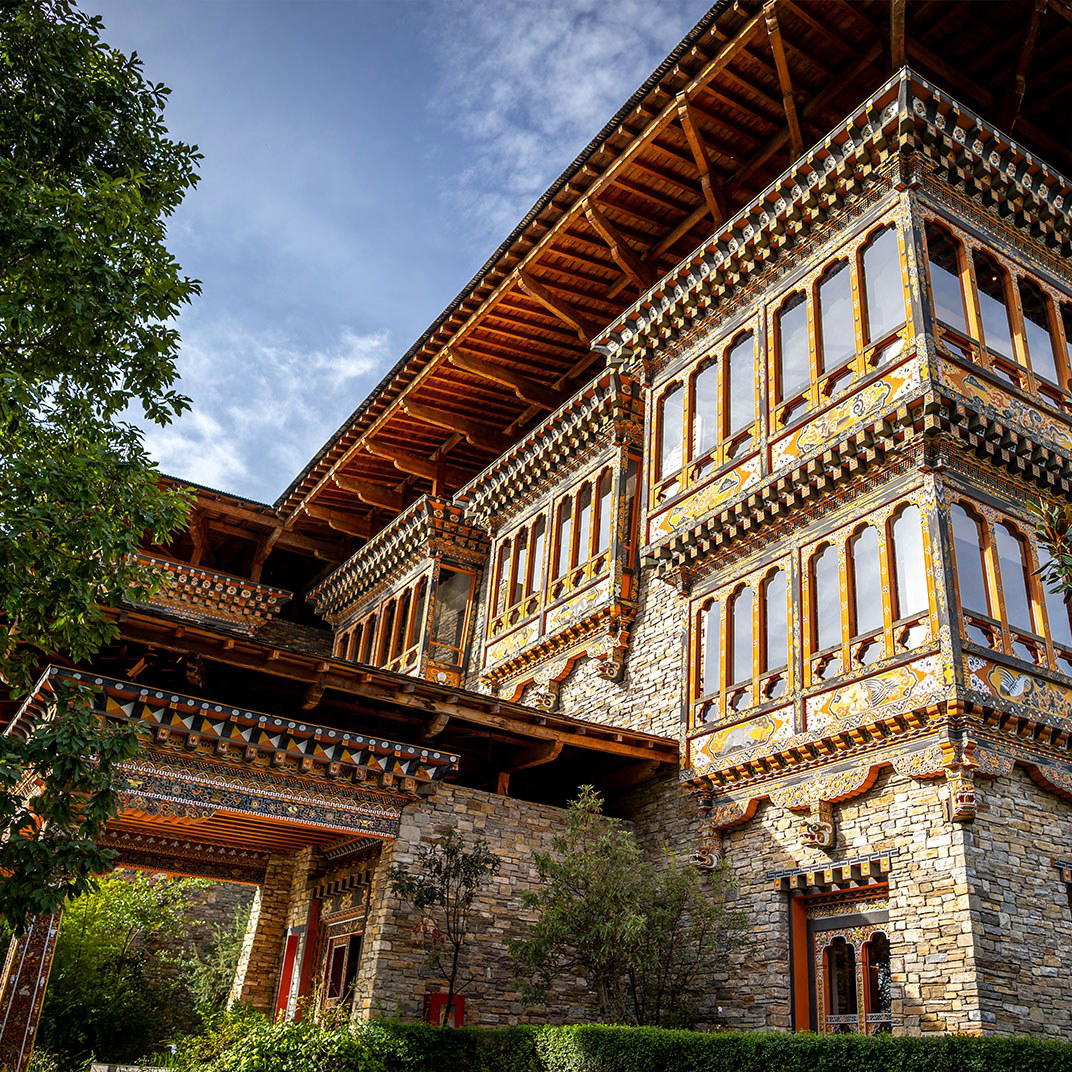
Restaurants in Paro
Browse all →
Details
- Quiet
- Elegant
- Scenic
- Intimate
- Sophisticated
- Minimalist
- Honeymoon
- Romantic Getaway
- Wellness Retreat
- Anniversary
- Panoramic View
- Private Villa
- Butler Service
- Destination Spa
- Spa
- Sauna
- Restaurant
- Room Service
- Concierge
- Wi Fi
- Mountain
- Garden
Zen-like with soft natural lighting, wood-paneled interiors, cedarwood scents, and a peaceful, rustic chic atmosphere centered around wood-burning stoves and valley views.