
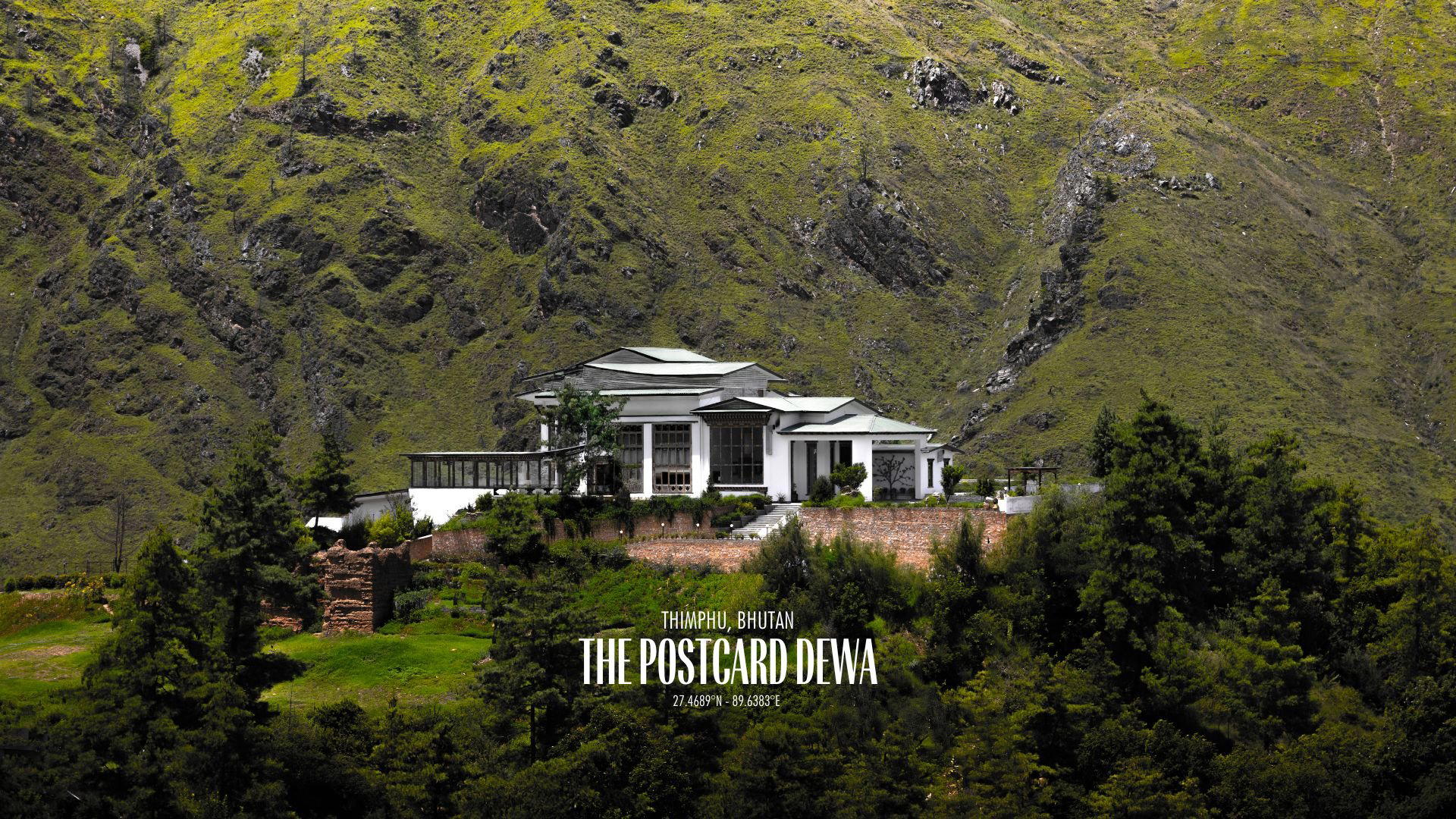
COMO Uma Paro occupies a 38-acre estate in Bhutan's Paro Valley, combining locally inspired architecture with the COMO Shambhala wellness programme and Bukhari restaurant. The property operates as both a luxury hotel and full tour operator, organising trekking, archery, and cultural excursions across the kingdom. It sits in the upper tier of Bhutan's small-group, design-led lodge circuit.
Pearl is the En Primeur Club membership app — saves, bookings, and concierge access live there. Same editors, same standards.
- Address
- PO Box 222
- Directions
- Get directions
 Saves & bookings on Pearl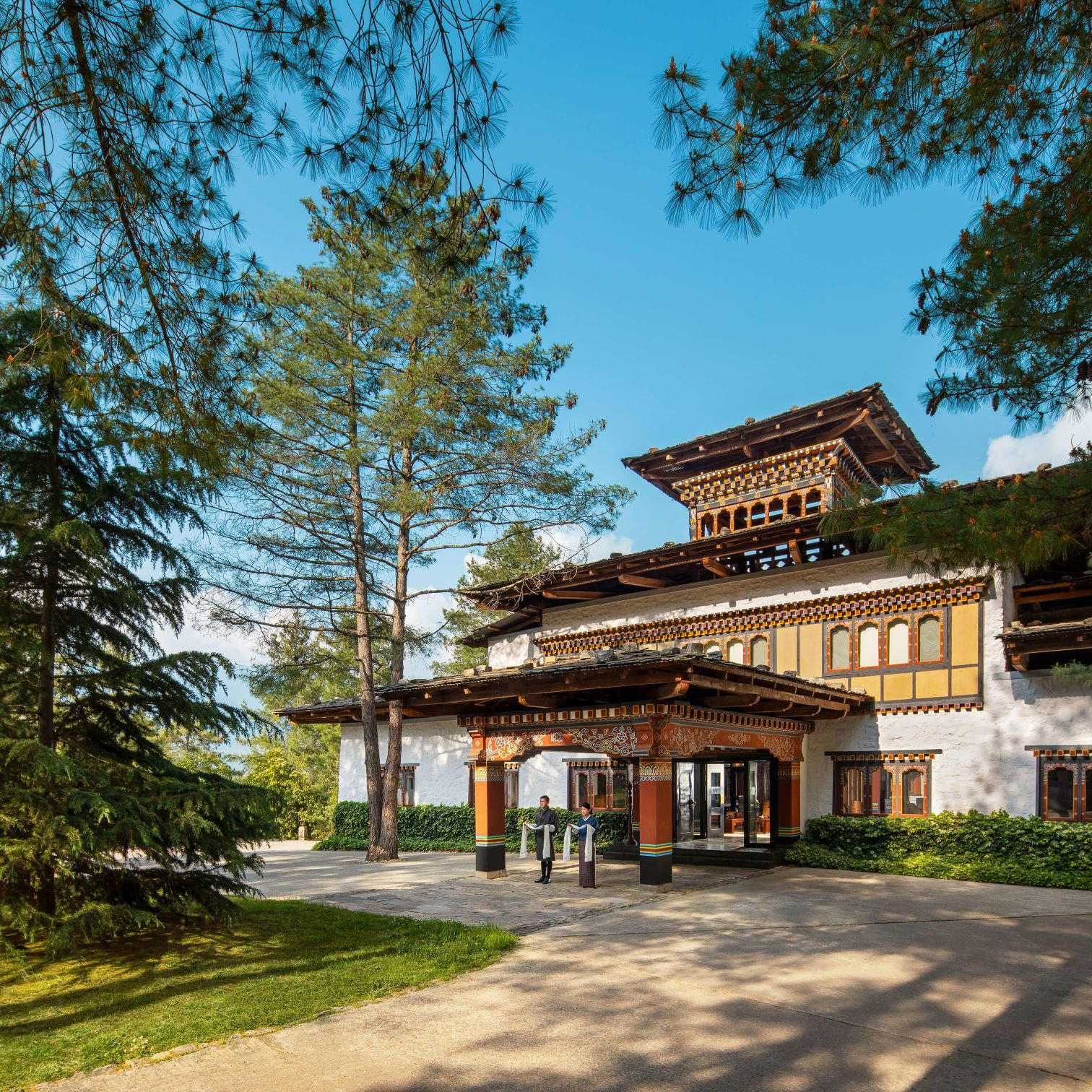
Arriving in the Paro Valley: Architecture as Orientation
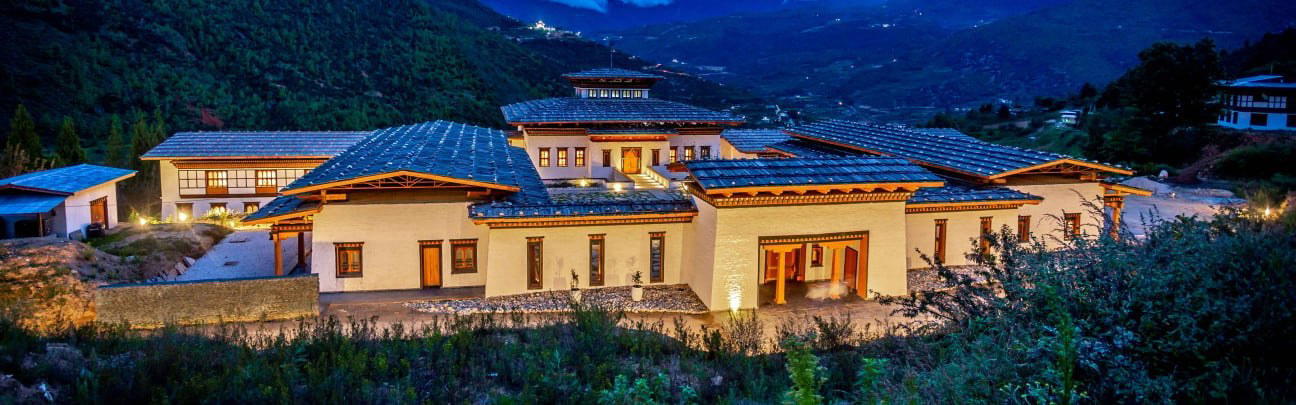
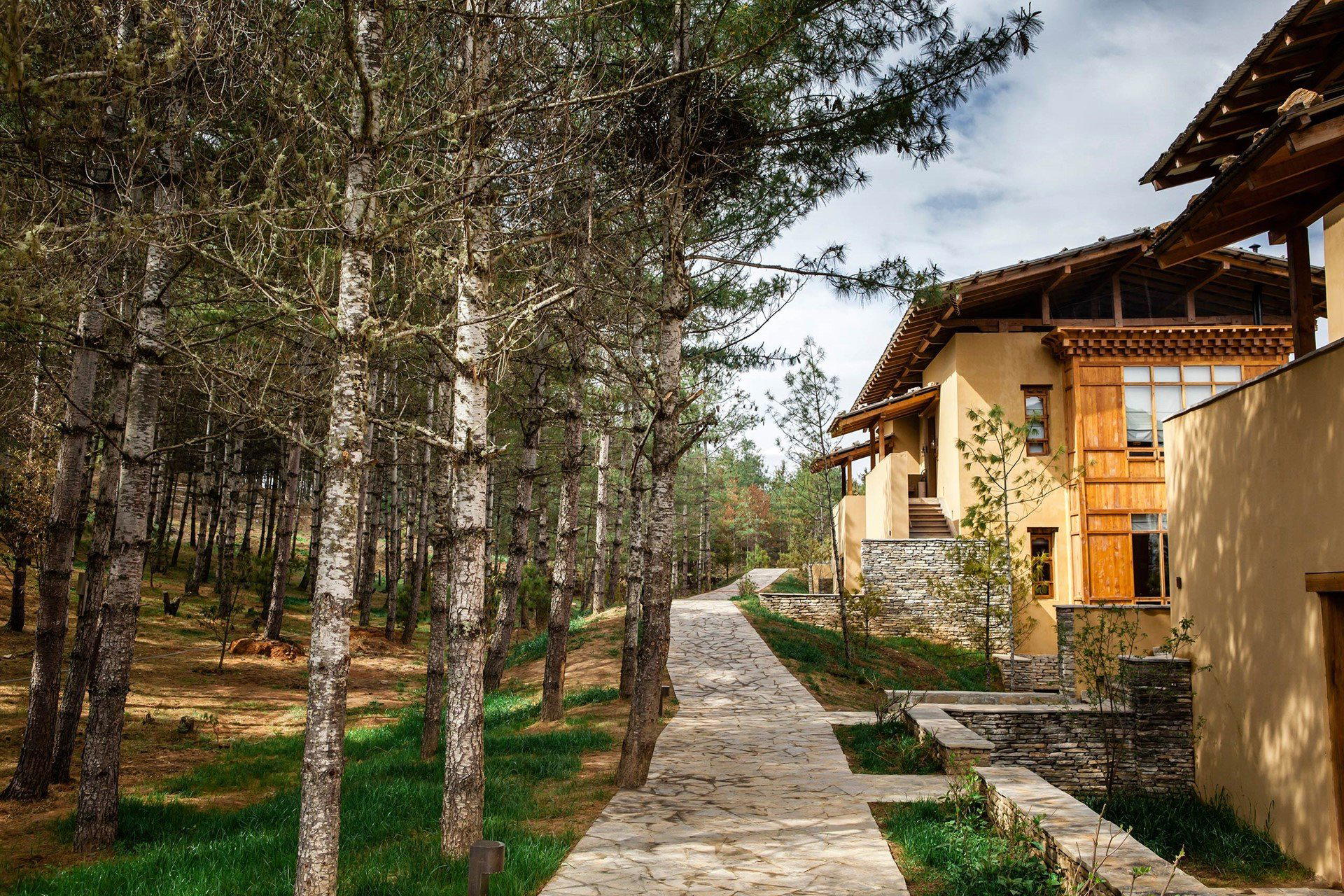
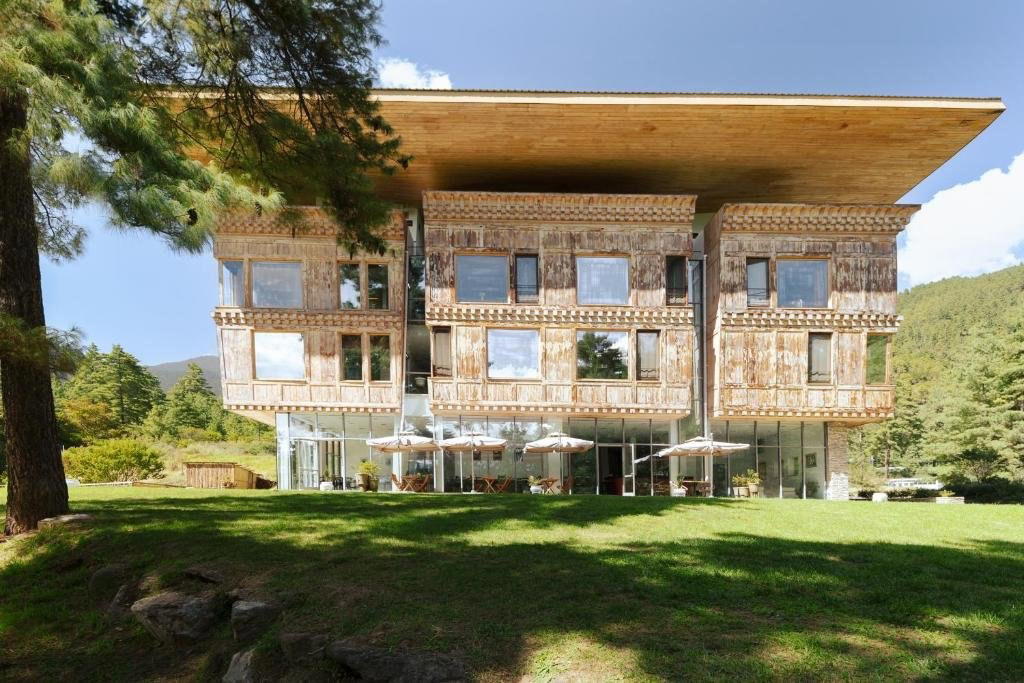
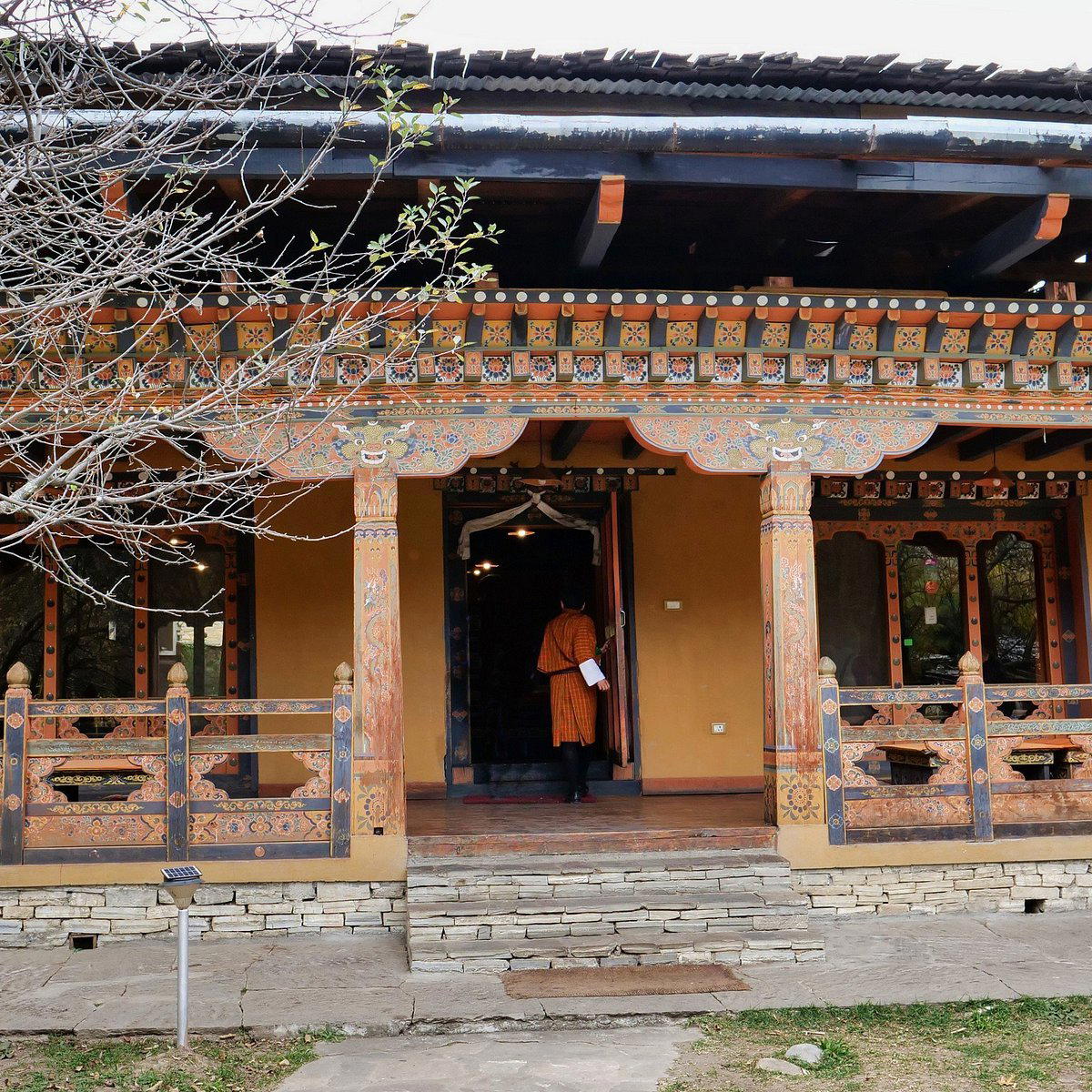
COMO Uma, Bhutan is a 5-star hotel in Paro, with 29 rooms and a nightly rate from USD 1,150. Prayer flags string across mountain ridgelines, whitewashed dzong walls rise against pine slopes, and the valley floor moves at a pace that has no urban equivalent. Into this context, COMO Uma Bhutan makes a deliberate architectural argument: its estate draws from local village construction traditions, with hand-painted murals and carved detailing throughout the interiors. The design work came from Bali-based architect Cheong Yew Kwan and Singaporean designer Kathryn Kng, who used vernacular Bhutanese forms as the primary reference rather than importing a generic Himalayan luxury idiom.
That choice places COMO Uma Paro in a specific tier within Bhutan's lodging circuit. The country's high-value properties have split between international brand outposts and smaller, locally anchored estates. COMO Uma sits in the latter category by design philosophy, even as it delivers the service infrastructure of a full international hotel group. Guests arriving from comparable properties, say, Amankora or Six Senses Paro, will find a peer-set sensibility around cultural immersion and small-scale operation, but COMO Uma's explicit positioning as a tour operator in addition to a hotel gives it a programmatic depth that differs from a pure accommodation play.
Bukhari and the Logic of Place-Based Dining
Bhutan's dining tradition does not operate like a destination restaurant scene. There are no independent fine-dining addresses drawing international food press to Paro, and the country's relatively closed tourism model means that food culture develops through hotels rather than around them. In this environment, an in-house restaurant carries more weight than it would in a city with a functioning dining neighbourhood.
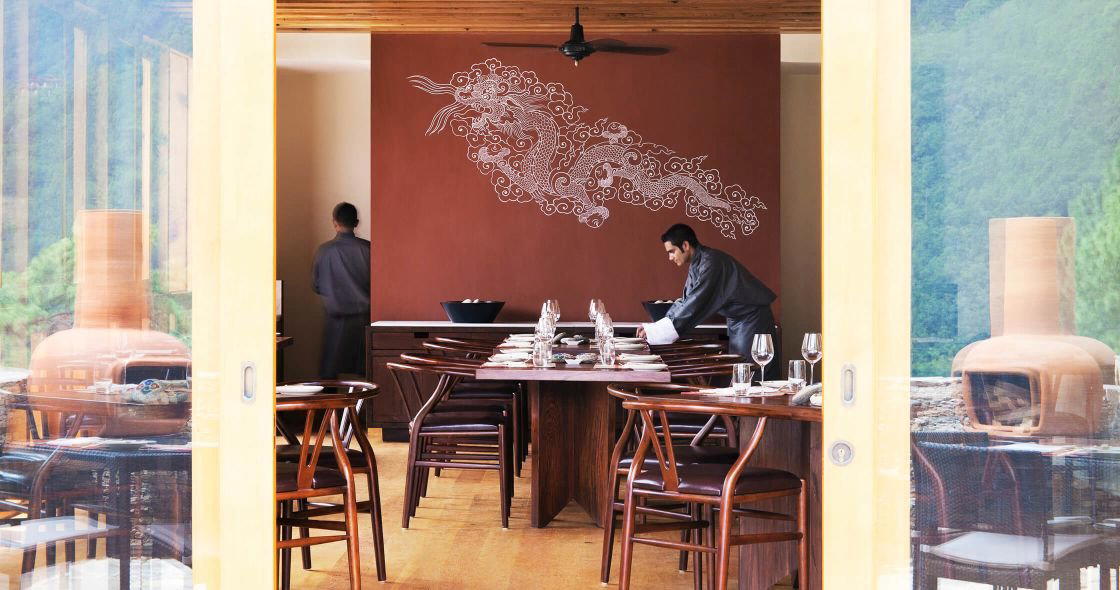
COMO Uma Paro's dining programme runs through Bukhari, a restaurant the property uses to anchor guests in local culinary culture rather than offer an internationally portable menu. The COMO group has consistently treated food as a structural element of its hotel identities, and Bhutan is no exception to that approach. At Bukhari, the aim is to translate Bhutanese ingredients and cooking methods into a format accessible to international guests without flattening the source material. The country's cuisine runs toward red rice, dried chillies, fresh cheese, and buckwheat preparations, ingredients shaped by altitude, climate, and Buddhist agricultural practice. A kitchen working honestly with that larder produces something categorically different from the pan-Asian menus that characterise luxury properties elsewhere in the region.
This commitment to place-based cuisine is worth contextualising against how other high-end properties handle the same challenge. Properties like Hotel Esencia in Tulum or Castello di Reschio in Lisciano Niccone face a parallel question: how much should a luxury property defer to local food culture versus offering guests a familiar international register? COMO Uma's answer leans toward the former, which is a meaningful editorial stance in a country where the cuisine is genuinely unfamiliar to most arriving guests.
The COMO Shambhala Programme and Wellness as Architecture
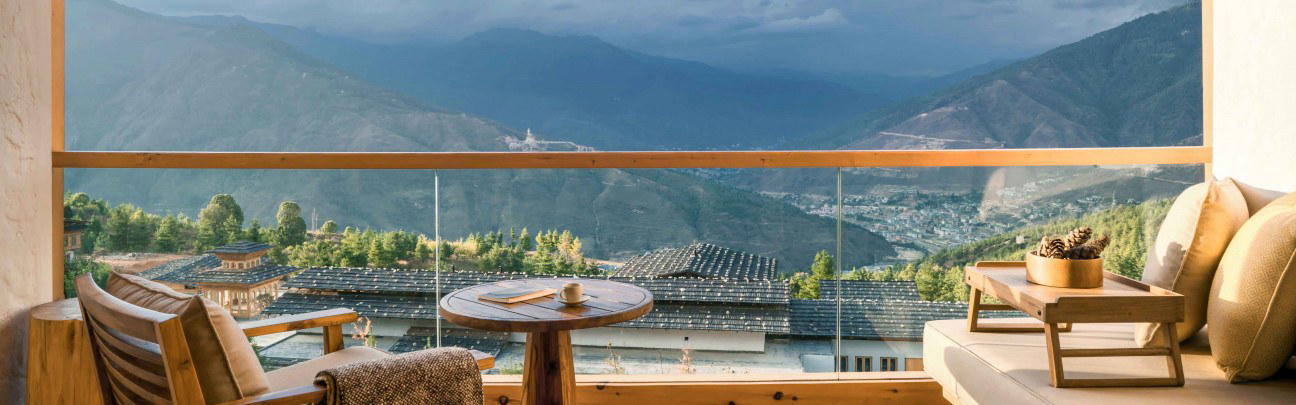
Bhutan presents an unusually coherent environment for wellness programming. The country's Gross National Happiness framework, its low population density, its forest coverage, and its absence of the ambient noise that defines urban hotel wellness experiences create conditions that wellness operators elsewhere spend considerable resources trying to simulate. COMO Uma Paro's COMO Shambhala Retreat works with that existing atmosphere rather than against it, offering yoga and holistic therapies in a valley where the elevation alone shifts the body's baseline.
The wellness model here differs from the destination-spa format common at properties like Six Senses Bhutan in Thimphu or comparable offerings at Badrutt's Palace Hotel in St. Moritz. The COMO Shambhala approach is less about treatment menus and more about resetting daily rhythm, an orientation that suits Bhutan's pace and positions the property as a recovery stay as much as an activity-led adventure base.
Experiences Beyond the Property: The Tour Operator Model
What distinguishes COMO Uma Paro's programming from a standard hotel activities desk is the depth of its operator function. The property coordinates a full Bhutan itinerary for guests, not merely a selection of day walks from the estate. Customised treks, overnight camping, biking routes, visits to historic sites, and private archery tournaments are all within scope. English-speaking local guides lead both group and private excursions, and the logistical architecture means that guests can structure a multi-day itinerary without engaging a separate ground operator.
This matters in Bhutan specifically because independent travel logistics are governed by the country's tourism policy, which has historically required visitors to book through licensed operators and pay a daily sustainable development fee. COMO Uma's dual role as hotel and licensed operator simplifies that process considerably. Guests staying at the property access a cultural programme without coordinating between separate entities.
For guests who want to range beyond Paro, the broader Bhutan circuit connects to properties like andBeyond Punakha River Lodge in Punakha, Bhutan Spirit Sanctuary in Shaba, and Gangtey Lodge in Gangtey. Multi-lodge itineraries across these valleys are a common format for travellers spending ten days or more in the country, and COMO Uma Paro functions well as either an entry or exit point given Paro's role as the country's sole international air gateway.
Planning a Stay: What to Know Before You Arrive
Bhutan's tourism infrastructure is deliberately constrained. The country limits visitor numbers through its daily fee structure, which historically ran at USD 200-250 per person per day (revised periodically by the Tourism Council of Bhutan), and this affects how and when you book. Peak seasons run from March to May and September to November, when trekking conditions are leading and festivals are most active. Booking COMO Uma Paro during these windows should happen several months in advance, as the property's size and the country's overall capacity work against last-minute flexibility.
Paro's Paro Vajradhatu Airport handles international arrivals from a limited set of gateways, predominantly through Druk Air and Bhutan Airlines connections via Delhi, Mumbai, Kathmandu, Bangkok, and Singapore. The airport sits within close range of the Paro Valley lodges, making transfers direct after what is consistently cited as one of the world's more technically demanding approaches for commercial aviation.
A Pricing-First Comparison
Comparable venues nearby, for context on price, style, and recognition.
| Venue | Price | Awards | Notes |
|---|---|---|---|
| COMO Uma, BhutanThis venue — the venue you are viewing | $$$$ | 5-Star | Not listed |
| Zhiwaling Heritage | $$$$ | 5-Star | Paro Valley, Traditional Bhutanese architecture blended with modern luxury, featuring locally sourced stone and timber with hand-carved details inspired by dzong and monastery design. |
| Six Senses Paro | $$$$ | 5-Star | Paro Valley, Bhutanese stone fortress-inspired luxury resort |
| Amankora | $$$$ | Michelin 2 Key | Paro, Minimalist Bhutanese lodge set in pine forests with panoramic mountain views. |
| COMO Uma Punakha | $$$$ | 5-Star | Punakha Valley, Intimate luxury lodge blending traditional Bhutanese design with contemporary comfort |
| Zhiwaling Ascent | $$$$ | 4-Star | Upper Mothithang, Contemporary Bhutanese retreat inspired by Dzong architecture and traditional farmhouse design |
Recognition history
Dated appearances from independent guides and award organizations, with the underlying list record or original source where available.
Virtuoso Luxury Hotel Partner
Virtuoso
At a Glance
- Elegant
- Scenic
- Sophisticated
- Intimate
- Quiet
- Honeymoon
- Romantic Getaway
- Wellness Retreat
- Anniversary
- Panoramic View
- Private Villa
- Butler Service
- Infinity Pool
- Wi Fi
- Pool
- Spa
- Fitness Center
- Room Service
- Concierge
- Business Center
- Airport Transfer
- Mountain
- Garden
- Wi Fi
- Pool
- Spa
- Fitness Center
- Room Service
- Concierge
- Business Center
- Airport Transfer
Pared-back elegant interiors accented by local artisanship, serene wellness atmosphere with valley views, warm bukhari fireplaces, and peaceful pine forest surroundings.