Coco Palm Dhuni Kolhu occupies a private island in Baa Atoll, one of the Maldives' UNESCO Biosphere Reserve atolls and among the region's most ecologically protected marine zones. Guests access the island via seaplane from Malé, making the journey itself part of the editorial proposition.

Pearl is the En Primeur Club membership app — saves, bookings, and concierge access live there. Same editors, same standards.
- Address
- Coco Palm Dhuni Kolhu Resort, Baa Atoll, Maldives
- Phone
- +960 660 0011
- Website
- cococollection.com
- Directions
- Get directions
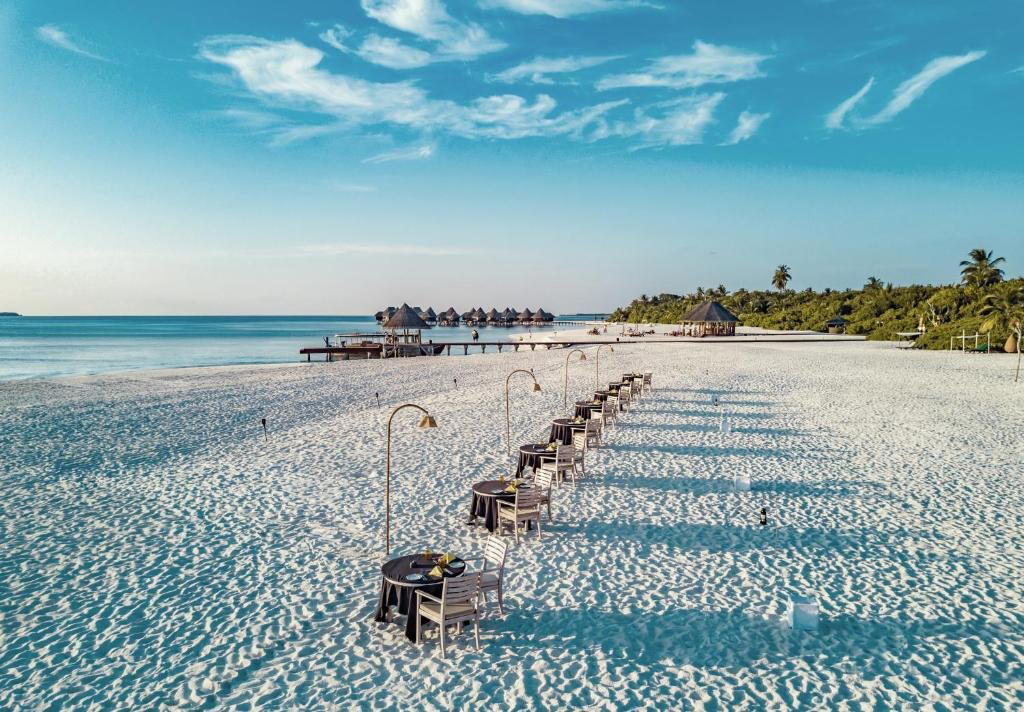
Baa Atoll and the Case for Reef-First Resorts
In the Maldives, the distance between a resort and a functioning coral reef is one of the most reliable proxies for the quality of everything that follows: the snorkelling, the marine life encounters, and, less obviously, the dining identity. Baa Atoll carries UNESCO Biosphere Reserve designation, a status earned through documented biodiversity rather than marketing positioning, and resorts that operate within its boundaries work under a framework that shapes what they can build, how they can source, and what they put on a plate. Coco Palm Dhuni Kolhu sits within that framework, on a private island whose reef access is among the most significant ecological facts about the property.
The atoll context matters for comparison purposes. Properties such as Amilla Maldives in Baa Atoll occupy the same UNESCO-designated zone and compete partly on marine access, partly on villa design, and partly on food and beverage programming.
The Dining Programme: Setting as Architecture
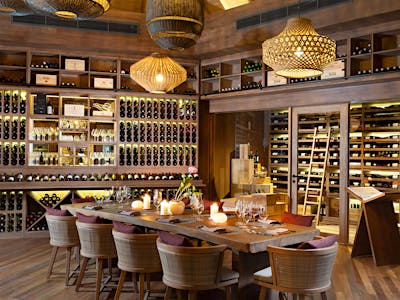
Resort dining in the Maldives has split into two broad camps over the past decade. The first pursues imported credentialism: celebrity chef associations, wine cellars with serious depth, tasting menus that would function identically in Dubai or Singapore. The second uses location as the primary culinary argument, building menus around the Indian Ocean's catch, tropical produce, and the visual and physical proximity of the reef. The more thoughtful properties in the second camp tend to offer an experience that the first cannot replicate by spending more money.
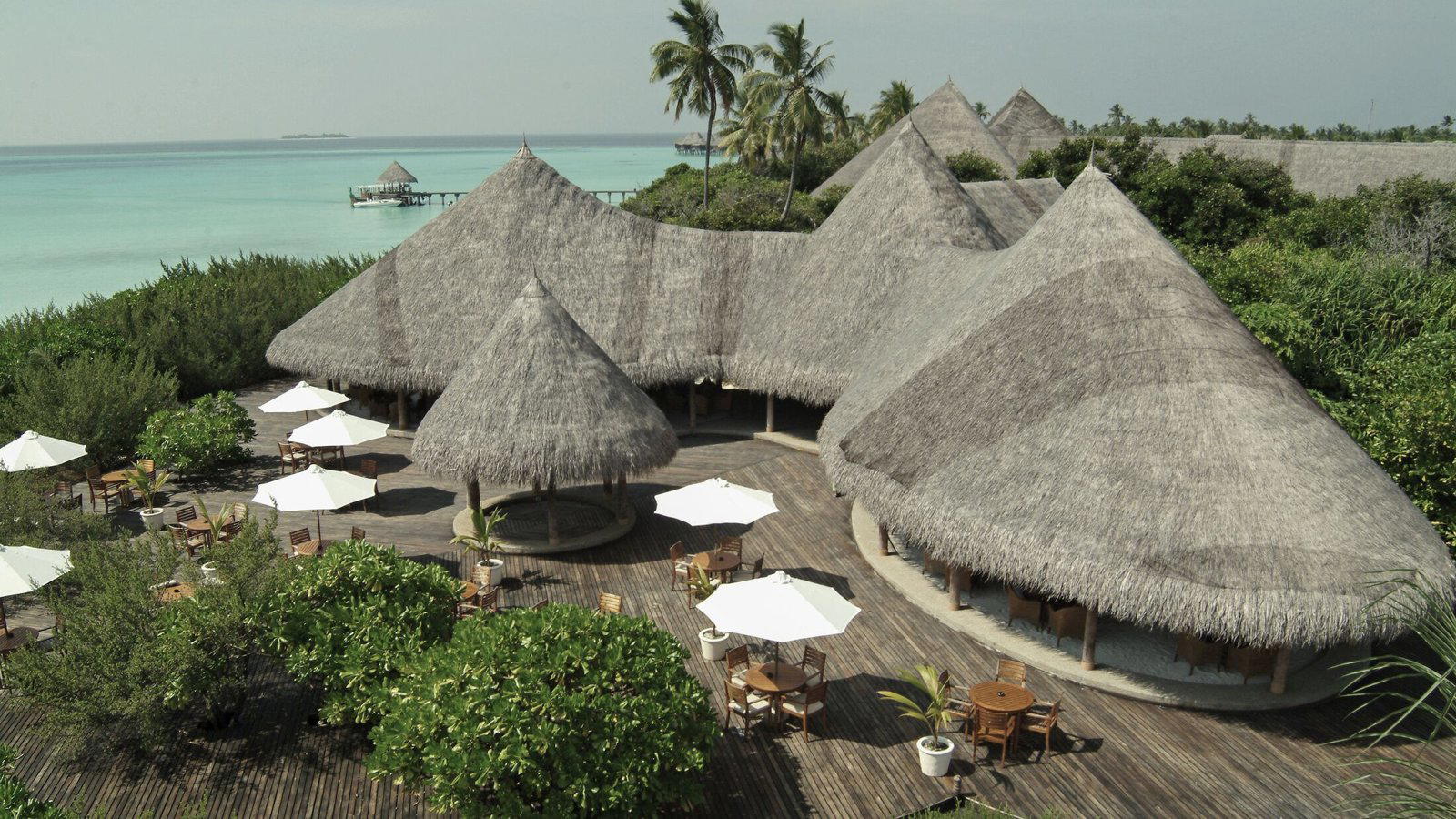
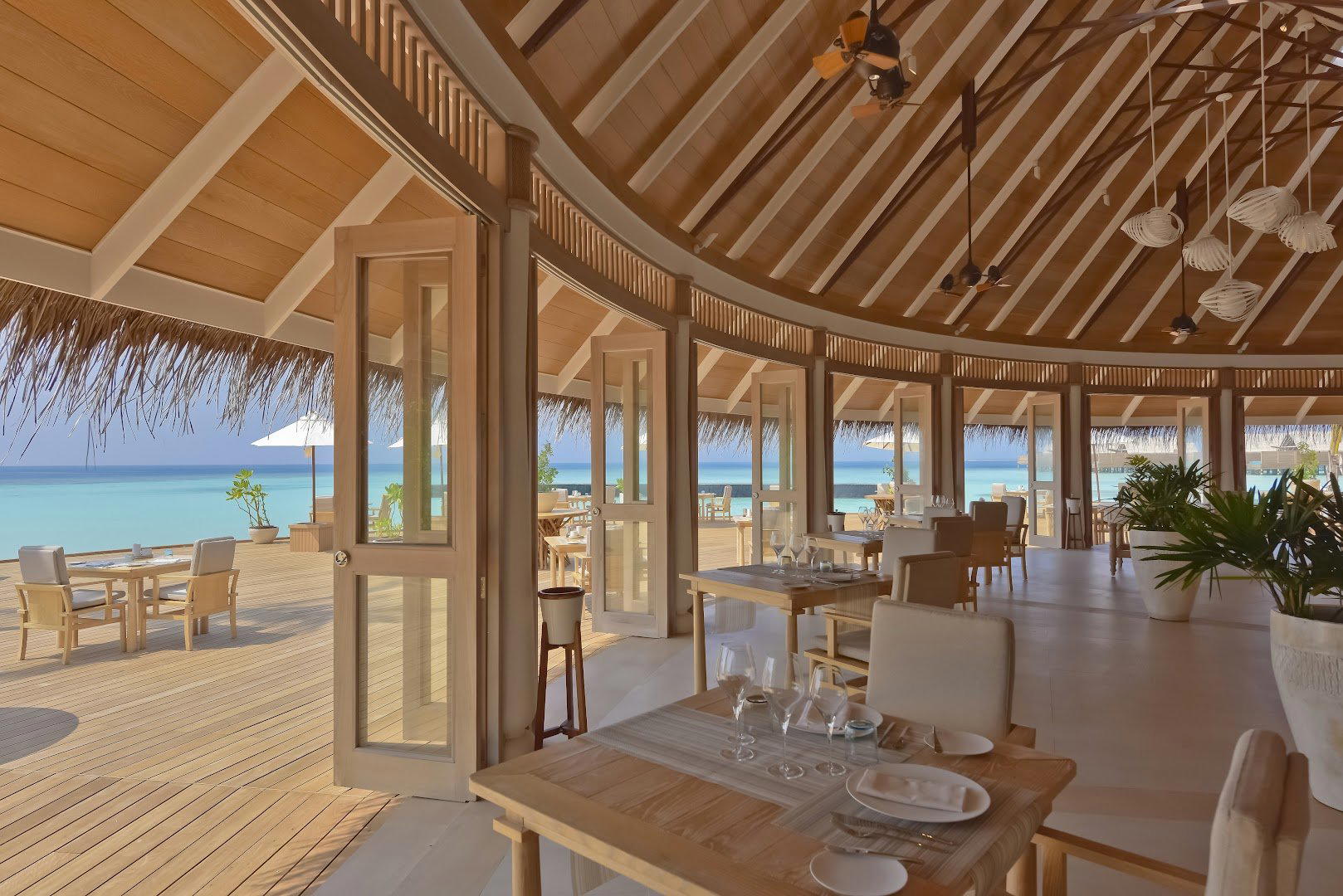
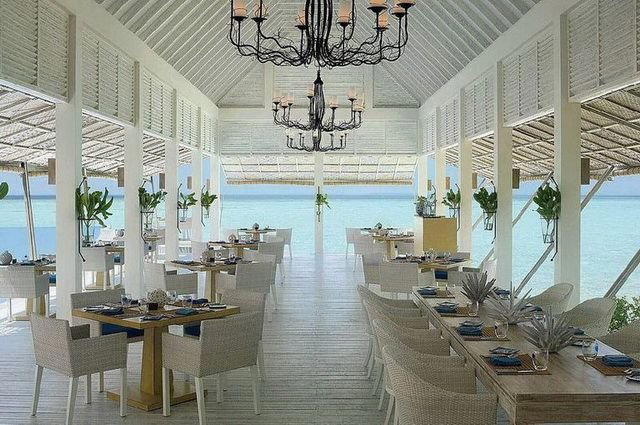
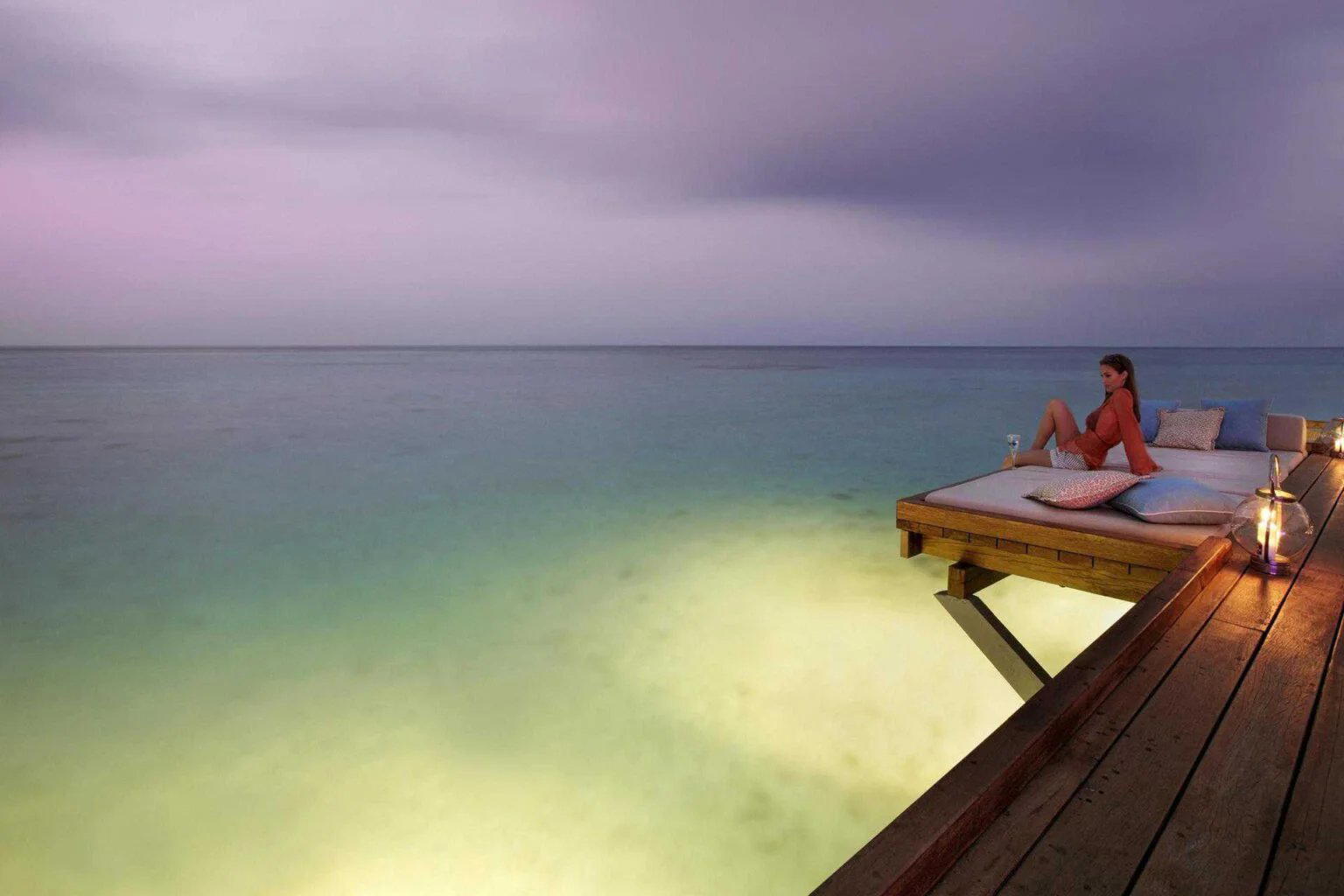
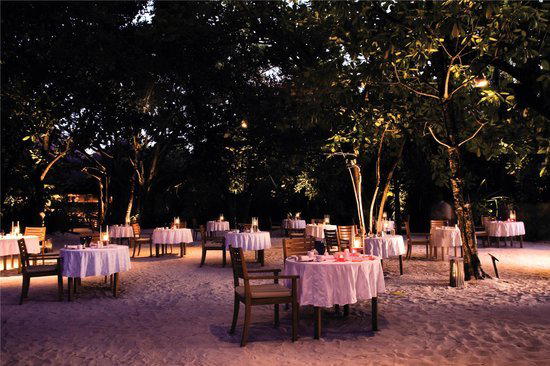
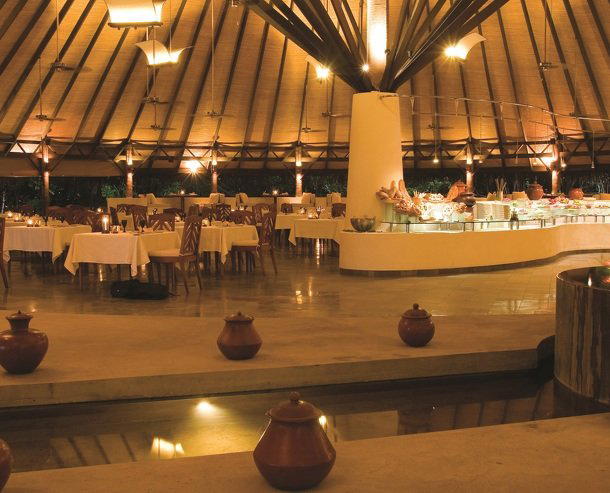
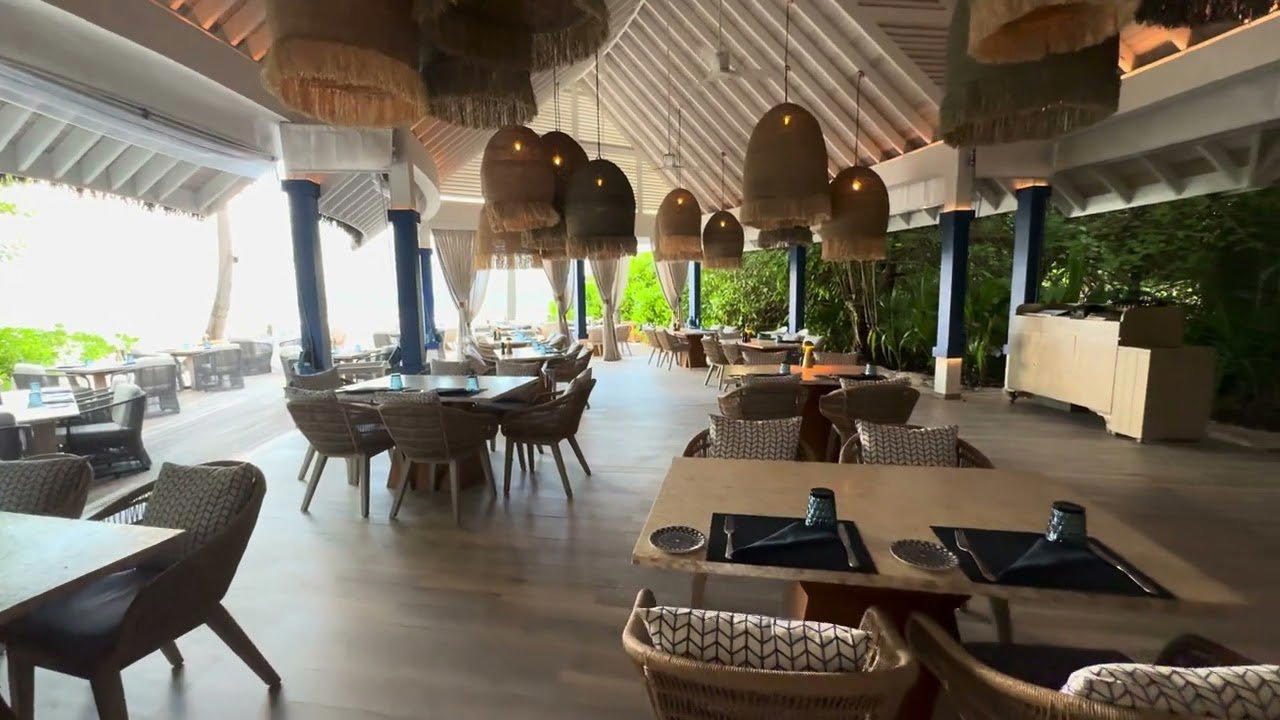
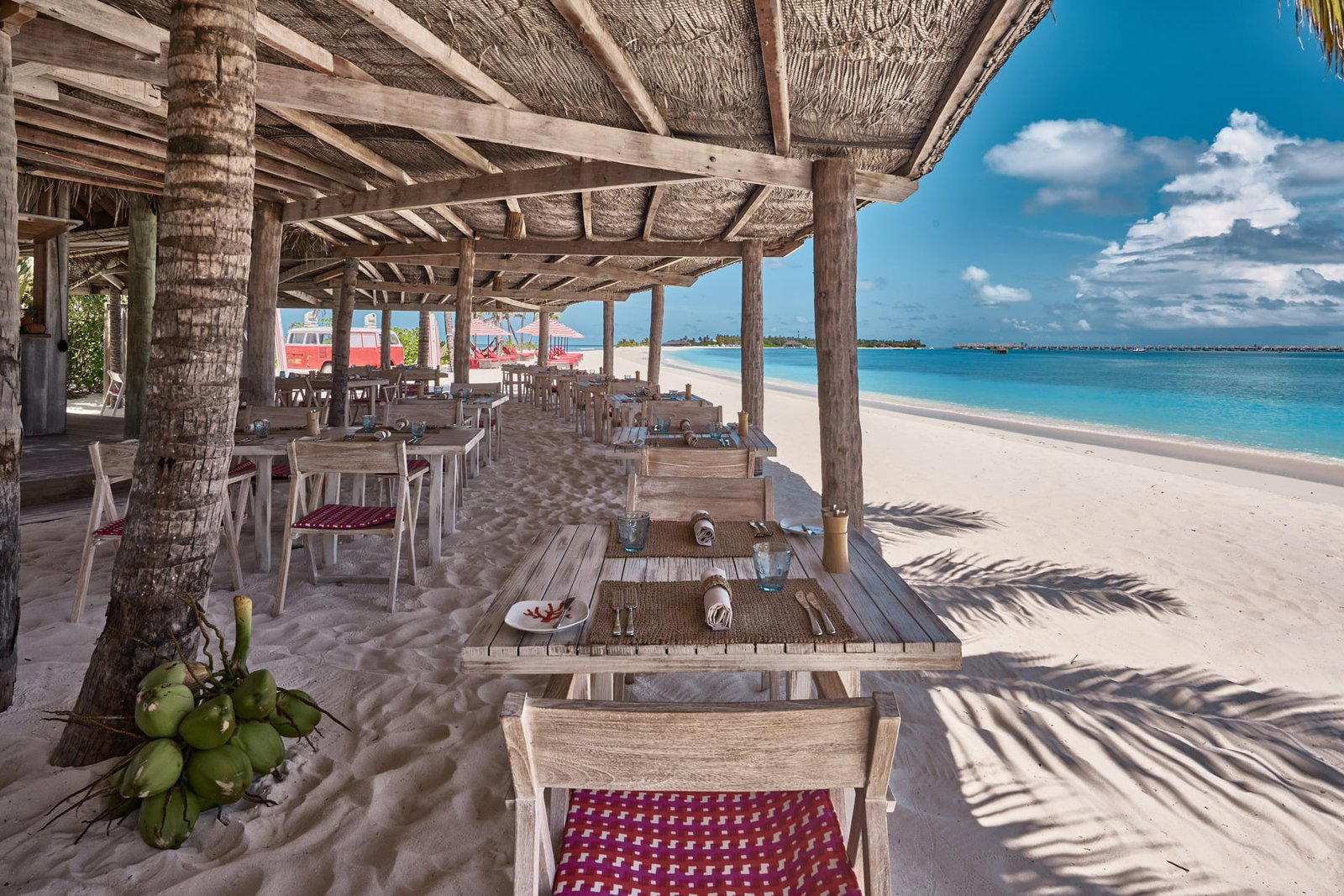
Coco Palm Dhuni Kolhu's dining structure follows the geography of the island rather than a single centralised restaurant format. Overwater and beachside settings serve different functions across the day, a pattern common to island resorts that take the outdoor environment seriously as a dining backdrop. The meal served closest to the water at sunset operates on a different register from a buffet breakfast in a covered pavilion, and programmes that acknowledge this distinction tend to produce more considered guest experiences than those that treat all eating occasions as equivalent.
For context on how Maldivian resort dining can achieve genuine culinary ambition within an island format, Soneva Fushi in Eydhafushi and Soneva Jani in Noonu Atoll represent the upper bracket, where multiple restaurant concepts, dedicated sommeliers, and sourcing programmes with documented provenance have become the benchmark. Niyama Private Islands Maldives in Kudahuvadhoo operates a well-documented underwater restaurant format that places it in a separate, more theatrical tier. Coco Palm Dhuni Kolhu's programme operates at a different scale and with different priorities, closer in spirit to properties that foreground nature access over culinary spectacle.
Accommodation and the Island Footprint
Island resort design in the Maldives has increasingly bifurcated between properties that maximise villa count to support higher revenue per island and those that restrict capacity to preserve the sense of genuine privacy. The latter category, which includes Gili Lankanfushi Maldives in Lankanfushi Island and Baros Maldives, tends to command premium positioning partly on scarcity rather than solely on villa specification. Coco Palm Dhuni Kolhu's island format reflects its Baa Atoll environmental constraints, which limit development intensity in ways that larger commercial operations in less protected atolls do not face.
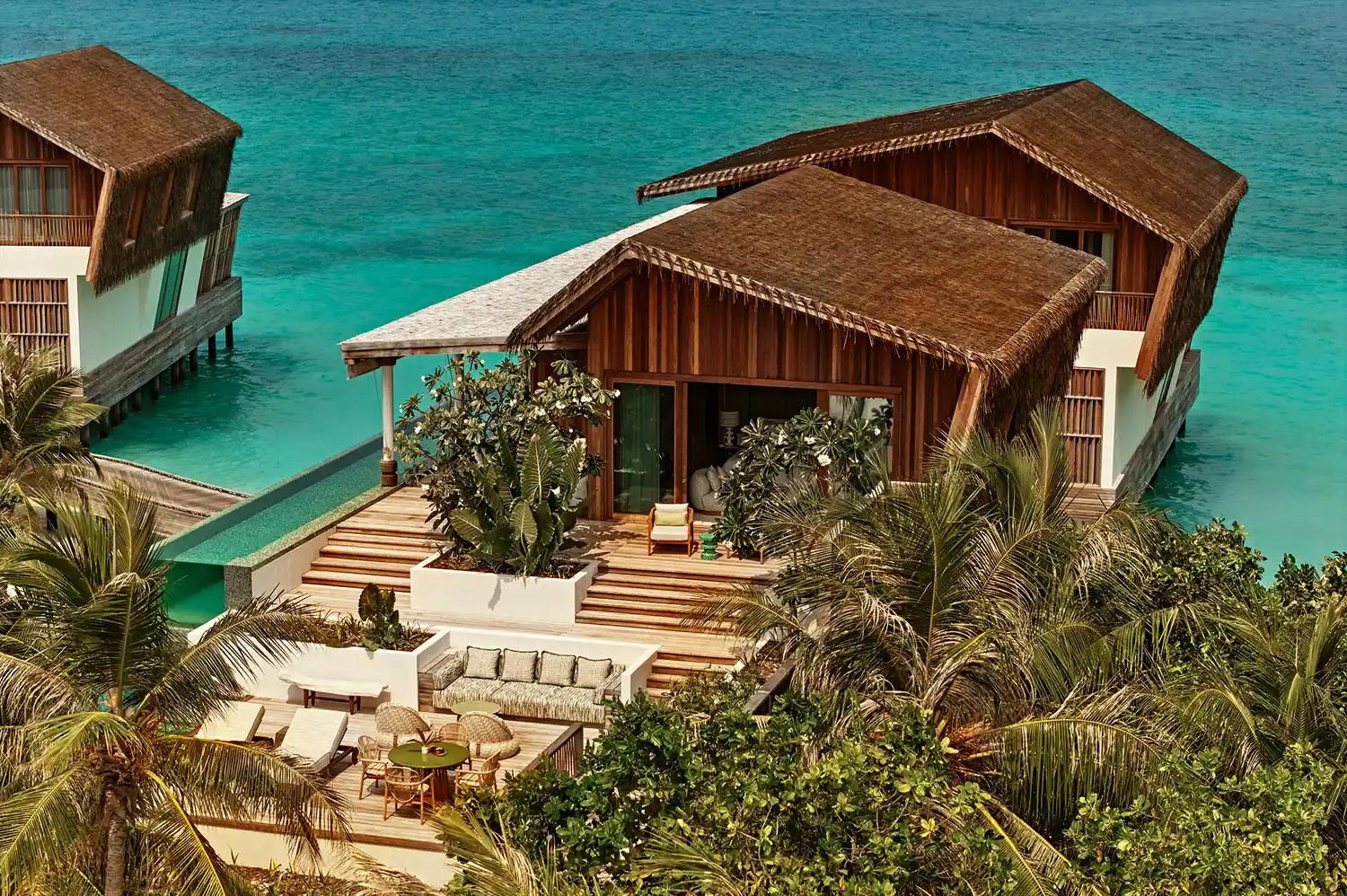
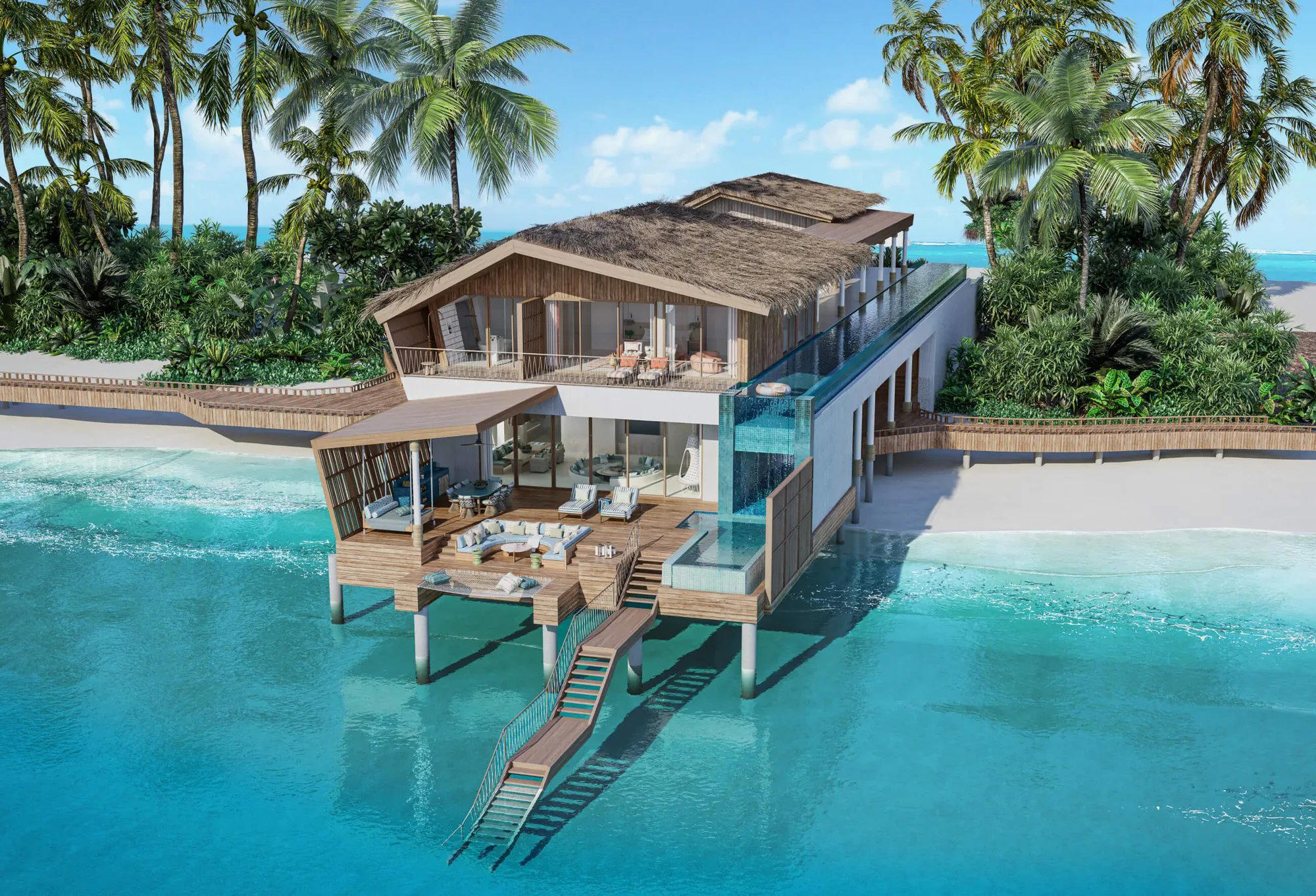
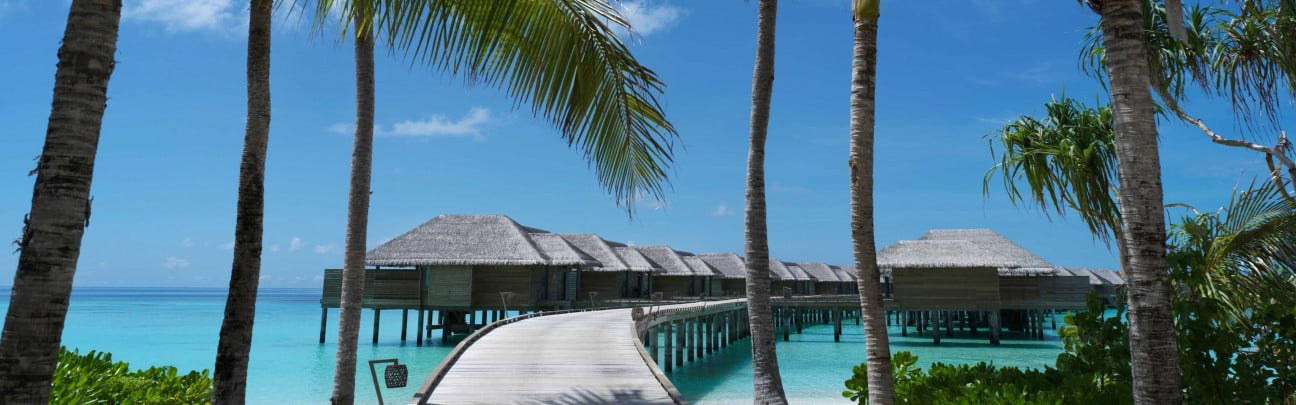
The villa typology at Coco Palm Dhuni Kolhu spans beachfront and overwater configurations, a standard split across the Maldivian market. What distinguishes specific properties within this format is the quality of reef access from overwater villas, the density of surrounding vegetation, and the degree to which natural materials and local craft inform the interiors. These are details that require direct inspection to verify, but the ecological setting of Baa Atoll provides an external constraint that keeps development proportions in check in ways that purely commercial zoning does not.
For comparison across different atoll locations and design philosophies, Huvafen Fushi and Velassaru Maldives both operate closer to Malé and represent a different access and pace proposition. COMO Cocoa Island, Maldives in Makunufushi and COMO Maalifushi in Guraidhoo bring a wellness-first design sensibility that occupies its own distinct niche. The Coco Bodu Hithi in Bodu Hithi sits within the same Coco Collection portfolio as Dhuni Kolhu and offers a useful comparison for guests deciding between the group's North Malé Atoll and Baa Atoll properties.
Getting There and Planning the Stay
Access to Baa Atoll from Velana International Airport near Malé requires a seaplane transfer, typically 25 to 35 minutes depending on conditions. Seaplane operations in the Maldives run daylight hours only, which means late-arriving international flights can require an overnight in Malé before continuing to the resort the following morning. This is not a Coco Palm Dhuni Kolhu-specific constraint but a structural feature of Baa Atoll travel that applies equally to Fushifaru Maldives in Fushifaru and Cora Cora Maldives in Raa Atoll, among others. Guests who have not accounted for this logistic in their itinerary planning frequently cite the additional night's accommodation as an unexpected cost element.
Baa Atoll's peak marine season, when manta ray aggregations at Hanifaru Bay are most reliable, runs roughly from May through November, with June through August representing the most consistent window. This seasonal pattern is well-documented and drives a meaningful share of booking decisions at every resort in the atoll. Planning a stay to coincide with that window requires lead time of several months at properties with limited villa inventory. Our full Malé restaurants and resorts guide maps the broader Maldivian landscape for those still weighing atoll options.
Other properties worth considering in the wider region for their distinct approaches include Banyan Tree Vabbinfaru in North Male Atoll, Constance Halaveli Maldives in Alifu Alifu Atoll, Hurawalhi Island Resort in Lhaviyani Atoll, JA Manafaru in Haa Alifu Atoll, Angsana Velavaru in Velavaru, Baglioni Maldives Luxury All-Inclusive in Dhaalu Atoll, and Conrad Maldives Rangali Island in South Ari Atoll, each occupying a distinct position across price tier, design approach, and marine access quality. Soneva Secret in Haa Dhaalu Atoll represents the most remote and most recently developed offering in the Soneva portfolio for those interested in that group's environmental programming.
Price and Positioning
| Venue | Price | Awards |
|---|---|---|
| Coco Palm Dhuni KolhuThis venue — the venue you are viewing | $300–500 | Not listed |
| Baros Maldives | $1,000–1,500 | La Liste Top Hotels · Mr & Mrs Smith Seal of Approval |
| Velassaru Maldives | $300–500 | Small Luxury Hotels of the World Member |
| Huvafen Fushi | Not listed | Mr & Mrs Smith Seal of Approval · Small Luxury Hotels of the World Member |
Continue exploring
More in Male
Hotels in Male
Browse all →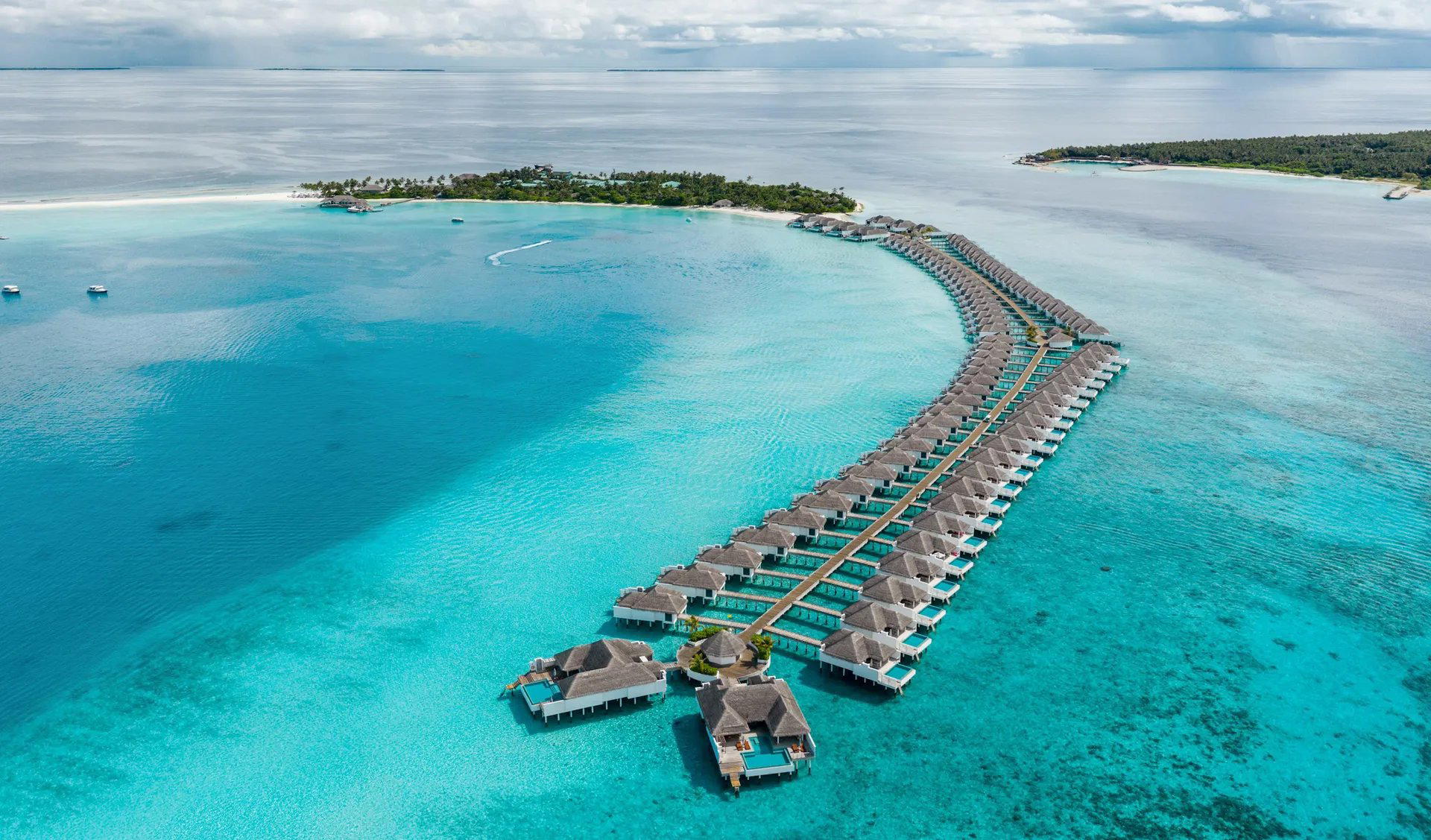
Details
- Romantic
- Scenic
- Rustic
- Elegant
- Intimate
- Bohemian
- Honeymoon
- Romantic Getaway
- Wellness Retreat
- Family Vacation
- Anniversary
- Beachfront
- Private Villa
- Destination Spa
- Waterfront
- Garden
- Panoramic View
- Private Dining
- Wi Fi
- Spa
- Fitness Center
- Room Service
- Concierge
- Beach Access
- Kids Club
- Restaurant
- Bar
- Waterfront
- Garden
- Accessible Restroom
- Step Free Entrance
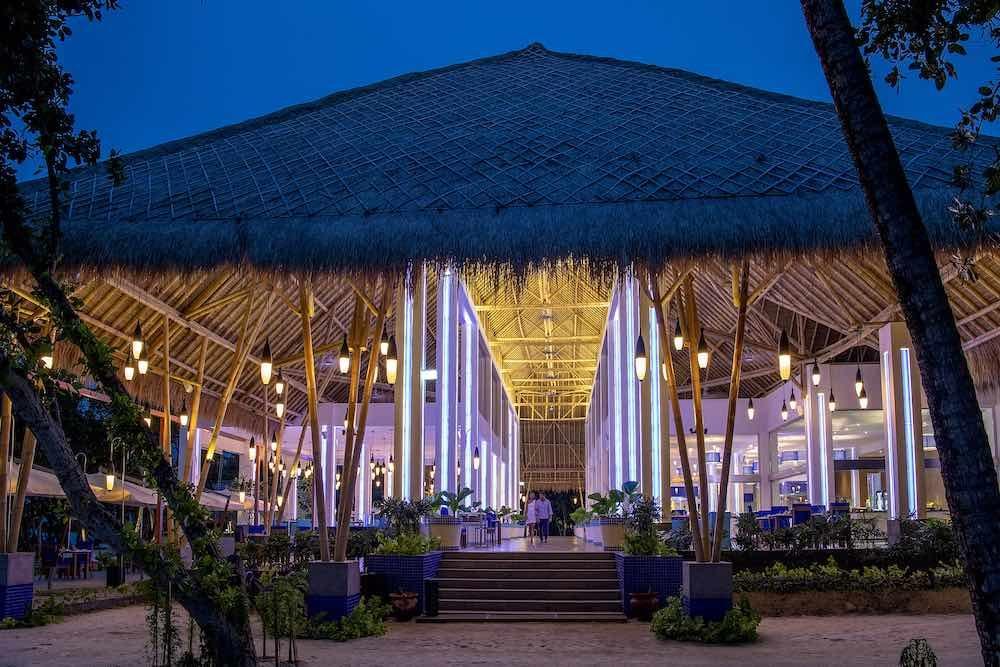
Serene and inviting with pristine beaches, natural lighting through open-air designs, and warm tropical atmosphere enhanced by live music and beachfront bars.