Gili Lankanfushi Maldives


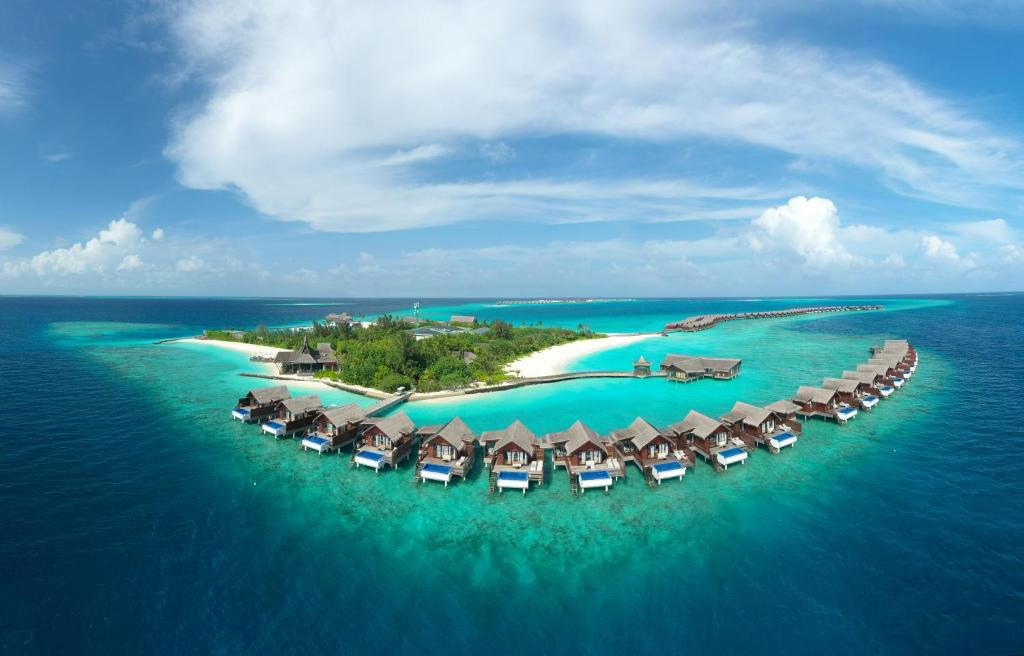
A 20-minute speedboat ride from Malé places you on a coral island where 45 over-water villas, built from sustainable timber and natural materials, sit above a shallow lagoon teeming with marine life. Recognised in the La Liste Top Hotels 2026 with 91 points, Gili Lankanfushi operates across a tiered dining program, a subterranean wine cellar, and seven boat-access-only Crusoe Residences that define its upper price bracket.
 Discover on Pearl
Pearl is the En Primeur Club membership app — saves, bookings, and concierge access live there. Same editors, same standards.
- Address
- Lankanfushi Island, North, 08920
- Phone
- +960 664-0304
- Website
- gili-lankanfushi.com
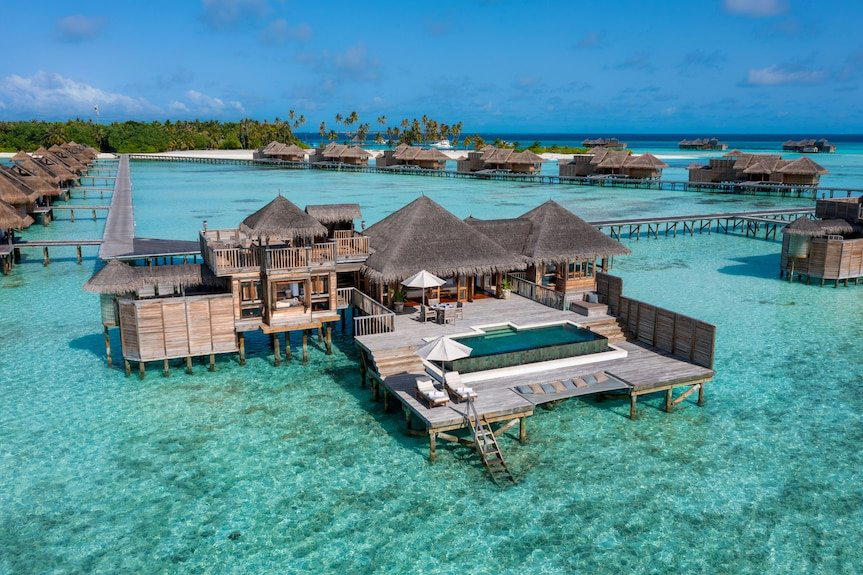
A Coral Island Built for the Water, Not Just Beside It
The standard Maldives resort model places guests near the ocean. Gili Lankanfushi places them inside it. The island sits in the North Malé Atoll, a 20-minute speedboat transfer from Velana International Airport, and what greets arrivals is not a beach club or a lobby bar but a network of timber jetties threading across a shallow lagoon, each one leading to an over-water villa suspended a few metres above living reef. The architecture here is not decorative water-frontage; the water is structurally part of every space.
That positioning within the North Malé Atoll matters for practical reasons too. Properties deeper in the archipelago require domestic flights before a boat transfer. Gili Lankanfushi's 20-minute speedboat access is among the most direct arrival sequences in Maldivian luxury hospitality, a consideration that tips decisions for time-pressed travellers who want the full over-water experience without a half-day of connections.
The Design Language: Natural Materials, Deliberately Chosen
The 45 stilted villas plus the expansive Private Reserve draw on a construction philosophy the resort calls Intelligent Luxury: traditional building forms executed in sustainable timber, natural fibres, and locally appropriate materials, with no compromise on contemporary amenity. The result is a design register that sits at the intersection of vernacular Maldivian craft and considered resort architecture. Open-air bathrooms connect to interior spaces through walkways open to the sky. Rooftop and over-water sundecks extend living areas into the lagoon air. Large over-water net seating areas, fitted into most villas, position guests horizontally above the water, close enough to watch reef fish below.
Interior specification runs deeper than the material palette suggests. Each villa carries a 160GB iPod with docking station, a full CD and DVD library, and stereo systems wired through both bedroom and bathroom. Chess and backgammon tables occupy villa common areas. These details collectively point toward a guest who arrives for longer stays, not weekend transactions. The furnishing logic is residential rather than hotel-transient.
The Private Reserve amplifies this. Reached only by private boat from the main island, it operates as a compound within the resort, with the scale and service logic of a rented private island rather than a hotel suite. For guests whose requirement is structural separation from other travellers, rather than just a larger villa, the Reserve answers that need directly. The seven Crusoe Residences function on a similar premise: boat-access-only positioning that converts distance into privacy architecture.
Among peer properties in the North Malé Atoll, Gili Lankanfushi's design approach places it in a smaller cohort that prioritises natural materials and residential scale over branded luxury signifiers. Banyan Tree Vabbinfaru in North Male Atoll operates a comparable island footprint with similar environmental sensitivity, while Coco Bodu Hithi and COMO Cocoa Island represent the smaller-key, design-led end of the Maldives spectrum. Gili Lankanfushi sits in that grouping rather than with the large-footprint international resort chains.
The Dining Program: Multiple Formats, One Island
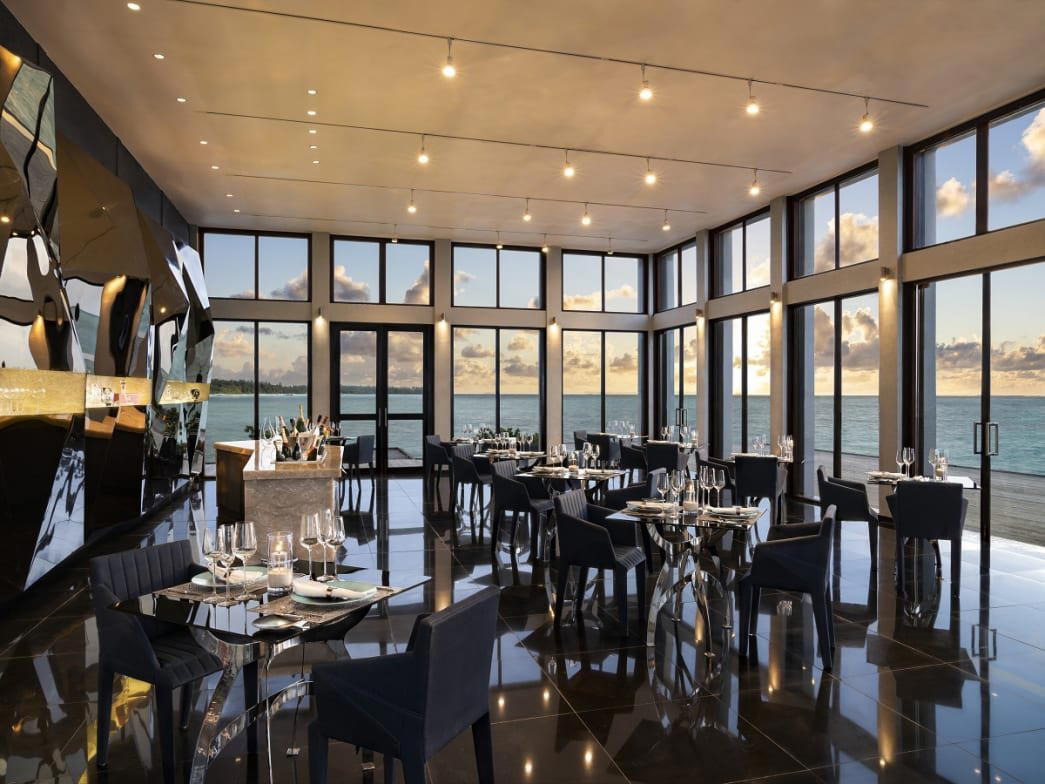
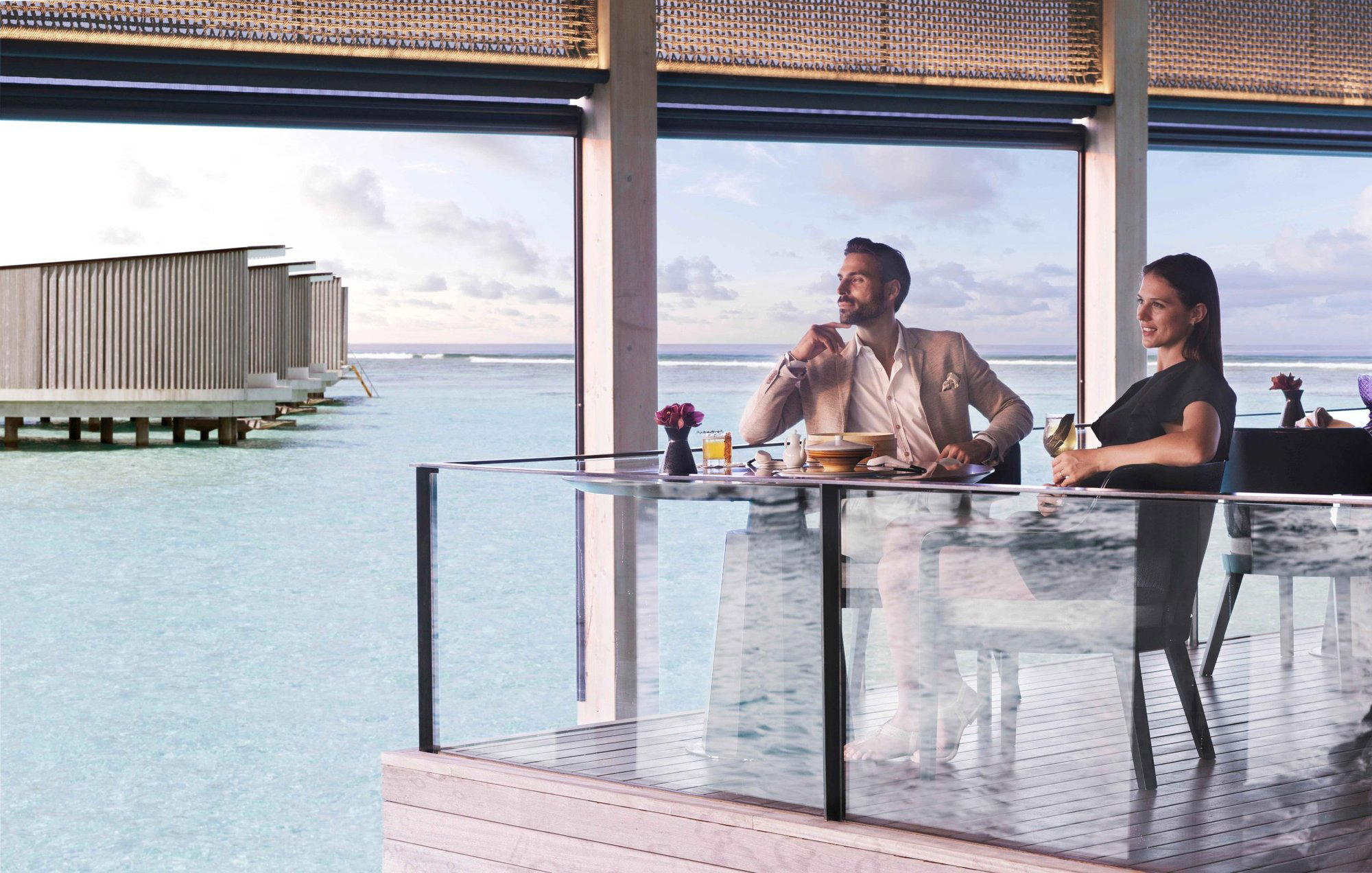
The food and beverage structure at Gili Lankanfushi is more differentiated than most over-water resorts of comparable size. The main restaurant, positioned on the island's west side, anchors breakfast and dinner across a format that combines Eastern and Western preparations. Its setting over the water on the sunset side is deliberate: the west-facing orientation means evening meals align with the light rather than working against it.
By the Sea operates on a different register entirely. Seated on the refined upper level of a two-storey structure on the island's sunrise side, the restaurant takes 26 guests across a Peruvian-Japanese menu that draws on the resort's own garden produce and daily catch. An open kitchen station, five tables seating up to four guests each, and a sushi bar fitted with daybeds define the room's format. The tasting menu runs from traditional Japanese preparations through indigenous European and Peruvian influences. With a capacity of 26, reservations operate within a tight window, particularly during high season from November through April.
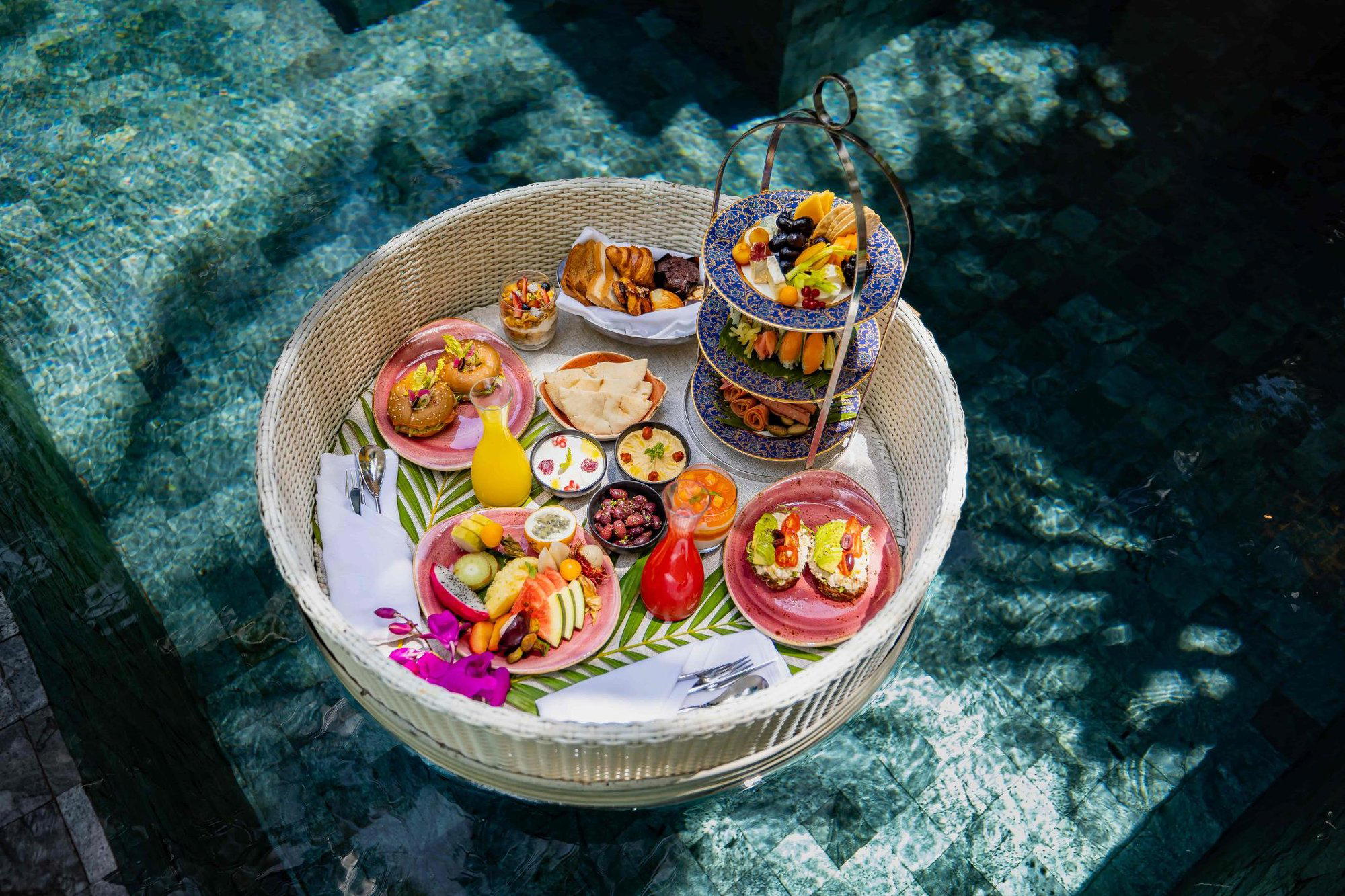
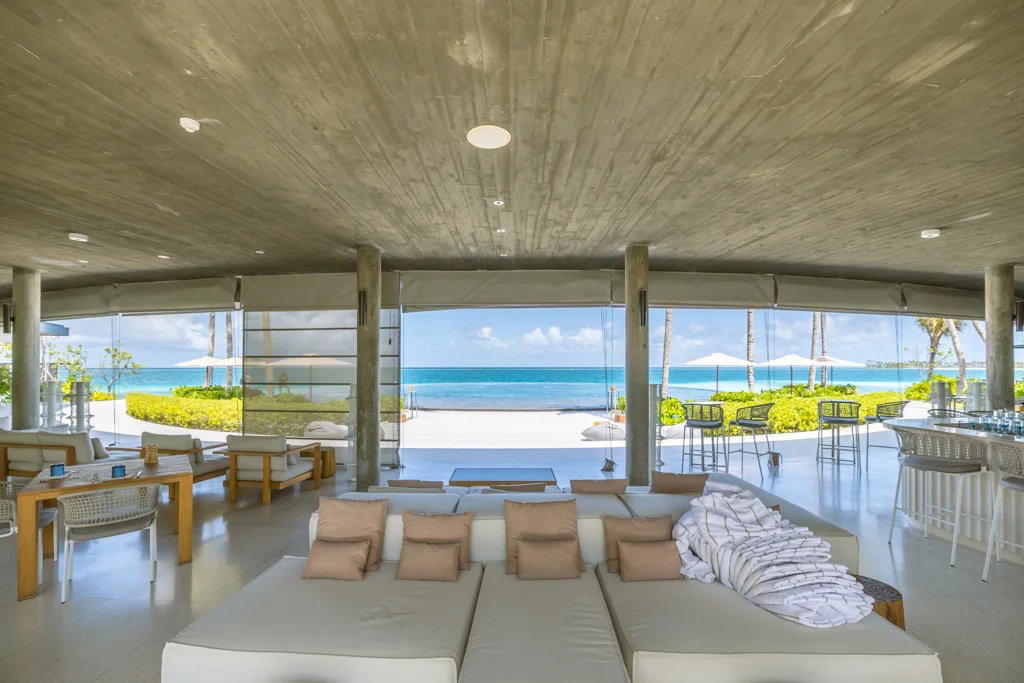
The Over Water Bar functions as the daytime social centre, with a lunch format built around fresh salad leaves from the on-site garden, sushi, Mediterranean preparations, daily catch, and imported meats. This kind of midday informality, where guests self-compose from a broad spread rather than ordering from a set menu, is a structural choice that keeps the resort's pace relaxed through the middle of the day.
The wine program has its own dedicated space below ground. The Underground Wine Cellar descends via a glass staircase beneath the island surface into a cellar holding more than 300 labels, displayed in recessed wine racks along stucco-finished walls. A six-metre driftwood tree trunk serves as the cellar's central table, slotted with eight glass table tops. Wine dinners and tastings are hosted by the sommelier on request. The addition of a Chocolate Cave within the same space, curated by the executive pastry chef and designed for wine pairing before or after dinner, gives the cellar a distinct identity within the resort's dining ecosystem. Few over-water properties in the Maldives operate a wine cellar at this scale or with this level of curatorial intent.
For comparison on dining breadth and format within the Maldives, Soneva Fushi and Soneva Jani operate multi-restaurant islands with comparable format diversity, though across significantly larger footprints. Conrad Maldives Rangali Island in South Ari Atoll holds the Maldives' other notable subterranean dining format. Gili Lankanfushi's cellar and its 26-seat By the Sea restaurant together represent a dining program punching above the island's 45-villa scale.
Wellness, Water, and What's Below the Surface
The Meera Spa is built over the water, with glass floor panels fitted beneath massage tables so that the lagoon remains visible during treatment. A resident Ayurvedic Doctor works alongside internationally trained therapists, and the programme extends to yoga and Tai Chi, steam rooms, sauna, and a chill room. The over-water gymnasium offers panoramic ocean sightlines through full glass walls, a consideration that makes the fitness space more connected to the broader island environment than the typical hotel gym.
The Ocean Paradise Dive Centre operates as a PADI-certified facility with multilingual instructors and small group sizes. Manta Point, one of the better-known dive sites in the North Malé Atoll, sits within a 10-minute boat ride from the resort. For guests whose interest in the Maldives is primarily sub-surface, this proximity removes a logistical barrier that longer transfers create at outer-atoll properties. Niyama Private Islands Maldives and Amilla Maldives in Baa Atoll also offer strong dive programs, but those islands sit further from Malé and require additional transit.
Planning Your Stay
Gili Lankanfushi is managed by HPL Hotels and Resorts, the Singapore-based group that also operates properties in Thailand, Bali, and Malaysia under the Concorde, Boutique Hotels, and Hard Rock brands. Within the Maldives, HPL's operational experience translates to a property that runs with the infrastructure of a larger hospitality group while maintaining the physical intimacy of a 45-villa island.
The island supplies complimentary broadband and Wi-Fi across all villas, and each property comes with a Mr Friday butler assigned to the villa. Villa arrival is by speedboat from Velana International Airport, a 20-minute crossing that operates across arrival times. High season in the Maldives runs from November through April, when visibility is strongest and the northeast monsoon keeps conditions stable. May through October brings quieter occupancy and different light, with some dive sites less accessible depending on swell direction.
At-a-Glance Comparison
Comparable venues nearby, for context on price, style, and recognition.
| Venue | Cuisine | Price | Awards | Notes |
|---|---|---|---|---|
| Gili Lankanfushi MaldivesThis venue — the venue you are viewing | barefoot luxury overwater resort | $$$$ | 5-Star | |
| Naladhu Private Island Maldives | Timelessly elegant private island houses blending coastal, Thai, and island styles with modern luxuries. | $$$$ | 5-Star | South Malé Atoll |
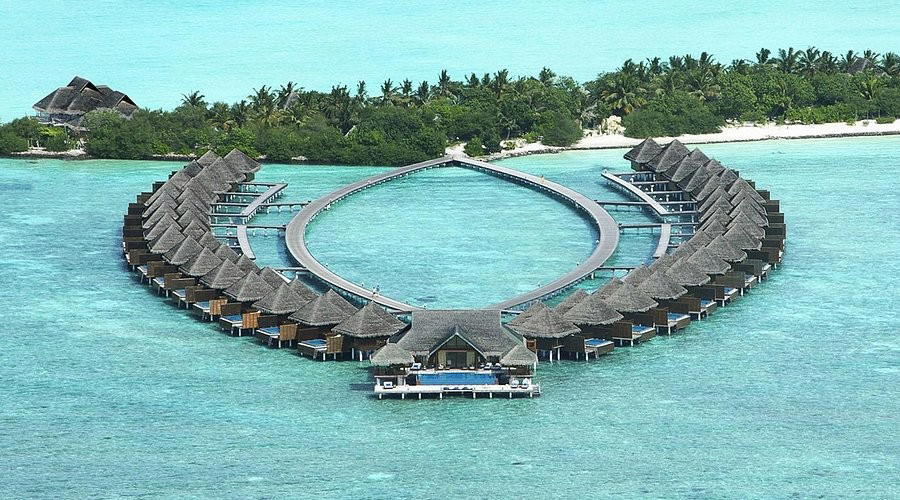
| Taj Coral Reef Resort & Spa | Exclusive private island luxury resort with thatched-roof villas blending modern sophistication and rustic tropical charm. | $$$$ | 5-Star | Hembadhu, North Male Atoll |
| COMO Cocoa Island, Maldives | Understated luxury overwater resort inspired by traditional Maldivian dhoni fishing boats with Keralan boathouse architecture. | $$$$ | 5-Star | South Malé Atoll |
| Constance Moofushi Maldives | Luxury all-inclusive island resort with traditional Maldivian architectural elements and contemporary design interiors. | $$$$ | 5-Star | South Ari Atoll |
| Milaidhoo Maldives | barefoot luxury resort blending Maldivian elements with contemporary design | $$$$ | 5-Star | Baa Atoll |
Continue exploring
More in Lankanfushi Island
Hotels in Lankanfushi Island
Browse all →
Restaurants in Lankanfushi Island
Browse all →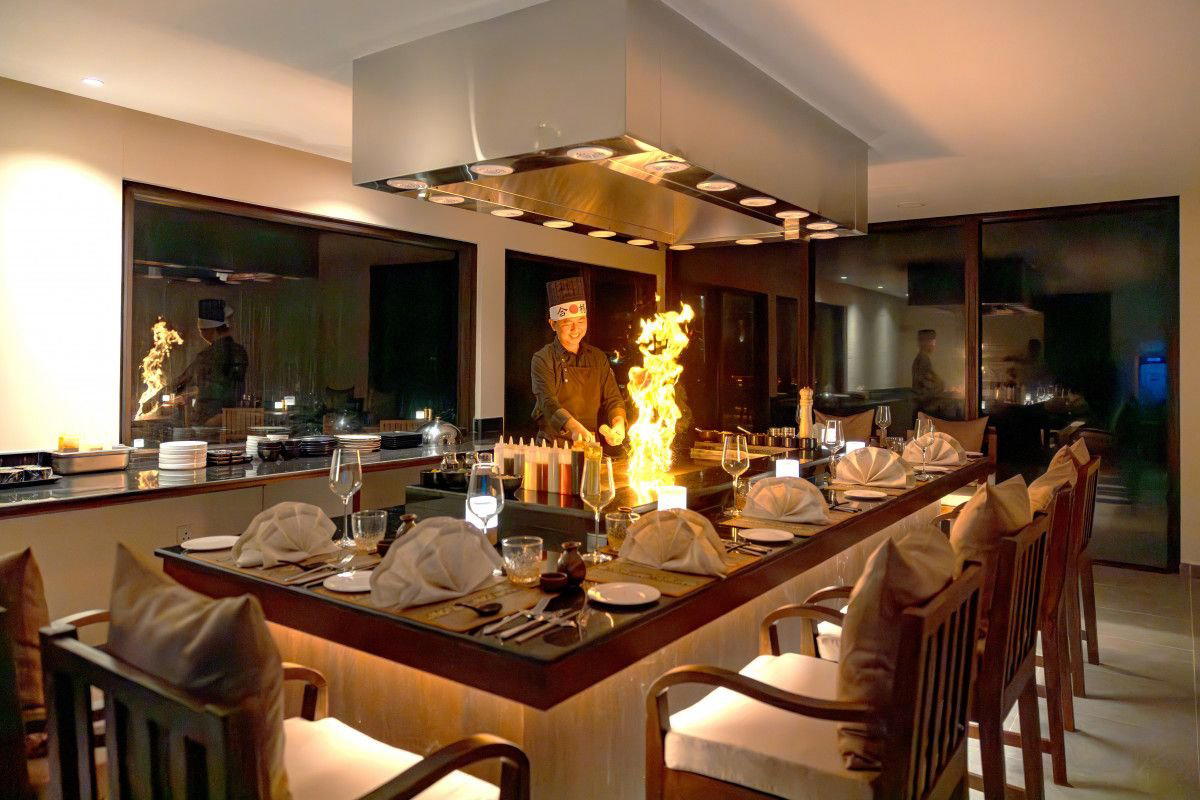
At a Glance
- Romantic
- Elegant
- Intimate
- Sophisticated
- Opulent
- Honeymoon
- Romantic Getaway
- Anniversary
- Wellness Retreat
- Beachfront
- Private Villa
- Infinity Pool
- Butler Service
- Panoramic View
- Wifi
- Pool
- Spa
- Fitness Center
- Room Service
- Concierge
- Beach Access
- Waterfront
Serene and elegant barefoot luxury with natural materials, soft tropical lighting, ocean breezes, and romantic beachfront settings.