Casona Sforza


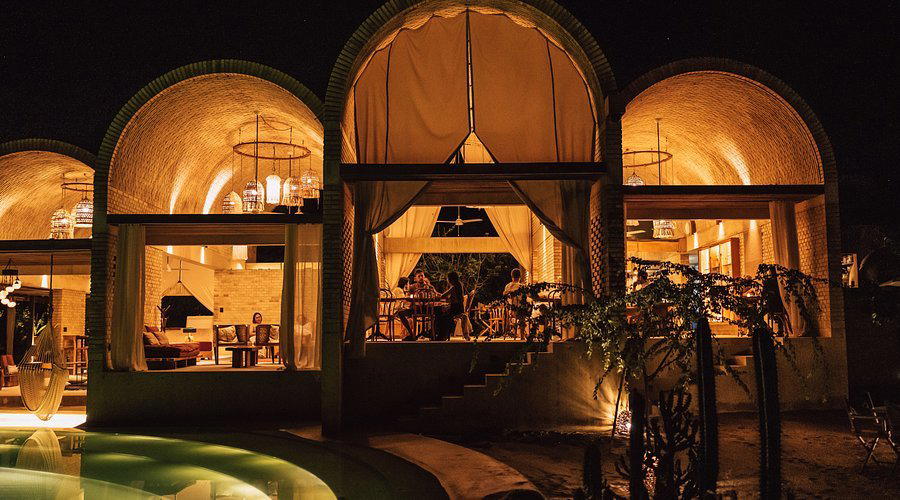
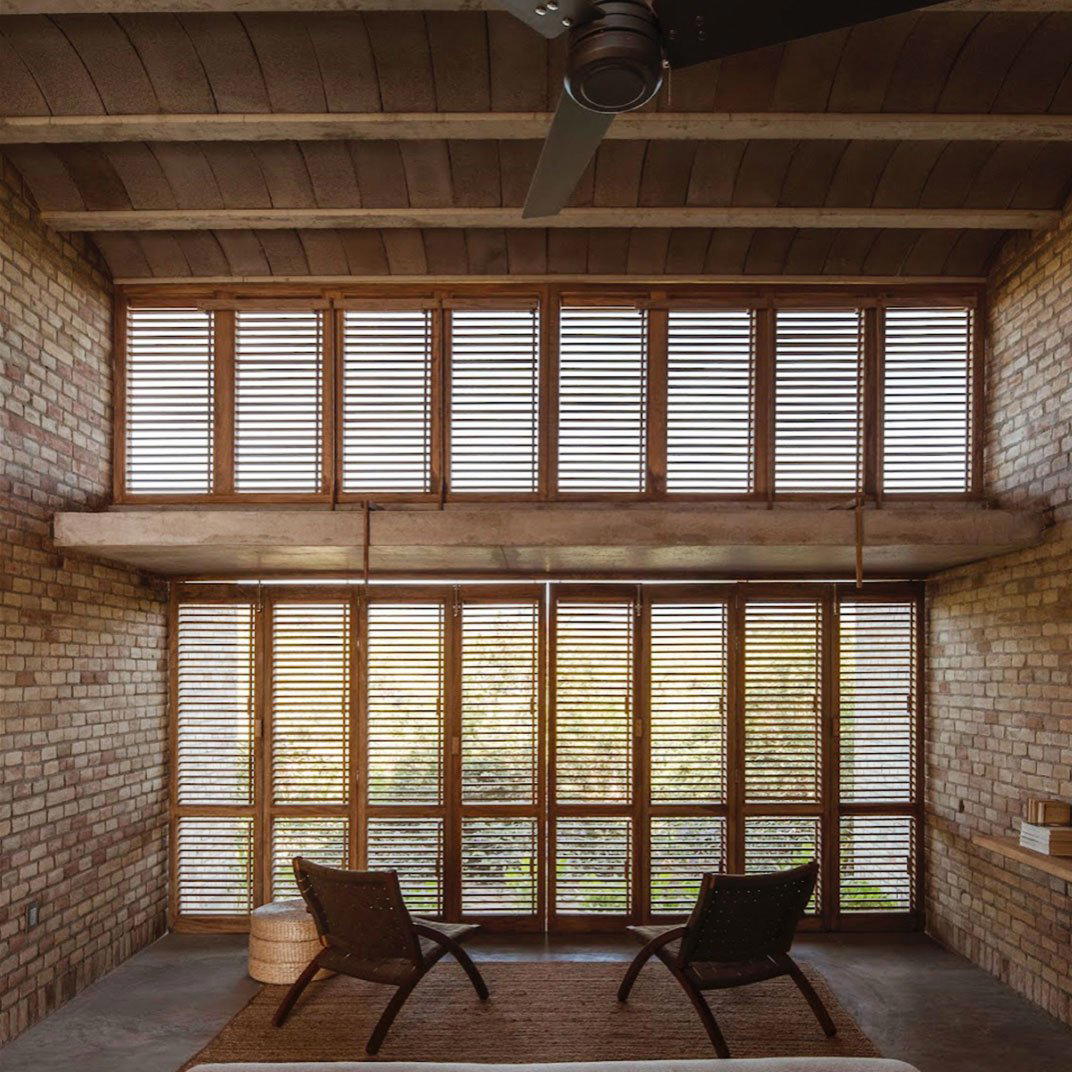
An 11-room adults-only retreat on the Oaxacan coast, Casona Sforza pairs Alberto Kalach's arched architecture with rough-luxe interiors by Mexico City's MOB Studio. The in-house restaurant La Bóveda anchors a dining programme around hyper-local Oaxacan ingredients filtered through French technique. Rooms from $632 per night place it at the upper tier of Puerto Escondido's boutique hotel circuit.
Pearl is the En Primeur Club membership app — saves, bookings, and concierge access live there. Same editors, same standards.
- Address
- La barra Santa María Colotepec, 70934 Puerto Escondido, Oax.
- Phone
- +52 954 168 5652
- Website
- casonasforza.com
- Directions
- Get directions
 Saves & bookings on Pearl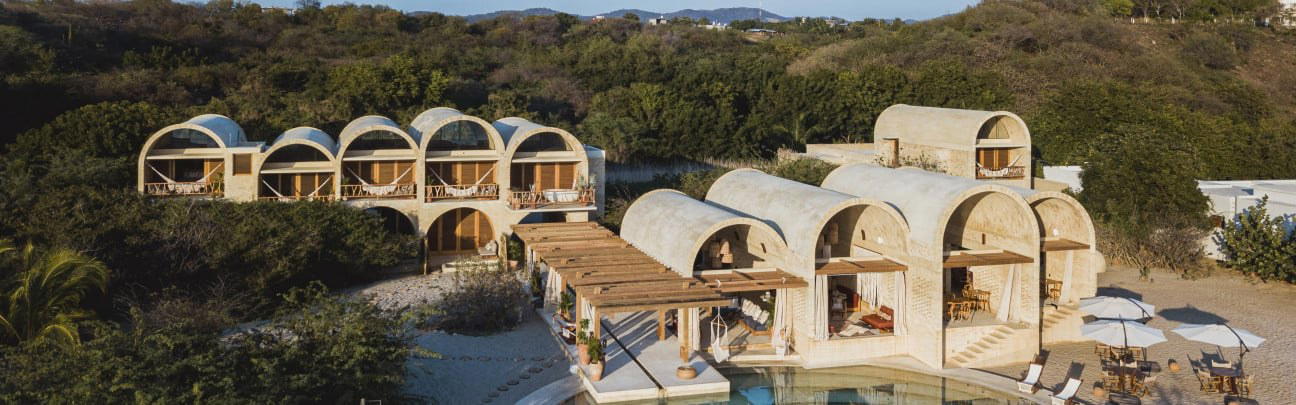
Where the Architecture Meets the Shoreline
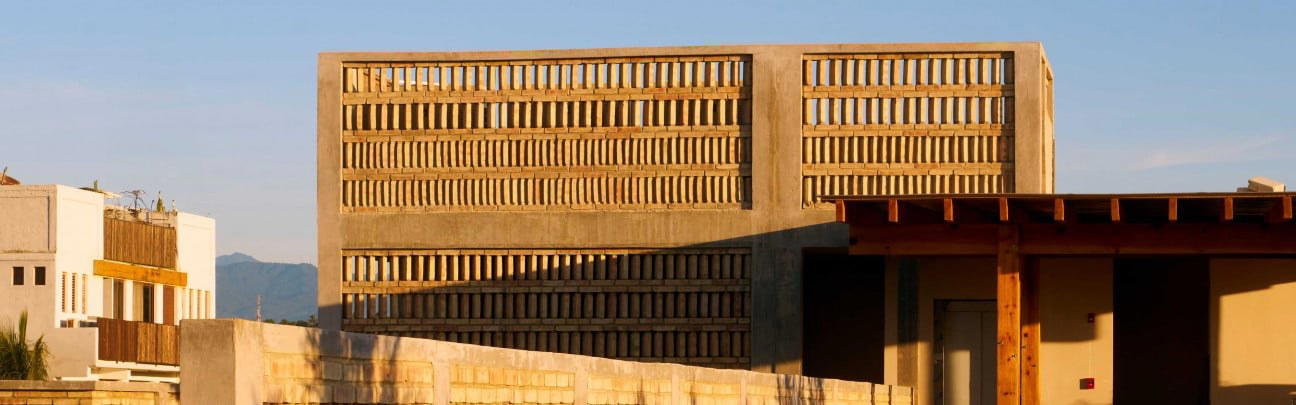
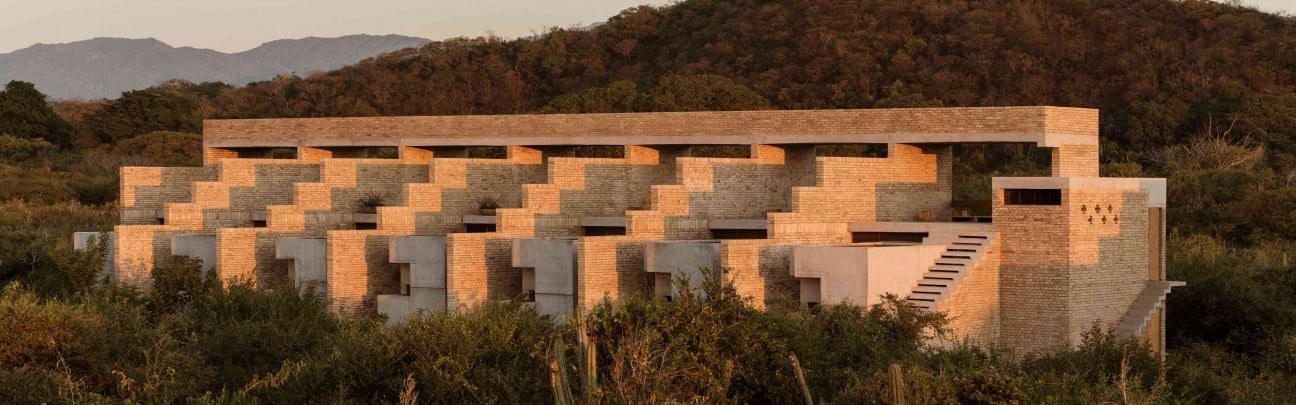
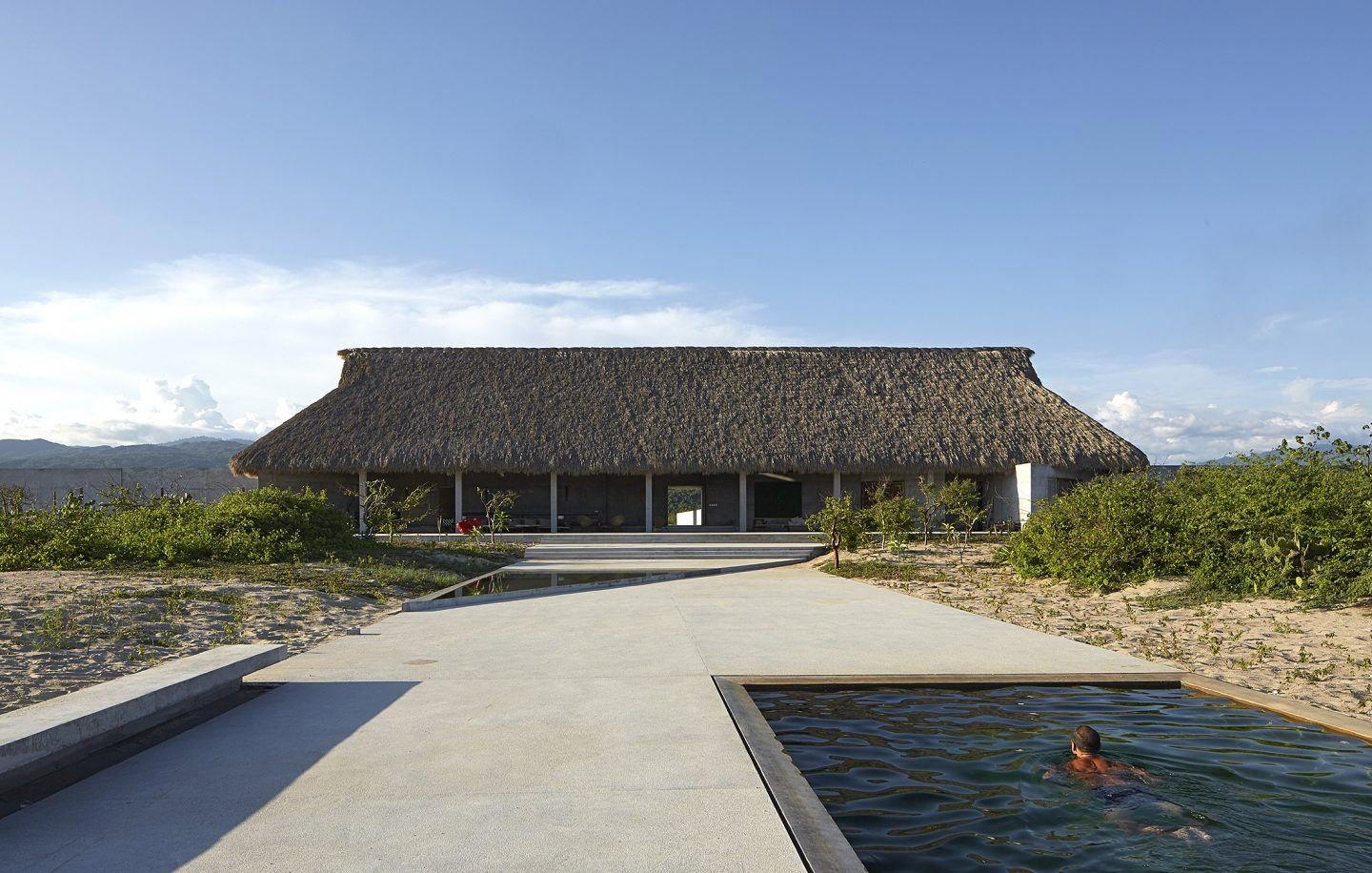
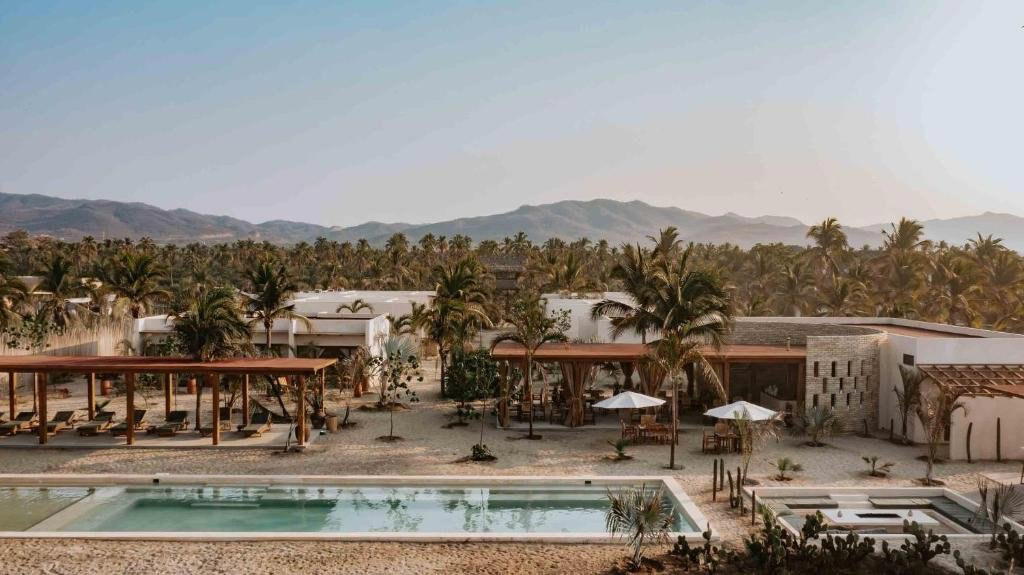
Puerto Escondido has spent two decades caught between its surf-town identity and the slow arrival of serious design-led hospitality. The tension is still productive: the town retains enough roughness that a property like Casona Sforza reads as genuinely ambitious rather than out of place. Architect Alberto Kalach, whose practice is among the most referenced in contemporary Mexican architecture, conceived the building as a series of arched volumes positioned to pull in ocean breezes, frame coastal sightlines, and keep guest spaces shielded from one another. The result sits at the south end of Puerto Escondido, yards from the beach at La Barra Santa María Colotepec, with a formal presence that few properties at this latitude attempt.
The interiors, handled by Mexico City studio MOB Studio, lean into what might be called rough-luxe: materials that read as deliberately unfinished or locally sourced, without any of the austerity that framing sometimes implies. Across 11 rooms, the approach creates a property that sits in the same niche as smaller design-led coastal retreats elsewhere in Mexico, where the investment is in craft and atmosphere rather than keys or amenities volume. Hotel Terrestre and Hotel Escondido occupy the same local tier, each making a distinct architectural or conceptual argument for why Puerto Escondido warrants serious design investment. Casona Sforza's case is Kalach's structural geometry and an adults-only policy that keeps the property closer to its intended register of calm.
La Bóveda and the Logic of Glocal Cooking
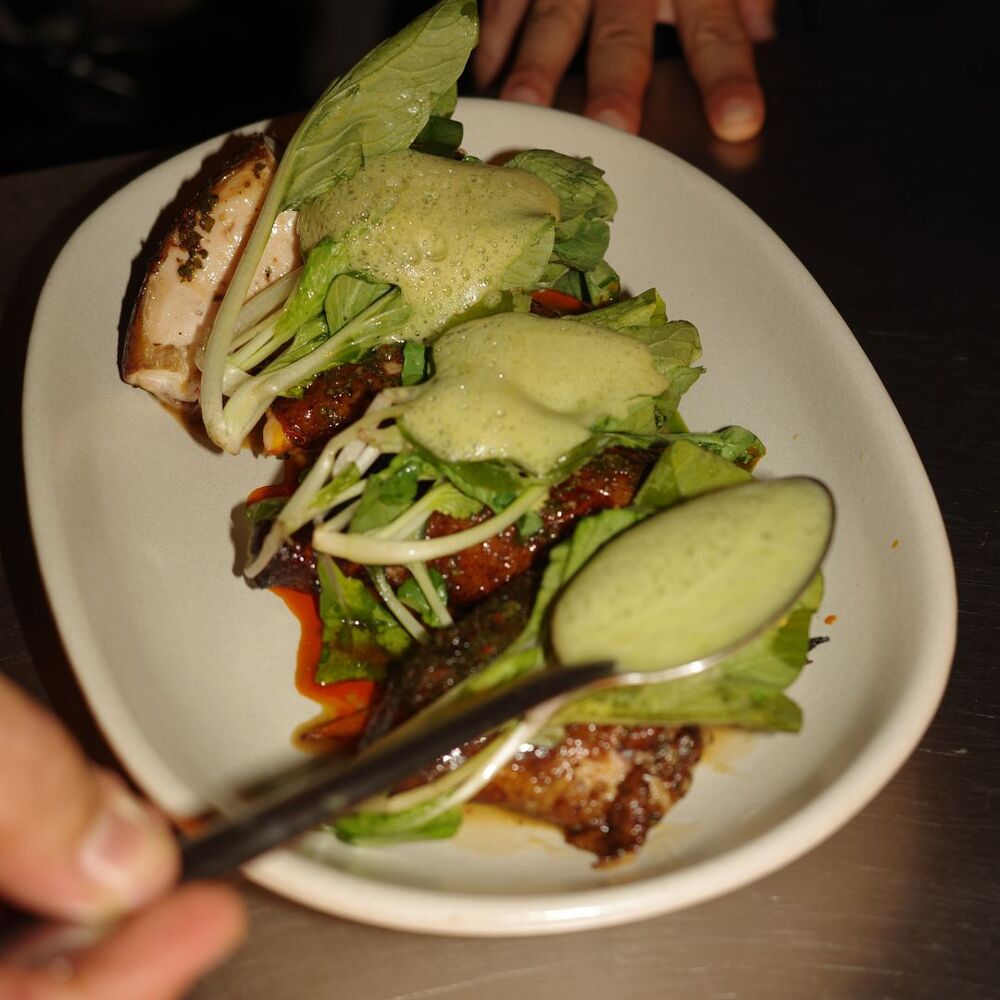
The dining programme at Casona Sforza is framed around what the property calls "glocal" cuisine: hyper-local Oaxacan ingredients processed through global influences and French culinary technique. The term has become a shorthand across Mexican fine dining, where chefs increasingly position their kitchens at the intersection of regional sourcing and cosmopolitan technique rather than as strict custodians of one tradition. At La Bóveda, this means the Oaxacan coast's seafood, produce, and pantry form the raw material, while preparation draws from a broader culinary vocabulary.
This approach places La Bóveda in a wider pattern visible across Mexico's more ambitious hotel restaurants. Coastal Oaxaca's ingredient base is genuinely distinctive: the Pacific yields different fish species than the Gulf or Caribbean, the agricultural corridor behind Puerto Escondido produces chiles, corn, and herbs that don't travel easily, and the region's culinary traditions, while less globally published than those of Oaxaca City, carry considerable depth. A kitchen that sources seriously from this geography has access to material that resort restaurants in Cancún or Los Cabos cannot replicate. The choice to run that ingredient base through French technique rather than strict traditional Oaxacan cooking is a creative position, and one increasingly common at hotels pitching to an international guest who expects technical polish alongside local character.
For context on the broader Mexican hotel restaurant circuit, Hotel Esencia in Tulum and Chablé Yucatán in Merida both run dining programmes that pursue a similar regional-meets-refined argument. One&Only; Mandarina in Riviera Nayarit takes the concept further with multiple dining formats and named chef involvement. La Bóveda is operating at a more intimate scale: 11 rooms means the restaurant is not designed for volume, and the dining experience at a property this size tends toward the personal rather than the produced.
Adults-Only and What That Actually Changes
The adults-only designation at Casona Sforza is not merely a positioning signal. On a stretch of Oaxacan coast where open-air design and natural environment are central to the appeal, limiting the guest demographic to adults changes the texture of the stay in measurable ways. Seaside massage, surfing instruction, and open-water dolphin-watching are the activity anchors, and all three sit more comfortably in a property operating at a single-demographic tempo. The beach at La Barra is not one of Puerto Escondido's crowded surf breaks; it functions as a quieter southern extension of the town's coastline, which suits the property's pace.
Compared to Hotel Humano and Casa Yuma, which each bring their own distinct tone to the Puerto Escondido boutique market, Casona Sforza occupies the most architecturally deliberate position in the local field. The comparison that makes most sense is with small design-led properties elsewhere in Mexico: Xinalani in Quimixto, Playa Viva in Juluchuca, and Las Alamandas in Costalegre all represent the same category logic: limited keys, strong design identity, coastal Oaxacan or Pacific Mexican setting, and a price point that reflects the investment in architecture and experience over room count.
Where Casona Sforza Sits in Mexico's Coastal Luxury Circuit
Mexico's premium coastal hotel market has stratified considerably. At the volume end, large international brands operate at scale in Los Cabos and the Riviera Maya. Properties like Las Ventanas al Paraíso in San José del Cabo, Montage Los Cabos, and Zadun, A Ritz-Carlton Reserve in Los Cabos compete on amenity depth, beach infrastructure, and brand recognition. At the other end, a smaller cohort of independently conceived boutique properties competes on design specificity, culinary seriousness, and the sense that the property could only exist in one particular place. Casona Sforza belongs to the latter group.
The Oaxacan coast adds a further layer. Unlike the Yucatán, where resort infrastructure has been layering in for decades, or Baja California Sur, where the luxury hotel market is mature and increasingly dense, the stretch of Pacific coast around Puerto Escondido remains comparatively open. That creates both opportunity and constraint for a property like Casona Sforza: the setting is genuinely less developed, which protects the atmosphere, but the supporting infrastructure for high-end travel, including flights, transfers, and dining options beyond the property itself, is thinner than at Mexico's more established resort destinations. Guests arriving at Casona Sforza should plan accordingly. The nearest city with international airport connections is Oaxaca City, roughly five hours by road through the Sierra Norte, though the Puerto Escondido airport serves domestic routes from Mexico City and a small number of other Mexican cities. The full Puerto Escondido restaurants guide covers the broader dining and neighbourhood context for the town.
For travellers comparing against Oaxaca state's interior options, Casa Silencio in San Pablo Villa de Mitla and Casa Antonieta in Oaxaca City represent the design-boutique argument applied to the valley rather than the coast. The culinary traditions differ markedly between coast and valley, and La Bóveda's glocal positioning is a direct response to coastal Oaxaca's distinct pantry rather than to the mole-centred traditions that define the state's international reputation.
Planning Your Stay
With 11 rooms, availability at Casona Sforza moves quickly during the dry season, which runs broadly from November through April along this stretch of Oaxacan coast. That window also corresponds to the peak surfing period at nearby breaks including Zicatela and Carrizalillo, which pulls a broader premium travel audience to Puerto Escondido than the town saw a decade ago. Booking early in the dry-season window is prudent. Rates begin at $632, which positions the property firmly in Mexico's independent luxury boutique tier, comparable on price to Maroma in Riviera Maya or Etéreo, Auberge Resorts Collection in Punta Maroma and above the mid-market Puerto Escondido options. The adults-only format means it is not suited to family travel. The on-site activity offering covers surfing instruction and ocean excursions, so guests need not leave the property for structured programming, though the town's broader surf and food scene is accessible and worth exploring.
How Casona Sforza Puerto Escondido compares with similar nearby venues.
| Venue | Awards |
|---|---|
| Casona Sforza | Michelin 1 Key |
Recognition history
Dated appearances from independent guides and award organizations, with the underlying list record or original source where available.
Mr & Mrs Smith Smith Seal of Approval
Mr & Mrs Smith
Tablet Hotels Best New Hotel Designs (Mexico & More)
Tablet Hotels · Tablet Hotels Design Awards 2026: Best New Hotel Designs (Mexico & More)
Michelin 1 Key
Michelin
Continue exploring
More in Puerto Escondido
Hotels in Puerto Escondido
Browse all →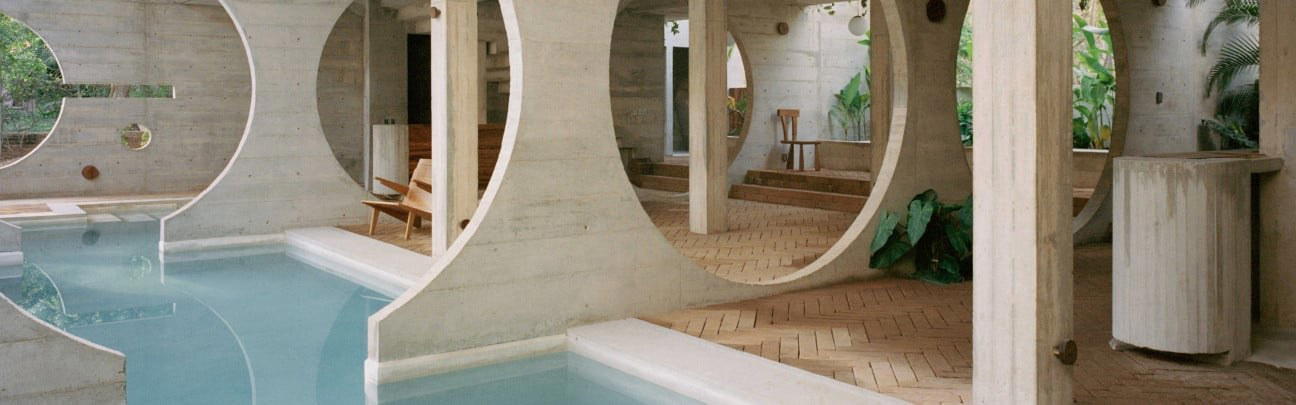
At a Glance
- Bohemian
- Romantic
- Quiet
- Elegant
- Scenic
- Cozy
- Romantic Getaway
- Honeymoon
- Wellness Retreat
- Weekend Escape
- Beachfront
- Infinity Pool
- Wi Fi
- Pool
- Spa
- Restaurant
- Room Service
- Concierge
- Beach Access
- Waterfront
- Wi Fi
- Pool
- Spa
- Restaurant
- Room Service
- Concierge
- Beach Access
Tranquil and relaxing beachfront atmosphere with natural light, earthy tones, and bohemian decor praised for peacefulness and sensory immersion.
Know Before You Go
- Getting there
- La barra Santa María Colotepec, 70934 Puerto Escondido, Oax.