Blanket Bay




Positioned between the Humboldt mountain range and the shores of Lake Wakatipu, Blanket Bay is one of New Zealand's most architecturally serious lodge hotels, scoring 92.5 points on La Liste's 2026 Top Hotels ranking. Thirteen rooms, suites, and chalets keep the property deliberately intimate. Rates start from US$1,353 per night, with Queenstown airport approximately 55 kilometres away.
Pearl is the En Primeur Club membership app — saves, bookings, and concierge access live there. Same editors, same standards.
- Address
- 4191 Glenorchy-Queenstown Road, Glenorchy 9372
- Phone
- +64 3 441 0115
- Website
- blanketbay.com
- Directions
- Get directions
 Saves & bookings on Pearl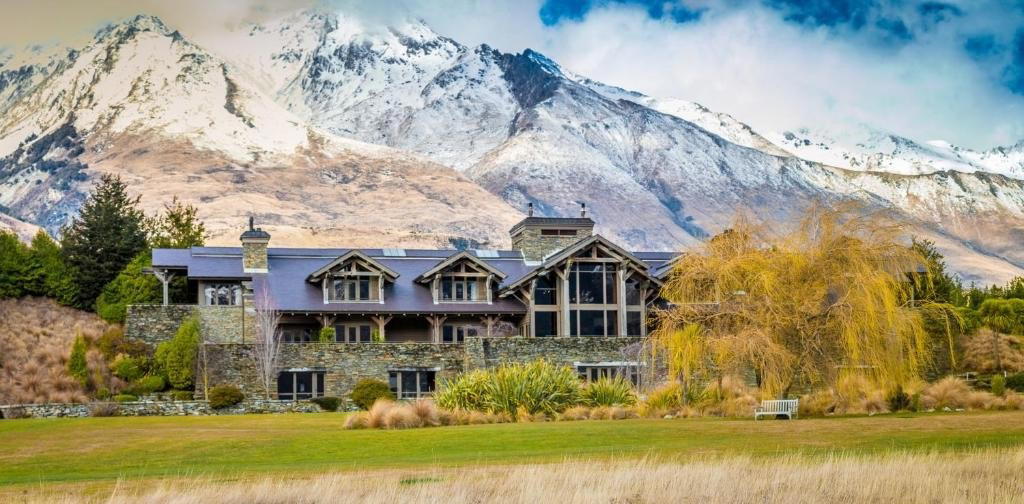
Where the Road Ends and the Mountains Begin
The drive north from Queenstown along the Glenorchy-Queenstown Road already tells you something about where you are going. The tarmac traces the western shore of Lake Wakatipu, the mountains pressing closer as the lake narrows, beech forest thickening on the slopes above. After roughly 35 minutes, the sealed road arrives at Glenorchy, population just a few hundred, backed by the Humboldt and Richardson ranges and bordered on two sides by National Parks. It is here, at the end of accessible high country, that Blanket Bay sits. The approach prepares you for scale. The lodge itself then exceeds it.
Blanket Bay is a 5-star hotel in Glenorchy, New Zealand, with 2 MICHELIN Keys and rates from US$735 per night. Huka Lodge, Otahuna Lodge, and Wharekauhau Country Estate each sit within this tier, each with a distinct character. Blanket Bay occupies a specific position within it: a property designed by an Idaho architect as a deliberate reference to the grand lodges of the American West, placed in one of the more geographically extreme settings any of them can claim. The result is a building that reads as immediately familiar to North American guests and simultaneously extraordinary in its context. See also our full Glenorchy guide for further context on this part of Otago.
Architecture as Editorial Statement
The lodge's design philosophy is worth understanding before arrival, because it shapes how the property functions emotionally. Most high-country lodges in New Zealand lean toward local vernacular: corrugated iron, exposed timber, references to farm buildings or Maori spatial traditions. Blanket Bay takes a different position. The Great Room, which anchors the main lodge, carries a thirty-foot beamed ceiling and a fireplace scaled to match. Vaulted wood ceilings and aged hardwood floors run through the lodge rooms. The overall register is closer to a Rockies hunting lodge than anything in the colonial New Zealand tradition, yet the materials are local and the integration with the site is careful enough that the building never feels transplanted. It feels, instead, deliberate: a considered choice to prioritize comfort and grandeur over novelty.
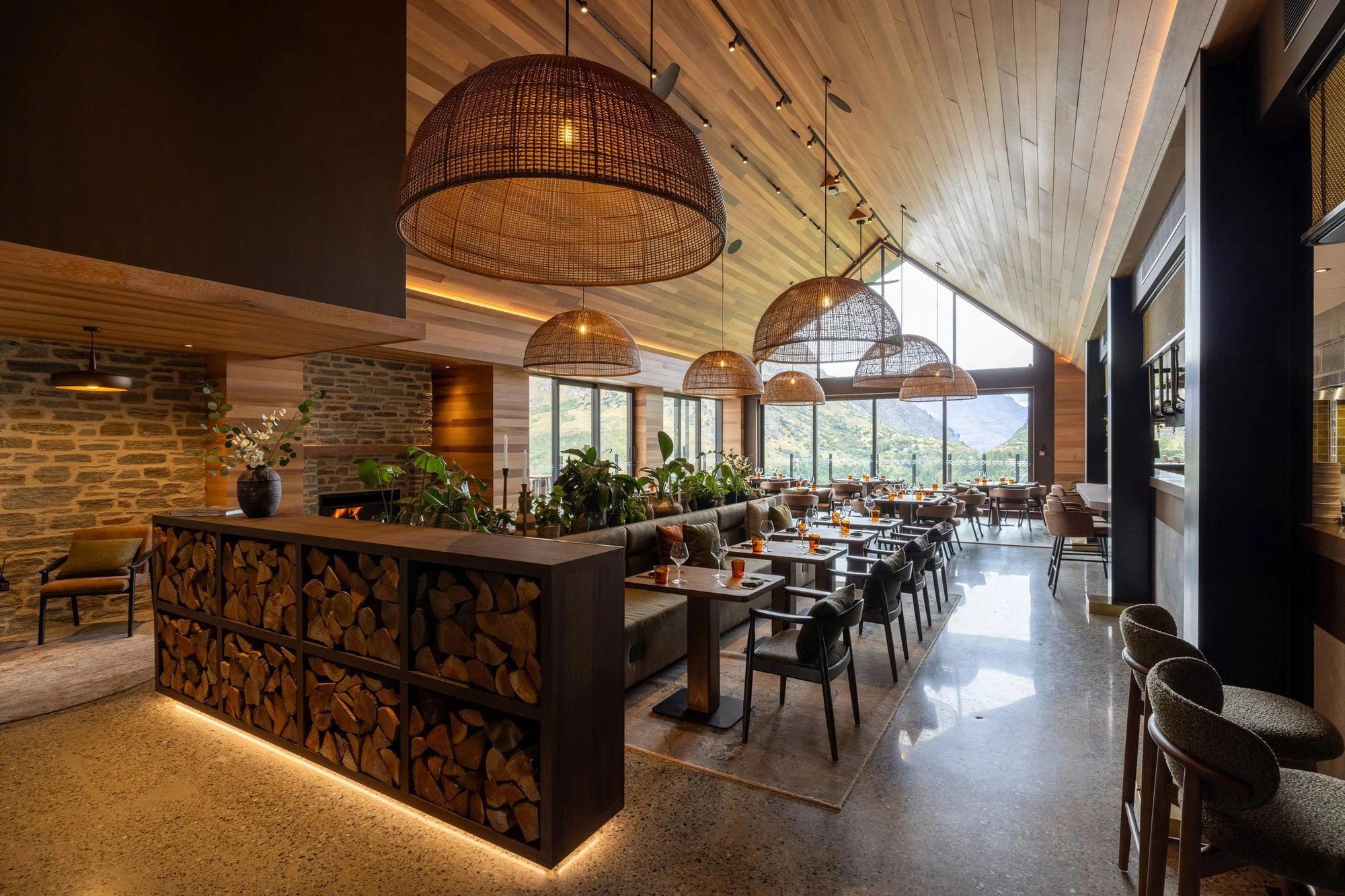
Natural materials recur throughout, chosen to echo the terrain outside rather than contrast with it. The stone fireplace in the Lake View Evening Dining Room, the beamed ceiling above it, the rugs and furnishings throughout the suites, all carry the same logic: weight, warmth, and a visual connection to the alpine world visible through every window. For guests arriving from design-forward properties in Auckland or Wellington, where the prevailing aesthetic tends toward light timber and spare lines, the hotel registers as a counterstatement. It argues that grandeur, properly deployed, is its own kind of restraint.
This positions it differently from peers like Minaret Station Alpine Lodge near Wanaka or Hapuku Lodge in Kaikoura, both of which lean more explicitly into New Zealand materials and form. The comparison is not a hierarchy but a genuinely different set of intentions, and guests should understand which register they want before choosing.
The Rooms: Scale and Separation
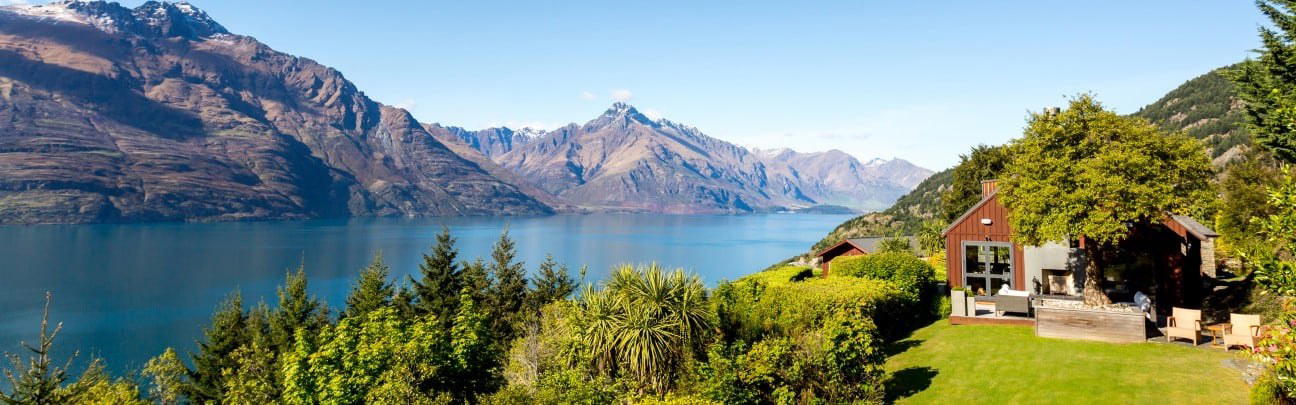
The hotel holds 13 rooms across three formats. Five lodge rooms and three lodge suites occupy the main building, positioned to hold views across Lake Wakatipu and toward the ranges beyond. The four chalet suites stand separately, built in a more traditional New Zealand colonial style, and offer a degree of privacy that the main lodge cannot match. For guests who value the ability to move between solitude and communal spaces on their own terms, the chalet configuration is the more considered choice.
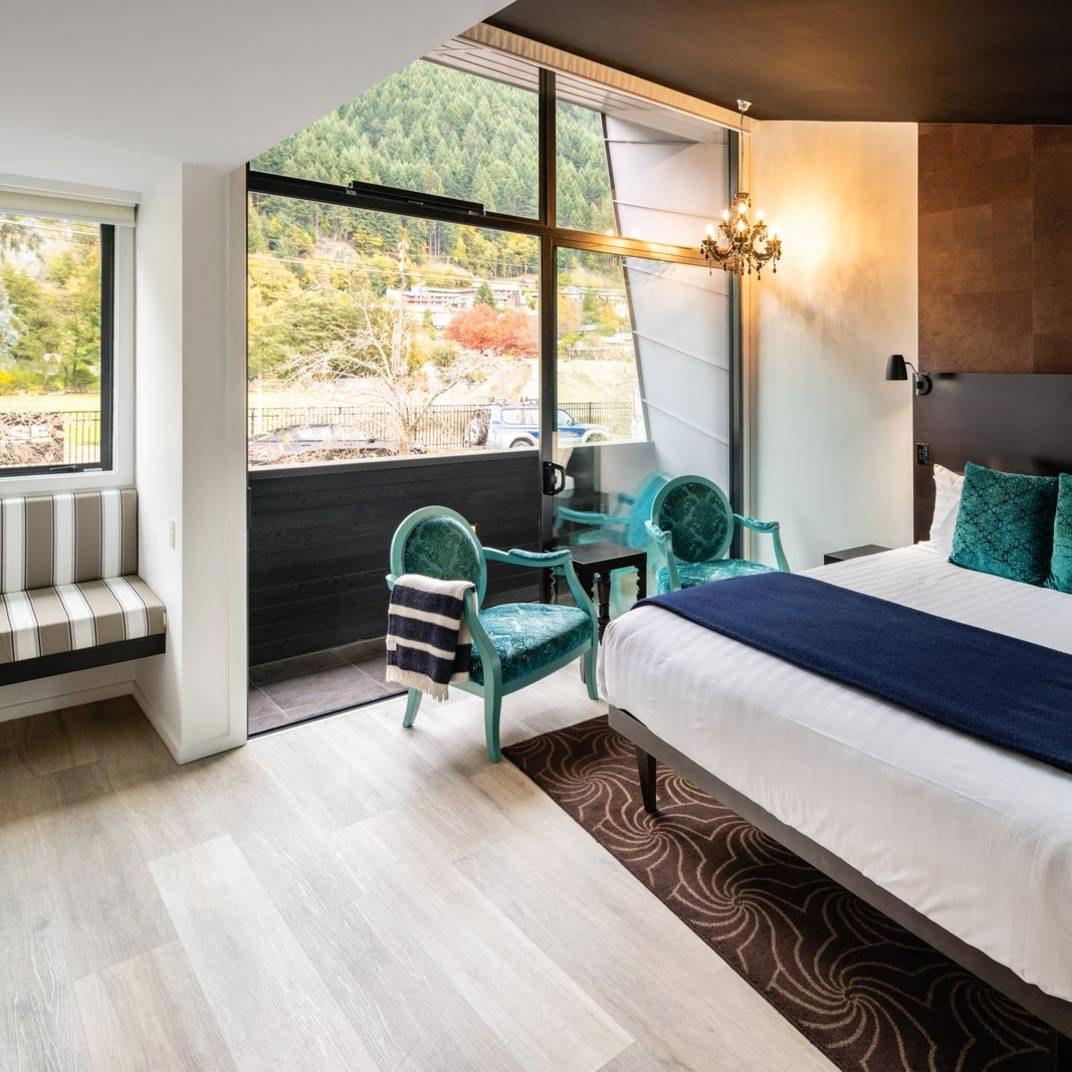
Lodge rooms carry super-king beds, vaulted ceilings, aged hardwood floors, and private balconies or terraces. The suites expand significantly into living space, a scale of room that few New Zealand properties sustain at this distance from a major city. The chalets add further separation from the main building and a colonial-era material palette that grounds them differently from the main lodge's American West register. Rates start from US$1,353 per night, which places the hotel at the higher end of New Zealand lodge pricing. For context within the South Island market, comparable properties such as Fiordland Lodge in Te Anau or Lakestone Lodge in Twizel operate at meaningfully lower price points with smaller activity programs. The pricing at the hotel reflects both location and a facilities set that extends to a swimming pool, steam rooms, gym, speed boat, private jetty, and Wine Cave.
Dining and the Wine Cave
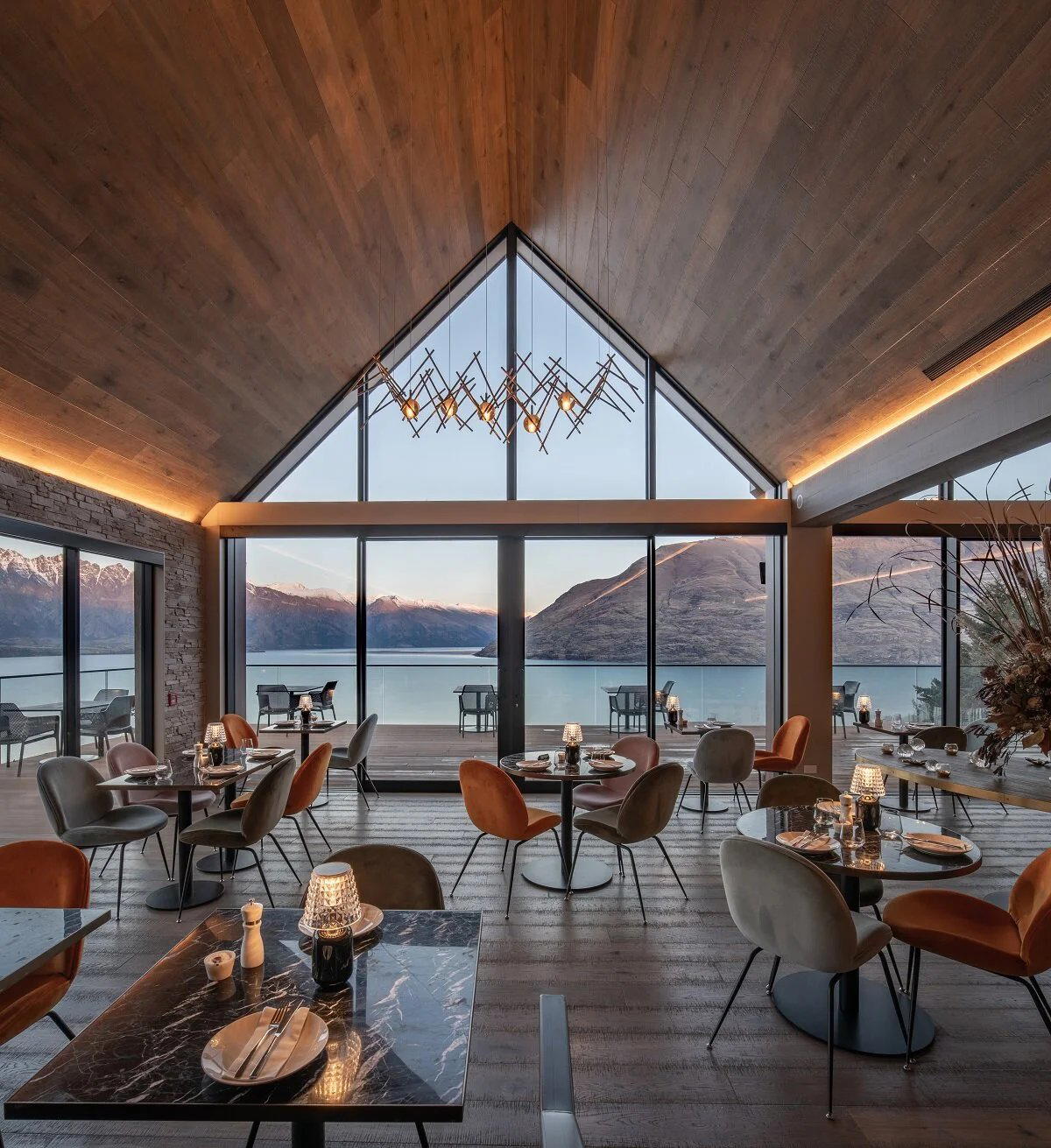
Dinner operates from the Lake View Evening Dining Room, where individual tables sit beneath beamed ceilings beside a stone fireplace. The format is in keeping with the lodge's general approach: measured, considered, oriented toward the view. Executive Chef Brendan Downer leads the kitchen. For private dining, the Wine Cave accommodates up to six guests and can be reserved separately, a format that functions well for small groups arriving together or for milestone occasions where separation from other guests matters. On warmer evenings, the outdoor Terrace provides a third dining context, with the lake and mountains as the backdrop and the outdoor fireplace running behind. Three distinct dining environments within a 13-room property is a meaningful investment in format variety.
Activities and the Glenorchy Advantage
The lodge's position at the northern head of Lake Wakatipu is directly relevant to the activity program. Glenorchy serves as the trailhead for three of New Zealand's most-walked multi-day tracks: the Routeburn, the Greenstone/Caples, and the Rees/Dart. The Dart River, accessible directly from the lodge's vicinity, is used for jet boat excursions into the Mount Aspiring National Park. Heli-skiing operates in winter months over the surrounding ranges, and helicopter access extends the reach to Milford Sound for day excursions. Queenstown, roughly 35 minutes south, provides the full menu of adrenaline-focused options that have made it New Zealand's adventure-sports center. Properties positioned at this distance from Queenstown, such as Hotel St Moritz in Queenstown itself, give easier urban access but surrender the specific quality of stillness that the Glenorchy location provides. The distinction matters for how guests actually spend their time. Several other lodges around New Zealand's National Parks draw similar comparisons: Pompolona Lodge in Fiordland and Solitaire Lodge in Rotorua each offer remoteness-as-feature, but without the same density of trail access from a single point.
Peter Jackson chose this valley for the landscape sequences of the Lord of the Rings trilogy, which provides a cultural reference point for non-hiking guests and a frame for the visual scale of the terrain. The mountains visible from the lodge's terraces and dining room appear in those films largely unchanged.
Planning Your Stay
The hotel sits at 4191 Glenorchy-Queenstown Road, approximately 35 minutes by car from central Queenstown or 50 minutes from Queenstown International Airport. Transfer costs from Queenstown run NZ$190 for a standard sedan and NZ$240 for a larger vehicle each way. The property does not accommodate children under 13 years of age. e-kidnappers-te-awanga-hotel">Rosewood Cape Kidnappers, Rosewood Kauri Cliffs, Omana on Waiheke Island, Bay of Many Coves, Poronui Lodge, Carnmore Chateau Marlborough, Mt Cook Lakeside Retreat, Hotel DeBrett in Auckland Central, and internationally, Aman New York, Aman Venice, and The Fifth Avenue Hotel in New York for guests building a broader international itinerary.
Fast Comparison
Comparable venues nearby, for context on price, style, and recognition.
| Venue | Cuisine | Price | Awards | Notes |
|---|---|---|---|---|
| Blanket BayThis venue — the venue you are viewing | Grand alpine lodge blending colonial New Zealand architecture with modern luxury; native timber and stone construction with contemporary comforts. | $$$$ | Michelin 2 Key | Not listed |
| Wharekauhau Country Estate | Edwardian country mansion with freestanding cottages | $$$$ | Michelin 2 Key | Palliser Bay |
| Otahuna Lodge | Historic Queen Anne mansion on a country estate | $$$$ | Michelin 2 Key | Tai Tapu |
| Rosewood Cape Kidnappers | Contemporary luxury lodge on a working farm | $$$$ | Michelin 2 Key | Te Awanga |
| Eichardt's Private Hotel | Historic luxury boutique hotel blending heritage charm with modern elegance. | $$$$ | Michelin 1 Key | central Queenstown |
| Stoneridge Estate | Contemporary luxury lodge with heritage elements, built around a 150-year-old stone homestead and constructed from local schist rock and recycled materials. | $$$$ | Michelin 1 Key | Lake Hayes |
Recognition history
Dated appearances from independent guides and award organizations, with the underlying list record or original source where available.
La Liste Top Hotels
La Liste
Relais Chateaux Award
Relais Chateaux
Virtuoso Luxury Hotel Partner
Virtuoso
Michelin 2 Keys
Michelin
Relais Chateaux Award
Relais Chateaux
Continue exploring
More in Glenorchy
Hotels in Glenorchy
Browse all →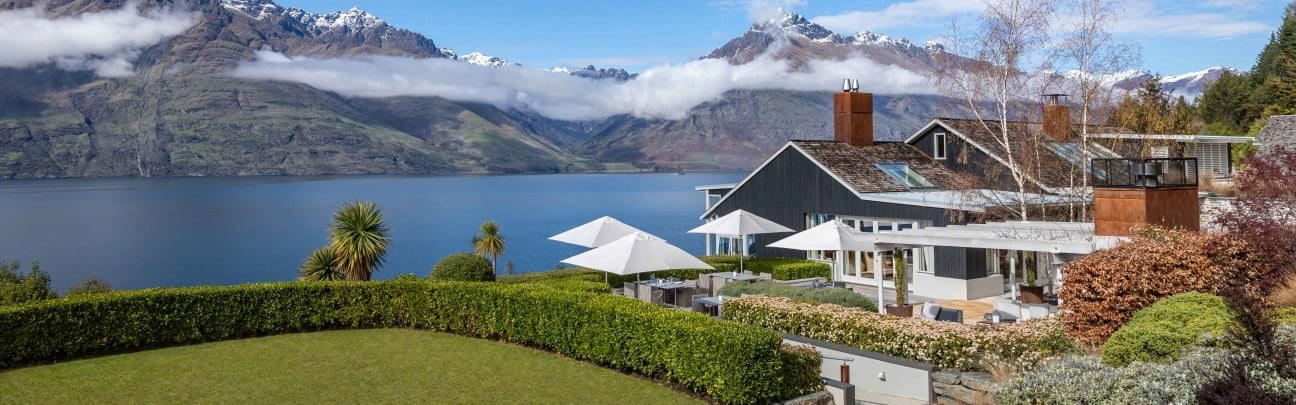
Bars in Glenorchy
Browse all →
Restaurants in Glenorchy
Browse all →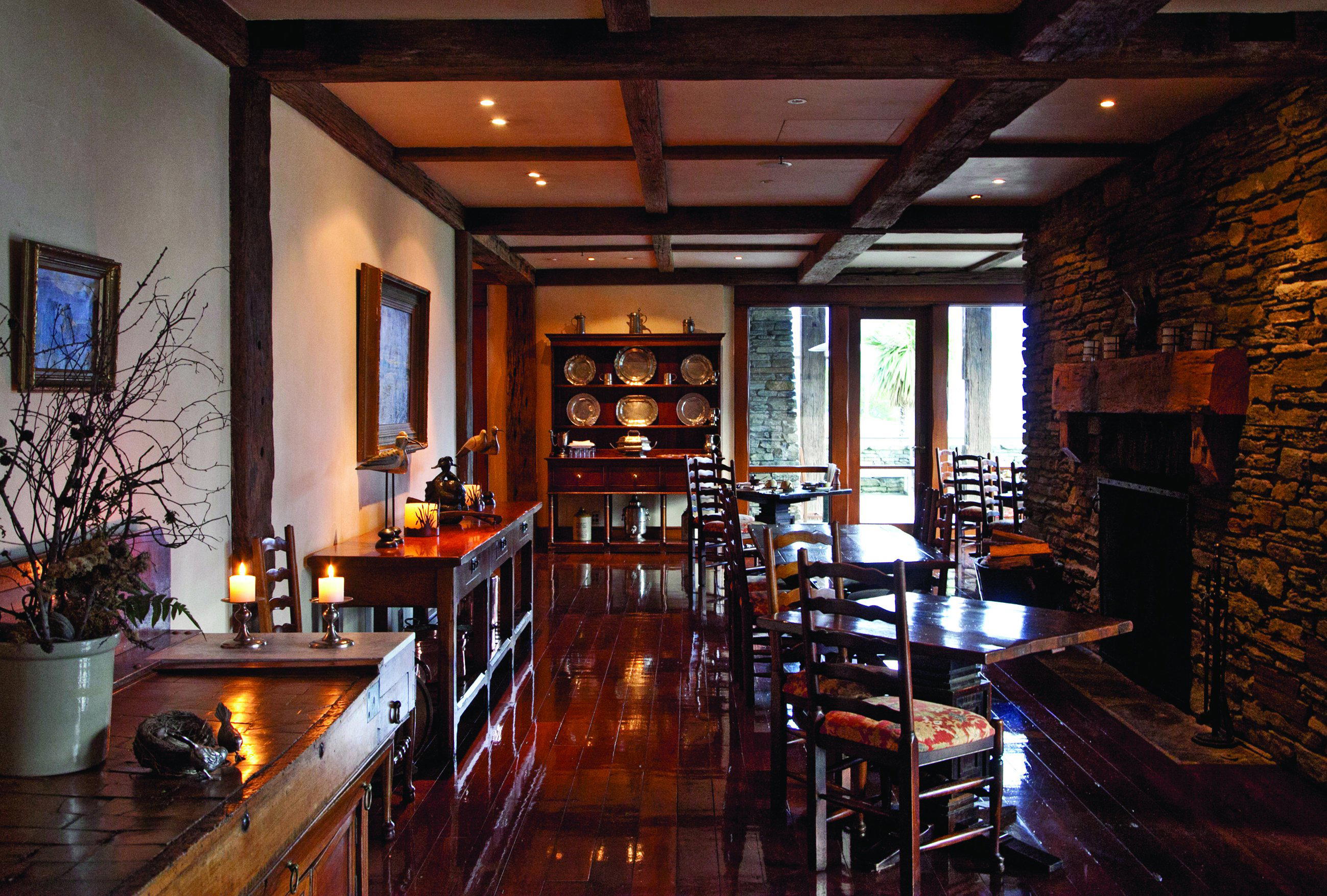
Wineries in Glenorchy
Browse all →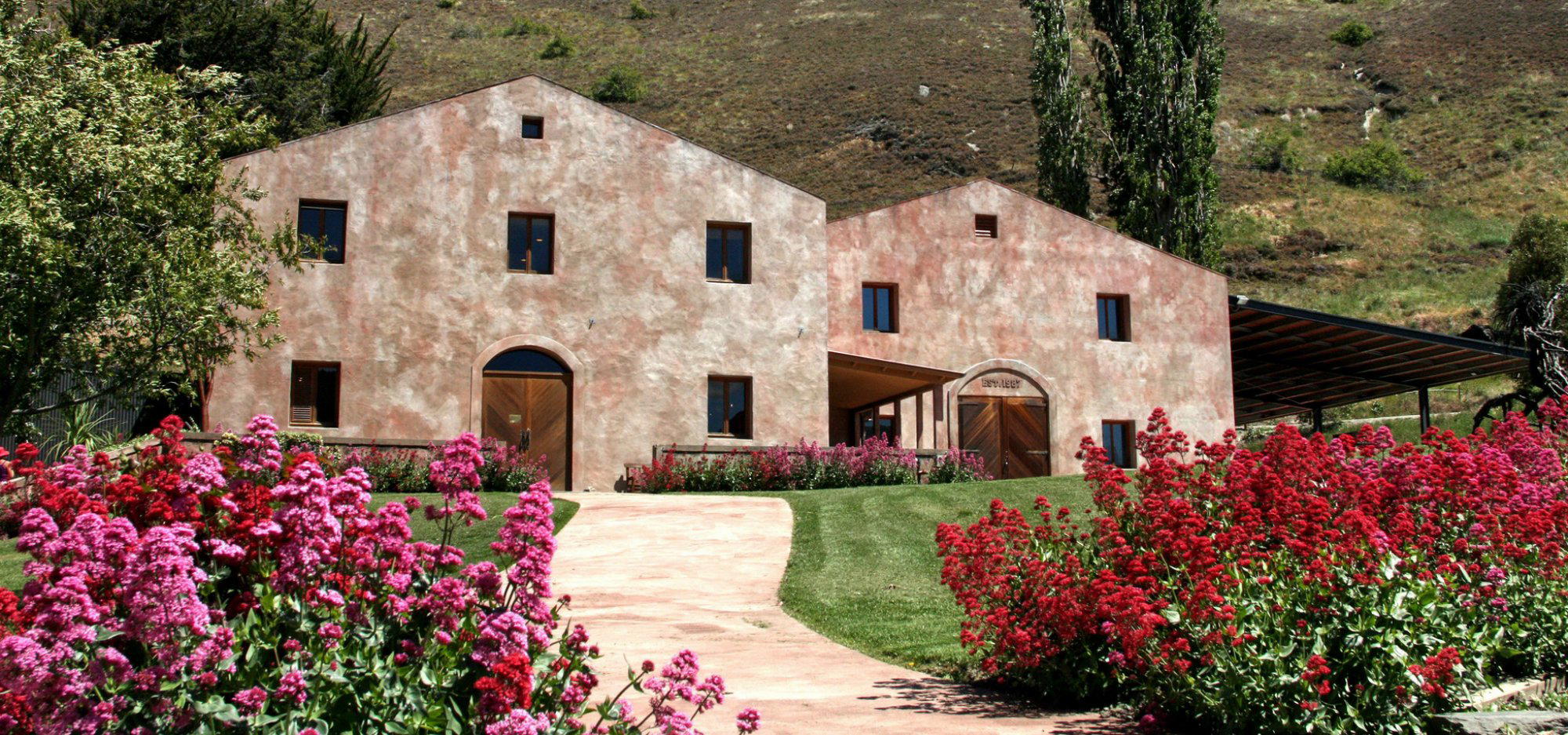
At a Glance
- Romantic
- Scenic
- Elegant
- Quiet
- Sophisticated
- Ornate
- Honeymoon
- Romantic Getaway
- Anniversary
- Celebration
- Weekend Escape
- Waterfront
- Private Villa
- Destination Spa
- Panoramic View
- Private Dining
- Terrace
- Garden
- Wi Fi
- Pool
- Spa
- Fitness Center
- Room Service
- Concierge
- Valet Parking
- Restaurant
- Bar
- Hot Tub
- Waterfront
- Mountain
- Wi Fi
- Pool
- Spa
- Fitness Center
- Room Service
- Concierge
- Valet Parking
- Restaurant
- Bar
- Hot Tub
Warm and sophisticated with grand stone fireplaces, native timber finishes, and soft lighting creating cozy elegance; evening atmosphere enhanced by candlelit dining overlooking the lake and starlit skies.