Our verdict
Attached to the Folk Heritage Museum in Thimphu's Kawang district, this restaurant offers one of the clearest expressions of traditional Bhutanese cooking available to visitors. The setting draws directly from the museum's mandate to preserve rural Himalayan domestic life, with food that reflects subsistence-farming traditions rather than modernised Bhutanese cuisine. For travellers seeking grounding in the country's actual culinary heritage, it earns serious consideration.

Pearl is the En Primeur Club membership app — saves, bookings, and concierge access live there. Same editors, same standards.
- Address
- FJJJ+WP8, Thimphu, Bhutan
- Phone
- +975 17 61 19 82
- Hours
- Daily 9 AM–9 PM
- Directions
- Get directions
The menu
What to order
- Red chili datsi
- Phagsha seekum paa
Stone Walls, Smoke, and Subsistence: Eating at Bhutan's Heritage Table
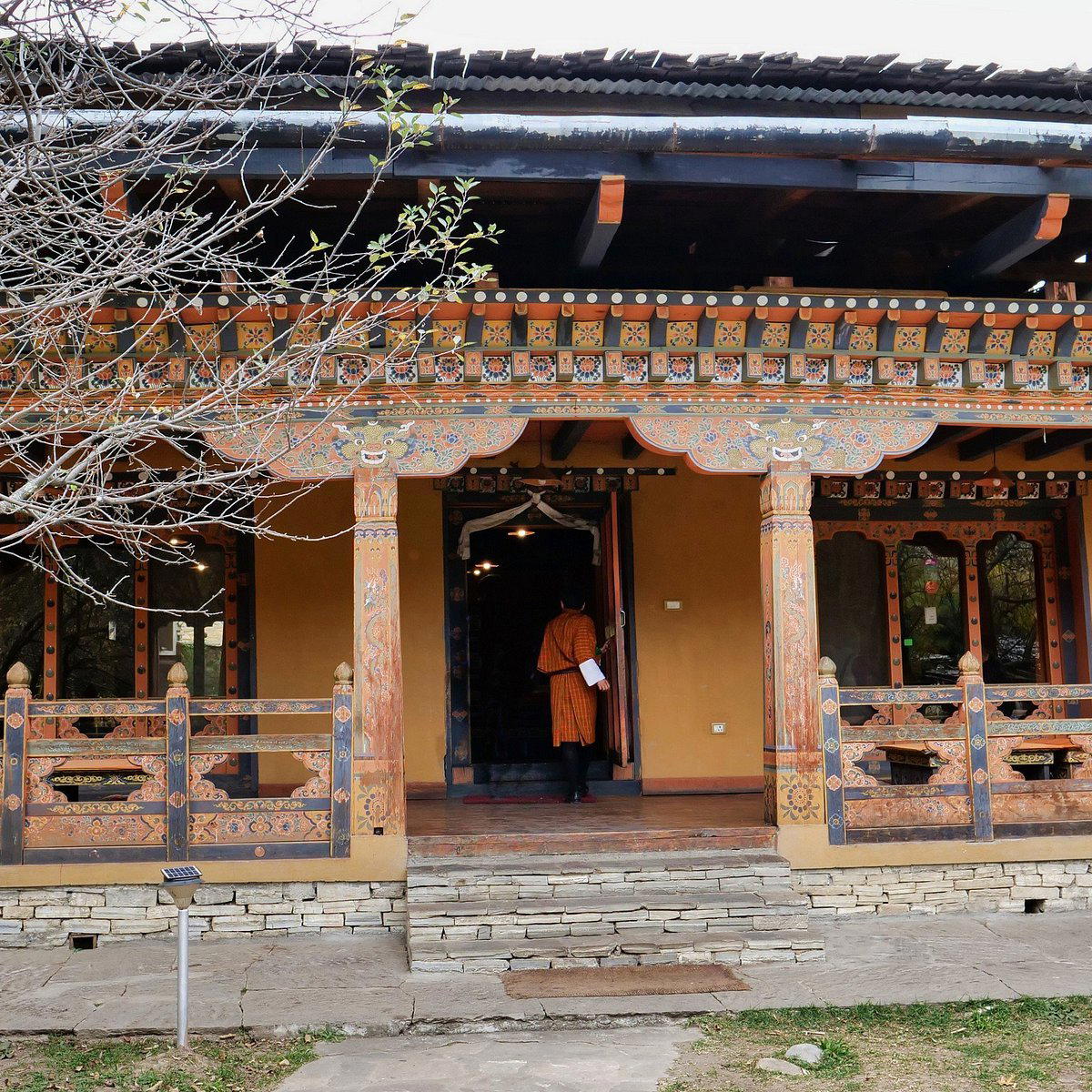
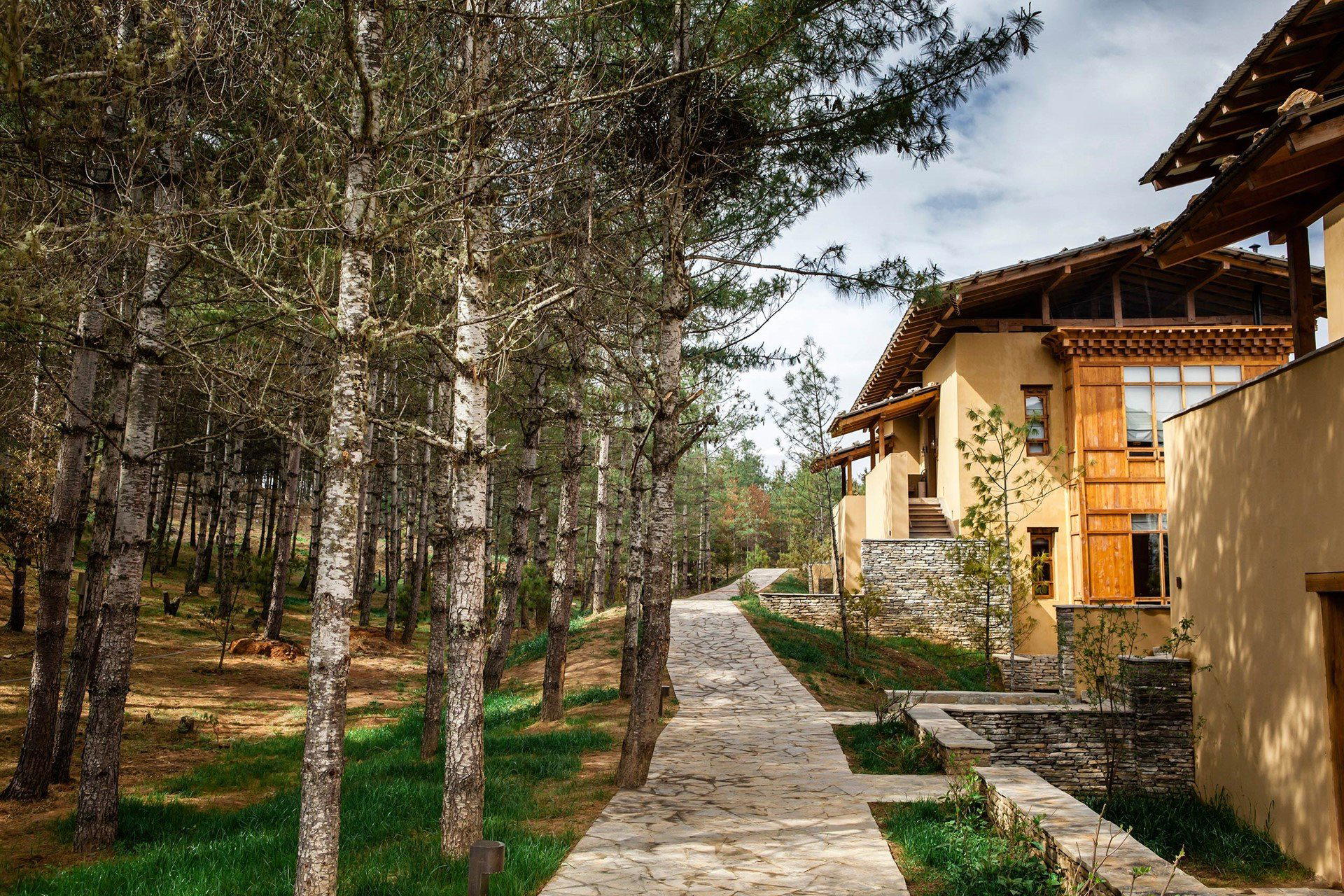
The building announces its intent before you sit down. The Folk Heritage Museum in Kawang occupies a traditional Bhutanese farmhouse, the kind of structure built from rammed earth and timber that once defined rural domestic life across the Thimphu valley. Entering the restaurant means passing through those same architectural layers: low-ceilinged rooms, darkened wood beams, cooking areas that recall open-hearth traditions rather than commercial kitchen design. The atmosphere is less curated than it is preserved, which is a meaningful distinction in a country where heritage presentation can tip toward the theatrical.
This is a useful context for understanding where the Folk Heritage Museum Restaurant sits relative to Thimphu's broader dining scene. The city now has a range of options, from guesthouses serving simplified visitor menus to establishments oriented toward international travellers at the upper end of the market. The Folk Heritage Museum Restaurant operates in a different register entirely: its authority comes from institutional context rather than culinary ambition in the competitive-restaurant sense. The museum's mandate is documentation and preservation of Bhutanese rural life up to the early twentieth century, and the restaurant functions as an edible extension of that mandate.
Where the Food Comes From, and Why That Matters
Bhutanese subsistence farming shaped a cuisine built around what the high-altitude, landlocked terrain could reliably produce: red rice grown in terraced paddies, buckwheat at higher elevations, chillies dried and used as a vegetable rather than a seasoning, dairy from cattle and yak herds. These were not stylistic choices but the outcomes of geography and growing seasons. The distinction matters because so much of what gets described as traditional food elsewhere has been softened or adapted for broader palatability. In Bhutan, the foundational ingredients retain their character precisely because the country's isolation preserved them.
Ema datshi, the dish most associated with Bhutanese cooking, illustrates this clearly. It is chilli and cheese, cooked together until the cheese softens into a loose sauce. The version that emerges from an authentic preparation uses fresh or dried chillies as the primary volume ingredient, with the cheese serving as the medium rather than an accent. Restaurants in tourist-adjacent contexts frequently moderate the heat and increase the dairy ratio to make the dish more approachable. The Folk Heritage Museum's setting suggests a commitment to the less-mediated version, though visitors with calibrated expectations around spice should factor that in when planning. For comparison, internationally recognised restaurants like Atelier Moessmer Norbert Niederkofler in Brunico have built their reputations on a similar principle: letting terrain dictate the plate rather than imposing culinary fashion onto local ingredients.
Red rice, the other constant of traditional Bhutanese cooking, is grown in the Paro valley and has a nutty, slightly chewy character distinct from white or brown varieties. Its nutritional density made it the caloric backbone of farming communities working at altitude. Buckwheat pancakes and noodles appear in regions above 2,500 metres, where rice cultivation becomes impractical. A restaurant connected to the heritage museum has the institutional rationale to present these ingredients in their historical context rather than as novelties, which gives the eating experience a frame that changes how the food reads.
The Heritage Dining Format in Thimphu's Visitor Economy
Thimphu sits at an interesting point in Bhutan's carefully managed tourism development. The country's high daily tariff structure for visitors, which covers accommodation, meals, and a guide, means that most travellers encounter Bhutanese food through their tour operator's selected guesthouses and hotels rather than through independent restaurant exploration. The Folk Heritage Museum Restaurant represents one of the places where visitors who want to eat outside that structured circuit can do so within a setting that has documentary credibility.
For travellers accustomed to seeking out culturally grounded eating experiences at premium destinations, like Lazy Bear in San Francisco or Atomix in New York City, the reference points shift entirely in Kawang. The signal here is not tasting-menu architecture or wine programme depth but proximity to a living record of how people actually ate. That is a different kind of authority, and it requires a different evaluative lens.
The restaurant also places Thimphu in useful dialogue with how other cities handle the relationship between heritage preservation and food. At Dal Pescatore in Runate in Lombardy, generational continuity provides the legitimacy; at Waterside Inn in Bray, it is the persistence of classical French technique. In Kawang, the grounding mechanism is institutional: the museum itself is the credential, and the restaurant draws from that rather than from chef biography or awards recognition.
Elsewhere on the Thimphu dining scene, Wangchen Momo Corner offers a more casual entry into Bhutanese staples, particularly the steamed dumplings that have become standard street-level eating across the Himalayan region. The Folk Heritage Museum Restaurant operates at a different register, where the architectural setting and museum context add interpretive weight to the meal. These are complementary rather than competing experiences.
Planning Your Visit
The museum is located in the Kawang area of Thimphu and is accessible from the city centre without significant difficulty. Most visits to Bhutan operate through guided frameworks, and a knowledgeable guide will be able to advise on current opening arrangements and whether the restaurant is receiving independent visitors alongside museum guests.
Timing a visit around the mid-morning museum opening, and staying through to lunch, is the natural structure for combining the exhibition with a meal. The harvest cycle also bears some consideration: autumn, following the rice harvest, is when traditional Bhutanese pantry ingredients are at their freshest and most varied, and the October-November travel window also aligns with favourable weather across Thimphu valley.
For the wider context on eating and drinking in Kawang and Thimphu, our full Kawang restaurants guide covers additional options across price points and formats. Visitors with an interest in how other high-commitment culinary traditions document their heritage might also find useful comparison in entries for Piazza Duomo in Alba, Jordnær in Gentofte, and Arzak in San Sebastián, each of which approaches regional identity through a different institutional logic than what the Folk Heritage Museum represents, but shares the underlying premise that place should be legible on the plate.
Frequently asked questions
Can I bring kids to Folk Heritage Museum Restaurant?
The Folk Heritage Museum in Kawang occupies a traditional farmhouse setting oriented around cultural education, which makes it a reasonable fit for children with an interest in how Bhutanese households functioned historically. The food is rooted in subsistence staples rather than elaborate tasting menus, so there are no format pressures around long courses or wine pairings.
What is the atmosphere like at Folk Heritage Museum Restaurant?
The restaurant sits inside a preserved traditional Bhutanese farmhouse in the Kawang area of Thimphu, with stone walls and architectural details that reflect how highland farming families lived and ate. The dining context is inseparable from the museum itself: you are eating in a working exhibit, not a heritage-themed dining room built to suggest the past. That gives the room a low-key, documentary quality that contrasts with the more polished hotel restaurants found closer to Thimphu's centre.
Does the Folk Heritage Museum Restaurant in Kawang serve food that reflects actual Bhutanese farming traditions, or is it adapted for tourists?
The restaurant is embedded in a museum dedicated to preserving traditional Bhutanese rural life in Thimphu's Kawang area, and the food format follows from that mandate: dishes draw on high-altitude subsistence staples like red rice and grains that shaped Bhutanese cooking before tourism was a factor. No chef name or adapted menu is publicly documented, which itself suggests the kitchen is not operating on a modernised tasting-menu model. For visitors coming through Bhutan's managed tourism system, that positions it as one of the more context-grounded places to eat in the capital district.
What do people recommend at Folk Heritage Museum Restaurant?
The kitchen draws from Bhutanese subsistence farming traditions, meaning red rice, high-altitude grains, and staple preparations shaped by what the landlocked terrain reliably produces. That approach reflects how the cuisine itself was constructed: around availability rather than choice.
Where do I go for Folk Heritage Museum Restaurant?
Folk Heritage Museum Restaurant is located at FJJJ+WP8, Thimphu, Bhutan, Kawang.
How hard is it to get a table at Folk Heritage Museum Restaurant?
The restaurant operates within the Folk Heritage Museum in Kawang, Thimphu, and functions partly within Bhutan's high-tariff tourism framework, which structures visitor numbers across the country at a policy level rather than pure demand. Confirmed booking procedures and hours are not publicly listed, so reaching the museum directly before your visit is the practical first step. Given the farmhouse scale of the building, seating capacity is unlikely to be large.
How It Stacks Up
| Venue | Cuisine | Price |
|---|---|---|
| Folk Heritage Museum RestaurantThis venue — the venue you are viewing | Traditional Bhutanese | $10–20 |
Continue exploring
More in Kawang
Restaurants in Kawang
Browse all →
Details
- Rustic
- Cozy
- Scenic
- Special Occasion
- Group Dining
- Historic Building
- Garden
- Organic
- Local Sourcing
- Garden
- Set Menu
- Vegetarian Friendly
- Vegan Options
- Gluten Free Options
Current opening hours
- Monday
- 9 AM–9 PM
- Tuesday
- 9 AM–9 PM
- Wednesday
- 9 AM–9 PM
- Thursday
- 9 AM–9 PM
- Friday
- 9 AM–9 PM
- Saturday
- 9 AM–9 PM
- Sunday
- 9 AM–9 PM
Hours can change for holidays and private events. Last verified .
Charming orchard environment with thematic traditional decor, colorful and welcoming atmosphere.