Aloft New York Brooklyn
Aloft New York Brooklyn occupies a sharp-edged position in Downtown Brooklyn's accommodation tier, where the borough's rapid commercial and residential densification has drawn a crop of design-conscious, mid-scale hotels to Duffield Street and its surroundings. The property sits within walking distance of the Brooklyn Bridge and DUMBO, making it a practical base for both business travelers and those crossing over from Manhattan.
Pearl is the En Primeur Club membership app — saves, bookings, and concierge access live there. Same editors, same standards.
- Address
- 216 Duffield St, Brooklyn, NY 11201
- Phone
- (718) 256-3833
- Website
- marriott.com
- Directions
- Get directions
 Saves & bookings on Pearl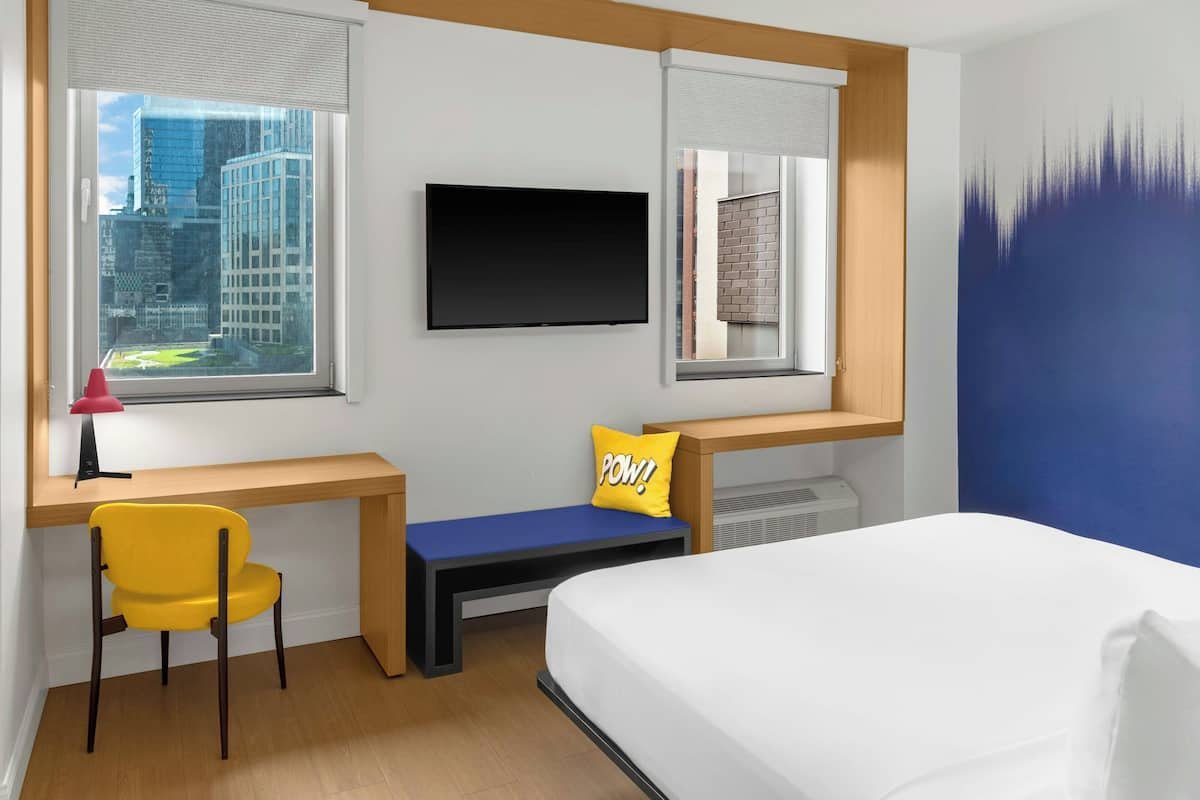
Downtown Brooklyn's Utilitarian Edge, Reframed
Duffield Street sits at the compressed centre of Downtown Brooklyn, where the borough's administrative and commercial grid collides with one of the densest transit hubs in New York City. The Aloft New York Brooklyn, at 216 Duffield St, occupies that friction zone rather than retreating from it. The Aloft brand, developed by Marriott as a design-forward, lower-ceremony alternative to the group's full-service properties, has consistently placed its properties in urban cores where the surroundings do the work. In Brooklyn, that calculus works: the neighbourhood delivers a constant visual churn of glass towers, Federal-era commercial buildings, and the pedestrian overflow from Atlantic Terminal and the Fulton Street transit complex two blocks north.
What the Design Language Says About the Category
The Aloft format emerged from a specific moment in American hotel design, roughly the mid-2000s, when brands began splitting the difference between the anonymity of extended-stay properties and the ceremony (and cost) of full-service boutique hotels. The resulting aesthetic is deliberate and consistent across the portfolio: open-plan lobbies that double as social spaces, industrial-inflected material palettes with exposed ceilings, and a reduced-service model that front-loads common areas instead of room amenity. At the Brooklyn location, that format maps onto a building that reads from the street as contemporary commercial construction, a form common to the post-2010 development wave that reshaped much of Downtown Brooklyn's skyline.
This is not a property that competes on architectural provenance or historical register. It competes on position and format efficiency. For travellers whose priority is proximity to Brooklyn's transit grid and lower Manhattan access across the East River, the address at Duffield is genuinely functional: the A, C, F, R, 2, 3, 4, and 5 trains are within a short walk, making the hotel among the more transit-connected lodging options in the entire borough. That logistical advantage shapes the property's natural guest profile: business travellers working between Brooklyn and midtown, visitors using Brooklyn as a base for wider New York exploration, and attendees of events at Barclays Center, roughly ten minutes on foot.
Aloft in Context: Where It Sits in the Brooklyn Hotel Market
Brooklyn's hotel market has matured considerably since the mid-2010s, when the borough was still absorbing its first wave of purpose-built lodging. The current inventory spans from design-led independent properties to full-service chain outposts. At the independent end, properties like The Livingston and The Livingston - JDV by Hyatt position themselves on neighbourhood character and locally inflected programming. The Aloft occupies a different coordinate: brand-consistent, transit-optimised, and priced to reflect reduced service depth rather than curated experience.
That positioning is neither a weakness nor a compromise for the right traveller. Within the Marriott ecosystem, Aloft properties sit below the W brand on ceremony and above extended-stay formats on design intention. In Brooklyn specifically, the format fits a visitor who wants a reliable physical environment, functional common spaces, and fast access to a city that largely happens outside any hotel's walls. Travellers seeking the kind of locally embedded experience delivered by properties such as Chicago Athletic Association or Raffles Boston are shopping a different segment entirely.
For reference, the upper registers of American hotel design currently run through properties like Aman New York in Manhattan, Amangiri in Canyon Point, or Post Ranch Inn in Big Sur, each of which builds its identity around site specificity and architectural singularity. The Aloft model is deliberately the inverse: consistency as value. Across the brand's global portfolio, a guest in Brooklyn and a guest in Nashville encounter a comparable spatial grammar. That reliability is the product.
The Neighbourhood as Amenity
Downtown Brooklyn has changed faster than almost any comparable urban district in the United States over the past fifteen years. The arrival of major mixed-use developments, the expansion of the cultural and restaurant infrastructure, and the borough's continued draw for New York's creative and professional class have produced a neighbourhood with genuine density of interest. From the Aloft's Duffield Street address, the Brooklyn Museum is accessible by subway in under ten minutes, DUMBO's gallery and restaurant concentration is a short ride or a walkable distance depending on the route, and the Brooklyn Bridge Park waterfront sits roughly twenty minutes on foot to the northwest.
For dining, Brooklyn's output across the price spectrum is substantial, from the Red Hook waterfront to the Greenpoint corridor. The neighbourhood immediately surrounding the hotel skews toward fast-casual and transit-adjacent dining, which matches the format logic of the property itself.
Travellers comparing against more destination-specific American properties, from Hotel Bel-Air in Los Angeles to Auberge du Soleil in Napa or Troutbeck in Amenia, should note that the Aloft Brooklyn is not a destination in itself. The neighbourhood and the city are the destination. The property is infrastructure.
Planning Your Stay
The Aloft New York Brooklyn functions well as a base for both short-stay business visits and longer New York explorations anchored in Brooklyn. The property's Downtown Brooklyn location means demand tracks closely with citywide event calendars, particularly Barclays Center events and peak New York tourism periods in June, September, and December.
Other properties across the EP Club portfolio that share a city-base format in high-density urban environments include 1 Hotel San Francisco and The Fifth Avenue Hotel in New York City, each serving a different price tier and design ethos but the same fundamental traveller logic: the city is the product, the hotel is the platform.
Comparable Spots, Quickly
Comparable venues nearby, for context on price, style, and recognition.
| Venue | Cuisine | Price | Awards | Notes |
|---|---|---|---|---|
| Aloft New York BrooklynThis venue — the venue you are viewing | contemporary urban hotel with loft-style rooms | $$ | 3-Star | Not listed |
| Henry Norman Hotel | Eclectic boutique hotel blending industrial heritage with contemporary design in a converted warehouse. | $$ | 3-Star | Greenpoint |
| The Box House Hotel | Converted industrial factory with modern addition | $$$ | 4-Star | Greenpoint |
| The Livingston | Modern hideaway in Downtown Brooklyn's Cultural District | $$$ | 4-Star | Downtown Brooklyn |
| Penny Williamsburg | Contemporary boutique hotel honoring Williamsburg's creative heritage with residential sensibility and artistic focus. | $$$ | 4-Star | Williamsburg |
| The Livingston - JDV by Hyatt | Modern hideaway blending industrial design with Brooklyn's cultural heritage | $$$ | Not listed | Downtown Brooklyn |
Continue exploring
More in Brooklyn
Hotels in Brooklyn
Browse all →
Bars in Brooklyn
Browse all →
Restaurants in Brooklyn
Browse all →



At a Glance
- Modern
- Trendy
- Lively
- Energetic
- Business Trip
- Weekend Escape
- Wi Fi
- Fitness Center
- Business Center
- Restaurant
- Bar
- Street Scene
- Wi Fi
- Fitness Center
- Business Center
- Restaurant
- Bar
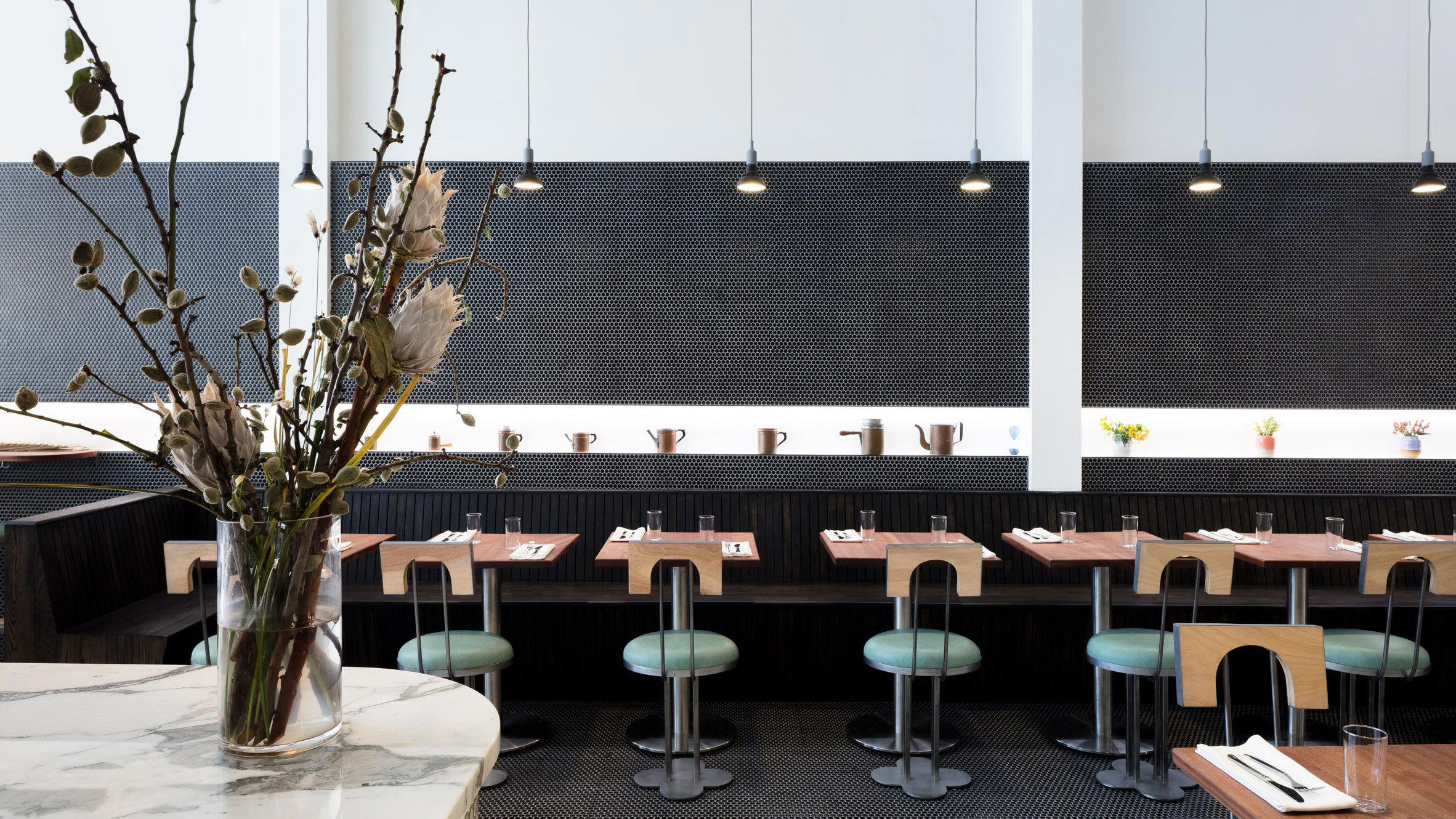
Bright, energetic atmosphere with colorful pod chairs, brushed steel, and a social re:mix lobby featuring fireplace lighting for daytime and evening vibes.