← Guides
From a former Jackson Family Wines VP to an Italian pioneer with 121 varieties, meet the cross-border generation reshaping Valle de Guadalupe.
From a former Jackson Family Wines VP to an Italian pioneer with 121 varieties, meet the cross-border generation reshaping Valle de Guadalupe.
Seventy miles south of the U.S. border, Valle de Guadalupe sits close enough to San Diego that Tony Viramontes, former VP of Operations at Jackson Family Wines, flies in, sleeps in Tijuana, drives an hour south to taste barrel samples of Sauvignon Blanc and Petite Sirah rosé from his hillside Costa de Valle vineyard, eats lobster tacos on a bluff above the Pacific, and is back in Sonoma County by nightfall.
That rhythm is not a novelty. It is the operating model for a generation of winemakers bringing Sonoma Coast viticulture, UC Davis oenology, Australian cellar technique, and Italian variety obsession to a valley that now holds approximately 200 estates and five Michelin-starred restaurants.
The wines landing on those tables are no longer a regional curiosity. They are the product of deliberate, internationally trained craft, and most U.S. collectors have not yet found them.
Valle de Guadalupe's story has always been one of arrivals. Russian immigrants who reached Baja in the early 1900s developed farming operations across 13,000 acres here, laying the agricultural foundation that later generations would plant with vines. Italian-born Camillo Magoni showed up in 1965. A Santa Barbara restaurant worker named Kristin Magnussen followed in 2013. A former Mexico City actor named Fernando Pérez Castro runs two wineries his family built on land the family has held for decades. Each arrival brought a different set of references, and the valley absorbed them all.
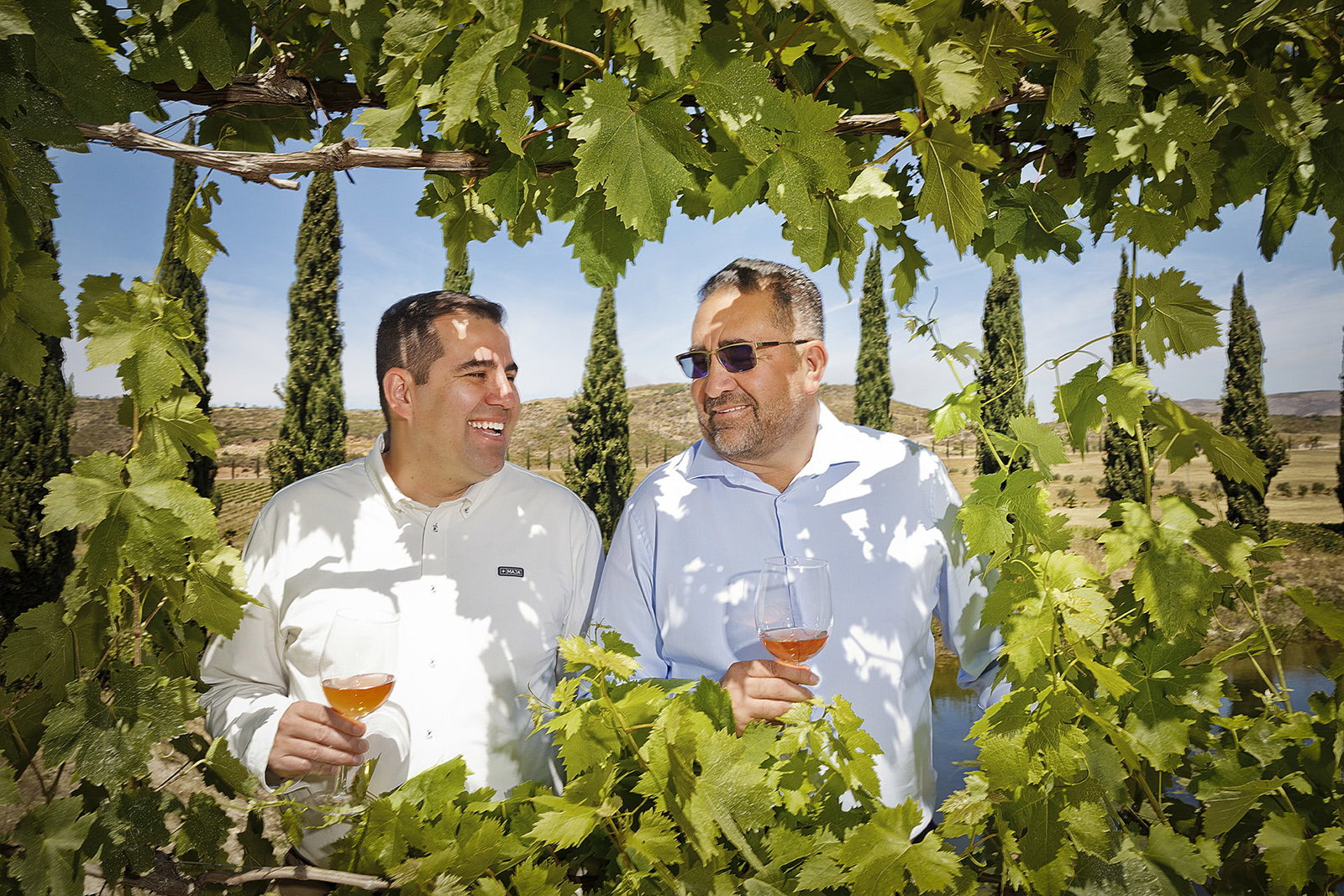
What makes the current generation of Valle de Guadalupe cross-border winemakers distinct from earlier waves is the specificity of their expertise. These are not enthusiastic amateurs planting a dream. Tony Viramontes spent decades navigating Northern California's corporate wine infrastructure before redirecting that knowledge south.
Verónica Santiago of Mina Penélope studied winemaking in Australia before returning to the Ensenada coast she grew up near. Nikolai Rudametkin trained at UC Davis, staged at Peju and St.
Supéry in Napa, worked at Fingers Crossed in Ojai, and spent time at Bodega Garzón in Uruguay, all before his family's estate became the first in Mexico to earn organic certification. The accumulation of that knowledge, concentrated in a single Mediterranean-climate valley, is what is shifting the region's ceiling.
The climate itself rewards the ambition. Valle de Guadalupe shares its Mediterranean profile with coastal California, warm, dry summers moderated by Pacific influence, with enough diurnal swing to preserve acidity. The valley floor runs hot, but the hillsides and coastal approaches catch marine air that extends hang time and adds a savory, herb-driven character to the fruit. Sun-dried rosemary, dark plum, and a flinty mineral edge run through the reds from the better-polished sites. It is a terroir that rewards the same instincts that work on the Sonoma Coast, and that is exactly why producers with Sonoma experience keep gravitating here.
Fernando Pérez Castro put the regional identity plainly: the valley draws people from England, the Netherlands, France, Spain, Italy, and all over Mexico. "We don't pretend to be Napa or Rioja or Bordeaux," he said. "We are proud to be Mexico, and we believe we have everything to offer."
Winemaker / Producer | Background & Training | Vineyard / Estate | Notable Credential | Variety Focus |
|---|---|---|---|---|
Tony Viramontes (West Soul / Juego de Pelota) | VP of Operations, Jackson Family Wines; 35+ years Northern California wine industry | Costa de Valle, 30-acre hillside coastal site | Sonoma Coast viticulture expertise applied to Baja hillside farming | Sauvignon Blanc, Petite Sirah rosé |
Verónica Santiago (Mina Penélope) | Winemaking studies in Australia; grew up near Ensenada coast | Ensenada coastal zone | International oenology training brought back to home region | Coastal Baja varieties |
Nikolai Rudametkin | UC Davis; staged at Peju, St. Supéry (Napa), Fingers Crossed (Ojai), Bodega Garzón (Uruguay) | Family estate, Valle de Guadalupe | First winery in Mexico to earn organic certification | Organically farmed Baja varieties |
Fernando Pérez Castro | Former Mexico City actor; family land held for decades | Two family-owned wineries, Valle de Guadalupe | Multi-generational land ownership; regional identity advocate | Traditional Baja red varieties |
Camillo Magoni | Italian-born; arrived 1965 | Valle de Guadalupe | Pioneer of modern winemaking in the valley | Italian varieties |
Kristin Magnussen | Former Santa Barbara restaurant worker; arrived 2013 | Valle de Guadalupe | Cross-border hospitality-to-winemaking career transition | Baja Mediterranean varieties |
Tony Viramontes left Zacatecas at 18 to find work in the United States.
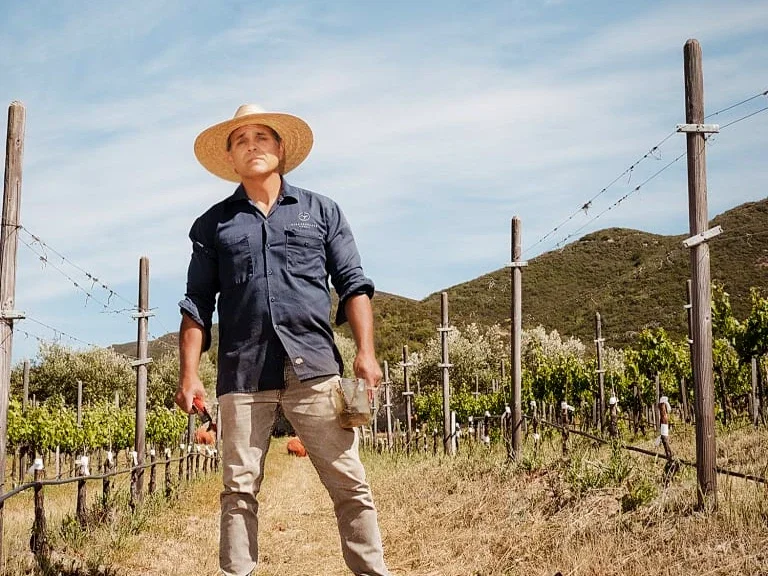
Thirty-five years later, after climbing to a VP of Operations role at Jackson Family Wines, he and his brother Gerardo, also a Northern California wine industry veteran, are building something in the hills above the valley floor: a 30-acre vineyard in the polished coastal terrain they have named Costa de Valle, applying the Sonoma Coast logic of Pacific influence and hillside farming to Baja California.
The site's elevation and marine exposure give it a cooler, more restrained register than the crowded valley floor, closer in character to Petaluma Gap than to Paso Robles.
The decision to avoid the valley floor was deliberate. "I am looking for that Pacific influence," Tony said during a March tasting of wines from their two labels, West Soul and Juego de Pelota. "I want to farm on the hill and make a different kind of wine." The wines poured that morning, a tropical Sauvignon Blanc, a savory Petite Sirah rosé, and fresh red blends, reflect exactly that cooler register. The Petite Sirah rosé in particular carries the savory, herb-edged quality that Pacific-influenced sites produce: less stone fruit, more dried lavender and iron.
The brothers still live in Healdsburg and cross the border on a schedule that would exhaust most people: fly to San Diego, overnight in Tijuana, drive south to the vineyard, then back north the same day to manage workers awaiting visas, a process they have facilitated for hundreds of people over the years.
The following week might find them in Querétaro managing another vineyard entirely. "Working between Baja and Alta California has shaped not only how we grow and make wine, but also how we think about continuity, identity, and long-term stewardship in wine regions that are geographically divided yet deeply intertwined," Tony said.
"Bridging these worlds through vineyards and wine has been central to our work for decades."
Working between Baja and Alta California has shaped not only how we grow and make wine, but also how we think about continuity, identity, and long-term stewardship in wine regions that are geographically divided yet deeply intertwined1
Tony Viramontes, Co-founder1
West Soul and Juego de Pelota are still young labels building their allocation base, but the vineyard's coastal elevation and the brothers' operational depth give them a structural advantage that most new Baja projects lack. The case production at a 30-acre hillside site will never be large, and distribution is currently limited to those who find the project directly, which means now is the window to get acquainted before the allocation closes.
Kristin Magnussen's path to Vinos Lechuza started with her father and stepmother buying a small ranch in Valle de Guadalupe in the early 2000s, a purchase that felt speculative at the time. They planted the first vines with cuttings from neighboring properties and harvested with volunteer firefighters filling in as cellar hands. When her family encouraged Magnussen, then working restaurant jobs in Santa Barbara, to study wine at UC Davis, she declined. Then the valley's energy changed her mind.
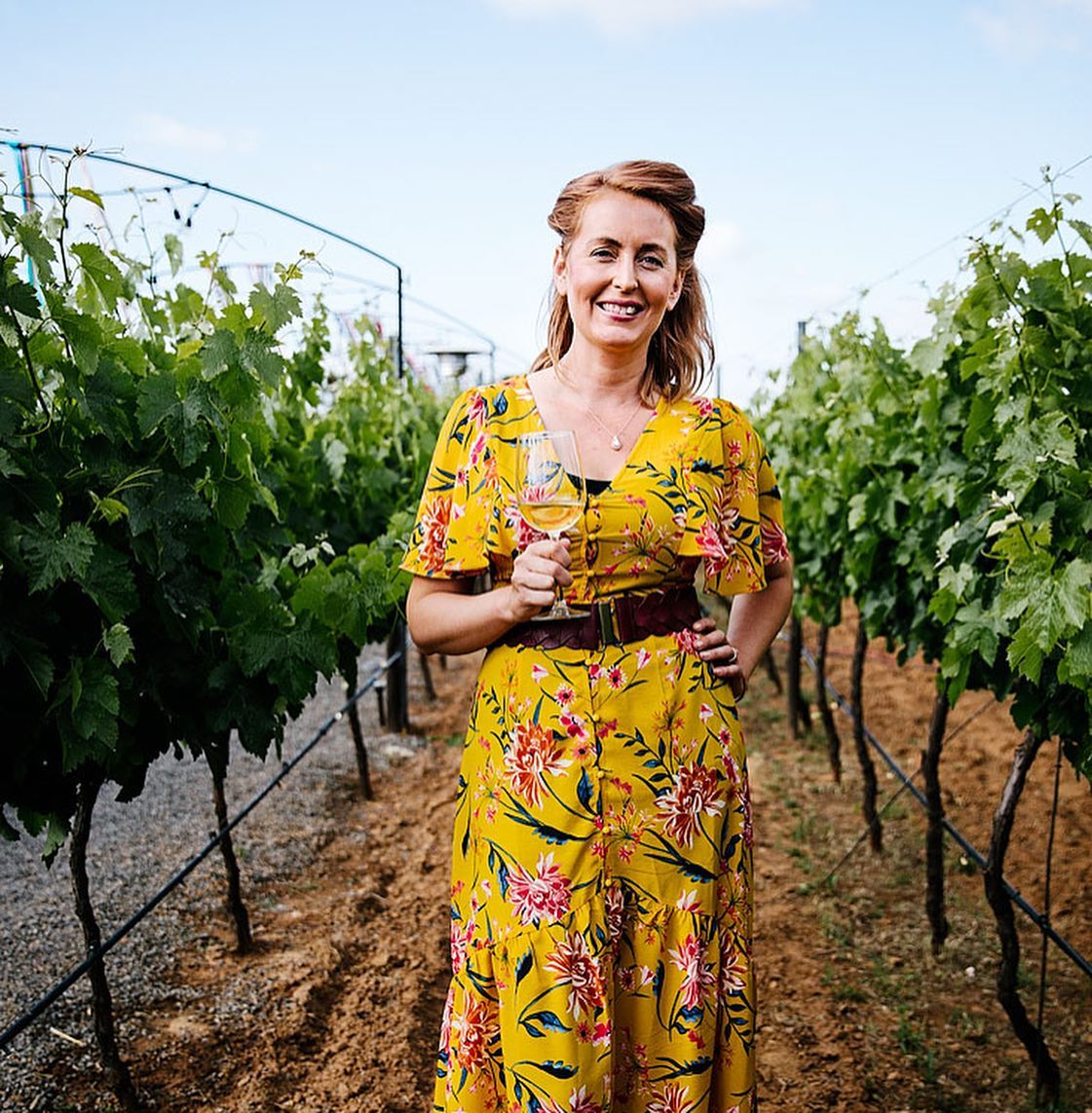
"The energy was infectious," said Magnussen, who moved to Valle to run Vinos Lechuza in 2013. "In Santa Barbara, I was just treading water. Let's give it a go." What she found was a region that rewarded risk in ways that California's more established appellations no longer could. "I have the ability to learn and take risks," she said. "As a female and as an immigrant, that just doesn't work on paper."
Running Vinos Lechuza has not been without difficulty, her father died suddenly in 2017, leaving her to carry the project forward. But the life she has built around it has become its own argument for the valley. "We eat well, all of our friends are chefs. We drink well, all of our friends are winemakers. We live such a rich life that when I travel, I want to come home." That rootedness, built by a California transplant over more than a decade, is part of what gives Vinos Lechuza its character: it is a project made by someone who chose this place rather than inherited it.
Magnussen is also conscious of the dual ambassadorship her position requires. "We want to be good ambassadors of Mexico in the United States," she said, "and we want to be good ambassadors of the United States in Mexico." For U.S. collectors encountering Valle de Guadalupe wines for the first time, Vinos Lechuza is often the entry point, the label that reads as familiar enough to trust while delivering something the California shelf cannot.
Nathan Malagón grew up on a ranch near San Juan Capistrano in Alta California, but his family's connection to Valle de Guadalupe runs deeper than most, his great-grandfather, originally from Guanajuato, bought land here in the 1960s. When Malagón was in his twenties and planning to teach English and surf in Brazil, his father suggested he take care of the family ranch in Valle instead. "This place saved my life," Malagón said. "It gave me direction."

It also introduced him to Verónica Santiago, who had grown up in Ensenada and gone to Australia to study winemaking before returning to the Baja coast. They launched Mina Penélope together in 2014, and the variety list they chose for their roughly eight coastal acres reads like a deliberate argument against the obvious: Aglianico, Montepulciano, Nebbiolo, Mourvèdre, and Sauvignon Blanc. In a valley where Cabernet Sauvignon and Tempranillo dominate many estates, Mina Penélope is asking what the dry coastal climate can do with varieties bred for the Italian south and the Rhône.
The division of labor is clean: Verónica manages the cellar, a converted garage and tool shed beneath their house, while Nathan tends the vines. His guiding question for every planting decision is the same: "What is more resilient?" In a region where water scarcity shapes every vintage, that is not a philosophical position. It is a practical one.
The Aglianico and Mourvèdre, both drought-tolerant by breeding, are well-suited to the challenge. The Nebbiolo is a longer bet, a variety that demands patience in its home territory of Piedmont and asks even more of a winemaker working outside its native climate.
Verónica Santiago's Australian training gives Mina Penélope a cellar sensibility shaped outside both the California and Mexican mainstream, a perspective that shows in wines built for structure and age rather than immediate approachability.
Production from eight coastal acres will always be limited. Mina Penélope's Aglianico and Nebbiolo plantings are among the few in Mexico, which means the wines carry a scarcity that has nothing to do with marketing, it is simply the arithmetic of a small coastal parcel growing varieties that almost nobody else in the country is attempting. This is a label to find before the allocation closes.
If the Viramontes brothers and Mina Penélope represent the new wave of Valle de Guadalupe cross-border winemakers, Camillo Magoni is the tide they are all swimming in. Italian-born, Magoni arrived in Valle de Guadalupe in 1965 and spent nearly half a century working for L.A. Cetto, one of Mexico's largest commercial wineries, before launching his own label, Casa Magoni, in 2013. During those decades at L.A. Cetto, he introduced stainless steel tanks and Petite Sirah to the region, two contributions that shaped the valley's technical and varietal vocabulary for generations of winemakers who followed.
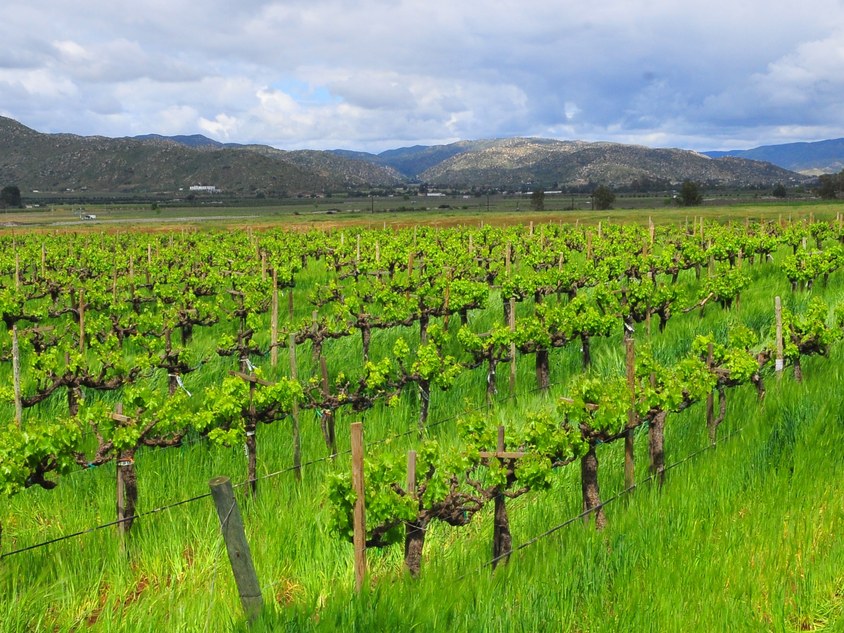
"It was like yesterday," said Magoni of his arrival in 1965. "It was a strong decision of my life." Now his curiosity has not narrowed, it has expanded. Casa Magoni grows 121 different varieties across more than 280 acres, a living ampelography project that functions simultaneously as a commercial winery and a research estate.
His daughter Monica manages operations; his other daughter, Mariela, runs the kitchen, serving dishes like sea snail crudo in olive oil and rosemary flowers. Mariela, who was born in San Diego and raised in Tijuana, has also taught culinary classes in California for 14 years. "We're constantly crossing the border," she said.
The scale of Casa Magoni's variety collection, 121 distinct cultivars across more than 280 acres, makes it among the more unusual viticultural resources in North America. For winemakers like Nathan Malagón, who is always asking what grows best in this dry coastal climate, Magoni's decades of observation across that many varieties represent an archive that no textbook can replicate. The single-variety and small-parcel bottlings from that estate are worth tracking as Magoni's daughters continue to develop the range.
Finca la Carrodilla and La Lomita, run by Fernando Pérez Castro for his family, anchor a different kind of continuity. Pérez Castro came to winemaking from acting in Mexico City, a trajectory that sounds unlikely until you spend time in a valley where a former corporate VP and a former restaurateur from Santa Barbara are farming neighboring hillsides. His family's ranches carry the same cross-border DNA as every other project here: built on land with deep local roots, shaped by influences that arrived from elsewhere.
Nikolai Rudametkin's biography reads like a map of the Alta-Baja continuum. Born in San Diego, raised in Ensenada, he was 16 when his uncle Fernando Pérez Castro opened La Lomita and Finca la Carrodilla on the family's ranches in 2009. His grandfather funded his oenology studies at UC Davis. After graduating, he worked at Peju and St. Supéry in Napa, then at Fingers Crossed in Ojai, then at Bodega Garzón in Uruguay. This past spring he was working in Argentina; by fall he was aiming for a harvest in Champagne.
"That's how I want to live my life, as an international consultant," Rudametkin said. His ambition is not to make the wine from a single appellation. It is to become the kind of viticulturist who improves growers across regions. "If I become a great winemaker, I'll just be another great winemaker.
But if I become a great viticulturist, I can help everyone become better growers.
Then everybody can make better wines." That philosophy, applied back to the family estate, is part of what drove La Lomita and Finca la Carrodilla to earn Mexico's first organic wine certification, a credential that required the kind of rigorous vineyard discipline that Rudametkin's international training was built to deliver.
The Alta-Baja connection runs through families as much as through institutions. Javier Flores, a Tijuana-born winemaker now working at South Coast Winery in California's Temecula Valley, came to wine through Camillo Magoni, his father worked for Magoni, and Javier did too after his father fell ill with cancer and later died. That lineage, from an Italian pioneer who arrived in 1965 to a Tijuana-born winemaker now working in Temecula, traces the full arc of how knowledge moves across this border. It does not travel in one direction. It circulates.
L.A. Cetto, where Magoni spent nearly half a century, remains one of Mexico's largest and most established commercial wineries, the institutional anchor against which the boutique generation consciously positions itself.
The new projects, West Soul, Mina Penélope, Vinos Lechuza, are defined partly by what they are not: not high-volume, not valley-floor monoculture, not built for the domestic mass market. But they exist because L.A.
Cetto and Magoni's decades of work created a regional infrastructure, trained labor, established varietals, a market identity, that smaller producers could build on. The old guard did not just precede the new wave. It made it possible.
Valle de Guadalupe is a two-hour drive from San Diego, less time than it takes to reach Napa from San Francisco. The valley's approximately 200 estates are concentrated enough to cover four or five in a day, the five Michelin-starred restaurants mean you are not sacrificing the table for the cellar, and the cross-border producers profiled here are, almost without exception, accessible in ways that Napa's allocation-gated estates are not. You can walk into a tasting at Vinos Lechuza or sit at Casa Magoni without a six-month waitlist.
For collectors, the calculus is different. Mina Penélope's eight coastal acres and Aglianico-forward blend program will never produce large volumes, this is a label to find and follow before it becomes difficult to source.
West Soul and Juego de Pelota from the Viramontes brothers' Costa de Valle vineyard are similarly constrained by the 30-acre site; distribution is currently narrow, and the wines are best secured directly.
Casa Magoni's 280-plus acres and 121-variety collection give it more production depth, but the single-variety and small-parcel bottlings from that estate are worth tracking as Magoni's daughters continue to develop the range.
The harvest window, typically September through October in Valle de Guadalupe, is when the valley is most alive. The cross-border producers here tend to be present during that period, which means a harvest visit offers the kind of access that formal tasting room appointments rarely deliver. If you are planning a Baja wine trip, time it to the crush. The conversations you will have over a tank sample of Nebbiolo from Mina Penélope's coastal block, or a barrel trial of Petite Sirah rosé from the Costa de Valle hillside, are the ones that make the drive south worth every mile.
The generation of Valle de Guadalupe cross-border winemakers profiled here is still early in its arc. The Viramontes brothers' Costa de Valle vines are young. Nikolai Rudametkin is building the international résumé he will eventually bring home. Verónica Santiago's cellar is a converted garage. The wines are already serious, but the estates that will define this valley's next chapter are still being planted, and the winemakers shaping them are still learning. That is not a caveat. It is the reason to pay attention now. If this is the kind of insider detail you look for in a glass, join the club, we'll keep pouring.
Who are the valle de guadalupe cross-border winemakers leading the region's transformation?
Key figures include Tony Viramontes, former VP of Operations at Jackson Family Wines, who farms a hillside vineyard called Costa de Valle with his brother Gerardo. Verónica Santiago of Mina Penélope trained in Australia, while Nikolai Rudametkin earned organic certification, the first in Mexico, after training at UC Davis and staging at Napa Valley wineries.
How far is Valle de Guadalupe from the U.S. border?
Valle de Guadalupe is approximately 70 miles south of the U.S. border, roughly an hour's drive from Tijuana. The proximity makes same-day trips from San Diego or even Sonoma County feasible for winemakers managing cross-border operations.
What makes Valle de Guadalupe's climate suitable for fine wine production?
The valley shares a Mediterranean climate profile with coastal California, featuring warm dry summers moderated by Pacific marine influence and significant diurnal temperature swings that preserve acidity. Hillside and coastal sites catch marine air that extends hang time and adds savory, herb-driven character to the fruit.
How many wineries are currently operating in Valle de Guadalupe?
The valley now holds approximately 200 estates, a figure that reflects decades of arrivals from across Mexico and internationally. The region also hosts five Michelin-starred restaurants, signaling its emergence as a serious fine dining and wine destination.
What valle de guadalupe cross-border winemakers have formal oenology training?
Nikolai Rudametkin trained at UC Davis and staged at Peju, St. Supéry, Fingers Crossed in Ojai, and Bodega Garzón in Uruguay before returning to his family's estate. Verónica Santiago of Mina Penélope completed her winemaking studies in Australia before settling near the Ensenada coast where she grew up.
Get the App
Take the shortlist into the En Primeur Club app for concierge access, saved places, and the next step after discovery.
Get Exclusive AccessMore from the editors